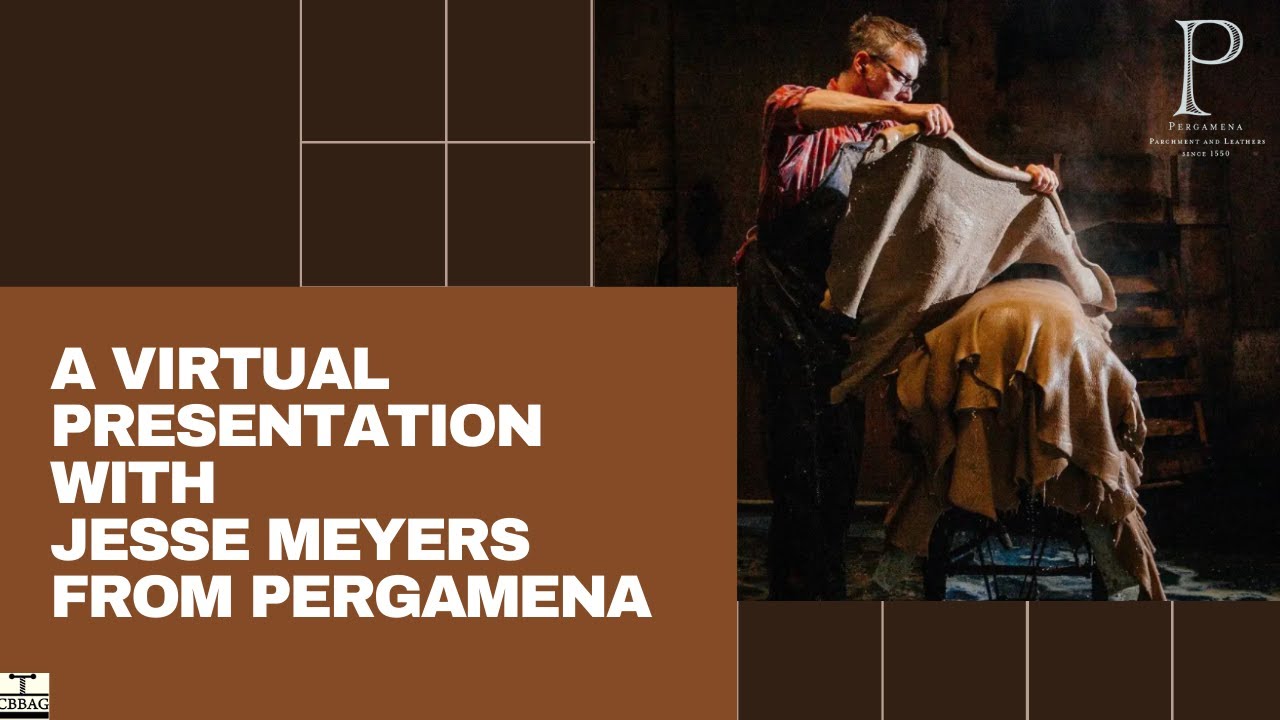
























Parchment is an ancient paper-like material made from animal hides through a laborious process involving soaking in calcium hydroxide, dehairing, rinsing, stretching, shaving with a medieval lunellum knife, and sanding, a craft dating back to 2500 BC that nearly disappeared after the Middle Ages but was revived by Jesse Meyer at Pergamena, the last workshop in the US, to save his family's 450-year-old tannery business.
Traditional Parchment Making: Last US Workshop | Artisan Crafts & History
Added:Understanding the fundamental difference between paper (plant-based), leather (tanned animal hide), and parchment (un-tanned animal hide stretched under tension).
Basic knowledge of the historical evolution of writing surfaces, specifically moving from clay tablets and papyrus to parchment and vellum.
A rudimentary understanding of skin anatomy, particularly the structure of collagen fibers in animal hides and how they respond to chemical and physical manipulation.
Familiarity with the historical context of the medieval scriptorium and the labor-intensive process of creating hand-copied manuscripts.
Exploring the field of Codicology, specifically the physical study of medieval books, including how to identify different types of animal skins used in manuscripts.
Investigating the chemistry of conservation and preservation techniques used by archivists to restore damaged or aging parchment documents.
Analyzing the historical transition from parchment to wood-pulp paper and its socioeconomic impact on literacy and the spread of information.
Studying the preparation and application of historical writing mediums, such as iron gall ink and tempera, on parchment surfaces.
7.9M views54.6Klikes8:04Original Release: 2021-03-07
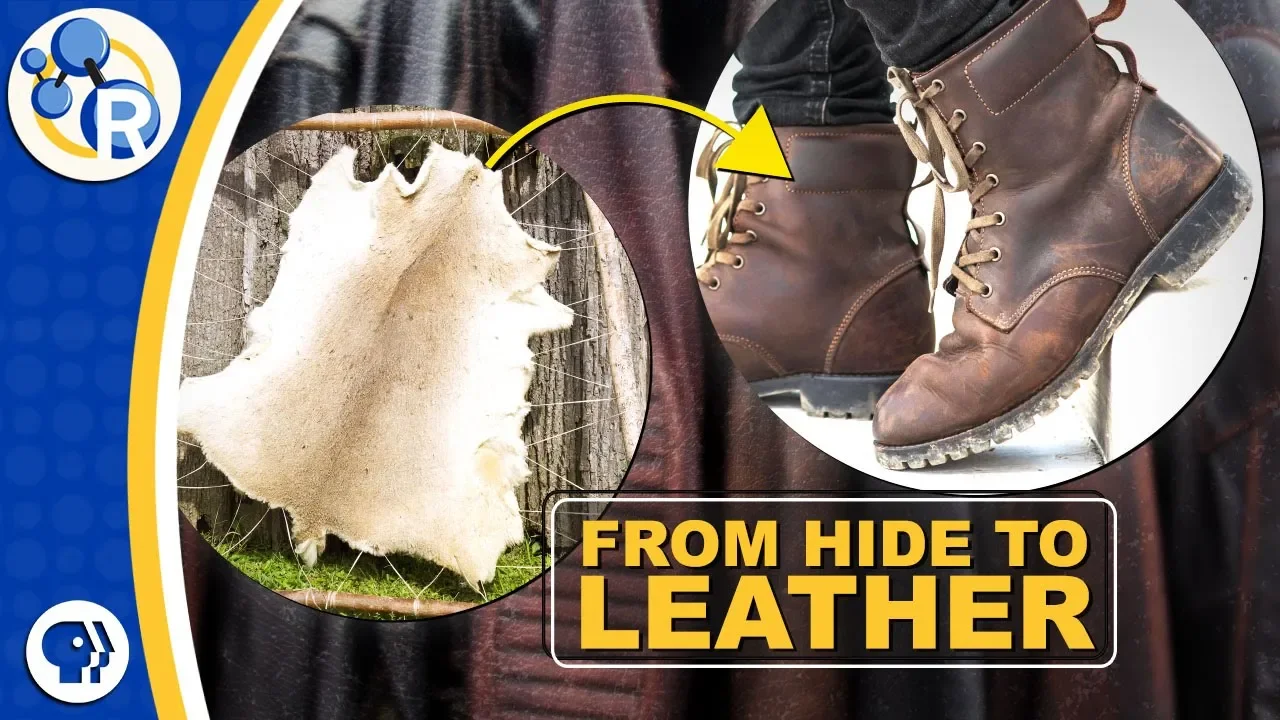
This goatskin is about to be turned into parchment, an old kind of paper made from animal skin.
It goes through a laborious process of having every last hair scraped off.
The craft dates back to 2500 BC, and this is the last place in the US that still makes it.
Every piece takes at least two weeks to make, and only a handful of people in the entire world know how.
Parchment as a product almost hasn't survived.
There was almost no need for it as a material.
But it was this centuries-old work that helped Jesse Meyer save his family tannery.
We visited their facility in Montgomery, New York, to see how it's still standing.
Making parchment is a messy craft.
It's cold and wet around the workshop, but the lingering smell is something Jesse's gotten used to.
It all starts with the skin.
Deer, goat, calf, and sheepskin are sent by slaughterhouses or local hunters.
Jesse soaks it in a mixture of water and calcium hydroxide to break down the fibers, loosen the hair, and clean it.
This is the longest part of the process, taking at least two weeks.
Then it's time for dehairing.
Jesse scrapes at the skin, pushing the hair off.
He uses a makeshift tool, a 100-year-old piece of wood that has the perfect shape for the job.
Even the hand tools that we use, most people have never seen before.
And in some cases, they don't exist, and I've had to recreate these tools myself.
After dehairing, he removes the extra meat layers on the other side.
They've installed machines to help speed this along, but sometimes, Jesse prefers the traditional way.
The more involved you can be with your own hands, the better and more control you have over the end product.
But there is a point where, if you're doing this on a commercial scale to try to be efficient and more economical, you don't really have the ability to handle each one by hand.
The hides then go through a thorough rinse.
That adjusts the pH level after weeks of intense chemical treatment.
Jesse selects some of the clean skins to be dyed in a large drum.
He uses plant-based pigments and water to create a range of colors.
As the skins tumble, they soak up the dye until they're saturated.
He hangs the skins to dry overnight so that the color spreads evenly throughout.
But most of the rinsed skins are left their natural white color and sent up to the dry room.
Jesse stretches the skin to keep it flat while it dries.
First, he scrapes the hide while it's wet to remove excess moisture.
Then when it's dry, he shaves it to clear away tissue.
He made this medieval knife with a saw blade, a threaded rod, and leather.
Its proper Latin name is lunellum, for its crescent-moon shape.
Sanding is the very last step.
Jesse refines the surface, smoothing it out until almost every blemish is undetectable.
Finally, the skin is now parchment.
The first record of parchment dates back to 2450 BC.
Famous ancient documents like the Dead Sea Scrolls and the Magna Carta were all written on it for its durability.
The use of parchment peaked in the Middle Ages in Europe, when it was mostly used for illuminated manuscripts and book bindings.
Paper made from wood pulp or plant fibers was invented in China around 105 AD.
It made its way across Asia, the Middle East, and Europe through the centuries with the rise of literacy and the printed word.
It was faster and cheaper to make.
It quickly industrialized and rendered parchment virtually irrelevant by the 16th century.
Early in the 20th century, designers incorporated parchment into high-end furniture and decor, and it is still used for that today.
Preserving history is what saved parchment in this business.
Conservators use the material to mend old manuscripts, make copies, and restore missing pages.
It's been a very niche product. It is something that happens alongside of leather production.
And that's how I kind of rediscovered and have been trying to sort of reapply it since then.
The rare craft saved his family's centuries-old tannery business, which has been in the country since his ancestors moved here in 1820.
By the time Jesse took over, demand for leather was on the decline, and by 2005, keeping the business going was getting more difficult.
That's when Jesse introduced parchment making.
But he struggled to find out about the process.
There are a handful of other companies around the world that do this sort of thing, and they're far, far away.
And they've never told me how they do what they're doing.
So I've had to try to figure this out in a vacuum.
So it's me, figuring it out as I go, and what seems to work best for me.
Because it's such an old medieval craft, anytime I would try to go look up information, a lot of times, it was from medieval recipes that was written in Latin from 1300, 1400.
Eventually parchment became such an important part of the business, Jesse changed the name from Meyer and Sons to Pergamena, which means parchment in Latin.
And he found a niche of customers: conservators and designers who use the material in lampshades, upholstery, headboards, and even as wallpaper.
No two pieces of parchment look the same, which is a blessing and a curse.
It's part of the artistry.
A single sheet starts at $100.
What started out feeling like an albatross around my neck ended up becoming a way to help revitalize the family industry.
I want to be proud of this and to be able to pass it on to my family, and for people to know that skilled work like this is still being done in the world.
It's being made right here in the United States by a family that's been doing it for 450 years.
Up Next
8:00
Paper Manufacturing Process: From Wood to Pulp and Sheets
@Process-X
108K views•2024-08-03

12:54
Triumph of Orthodoxy Icon: Byzantine Art & History Explained
@BenCallan
2.1K views•2024-08-06
9:13
Sustainable Gold Extraction from E-Waste Using Microbes
@BusinessInsider
6.5M views•2021-05-19

1:42
Game of Thrones Opening Credits: A Cinematic Analysis
@gameofthrones
46.3M views•2011-04-18
Related Study Plans & Knowledge Roadmaps
Structured learning paths in General & Interdisciplinary Studies
general-studies
Elevator Engineering: History, Physics & Cities
01From Hoists to Safety Brakes: The Dawn of Vertical Lift
02Hydraulic vs. Traction: The Engineering Physics of Elevators
03Modern Speed, Safety, and Algorithms
+ 2 more learning modules
12h5 modules
Explore Roadmap
general-studies
Rubber: Material Science, History & Geopolitics
01Origins of Natural Rubber & Mesoamerican History
02The Chemistry of Natural Rubber & Vulcanization
03The Geopolitics of the Rubber Boom & Colonization
+ 2 more learning modules
12h5 modules
Explore Roadmap
general-studies
Containerization: Evolution, Logistics & Trade
01Ancient Trade & Bulk Cargo: Amphorae to Barrels
02The Industrial Revolution & Cardboard Packaging
03The Containerization Revolution: Malcom McLean
+ 2 more learning modules
12h5 modules
Explore Roadmap
general-studies
Textile Tech: Evolution, Labor & Global Impact
01Pre-Industrial Textiles: Handloom & Cottage Industry
02Mechanization: The Spinning Jenny to the Power Loom
03The Factory System & Global Labor Transformation
+ 2 more learning modules
10h5 modules
Explore Roadmap