

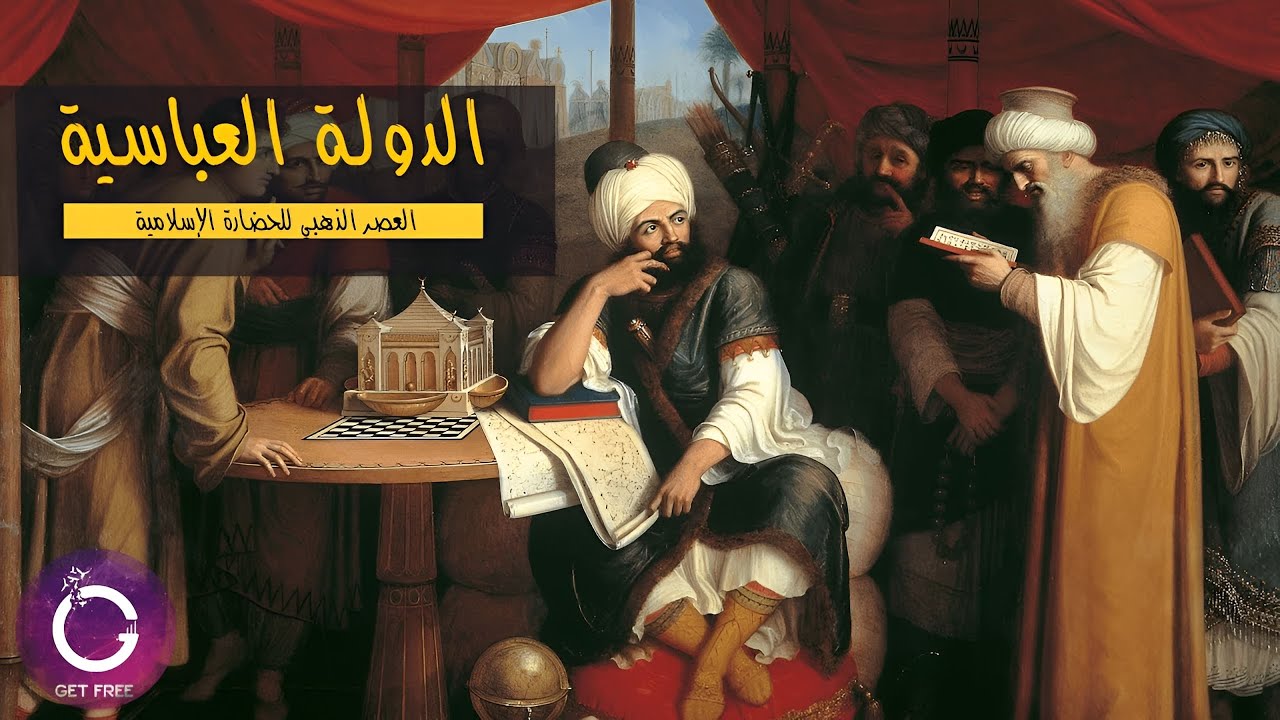


















The medieval Islamicate world, particularly under the Abbasid Caliphate (750-1517), served as a major center for scientific advancement through the Translation Movement, which systematically translated Greek, Persian, Indian, and Chinese texts into Arabic, leading to innovations in mathematics (including algebra and the adoption of Arabic numerals), astronomy (with accurate measurements of Earth's circumference), and engineering (including programmable machines and sophisticated automata).
Medieval Islamic Science: Crash Course History of Science #7
Added:The historical geography and timeline of the Islamic Golden Age, including the significance of major intellectual centers like Baghdad and the House of Wisdom.
The basics of classical Greek science and philosophy, particularly the foundational works of Aristotle, Ptolemy, and Euclid.
An understanding of the 'Translation Movement', which served to preserve and synthesize Hellenistic, Persian, and Indian texts into Arabic.
Fundamental mathematical concepts such as basic geometry, arithmetic, and the pre-algebraic systems utilized by ancient civilizations.
The transmission of Islamic scientific knowledge to Western Europe through cultural contact zones like Al-Andalus (Spain) and Sicily, which helped spark the European Renaissance.
The detailed history of Algebra, tracing its evolution from Al-Khwarizmi's 'Al-Kitab al-mukhtasar fi hisab al-jabr wal-muqabala' to modern mathematics.
The influence of Islamic astronomers (such as the Maragha school and Nasir al-Din al-Tusi) on the development of the Copernican heliocentric model.
The origins of the modern scientific method, focusing on Ibn al-Haytham’s (Alhazen) pioneering experimental work in optics.
1.2M views27.8Klikes13:04Original Release: 2018-05-14
The religion of Islam significantly influenced knowledge-making in the greater Mediterranean and western Asian world.
Islamicate scholars—meaning people influenced by Islamic civilization, regardless of their religious views—gave us terms such as “algebra,” “azimuth,” “algorithm,” “alcohol,” “alkali,” and “alembic.” We’ll dive into Islamic medicine and philosophers such as the great Persian polymath Ibn Sina in future episodes.
For now, let’s explore the beginnings of Islamicate natural philosophy.
[Intro Music Plays] Islamicate power expanded rapidly after the Prophet Muhammad’s death in CE 632.
What began as one vast Arab-governed state soon fractured into two spheres of political influence: a western one centered in southern Spain, with a capital at Córdoba, and an eastern one including the great cities of northern Africa as well as Arabia and Mesopotamia.
This eastern empire, the highly urbanized Abbasid Caliphate, existed in some form, increasingly fragmented, from 750–1517.
The Abbasid Caliphate was a crossroads or trading zone for Persian, Indian, and Byzantine cultures, as well as for the religions of Islam, Judaism, Christianity, and Zoroastrianism.
Many languages flourished across the Abbasid Caliphate, as they did in the Emirate of Córdoba.
This blend of cultures and belief systems made early Islamicate science cosmopolitan—that is, generally inclusive in character.
A high literacy rate thanks to Islam’s focus on the Qur’an meant that many people—well, noble men, at least—could study natural philosophical texts.
Further, Islam-the-religion called on its adherents to treat others as equals, helping make Islamicate knowledge production more egalitarian.
And ongoing support by pious philanthropists including heads of states allowed Islamicate polymaths to study natural phenomena systematically.
Baghdad, the first Abbasid capital, was founded by its second caliph, al-Mansur, in 754.
A sprawling metropolis quickly grew up around the original, carefully planned city.
And Baghdad became the largest urban area in the world by 930, with a population of one million.
Key for our story today: Baghdad housed the Bayt al-Ḥikmah or House of Wisdom.
This great library grew out of al-Mansur’s private collection, which he opened up to visiting scholars, including delegations from India.
Al-Mansur’s successor, Caliph al-Rashid, carried on this tradition.
Al-Rashid also supported the Translation Movement, which we’ll get to shortly.
But first, let’s reflect on his rule as a great example of the cosmopolitan character of the early Abbasids.
Charlemagne sent a mission from France to al-Rashid’s court in 799 with gifts.
So in 802, al-Rashid sent Charlemagne an embassy including an elephant named Abul-Abbas and a water clock that featured clockwork knights who emerged once per hour.
You could see the elephant’s journey as one origin of veterinary science: the Abbasid diplomats kept the elephant healthy walking from India to Baghdad to France, and it lived for years after in captivity.
And, to the Franks, the water clock was simply mind-blowing, something they’d never even imagined!
But it was al-Rashid’s successor, Caliph al-Maʾmūn, who in 832 refounded the House of Wisdom specifically as an international center for translation and research.
Al-Maʾmūn was involved in the House’s daily operations, and he sponsored knowledge production programmatically, inspiring his successors to do the same.
By 850, the House of Wisdom had become the largest library in the world.
Al-Maʾmūn sponsored families of scholar–translators to bring useful texts into Arabic from Greek, Chinese, Sanskrit, Persian, and Syriac.
This should be known as the “Useful Texts into Arabic Movement” but, for some reason, is called the Translation Movement instead.
This movement began with Persian texts concerning astrology and astronomy.
Remember that, across the ancient and medieval worlds, astronomy was the study of the heavens, and astrology the study of the influence of heavenly bodies on earthly matters.
While both were studied, astrology was seen as more useful.
After texts about the stars, the translators moved onto others.
To feed this program, al-Maʾmūn sent emissaries to collect Greek scientific manuscripts from the Byzantines—and began demanding them as loot in war.
The Translation Movement lasted from roughly 750–950.
By 950, virtually every Greek scholarly text had been translated multiple times, and the libraries were brimming.
Many translators of Baghdad particularly fell for the works of Aristotle.
One of the greatest Islamicate philosophers, Ibn Rushd, is sometimes called “The Commentator,” meaning the number-one Aristotle fan.
To this day, more classical Greek commentaries on Aristotle may be available in Arabic than English!
Why was Caliph al-Maʾmūn so into the Persian and Greek science?
For one, supporting translations was a sign of civic status, and a worthy cause.
Al-Maʾmūn also saw scientific translation as highly practical.
For example, a better understanding of astronomy led to more accurate official timekeeping for mosques.
And improved geographical knowledge helped more accurately align prayers to Mecca.
The Translation Movement also fostered a strong appreciation for reasoned thought, at least among the ruling and scholarly classes.
This rubbed off on religious philosophy, giving rise to the school of mu‘tazilism.
Mu‘tazila such as al-Maʾmūn believed that rationalism could be used to understand both the physical world and God.
They brought the Greek tradition of reasoned debate about the nature of the cosmos into an Islamicate social context, looking beyond a literal reading of the Qur’an for sources of knowledge.
In fact, places of learning under the Abbasid Caliphate included observatories, hospitals, and public libraries, as well as mosques and madrasas, or Islamic colleges.
Madrasas were critical centers of knowledge transmission.
There were thirty in Baghdad in the 1200s, and one hundred and fifty in Damascus by 1500.
Each madrasa had its own library full of paper books.
Paper had been introduced to western Asia from China, and paper factories appeared in Samarkand, Baghdad, Cairo, Morocco, and finally in Spain by 1150.
While they were religious centers, madrasas were also places where students could learn law as well as Greek natural philosophy, including logic and arithmetic, astronomy, and astrology.
Abbasid scholars didn’t merely translate foreign writers.
In translating the texts, these polymaths wrote commentaries on them, comparing, summarizing, and analyzing them.
Even when motivated by utilitarian concerns, the work of careful reading and comparison led many scholars to pursue new questions in natural philosophy.
For example, observatories arose throughout the Islamicate world.
Al-Maʾmūn built two observatories, one in Baghdad and another outside Damascus.
At these sites, scholars refined astronomical handbooks, called zīj, that helped fix prayer times.
In fact, by the late ninth century, Islamicate polymaths such as Abu Maʿshar, the famous Persian physician al-Razi —whom we’ll meet again soon—and the Indian-influenced al-Biruni were even proposing heliocentric models of the solar system.
Their theories went against Aristotle but with observed data!
In geography, Islamicate scholars extended Ptolemy’s system.
Our scientific hero today, Caliph al-Maʾmūn, commissioned a measurement of earth’s circumference that was pretty amazing: two groups ventured into the desert, finding a specific location by following the stars.
One group walked north and the other south, tracking the stars for one degree.
They counted their paces.
Then they walked back, remeasured, averaged the measurements… and multiplied by 360 to derive a circumference of 24,480 miles.
The modern measurement?
24,901—less than 2% more accurate than the one made by al-Maʾmūn’s team.
And don’t get me started on astrolabes!
You know—mechanical devices used for measuring incline by astronomers and navigators?
To determine the position of celestial bodies in the night sky?
The ones Islamicate astronomers improved by adding the azimuth, or direction of compass bearing?
And then merged with armillary spheres, or models of the entire cosmos constructed from rings and hoops that revolved on their axes, around 900?
And then improved into geared mechanical astrolabes in 1235?
I’m looking at you, Abi Bakr of Isfahan!?
MEANWHILE—back at the House of Wisdom… In addition to translation and improvement on Greek natural philosophy, scholars were also innovating in new realms.
In mathematics, medieval Islamicate scholars focused on arithmetic and algebra.
They adopted the number zero and the “Arabic” decimal-style numerals from India, using them so much that they became known to us as, well, Arabic.
They also developed trigonometry.
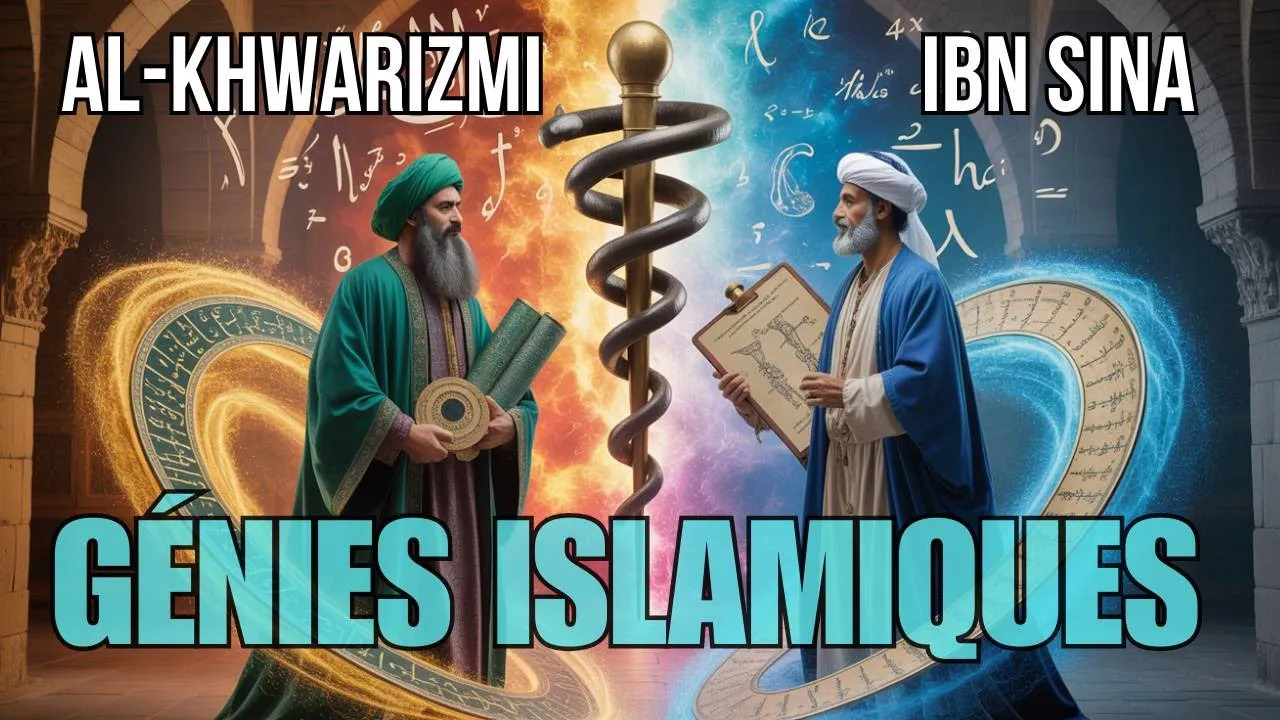
One example of this work in particular jumps out: in 820, at the House, Muhammad ibn Musa al-Khwarizmi wrote Kitab al-Jabr, or The Compendious Book on Calculation by Completion and Balancing, an original manual of practical math.
Al-Khwarizmi wasn’t the first to work on algebra, but he set out the general rules for solving equations that was highly influential for centuries.
Algebra introduced a theory that treated rational numbers, irrational numbers, geometrical magnitudes—all numbers—as similar objects, ready to be manipulated.
Or, as my dude himself says it: “When I consider what people generally want in calculating, I found that it always is a number.” Mic drop!
This opened up the possibility of exploring new areas of mathematics such as algorithms, quadratic equations, and polynomial equations.
Also at the House of Wisdom, thinkers such as Mohammad Mūsā worked on the basic laws of physics.
Others focused on optics, performing many experiments.
And doctors and philosophers trained and traded works.
But what about the engineers—the scholars working on technē instead of epistēmē?
The Abbasid state privileged public service and the interests of the state, focusing on improving useful arts such as hydraulic engineering and agricultural science.
The Abbasids used the arch, rather than the Greek post and lintel system.
And they constructed large dams, waterwheels, and qanats, or underground channels to tap groundwater.
Abbasid technology thus resembled that of the Romans, with craftspeople, not scholars, typically building actual stuff.
But a few stand-out engineers from this time period created wonders so—er—wondrous, that they deserve a little attention from ThoughtBubble: In 850, at the House of Wisdom, the Banū Mūsā brothers—Mohammad, just mentioned, and Ahmad and Hasan—wrote The Book of Ingenious Devices: a compendium of one hundred devices and how to use them.
This included the earliest programmable machine, “The Instrument that Plays by Itself.” Medieval automation, whaaat!?h And it gets cooler.
In 1206—far from Baghdad, in what is now Diyarbakır, Turkey—the polymath al-Jazarī wrote an even more amazing book on machines: The Book of Knowledge of Ingenious Mechanical Devices also covers one hundred machines, with instructions on how to build them.
Most of these are trick vessels, but others include water wheels, watermills, a giant water clock, elephant- and castle-shaped clocks, fountains improving upon designs by the Banū Mūsās, a candle clock, and musical automata.
Al-Jazarī even designed a water-powered, perpetually-playing flute!
How did these devices work?
Well, it helped that al-Jazarī invented the camshaft, which would make it into Europe by the 1300s, an early version of the crankshaft, and the segmental gear.
You can look up how these work online, but the point is: our modern world runs on them, and this guy figured them out in medieval times.
That is so.
Dang.
Cool.
But the coolest of al-Jazarī’s inventions were his full-on automata—medieval robots.
He made humanoid machines including one that could serve water or tea.
He made a flushing toilet with a nearby servant, who refilled the basin when flushed.
And the pièce de résistance: al-Jazarī constructed a four-piece robot band that floated on a lake, entertaining party guests.
The music?
Most likely programmable, using tiny pegs and levers.
Thanks Thought Bubble!
We could spend several more episodes on science in the early Islamicate world.
And we will come back to some of the people and themes mentioned today.
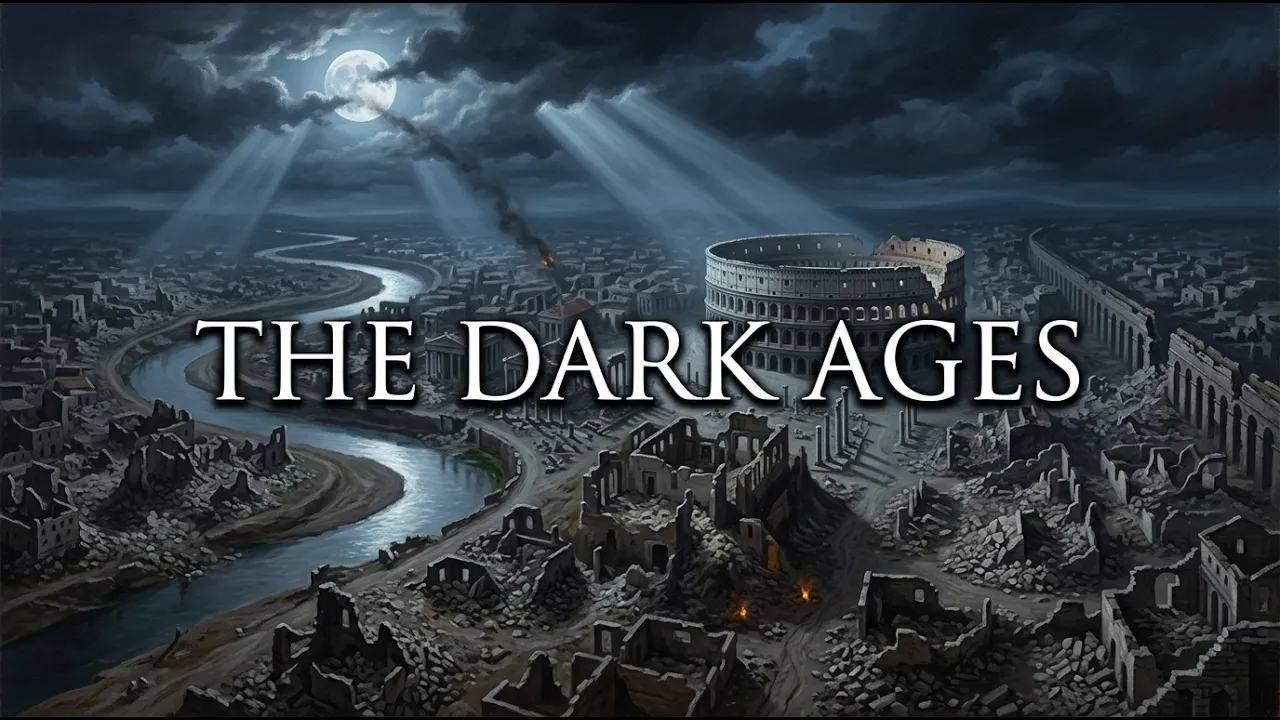
There’s a common understanding of the history of medieval Eurasia and North Africa long-held by many English speakers is just plain wrong: instead of a “dark age” defined by conflicts between Muslims and Christians who didn’t understand one another, we encounter urban centers of trade and knowledge exchange populated by natural philosophers with a keen desire to build upon earlier insights regardless of their origins.
Next time—we’ll build many cities and one very long canal in the rich Middle Kingdom, China.
Crash Course History of Science is filmed in the Dr. Cheryl C. Kinney studio in Missoula, Montana and it’s made with the help of all this nice people and our animation team is Thought Cafe.
Crash Course is a Complexly production.
If you wanna keep imagining the world complexly with us, you can check out some of our other channels like Scishow, Eons, and Sexplanations.
And, if you’d like to keep Crash Course free for everybody, forever, you can support the series at Patreon; a crowdfunding platform that allows you to support the content you love.
Thank you to all of our patrons for making Crash Course possible with their continued support.
Up Next

44:02
The Carolingian Renaissance: Intellectuals of Charlemagne's Court
@YaleCourses
268.4K views•2012-04-05

93:30
Zola, Baudelaire, Maupassant & the Transformation of Paris, 1852-1900
@SylviaSagona
5.6K views•2015-05-31

15:03
Hurricane Katrina and Structural Racism: Black American History
@crashcourse
269.3K views•2022-10-19

17:05
Understanding the Cold War: Superpower Conflicts and the Road to Détente
@OverSimplified
46.1M views•2019-01-24
Related Study Plans & Knowledge Roadmaps
Structured learning paths in History
history
Byzantine Iconoclasm: Theology, Art & Politics
01Foundations of Byzantium and Early Christian Images
02The First Iconoclasm: Leo III and the Crisis of Images
03Empress Irene, Nicaea II, and the Second Iconoclasm
+ 2 more learning modules
9h5 modules
Explore Roadmap
history
Iranian Revolution (Causes, Events & Legacy)
01The Pahlavi Dynasty and the Roots of Discontent
02The Spark of Rebellion and the Rise of Khomeini
031979: The Fall of the Shah and the Climax of the Revolution
+ 2 more learning modules
8h5 modules
Explore Roadmap
history
Mali Empire: Mansa Musa, Trade & Timbuktu
01Foundations of the Mali Empire
02The Trans-Saharan Gold and Salt Trade
03The Reign and Pilgrimage of Mansa Musa
+ 1 more learning modules
6h4 modules
Explore Roadmap
history
1947 Partition: Politics, Borders & Legacies
01Foundations of British India and the Divide
02The Political Negotiations and the Mountbatten Plan
03Drawing the Boundary: The Radcliffe Line
+ 2 more learning modules
8h5 modules
Explore Roadmap