



![Daniel Kaufman & Massimo Pigliucci [Sophia] (full conversation)](https://i.ytimg.com/vi/eoDoJgxNwLw/hqdefault.jpg)




















Stoicism, founded by Zeno of Citium in ancient Athens after his shipwreck, teaches that a fulfilling life comes from focusing on what we can control (our opinions, desires, and actions) while accepting what we cannot (external events, others' behavior, and outcomes), guided by four cardinal virtues—practical wisdom, courage, justice, and temperance—and viewing ourselves as citizens of the universal community ('cosmopolitans') who balance multiple social roles with integrity.
Stoicism as a Philosophy for Ordinary Life | Massimo Pigliucci | TEDxAthens
Added:An introductory understanding of Hellenistic philosophy and the historical context of ancient Greece and Rome.
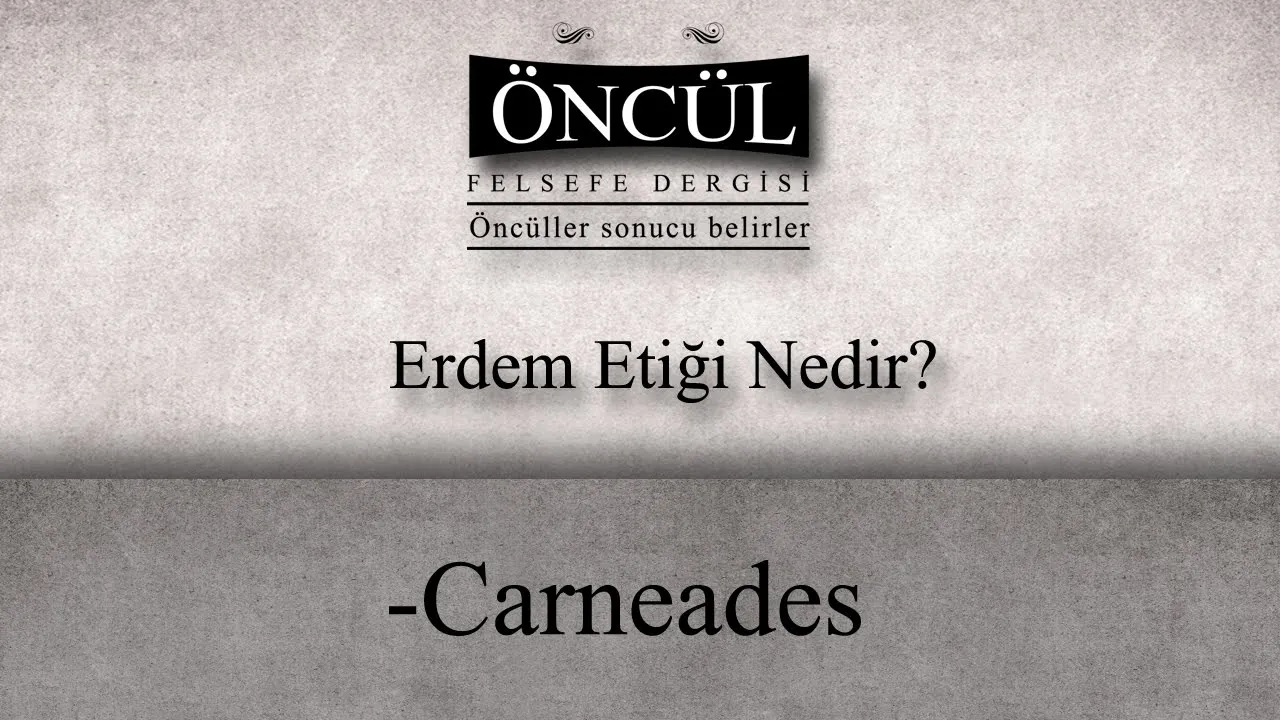
Familiarity with the concept of 'Virtue Ethics' and how it differs from consequentialism or deontology.
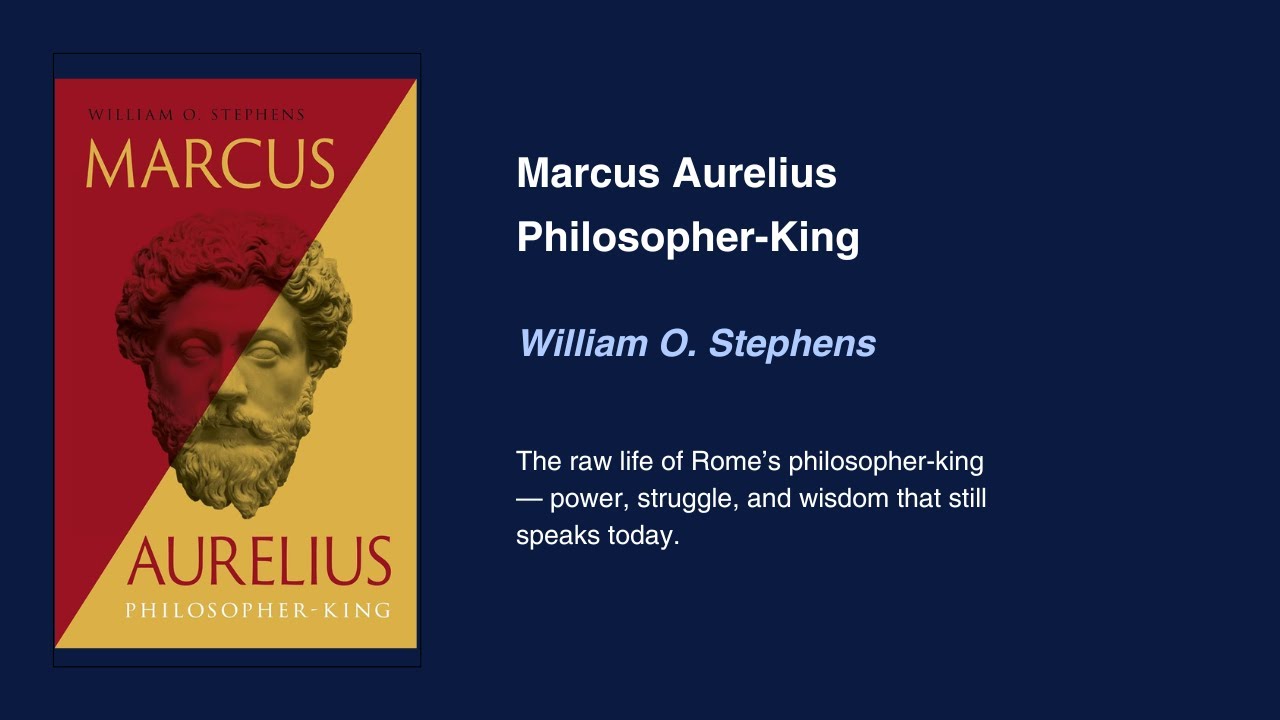
A basic acquaintance with key Stoic thinkers such as Seneca, Epictetus, and Marcus Aurelius.
The fundamental philosophical distinction between internal mental states and external physical events.
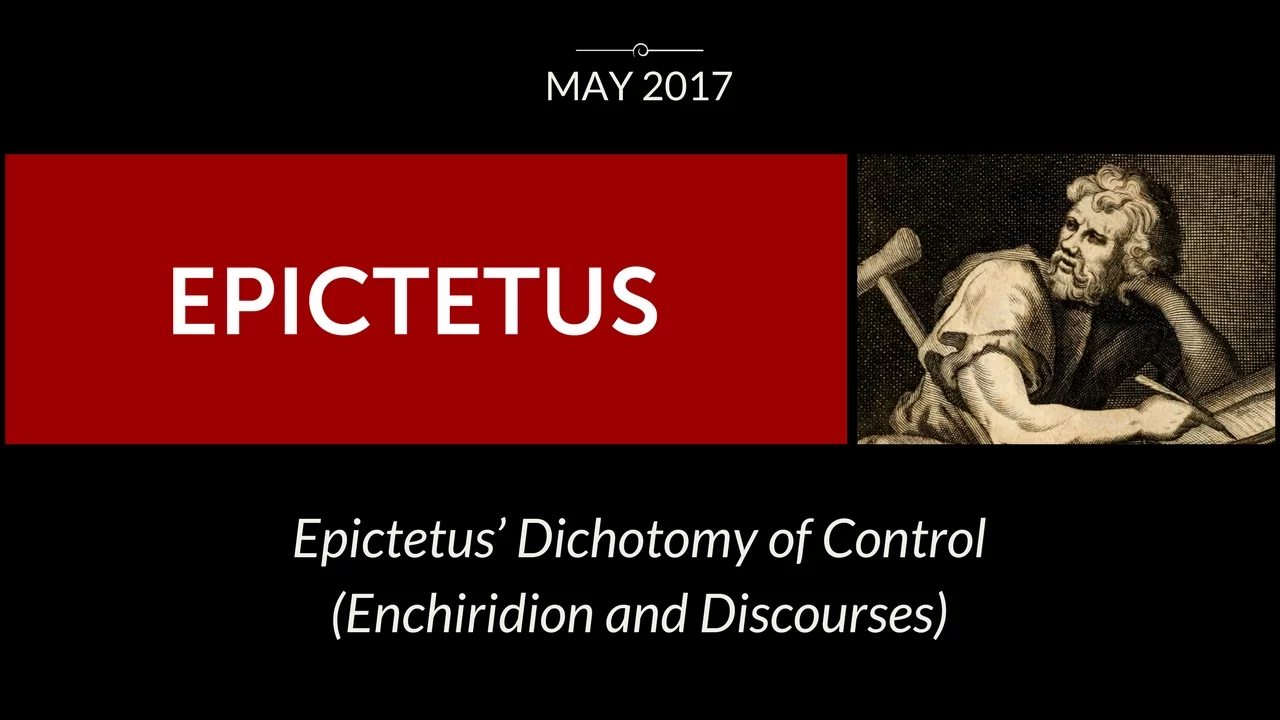
An in-depth study of Epictetus's 'Enchiridion' (Handbook) to explore the practical 'Dichotomy of Control'.
Exploring the historical connection between ancient Stoic practices and modern Cognitive Behavioral Therapy (CBT).
Implementing Stoic psychological exercises in daily life, such as 'Premeditatio Malorum' (the premeditation of evils) and journaling.
Analyzing modern adaptations of Stoicism (Modern Stoicism) and the contemporary ethical debates surrounding its potential passivity.
2.6M views61.5Klikes18:39Original Release: 2018-09-25
Translator: Tanya Cushman Reviewer: Peter van de Ven Imagine, if you will, that you're walking down the streets of Athens 24 centuries ago, give or take.
You might meet this guy: Zeno of Citium.
He was a merchant, a Phoenician merchant.
He was doing very well until a shipwreck destroyed everything and he lost everything he had.
So he made it to Athens, and what did he do?
One of the first things he did was to walk into a bookshop and started reading books.
He read Xenophon's "Memorabilia," which is a book about Socrates.
And he was so intrigued that he turned to the bookseller and says, "Where can I find me one of these people, one of these philosopher folks?"
And the bookseller turned around.
He said, "Well, there's one right over there, walking by."
Because that was Athens at the time: philosophers were just walking by.
(Laughter) The guy walking by was Crates, a Cynic philosopher.
And Zeno became his student, eventually went on to study with a number of other of the major philosophers in Athens.
And then he established his own school, which became known as "Stoicism" because they studied meaning in the stoa, in the open market, unlike the other schools where you had to go to a specific place - Plato's Academy or Aristotle's Lyceum - the Stoics wanted to be in the middle of people, to talk to people about their life and how to make it better.
Stoicism became one of the major philosophies of antiquity.
It spread through the Hellenistic world first and then to the Roman Republic and then Roman Empire.
It produced some of the major thinkers of the time.
Seneca, who was a senator, a playwright - he influenced Shakespeare - and the unfortunate advisor to the Emperor Nero.
That didn't end up well for Seneca.
Marcus Aurelius, one of the few king-philosophers of all of history, who wrote "The Meditations," his own personal diary, which is now read by millions of people around the world.
Now, unusual for ancient philosophy, Stoicism attracted a number of women.
A lot of Roman matrons used to organize convivia, which were sort of get-togethers with their friends, to talk about Stoicism.
But many of them also lived the philosophy.
One of them, the most famous one, was Porcia Catonis, who happened to be both the daughter of Cato the Younger, who was an archenemy of Julius Caesar, as well as the wife of Brutus, one of the co-conspirators against Caesar.
So she had a lot to deal with in her life, and she approached it in a Stoic fashion.
Now, Stoicism, like all ancient schools of philosophy, eventually died down or was closed with the rise of Christianity, but it kept influencing people throughout the following two millennia.
The reason many people today are familiar with some of the Stoic ideas is because they influenced Christianity, beginning with Paul of Tarsus, arguably the founder of Christianity, and continuing with Thomas Aquinas, the most influential theologian of the Middle Ages, and then into more modern times with René Descartes, arguably one of the most important modern philosophers, and Baruch Spinoza, whose ethics was, in fact, based mostly on Stoicism.
But enough about its history.
What is Stoicism about?
Well, the first thing is it's based on a crucial premise that we should live our life according to nature.
Now, before you go and run into the forest naked to hug trees - that's not what it is about.
The Stoics thought that we should take seriously human nature.
And human nature fundamentally consists of two things, two aspects.
One, we're highly social animals.
We can survive on our own if we have to, but we only thrive in groups of people, we only thrive when we have healthy social networks.
And two, we're capable of reason.
As you know, that doesn't mean we 're reasonable all the time.
In fact, on the contrary - we struggle for that.
But we are capable of reason.
For the Stoics, it followed that the best kind of human life you can actually have is one in which you apply your reason, your intelligence, to improve social living, to improve everybody else's life.
There are two fundamental pillars of Stoic philosophy, which we will see, in a minute, applied very practically to our life.
One is the four cardinal virtues: practical wisdom, courage, justice and temperance.
Practical wisdom is the knowledge of what is good for you and what is not good for you.
Courage is not just physical but especially moral: the courage to stand up and do the right thing.
Justice is what tells you what the right thing is, how to interact with other people, how to treat other people.
And temperance is the idea that you should always do things in right measure - not overdo them nor underdo them.
The second pillar is called "dichotomy of control."
This is the very basic idea that some things are up to us and other things are not up to us.
Now, you can divide everything you do into these two categories and only worry about the first one and not the second one.
For instance, I came here thinking that I could control the slides.
As you've seen, that's outside of my control.
Do I worry about it? No.
Let me introduce you to Epictetus.
He was one of the most important Stoic philosophers of antiquity.
He was a slave.
He was born in Hierapolis, in modern-day Pamukkale, in Turkey.
He was acquired - in fact, his name means "acquired."
We don't know his real name; Epictetus just means acquired.
And [he was] brought to Rome to the court of the Emperor Nero, where he did pretty well.
Eventually, he was freed.
He was, you know, a bright guy, so he started going through the streets of Rome preaching Stoicism.
And for his troubles, he got punched on the nose.
So he figured that wasn't a good approach.
It was in his power to change the approach, so he started over, and he established his own school, which was very successful until the Emperor Domitian kicked out all the Stoics out of Rome because he did not appreciate their "speaking truth to power," as we would say today.
So Epictetus moved and went to Nicopolis, in northwestern Greece, reestablished his school and became one of the most famous teachers of antiquity.
The reason I like Epictetus is because he's blunt and he has a sarcastic sense of humor.
And I'll give you a taste of this in a second.
Here's what he says in "The Discourses": "I'll have to die.
If it is now, well, then I die now.
If later, then now I will take my lunch, since the hour for lunch has arrived, and dying, I will tend to later."
Don't worry about death; worry about lunch.
(Laughter) You know you're going to die; that isn't under your control.
Lunch, on the other hand, is under your control.
Now, I told you about the dichotomy of control being one of the two fundamental pillars of Stoicism.
Here's how Epictetus himself explains it.
He says, "Some things are within our power, while others are not.
Within our power are opinion, motivation, desire, and in a word, whatever is of our own doing.
Not within our power are our body, our property, reputation, and in a word, whatever is not of our own doing."
And note, if you stop for a second and think about it, it's like that is weird.
He's saying that my body, my property, my reputation are not in [my] power?
What do you mean?
I can decide to go to the gym and eat healthy; of course my body's under my power.
Unless a virus strikes you down.
Unless you have an accident and you break your leg.
The idea is that you can do things, you can make decisions about your health, your reputation, etcetera, etcetera, but ultimately, you don't control the outcome.
So what does that mean in practice?
It means that we should try to walk through life by internalizing our goals, not worry about the outcomes, because those are outside of our control, but worry about our intentions and our efforts because those are very much under our control.
One of the beautiful metaphors that the Stoics introduced was that of an archer.
Imagine that you are trying to hit a target.
What is under your control?
Well, the practice of archery - you can practice for hours and hours.
You can choose the best bows and arrows that are available to you.
You can take care of those bows and arrows.
You can focus up until the second in which you let the arrow go.
But after that, things are completely outside of your control.
A gust of wind can ruin your best shot.
The target may move, especially if he's an enemy soldier, and you missed.
So what do you do?
According to Cicero, the actual hitting of the mark would be to be chosen but not to be desired.
So you do not attach your own self-esteem to the outcome; you only attach it to what is under your control, to your attempt.
In practice, in today's life, these can change the way you look at pretty much everything.
Let me give you a couple of examples.
Let's say you're up for a promotion for your job.
Now, the normal thing to do would be to worry about whether you're going to get the promotion or not.
According to the Stoics, that's the wrong way to look at it: the promotion itself is outside of your control.
Your boss may have gotten up on the wrong side of the bed, he's upset, he's got something else on his mind, and the interview is not going to go well.
Or maybe somebody else deserves the promotion better than you do even though you did well, and again, that's not up to you.
What is up to you, of course, is to prepare the best you can for your interview, to put together the best resume possible, to work really hard to actually, in fact, deserve that promotion.
That's the locus of your control; that's where you should focus your efforts.
Or think in terms of relationships.
You know, everybody wants to be loved.
But that's not up to us.
It's up to the person who may or may not love us.
What's up to us is to be the most lovable person, to be affectionate, to be there for them.
Whether they decide to stick with us or not - not under our control.
So if you take this seriously, Epictetus says, you will, in fact, have a happy life because a great part of happiness lies in the serenity, into the idea that you always walk through life by knowing that you've done your best and that nothing else could be done on top of that.
He says, "If you have the right idea about what really belongs to you and what does not" - in other words, what you do control and what you don't control - "you will never be subject to force or hindrance, you will never blame or criticize anyone, and everything you do will be done willingly."
And this would be a significantly better world than the one in which everybody goes around blaming other people for what they don't have control over.
Now, my colleague Brian Johnson at Fordham University explained Epictetus' approach as a type of role ethics.
The idea is that we all play a variety of roles in life and that a happy life consists in balancing these roles as best as we can.
There are, in fact, fundamentally, three kinds of roles.
First, our basic role as a human being - we're all members of the human polis.
The Stoics were the ones that introduced the term "cosmopolitan," literally meaning "a citizen of the universal polis."
We're all human beings, we're all in the same place, and we have to take care of the same place.
Then there are roles that are given to us by circumstances.
You could be, you know, somebody's son or daughter.
That wasn't your choice; it just happened.
And then there are roles that we choose depending on the circumstances: our career, being a mother or a father - things like that.
These three sets of roles are related in the following way: your basic role as a human being trumps everything else.
Everything you do, you should ask yourself first, Is this good for humanity?
If it isn't, don't do it.
It's a simple test.
You will end up doing much less, by the way, if you follow this, as we saved you energy.
And then the rest, you simply balance things out.
These roles come with trade-offs.
Yes, you want to be the best mother or father and son or daughter and colleague and friend and so on and so forth, but there are trade-offs, and a lot of what Stoic philosophy tells you about, or teaches you about, is how to balance these things.
How do you play these roles?
Well, the most important thing is you play them with integrity.
What does that mean?
Well, Epictetus again explains: "You are the one that knows yourself, of how much you're worth to yourself and for how much you're selling yourself.
Consider at what price you sell your integrity, but please, for God's sake, don't sell it cheap."
What that means is that the goal here is not to reach perfection, whatever that means; it's just to be the best you can.
Don't compromise and sell yourself cheap, because you only have yourself to sell.
That's it - once you've sold yourself, then there's nothing else left.
The idea is to be not perfect but just better than you were yesterday, one little step at a time.
Now, let me give you a couple of examples.
Epictetus talks about a father who is very distraught because his daughter is sick, and he just can't take it.
He leaves the house, and leaves his wife to deal with the daughter.
And Epictetus says, "Wait a minute.
Do you think you were right to have acted that way?"
The father thinks about it for a minute and says, "Well, I was behaving naturally.
I was, you know, distraught. I couldn't help it."
Well, that brings up the distinction between what is natural to us, our feelings - You don't control your feelings.
If you're distraught because your daughter is sick, there's nothing you can do or should do, probably, about it.
But that's different from the ethical duty that you have toward your daughter: you are her father.
You 're supposed to stay there even though it does cost you in terms of emotional energy.
So the two virtues that come into play here are courage, to actually do the right thing, to stay with the daughter, and justice, that is, do the just thing, the correct thing, for your daughter.
We also have to, as I said before, balance different social roles.
And this has to do with two other virtues: the practical wisdom, the idea of knowing the difference between what's good for you and what's not good for you, and temperance, the idea that you can balance things by putting the right amount of energy into everything you do.
Epictetus explains it this way: "Reflect on the other social roles you play.
If you're young, what does it mean to be young?
If you're old, what does age imply?
If you're a father, what does father entail?
Each of our titles suggest the acts appropriate to it.
Imagine you are an actor, you play a role.
Now, the role is not completely determined.
You can play the role of a mother, for instance, in many ways.
You don't have to play in the way in which society largely tells you to play.
You just have to play in the way you think it's the right way to play it.
But still you're a mother or a father, so you have certain duties.
The way you cash out these duties, the way you actually exercise those duties, is up to you.
But you do have them.
Now, how do we learn to play well our roles in life?
There's many ways - the Stoics were famous for a number of exercises, practical exercises, about these things - but fundamentally, one of the best ways to go is to simply imagine people that actually do well, people that are your role models, people that you can see and use as a pattern after which you change your own life.
The ancients used people that they knew, people that they heard about or even imaginary people.
One of their favorite role models was Cato the Younger.
I mentioned him earlier; he was the father of Porcia Catonis.
He had such a level of integrity that when people in Rome did something wrong - they made a mistake, they didn't hold up to expectations - they would say, "Well, not everybody can be a Cato."
He was used as an excuse.
It was like, "Not everybody can be that good."
Well, right, but you can try.
One of the favorite ancient role models was Odysseus, who gave up immortality twice and endured 10 years of traveling just to get back home, to get back to his wife and to his child.
But there's also modern role models, and there's a lot of them to pick from.
Some of my favorites are Nelson Mandela, who, as we know, spent more than 20 years in prison fighting the apartheid regime.
He was very angry, understandably, during that period.
But one of the changing points in his life was when one of his fellow inmates smuggled in a copy of Marcus Aurelius' "Meditations."
Mandela read it and understood that the way forward was not through anger or hatred, but on the contrary, by extending a hand also to the people, even to the people who were his captors and his tormentors.
And that changed his life and changed the life of the people in South Africa.
Another one of my favorite role models is Susan Fowler, who a couple of years ago came out and stood up to the Uber motor company to denounce their sexual harassment culture that was quite widespread at the time.
She risked a lot personally, in terms of career, in terms of friendships, and she did it from a Stoic perspective.
I happen to know Susan, and she is, in fact, a practicing Stoic.
My favorite role model at a fictional level is Spider-man, who famously said that with great powers come great responsibility.
Well, we don't have great powers - we're not superheroes - but we do have power.
We have the power of exercising choices, and that power comes with the responsibility of exercising the best choice we can possibly make.
So the general idea, according to Epictetus, is that just like actors in the ancient world, in ancient Greece, we wear a number of masks, and we change them continuously.
The same actor would come out on stage and wear a different mask, and the mask will tell the audience which character he was playing in the moment, and it would remind the actor himself that he was now playing a different character.
And the idea is that a happy life is, in fact, a life well-balanced, where you play all these roles as the best actor you can possibly be.
Thank you very much.
(Applause)
Up Next
9:07
Ataraxia in Hellenistic Philosophy: Stoicism, Epicureanism & Skepticism
@thesophist
3.4K views•2022-05-14

164:01
John of Damascus on Holy Images: A Theological Defense
@BannedBooks
139 views•2026-04-25

68:32
Should We Destroy the Machines? Big Tech Surveillance Critique
@TheStoriesWeTell303
167.9K views•2025-11-30
4:57
The Myth of Sisyphus: A Greek Legend of Eternal Punishment
@TEDEd
8.6M views•2018-11-13
Related Study Plans & Knowledge Roadmaps
Structured learning paths in Philosophy
philosophy
Frankfurt School: Critical Theory & Culture
01Foundations of the Frankfurt School and Critical Theory
02Horkheimer & Adorno: The Critique of Instrumental Reason
03The Culture Industry and Mass Deception
+ 2 more learning modules
12h5 modules
Explore Roadmap
philosophy
Philosophy of Language: From Frege to Austin
01The Linguistic Turn: An Introduction to Language in Philosophy
02Gottlob Frege: Sense and Reference
03Early Wittgenstein: The Picture Theory of Meaning
+ 3 more learning modules
15h6 modules
Explore Roadmap
philosophy
Feminist Epistemology: Standpoint & Injustice
01Introduction to Epistemology and Feminist Critiques
02Sandra Harding and Standpoint Theory
03Donna Haraway and Situated Knowledges
+ 2 more learning modules
12h5 modules
Explore Roadmap
philosophy
Environmental Philosophy: Ethics & Deep Ecology
01Foundations of Environmental Ethics & Anthropocentrism
02Biocentric Individualism and Animal Liberation
03Ecocentric Holism and Deep Ecology
+ 1 more learning modules
10h4 modules
Explore Roadmap