


![PHILOSOPHY - The Good Life: Aristotle [HD]](https://i.ytimg.com/vi_webp/VFPBf1AZOQg/maxresdefault.webp)

![Rick Roderick on Socrates and the Life of Inquiry [full length]](https://i.ytimg.com/vi/XQ_hUxuumk0/hqdefault.jpg?sqp=-oaymwEmCOADEOgC8quKqQMa8AEB-AH-BIAC3gOKAgwIABABGBkgRyh_MA8=&rs=AOn4CLAX522bqK_m4d1lpFpd8PchDrmf4w)



















Epicureanism, founded by Epicurus, teaches that happiness comes from eliminating fear of God and death, and pursuing ataraxia (inner peace) through catastatic pleasure rather than kinetic pleasure, while Stoicism, founded by Zeno and popularized by Marcus Aurelius, teaches that wisdom lies in distinguishing between what is within our control and what is not, accepting external events without stress to achieve a stress-free life.
Stoicism vs Epicureanism: Ancient Philosophies Compared
Added:An understanding of the Hellenistic Period of ancient Greece, which provided the socio-political backdrop of uncertainty that spurred these philosophies.
Familiarity with the core philosophical concept of 'Eudaimonia' (human flourishing or the 'good life') as the central pursuit of ancient ethics.
Basic knowledge of Socrates and the Socratic tradition, which shifted Greek philosophy's focus from cosmology to personal ethics and virtue.
An introduction to the distinction between determinism (fate) and free will, which is a major point of divergence between the two schools.
An in-depth study of Roman Stoicism through the primary texts of Marcus Aurelius (Meditations), Seneca (Letters from a Stoic), and Epictetus.
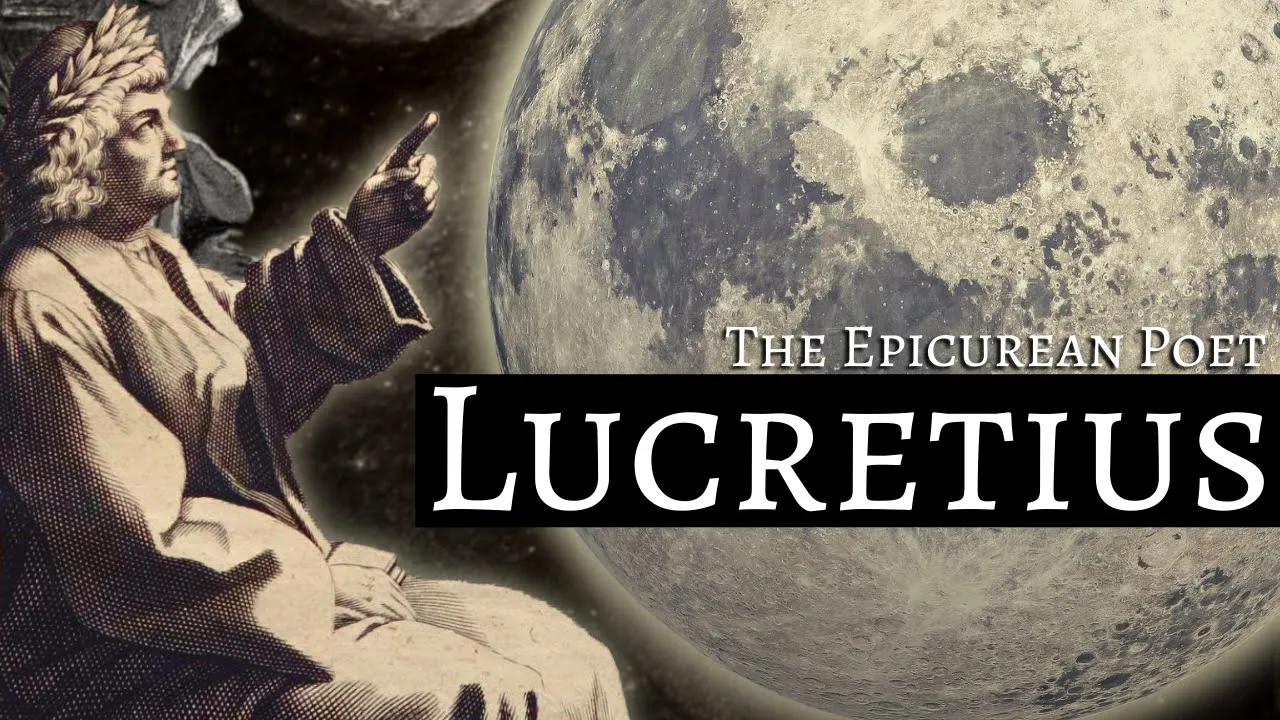
Exploration of Epicurean physics and materialism, particularly through Lucretius' philosophical poem 'De Rerum Natura' (On the Nature of Things).
Analysis of how Stoic philosophy directly influenced modern psychological frameworks, specifically Cognitive Behavioral Therapy (CBT) and Rational Emotive Behavior Therapy (REBT).
A comparative study of how early Christian theology absorbed, adapted, or rejected Stoic ethics and Epicurean metaphysics.
11.9K views229likes4:55Original Release: 2011-10-28
hey unicorns welcome back to University sorry the screen's a little bit crooked but that's how I roll today I'm going to give you a brief rundown on the epicurian and the stoics both of them pretty unknown in today's world which is highly uncool especially because most modern thinkers are in some way Epicurean so epicureanism was founded by epicurist named after him and he was an atomist which believes that golly gee the world is made up of atoms dude they knew this in ancient Greece and it took us forever to figure it back out yeah crazy right epicureans had a four-part cure which was the key to happiness don't fear God don't fear death what is good is easy to get and what is terrible is easy to endure mainly death again now a lot of modern people believe that the world is simply physical and that um you know everything is made up of atoms that's scientifically proven and all of that stuff but um modern people try to escape from the fear of death through technology um we have all sorts of distractions we have medicine and we try to overcome nature but the ancient epicurian would not have agreed with that because um as is the case in the Athenian plague that lucretius who was a Roman epicurian mentioned at the end of his on the nature of things which I highly recommend um Athens in its golden age had all of this wonderful stuff all of this great medicine and it all failed the second this plague hit during a war so the same thing could happen to us all of the computers could shut down Y2K style and we would be screwed so the key is philosophy according to the epicurian epicurian thought that pleasure was a cycle of Pleasure and Pain um they thought that it was all kinetic pleasure like friction in a sense that um felt good at the time like eating too much or whatever but would eventually leave you empty and sad and need to do it all over again so they thought that the best way to achieve happiness was through eliminating all of that which was a catastatic pleasure which is the elimination of kinetic Pleasures to achieve ataraxia which is a peace an inner peace that is the highest form of happiness for the epicurian so it's the exact opposite of what people think they were not a pleasure cult they were an aesthetic cult not aesthetic aesthetic um or AIC shouldn't say AIC that sounds like an acid whatever so yeah very very strict not Aristotle's moderation but a complete withdrawal stoicism was founded by another Greek philosopher epicus not to be confused with epicurus very very different people um although some people credit Zeno or Zeno um depending on how you choose to pronounce it that's weird he didn't um but he was a stoic as well um and stoicism was actually made famous by The Thinker Marcus Aurelius who was Emperor and what's funny about the fact that he was Emperor was that EP epicus yes um was a slave a slave of Nero actually so it kind of had a broad span first thing you learn about stoicism is you should just kind of let go of things that are out of your control and you should only act on things that are within your control and wisdom is knowing the difference sounds a lot like the Serenity Prayer huh some people accuse the stoics of resignation because they seemed to just accept a lot of externals some people also said that they had a love of Fate but none of that's true they actually believed that you know you can't control somebody else's behavior and um like you can't control whether your sports team's going to win or not so you just kind of relax and let what happens happen and that's the best way to live a stress-free life which is actually pretty damn reasonable and it's not incompatible with a variety of other ancient Phil philosophies that you may or may not be familiar with so the stoics were actually a lot cooler than people think they were um especially Marcus Aurelius specifically his meditations fantastic book so yeah Marcus celius also practically invented the vacation so you probably want to um you know give him some props for that so those were just the very very very basics of these two philosophies but I hope it's piqued your interest at least a little bit um The Works of epicurus and epicus are very short especially because we lost a lot of epictetus's work and only rediscovered a lot of it um in herculanum which was destroyed by pom not destroyed by pompe it was destroyed along with Pompei by vvus so if you want to read one of those they're both really short um but the Roman works are actually much much more interesting so I hope that you guys are a little bit more interested in that now and until next time University out
Up Next
86:26
Hellenistic Philosophy: Stoics, Epicureans, Skeptics with A.A. Long
@bi.johnathan
11.8K views•2025-03-28

164:01
John of Damascus on Holy Images: A Theological Defense
@BannedBooks
139 views•2026-04-25

68:32
Should We Destroy the Machines? Big Tech Surveillance Critique
@TheStoriesWeTell303
167.9K views•2025-11-30
4:57
The Myth of Sisyphus: A Greek Legend of Eternal Punishment
@TEDEd
8.6M views•2018-11-13
Related Study Plans & Knowledge Roadmaps
Structured learning paths in Philosophy
philosophy
Frankfurt School: Critical Theory & Culture
01Foundations of the Frankfurt School and Critical Theory
02Horkheimer & Adorno: The Critique of Instrumental Reason
03The Culture Industry and Mass Deception
+ 2 more learning modules
12h5 modules
Explore Roadmap
philosophy
Philosophy of Language: From Frege to Austin
01The Linguistic Turn: An Introduction to Language in Philosophy
02Gottlob Frege: Sense and Reference
03Early Wittgenstein: The Picture Theory of Meaning
+ 3 more learning modules
15h6 modules
Explore Roadmap
philosophy
Feminist Epistemology: Standpoint & Injustice
01Introduction to Epistemology and Feminist Critiques
02Sandra Harding and Standpoint Theory
03Donna Haraway and Situated Knowledges
+ 2 more learning modules
12h5 modules
Explore Roadmap
philosophy
Environmental Philosophy: Ethics & Deep Ecology
01Foundations of Environmental Ethics & Anthropocentrism
02Biocentric Individualism and Animal Liberation
03Ecocentric Holism and Deep Ecology
+ 1 more learning modules
10h4 modules
Explore Roadmap