
















![[English Subtitles] Does God Exist? | Javed Akhtar vs Mufti Shamail Nadwi](https://i.ytimg.com/vi/v_TGxBsH88M/maxresdefault.jpg)




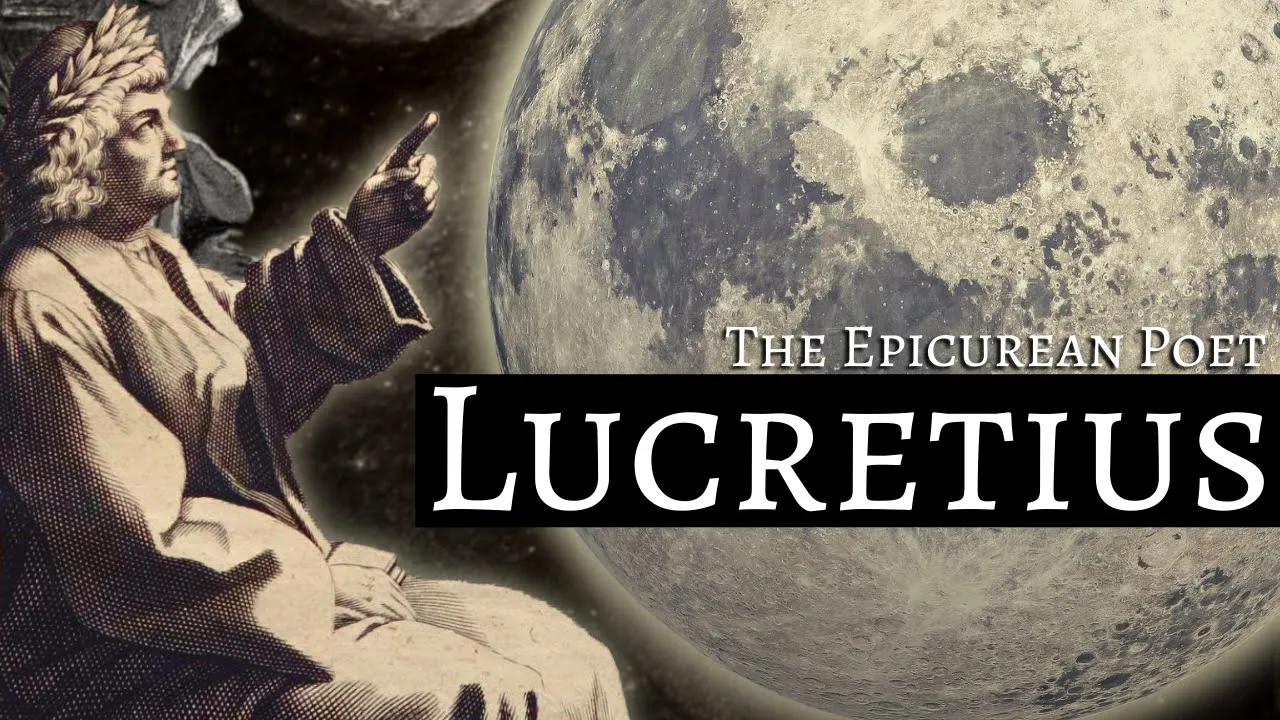




The ancient Greek philosopher Epicurus developed the 'Tetrapharmakos' (four-part remedy) as a cure for unhappiness, consisting of four maxims: (1) God is nothing to fear, since divine beings are unaffected by human affairs and cannot cause suffering; (2) Death is nothing to worry about, as it cannot affect either the living or the dead; (3) The good things in life are easy to acquire, as basic needs like air, water, food, and shelter are readily available from nature; and (4) The terrible things in life are easy to endure, as pain is temporary and we can always choose to end our suffering. Epicurus further categorized desires into natural/necessary (like food and shelter), natural but unnecessary (like luxury items), and hollow/empty desires (like fame, wealth, and power) that lead to more unhappiness than satisfaction. He distinguished between kinetic pleasure (stimulating enjoyment from satisfying needs) and static pleasure (tranquil satisfaction from eliminating pain), arguing that once basic needs are met, additional pleasures provide diminishing returns. By meditating on these principles, individuals can achieve tranquility and reduce anxiety.
Epicurus' Four-Part Remedy for Unhappiness | Philosophy Explained
Added:(intro music) Hi, my name is Monte Johnson.
I teach philosophy at the University of California, San Diego, and today I want to talk about Epicureanism's four-part cure for unhappiness, the Tetrapharmakos.
God is nothing to fear, death is nothing to worry about, it is easy to acquire the good things in life, and it is easy to endure the terrible things.
These four maxims are the first four capital doctrines of Epicureanism, collectively known as the "Tetrapharmakos."
"Tetrapharmakos" literally means "four-part remedy," or "cure."
The term originally referred to a medical concoction of four drugs, but the Epicureans mean by it the encapsulation of their philosophy in a formula of four easily digestible maxims that one can meditate on in order to relieve anxiety, much like modern cognitive behavioral therapy.
As Epicurus says, "Meditate on these ideas day and night, "and the ones related to them, both alone and with "someone like yourself, and you will never be badly "disturbed, whether awake or dreaming."
In order to see how the maxims might contribute to our tranquility, let's briefly expand on each part of the tetrapharmakos.
First, God is not to be feared.
Traditional religion presents us with terrifying visions of superpowerful gods, such as Zeus with his thunderbolts, or Poseidon who, with a rattle of his trident, can cause earthquakes and storms.
The perceived need to mollify such gods with sacrifices is the source of much distress, worry, and expense, and has had terrible consequences.
But for both scientific and theological reasons, the divine should not be thought to be the cause of natural disasters.
Epicurus, in his treatise on nature, gave a comprehensive account of the universe and its origin, including living things and human beings.
This account removed from natural philosophy the need for any appeal to God as a creator or maintainer or end of nature and natural phenomena.
Epicurus says that if we consider God to be an invulnerable and happy living thing, then God must be completely unbothered and unworried by human affairs, and unaffected by either anger or pity, which are kinds of suffering incompatible with divine perfection.
It is, in fact, impious, according to Epicurus, to represent God as inflicting punishment on human beings, whether through natural disasters or in the afterlife, and it is unholy to sacrifice human goods as if we could possibly influence or benefit a god.
Second, death is nothing to be worried about.
In connection with the first maxim, there is no need to worry that God will punish you after death.
Furthermore, our natural science tells us that when our body breaks down, the living thing ceases to exist.
There is no immaterial soul that can be tormented or rewarded in the afterlife.
Death is nothing to us, for it can affect neither the living nor the dead.
It cannot affect you when you're living, because then you're not dead yet, and it cannot affect you when you're dead, because then you don't exist anymore.
The ancient fear of dwelling for eternity in the darkness of subterranean Hades is baseless, as is the medieval worry about being tortured in Hell.
As for lamenting the loss of everything you could have experienced had you died later, you need not worry about that any more than you worry about everything you could have experienced in the time before you were born.
The time before you were born and the time after you die are equal, but there is no more reason to regret that you will not be alive in the distant future than there is to regret that you were not alive in the distant past.
In fact, it is comforting to realize that everything in life is limited, and that beyond a certain point, all striving and suffering necessarily ends.
And once one removes the fear of death and longing for more life, almost all other fears disappear, and we become free to enjoy the lifetime we have.
This brings us to the third maxim of tetrapharmakos: the good things in life are easy to acquire.
When we consider the things we want, it is comforting to realize that our true needs are limited and fairly easily available from nature, and that the things that are difficult to obtain, we just don't need.
Air is available for our breath, water for our thirst, fire for warmth, and earth for ground to stand on.
The minerals, plants, and animals supply our needs for shelter and sustenance.
There are plenty of people around to become our friends.
When we realize that we have enough, not just to survive, but to alleviate most of our pain, we necessarily become relieved and tranquil.
True relaxation and happiness becomes possible.
We can focus not only on survival, but on a deeper, more aesthetic appreciation of the universe that seeks to understand the nature of things, not only to provide what we need and to eliminate our fears about the divine and about death, but simply to be amazed at its beauty and sublimity.
Epicurus describes this state as "god-like" because when we are in it, we are invulnerable, happy creatures who do not fear nature, but take delight in it.
Now, if the idea that the good things in life are easily available seems doubtful to you, consider Epicurus's three-fold division of desires into those that are natural and necessary, like our desires for air, water, food, or shelter; those that are natural but not necessary, like our desires for expensive food and drink, mansions, or sex; and those that are neither natural nor necessary, which Epicurus calls "hollow," or "empty."
Desires for fame, riches, glory, political power, and immortality, common though they are, are all hollow.
Their pursuit causes more unhappiness than happiness, not only because they are difficult or impossible to achieve, and so efforts in this direction are futile and frustrating, but also because they are unlimited.
Not being related to any natural need, there is no amount of wealth, influence, or life extension that will satisfy us and allow us to live a relaxed, tranquil life.
Ease of living comes by appreciating just how little we need to be happy or flourish, and how abundant nature seems to be in supplying our needs.
All of our pleasures boil down to just two kinds.
On the one hand, there is the pleasant, agreeable, sweet stimulation that Epicurus calls "kinetic pleasure," and on the other hand, the tranquil, satisfied, self-sufficient, and self-assured state that comes when all pain is relieved, which Epicurus calls "static pleasure."
Both kinds are good, but both are naturally limited.
The most intense kinetic pleasures come from satisfying our natural needs.
Thus, drinking when we're thirsty, eating when we're hungry, warming up when we're cold.
Once these natural and necessary desires are satisfied, we reach the more stable condition of static pleasure.
At this point we cannot increase our pleasure any more, but can only vary it.
I can have either chocolate or vanilla ice cream, or I can have both, but beyond a certain point, eating ice cream will not be any more enjoyable for me, nor will eating any other food.
When one is very thirsty, simple water is what one most desires, and simple foods when one is most hungry.
Accustoming oneself to enjoying simpler pleasures makes the enjoyment of luxuries all that much more enjoyable when windfalls happen to come along.
That is why Epicurus, who practically lived on bread and water, asked to be brought a pot of cheese every once in a while, so that he could, as he put it, "indulge."
This is the character of the hedonistic philosopher who devoted his life to pleasure.
Epicurus does not need to go to the trouble of always having a pot of cheese with every meal, and as a general rule, one is better off eliminating a desire, rather than working too hard to satisfy it.
In fact, it is often necessary to forgo one pleasure in order to enjoy a greater pleasure later, just as it is often necessary to undergo some pain in order to avoid a greater pain later.
That brings us to the fourth and final maxim of the tetrapharmakos: the terrible things in life are easy to endure.
Acute pain, although sharp, is short.
Chronic pain, although long-lasting, is dull.
If pain ever becomes too intense for too long, there's always the option of ending life, at which point no harm can come to us whatsoever.
Once again, we should appreciate and be relieved at how the limits of nature have benefited us, and we should derive tranquility from this.
And when this appreciation takes an intellectual form of research and philosophical discussion, it offers rewards that more than offset and compensate for life's annoyances, pains, and sorrows.
Even though Epicurus was suffering from painful kidney stones at the end of his life, he wrote to his friend Idomeneus, "These pains I have offset with the joy "I feel when I recall our philosophical conversations."
Subtitles by the Amara.org community
Up Next

Epicurus and the Art of Happiness: Ancient Philosophy for Modern Anxiety
@conwayhall
4.3K views•2021-05-05

John of Damascus on Holy Images: A Theological Defense
@BannedBooks
139 views•2026-04-25
Prisoner's Dilemma Explained | Rational Choice Theory
@WirelessPhilosophy
279.1K views•2015-07-03
The Myth of Sisyphus: A Greek Legend of Eternal Punishment
@TEDEd
8.6M views•2018-11-13
Related Study Plans & Knowledge Roadmaps
Structured learning paths in Philosophy