










Free will exists according to an event-causal libertarian theory, which holds that our decisions are not causally determined by past events but can still be rationally explained by the reasons we choose to act upon; this theory accommodates both the 'could have done otherwise' and 'source' conceptions of free will by distinguishing between the rational explanation provided by chosen reasons and the non-rational choice aspect of decisions themselves, thereby resolving the apparent tension between determinism and free will.
Free Will Explained: A Philosophical Defense Against Determinism
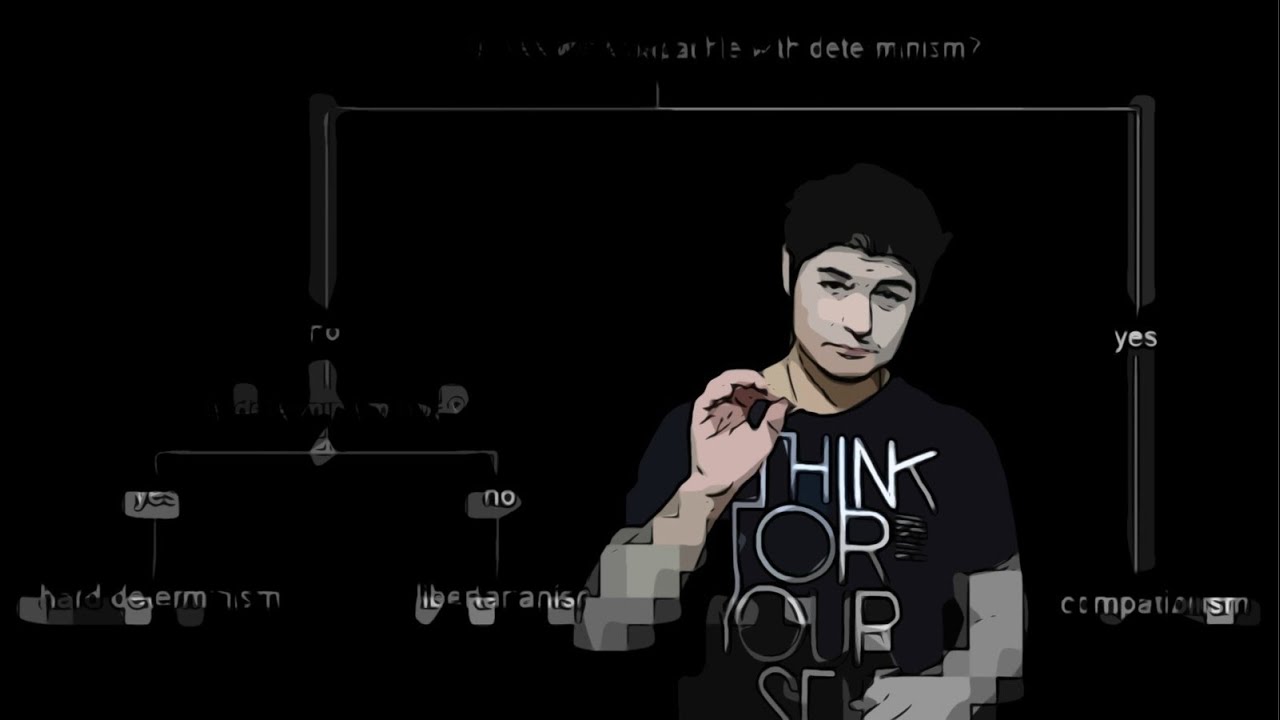
Added:Understanding the core definition of Hard Determinism: The philosophical view that all events, including human actions, are ultimately determined by causes external to the will.
Familiarity with the Free Will Taxonomy: Distinguishing between Compatibilism (the belief that free will and determinism are mutually compatible) and Incompatibilism (the belief that they are irreconcilable).
Basic knowledge of Libertarianism in philosophy: The metaphysical position that humans possess free will, that determinism is false, and that agents have the power to choose otherwise.
Awareness of modern skeptical arguments against free will: Familiarity with the deterministic arguments often presented in contemporary philosophy and public debate, such as those by Alex O'Connor (CosmicSkeptic) regarding the impossibility of ultimate moral responsibility.
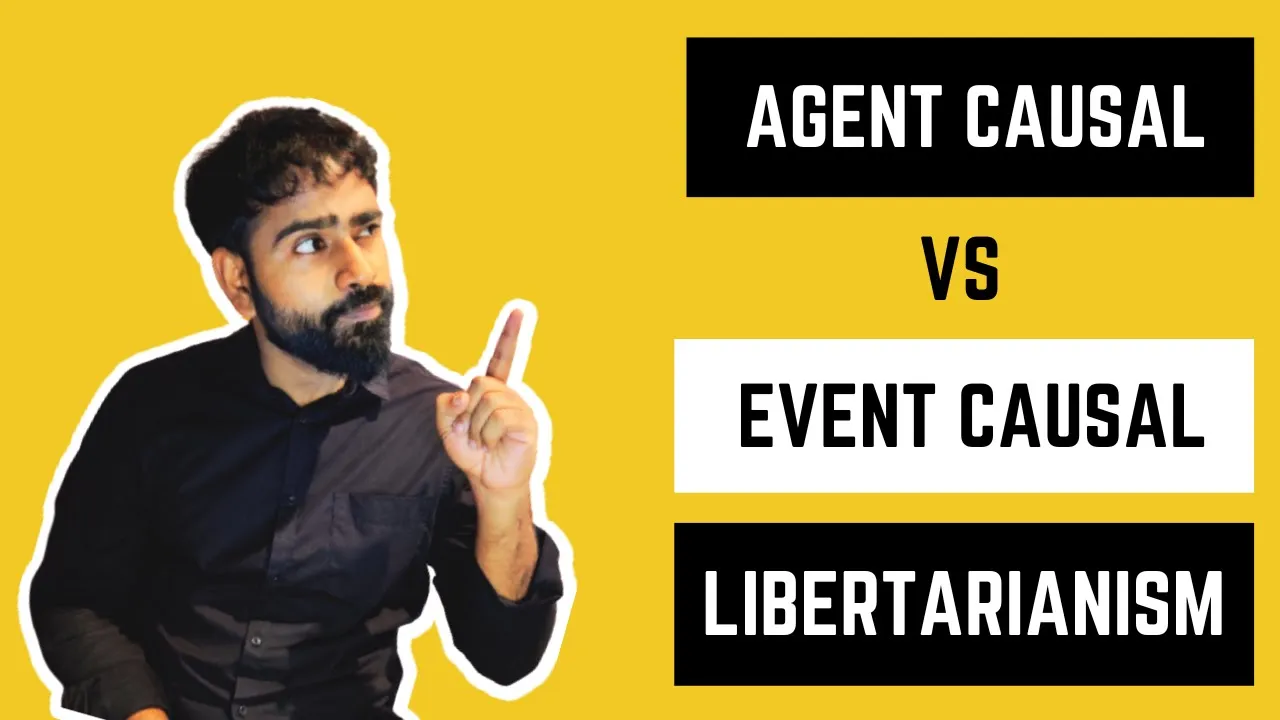
In-depth analysis of Event-Causal Libertarianism: Exploring how indeterminism at the level of neural events can allow for free choices without reducing actions to mere random chance (e.g., Robert Kane's 'Self-Forming Actions').
Comparison with Agent-Causal Libertarianism: Investigating alternative libertarian models where the agent as a substance, rather than preceding mental events, initiates new causal chains.
Implications for Moral Responsibility and Criminal Justice: Evaluating how accepting an event-causal libertarian view alters or justifies concepts of praise, blame, punishment, and rehabilitation in the legal system.
The intersection of Quantum Mechanics and Metaphysics: Exploring whether physical indeterminism at the quantum level provides a plausible scientific basis for philosophical theories of free will.
120.1K views3.9Klikes59:56Original Release: 2024-07-08
if you type do I have free will into YouTube You'll Be confronted by a wall of videos telling you the answer is no judging by this you'd be forgiven for thinking the matter was settled but in 2020 when a survey asked thousands of academic philosophers what they thought only 11.2% thought we didn't have free will so I thought I'd put out my own video on YouTube making the case for having free will to balance the scales a little bit now to do this properly I'm going to need to look at related topics too like causation natural laws determinism and so forth and I'm also going to need to put forward my own positive theory of free will to help me make my case and to tie this argument in with a great YouTube conversation I thought I'd argue by critiquing the views of the popular Alex o Conor AKA Cosmic skeptic about 7 years ago OK Conor released a video arguing we don't have free will a few years later he Revisited the topic and then recently he had an argument about Free Will with Ben Shapiro right let's go standardly there are two conceptions of Free Will philosophers use number one the could have done otherwise conception and number two the sorcer conception under the could have done otherwise conception what's relevant to Free Will is the possibility of having done something other than you did so if you did something freely then you could have done something else instead if you couldn't have done something else instead then you weren't acting freely under the sourced conception what's important is that the source of your actions is something we could call you or yours perhaps you couldn't have done otherwise but that doesn't matter as long as the source of Your Action comes from yourself to see that these two conceptions are different consider a coin toss suppose the coin lands heads well the coin could have landed Tails so it could have done otherwise but that doesn't mean that the coin was the source of its Landing heads the source of its Landing heads seems to be something to do with the way it was tossed or the manner of its bounce so it wasn't the source of the action even though it could have done otherwise similarly it's possible that you could be the source of Your Action without having been able to do otherwise for example consider a compulsive philosophy viewer whenever they watch a well explained and philosophically deep video on YouTube they just can't help but click like And subscribe to the channel in such a case it would be fair to say this person was the source of their action even though they couldn't have done otherwise now most philosophers think only one or other of these conceptions are required for free will but some philosophers think that both conceptions are required the important question for us at the moment is what does Alex o' Conor think well fortunately he defines what he takes to be free will at the start of his first video now the first issue that we have to face is of course the definition of Free Will for E's sake I'll go with the most succinct and least controversial definition that I've been able to come up with which is this Free Will is the ability to have acted differently what I mean by this is that if we were to wind back the clock in any situation it was completely within the realm of possibility for you to have acted differently to the way that you actually did the idea is that you are in control of your actions and any decisions that you make are determined only by your own conscious self in the clip okona says he's going to take the could have done otherwise conception of Free Will which he correctly says requires the possibility for alternative action but then he confusingly goes on and starts to talk about you being in control of your actions and your actions have to come from your own conscious self but this second idea goes beyond the idea of could have done otherwise and includes the sourced conception so Alex o Conor defines Free Will as requiring both the sourced and the could have done otherwise conception so okon sets an extremely high bar for free will at the outset by doing so he dismisses vast SES of Free Will theories by definition so he should be upfront that the only kind of free will oconor would accept is a very strong kind indeed that said the kind of Free Will O Conor accepts is the kind of free will I intend to defend because in my opinion like oconor we need both conceptions in order to have free will I think the could have done otherwise conception is required by the free bit of free will and that the sourced conception is required by the will bit of free will so with definitions explain explained and agreed let's go on to a Conor's first argument consider this most simple of choices chocolate or vanilla what would make me choose vanilla over chocolate well there is only one possible answer which I'll elaborate on shortly I would need to want it more than chocolate in order to choose vanilla I'd need to want vanilla but is this something I can control can I control what it is that I want not a chance I just want chocolate more than vanilla that's just a fact about myself that I can't change the key takeaway is this you cannot determine your wants think of something you want try to not want it think of something you don't want and try to want it it's not possible and even if it were in order to change a don't want into a want you'd need to want to want it and vice versa to change a want into a don't want you'd need to want to not want it you simply can't control what you want there are two reasons you will ever do anything because you want to or because you're forced to of course if you're forced to do something then you're definitely not acting freely and nobody would deny that so that just leaves your wants but well we've already concluded that you can't control your wants so actions motivated by wants aren't really free either so being forced to do something isn't Free Will and wanting to do something isn't free will but being forced or wanting to do something are the only reasons why you do any anything hence Free Will is conclusively an illusion okon's argument takes the form of a dilemma and it can be understood as follows premise one everything you do is either because you are forced to or because you wanted to premise two if you did it because you were forced to do it you were not acting freely premise three if you did it because you wanted to do it you could only have acted freely if you could control your wants premise four you cannot control your wants conclusion you have no free will the argument seems valid so I'm going to be attacking the premises and for the sake of limiting this discussion I'm going to accept premise two and four so I'm going to accept that you can't control your wants and that if you did something because you're forced to you didn't act freely but I'm going to be criticizing premise one and premise 3 let's start with the idea that all our nonforced actions can be explained by our wants well this idea is too simplistic suppose you were partway through a game of chess and you're considering whether to move your knight or to move your bishop and let's suppose you chose to move your knight what explains that action presumably if OK Conor is right the reason you moved the Knight is because you wanted to move it but did you it's not like you had some emotional attachment towards moving the Knight that you didn't have towards moving the bishop the reason you moved the Knight was not an emotional one but an intellectual one a better explanation is to say that what you wanted was to win the game and that you thought that moving the Knight was better suited to winning the game than moving the bishop in other words your decision was based in a process of deliberation a decision about what was more conducive to your wants your wants were involved in that process since they set the goal of the action but the wants by themselves are not sufficient to explain what you did an explanation in terms of wants can provide what philosophers call a simple explanation simple explanations place event within a context that enables us to rationally make sense of that action for example if anyone were to ask why did you move the night you can say I moved the night because I wanted to win the game but an explanation solely in terms of wants fails to provide what philosophers call a contrastive explanation a contrastive explanation explains why it was you did that thing rather than another thing in this case a contrast of explanation will have to say why you move the night in instead of moving the bishop and simply saying that you did it because you wanted to win the game isn't enough what you need to do is add something to the explanation in terms of wants perhaps the belief that by moving the Knight you are more likely to win the game than by moving the bishop now since OK Conor is trying to say that actions based on wants mean that we couldn't have done otherwise and aren't free he needs wants to provide a contrastive explanation for what we do and not simply a simple explanation because simple explanations are are not good enough to rule out alternative possibilities so here's one reason to doubt OK Conor's argument if our actions involve both decision-making processes and wants we might have a limited kind of Freedom as long as the decisions can be under our control then we could be free to do different things that are constrained by our wants perhaps we're not free to want to lose the game but we are free to move the Knight or the bishop basically the chess example shows that premise three of okon's argument isn't true this premise implies that any action motivated by wants can't be free unless we can control our wants but in the chess example we didn't control our wants we just wanted to win the game but we could have moved the Knight or the bishop since there were two options to us we could have done otherwise also the source of that action was our decision to move the Knight so according to our definition this action was freely willed and we didn't need to control our wants to do so but actually I think it's worse for ok Conor's argument than this because premise one isn't true either according to premise one any action that's not forced must be motivated by our wants but we often give explanations for what we do that don't depend on wants and sometimes we explain things that we do that we say we don't want to do now according to OK Conor when it seems on the surface that we're doing something we don't want to do that's because we're really motivated by a stronger want here's what he says later on in the argument you will only ever do any anything in your entire life because you either want to or are forced to that's it no exceptions consider exercise consider going to the gym most people don't want to go to the gym but they do it anyway surely this is an example of someone doing something freely and not because they want to or because they're forced to not really because there has to be a reason for going to the gym and for most people and for Aran it's something like to stay healthy to stay in shape to live longer what whatever it may be so we have to ask again the same fundamental question why is the desire to stay healthy stronger than the desire to go to the gym it just is or maybe it isn't and some people stay at home and eat junk food instead for these people why is the desire to sit around or to eat junk food stronger than the desire to be healthy it just is so even when you don't want to do something but you do it anyway this is only ever because of a stronger and equally uncontrollable desire to do something that requires you to do it in other words all of your actions really are controlled by your wants in the gym case he mentions the person who goes to the gym doesn't want to go to the gym so this seems like a case of somebody doing something they don't want to do but okona says that this must be because they have a stronger want the wants to get healthy that overrides the dislike of going to the gym and makes them go anyway and since we're not in control of the relative strengths of our wants we're not in control control of our actions but notice the justification okona gives for saying there's always a stronger desire in the background he says that if someone goes to the gym they must be going for a reason and that reason is to stay healthy but then he switches talking about this being a reason to go to the gym and calls it a desire to go to the gym now maybe in the gym case the reason the person has for going to the gym could be called a desire to get healthy but in other cases those reasons are not desires at all suppose a friend of yours decides to enlist in the Army to fight and what they think of is a just War they say they don't want to fight but they've decided to enlist anyway because it is their Duty according to OK Conor that must be because there is a stronger desire in the background perhaps their desire to do their duty is just stronger than their dislike of fighting but I think such a conclusion is just mere Prejudice it would be perfectly reasonable for your friend to say that no they don't want to do their duty at all the only reason they're doing it is because it is their Duty in other words the explanation they give for their action is one that appeals to duties and not to wants this example brings up the idea that there can be a variety of reasons for our actions some of those reasons will be reasons for doing whatever it is we end up doing some will be reasons for not doing it and some will be reasons for doing something else entirely and these reasons can be all sorts there can be desires and wants but there can also be moral conviction I religious convictions true beliefs false beliefs relationships with people involved and a whole host of other factors and it seems almost certain that some of the things we do we do not because we want to but we do it for other reasons the question of free will then comes down to whether or not we can have control over the reasons for which we do things and in my opinion yes we can when we deliberate about action we consider all the various reasons we have for doing something or for not doing it and then we choose to act based on some of those reasons now saying this is all well and good but how does this process work and how does this provide an explanation for our decisions well to answer these important questions I'm going to need to put forward my own free will Theory and it's this theory that I'm going to defend against objections in later sections to provide a full theory of how this process works would actually get quite Technical and we go beyond the scope of this video but fortunately there are two excellent articles on how this process of deciding for reasons works one by Robert Kane and the other by Donald Davidson and I've linked them in the description for now I'll just outline my theory and how it differs from the ones I've just mentioned my account of Free Will falls into the category of being an event causal libertarian Theory the event causal bit means that I think causation is something that holds between events and the libertarian theory of it means that I think our decisions which are events were not causally determined by events in the past so then my free will account rejects a view called causal determinism which basically says that every event has been caused by some event in the past now the supposed clash between Free Will and causal determinism is an absolutely huge topic within the Free Will debate and I'm going to be looking at it in a detailed way in the following sections but first i'm interested in accounting for two other features of Free Will number one the fact that our decisions to act could have been otherwise and number two the fact that our decisions to act can be rationally explained to do this let's pick a simple example suppose I have a decision to make say about whether to go on holiday to Spain or to Italy I consider the reasons I have for going to Spain perhaps for the beaches and architecture I also consider the reasons I have for going to Italy perhaps for the wine and historic sites at some point I decide to act and I do so by choosing to act upon certain reasons and the reasons I choose become the reasons for that decision if I decide to go to Spain then I decide to go to Spain because of the beaches in architecture if I decide to go to Italy then I decide to go to Italy because of the wine and historic sites so then my decision to act has two aspects to it the reasons that I choose and the choice of those reasons the reasons I choose provide the motivational or simple explanation for my decision whichever it is one that locates that decision within a context in which it rationally fits for example suppose I decide to go to Spain in reply to the question why did you you decide to go to Spain I can respond by saying because of Spain's Beach is in architecture but the reasons alone can't provide a contrast of explanation for my decision for that I must emphasize the decision's choice aspect for example in reply to the question why did you go to Spain rather than Italy I can respond by saying because I chose Spain's beaches and architecture over Italy's wine and historic sites so then the choice and reasons can together provide both a simple and contrastive expl explanation of my decision and in both cases the explanation resides entirely within the decision itself as two aspects of it the decision is therefore rational and self-explaining note that the choice of the reasons is not some act that precedes the decision rather it is the non-rational aspect of the decision act itself the aspect that constitutes pure will the rationality of the decision is provided by the reasons for that decision I.E the reasons chosen which are not the same as reasons for that choice there are no reasons for the choice as it is not an act the account I've just provided accommodates both features of free will I set out to explain number one as long as you had reasons to do otherwise you could have decided to do otherwise by choosing those reasons and number two your decision can be simply and contrastively explained by the reasons chosen finally by providing an account of free will that locates the ultimate source of action in your decision to act the sourced conception of Free Will is accommodated too one final thing to note this account doesn't mean that all our decisions to act are cases of free will consider for example the ice cream case okon mentioned if you were presented with a choice between vanilla and chocolate ice cream it may well be that you simply have no reason to choose vanilla in which case since all the reasons available to choose would result in a decision to eat chocolate you cannot decide otherwise and it's not not a free decision and with my own free will account explained it's time to defend it so then since I defend Free Will what about the big problem the issue of determinism well here's OK Conor to explain what the problem is determinism is largely a product of the rise of the scientific method and the belief that the Universe operates in accordance with laws of cause and effect that every event in the universe has some sufficient explanation for why it happened that is some preceding cause that necessitated it if everything in the universe is determined by laws in this way then so is every event that happens in your brain If determinism is true then everything that happens in the universe is the result of some previous chain of causation dating back to the beginning of time right every thought in your brain is determined by something prior to it as is whatever determined that as is whatever determined that and so on and so on if you do think determinism is true then you've kissed goodbye to Free Will so this clash between determinism and Free Will leads to the problem how do we Square these well some do so simply by denying either determinism or free will okay so some people deny that determinism is true and say that Human Action is free perhaps through some method of causation that we don't fully understand others including myself do the opposite affirming determinism and denying that Free Will exists as okon notes one way to maintain Free Will is to deny causal determinism and since I have argued that our decisions are not causally determined by events in the past I certainly do reject the kind of causal determinism he presents but I still leave room for noncausal determinism so I first need to explain what the difference between causal determinism and non-causal determinism is and then I'm going to justify why it's non-causal determinism that's important to free will I'll explain this by critiquing two other points that are Conor made in this clip the first was the idea that causal determinism is related to the scientific method and the second is the idea that causal determinism means that you couldn't have done otherwise with those two explained I'll take a closer look at the determinism argument okona gives based on the work of Peter van invagen and after that I'll look at his debate with Ben Shapiro let's start by looking at this first idea that causal determinism finds support from the scientific method and by scientific method here is meant physics if causal determinism can be hitched up to the power of physics at explaining the world there can be great pressure on philosophers to Simply accept it but the idea that the laws of physics describe cause and effect relations has been severely questioned for over a hundred years for example in 1912 Bertrand Russell wrote a paper called on the notion of cause in it he colorfully notes all philosophers of every school imagine that causation is one of the fundamental axioms or postulates of science yet oddly enough in advanced Sciences such as gravitational astronomy the word cause never occurs the law of causality I believe like much that passes muster among philosophers is a relic of a bygone age surviving like the monarchy only because it is erroneously supposed to do no harm the point Russell makes in this paper is that mature physics gave up on causal explanation long ago causal reasoning he says is just too vague and sensitive to the way in which events are described and it can't live up to its ideal of describing causes that necessitate their effects as physics sorted exactitude it abandoned causal explanation in favor of the precise language of mathematics but mathematics isn't causal it explains things in terms of functions and arguments a formula provides a way to calculate one variable in terms of other variables which it treats as arguments so if you give values to the argument variables the formula allows you to calculate the other variable but there's no implication in this process that the argument variables cause the the other variable calculated for a start sometimes we want to calculate one variable and sometimes calculate another the difference here is about what we know or what we measure not about what causes what for example let's take a simple law of Newtonian physics that Force equals mass time acceleration what this law tells you is that the force on an object will always be equal to the mass of the object multiplied by its acceleration but this in no way suggests that the force causes the acceleration any more than it suggests the acceleration causes the force the formula itself merely says that the quantities on the left hand side of the equal sign are identical to the quantities on the right hand side now we might use a law like this in a rough sense to explain why objects fall to the ground by saying something like a gravitational force causes them to accelerate downwards but such talk is loose and not part of physics proper in physics proper causation is out of place here's why causation as a concept requires the priority of cause over effect the effect is meant to depend on the cause in a way that the cause is not meant to depend on the effect in addition there must be a movement from cause to effect that takes place over time now time does appear as a variable in some physical formula but only ever as a lapse or period not as something absolute like Mass so time only ever represents a change in time for example the acceleration variable in FAL ma is identical to the rate of change of velocity over the rate of change of time by using calculus on these formula You can predict from a given state of an isolated system to other states of that system over a given period of time but what you can't do is look at your watch note the time and plug that directly into the equations to find out what's going on and that's because time is never an absolute variable in physics for example if you take a model with perfectly elastic Billard balls on a frictionless plane in a vacuum then given some state of the system you can use differential equations to calculate the location of any of those balls at any point in the future is this capacity for physics to predict future states of a system that lends weight to the idea that physics supports causal determination but here's the kicker those same formula can be used to predict what the states of that system were like before that given time as well so there's no forward predicting element to physics that isn't also a backwards predicting element at the same time in fact physicists use these laws and run them backwards to make predictions about what the universe was like in the distant past in other words the formula of Newtonian physics has no time asymmetry so they can't support the idea of causes necessitating their effects without effects necessitating their causes these formula merely connect states of the universe at all times to each other and give you a way to mathematically calculate what the state of the universe would be like at one time based on the state of the universe at another this kind of mathematical determinism is fully compatible with free will even the strong kind of free will that I defend I have said that our decisions are not causally determined by anything that came before them but whether they are mathematically determinable from other states of the universe is a question I'm happy to leave open although I only say that mathematical determinism is a metaphysical possibility not an epistemic one by this I mean that I don't think it's possible for us to have a complete set of laws that we could use to predict the future states of the universe if we could then a paradox would arise more details in that Paradox can be found in a video Linked In the description but as a metaphysical thesis as Russell acknowledges mathematical determinism has nothing to say about free will it's no more true to say the past states of the universe determine what you do than to say that what you do determines the past states of the universe it's a kind of determinism that is atemporal and thus irrelevant more on that later now before moving on it should be said that although Russell is operating within the Paradigm of Newtonian physics there are many very eminent contemporary philosophers that continue to make the same points about our current physics so Russell's point is very much alive and well the second idea from OK Conor's video that I'd like to criticize is the idea that determinism by natural laws means that you couldn't have done otherwise it doesn't at least not in any meaningful non-trivial sense the reasons for this come down to two considerations number one the nature of natural laws and number two the way we should analyze could have done otherwise claims first to laws what kind of thing is a natural law well there are three General conceptions about what a natural law might be supervenience conceptions governing conceptions and anti-realist conceptions the supervenience conception of laws traces its roots back to David Hume and so is sometimes called the humean conception of laws according to this view first there is the world and all the events that occur within it and then there are laws that describe patterns in those events that actually occur according to this View laws don't necessitate or compel anything they simply emerge from the course of events that actually happens so the humean understanding takes an Events first Law's second kind of approach first there are particular and local facts and the generalization to laws occurs as a result of them a second conception of natural laws is a governing conception according to this view laws are real entities of some sort such that they enforce their restrictions upon what is physically possible in the world whereas a supervenience conception takes an event first law second kind of approach the governing conception says that first come the laws and that these laws dictate to the world how it can actually occur so a governing conception takes a laws first events second kind of view a third conception of natural laws is an anti-realist conception according to this view laws don't exist out there at all either as patterns in events that occur nor as governing entities that enforce themselves upon the world rather they see laws as being generalized claims that help us make beliefs about what we think will occur or as explanations for what happens in other words they see laws as practical and useful tools for our thinking and explanation so then there are three ways in which we might conceive natural laws and if there is a clash to be had between natural laws and Free Will It could only be under the governing conception of laws because it's only this conception that grants laws the ability to restrict what's possible now going back to that survey I mentioned at the beginning of this video philosophers were asked what their view was and only about 50% of them took the governing conception in which case we should be a little bit careful about throwing out free will altogether when only about 50% of people think laws are the kind of thing that could prevent us from having free will but let's suppose we do go with the governing conception of laws how are would that affect what we could or couldn't otherwise do well it's not clear if you have the governing conception of laws then you need some explanation of how it is that they enforce themselves upon the world you can't say that they merely describe what actually occurs because that would be the supervenience conception so you need some explanation of how it is that they manage to regulate what happens one popular way to proceed is to see these governing laws as counterfactual truths what they do is tell you what would have happened happened in non-actual circumstances in other words they tell you what would have been enforced had things been otherwise let's go back to our FAL ma example if there were a 2 kilogram object that was accelerating at 5 m/s squared then it had a force of 10 newtons on it but if all the law did was to tell you that then it would be no different to a humean law merely describing what actually occurred but saying nothing more in order for this law to also be governing it would have to tell what would have happened had the circumstances been different for example it would tell you that if that 2 kg object had actually been accelerating at 3 m/s squared then it would have been acted on by a force of 6 Newtons no more no less note that this is a restriction placed by the governing law on what could have been otherwise it says that it wouldn't have been possible for this 2 kg object to have been accelerating at 3 m/s squared and yet only have been acted on by a force of two Newtons but it says it would have been possible for this 2 gilg object to have been accelerating at 10 m/s squared as long as it had been acted on by a force of 20 newtons so under this conception the natural laws govern the World by restricting what could otherwise have been the case so these governing laws require there to have been other possibilities and also require those other possibilities to nevertheless conform to the laws now reasoning about what would otherwise have been the case while keeping the laws fixed is something that we do all the time if I say the wine glass would have broken if I had not caught it then I'm saying that had things been otherwise the laws of physics would have ensured that my glass would have broken also many of the laws of physics are themselves things that would only occur in other circumstances for example we have laws of Ideal gases even though we know there are no ideal gases what these laws tell you is what would OCC Ur if there were an ideal gas in those same circumstances but then what does this have to do with free will if we take the natural laws to be governing all that means is that the way the world could have been must conform to those laws but that places a pretty minimal restriction on what it is that I could have otherwise done sure it means I can't go to Spain faster than the speed of light but it does mean I could go pretty much anywhere given enough time even to Saturn to cause a problem for free will then we need to do more than hold the natural laws fixed we also need to hold various other facts fixed such that we couldn't have done anything other than we did but here's the problem in all cases of evaluating what could otherwise have been the facts that we hold fixed are those that are relevant and relative to the question we're asking for example if I were to ask a friend whether I could have played for the All Blacks anyone who knew my stature would say no I couldn't and that's because when we typically ask questions like this things like our physical features are facts held fixed when we evaluate what could otherwise have been but I might protest that I could have been given growth hormones as a child and worked out continuously or I could have been a billionaire and paid the right people so much money that they let me play in an unmeaning friendly in other words I could protest that the facts held fixed shouldn't include things like my physical stature or current wealth and maybe under those circumstances I could have played for the All Blacks the the point here is that when you evaluate what could have otherwise been what you do is you hold certain relevant facts to the circumstances fixed and then perform a fair evaluation on what would be possible now in my own free will Theory I said what I thought those relevant facts were they were the reasons the agent has for that decision if we hold those reasons fixed and presumably the laws of physics as well if nevertheless they could have acted otherwise then it's fair to say that they could could have acted otherwise not only is this proposal reasonable when we're thinking about free will there's also a literature and developmental psychology to back it up when a four-year-old thinks about what it is they can do they only believe they can act impulsively on their desires it's not until they get to about six that they realize there might be other reasons for what they do and that they don't always have to follow what their desires push them towards and at the same time it's around this age that they begin to develop the concept of having free will so there are good reasons to think that Free Will is linked to our capacity to recognize our own ability to do otherwise given those same psychological features but this of course isn't the route that those who argue against free will take they say we need to hold the governing laws fixed and also facts about the complete state of the universe at some point in the distant past and then they say that given those circumstances could you have done otherwise I think this approach is question begging ad hoc and an unfair way to appraise what could otherwise have been but arguments like this have for a long time being a big part of the Free Will landscape so I better take a detailed look at them here for example is the argument by Peter Van invagen that okon presents let me demonstrate this problem a bit further by using the terminology of the philosopher Peter Van inwagen who in his essay the powers of rational beings freedom of the will defines two types of facts the first he he describes as such there are certain facts that no human being can do anything about and that no human being in history could ever have done anything about among these are the fact that the Earth is round the fact that magnets attract iron the fact that there were once dinosaurs and the fact that 3117 is a prime number even those who believe in free will will obviously accept that some such facts exist right facts over which we have absolutely no control now van inwagen calls these Untouchable facts since there's absolutely nothing we can do to affect their truth now to believe in Free Will is not to say that we have control over everything of course just that there are some things that we have control over that is there are some facts that aren't untouchable right things like deciding to drive your car and we might call any fact that you do get to control a touchable fact so if Free Will exists there are some touchable facts facts over which you do have control distinct from Untouchable facts like the fact that the Earth is Globe it's as simple as that Free Will is just the existence of some at least some touchable facts so here's the problem van inwagen introduces a logical principle which goes as follows if p is an Untouchable fact and Q follows from P then Q is also an Untouchable fact that is to say if there is some State of Affairs some fact over which you have no control which we'll call P and if it's also true that if P then Q then since the cause of Q is Untouchable Q is itself Untouchable you didn't cause it you couldn't stop it Untouchable for example let's say that P is the state of the universe 5 billion years ago clearly an Untouchable fact and let's say that Q is the formation of the earth if the formation of the earth follows necessarily from the state of the universe 5 billion years ago then since the first fact is Untouchable so is the second now determinism is simply the belief that for every state of affairs cu there is some preceding State of Affairs P which brought about Q by causal necessity so the fact that I'm currently saying these words was brought about by some previous cause itself brought about by some previous cause and so on and so on until we get to say the state of the universe 5 billion years ago right and using van in wagon's principle we can see that every single step along the chain of causation from the state of the universe 5 billion years ago all the way up until now is an Untouchable fact since whatever follows from the state of the universe 5 billion years ago is also Untouchable meaning that whatever follows from that will be Untouchable and anything that follows from that will be Untouchable and so on until you get to any action which we commit today which if determinism is true and there is this unbroken chain of causal necessity must therefore also be Untouchable so if a belief in Free Will is just the belief that there exists some touchable facts then Free Will doesn't exist unless determinism is false because because if determinism is true then all facts are ultimately untouchable now okon gets this argument from a chapter in a book that van invagen wrote in 2009 that serves as an introduction to metaphysics but there's a far better and more detailed account in a paper he wrote in 1974 and when we look at the technical details of how van invagen puts forward this argument we can see what the problem is in this paper van invagen describes the kind of determinism he is considering and it's more along the lines of the mathematical determinism I've talked about than it is the causal determinism okona takes it to be according to Van invagen his determinism has two features number one the idea that for every state of the world at a time there is a complete description of it I.E a true proposition or fact number two that if p and Q are facts about the state of the world at different times P plus the laws logically entail Q so in vanin varon's argument the log iCal connection between two states of the world say p and Q is supplied by the laws the fact that P combined with the laws entail the later fact that Q the fact that P is meant to be Untouchable because it describes the world before your birth while the fact that Q includes a description about what you do and so is according to Van invagen also Untouchable one problem for the argument involves his first claim it is by no means obvious that there could be a proposition that completely describe the state of the Universe At A Time propositions are linguistic entities and so they are restricted in the amount of information they can contain because language works by putting together sequences of symbols there can be at most only a countable Infinity of propositions in other words the number of propositions there could be is limited to the number of natural numbers numbers like one 2 3 Etc but if the world is a Continuum which seems likely to be the case then the number of possible States it could be in would be a much higher kind of infinity it would be an uncountable Infinity an Infinity that is the same as the number of real numbers there are which are numbers of decimal places that go on forever this kind of infinity is infinitely higher than the countable Infinity kind so there would be infinitely many more possible states of the world than there could be propositions to describe it in which case the probability of there being a proposition that would completely Des Des cribe a state of the world would be nil if you want more information about different kinds of infinity you can see the video I've Linked In the description below but even if we suppose that there were propositions that could completely describe the state of the universe at an appropriate scale as we have seen the natural laws wouldn't mean only that P plus the laws entailed Q they would also mean that Q Plus the laws would entail P so the implication goes both ways and our intuition is confronted by two two possibilities we inue it that P is Untouchable and that Q is touchable but when we recognize that the laws hold a logical relationship between them we recognize that this can't be but that means that they might both be touchable or they might both be Untouchable so are we forced to accept that in fact Q must be Untouchable no the problem here is the misleading term of being touchable the idea of being touchable seems to be an ambiguous mix a bit of a hybrid between both sourcehood conceptions and could have done otherwise conceptions if we're going to get clear on this issue we need to disentangle these two Notions and consider them separately now certainly we are not the source of P which is some description of the universe before we were born but that's because sourced conceptions tend to be causal in nature or at least track the general order of our explanations but then the logical implication via laws isn't a source tracking relation we don't think that if we are the source of our actions or decisions we must also be the source of anything that follows from them via laws for example even though I am the source of picking up this teacup that doesn't make me the source of everything that follows from that according to laws for example I'm not the source of the movement of the Shadow across the table as I picked it up nor of the ways the atoms reacted to the change of weight on the surface of the table and yet all of these things are the result of the laws applied to my action when we think about Free Will and the sourced conception we only require our decisions or maybe our actions to find their Source in us not everything else that results from those actions according to physical laws and if we did demand that all things must have their Source in us that follow according to laws remember that would mean that past states of the universe did have their Source in us since the present state of world has its source in us and that state can be used to determine those past States so since the sourced conception isn't threatened by the deterministic argument what about the could have done otherwise conception well again I think that in this case it's perfectly reasonable to say that both P could have been otherwise and Q could have been otherwise there's nothing strange about the idea that past states of the universe could have been otherwise nor incidentally is there anything strange about the idea that the natural laws could have been otherwise for example when scientists discuss what is called the fine-tuning of the universe what they're doing is asking why the initial states of the universe and various constants of physical laws operate within a very narrow range that is life supporting in other words what the scientists are doing is recognizing that the initial states of the universe could have been otherwise and also that the governing laws could have been otherwise too so given the fact that both p and Q could have been otherwise and given the fact that we can still be the source of our decisions and actions what is the problem for free will why must we nevertheless insist that Q is Untouchable no doubt those that want to press the argument further will say that at the point at which you decide to act p is a given fact and the laws are a given fact and so to analyze whether in this case you could have done otherwise you have to keep both the past states of the universe fixed and the laws and under such circumstances you couldn't have done otherwise but holding the past states of the universe fixed along with governing laws when asking what you could have done otherwise isn't what is done in any other counterfactual analysis and with good reason if you hold the past fixed and the laws then nothing could have been otherwise this isn't really a counterfactual analysis at all instead is the rejection of all counterfactual analysis which given what I've already said is completely hypocritical of the Free Will denier Remember The Free Will denier needs the laws to be governing and to ensure that they are governing they justify this by using counterfactual reasoning but then once they've used counterfactual reasoning to justify these laws being governing they then deny such reasoning of the Free Will theorist yeah that's fair and you can't simply ditch the governing aspect of laws by denying all counterfactual analysis sure you can hold cuman laws fixed but to do that you have to hold fixed every single actual fact and that makes the argument a complete triviality it amounts to saying that given everything is exactly as it is you couldn't have done otherwise well no shirlock the reason arguments like vanin vargin have some intuitive pull is because they rule out a branching Futures conception of the world the branching Futures conception assumes that everything that has happened has already happened and can't be changed but that the future is somehow open now if determinism is true according to Natural governing laws then this cannot be the view of the world but a branching Future's view of the world isn't required for free will what you need for free will is sourced and could have done otherwise now you don't need a branching future in order to have been able to do otherwise because could have done otherwise is evaluated against different kinds of world not different kinds of Futures so I think that the entire way the determinism debate is set up is a complete red herring and with that it's time to move on in the debate with Ben Shapiro okon presents a slightly different dilemma for free will theorists like me we can simply ask a question of any kind of mental activity and and this will be regardless of whether it's material or immaterial that's what makes this a crucial argument and an important one pertinent one is that you can ask of that of that mental activity is it determined or is it not that is is it determined by anything else or is it completely undetermined by anything if it's undetermined by anything then it's random and you're by definition not in control of that which is random if it's determined by something then it's either determined by something further inside your mind or inside your brain or indeed inside your soul or it's determined by something external to your brain if it's determined by something external to yourself I should say yourself rather than your brain here to rid this conversation of any implicit materialism exterior to yourself if that's what's determining the action then clearly you're not in Ultimate control of that action if it's something inside of yourself somewhere then all you do is push the problem back and you ask the question again is that thing determined or is it indetermined indetermined it's random determined you keep going back until you either terminate in something outside of the self something uh or I suppose something undetermined and therefore therefore random either of which you are completely out of control in if you say that it terminates in something like a soul people like to do this they say well look with a religious philosophy we you have the benefit of introducing a soul that doesn't solve anything because you still need to it's not it's not a matter of having to explain the mechanism by which the soul brings about actions that may well be a mystery but if it is the case that whatever it is that's doing that is either determined or it's not and that if it's not it's random and therefore out of your control and that if it is It ultimately terminates in something outside of yourself or something random and both of which are out of your control Free Will cannot exist okon argues there is a problem for free will theorists like me whether our actions are determined or un determined and by determined here he clearly means causally determined so I'm going to say caused from now on to make it less confusing his argument thus becomes our action is either caused or not caused if it was caused then there must be something else prior to that event that caused it and we can then turn to that event and just ask again was that event caused or not caused and the problem repeats however if our action was not caused or if some event that eventually caused it was not caused then ultimately our action was random and we're not in control either way we don't have free will now there's a lot I could say about oon is claim that things that are not determined must be random for example I could point the idea of probabilistic causation and the ways in which under some interpretations that enables it to be possible to do otherwise or I could discuss the way that indeterminism can also arise from deterministic systems according to an idea called multiple realizability the philosopher Christian list has a good article on this and how it can be used to support Free Will which I've Linked In the description but I won't go this route instead I want to focus attention on aon's argument against the idea that the causal chain might terminate in a soul aon's argument at this point is a bit ropey and it's exactly here the Ben Shapiro targets him but I think the very idea that we have of ourselves as selves is as a deciding being very word deciding suggests uncaused decision- making and you've just excluded it through your own philosophy uncaused decision making I I suppose it's a concept that I think is unintelligible an uncaused decision I mean what is the process by which a decision is made the beauty of religion is that there's a bunch of stuff I don't understand so I can't explain to you how the uncaused self makes decisions shapir present an account that is similar to mine but it's not quite the same in Shapiro's account we are a soul or a self and what it is to be a soul or a self is to be a decisionmaking thing so it's the soul or the self that is the cause of the decisions that are made views like this are sometimes called Agent causal libertarian views and there's an excellent paper outlining how this works by rodri Chism Linked In the description but this account introduces unnecessarily an uncalled self or soul and by saying that it's this self or soul that makes the decisions it seems as though you need an account of how this works when OK Conor says that such an idea is unintelligible Shapiro is then left appealing to religious mystery my view differs from Shapiro by stopping One Step short of the soul and saying it is the decision itself that is the uncalled cause this has two advantages first it means that I don't have to introduce a soul or a self into my account and secondly it means I don't have to explain some special kind of causation that connects something that's not an event I.E a soul with something that is an event I.E a decision in my account causation is just something that holds between events also unlike Shapiro I make this process intelligible by explaining how our decisions arise from deliberation about our reasons and are choosing some of those Reasons by doing this I'm not left appealing to mystery but instead I'm providing both a simple and contrastive explanation for how this works further my justification for this account is not based on religious Notions but on what we experience in that process when I reflect I don't experience some soul making a decision I simply experience the decision itself and what follows from it so this minimal account I think is much more preferable as such I would maintain that the process is not mysterious or unintelligible at all we know what having free will is like by reflection we experience it in the most direct and intimate way imaginable as Vicken Stein might say since everything lies open to view there is nothing to explain but there does remain one supposed mystery that I will say something about and that is the supposed mystery of an uncaused decision okona says such a thing is unintelligible but I think in accordance with a long-established philosophical tradition that Free Will is the basis upon which we understand causation so without Free Will causation itself is unintelligible the ironic thing about pitting causation against free will is that causal reasoning is intimately tied up with our experience of deciding to act for reasons so causation as an idea could never properly threaten Free Will here's why our direct encounter with causation is in our experience of the connection between our decisions actions and the consequences of those actions this connection then gets projected out onto the world to explain other events in deliberation we use causal reasoning as follows we consider the certain decisions we might make and then we treat those decisions as an uncaused cause at the start of a causal chain and use causal reasoning to determine what the consequences of that action would be then based on the supposed effects of those decisions we form beliefs about the likely consequences of our actions to help us choose what to do you may notice that this is quite similar to the account that I put forward about Free Will for example if I were considering whether to buy my son a toy sword or a toy gun I might start from those decisions and use causal reasoning to decide what the likely consequences would be if I buy him the toy sword that would likely result in bruises on my legs because I'll probably get a few Wallops if I decide to buy him the gun that might result in my wife's vase getting smashed by a stray bullet when I consider the possible consequences of course I choose to buy him the gun I mean sord further it's only because of the circumstances of this causal reasoning that we assume the priority of cause over effect when we deliberate about action we take our decision as an uncaused cause and then reason to the effects but those effects depend on that decision the decision is under our control and whether or not the effects occur depends on which which decision we actualize so in causal reasoning for Action the cause is prior to the effect because the cause is our decision which is under our control and the existence of the effect depends on it so our understanding of causes being prior to their effects is a mere artifact of our deliberation in context of Free Will returning to the toy example whether I end up with bruises on my leg depends on whether I buy my son a sword but whether I buy my son a sword only depends on my decision call thinking is thus first and foremost a heuristic that we deploy in our decision-making processes if the consequences of our decisions were not somewhat predictable then we could never act rationally so as to actualize our intentions at the same time we recognize that causal reasoning isn't perfect things can work out really well in our heads but the world refuses to play nice maybe I buy my son the sword but my wife's V ends up getting smashed anyway nevertheless as we so regularly use causal thinking to work out the consequences of our actions and because we also see the same kind of regularity out in the world we project the same causal process out into the world in order to explain the events we perceive the idea that causal reasoning begins with free will matches the kind of history of causal thinking that we see in the world too it's very natural for our ancestors when projecting the same causal process into the world to assume that it too was driven by will we see them recognize gods of various sorts out in the world and think that the causation that's experienced is a result of the will of those Gods later as the connections in the world seem to be more regular and predictable than our own and as our technology increased it was natural for us to see cause and effect relations in mechanistic terms instead but then science moved on from causal Notions completely and turned to the precise language of mathematics for its explanations but they seem to have left several philosophers behind sitting on a causal Branch trying to soil off from the Free Will tree that supports it given this the notion of an uncaused cause is wired into our primitive understanding of a causal chain all causal reasoning has to start somewhere and we began this process when considering our own actions so far from being a mystery the idea that our decisions would be an uncaused cuse is the most natural idea in the world I have now dealt with what I take to be the biggest philosophical objections to free will but before I end I have a few final comments I have dealt with free will purely from a metaphysical perspective I haven't attempted to go into the connection between Free Will and moral responsibility I can only do so much in a single video and these discussions would take me too far a field I have also ignored supposed evidence against Free Will from other Sciences like Neuroscience or psychology as far as I can tell these objections either rely on a materialist view of the universe that I reject or they talk about factors that influence our decisions now I'm happy to say that our decisions are influenced by a variety of factors all I say is that decisions have our source in us and that we could have done otherwise and therefore we have free will so with the main reasons to deny Free Will dealt with I think we have overwhelming reasons to accept that we have free will Free Will is a deep intuition is the basis of our ideas of moral responsibility is crucial to the notion of meaning and it's experienced in a direct and intimate way in every waking moment of our life I would even say that our direct and regular experience of freely deciding to Act is a datum that any universal theory must accommodate if you present a universal theory that can't accommodate it so much the worse for your theory but granting this several accounts of Free Will are possible I have presented to you what I think is the most compelling Theory one that solves the Free Will problem with elegance and allows the scientific program to run alongside it now this video certainly took a lot of work so if you enjoyed it I'd really appreciate a like and maybe share it and subscribe to the channnel too I've got lots of other great videos on here already like this one and I've got some more coming up as well I also have a membership program for those that want to dive deeply into some of my favorite philosophical texts as well as support the work that I'm doing on this channel and finally if you'd like some oneon-one philosophy tuition with me I have some limited spaces for a few private students and you can email me on the email in the description below to find out more and in the meantime keep thinking
Up Next
8:55
Compatibilism Explained: Free Will in a Deterministic World
@crashcourse
1.7M views•2016-08-22

164:01
John of Damascus on Holy Images: A Theological Defense
@BannedBooks
139 views•2026-04-25

68:32
Should We Destroy the Machines? Big Tech Surveillance Critique
@TheStoriesWeTell303
167.9K views•2025-11-30
4:57
The Myth of Sisyphus: A Greek Legend of Eternal Punishment
@TEDEd
8.6M views•2018-11-13
Related Study Plans & Knowledge Roadmaps
Structured learning paths in Philosophy
philosophy
Frankfurt School: Critical Theory & Culture
01Foundations of the Frankfurt School and Critical Theory
02Horkheimer & Adorno: The Critique of Instrumental Reason
03The Culture Industry and Mass Deception
+ 2 more learning modules
12h5 modules
Explore Roadmap
philosophy
Philosophy of Language: From Frege to Austin
01The Linguistic Turn: An Introduction to Language in Philosophy
02Gottlob Frege: Sense and Reference
03Early Wittgenstein: The Picture Theory of Meaning
+ 3 more learning modules
15h6 modules
Explore Roadmap
philosophy
Feminist Epistemology: Standpoint & Injustice
01Introduction to Epistemology and Feminist Critiques
02Sandra Harding and Standpoint Theory
03Donna Haraway and Situated Knowledges
+ 2 more learning modules
12h5 modules
Explore Roadmap
philosophy
Environmental Philosophy: Ethics & Deep Ecology
01Foundations of Environmental Ethics & Anthropocentrism
02Biocentric Individualism and Animal Liberation
03Ecocentric Holism and Deep Ecology
+ 1 more learning modules
10h4 modules
Explore Roadmap