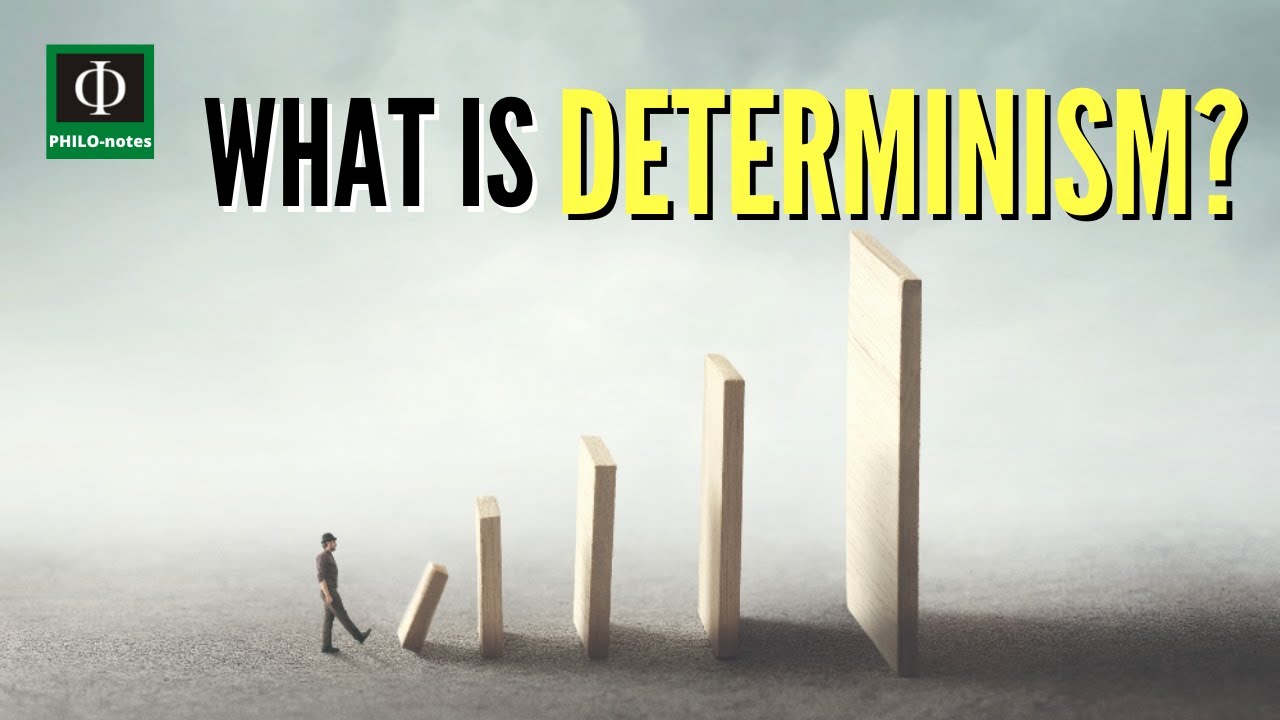














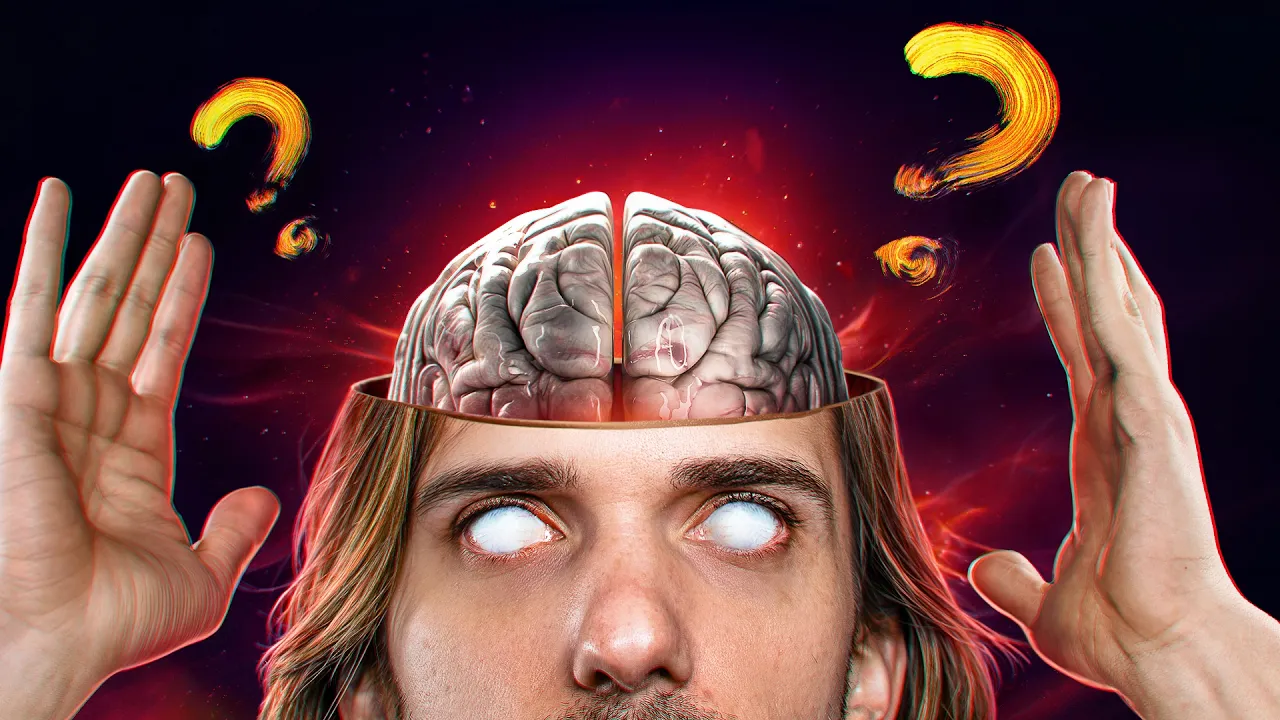









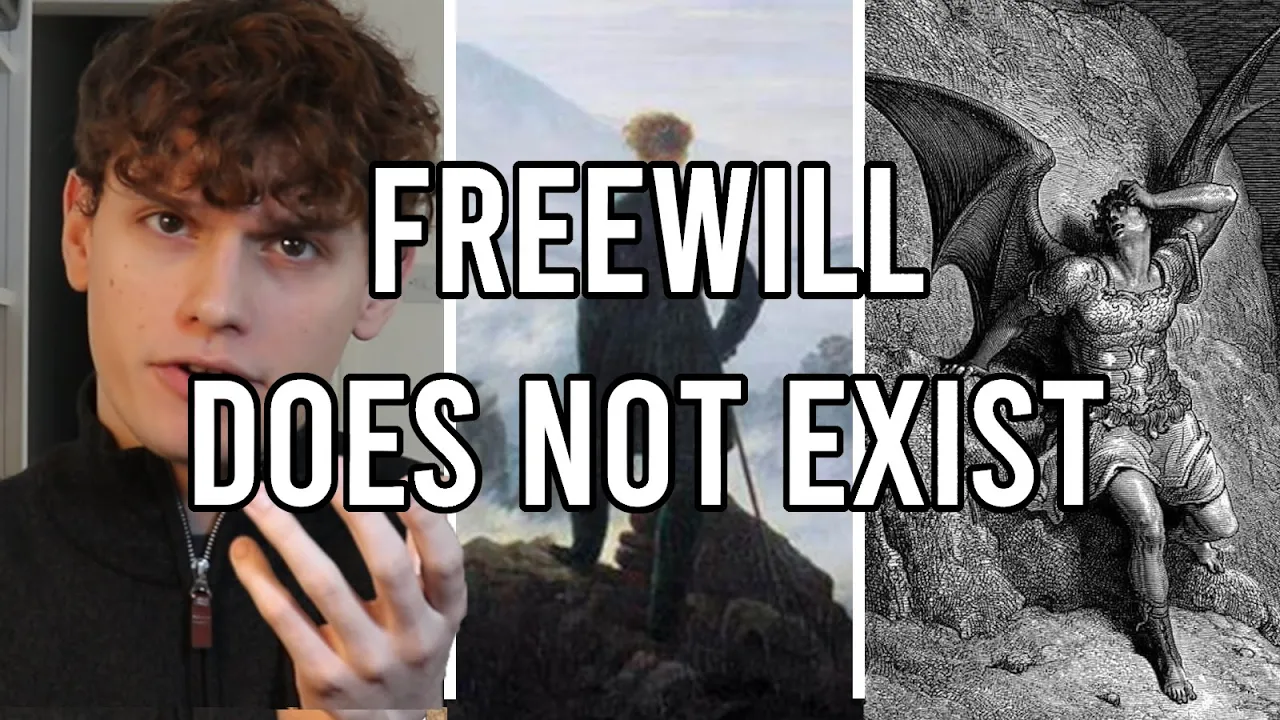






According to physics, the universe operates under deterministic laws (governed by differential equations) with occasional random quantum fluctuations; since human decisions emerge from complex interactions of particles following these laws, free will as traditionally conceived does not exist, though this doesn't negate our capacity to make meaningful decisions based on our desires and circumstances.
Physics of Free Will: Determinism and Quantum Mechanics
Added:Classical Determinism and Newtonian Mechanics: The concept of a 'clockwork universe' and Laplace's Demon, where knowing the position and momentum of every particle allows one to calculate the future with certainty.
Foundations of Quantum Mechanics: A basic understanding of quantum superposition, wave function collapse, and Heisenberg's Uncertainty Principle.
Core Philosophical Terminology: Familiarity with basic philosophical terms, particularly the definitions of free will, moral responsibility, and physicalism.
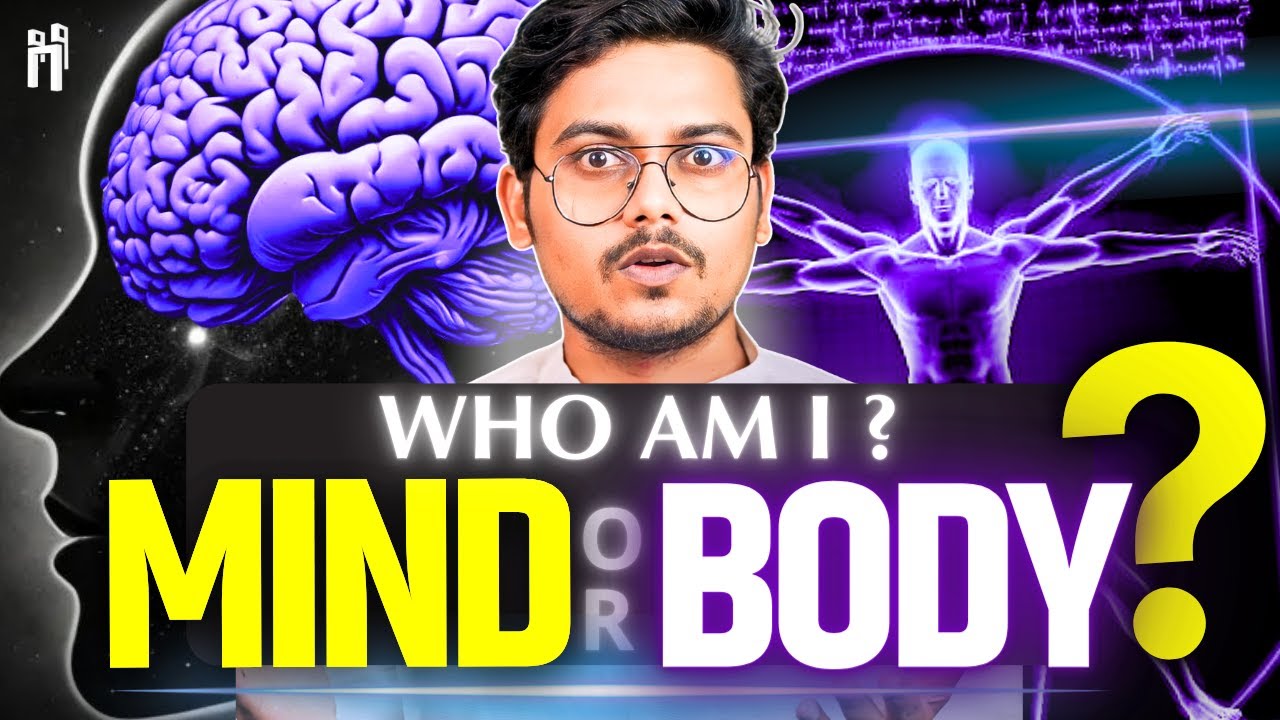
The Mind-Body Problem: An introduction to how mental states (decisions, consciousness) relate to physical states (brain activity and physical laws).
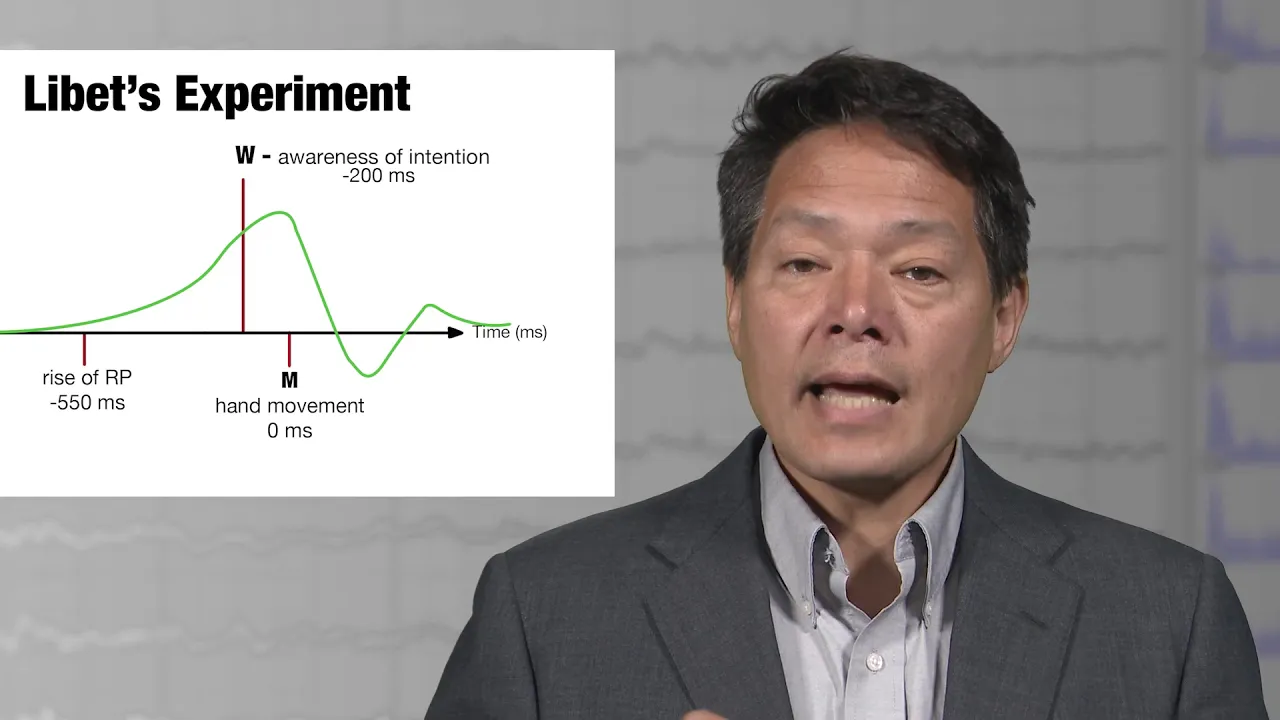
Neuroscience of Volition (The Libet Experiments): Exploring empirical brain research that suggests unconscious brain activity precedes the conscious decision to act.
Alternative Quantum Interpretations: Investigating how different interpretations of quantum mechanics—such as the Many-Worlds Interpretation or De Broglie-Bohm pilot wave theory—impact the concept of determinism differently.
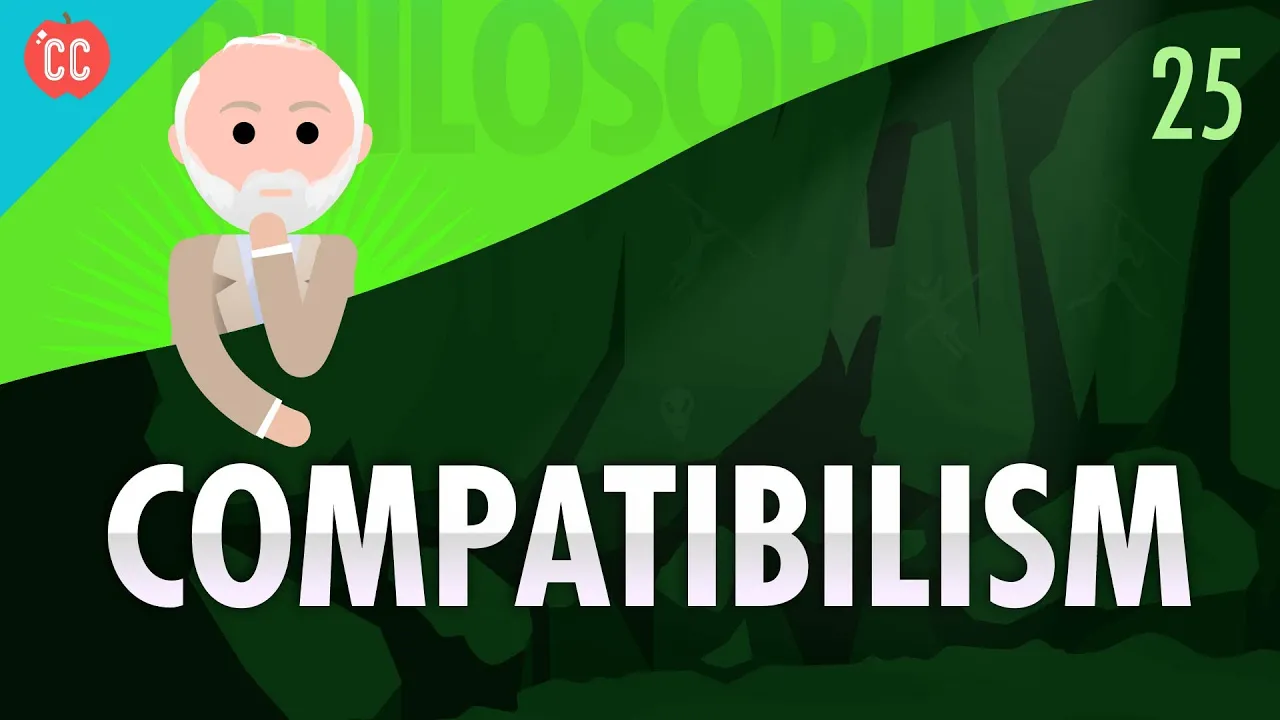
Philosophical Compatibilism: A deeper dive into how modern philosophers (like Daniel Dennett) argue that free will is compatible with a deterministic universe.
Ethical and Legal Implications: Examining how views on determinism and free will influence concepts of criminal justice, punishment, and moral accountability in society.
1.3M views54.6Klikes19:58Original Release: 2023-06-03
the future is determined by the past except for random Quantum jumps which no one can control causes have causes have causes and they go back all the way to the Big Bang does that mean we have no free will people often ask me that I find the question stunningly uninteresting of course we don't have free will okay then how do we make decisions do we make decisions did the Big Bang make me do this video that's what we'll talk about today I already made a video about free world a few years ago but I've noticed recently that a lot of people think Free Will is relevant for addressing climate change and because I don't believe in Free Will I've suddenly become a problem this is complete nonsense but let's start at the beginning and we begin of course with physics everything in the universe is made of 25 particles that for all we currently know are not themselves made of any smaller constituents we collect them in What's called the standard model of particle physics that's everything in the universe except possibly dark matter but that's a different story most of those particles are unstable and Decay very quickly how can it be that a particle which isn't made of anything can Decay that's a question I get so frequently I made a video about that specifically for now let's stick with the particles that are stable those are the ones that we are are made of electrons up and down quarks and photons and gluons to hold them together and good thing they're stable because otherwise you'd be more radiant than a nuclear fuel Rod you'd also be dead very quickly okay so humans are one big collection of particles what the particles do is described by the mathematics of the standard model it's a lot of math and you need that math if you want to answer difficult questions like what's going on in LHC collisions for simple questions like whether Free Will exists we don't need to know much about the maths relevant is just that ultimately what you and I do is also described by the standard model and yes that means that we know the equations for human behavior we can write them down in practice that's a completely useless statement because we can't solve the equations for all these 10 to the 30 or so particles that humans are made of not even the biggest supercomputer in the world could do that but we don't need to solve the equations to draw conclusions from their properties for the purposes of this video the most relevant property of these equations is that they are deterministic which means that if you know the properties and motions of the particles at one time you can calculate what happens at any later time okay it isn't quite as simple because this is quantum physics so on top of this deterministic Behavior there's an occasional Quantum jump which happens randomly whenever you make a measurement you'll know that I don't believe this stuff with the quantum jumps but today I'll stick with the most generally accepted Theory so we have particles that behave deterministically plus random jumps in quantum mechanics we use wave functions to describe the particles and this implies that there are some quantities like position and momentum whose values you can't know precisely at the same time but the wave function still changes deterministically if you want you can include gravity but that's just a deterministic theory a non-quantum theory or a classical Theory as physicists say so gravity just adds some more determinism on top and that's how the universe works for all we currently know it's one big wave function that contains all those particles its change in time is deterministic with the occasional random jump the deterministic part is fixed by the past the random jumps cannot be influenced by anything because that's what it means for them to be random and that's it please don't blame me for this I swear it wasn't my idea physics is great but it doesn't tell you much about human anatomy other than possibly that flapping your arms won't make you fly that's because if you combine many particles then things get very complicated very quickly you get new emergent Behavior as it's often called you don't even need to look at difficult things like human beings to see that if you do as much as combine atoms to big chunks called Metals you get new Behavior like the ability to conduct electricity or being very shiny or being very painful if they fall on your foot emergent properties don't exist on the level of constituents they arise from the properties and interactions of the constituents as single electron doesn't have a conductivity that just doesn't make sense conductivity is a property that only makes sense for large collections of electrons it doesn't make sense to talk about the conductivity of an electron for the same reason it doesn't make sense to ask whether a single oxygen atom is a gas or what's the marital status of your small intestine it's what philosophers call a category error it would be trying to assign a property to a class to which it doesn't belong emergent properties don't make sense on the underlying levels but that doesn't mean they don't exist chairs exist all right but they exist on the macroscopic level and not on the level of Elementary particles curiously enough our universe is organized so that the details of what happens at Short distances become less important at large distances this is why if you want to understand planetary motion you don't need to know the population of New York City this is why if you want to understand chemical reactions you don't need to know the standard model of particle physics and this is why if you want to become a YouTuber you don't need to know anything physicists call it the decoupling of scales the mysterious but empirically well-confirmed fact that the details of what goes on at small scales can be disregarded if you're only interested in what happens on large scales and this is why we have so many disciplines of science because each discipline of science has its own language about emergent properties that are adequate to its subject but that we get new emerging properties from the interactions of the constituents doesn't mean the equations that determine the behavior of the constituents do no longer apply emergent behavior is a consequence of combining large numbers of particles with complicated interactions it follows from the underlying laws it doesn't make them go away some philosophers have speculated that large systems could have emerg in behaviors which don't follow from the laws of the constituents this is sometimes called strong emergence but there's no evidence this happens in the real world though there are some mathematical examples if you have an infinite number of constituents or an infinite number of properties of the constituents or anything else being actually INF in it there are cases where it becomes impossible to calculate one or the other quantity of the entire system a few examples for this have been constructed in the literature usually the proof works by a map to the halting problem or similar examples of computational complexity however those are mathematical constructions that have no real world counterpart because in the real world nothing is ever truly infinite okay so emerging properties are an interesting consequence of the underlying laws but we're still governed by a mix of determinism and indeterminism what does that mean for free will Free Will is often described as the possibility that one could have done otherwise but this description stopped being useful with quantum mechanics because it it mean that single particles also have free will if you take for example a photon a single Quantum of light and you send it through a beam splitter then there's a 50% chance the photon goes left and 50% chance that the photon goes right if you measure the photon on the left you can say well it could have done otherwise it could have gone right right does that mean it has free will well I'd say that's not what normal people would call free will though some physicists actually believe that photons are observers one of the consequences of that is that they've concluded reality does doesn't exist I've talked about this in an earlier video this is also what happens in the Free Will theorem this theorem was mathematically proofed by John Conway and Simon Cohen in 206 it says that if humans have free will then Elementary particles also have free will but the statement of the theorem is logically equivalent to the statement if particles do not have free world then neither have humans I don't know about you but to me it seems reasonable to assume that particles do not have free will and either way you put it the Free Will theorem says nothing about the existence of Free Will in the first place so let's return to the question of what we mean by Free Will we've seen that the idea that you could have done otherwise or that your actions were not determined is not descriptive because of this random element from quantum mechanics contemporary philosophers have therefore tried to capture the essence of Free Will in the idea that human decisions are to a large extent independent from external factors and instead dominantly driven by internal deliberation different philosophers have put somewhat different spins on this story but it always comes down to the idea that human decisions are difficult if not impossible to predict from external input and observations alone the philosopher Daniel danet for example captures the essence of Free Will in our ability to see probable futures Futures that seem like they're going to happen and then the possibility to take steps that something else happens instead like for example an autonomous vehicle does the philosopher jenon Ismael has even written a book called How physics makes us free she basically says that Free Will lies in the large degree of autonomy that our brain has from environmental factors as it operates those are typical examples of what's called compet iism that's the philosophy that Free Will is compatible with the laws of nature as they are a mixture of determinism and indeterminism most contemporary philosophers are compatibilists according to a 2020 survey almost 60% but it's not like this is a new idea well-known philosophers like David Hume and John Stuart Mill were compatibilists the other big Camp is that of libertarianism whose supporters also believe in Free Will their philosophy comes in several variants first there are those who insist that the randomness of quantum mechanics makes place for free will as I said I don't see how this Mak sense then there are those who acknowledge that an element of indeterminism doesn't entail free will but who then throw out some established signs to make place for miracles like for example the ability to change your past by your thoughts and then there are those who just insist that that Free Will exists but it's non-physical the letter is a well trodden wrote for example Renee deart and Emmanuel were both in that camp I'd say the idea is not wrong but I never understood the point because if Free Will is not physical it doesn't explain anything in the physical world so why bother inventing it I ow neither of those camps the science writer John Hogan once called me a free world denier but I think this is a misunderstanding it's not that I'm denying people feel like they have free will but I'm with Libertarians in that I think Free Will is incompatible with determinism I also think it's incompatible with indeterminism and since the real world is governed by a mixture of determinism and indeterminism I arrive at the conclusion that free world doesn't exist it's sometimes called heart incompatibilism the good thing about heart incompatibilism is that you don't need to explain what free will is in any Det DET you just need to say whatever it is it isn't compatible with what we know about the laws of nature that said I don't have a problem with compatibilism if you want to Define whatever as free will please go ahead it's just a definition after all if your definition leads you to the conclusion that photons also have free will I'd find that a tad bit ridiculous but maybe that's just me I should add that when neurologists discuss the question of free will they talk about something else entirely they are concerned with the question of whether we make decisions consciously or unconsciously interesting question but not what I'm talking about today I recently gave an interview and the guy said to me if Free Will doesn't exist why don't I kill myself tomorrow because what's the point of anything this isn't a joke it actually happened it wasn't even the first time people said something like this to me and I'm afraid it won't be the last time which is why I'm here talking about free will again I'm not a psychologist I'm a physicist I don't know what to say to people who have existential angst other than please see a psychologist I'm not a philosopher either for what I'm concerned if free world doesn't exist it's never existed so what difference could it possibly make for your life I believe the problem is that many of us have grown up thinking our brain works in a particular way then we learn that this isn't compatible with science and we have a hard time readjusting how we think about ourselves the Free Will story suggests that the brain works like this you use your neural circuits to consider different options for example what you could eat for lunch you draw on your memory and the associations you have for each possible option and try to imagine how much you'd enjoy it then you take this thing called free will and use it to pick one the challenge is now to integrate the knowledge that the thing you call Free Will is just another part of this algorithm that runs in your neural circuits a good way I've found to make sense of this goes back to Witkin we can't know the result of a calculation that our brain performs before we have completed the calculation if we did we wouldn't have to do the calculation this is why we have the impression that the decision is free until we've arrived at the conclusion but the result ultimately follows from deterministic brain functions with the occasional random element if that sounds weird all it means is that our decisions follow from what we want and I think that's a good thing I'd find it creepy if there was something else call it free will or whatever that would affect the decisions in my brain so that you don't have free will doesn't mean you don't make decisions of course you make decisions you decided to watch this video didn't you good choice by the way did the Big Bang make me do this video no that's because all those structures in the universe including this planet and life on it were created by Quantum fluctuations in the plasma in the early Universe their details were not determined at the Big Bang if there was a big bang it's also extremely likely that one or the other Quantum event played a role for the word becoming just exactly as it is today why does it matter it matters because to come to good decisions we need to understand how our own brain works and how Society Works overall and the idea of Free Will suggests an inaccurate description of reality it makes people believe they have more control over what goes on in their head than is really the case fact is that our brains will process input whether we want that or not once it's in we can't get it out this is why trauma is so hard to cope with this is why misinformation is so hard to combat this is why what the FIFA called three Victorious hands around a soccer ball will forever look like a face palm once someone told you it does you can't unsee something and this is also why I take issue with upbeat climate change activists Who attack realists as doomers because they believe we just need the will to take action the idea that will is all we need has led to utopian plans for staggering amounts of carbon capture home insulation and renovation upgrades of the electric grid energy storage and the hydrogen economy all of which is somehow magically supposed to pop out of nowhere if we just have the will this believe and Free Will puts the blame on individuals when really the problem is the way that we've organized our societies I'd say it isn't n me who is a problem for action on climate change it's people who disregard the limits of human cognitive ability I have a chapter about Free Will in my book existential physics where I also discussed the question of moral responsibility so if you want to know more go and check this out the reason why the laws of physics are deterministic plus that random element is that they are based on differential equations if you want to know more about how they work there's a great CA about differential equations on brilliant brilliant.org offers courses on a large variety of topics in Science and Mathematics it's a fresh and new approach to learning with interactive visualizations and followup questions I found it to be a highly effective way to understand and also to remember material if you want to know more about the physics behind this video check out for example their course on differential equations it's full of examples from many different areas of science and it gives you a stepbystep guide to understanding how these equations work if you want to know more about quantum mechanics you might want to try my course that's an introduction to Quantum Mechanics starting from the very Basics it doesn't require you to bring background knowledge my course covers topics such as interference superpositions and entanglement the uncertainty principle and Bs theorem and afterwards maybe you want to continue learning more about Quant Quantum Computing or special relativity if you're interested in trying brilliant out use our link brilliant.org Saina and sign up for free you'll get to try out everything brilliant has to offer for 30 days and the first 200 subscribers using this link will get 20% off the annual premium subscription thanks for watching see you next week
Up Next
16:07
Spacetime Geometry and the Causal Structure of Relativity
@pbsspacetime
1.7M views•2017-02-02

12:53
21cm Hyperfine Transition in Neutral Hydrogen: Radio Astronomy Basics
@AaronRobertParsons
12.4K views•2011-10-13

32:32
NMR Spin Physics I: Zeeman Effect, Resonance Condition & Larmor Frequency
@nptel-indianinstituteofsci8064
2.3K views•2024-01-17

27:14
Entropy and the Second Law of Thermodynamics Explained
@veritasium
27.5M views•2023-07-01
Related Study Plans & Knowledge Roadmaps
Structured learning paths in Physics
physics
Nuclear Physics (Decay, Fission & Reactors)
01Atomic Structure and the Binding Force
02Radioactive Decay and Half-Life
03Nuclear Fission Mechanics and Chain Reactions
+ 2 more learning modules
12h5 modules
Explore Roadmap
physics
Soft Matter (Polymers, Colloids & Rheology)
01Foundations of Soft Matter & Thermal Forces
02Polymer Physics and Macromolecules
03Colloids, Surfactants, and Self-Assembly
+ 2 more learning modules
38h5 modules
Explore Roadmap
physics
Analytical Mechanics: Lagrangian & Hamiltonian
01Mathematical Foundations: Calculus of Variations
02From Newtonian Mechanics to Constraint Dynamics
03The Principle of Least Action & Lagrangian Mechanics
+ 3 more learning modules
28h6 modules
Explore Roadmap
physics
General Relativity (Spacetime & Cosmology)
01Foundations of Relativity: Special Relativity
02The Geometry of Spacetime: Equivalence Principle & Curvature
03Einstein's Field Equations: The Mathematics of Gravity
+ 2 more learning modules
55h5 modules
Explore Roadmap