

![Все предопределено, значит свободы нет? [Алипов и Кузнецов]](https://i.ytimg.com/vi_webp/3qcawrUwe-A/maxresdefault.webp)








![Does Compatibilism Solve Free Will? | Robert Wright & Eddy Nahmias [The Wright Show]](https://i.ytimg.com/vi/0ERH3NdtFas/hqdefault.jpg)

![Am I Responsible Even If I Couldn't Do Otherwise? [Frankfurt Cases]](https://i.ytimg.com/vi/Y4ZlfY1gCas/maxresdefault.jpg)




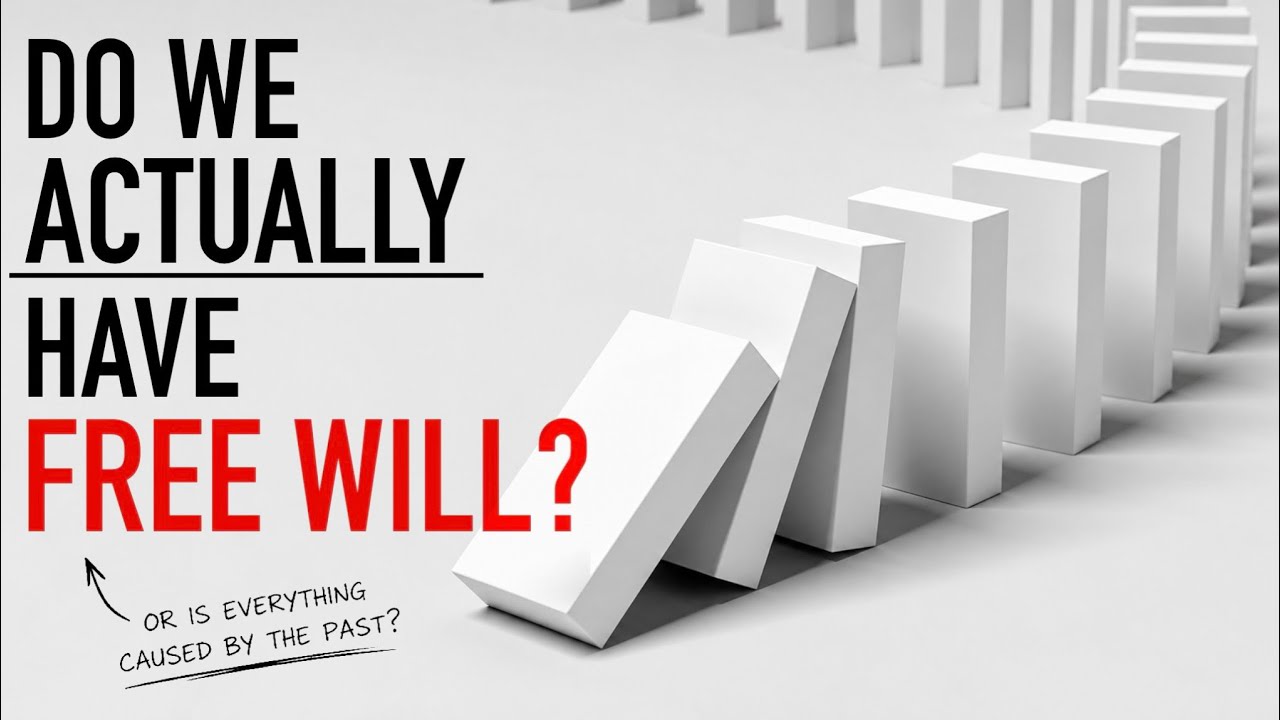
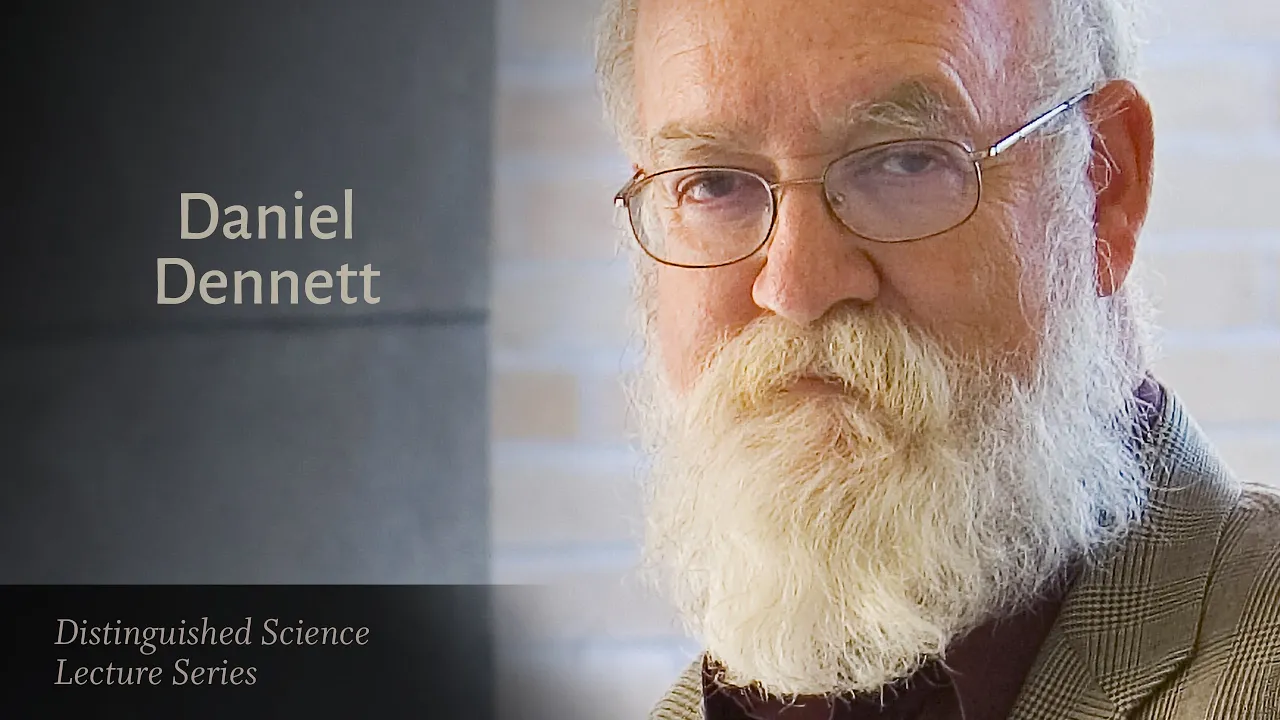
Daniel Dennett argues that free will and determinism are compatible, challenging the traditional view that determinism eliminates free will. He contends that the concept of 'inevitability' is misleading because it doesn't specify what is being avoided or by whom. Dennett proposes that free will should be understood through the lens of agents who can avoid harm and pursue goals, and that all meaningful varieties of free will—those needed for moral responsibility and life meaning—can exist in a deterministic world. He rejects the traditional conception that free will requires the ability to do otherwise, arguing that this is an unnecessary metaphysical conceit that doesn't serve any practical purpose.
Dennett on Free Will: Compatibilism vs Determinism
Added:The core concept of Causal Determinism: the philosophical proposition that every event, including human action, is the inevitable result of preceding events and natural laws.
The classical debate between Incompatibilism (the view that free will and determinism cannot both be true) and classical Compatibilism.
The traditional definition of Free Will as the 'ability to have done otherwise' (the Principle of Alternative Possibilities).
Basic familiarity with metaphysical dualism, particularly the Cartesian notion of the mind or soul existing independently of the physical body.
Daniel Dennett's evolutionary account of agency and choice, specifically his arguments in 'Freedom Evolves' regarding how biological complexity generates free will.
The philosophical implications of compatibilism on Moral Responsibility, retributive justice, and ethical accountability.
Frankfurt-style cases: thought experiments designed to show that moral responsibility does not require the ability to have done otherwise.
The intersection of cognitive neuroscience and philosophy of mind, focusing on how brain science challenges or supports the subjective experience of decision-making.
206.7K views1.2Klikes10:05Original Release: 2008-08-30
your your book on Free Will um the the you're framing uh the issue of free will in a very what what will strike most people as an unusual way people usually think of Free Will as opposed to determinism of course by determinism we mean the idea that basically the rest of the future of this universe is inevitable because the universe is this mechanistic things it works according to rules and principle if you understood the everything about the state of the Universe and everything about the rules of government you could predict what happens tomorrow and that includes people's brains they're deterministic and so free will is kind of an illusion because of determinism because of the truth of determinism that's the argument traditional argument against that's the traditional argument yes you're saying I think you're saying that actually the two are compatible in some meaningful sense of both terms absolutely compatible yes so I'm just a compatibilist they've been compatibilists for hundreds of years um but I'm a little different from most of the earlier compatibilists in that I want to deny flat out a premise that you started with that you mentioned yourself just a minute ago you said the future is inevitable if determinism is true uh first of all I want to say that phrase the future is inevitable just doesn't mean anything um we can't talk the future the future is g to happen uh whatever it is and that's true whether determinism is true or indeterminism is true there's going to be a future now in what sense could you talk about the future being inevitable I don't know what we have to talk about is particular events being inevitable and or particular types of events and in order to see what the word inevitable means you have to take it apart and oddly enough although the word trips off the tongue of everybody who writes about Free Will and determinism uh hardly anybody's ever looked at it but of course what it means is unavoidable I mean evitable inevitable avoidable unavoidable that's all the word means but now to avoid something this is something that an agent does an avoider you don't mean you don't mean a literary agent here no I mean I mean although sometimes they they avoid sometimes they avoid this no I didn't have literary agents in my I had uh or secret agents uh although those are both agents uh I agent in the broad sense of being an actor that has some sensory capacities and some goals and that acts in the world to accomplish its ends okay um now are there agents that can avoid things sure tons of them and in fact the reason you have to look at free will from an evolutionary point of view is that's remarkable that that are agents that avoid things is a remarkable fact and there's many more avoiders now than there used to be and they're much better at avoiding than they used to be and in fact uh it's as good as as a definition of intelligence to be uh an expert avoider to be able to foresee far into the future to see things coming down the pike and to take steps in a timely way to prevent those bad things from happen happening and in order to Foster things that you want to happen um uh we don't have a a good uh parallel word what would it be enhancer uh uh probabil ofier um there's there's no uh uh we avoid harm what and we and we try to get the good um but but there isn't a single verb for for what we do with regard to good things the way there is for avoiding the bad but now that means that the whole concept of inevitability gets its meaning from the perspective in which a perspective in which there are agents in which there are agents that might want to avoid something and it might be in their power or it might not now there's if we start looking at particular worlds with particular agents and particular circumstances in them we can now start saying well in this world what things are avoidable what kinds of things were avoidable by this agent given its powers and its circumstances and the answer may be well if you throw a brick at it it can duck uh uh because because there's enough light so it'll be able to see the brick and its nervous system is good enough and it's reflexes are fast enough so that it's pretty good at avoiding bricks however a random lightning bolts is no good at avoiding those you know it's just doomed if if there's a lightning stroke coming up in its future it's it's toast there's nothing it can do about that but if you if you try uh uh you know to throw a spear at it or something your chances of of succeeding are are are nice to nil because it's such a good spear avoider now in order to be able to talk this way in order to partition the universe into the things that are inevitable for that or agent or evitable by that agent uh we have to have a way of talking about evitabroadwayvevo is an explosion of evabillion [Music] you see that just the the the traditional philosopher's notion of inevitability just isn't in the same picture and and you could say that we are future alterers at least in the sense that had we not evolved the capacities we have for harm avoidance the future would have been otherwise and and you have to be very careful when you talk about future alterers right because what are you going to change the future from what to what since it hasn't happened but you can talk about what it would have been had I not evolved my whatever it is I to avoid harm um but of course the reply you get from people is yes but you're still saying that given the fact that I have evolved these things given the condition in which I wake up this morning and the way my brain is inclined to use these things the future is inevitable and my feeling that that that I need to Well you certainly hear this as a reply you certainly do but but I'm going to say what on Earth do you mean my future is inevitable well but that again I if you knew that an omniscient being could predict what's going to happen today and there is no possibility that I will behave in a way that's going to change that's going to make that's going to falsify that prediction that's what people mean well first of all that would be true if I understand you right in an indeterministic Universe too well no in that Universe the omti being would would take would do the calculation and go I think this is going to happen whoa Caprice enters the picture magically no the the omniscient being is going to know the future well no omnicient about the present I mean and the laws that govern the present so you mean a lassan a laian yeah calculator and then but lo and behold uh t plus one after the prediction is made Caprice enters the picture from we know not where that's the traditional conception of Free Will and and and people have to let go of that that's a that's a traditional conception of Free Will and what I'm arguing is that it's uh it's gratuitous it it does not the motivation people have imagined for it is simply mistaken allowing for Quantum indeterminacy or shall we call it lassan indeterminacy does not give you any more Powers any more freedom any more avoidability any more evitabroadwayvevo than you have in a deterministic world it's just an illusion to think that it does okay you say in the book that and this is maybe one example but that uhu Free Will lacks the tra your conception of the kind of free will that's viable uh lacks some of the traditional properties associated with free will have we already covered all the traditional Properties or are there other things people are going to have to let go of um I I'll let other people make that calculation I've tried I mean what what I claim is that all the varieties of free will that are worth wanting we can have in a deterministic world that the I can Define varieties of free will that are incompatible with determinism but they're pointless that they don't they don't give you anything that matters they don't give you they they aren't needed for moral responsibility they aren't needed to give your life meaning they they are completely gratuitous uh they're sort of B are metaphysical conceits they don't pull their weight you don't need them who cares
Up Next
78:52
Sam Harris: The Illusion of Free Will (Science Lecture Series)
@skepticmagazine
1.9M views•2012-03-28

164:01
John of Damascus on Holy Images: A Theological Defense
@BannedBooks
139 views•2026-04-25

68:32
Should We Destroy the Machines? Big Tech Surveillance Critique
@TheStoriesWeTell303
167.9K views•2025-11-30
4:57
The Myth of Sisyphus: A Greek Legend of Eternal Punishment
@TEDEd
8.6M views•2018-11-13
Related Study Plans & Knowledge Roadmaps
Structured learning paths in Philosophy
philosophy
Frankfurt School: Critical Theory & Culture
01Foundations of the Frankfurt School and Critical Theory
02Horkheimer & Adorno: The Critique of Instrumental Reason
03The Culture Industry and Mass Deception
+ 2 more learning modules
12h5 modules
Explore Roadmap
philosophy
Philosophy of Language: From Frege to Austin
01The Linguistic Turn: An Introduction to Language in Philosophy
02Gottlob Frege: Sense and Reference
03Early Wittgenstein: The Picture Theory of Meaning
+ 3 more learning modules
15h6 modules
Explore Roadmap
philosophy
Feminist Epistemology: Standpoint & Injustice
01Introduction to Epistemology and Feminist Critiques
02Sandra Harding and Standpoint Theory
03Donna Haraway and Situated Knowledges
+ 2 more learning modules
12h5 modules
Explore Roadmap
philosophy
Environmental Philosophy: Ethics & Deep Ecology
01Foundations of Environmental Ethics & Anthropocentrism
02Biocentric Individualism and Animal Liberation
03Ecocentric Holism and Deep Ecology
+ 1 more learning modules
10h4 modules
Explore Roadmap