




















Scientific evidence from neuroscience demonstrates that human behavior is determined by biological processes—every action originates from prior neural events in the brain, making true free will an illusion; however, this understanding does not negate the practical importance of praise, blame, and moral responsibility in society, as recognizing biological determinants can actually liberate individuals from guilt and enable more compassionate approaches to justice and mental health.
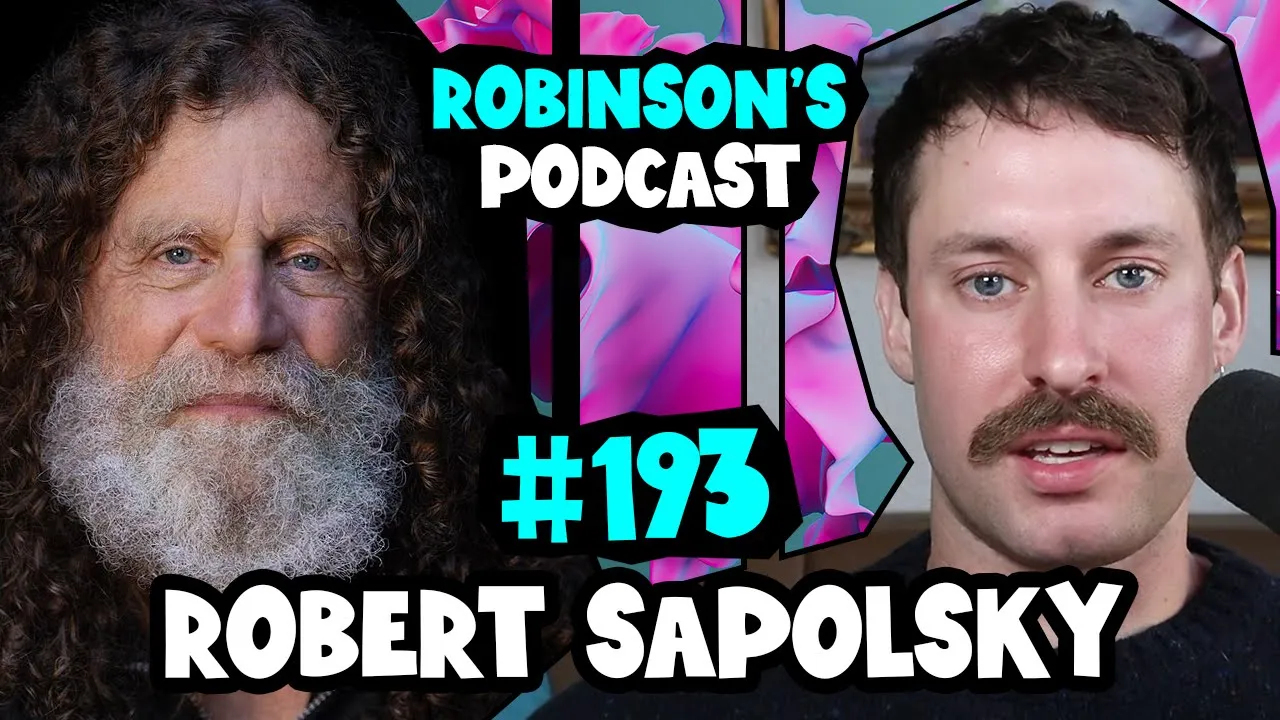
Robert Sapolsky on Free Will, Justice, and Morality | Science Interview
Added:The philosophical debate between determinism (the belief that all events are determined by external causes) and free will, including compatibilism.
Basic neuroanatomy and neurobiology, specifically how neurotransmitters, the prefrontal cortex, and the limbic system influence decision-making and behavior.
The concept of gene-environment interaction (epigenetics) and how prenatal and early childhood experiences shape brain development.
Traditional theories of criminal justice, specifically the distinction between retributive justice (punishment based on desert) and utilitarian/consequentialist justice (rehabilitation and deterrence).
The 'quarantine model' of criminal justice proposed by philosophers like Derk Pereboom, which advocates for detaining dangerous individuals without moral blame or retributive punishment.
The psychological and societal impacts of belief in free will versus determinism, including studies on how disbelief in free will affects empathy, cheating, and behavior.
Advanced ethical frameworks that construct moral systems and personal accountability without relying on the concept of ultimate moral responsibility.
The application of neuroscientific determinism to public policy, healthcare, and educational reforms to reduce systemic inequalities and stigma surrounding addiction and mental illness.
193.6K views5.8Klikes1:04:23Original Release: 2020-12-27
what science is and how and why it works [Music] when you say that there is no free will what exactly do you mean by free will because it seems to confuse lots of people sure and you know i've been forced to read all sorts of philosophers who write about free will and it's agony because i don't understand what they're saying and they're terrible writers and i'm a terrible reader and it's very hard and they have endless endless definitions of free will um provisionally i'm using kind of a reductive definition and it's one it's obviously silly um but it's still how at the end of the day you need to think someone does a behavior they they take their finger and it does that their brain tells them to do that to their finger that's like as as simple fundamental of behavior as you can imagine and it's totally inconsequential action that happens to be very consequential because you're pulling a trigger whoa okay so this is the production of behavior that really matters and neurobiologists can go and find the neuron in your motor cortex which sent the signal to those muscles to flex and you could find the neurons in what are called the pre-motor cortex which sent signals which triggered that motor cortex to send that signal and you could then find neurons in the frontal cortex that triggered the and find neurons in the prefrontal cortex that triggered that and neurons and emotional parts of the brain that triggered those neurons and basically show me the neuron that started that cascade a neuron that fired that had an action potential for no reason whatsoever a neuron whose firing was not regulated by the physical laws of the universe that happened for no prior causal antecedent reason show me a neuron that started that and that works that way and then we could talk about free will you've just shown me some sort of neurobiological building block for free will and it's just not there there's no causeless cause there's nothing in the biology of our behavior that just happens from out of nowhere every single biological event that we have has a history and what about for example something very very complex because it's from all the objections we received in the comment section when we announced the topic uh lots of people actually uh say that their conscious thought their some action that they really thought through something that they did using self-control uh a choice that they make not not by um some spontaneous emotion and just wanting something but actually thought it through that that is example of free will and unfortunately i think that's nonsense and the best way to show that is the endless ways in which we behave for reasons that we're not even conscious of here's here's one study um you take christian people and in this study you look at attitudes towards muslims how much hostility there is or isn't and there's music playing in the background and if you happen to be playing church music at a very low volume versus classical music if you're playing church music people express more hostility to members of other religions if you've just walked down a street and either you walk down this way or this way and this way has a church in it and you've just walked past a church in a questionnaire afterward you were likely to be more hostile to members of other religions if you put somebody in their room and you have them fill out a questionnaire about their political attitudes should abortion be legal should gay marriage be legal things of that sort if you have a horrible rotten smell in that room if it smells like rotting garbage in there people become more socially conservative they become more socially intolerant on the other hand if you have somebody playing an economic game where they have to make decisions about generosity if they're sitting at a room and it smells like chocolate chip cookies that have just come out of the oven and this is actual scientific studies you could buy a little vial of chocolate chip smell or a little vial of like rotting carcass smell or whatever and people would like to do that in the studies if you're smelling freshly baked bread or cookies people become more generous and nobody is going to sit there and attribute their behavior to those factors one incredibly important study looking at more than 5 000 decisions that judges made in courtrooms and the single best predictor of whether they were going to parole someone allow them to go free or send them back to jail for another whatever number of years the single best predictor was how many hours it had been since the judge had eaten a meal if you appeared before the judge right after you had lunch 60 chance of being freed by two hours later zero percent chance and that study has stood up to all sorts of like challenges and such and no judge if you sat them down there and asked them to use their conscious awareness to say whoa that's really interesting you freed that guy but this guy you said back to jail how come they're gonna cite some philosopher that they learned about their first year in college they're not going to say because of my blood glucose levels an enormous percentage of our behavior is occurring without our furnace and what is very often the case and neurobiology proves this is when we think we are making a conscious decision especially a conscious moral decision we have emotionally decided long before that seconds before that and our conscious rational cerebral part of the brain is just making up an explanation maybe not responsibility but against determinism there is a strong argument that at least people uh often make the quantum mechanics like the randomness of quantum mechanics the heist i'm just i'm just translating what people what's like one of one of the big objections against like overall determinism is that okay ironically the last month of my life has been miserable because the planet is falling apart and democracy in my country is collapsing and here in san francisco we're having fire so bad we've supposed to been staying indoors for the last week and in addition because i've spent the last month trying to write a chapter about quantum mechanics and how it doesn't explain free will okay let me try to do this for three reasons number one quantum mechanics is all about at the sub-atomic level wave particle duality quantum entanglement non-locality over space and time quantum tunneling these are all the things that are occurring at a subatomic level and if that's going to have anything to do with why you are a good kind person or why you were a selfish horror those quantum effects are going to have to bubble up 20 30 orders of magnitude to begin to explain a single action potential which takes about three or four milliseconds that is about 10 to the 23rd times longer in duration than a quantum effect than a in an electron that's a hell of a lot of bubbling up you need to do to get to just that level of biology and what 99 of the people the field agree is you cannot get the bubbling up even if a quantal effect in this one synapse has synchronized through like superposition and quantum entanglement and such has entangled the events of 4 000 other synapses you're using about a trillion synapses emptying about a trillion axon terminals um full of neurotransmitter every time you do an action there's very little evidence that it bubbles up the second big problem is in some ways the even more fundamental one which is even if it did bubble up that high the gigantic problem is quantum indeterminacy cannot be the explanation for free will it could be the explanation for us doing stupid random things that are completely out of character for us it's the explanation for us doing things where we would then say i have no idea why i just said that except you wouldn't be able to say that because your tongue muscles would be doing stupid random things and you wouldn't even be able to speak when we think about free will we're not trying to understand the randomness we're trying to understand why you know gandhi was almost certainly like a more than average moral 10 year old as he was as a 75 year old we're trying to understand the things that make up consistency and quantum indeterminacy sort of the most subatomic level of randomness is not where we get the consistency of a moral philosophy coming from or your character or your outlook on life or the fact that whether you offer somebody one dollar or a million dollars worth of money to do something awful if they have a voice in their head saying that's not who i am that's gonna explain some consistency the third the final problem is nevertheless there's a whole bunch of thinkers out there and they are almost certainly philosophers rather than neurobiologists who try to magically pull enough levels of bubbling up to get it up to the behavior we're interested in and magically find a means by which you can harness the randomness of in determinacy and harness it into something determinate and philosophically consistent and the problem with that is i'm being polite here you read this and it just does not make sense what these people are postulating they're ways in which your conscious free will can reach down and change your electron orbitals and from that your brain will work differently the ways in which you get around the bubbling up problem and the rad in this problem make no sense at all so at great length here um that's why i think quantum indeterminacy has nothing to do with why you pick up this knife at this moment or why you pick up this fork and it certainly has nothing to do with moral philosophy does that actually imply complete determinism on what we do and how we act okay that's like such a hard question um is is the debate whether we have less free will than is usually the case or is the debate whether we have no free will at all um most of the people who want to be skeptical about free will wind up concluding there's much less of it than we used to think um i personally think there is no free will whatsoever i think there is none at all but the moral issues the the controversy the challenges become exactly the same whether you think there's a lot less free will when it comes to some of our best behaviors and worst behaviors or if there's none at all which is in circumstances you were going to be blaming someone for a behavior they had no control over or you're going to be praising someone or rewarding them but the question becomes oh yeah if you think there's no free will at all how come you can't predict which child who raised in poverty is going to become a criminal when they're an adult how come you can't predict which person with the elevated testosterone levels is going to like say something nasty to someone versus they're going to pull out a knife can you predict that and i now spend a lot of my time in courtrooms teaching juries about the brain during murder trials trying to convince them that this person with the way their brain works if that was your brain you would have done the same exact thing and the prosecutor who then always gets to like question me very hostilely for hours what they always say is okay so science is teaching us there's much less free will there's much else free will that's great can you take somebody and look at their brain if they've had damage to their frontal cortex and say this is someone who is going to be outside the controls of society when they're at a funeral they're going to laugh loudly at some point oh my god what's wrong with them versus this person with the same amount of brain damage is going to be outside the loss of society they're going to murder eight people can science tell us these days which person is which and i always have to give the same answer absolutely not we're not there yet all we're good at now is if you have damage to this part of the brain at some point you're going to do something that shows that you are socially unconstrained by a lot of the standard rules of behavior is it gonna be laughing loudly at a funeral or is it gonna be being a murderer okay we've learned a little bit more if you were raised in a stable loving middle class home you're less likely to be the murderer you're more likely to be the one who'll just like laugh loudly in the wrong circumstance whoa that's where the science has gotten us at this point so you say okay don't tell me about there's no free will we can't like any of that stuff yet um but the point that i always wind up making is yeah yeah yeah that's true but look at what we know about the biology behavior at this point and 99 of it we've learned in the last century 50 of it we've learned in the last 10 years 25 of it we've learned in the last year so either you've got to sit there and say that's it tonight at midnight there's no more science we've learned all the science we can ever learn can you predict who's going to be a murderer and the answer is no we can predict who's going to be socially inappropriate but you know that's about as far as the science has taken us but you have to be crazy to think that the science is not going to continue to rise at the same exact fast pace one way of reframing that is we are going to learn the things that we call free will now we're going to discover a century from now or a year from now that no it's actually a biological phenomenon or stated in another way a circumstance in which we feel now that we are acting morally and rationally in holding somebody responsible for their actions for punishing them for killing them for jailing them for praising them for giving them extra money for telling them they're so smart and wonderful and kind at some point in the future there's a good chance we're going to sit there and look back at this and say oh my god the things we didn't know about then the damage that we did thinking we understood behavior and that there was choice and responsibility in the agency and that's not just going to be scientists 300 years from now almost certainly we're going to last long enough to sit there in some of these realms we're going to say my god the way i've treated people in my life thinking that there was responsibility at that juncture and we had no idea about that part of the brain that hormone that neurotransmitter that gene that childhood experience whatever my god the damage that we have done if there is no free will and everything is returned determined and then there is no blame to put on people responsibility for what they do couldn't i mean that kind of implies a certain view on the world and if you personally when when did you actually realize that you had no free will and how did it feel and does it actually how does it actually have effect on your everyday life um i was it was about a month after my 13th birthday and in my very strict religious studies that i went to almost every day of the week something came up and there and it produced a huge existential crisis in me of how to reconcile this with god and our actions and being held responsible for our actions and being punished for them yet god controlled that and that's the way he chose to make the world and all of that and oh i was going to my teachers and bringing this uh and then one night i woke up at two o'clock in the morning and i said oh i get it there's no god and then about three minutes later i said and there's no free will either and then about two minutes after that i said and there's no purpose to life and i actually sat up for about five hours at that point and scribbled out everything that i was thinking and ever since then i have had zero capacity for religiosity for spirituality for believing that there's free will or for believing that the universe is anything other than cold and empty and unempathic and pointless and you know what i've been depressed ever since you know i think that is an unavoidable outcome of that like we get an awful lot of sense of purpose and sense of comfort and sense of safety from our myths and the notion is that worth doing um unfortunately i think absolutely yes i'm depressive as hell um you know you show me something wonderful that happens in the world you show me something the terrible that happens to the world when i feel depressed you show me something wonderful that happens in the world and somehow i'm going to be convinced why that's poignant and that's bittersweet and why it's not going to last and why it's wonderful amid so much pain and all of that and or or i joke about this with my wife who is not at all depressive but she tends towards anxiety anxiety is when you're constantly worried that something terrible is going to happen happen to your children happen to your loved ones whatever depression is when you feel absolutely confident that nothing bad is going to happen your children are safe they are loved they are going to have long happy productive lives and it's so sad you can barely stand it it's so sad somehow you can turn that into the same conclusions so yeah unfortunately that's kind of my mindset and you know i've been incredibly lucky in all sorts of ways that's one way in which my brain chemistry has not been lucky for me um actually one of the questions from the comment section from youtube um i'll just gonna read all of my life 28 years i suffer from depression and anxiety is there a way to live happy life without medication and thank you for your work it's a phenomenal question it's so important and it is so relevant to millions of people if you are very very lucky you were one of the people where you have one episode of major depression you heal statistically it's no more likely to happen to you than to anybody else you have two episodes you have three or four still the same thing you get four or a five or so and that's where statistically you are now likely to have joined the the cadre of people who are going to be clinically depressed on and off for the rest of their lives a lucky subset of those people it resolves often as you get older if the depression doesn't go away the the edge the the razor quality to it can go away um but that's lucky for the most part you need psychotherapy uh professional or otherwise or you're gonna need meds and one of the clearest things out there is if you have a choice if you have severe problems with depression and if you have a choice between psychotherapy or medication your choice is to do both because they work much better synergistic synergistically than either alone you want to think of it as what the medication does is it breaks the back of the depression it gets you a first foothold on the beach and what the psychotherapy now allows you to do is be able to actually have the the psychic energy to start doing the hard work to figure out how you got there and how you can do things differently to change that the two of them in combination are far better and amid that an important thing to emphasize at least in the united states there's a frequent critique of psychiatry political left and i am about as much of a leftist as you can get nonetheless there's this critique that oh psychiatric medication they're abused they're the means by which psychiatry is the the horror of governments and suppression they just serve the the means of pharmaceutical companies to make money and profits yes it is absolutely the case that a lot of these drugs are over medicated and they're medicated at the convenience of some doctor or they're medicated for people who were societies troublemakers yes yes yes all the all of that but at the same time if you are one of the millions of people who have a serious problem with clinical depression and it is not treated it is one of the most life-threatening diseases that exists on this planet in terms of the likelihood of it destroying the quality of your life or destroying your life and it is not a measure of your moral failings or your lack of sufficient backbone or free will it is a biochemical genetic disorder of your brain chemistry being screwed up and often the first critical way of saving you from that in the most like literal possible way is medication so when it's used right thank god for it actually we received one of the letters saying thank you from lady his name is elena and she actually also said that she is living with ocd and depression and that actually your lectures and your books helped her to like to handle that uh so in terms of how to live like yeah i mean your lecturers are doing good things for people and actually helping that's that's good to hear and that's so important in the realm of mental illness i mean the problem with depression is the word depression at least in english both explains you know something crummy happens to you and you feel kind of depressed for the rest of the day and you're sort of in a bad mood and the same word describes this disease that destroys your life and what we're mostly surrounded by are people who get depressed because something crummy happens and a day later or even a week later they get better and hey why is it that you have not been able to get out of bed for the last three months because life feels so pointless why don't i have the self-discipline that these people do why don't i have the gumption why don't i have the strength to work my way through to fight through this and get over this depression and that's an incredibly damaging viewpoint a major depression is as biological of the disorder as is diabetes and you don't sit down somebody with diabetes and say oh come on what's the deal with you and insulin stop babying yourself you don't really need this insulin stuff it is as real of a disease and the fact that society stigmatizes it and most other psychiatric disorders is tragic if for no other reason that it makes people less likely to seek help you've also mentioned that now at this point of you working on the book you read a lot of philosophers and it hurts your brain and you don't like it i kind of understand that it's a completely maybe different approach to solving problems like maybe at least how it feels from the outside of both basically science and philosophy uh kind of seems like science discovers how things are philosophy tries to decide what to do with them and try to figure out things that uh not existent in the world such as justice for example and can you are you trying to somehow connect this your scientific approach with philosophical ideas and like at what stage of uh connecting these two are you now very incompetent that much is very clear to me um and it's simply because the way my brain works you know philosophy political theory things of that sort of literature that's not realms which i do very well um so it's just a limitation on my style of cognition in terms of mixing the two it is absolutely clear to me you cannot be a good neuroscientist unless you know something about philosophy and you cannot be a good philosopher unless you have heard of the brain it's hard though i'm not very i'm not doing a very competent job yet of being a neuroscientist who really understands modern philosophical thought and what's very clear to me reading a lot of these folks is there's not a whole lot of philosophers out there who've learned a lot about the brain yeah it's hard it's a difficult challenge i think i wrote you the about that course the justice course by michael sandal it's the one we just finished translation translating and it's just it's just surprising how often your name and your lectures come up in the discussions because but for some reason it's usually against the philosophy lectures and i mean they there are even no scientific claims there it's just more like history and political philosophy and stuff like that and law but every once in a while somebody appears saying oh this is crap this is empty this is just blah blah blah robert sapolsky's letters they are awesome all you need is just to understand biology and of human behavior and you understand that there is no morality and the justice is just a construct and you don't need that could you maybe i don't know somehow settle this dispute down well do you think it even exists this dispute between uh like science and philosophical applications no i think they're inseparable in the same ways that nature and deutsche are and our best behaviors and worst behaviors gives a context dependent no it's all one big subject and i think if you're really thinking hard about this if you think that way and you say i'm a neurobiologist or you say i'm a philosopher all you're saying is the way my brain works is it turns out it's easiest for me to get at these issues from this direction but it's just as valid to get at it from that direction but i happen not to think very clearly that way um in terms of that though some of these folks are absolutely right because i spent so much of my time tearing my hair out reading these philosophers because on a certain level like if you're plato and you've never heard of the fact that if you get damaged to this part of the brain you will do anti-social damaging things and if you take a medication for your parkinson's disease you have a 15 chance of becoming a compulsive gambler and losing your family's life savings and if you were so mired in depression that you cannot get up in the morning and you take another drug that blocks serotonin reuptake you will begin to feel like life has a purpose plato could not have incorporated all of that into his philosophy like you can't blame somebody from before that time the philosophers who make me crazy are the contemporary ones and by now i i like sarcastically they all basically write the same paper which could be reduced to three sentences sentence number one wow neurobiology has been learning all sorts of cool stuff they're just learning all these new things at such a rapid pace sentence number two some of these findings have challenged our very notion of individuality and agency and responsibility and free will sentence number three nah not really like that's basically the paper and here's the magical thing i'm now going to come up with why it really isn't the case and i'm going to cite aspects of neurobiology that don't exist or i'm going to insist that there's emergent transcendent things that happen in us that are transcend biological constraints or even the constraints of the physical universe or i'm going to say that free will floats in the transactions between people and that's a non-biological and here's the magic that i'm going to invoke in the third sentence that says ah it's not really a problem with all that neurobiology is coming up with and what makes me even crazier is the neurobiologists who occasionally write the papers like that um and what usually happens when you look closely and i have one very renowned elder neurobiologist in the field who was incredibly accomplished whose name i'm not going to mention but who happens to think that way and has produced a bunch of books and i've spent forever trying to understand why that is the case and finally the book that he has written most recently which is an autobiography explains it he is a devoutly religious catholic and even how one neuron deals with ion fluxes of potassium and sodium he sees to some extent through a mirror of his religiosity oh okay that's why he thinks that way so like if you're a highly devout fundamentalist religious person neurobiologist my bet is your feelings about free will are gonna make me get crazy at some point and if you were 99 of the contemporary philosophers out there as far as i can tell um your views about it are going to make me crazy as well because at some point you're going to reach sentence number three where you're going to say but yeah that neurobiology doesn't really count because we really do have free will so okay there is no free will but we have a feeling that we have a free will we act as if we have a free will in terms of evolution can that is that adaptive or is just uh what we call a spandrel just some accident this illusion of having free will great um it might have originally been a spandrel but it's extremely adaptive now in that it allows most of us to get up in the morning and it allows most of us to feel like we are part of something a lot lot bigger than ourselves and it allows us to like get through very difficult times um but it's also a disaster if you are by anyone's standards a failure in life for reasons you have no control over and yet society has taught you that it is your fault you should have been able to avoid that if you are not as accomplished or rich or beautiful or famous or who knows what is the next person free will you should have been able to do that there is an incredibly destructive sound bite in the united states that every child is taught in school which is anybody can grow up to be president and like with one exception um every single president we have had has been a wealthy white christian male so if you grew up and you're in jail as a drug addict um instead of being president well whose fault is it you have so it cuts both ways um what i think you see is the myths that we make up for ourselves whether it's a myth about free will and agency or a myth that there is a god who loves us or any other such myth they can be very very good at reducing anxiety but what they are mostly doing is reducing anxiety that that myth invented in the first place speaking of motivation and yeah for some people lots of people actually being free in their choice is as you said a way to get up uh in the morning uh but how do you stay motivated if you actually if you accept the idea there is no free will how do you stay motivated how do you enjoy or maybe not life in general how do you praise yourself how do you get any enjoyment from accomplishments if you accept that there is no free will it's hard um i don't have terribly good answers for that you have to externalize some of your sources of pleasure it is great that i've done those thousands of hours of practicing because i just made an audience of people very happy playing that sonata on the piano for them rather than whoa i am a great pianist i've just come up with a vaccine that will cure covet and you know saving millions of lives has to count for something yeah that's great and soon we're all like mother teresa or nelson mandela and we all know that like it's very hard to be that selfless and and buddhist and detached in our like sense of purpose in life um and instead we need exactly the sort of things that losing a sense of free will destroys um it's kind of a drag it's not a great thing until you look closely and sometimes it's the most wonderful thing on earth a great historical example of it where as i was saying earlier wow there's all sorts of stuff where it's not waiting 300 years from now scientists would just say oh my god the things they used to believe the damage that they did where people lived long enough to be saying that about what they themselves had done at the younger age it's 1950 you have a 17 year old child who is beginning to act in a very thought-disordered way they're not making sense they say things that make no sense they're hearing voices they're hallucinating they're having you take them to a doctor and it's the most heartbreaking thing imaginable they say it looks like your child has this disease called schizophrenia and it's devastating and all of that and eventually after they're telling you no there isn't a cure and it's likely to destroy their life and all of that eventually you get around to saying where did this disease come from what caused this disease and if it was 1950 the wisest psychiatrists on earth the wisest neuroscientists would have had an answer they would say it's you you the mother of that child you caused your child schizophrenia and something that was called schizophrenic mothering a mothering style that generated schizophrenia it started off as a freudian notion but it it festered in all sorts of poisonous directions and the basic core of it was that a horrible mothering style could produce schizophrenia and it was a mothering style that was built around a mother who unconsciously hated her child and wish that the child hadn't been born oh my god and thus you were teaching hundreds of thousands of mothers for decades that they caused their child schizophrenia and then in the mid 1950s along came biochemists who discovered the first drug out there that had antipsychotic effects and it worked not by going back in time and making your mother actually love you it made you go back in time it made you block dopamine receptors in your brain and everyone sat there in some cases the psychiatrist didn't sit there it took them about 20 30 years to sit there and say oh my god it wasn't the mothering it's a crappy biochemical disorder it's brain chemistry it's not the wrong kind of incompetent mothering and what is remarkable is hundreds of thousands of parents of schizophrenics that was one of the most wonderful days of their life because they had been told at the very least this is the most tragic thing any parent can see happen to their child but at least it's not your fault it's not your fault and i have actually talked to there's organizations in the united states alliances of parents of schizophrenic children and support groups and all of that and i've talked to the founders of these organizations and they are all in their 90s now and they say that it was one of the most freeing liberating moments of their lives the first time they truly accepted that they had not caused this disease and the same thing happened with autism autism up until the 1970s or so the dogma was if your child had autism you caused it because you could not love your child and the jargon was you were a refrigerator mother and then people discovered no autism has something to do with prenatal endocrine environments and there's genes and we're slowly sorting it out and remarkably one of the fathers of autism research and the notion of refrigerated mothers in old age came to a meeting a support family group and in front of an audience of a thousand parents of autistic individuals said i am so so sorry for the damage that i did i thought i was doing good i thought i was a healer i thought i had devoted my life to making people's lives less painful and all i did was spread pain further and i'm so sorry for what they did and what is remarkable is you talk to the 90-year-old mothers of schizophrenics with their organizations and no leader of the school of schizophrenogenic mothering ever ever sat down and wrote them an essay or appear before them and say my god i saw causality and free will and responsibility where there wasn't and i am so sorry for the damage that i happened so okay you stop believing in free will yes depression existential despair all of that for a whole lot of people it's going to be the most wondrous liberating thing you can imagine does that mean absence of responsibility and blame as a concept does that mean that you would like to get rid of both of these things absolutely um does that mean and by the way um that also gets rid of praise um does this mean that oh no murderer should be allowed to run around on the streets because you can't blame them of course not of course not um like if a car if the brakes on a car are not working you don't allow the car to be driven it's going to hit somebody and kill them what you either do is you fix the brakes or if your behavioral neural endocrinology is not at the point yet where you know how to fix those broken brakes you lock the car up in a garage and that's great you've protected society from that car but you don't sit there and say that car deserves not to be able to take a nice ride in a park on a beautiful sunday afternoon deserve blame responsibility justice retribution none of those words make any sense at all for making sense of a car whose brakes don't work and you look at a human whose lousy biological luck has produced someone who is broken in a very damaging way as well and they're no different from a car with a broken brake it's you know infinitely more complicated broken brakes and thus we're infinitely further from being able to fix it but it's the same exact thing and if you think it is like dehumanizing to turn us into machines with broken breaks that's a hell of a lot better than sermonizing us into having evil souls um we're very complicated machines what is clear to me though is if it's going to be hard to make people think that way about you know murderers and not thinking in terms of blame it's a thousand times hard to think that same way when somebody comes up to you and says wow you did such a nice job on that project wow great score on your final exam whoa what a delicious dinner um we're going to say thank you and feel like we in some way are responsible for the praise we're being given if you're going to throw out blame and punishment you got to throw out praise and reward as well and that's at least as big of a challenge but you just said that that video was one of the nicest things you've seen and i was going to send you more videos and different pictures yes what i've just proven is why i'm having so much trouble writing this book figuring out how we're supposed to live truly truly not believing in free will because anything emotionally arousing comes along and i forget everything that i've learned from my science but fortunately i forget it for 30 seconds instead of for 30 years with any luck the other week there was some horrible hate crime in the united states where somebody went into a place of worship with a weapon and he belonged ideologically to a group that had been discriminating against that religious group forever and he opened fire and killed a bunch of people and it was like a total nightmare and that monday morning the news was saying oh this person was brought to court today in this state in the united states and charged with whatever number of counts of murder whatever and the way the legal system works here is it's not clear yet if they're also going to be charged with a federal government hate crime and if they are they're going to be eligible for the death penalty to be put to death and my first thought was yeah give him the death penalty fry that son of a and then three seconds after that i thought what are you doing you were working on a death penalty case right now trying to keep them from killing somebody who murdered 11 people because his frontal cortex was damaged in childhood it's really hard not to think that way maybe the best we can hope for is when you have a first impulse towards hating someone for what they did you know all you can hope for is a year later or a minute later you can stop yourself and say that behavior did not come from nowhere and they had no more control over how they turn to who they are and how i turned into who i am but here is the thing and that that understanding of the biology of an action it doesn't really help with uh this philosophical more philosophical problem of like justice and how actually the law should be and how we should be governed i mean that's the topic of your book if i'm not mistaken right yep and it has huge implications um it's logical implication is the entire criminal justice system has to be abolished because it is based on a scientific mindset that was obsolete during the renaissance during the medieval periods it has not been formed by informed by neuroscience for 150 years or so when you look at how it works we've got to completely get rid of it and oh my god that is incredibly hard to think about and it's also incredibly hard to think about a world in which two people do a job and this person gets more money at it because they're smarter and they could do it more effectively because they had enough protein when they were a fetus so that their brain developed right because when they were 10 years old they were not beaten on a regular basis and stress hormones impaired the development of their brain etc etc what's a world like where not only does like criminal justice and retribution make no sense at all but we're rewarding people for being better at something than the next person is makes no sense either you know it's going to be hard but again we can do it in some cases schizophrenia is like not any more of a horrible epidemic of a disease it's still an epidemic and it's still horrible um but it's no more worse because we don't blame mothers anymore because we learned oh it's biological disorder in fact we've gotten much better at making the pain of schizophrenia less because we block people's dopamine receptors instead of ask them what their mother did to them lovelessly when they were a child um so it's going to be very very difficult but subtracting blame and subtracting praise out of how we judge behavior because of biology cannot be anything other than liberating and freeing and at the end of the day one of the most liberating things we can possibly reach is if you truly truly believe this stuff you cannot feel entitled to anything that makes you more special than the next person and you truly truly cannot feel hatred for anyone else and if you really embrace that and sometimes i can actually feel that way for four or five seconds before i fall back into old habits it's a wonderful state of mind and it would be a much better world if we can all think that way all the time but isn't that i have to say um it feels a bit idealistic i mean yeah of course it would be awesome and great if everybody just recognized that accept that idea and just generally start thinking more scientifically sure of course but but like right now as of today it's impossible and right now as of today we have people on trials we have people in prisons we have um the stigmatization the blame and i mean i mean what's going on in the world kind of shows that a lot right now how that wish that everybody would understand science and how that notion that okay science tells us that how that can help solve problems now you know if you go in it and jump into the deep end and decide there's no free will whatsoever and blame and praise make no sense at all and in fact it's immoral to praise or blame anyone and all of that you're going to wind up as confused as i am and as incapable of really constructing how society is supposed to function and what you're gonna have to do is like be a safe like undangerous professor sitting in front of a white board talking about these abstractions rather than someone who actually gets to decide should this person be sent to jail or should we pull the plug and end this person's life or should we pay this person more money than that person or tell them they're a better person because they're better to yeah um all you can do is do it a few pieces at a time if somebody has an epileptic seizure and they lose control of a car and they kill someone in the process we do not think like medieval peasants and say they were possessed by satan and we do not hate them for their evil soul we feel incredible pain for the tragedy that crappy biology gave them a seizure at that moment and we have a societal intervention that does not require hate we say oh they need to go six months or longer on medication without a seizure before they're allowed to drive a car again and we can solve that problem without hate fueling free will playing a role in it and we can have a society in which we do not hate women who cause their children to become schizophrenic because they could not love properly and not only has society not fallen apart we've become much better at decreasing the pain of schizophrenia and you know if we're gonna have to do it one step at a time one step where somebody is going to say whoa i had no idea biology had something to do with that when you follow the science and you read what's happening in the journals and the rate at which new information emerging that's happening 20 times a day in tiny little steps um you know if there's one little outpost where people are suffering because they are being held responsible for their terrible biological luck and we learn instead no it's not them here's what's actually going on you know maybe this will get a better world tiny little steps at a time but again um no free will everything has basically like a biological reason outside of our control and you're comparing you're bringing again and again up the example with epilepsy and schizophrenia which used to be blamed on people now their disease does that mean that in your opinion in some way every bad person is just sick yes or stated another way every bad person is nothing more or less than the outcome of their biological luck and their luck has been worse than any person out there who was nothing more or less than the sum of their biological good luck which causes us to call them a good person or a smart person or an empathic person or a talented person that's all any of us are another thing that if we see the world this way isn't that a bit the same as saying oh sorry i was just following orders yes in some sense i mean it didn't it didn't help it didn't help during the nurburgring trials right and for example okay nowadays the amount of police violence and law enforcement violence in general i mean it's not for me to tell somebody who lives in u.s about that so i mean here is actual problem right now should we approach it the same way should we say oh yeah they were just following orders they are not responsible plus there is no free will yes and that's so difficult um but if you're going to decide there is no such thing as blame or responsibility somebody is allowed to say don't blame me i was just following the cumulative effects of the biological organism that circumstances made me does that mean i should run around the street being allowed to kill people no if the car's brakes are broken you fix them and in the exact same way you should be able to say don't praise me i was just following a different set of biological orders there's this wonderful moving youtube thing a graduation lecture a few years ago at harvard university where this the kid who apparently had like the highest grade point average number one in the graduating class every year that person gives a little speech at graduation and this kid got up and gave a speech and this was a korean american kid and like basically what he said what he literally said at one point is you want to know why i'm up here you want to know why i'm giving the speech why i got to go to college why i got to go to this college why it doesn't well etc etc it's because my parents snuck into the united states illegally and they've been working their asses off for the last 30 years washing dishes in the back of a korean restaurant hoping they're not going to be discovered and fired that's why i'm here that is the luck that's the thing that i cannot be praised for i am here because of that feature of my luck and it could have been totally different otherwise and don't forget it if you're sitting there in that chair feeling like you were entitled to some of the praise that you were getting now and i thought that was incredibly moving one thing you have to be totally on guard for is to not turn the don't blame me don't praise me i'm just following biological orders into and i cannot change because if you decide you cannot change what we've learned from this absence of free will is nothing can change is predetermined that's nonsense that is not the case organisms change if you are a sea slug we understand how you could learn to do something new down to the regulation of every single relevant gene and every neuron in its nervous system and a man named eric candel about 20 years ago got the nobel prize for figuring it out and when you look at all the bits and pieces the enzymes the transcription factors the kinases the phosphorylases to throw out jargon like crazy that you find in that sea slug you find the exact same things in our nervous system and the exact same things when you were learning to change we do not choose to change because we don't choose to do anything we are changed by circumstance and in the book like there's one chapter where i analyze the entire neurobiology down to sea slug like molecular biology of like a year ago i was driving on a highway and i don't know if this is the case in russia but like americans put bumper stickers on the bumper at the back of the car a bumper sticker for which political candidate they support or what you know some such thing and a car drove past you with the bumper sticker saying do a random act of kindness today and like a phrase in english is random acts of violence so there's this bumper sticker do a random act of kindness today and like somebody drove past me with that and i glanced at and i said oh that's nice i bet they're a nice person i bet they're politically liberal oh i bet i bet i would like them wouldn't that be interesting if they're on their way to go shoot somebody wouldn't that be ironic whatever and then i think of something else and i forget about them i'm now thinking about something else and then 15 seconds later another car is signaling that they want to pull into the lane in front of me and my first rotten thought is oh no you don't i'm in a rush and i'm ready to put my foot on the gas and go a little bit faster and then for an eighth of a second i think of that bumper sticker and i say ah and i put my foot on the brake instead and i slow down and like to let them in i did not just choose to change my behavior but amid believing and no free will whatsoever i've just made the world this much better of a better place because my behavior was changed by circumstances and i can tell you the circuitry of that down to the enzymes involved you know there's no free will we can't be blamed we can't be praised we're just following our biological luck but at the same time everything we've learned about the biology behavior is about the biology of change and nothing about us is set in stone and the most important versions of the biology behavior to understand is that which explains how we change for the better or worse how we are changed for the better or worse
Up Next
87:27
Alzheimer's Disease: Clinical Syndromes, Pathology & Biomarkers (UCSF) 59
@uctv
1.1M views•2019-07-27
21:55
Deciphering Neural Circuits Controlling Anorexia in Mice | Richard Palmiter
@AllenInstitute
2.3K views•2011-10-10

4:10
Vagus Nerve (CN X): Anatomy, Nuclei & Functions Explained
@Alilamedicalmedia
305.2K views•2022-10-31
13:03
How Exercise Benefits Your Brain: Science Explained
@TED
11.4M views•2018-03-21
Related Study Plans & Knowledge Roadmaps
Structured learning paths in Neuroscience
neuroscience
Appetite Regulation: Brain Circuits & Hormones
01Foundations of Endocrinology and Brain Anatomy
02Introduction to Energy Homeostasis
03Peripheral Signals: Leptin, Ghrelin, and Insulin
+ 2 more learning modules
14h5 modules
Explore Roadmap
neuroscience
Neuroeconomics: Value, Risk & Brain Mechanisms
01Foundations of Neuroscience and Brain Anatomy
02Introduction to Neuroeconomics and Subjective Value
03Dopaminergic Prediction Errors & Reinforcement Learning
+ 3 more learning modules
18h6 modules
Explore Roadmap
neuroscience
Spatial Navigation: Cells, Grids & Brain Maps
01Foundations of Brain Anatomy and Memory
02Place Cells and Head-Direction Cells
03Grid Cells: The Brain's Coordinate System
+ 2 more learning modules
12h5 modules
Explore Roadmap
neuroscience
BCIs: Neural Decoding & Prosthetic Control
01Neuroscience Foundations: How the Brain Signals Intent
02Signal Acquisition: Recording the Brain's Activity
03Neural Decoding: Translating Brain Waves into Data
+ 2 more learning modules
25h5 modules
Explore Roadmap