




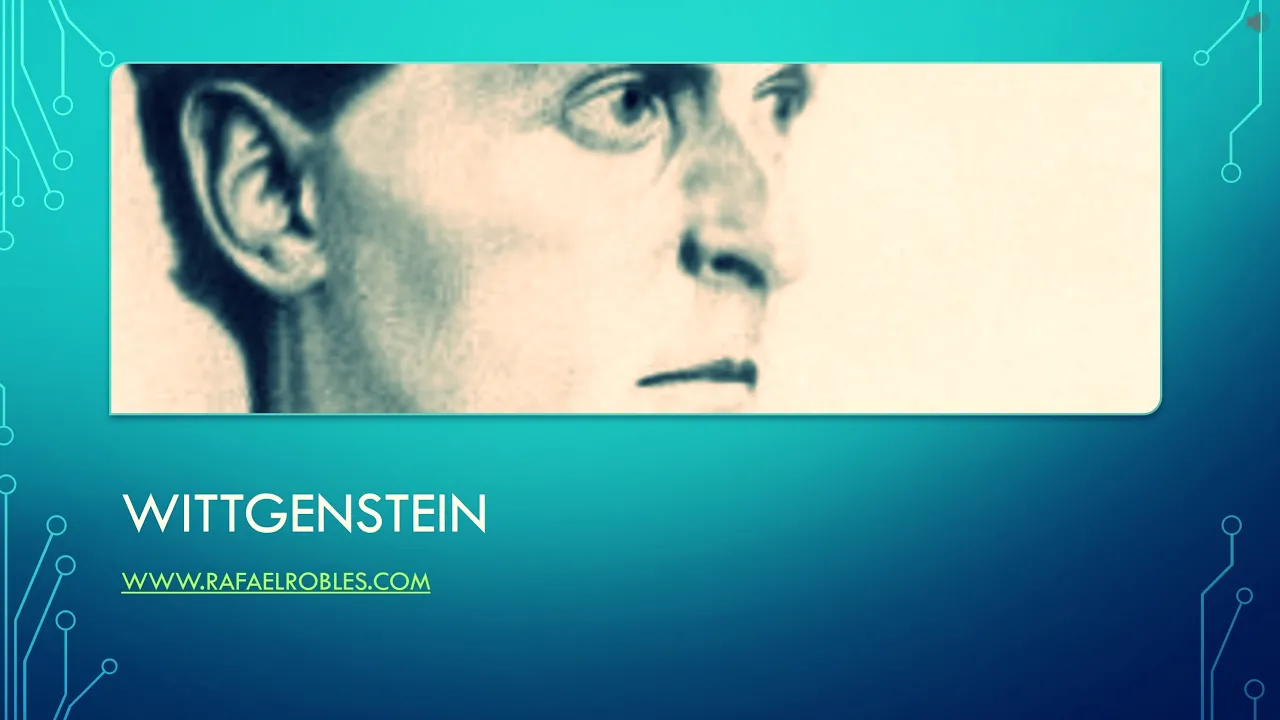


















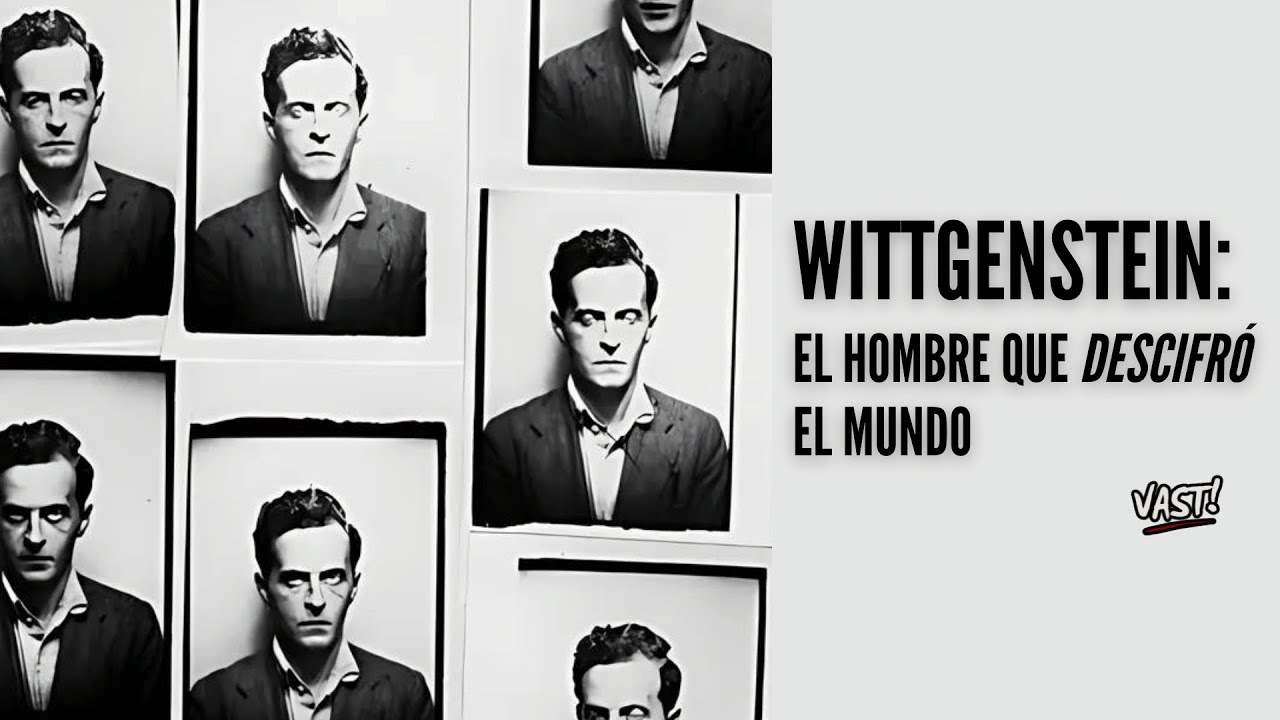
Wittgenstein's concept of 'language games' proposes that meaning arises not from language's relation to an external world (as in his early Tractatus) but from the various ways we use language in different contexts—what he called 'language games'—each governed by its own rules; this later view, developed in Philosophical Investigations, suggests that philosophical problems often arise from mistakenly applying terms from one language game to another, and that ethical and religious discourse, while not amenable to scientific analysis, gains its own validity through being woven into forms of life and constituting their own meaningful language games.
Wittgenstein's Language Games Explained | A.C. Grayling
Added:Understanding the traditional referential theory of meaning, which posits that words are labels pointing to corresponding physical or mental objects.
Familiarity with Wittgenstein's early work in the 'Tractatus Logico-Philosophicus', specifically his 'picture theory of language' where language mirrors logical facts.
Basic knowledge of the Logical Positivist movement and their verificationist criterion of meaning.
An introductory awareness of the core questions in the philosophy of language, such as how words acquire meaning and how they relate to the world.
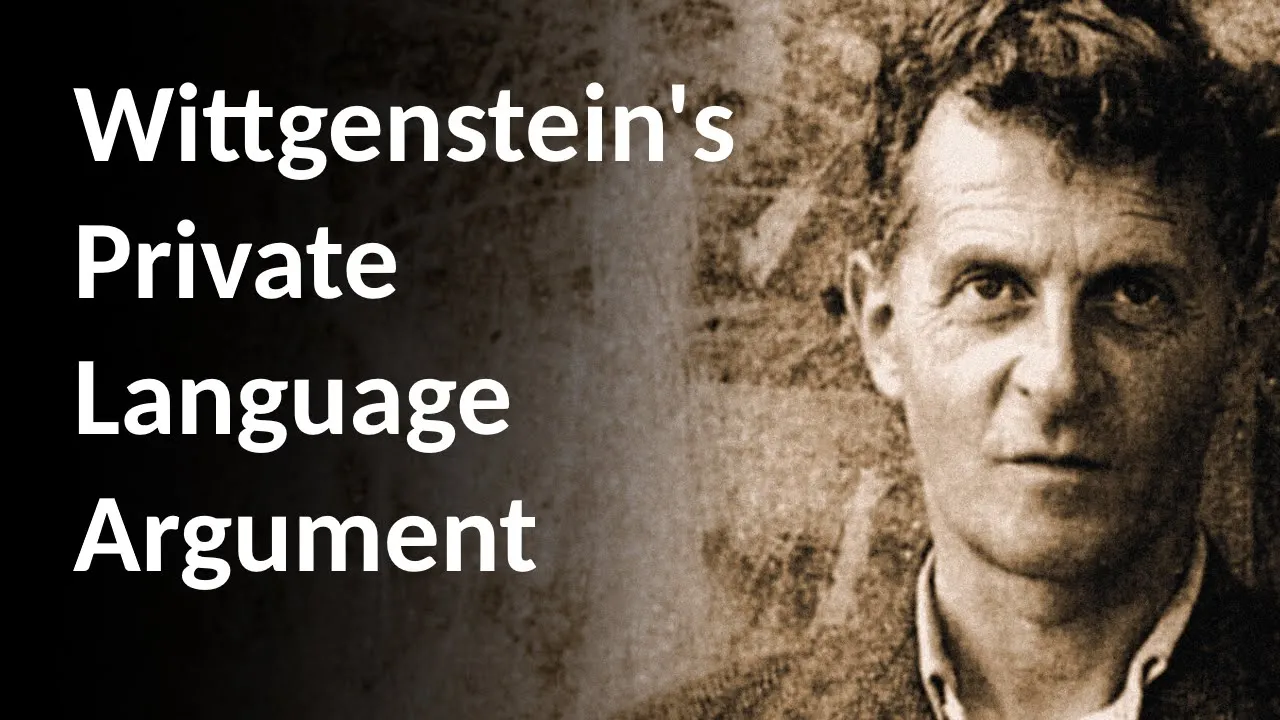
Exploring Wittgenstein's 'Private Language Argument', which argues that a language understandable to only one person is logically impossible.
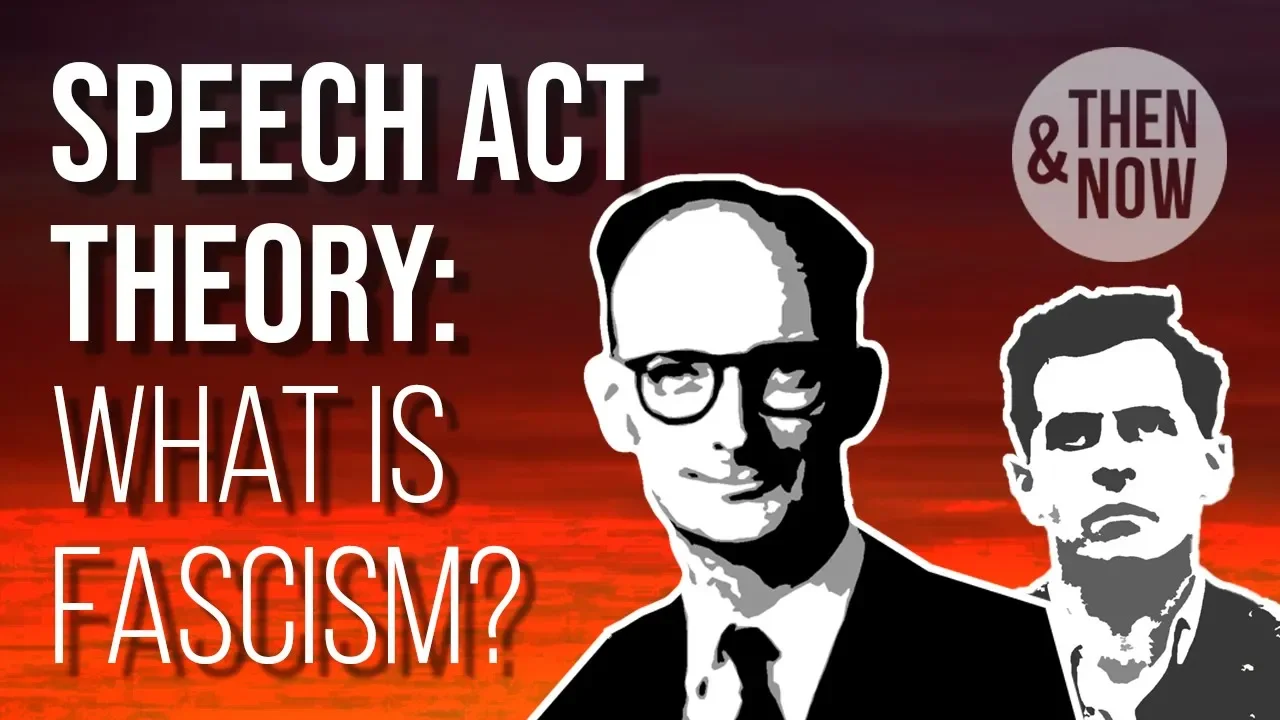
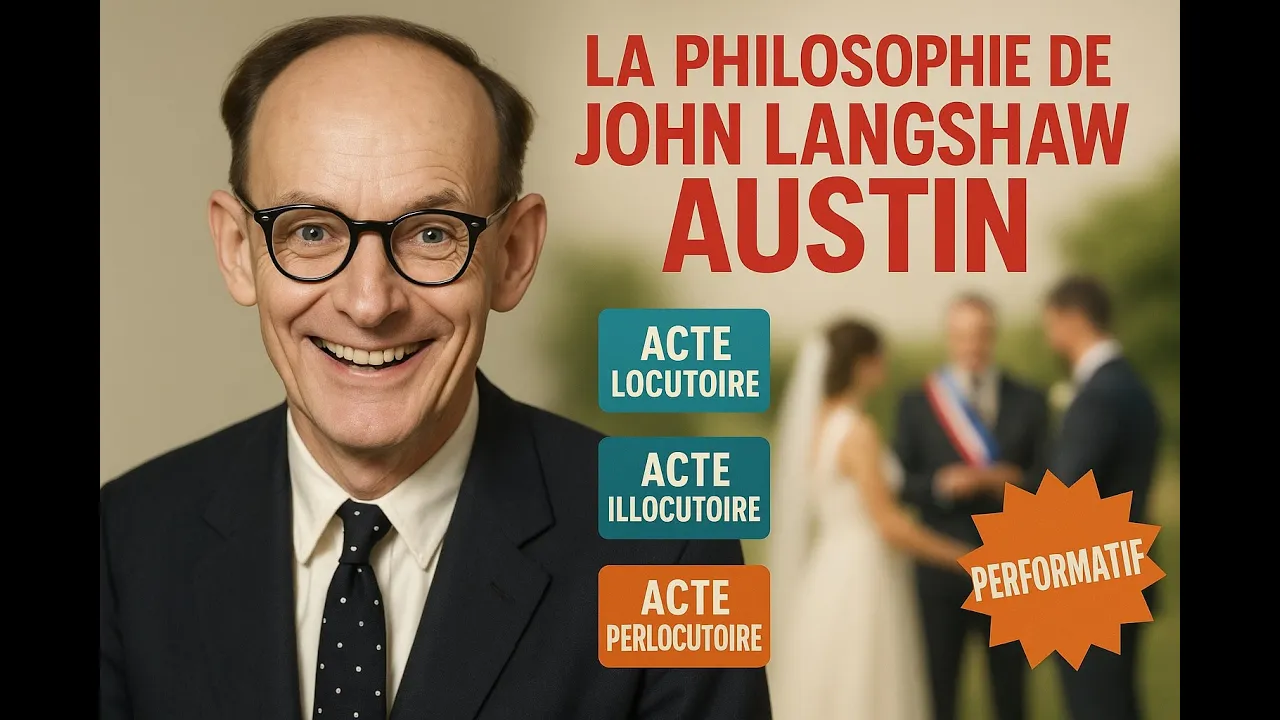
Studying J.L. Austin's Speech Act Theory and how it builds on Wittgenstein's ideas of language as an action (locutionary, illocutionary, and perlocutionary acts).
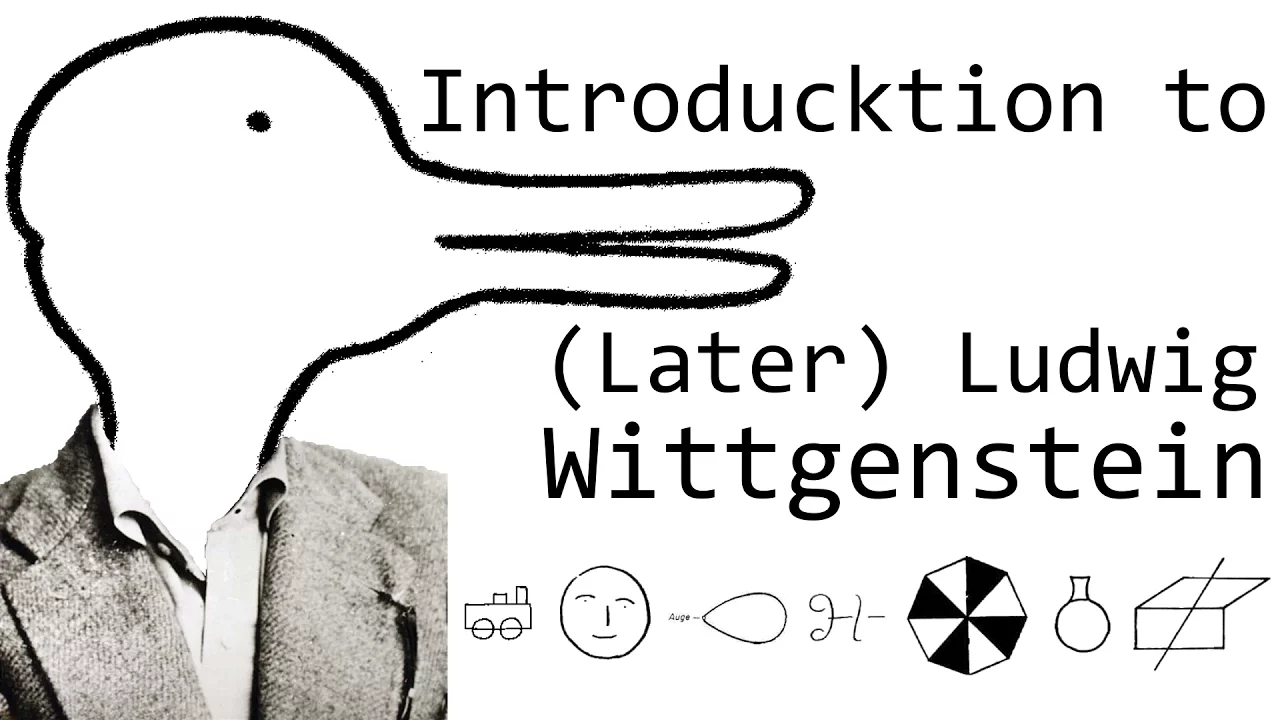
Investigating the concept of 'Family Resemblance', Wittgenstein's alternative explanation for how things fall under a general term without sharing a single defining essence.
Analyzing the impact of Wittgenstein's later philosophy on 'Ordinary Language Philosophy' and its critique of traditional metaphysical problems as linguistic confusions.
Applying the concept of language games to contemporary fields like pragmatics in linguistics, social constructivism, and the philosophy of religion (e.g., Wittgensteinian Fideism).
90K views2.1Klikes1:01:25Original Release: 2020-02-16
I'm going to be talking about a concept very central to the philosophy of Ludwig Wittgenstein the concept of games to explain what that concept meant to him but I also want to explain something about Vic in Stein's own games that he was playing in using that concept because I think that it has a general application to some of the problems that we face in our world today in light of some of the conflicts and difficulties that we find especially in the great and rather bad-tempered debates between those who have religious commitments and those who don't I'm professor Angela grayling and that my theme tonight is Vic in Stein's games so good evening and welcome to the third of the 2016 Darwin College lectures on the theme of games last week we heard the very thoughtful insights Nicky pad field brought to the challenges that society faces in dealing with crime and punishment and that of course makes one think of Dostoyevsky and then back to that marvelous analysis that Rowan Williams gave in 2014 in his lecture for us then so I should have saved right now that the first two lectures so baroness warsi and a keypad feels from last week are now available online and we hope that from this lecture onwards you won't have to wait quite so long to see them so hopefully by the mid towards the end of next week each one will be online okay so Rowan Williams talked of language as metaphor and tonight we're going to look at language from the opposite end of the spectrum AC grayling the master of the new college of the humanities is here to discuss Vic and Stein's concept of language games Antony grayling is among the leading philosophers of our generation and his subject look Dixon Stein is one of those Cambridge Giants to whom we bow but perhaps for most I look to Morris icons than them bedtime reading at least and of course is that old story that Vidkun Stein refused to accept that there was no hippopotamus in the room although some versions said there was no Rhino and Bertrand Russell who looked everywhere even under the desks and couldn't find the hippo but they can Stein still wouldn't accept the absence of a hippo so you know as an empirical scientist I can have some sympathy for that because it can be very hard to prove that something doesn't exist especially when it's beyond understanding but to explain how language acquires meaning and Vick concerns concept of games please welcome Anthony grayling thank you thank you very much indeed well I will do my best to explain what bekenstein meant by invoking the concept of games to explain how language has meaning and what the meaning of that is for a broader conception of the philosophical enterprise but I also want to say something a bit about Vic in Stein's games in a slightly different sense I shall towards the end talk about why it is that Vic in Stein had his interest in the question of language and the importance of understanding language for philosophy because there was a second motivation that lay behind the work that he did now Vicky sign is very much a philosophers philosopher in the sense that to understand him in order to make sense of the enterprise in which he embarked and I should actually use the plural there and say the enterprises because there is a quite a dramatic difference between his first and his second attempts to explain how it is that language has meaning and what the implication of that is for philosophy but to explain that one has to put him in context and the context indeed is provided by the work that another great Cambridge figure did in the early part of the 20th century and that is the work done by Bertrand Russell now Russell um as you know was very ambitious indeed to try to show that you could place mathematics on a logical foundation and his great work the Principia Mathematica which cost him and in Whitehead each 50 pounds that have published and this is a pretty egregious example of vanity publishing if you are considerate and fifty pounds after all back in the Palmer year of 1910 was quite a large sum of money and he and whitehead had to take the manuscript of that magnificent book to the to the press in a perambulator so heavy was it and Russell and self pointed out that only three people had ever read beyond proposition 56 in the Principia Mathematica that was himself and Whitehead and a madman in Texas so the this this huge endeavor of rustles and which turned out alas to be a proof of the failure of the attempt to generate so far to carry out what was known as the lodge assist project that is to show how you could base mathematics on logic and one of the outstanding reasons why that so of course was the work done by Kurt girdle in the 1930s but in the process of doing that work a great deal of very important philosophy came out this was a wonderful example of what the French poet Paul valéry once said which is that a difficulty is a light but an insurmountable difficulty can be the very sum in what it reveals to us of matters of importance and then this was certainly the case with that great endeavor because in the course of it Russell identified a number of approaches and came up with a number of ideas which approved of the very first importance in philosophy ever since even the footnote here and just remark that those of you who are engaged in one or another way in philosophy might occasionally ask yourself the question why is it that outside for the software logic and the paucity of language Russell is not so much mentioned any longer and I think a large part of the reason is that Russell is in fact the wallpaper of recent analytic philosophy there is so much of what he did and that we now no longer bother to quote or or cite him on it all you need do is to look through the index of his book the principles of mathematics which published in 1903 set out in in more schematic form what he invited tried to carry out in the pink appear Mathematica to see they're listed all the major topics in that lyric philosophy and so he really is a very seminal figure indeed in an almost literal sense of that term now the important thing that came out of Russell's work for Vic in Sloane's own work was that Russell came to the conclusion that we needed to find a way of explaining how it is that we can connect what we say to what we're talking about to effect a connection between language and the world which respected some very basic common sense intuitions about what the world is like early on Russell had been persuaded by a view taken by the Austrian philosopher Alexius Meinl that words mean have meaning by denoting things that fundamentally the semantic relation is a relation of D notation so if I use the word lectern then that word the meaning of that word is the object that it can be used to refer to that is an object of this kind here that I'm standing in front of if I say the word watch meaning it as a noun then it has its meaning an object of this kind it denotes and a timepiece and one consequence of this was that since there are many words in the language that don't denote spatial temporal objects physical objects in the world that nevertheless they must by virtue of the fact that they are meaningful like for example the word unicorn or the or the name Harry Potter but these expressions must denote something and if they are not actually existing entities in the world then the things denoted must in some sense as mine on budget subsist that is they must have some kind of of metaphysical being so that they can be the Dino charter of the words that we used to refer to them by and Russell accepted this view until he realized the factor was pointed out to him by yet another great cambridge luminary GE Moore and that this was at a very uncomfortable result which is that merely by talking about your infinite number of siblings you thereby bringing them into subsistence and this makes for a very overcrowded universe indeed WV Quine later described it as an ontological slum there are far too many entities to be referred to in this simple way and Russell said well this came to offend my vivid sense of reality there can't be lots of subsistent entities subsistent unicorns because we talked about unicorn and for this reason he gave up not the idea that the meaning of a word is the object it denotes but he gave up the idea that most words in fact almost all words except two are actually denoting expressions and the two words that are alone denoting expressions are the demonstrative pronouns this and that because every time you use them there is guarantee be guaranteed to be something that they denote because we should admit their puros as well science based there are four denoting expressions isn't that reason those so by turning all apparently denoting expressions nouns and names into non denoting expressions Russell had to come up with a explanation of how this works and he did it by saying that these apparently denoting expressions are actually concealed descriptions they're descriptive phrases and this allowed you to overcome the great difficulty of having an account of meaning based on the notation without the ontological slum attached to that way of thinking about things if you stuck with mine on indeed there was another motivation that Russell had and that is that Russell of course wanted to preserve what is called by valence that is the idea that our language is one in which there are the two alternatives that we have in connection with things that we say or assert about the world is that they are either true or false that there are just two truth values truth and falsity and if something isn't true it's false and if it isn't false then it's true now this is quite a claim and you will be aware of the fact that there are other possibilities for a propositions not being true it might fail to be true because for example it's meaningless what might fail to be true because there may be more than two truth values indeed now we have multivalent logics with even an infinity of truth values possible in them and so the that the genuine opposition is not between true and false but between true and not true but Russell was very anxious preserved by valence because he wanted the logic that he was using to explain language to be a classical to valued logic and the reason why I wanted that in turn was that in order to show that many of the nouns and names in our language other than this and that are in fact concealed descriptions you have to provide an analysis of the surface forms of language into what underlies them logically so for example supposing you were presented with the following puzzle supposing somebody claimed that the present King of France is wise now unless you think that Monsieur Orland is actually the present King of France then you're inclined to think that there isn't one you've ever inclined to think that it's not true that the present King of France is wise but not because there is an unwise present king of France but because there isn't a king of France and so what Russell had to do was do too deep down into the underlying structure of the sentence the present king of France is wise to show why it's false for a reason other than the wisdom or unwisdom of anybody who fits that description so he did it by saying this if you look at the structure the logical structure of the sentence and if you represent that structure in purely logical terms get rid of the English words that make up the center so just look at the form of the form the proposition which is being expressed in this sentence then you notice that what you're doing is this you are saying there is something at the moment let's call it X there is an X which has the property of being present King of France and for anything whatever which is present King of France that thing is identical to X now that little bit of logical machinery takes care of the word the in English because that seems to imply uniqueness and so in order to capture the idea that there is one and only one thing being talked about you have to say if anything has that property then it is the same thing as X and whatever has that property has the further property of being wise so there is an X such of X's king of France and for anything whatever Y if Y is king of France then it is the same thing as X and X is wise and now this gives you two ways of showing why the whole proposition is false either if there is a present king of France that he is not wise or if there is no king of France at present and this overcomes the problem you're all familiar with this problem perhaps when you're asked the question and there is a presupposition lying behind the question which is not fulfilled the classic example is someone says to someone else have you stopped beating your wife and of course if you've never done so you can't say no because that means you're still doing it and you can't say yes because it means that you once did it so you have to say well hang on a second you're the there's an assumption lying behind what you say which is that I once did it all that I do do it and that assumption is not fulfilled and so I can't answer your question that seems to be a way to deal with that difficulty Russell's way of doing it was to say if you look at the underlying logic of the assertion in question then you see that there are two different ways in which the surface proposition can be false now I've had to explain this and this by the way is known as the theory of descriptions described by yet another Cambridge luminary Frank Ramsey as a paradigm of philosophy as a perfect example of a piece of conceptual analysis and it is a rather beautiful piece of philosophy and this I've had to explain because it is what when Dickon Stein came to Cambridge and worked for five terms with Russell sparked off the work that resulted in his the only bit of philosophy that he published in his lifetime the Tractatus logico-philosophicus which I know you were all reading in the bath last night in preparation for this so it would be quick and easy to explain what he was attempting there now Vic inside of course as some of you may know been brought up in an extremely wealthy and influential family and his father was a an industrialist and a very wealthy man a donor to the Secession in Vienna and he had to try to educate his children at home very unsuccessfully so unsuccessfully indeed that Ludwig himself when he finally was sent to school couldn't get into a decent school at all and in fact had to be sent off to a Lintz to get into what this sort of equivalent of a what used to be called a secondary modern where he was a immediate contemporary of Adolf Shikoh Gruber later known as Hitler although in fact I don't think they knew one another because they were although the same age in different classes and then because he couldn't get into a university since you didn't have sufficient qualification because I was sent to a Technical College in Berlin Berlin Shalaka Berg where he became interested in aeronautics became interested in aeronautics because he had originally had a great desire to study physics with Boltzmann in Vienna and he had heard that Boltzmann said that the new science of aeronautics required heroes and geniuses I mean people who were both heroes and geniuses at the same time this is because in those early days of heavier-than-air flight you needed to be heroic enough to accept breaking your neck on a fairly regular basis and genius in order to understand the principles of aerodynamics and because I'm very much wanted to be a hero and a genius and so he got interested in aeronautics and as a result went off to study at Manchester University and was while designing a propeller at Manchester that he became interested in the mathematical properties of propellers this led him on to an interest in mathematics itself and he thought that he had and this is another characteristic abacus that solved the problem of the basis of mathematics wrote an essay which he sent to Gottlob free gain jeno university and Frager bay kindly invited him to come and talk and explained to him that his paper was complete rubbish and he needed to go and study with somebody who knew something about the philosophy of mathematics and he Frager recommended russell and so vikins thank you to Cambridge in 1912 and he spent five terms dazzling Russell with his powerful and eccentric personality Russell reports that Vic and Stein used to knock on his door at two o'clock in the morning and storm into his rooms and Russell would say Jim are you thinking about logic or your soul and Vic and Stein would say both anyway he tremendously impressed Russell he also impressed GE more by the way who said that he thought because I was a genius because he was the only person who frowned during Moore's lectures this is a tip by the way for anybody who wants to but while working with with Russell who had just at that point of course finished work on the Principia and explained to to Vickie Stein much of what he had been attempting and thinking talking also about the move that he was then making into what more recognizable areas of philosophy in a particular epistemology the theory of knowledge because he was at that time busy writing a book which he abandoned actually as a result of some criticisms that we can Stein offered him on the book but he sparked off this desire in breaking Stein to provide a solution to the problem of language and how language has meaning and watch the logic of language is when the war broke out reconsignment should joined the austrian army he was a mechanic for a couple of years on the Eastern Front and an artillery unit then he trained did Officer training and went to fight on the Italian front we're with the surrendering Austrian forces at the end of the war he was in prison for a while yeah Monte Cassino and at that time he had in his backpack the manuscript of the book that came to be called the Tractatus logico-philosophicus a name for the book by the way that GE Moore came up with in imitation of one of Spinoza's works and this book in a very very pared down highly economical very austere way set out a view about how it is that language and world can connect and thereby how language can have meaning and just to put it in the crudest of terms the proposal that begins lying offered was this both of the world and language obviously are complex things and complexes have structure and if you look at the structure of a complex if you analyze those structures down to their elements to the atoms as it were the things that are no further analyzable their logical simples at the bottom of the structure you can see how the two structures parallel one another even if you can't specify what the different levels of structure are so you said here on the one hand you have the world and here on the other hand you have language and there are facts in the world the world consists of facts and little footnote lot of things because if you gave just the straightforward inventory of the things there are in the world like my left shoe and my right shoe in this lecture and in this building you wouldn't just be describing how the world is but if you say there is my left shoe and my left porch and my left shoe is on my left foot then you've described a fact a way things are in the world so the world is the totality of facts of how things are arranged and not arranged but not just of a mere inventory of things so you had the world and it consists of these facts and you have language and language is made up of propositions by proposition victim's name meant watch in the early phase of analytic philosophy was mentally the expression of a fourth the expression of a claim about the world a proposition is not to be identified with the sentence the sentences it's raining IRRI blue is reg net shy you they all mean the same thing in different languages they all mean it's raining they were expressing the proposition that it's raining and so it is the proposition which in its physical embodiment as an assertion or a sentence in a given language relates in some way to facts now the quick question is how do they thus relate well you see this Arabic in sign if you look at the further levels of structure facts are made up of what he called states of affairs and states of affairs are made up of objects now he said I don't know what states of affairs are and I don't know what objects I don't know what you would actually empirically or find out constitute these lower levels of structure but any complex must have structure and any complex must eventually end in the simplest level of structure so let us just denominating as follows the world's made up of facts facts are collections of states of affairs and states of affairs are collections of objects and parallel to this is the structure of language language consists of propositions propositions are made up out of elementary propositions and elementary propositions are made up of names now I don't mean names like Tom Dick and Harry said we can sign I just mean whatever the most basic units of language are so I'm just talking about the formal structure not the actual content and here you see how the structures parallel one another propositions describe facts actual or possible facts elementary propositions describe states of affairs and names denote objects and it is it is at this very lowest level of structure of language that the connection between language and world is affected because the arrangement of names in an elementary proposition will be a picture of the arrangement of objects that constitute a state of affairs and he meant the idea of the picturing relation quite literally because it captures the sense of the way that different formal structures can actually be representations re presentations or depictions of one another he gives us an example the musical score the movement of the pianists fingers on the keyboard the airwaves propagating to the eardrums of listeners the music has heard now each of these different phases and stages have an internal connection from the musical score you can deduce something about what will be heard and vice versa somebody who has the skill could listen to a piece of music and transcribe it onto staves and this is because of the logical relationship in which these different instantiations of the music to share a pictorial representation of other phases of the music so is it where the musical score is a picture of the sounds heard the sounds heard can be treated as a picture of the musical score and this therefore is the nature of the relation that matches the arrangement of names and elementary propositions to the arrangement of objects the names picture the objects they denote them so that the initiative theory of meaning is preserved but the explanation given of how it is that propositions up at the top of the structure can be pictures of actual or possible facts resides in that relationship at the bay bottommost level of the two structures and this in essence is what the Tractatus argues about how language has meaning but there is a very very significant other aspect to the Tractatus which we can sign himself described by saying that the most important thesis offered by the track changes is that half of the book which could not be written and this is the point it sounds rather Vedic and mysterious and indeed there is something rather basic and mysterious about it and that is they bit that is the game they can Stein is playing which I want to come back to a little bit later so there we have the idea of them of the track dates it's the central theme orbit and Vika Stein again brother characteristically may remember that the essay he sent to Freya was attempted to solve the problem of the logical basis of mathematics so he now claimed that the Tractatus had solved all the problems of philosophy and he claimed this because he said and if a proposition is a picture of an actual or a possible fact then that is how it has meaning and if it isn't a picture of an actual or possible fact then it is meaningless it is empty it is normal in the literal sense of that turn but the only possible and actual facts there are in the world so the ones that can be described by science so the only meaningful discourse is science or common sense anyway which relates to science in that science gives a more detailed and circumstantial account of our common sense beliefs but all the things that we want to say in ethics and aesthetics and religion since the propositions or seeming propositions that we assert in connection with those subject matters are not pictures of actual or possible facts they are in the literal sense nonsensical not however that that means that there are in some way unimportant and this therefore is the second unwritten half of the tract ages all the things that are most important cannot be said because the propositions in which you attempt to say them are not pictures of actual or possible facts so that's the point that I want to come back to later so he thought he'd solved all the problems of philosophy if you understand how language works you see that that you can say things of a scientific and common-sense nature but you cannot say anything about ethics and the aesthetics or anything really important and therefore that solves the whole problem people can stop doing philosophy and now shut up shop and go home and this is in effect what he did he he trained as a teacher like Russell himself and like Karl Popper number of the major figures in philosophy in the interwar period who shocked by the first world war and its effect on what had seemed to them to be advanced in civilized countries they came to believe that the only way to prevent another tragedy of that kind of caring was through education through the education of the young and they all in their different ways became educators as a result as you know Russell opened a school at Telegraph house which was a house owned by his brother then Russell and there's a famous anecdote told about it that a bishop once visited the school knocked on the door it was opened by a naked child and the bishop said my god and the child said there isn't one so this was meant the very characteristic of the kind of school that you would expect Russell to run he can sign himself however had a very unsuccessful period as a teacher if we talked for several years indeed about four years in all different schools in the Austrian hinterland and eventually had to abandon his school teaching career because he got into trouble having struck a child who fainted or collapsed unconscious and their parents are very angry and wanted to institute an inquiry against freaking Stan and his teaching methods which reminiscent of my own that I had as a youth when the cane was very liberally employed and hence the the rather good memory I have and he therefore became a gardener in Vienna wanted for a time to be a monk and wasn't at all engaged at that point with philosophical reflection until he was invited by members of the Vienna circle and Moritz Schlick and the others who were interested in what he had to say in the Tractatus because they thought I think mistakenly indeed I think the consensus would be that they were mistaken in thinking that their view the so-called logical positivist view which said that only empirically verifiable sentences had meaning and the things that we say in ethics and religion and so on don't because you couldn't verify claims made using that kind of language they thought that the Tractatus was very much in their way of thinking and they invited be concerned to come and discuss with them he didn't accept the invitation although he did discuss privately which Lincoln won through others of the circle but but not officially as part of the circle but bit by bit they persuaded him that he hadn't actually solved all the problems of philosophy they may didn't see that there might be some difficulties of the Tractatus and so in the 1929 he returned to Cambridge and he submitted the tract jaysis for the degree of PhD he was supervised by Frank Ramsey then only 24 25 years of age tragically ramsey died the following year under an anaesthetic at Guy's Hospital in London having been ill for a while a very very brilliant brilliant young man indeed and he acted as bekenstein supervisor and the Tractatus was examined by Russell and more Moore was very very opposed to the PhD which he regarded as a frightful import from Germany via the United States of America and didn't at all like it and so his report on the Tractatus read as follows this is a work of genius but it otherwise satisfies the requirements for the PhD so so Vicki assign was awarded the PhD and and then he was helped by Russell to get a five-year research fellowship at Trinity College and while there he began to write copiously and indeed over the next two decades really these notes that he made presented themselves to the philosophical world in some is that form some of the students that he had wrote down things that he said in his seminars he dictated to some of his students and if a by little some of his ideas came out but it really wasn't and after he died that these works were published and the most significant and the fact I suppose in for Vik and science scholars they were all very significant but for the wider philosophical community I suppose the one that was most significant an outcome of the work that he did during the course of these two decades was what we now know as the philosophical investigations and it is in the philosophical investigations that we meet with the concept of gains that proved to be very central to this new and very different phase of it contains thought and it was a phase predicated on the idea that he had been quite badly wrong in the Tractatus about how language has meaning and indeed he says in the exordium to the philosophical investigations that really you ought to read the Tractatus alongside the investigations in order to see how wrong the track just was and why therefore it is necessary to revise the view and about the nature of language and how it works one major continuity between the early and the late philosophy Obachan Stein is that because they at the time that he was writing the notes that were eventually published as the philosophical investigations continue to believe that philosophy is not a rail pursuit that philosophical problems are actually spurious problems that they arise because we misunderstand the way language works you taken that view in the tract ages he still held that view but he now had a dramatically different way of thinking about how language works not by having a relationship to something other than itself namely the world by these connections of the notation or reference but instead that meaning arises from the uses that we make of language in the very very many different ways that language is used he now saw for example that the Tractatus had given us an extremely impoverished view of language as if language is only ever used to say things like this is a table and this is a watch and there is a glass on the table it's raining outside that is as if language with just a collection of assertions collection of propositions you now recognize that there are many many different things that we do with language we ask questions we give commands we make statements we express desires and wishes we play act we quote poetry there are many many different things that we do we make demands on others and we perform certain actions like saying I do the wet and the light and these this great variety of areas of language and the differences between them are what create philosophical difficulties when we make the mistake of assimilating uses in one area of language to uses in another where we mistake the way that an expression works in a given area of language and he called these different areas of language language games now he didn't mean by the word game here something frivolous or unimportant he meant that just in just the way that a game is an activity which has its own rules which explains how you use the the pieces in the game think for example of chess or backgammon it's a kind of self constituting enterprise where what you mean by using a piece in the game is set by the tradition of use by the behavior that you associate with it in fact he described language games as being woven into what he called a form of life but when we talk about things we are making reference to things were asking questions about things we are telling jokes about things within lots and lots of different things with language and the way that the expressions in the language are used constitutes the meaning of the expressions to put it very roughly you might say that the theory of meaning that he came up with it for the later philosophy was that meaning is use the meaning of an expression is the use that it has in an area of language a language game which constitutes the rules for the use of that expression so now you see a number of consequences flowing from the Spader from view the idea of a denoting link between language and something other than language has gone it's no longer the case that something independent of language confers meaning on linguistic expressions rather language is self constituting language games set to the meanings of expressions used in those games and if you try to use an expression in a language game where it doesn't belong if you take it out of its context then you're going to be misusing the expression you get to misunderstand it and thereby you get to generate a problem and that is the source a see sort of philosophical dilemmas he thought the philosophical dilemmas arose from the misapplication of terms and misuse of them in the wrong contexts and that if only you understood the normal straight bored surface use of an expression in its own appropriate language game you would never fall prey to that temptation and this he thought solved the problems of philosophy so once again you can shut up shop and go home there are a number of other implications of this view about language games as well he talks about language games as having what he described as a family resemblance to one another in just the same way as members of a family have something identifiably or recognizably similar in caste of expression or color of eyes or shape of face or way that they behave so different language games resembles other language games in this family resemblance way but he used the word games for a very particular reason which is that of all the different games there are there is no one thing that all games have in common you try and you'll be kept awake by and the the task of trying to find one single thing that all games have in common that make them games they put it is that games have family resemblances to one another but there is no single criterion there's no overarching definition that you can give of what a game is because of the great variety of games that there are and this is how it is with language that all the different activities that we can engage in linguistically have these family resemblances to one another but you cannot assimilate users in one to another and hence the putative solution that he gave to all the problems of philosophy they are just all mistaken misapplications of expressions that don't belong where you think they might now it turns out that at the very end of his life Victor stone began to think about a problem which is very central to the theory of knowledge the problem of diaochan certainty and claims to know things in fact he and was reflecting on some of the work that GE Moore had done half a century before in this area of philosophy and the notes that speaking Stine made on this subject were collected by his editors posthumously he died of cancer in 1951 and they were published as a book called uncertainty and in it he reprised them I should open yet another footnote and point out to you that picking Stein was was no scholar he he didn't read very many other philosophers at all he certainly read Russell and thereby hangs a tale which I'll tell you in a moment and he may have read a bit of Schopenhauer who was extremely popular in the german-speaking world at the end of the 19th century he certainly heard at the breakfast table in his Viennese home discussions Schopenhauer's views and so little bits of the great Immanuel Kant might've slipped through the Schopenhauer Ian net into pigeon Stein's consciousness but he wasn't a reader of the philosophical tradition at all and so you therefore see in his notes uncertainty him reinventing some of the insights that Hume and Vik and Kant and others had about the some considerations relating to what we have to assume the kind of assumptions we have to treat his undischarged well if we're going to be able to claim to know things so to be certain about anything but I mentioned this because at the very end of his life Joaquin Stein having been committed twice over in two dramatically different ways to the idea that philosophy is a load of nonsense was doing quite serious quite central philosophy it's the kind of thing that any of you would do is the first-year undergraduate and there was speaking Stein taking it very seriously at the end so that was said that the way that this idea of games entered into thinking science later philosophy sustaining that one great continuity of view that one can solve the problems of philosophy just by getting a write about language here however is the game that Vick ensign was playing in devising these two different philosophies in these two different phases of his working life you remember I said in talking about the Tractatus that because I said that the more important half of the Tractatus was the unwritten half at the very end of the tract age is one of the last things that he says if not indeed the last thing in the tract ths is this what we cannot speak about we must be silent on we're off we cannot speak they're out we must be silent and this adverts to the point that he insisted on introducing the tract ages and at the end that unless a proposition is a actual or possible picture of a fact then the subject matter in question is something that we cannot talk about and that all the things that are much more important than what common sense and science addresses namely questions of ethics questions of our religious beliefs questions of aesthetic value these are things we simply cannot talk about we can only manifest our attitudes to them it described this by saying that the world of the happy man is completely different from the world of the unhappy man meaning that how you address the world the stance that you take towards it your orientation on the world is in a holistic way expressive of what you think about matters of ethics and aesthetics and religion and the motivation that lay behind this the second of vikins those motivations the first being of course to solve the problems of philosophy by understanding language the second motivation was that matters of ethics and religion are far too important to talk about and indeed his motivation there was to try to protect matters of ethics and religious commitment from what he regarded as the in the reductive encroachments of the natural and Social Sciences that of natural science and psychology would explain why it is that people had certain ethical views or certain religious commitments then the significance of these commitments would be reduced he may not himself of express matters in quite this way but reductionism you know in philosophy and elsewhere is sometimes described as seeing nothing in the pearl other than the disease of the oyster taking away all the value and beauty of things by giving scientific or social scientific explanations of them taking away all the importance to individuals of that assay religion by explaining religious belief and experience wholly in Psychological terms only and it was this that he because of the time at which he lived and because of the great advance in scientific knowledge was anxious to prevent so the game that he was playing there was to say with all the most important things that we address in our living in our reflection on living the ethical and religious ones are not ones that can bear discussion or examination or inquiry because such examination and discussion would have to take the form of assertions of propositions of descriptions of them and they would therefore be meaningless because these things these very important things are not the kind of thing about which we can talk so his second motivation really was to protect something that he saw as important it's a very and speaking in fact about beacon Stein that during the first world war he read Tolstoy's version of the Gospels when he actually read the Gospels themselves later on he was very disappointed because they didn't quite come up to Tolstoy's version of him but he was very interested in in religious matters and on several occasions effect on three separate occasions thought of becoming a monk he didn't himself talked quite consistently with his view in the Tractatus that this wasn't something you could talk about anyway he didn't talk very much about his religious views later on in life but it's evident I think from the nature of of his life that questions of personal morality his own view for example of human relationships have a tormented one he was a man who never stayed in the same case very long never spent more than their two or three years any one location very often took himself off to live in a solitary way and evident did there was something that was hurtful and difficult in his private life may very well have been because he was homosexual and at that time on the sexuality wasn't widely appreciated and it's also likely that he felt if he had religious convictions and feelings about which he was never very explicit for the reasons that the Tractatus itself gives it may be that he felt guilty about these desires so um it would explain a great deal about the unsaid and hidden motivations for his work that he wanted to make it possible that there should be either a barrier against in the reductive encroachments of natural and social science on these precious matters or and here is the rather powerful result of the way he put things in the later philosophy that it might be possible to justify and defend our attitudes in ethics and religion by saying that the discourses of ethics and religion constitute their own meaning because they constitute a game a language game woven into a way of living a form of life having therefore the validating their own meanings giving them their own semantic content making sense because this game has its own constitutive Eve there is nothing to be said about to the the way that we consign uselessly the theory of meaning that he offers us in the later philosophy because it connects to the the following fact Bertrand Russell was a great help to Vikki Stein throughout his life who accepted him as a student before the first world war helped him to get his doctorate later on in 29 1930 and helped him to get a fellowship at Trinity and then when Moore retired from the chair of philosophy helping pick it's time to be appointed to the chair philosophy here and it is a universal truth that if a helps B be whatever thereafter resent a and certainly a certainly a Vicky's things seemed to bear a great deal of resentment against Russell for all the help that he got from him not least because he thought sometimes were not entirely incorrect reasons that Russell's philosophy was insufficiently detailed and clear and that he made lots of philosophical mistakes and and he read Russell with the main intention of refuting him and there were two aspects of Russell's views that came to inspire in bacon Stein two important contributions which have remained a permanent possession of philosophy the Philosopher's among you will recognize them under the titles the rule following considerations and the private language argument and I explain very briefly what these are but they came out of two things that that vikins standard read in Russell one was this you may remember Russell's spent a little while in prison during the first world war in 1918 during the course of which he wrote a book called an introduction to mathematical philosophy so Charlie would read actually and in this book he makes use of the notion of mathematical induction that is the application of a rule will always guarantee the same outcome on each occasion so for example the rule at one will always give you the successor to any given number if you apply that rule and this prompted in making science later philosophy in the work that he was doing for it anyway a thought and the thought was how can you be sure that that's the case how do you know that a rule doesn't start to vary and produce different results way down the line supposing you think of the rule plus one maybe you do get the successor of any given number n until after you've got several billion numbers maybe after three and a half billion it suddenly starts to give you the second success of our number how do you know how can you guarantee that a rule will always have the same outcome there was one thought the other thought was this again while Russell was in prison finished off a series of lectures which he gave after he was released I came to be published under the title the lectures on logical atomism and this was Russell's very informal and rather in completely worked out version of big in Stein's Tractatus because of course they have been discussing these matters together before the war and they had gone in rather different directions very very austere architectonic of the Tractatus in this very very informal sketchy version of the idea of logical atomism in Russell but fundamentally the idea was very much the same that there are structures that the bottom most layer of structure in the world has to be the the sense-data as Russell called them that we have when we have empirical experience out of which we build the physical objects that we encounter in the world the physical objects are actually constructions out of actual and possible sense experiences that we have and they are the actions remembering the Tractatus the atoms of the world were objects undefined and b'keen stein said i don't know what they are but they must be there but russell actually gave us a candidate for the the basic atoms of the world and they are the sense data that we have this is in line with the empiricist tradition of thinking about how we have our knowledge of the external world but of course the great difficulty there is that Russell had made an assumption common to all epistemologists since they cut now you were all reading the meditations last night in the bath as well so you remember they can't starting from from the contents of his own consciousness I know what I am I'm a thinking thing and I have ideas and beliefs and so on so from this internal perspective I have to somehow other rebuild a degree of certainty about what exists independently of me or outside my mind and this is the project undertaken in Descartes meditations and so the Cartesian starting point is the the internal contents of one states of consciousness and that of course is precisely what Russell is doing in the lectures in logic Latium ISM starting from the the little bits in the computer a sense of sense sensing that goes on in the inner space of our consciousness from which we have to infer an external world or rebuild confidence in these internal states being genuinely representative representative of something outside ourselves and this beacon Stein recognized as posing a major problem if you were starting as a kind of Robinson Crusoe a figure just all on your own solo to talk about the inner states of your own consciousness how could you do it how could there be a language which was logically private to yourself in which you could discuss these things so that you could attempt to rebuild your knowledge of the external world because isn't it the case that a language has to be public in order for it to exist at all here's an example of this supposing you are washed up on on a desert island as a little baby before you've had any chance to be exposed to language and somehow or other you grow up there safely and one day a coconut falls on your head it gives you a headache and you say to yourself I'm going to call this headache and then a last six months data another coconut falls on your head and once again you've got a headache and you say to yourself ah now what did I call this the first time oh yes headache now how would you know that you use that sound to denote the experience that you're having on the later occasion well by memory of course because on the second occasion you're remembering the baptismal occasion but here's the problem doing that is very like looking at something in The Guardian thinking good God can that be true you rush out to buy another copy of the Guardian to see whether what the first one says is true so really you you would as a solo language user never be in a position to know whether you are using terms with the same content the same meaning as on an earlier occasion unless you were a member of a linguistic community which could check and control your uses of expressions unless you were a member of a following community of speakers who together constitute the meanings of the expressions they use and govern their respective uses of those expressions so this is some the important point that Vic and Stein raised about the impossibility that there could be a logically private language of course there could be a contingently a private one like pizzas diary and so on but the point about those is that they can be translated into a public language and so they're not logically private but there cannot be logically private language then there cannot be a Cartesian starting point for the theory of knowledge that was the big contribution that Vic and I made in reacting to Russell's view and you can see the connection between the rule-following considerations and the private language arguments there are in a way the reverse and obverse at the same point because the reason why a language cannot be logically private is that language is a rule governed activity and rules can only exists in a public setting can only be followed and it'll be recognized as genuinely normative in the public setting so those are things to two points that came out of the concise view of language games and today self constituting semantics of language on the basis of the language games idea which gave rise to this I think permanent contribution to porosity in the way of the private language argument and the rule following considerations so I suppose we have something to thank resentment for well that is my account of Vic in Steiner on games and that is my account of the game that Vic and Stein was plain namely to protect those things that he regarded as important ethics and religion from the encroachments of a reductive scientific attitude to them in his early work and in the later work by saying that ethical talk and religious talk validate themselves because they give themselves their meaning in the language games and forms of life that they constitute and I think this is of some interest in significance to us today because of course we live at a time where there is rather about time that Horrell going on between people who have religious outlook than people who don't and there are arguments about the degree to which religious assertions and beliefs have content and whether the belief that people have in their actually having content should nevertheless be one that they keep to themselves or whether some real significance attaches to what people say and think when they use religious discourse to the extent even that they might be permitted a place in the public square and in public policy matters so what we consign had to say it touches on the great question of whether religious talk makes sense and that is where the crux of the debate between the two sides in this bad-tempered argument lie thus religious discourse make any sense or does it not begin science games offer comfort to those people who thinks that religious talk does make sense thank you very much indeed for your attention [Applause] so thank you very much indeed language I mean I call I recall decades ago now coming to terms with Fortran and IBM's job control language a sort of challenging almost seductive something that came to dominate your thinking everything had to be very carefully structured and bracketed and and dimensions whether or not it was to do with computing it just dominated the way that you thought the language really is powerful it shapes us shapes the way we think and and our society next week's lecturer is also very familiar with the nuances of language but he's going to take us to a very different type of games so David Brailsford will speak to us on games in sports indeed very different finally our thanks again to Anthony grayling for a for a fascinating lecture this evening thank you you
Up Next

42:34
Wittgenstein's Philosophy | Searle & Magee (1987)
@Philosophy_Overdose
81.6K views•2023-08-25

164:01
John of Damascus on Holy Images: A Theological Defense
@BannedBooks
139 views•2026-04-25

68:32
Should We Destroy the Machines? Big Tech Surveillance Critique
@TheStoriesWeTell303
167.9K views•2025-11-30
4:57
The Myth of Sisyphus: A Greek Legend of Eternal Punishment
@TEDEd
8.6M views•2018-11-13
Related Study Plans & Knowledge Roadmaps
Structured learning paths in Philosophy
philosophy
Frankfurt School: Critical Theory & Culture
01Foundations of the Frankfurt School and Critical Theory
02Horkheimer & Adorno: The Critique of Instrumental Reason
03The Culture Industry and Mass Deception
+ 2 more learning modules
12h5 modules
Explore Roadmap
philosophy
Philosophy of Language: From Frege to Austin
01The Linguistic Turn: An Introduction to Language in Philosophy
02Gottlob Frege: Sense and Reference
03Early Wittgenstein: The Picture Theory of Meaning
+ 3 more learning modules
15h6 modules
Explore Roadmap
philosophy
Feminist Epistemology: Standpoint & Injustice
01Introduction to Epistemology and Feminist Critiques
02Sandra Harding and Standpoint Theory
03Donna Haraway and Situated Knowledges
+ 2 more learning modules
12h5 modules
Explore Roadmap
philosophy
Environmental Philosophy: Ethics & Deep Ecology
01Foundations of Environmental Ethics & Anthropocentrism
02Biocentric Individualism and Animal Liberation
03Ecocentric Holism and Deep Ecology
+ 1 more learning modules
10h4 modules
Explore Roadmap