


















In Wittgenstein's Tractatus Logico-Philosophicus, the world consists of facts (states of affairs), and language functions as a picture or model of reality, where propositions represent these facts through logical structure; however, this scientific picture of the world cannot address ethical, metaphysical, or existential questions, and once all possible scientific questions are answered, the fundamental problems of life remain untouched, leading Wittgenstein to conclude that we must pass over certain matters in silence.
Wittgenstein's Tractatus Logico-Philosophicus | Analytic Tradition Lecture
Added:An understanding of early analytic philosophy, particularly Bertrand Russell and Gottlob Frege's work on mathematical logic and the foundations of mathematics.
Basic familiarity with propositional logic, including the concepts of truth tables, atomic propositions, and truth-functional operators.
The core tenets of Logical Atomism, which posits that the world consists of discrete, ultimate logical facts that language aims to mirror.
The historical context of the 'Linguistic Turn' in philosophy, which shifted the focus of philosophical inquiry from the mind/nature of reality to the analysis of language.
Wittgenstein's self-critique and the transition to his later philosophy in 'Philosophical Investigations', moving from the 'picture theory' to 'language-games' and 'meaning as use'.
Logical Positivism and the Vienna Circle, examining how figures like Rudolf Carnap and Moritz Schlick interpreted (and sometimes misinterpreted) the Tractatus to formulate the verificationist theory of meaning.
The Tractatus's views on ethics, aesthetics, and the 'mystical', focusing on Wittgenstein's famous assertion that the most important aspects of life lie beyond the limits of language ('what cannot be said').
The development of Ordinary Language Philosophy in mid-20th century Oxford, which rejected formal logic-based analysis in favor of studying everyday language use.
103K views2Klikes49:55Original Release: 2017-02-11
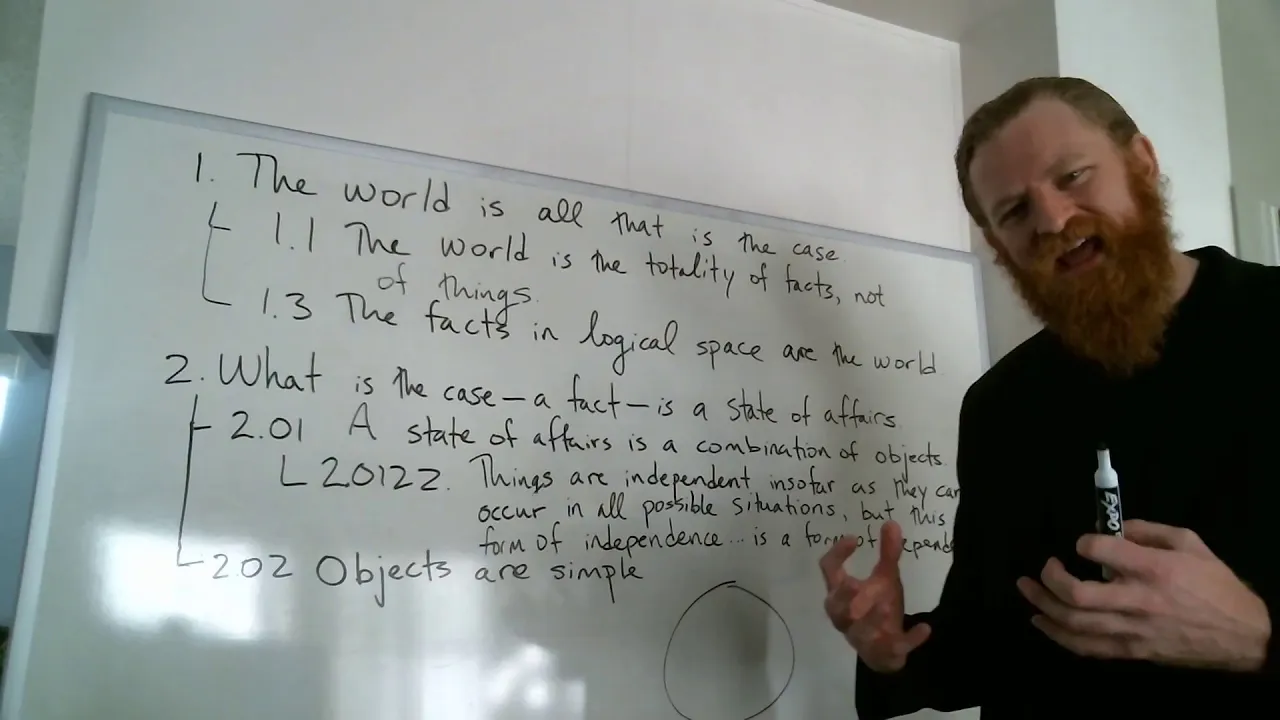
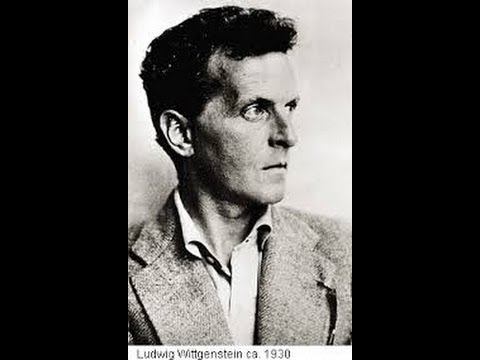
today I want to talk about binstein TR Thomas so first of all a little bit about lud binstein himself binstein was a very peculiar sort of person um he studied with Russell and mo in Cambridge uh the track Tau us was his dissertation so it would be fascinating to have been there at the dissertation events to hear the three of them discussing these ideas um binstein himself was enormously wealthy um born to one of the wealthiest families in IND uh and in all of a Austria Hungary um he ended up serving in the first world war in the Austrian Army um which is part of the reason in the lectures uh that Russell says I don't know whether he's alive or dead binstein was a sort of curious person he had no interest in wealth and ended up giving away the family fortune um he for many years taught at a small Elementary School in the mountains uh in Austria uh because he went to Cambridge and uh decided that philosophy was pointless essentially and so did this um it is reported that his Elementary School students were terrified of him that he routinely slapped people who got wrong answers that areic and anyway he ended up going back to Cambridge eventually um there is a famous incident much disputed in which Carl poer appeared and gave a talk at Cambridge and uh viin Stein is said to have threatened him with a fireplace poker uh there is an entire book about that called vien Stein's poker uh it's clear that he was waving the poker around Witnesses differ about whether this was threatening or whether but in any case they were discussing ethical propositions and a statements and Vicken Stein was waving this poker about at poer saying give me one example of rationally Justified a statement and he said you not threaten visiting speakers with fireplace cers at which point V sign stor stormed out of the room uh anyway he was a highly idious sycratic guy he wrote this it was published in 1921 although it was written some years uh before the prison was actually serving in the war Rel least started then um then for a long time he didn't really do very much or published very much and then he wrote the philosophical investigations and a variety of other things that appeared in the late s and um those had a huge impact and were a radical departure from the thought here but here Russell at least thinks that Vicken Stein and here on the same page that Vicken Stein is in part the person who inspired his logical adamism as we'll see Vicken Stein um conceived of things rather differently and actually did not think he and Russell were on the same page at all um and in fact very nice book about binstein called vien Stein's Vienna which argu that he really ought to be understood as a continental philosopher not as an analytic philosopher and that he's up to something radically different from what Russell and others thought he was up to apparently at one point even though his work helped to inspire the vi Circle he was asked by Vi Circle philosophers to appear before them and give a talk and I am told that he came to the meeting of the circle turned his back to them and read poetry allow to them rather than actually give them a philosophical talk something that mystified them in any event let's start with the beginning of the track talks uh I took a seminar by the way senior year last semester that was entirely on the track totus and we all hated it the seminar that is trus um it was it was a few people in my class had taken a a course at the University of Pennsylvania with a sociologist named Philip reef and Reef's style was to go sentence by sentence very slowly that so that in his seminars which met just once a week for two and 1 half hours you would get through maybe one sentence um in two and a half hours and so you would be lucky by the end of the semester to get through the first page anyway they said we want that kind of course on the track TOs and so that's what happened um I actually thought this was brutal and the result was that we had a it was like see seeing a very a series of very closeup images of someone and never seeing a whole picture of their face imagine that somebody says all right I'm going to do a portrait here's what I'm going to do I'm going to zoom in with an electron microscope and get one of your hairs right I have no idea what this guy looks like all I see are these little you know microscopic images and that's what that course was like well today my strategy is just the opposite of that to give you the big picture and we're going to skip over a number of important details just so that we can get the big image and see the picture of so let's start the world is all that is the case now what he does here is give you an elaborate outline right this is Proposition one in the end there are seven propositions here and if you want a sort of short short version of the tractus just read the seven main propositions and they give you the structure of the entire work but then you get 1.1 and then various things under that 1.1.1 and or 1 point you know 111 1.12 Etc that explain those but it's all an elaborate outline and really it would be nicer although it would be obnoxious and take up a lot of P paper but it would be nice if these were indented so it was easy to see just what depended on what yeah so is this that was on canvas your own distillation of what's in that book um it's not my own distillation it's actually excerpts but I have put in some of that indentation in the original that's not there so I've tried to help you out so you can see that outline structure um as it's usually presented it's just a list like that and then it's very easy to miss what is actually a key proposition what's explaining what so I tried visually to to sort of help out but okay the world the first bit of explanation 1.1 the world is the totality of facts not of things now we have a nice contrast going on if we're thinking about what makes up the world and we're doing what Russell did starting to think about the ultimate constituents we've got a question of well what are we looking for as the ultimate constituents let's think about oh well for example Plum what are the ultimate constituents of the world in Plum the forms the forms the forms really right I mean think about the divided line you've got Shadows of things but they're really derivative right of the objects but then that whole visible realm is really derivative of the realm of forms and then the mathematical forms are actually derivative from the most abstract forms and so you might say look we've really got Shadows Of Shadows and so on and in the end it's the forms that are really the ultimate constituents of the world how about Aristotle what are the ultimate constituents of the world for Aristotle forms in matter okay forms in matter and what is a form in a matter forms and matter forms and matter right exactly so we've got this hylomorphic conception as it's called a question of form and matter but now it's not sort of understood as two big Realms the realm of the material and the realm of the forms but instead informed matter right and so this piece of chalk might be an example of the form of a piece of chalk in a bit of matter um or me Humanity the form of humanity in well flesh and Bone um and so in those cases we say aha with me this particular bit of informed matter or this as a bit of informed matter those are substances right and so we can think in terms of ah yes there are all these categories but they all depend on substance or we can think well what is a substance it's really a form in matter and so we've got substances from one point of view or uh informed matter matter and form together as in in in the basic picture well in Russell's case what does he think the ultimate constituents are simpol they're the ultimate simpol out of which everything else is built and what are those ultimate symbols in the end senses yeah sense data these little bits of experience right theistic bits of experience now in binstein it's clear the world's all that is the case the world is the totality of facts not things so for binstein the ultimate constituents here are really facts now ultimate well maybe that's unfair because as we'll see facts actually are made up of things too and so this is maybe less radical than at first glance it appears but it looks like he's trying to say look I'm I'm differentiating my view from that of Plato or Aristotle or the idealists or Russell or anybody else I'm saying facts are basic facts are the things that make up the world now the world is determined by the facts and they're being all the facts so notice there is something important here that Russell also observes in the philosophy of logical at it's not enough to just list the facts you might think ah if the world consists of facts then I could characterize the world completely by just listing all the facts let's just take the world consisting of this room okay A little subor a situation if you will and think about what it would be like to characterize it in terms of listing all the facts it would be complicated there are a lot of facts just involved in this room um facts about what is where about who is here about that poster on the side about the Blackboard and what I've written on it with if we started listing them we would realize wow there are really a lot of facts involved in describing just this room but now suppose we had a list of all those facts and we said done we've given a complete description of room binstein is saying well not quite we need to know that those are all the facts there's an important Point here which is really there is a kind of generality that is in aimable you can't get rid of it you've got to say and that's all folks think about an indu Ive definition where you say here are the base cases like for example zero is a number and then here are the inductive Clauses like if N is a number that n plus one is a number and then at some point you have to say and that's all the numbers there are okay um in order to get a principle of mathematical induction and describe arithmetic and the same thing is true with all sorts of other things um Aristotle gives you a definition of a citizen a citizen is the child of a citizen and you might think well that's stupidly circular but it's not really circular it's that there's some case he has in mind okay these people are citizens then how do you get to be a citizen if you're not one of those well you are a child of a citizen and so that's how he characterizes citizenship in athet now um this is but the point is you have to at some point say oh and and that's all that's all the citizens you need something like here saying and this is all the facts so we've got a sort of picture here of that um one way to see this practical way to see it is actually something that's come out in artificial intelligence suppose ah I don't to say suppose real life case um someone who was supposed to give a talk this afternoon can't get here give the talk it's canceled um why because she's stuck up in the Northeast and there's a snowstorm and her flight was canceled so one thing you could do is say oh is there any way to get to Austin now that my flight has been canceled you look at the airline schedules and they list flight flights right and their status let's say whether there's still any seats on the flight whether it's been canceled due to the storm and you could go through and think well okay now suppose you can't find a flight with any seats left that's actually flying today you conclude there is no flight now there could be those facts that are listed in the table do not actually tell you there were no other flights but you assume there are no other flights yeah is there a difference between their like like is there a difference between there being no flight and there being flights that aren't flying that aren't available you know what I'm saying like is that like when you say there is no flight do you mean like they're gone they don't exist right now the flights well what I really mean to say yeah maybe the storm is misleading in this respect so let me give you a different example um a few years ago my aunt died and I was going to go to Pittsburgh for a memorial service but I was told no she didn't want a memorial service there is no memorial service then I get home on Thursday to listen to a message that says actually we are having a memorial service it'll be Saturday morning well at this point I look at the flight schedules to say is it possible for me to get a flight from Austin to Pittsburgh on Friday and I look at them and they're all spld out now I infer there is no flight that I can take from Austin to Pittsburgh right but in fact it didn't say there are no flights it said well there were flights a b c and d but they're all sold out now I iner basically I'm assuming that those are all the facts that when I look at the Southwest Airlines schedule for example it's listing all the flights it could be that like it's not right it could be like oh here are flight times but there are these other secret flights you got to know somebody right but it's not we we tend to think no no no we look at the schedule there AR Secret flights um if it's not listed there it doesn't exist okay and so to go back to the example today some of those flights well would exist in general but aren't existing today because of the storm but in any case we look through and there's no way to get here we say all right that doesn't do it that doesn't do it that doesn't do it for whatever reason and we end up concluding there's no way to do it and that's a the Assumption in the background is that the schedule is listing all the flights um you might think actually we get into a devil wear's Prada thing here you know get me out of Miami I got to get there uh no nobody's flying even you know Charter Jets might not be flying and so the thought is we have to know not only what the facts are but those are all the facts we need something that says and that's a complete description and that kind of general fact that's all the facts is an important additional fact otherwise would' never be able to say there isn't anything it's something related to a problem that the um Nia B problem uh philosophers in India worry about U their example is the elephant in the room is there an elephant in this room no now how do you know that we don't see an elephant cuz you don't see an elephant in the room right you look around no elephant no elephant no elephant no elephant and you conclude there is no elephant in the room but their point is well gosh how do you do that right uh you somehow infer from the fact that okay over here I just see a door and so on there's no elephant here I see people there's no elephant here somehow you say and you know well what do you see they some of them end up saying there must be a lack of an elephant an absence you see there is no elephant and so there must be a negative fact in Russell or binstein term the the fact that there is no elephant or as they would put it the absence of an elephant in the room um and so they commit themselves to well negative facts in this terminology or absences in a more ontological sense but other people might say well no no no I there isn't a separate fact of an elephant not being in the room they're just the facts that I'm observing in this case plus this factor of assumption that those are all facts right that I'm seeing what's in the room and if there were an elephant here I would be seeing it I'm not seeing it there for the reason okay anyway let's continue the totality of facts determines what is the case and also whatever is is not the casee the world divides into facts and so it's possible for us to take the world and say well what are the what's in the world we can carve it up into these facts and let's ah here this is important each item can be the case or not the case well everything else Remains the Same so it's not just that these facts exist these facts the ultimate constituents anyway which we'll end up calling Atomic facts are logically independent of one another one of them could change and everything else would remain the same now if you stop and think about it you realize oh a lot of facts actually aren't like that suppose one of you didn't come today what difference would it have it would it have made to any of the rest of us are there other facts that would have depended on that we have perfect dependence here today no no that it's true well all right there are a few people absent what if those few people had shown up that would have been the addition of a fact that that person is here right would that have added any additional facts we have empty seats or we have a limited amount of empty seats oh all right we would have had fewer empty seats um right now the seat to the right of you is empty but maybe the person would have sat there and so there would have been somebody to the right of you that fact would have been different yeah there may be more men than women or women than men or there may be more brown-haired people than I mean oh good okay it could change the balance between men and women or brown-haired people and blonde people or and bald people or uh gosh um people with blue eyes green eyes brown eyes Etc all sorts of things might change right all those numerical counting facts about people in any Dimension could have changed can you think of other facts that might have changed yeah I mean the seat would be depressed a little bit because they'd be sitting on it good all sorts of physical packs would change right there would have been pressure on that seat in a way that there isn't now and so that would have changed um presumably they would have exerted gravitational force on the rest of us um greater than what they're doing right now when they're not here um it's tiny nobody would observe it uh oh here we go example okay so so but he enters now he's here that fact has changed what other facts are going to change no pressure what about I say I put him up to this that would have been awesome but eventually we to do that yeah uh the course of discussion will change if that well I guess it's not a fact that that person will talk though no good right it depends what does that person say anything I'll probably say something see probably he just did okay so he said something if he hadn't been here he wouldn't have said that so that's already changed things that changed what I just said and so there might be all sorts of facts changed as a result of that due to his causal interaction with the rest of us and so that too is going to change facts now what does vien stein mean then when he says each item can be the case or not be the case while everything else Remains the Same it means a lot of those facts are really derivative right they're derivative facts these basic facts are going to be ones that are totally well at least logically independent now he doesn't say they're causally independent and so maybe we've been picking out causal dependencies um it is true that gosh everything else wouldn't have remained the same so at least it appears that that kind of thing is involved maybe are is he saying that causally independent too that seems strange but if they're at least logically independent then we're going to have to exclude lots of facts presumably fact that now there's someone sitting behind you and in front of you and uh to the left of you and to the right of you and so on all of those presumably are not Atomic facts because they've been changed by someone's presence the fact a basic fact change and then all sorts of other facts change derivatively let's go on to proposition two what is the case a fact is the existence of states of Affairs so a fact is something that is the existence of a state of affairs now this is important but also potentially confusing states of Affairs can exist or nonexist so right now for example there is an empty cap carrier in my office okay uh yeah don't ask um but a state of affairs then of the cat carrier being in my office and the cat carrier being empty those states of Affairs exist now at 2:00 a student from last semester is bringing me a cat this happens to me a lot I I really should stop teaching so that students stop redeeming cats but anyway this cat is arriving into that will change the state of states of Affairs right there will still be a cat carrier in my office but then there will be a cat in it and so and then I will take the cat home I'm not going to just leave it there so that will lead to the departure of both cat and cat carrier so what about that State of Affairs of the cat carrier being empty it exists now it will stop existing at around 2:00 okay and a new State of Affairs will start existing the cat in the cat carrier but states of Affairs are things like that they are objects standing into relation to one another or being exhibiting a certain quality and those things can exist or not exist now what do we say about the fact the fact is the existence of the State of Affairs it's a fact right now that there is an empty cat carrier in the office and so that fact is a fact because the State of Affairs of the cat carrier andd being in the office exists um it's nice have a language that will allow us to talk about the fact what happens to the fact of the empd cat carrier at 2:00 well the State of Affairs ceases to exist what do we say about the fact it's no longer a fact it's nice to have some language for that and so the language people often use is that the fact obtains or fail to fails to obtain um but that can be a little tricky basically the fact obtains if and only if the State of Affairs corresponding to the fact um that's what constitutes the fact the existence of that State of Affairs so you might think I don't want to be too misleading here um but one way to think about it is that a State of Affairs is the kind of thing that sort of a possible fact it might exist in which case it is a fact or it might not exist in which case it's just a possible fact yeah so what is a fact about the cat carrier if it I mean if we're saying that it can change like if you add a cat to the cat carrier the fact that the cat character cat character that the cat carrier is empty is no longer a fact right right so like what would be just a basic fact about the F about the cat carry that it's just a cat carrier all right good it's a really hard thing to identify the basic facts and in fact in fact all the way through the tractus we're going to get this diagram as a work of how the molecular uh facts depend on Atomic facts and how in short these other constituents of the world depend on the ultimate constituents of the world but then the question arises well great you've given us this map of how to get down to the atoms but what are the atoms what are the basic facts and what are the things in the basic facts and guess the answer you know Russell at the end gets to this point and he says oh and I think they're the ultimate constituents of experience so the they're the sense data binstein never tells us and so are two ways of thinking about it one is he gets us up to the point where he says okay so it all depends on the ultimate constituents what are they I don't know I'm not telling you uh that's one way to read it the other way is to say here's what language does it creates this structure and then you say what is it the ultim ultimately the structure of he says language can't answer that question maybe that's one of the things at the end that we have to pass over in silence that's something we can't communicate later post postmodernists actually say things that are very similar to that interpretation of wienstein that in the end all language can do is divide up reality carve it up into basic facts but if you say now what are the components of that there's no way of answering that question we've got language and then in the intuitively speaking what the language is the language of and a postmodernist might say there's no way to talk about that because we'd have to use language we can never get outside language to say what it's actually giving us a picture of and I think there's a lot in binstein that gives support to that sort of picture yeah I don't know if this is the same kind of idea I had I had a really hard time like a year ago I had a 7-year-old cousin at the time visiting and she and and she pointed to the UT Tower and said so that's University of Texas and I said yeah that's University of Texas and then we were walking around campus and she pled to she said but is that University of Texas too and I said well yeah that's also University of Texas and I started to think about like well if I remove one building is it still the university I I had a really hard I I didn't think I had the language to describe how all of the things were the University of Texas and yet if you remove one thing it might still be the University of Texas and if you removed another thing it might still be but at one point is there really not a University of Texas there's just this thing we call the map or something you know what I'm saying yes yes okay good yeah somehow an ad campaign pops into my mind here you know you look at the main building this is UT you look at this classroom this is UT right you look at you this is UT Etc right and that'd be kind of cool wow I I should be an Advertiser but but no there's an important philosophical question here when you think about these large scale facts for example facts about the University of Texas you start thinking wait a minute how does that depend on whatever these comic facts on it's really complicated and it's not at all obvious what that ends up meaning about the relationship to Atomic facts um there is a Buddhist text that actually gets at the same question um where a monk nagasa runs into the king U the king is driving in a chariot and they begin to talk and it's very funny actually because he says who am I addressing it he says well I I'm called NASA but that's just an appalation a name a way of counting really there is no ego here to be found and the king is astounded starts asking him about this and what what he does is essentially give that kind of argument precisely look I'd still be me if I yes is this hand nagasa well you know I'd still be me without the hand so obviously not I can't identify with me me with a part but you also can't identify me as the whole of consisting of these parts CU I could lose a part right so the main building could collapse or could be uh you know torn down and replaced with something else and would still be the University of Texas so actually he ends up going through a long list of things and concludes yeah none of those are essential to being me so there is no n so I can imagine if you were a Buddhist you would have continued saying there is actually no University of Texas that was what I was I was thinking like that can't be true that there's no University of Texas that's what right no of course not so so in the end what it amounts to is that's well in in Russell's term something like a complex of all these individual things but it's hugely difficult to explain exactly what kind of complex it is and I think as soon as you get into these counterfactual things but wait it would still be the University of Texas even if that didn't exist or even if some of you hadn't come here and so on and so forth all of that makes you think I don't actually know in the end what that is right yeah is the existence of states of Affairs a place where wienstein and Russell differ since wouldn't Russell say like the cat carriers presence in your office is a complex and therefore doesn't it's a fiction right it doesn't exist in the way a simple does oh good notice I said but C carer doesn't have a name um I have a friend who names almost everything uh names his cars names this and that but the cat carrier has no name even my cars don't have names sad but anyway um yeah so that's a description first of all but even if it were a name it would really resolve into some kind of description so in the end into the ca carrier is nothing it's no simple in Russell's view it's a complex you're absolutely right um and Russell doesn't introduce something like a state of affairs here we've got a fact and the fact is the existence of the State of Affairs so we've got a fact maybe something like what um that the carrier is empty and corresponding to that is a state of affairs um which I will depict in the following way using my brilliant artistic skill well anyway and there's and see no cat there's no cat later there will be a cat so this is at you know uh 11:00 but now at say 230 there will be cat carrier and inside will be a cat and so what will happen that will be a different state of affairs and this will cease to be so right now this state of affairs exists which makes that fact this one does not exist but at 230 this one will exist and this this one will cease to exist and at that point there will be another fact so this fact that the character is of will no longer obtain yeah is that why Russell said that most eonic facts operate in like a short amount of time because State of Affairs are usually changing um well it's partly that and partly the fact that the kind of uh thing that he takes as basic is the kind of thing that constantly changes um if you have in mind what the sensations you're receiving right now MH then wow they keep changing every time you turn your eyes anything moves in your visual field anytime anything happens that uh that you hear and so forth and so if you think ah the pattern of sense data the only way you can really get that to stay very stable is to just stare at the same thing that's not moving um which is part of the reason by the way when people meditate they tend to stare at something and just it's like just stay at the wall be the wall and they're doing that to remove that that source of change yeah but Russell also believes that facts ultimately exist we just can't talk about them right they they make a proposition true or false but right they are included in his ultimate constituents facts facts uh I wouldn't think they're constituents I just think it would be like the most simple complexes I guess yeah it's I actually don't know how to talk about that for Russell but I I my my inclination is more to think of it your way which is that for I mean he thinks he's giving you the same view as binstein so I think on one level Russell thinks he's giving you a view where the facts are ultimate constituents and yet when you actually find out that for example there sense data is a sense datum a fact um what's the relationship between the sense datum let's say as I stare at the white chalk and then some fact I I think at least in the lectures um that we looked at the philosophy of logical atomism there's not really a very clear answer to that um and it's one of those questions on which I think he changes his mind over time um so whether PS are playing the same role in Russell that they are here I'm not sure I don't think there's enough evidence in a way in that um text to really be certain of that yeah just regarding existence the cat carrier couldn't exist for Russell because it's a complex it's not simple right yeah carrier is is some kind of complex and so it's a fiction um so it's certainly not an ultimate constituent of the world it's actually strange to say it's fictional I mean that if I said yeah you know this this fiction that there's a cat carrier in my office uh that sound like well okay if the cat Carri is fictional where you going to put the cat don't worry the cat is fictional too it's a complex uh but that that feels really strange right I mean obviously the cat the cat carrier are not just things making up it's not them just telling you a story there really is a cat character yeah I'm kind of confused on how fictions can't be simples as well because we can like I think we can kind of observe like there being two of something yet two itself is a Fiction two is a fiction right but there can be two of something M and we can still like we can still see with our sense data or like inter with our sense data right right yeah so why do you think that's a problem because and because you know following that reason I would think two could still be as simple even though it's a fiction ah well yeah um I think I think what it amounts to is Russell is using the term fiction in a sort of technical sense because you might think look um if I ask you what is fiction how would you answer that question now you're afraid to say anything yeah go ahead I what what what I my immedate thought was just um the things that you would count and say these are two holes are always fictions like any complex ho that can be counted has to be a fiction itself might be one Sol that like you can't count sense data even though the term makes it seem like they are discret things I don't think I mean can't you just like sense there being a pair of things though or like it does it have to like involve some kind of like action thought process voice Transcendent to like a fiction I just thought you could like immediately interpret there being more than one like apple say yeah juming well I was just kind of going to go back to what I was saying earlier and I definitely interpreted Russell that he believes that you know that facts exist on are are the basic constituents like on page 33 it says he's talking about simples and then he says the only other sort of object you come across in the world is what we call facts oh okay right so like I I guess how I interpreted it is a lot um I guess a lot more similar to what Vin sign is saying here and I don't really understand the difference if if I'm right in saying that Russell believes that there are facts out there well no you may be right as I said I don't think here's why I don't think it's entirely settled because in the end he says well what we're really after are these ultimate constituents of the world um logical atomism is The View that you can get down in to symbols that have a kind of being that nothing else has and are facts included among that in that passage it sounds like he's saying okay here are the basic things these symbols and then also facts and like that confuses me since in the end I think he's sort of saying ah it's the be we can get down to the symbols which are the real things well what are the facts and I don't think in lecture 8 it's it's like the facts of sort of disappeared I don't know what status they have and that's why I thought it was ineter I agree with you there it sounds like you've got two things these things I'm going to count as simples and then you've got the facts that are composed of those and I think that's a viable interpretation of what he's doing it's just strange that by lecture 8 he seems to have forgotten about the facts so I don't quite know what to say about that so I think what you're saying is perfectly plausible and on that reading Russell's right that actually he's giving you an account very much like viin Signs and really what we have here is a picture of okay simples and then there are simple Atomic facts that are made up of those simpol and those are the ultimate constituents of the world um there basically for both Russell and wienstein there's this this sort of funny thing going on because you've got facts that they are in some sense taking as basic and yet put in this language a fact is the existence of a state of affairs and the State of Affairs is going to be made up of objects and so when we get out of the ultimate facts these are going to be made up of simple and then we say well uh so is it a fact a complex of sybol and so doesn't the fact not really exist it's really the symol and I don't know how either one really means to answer that question a fact has to correspond to a simple right well a fact doesn't correspond to a simple it has symbols as something like it well at least an atomic fact would have something like symbols as its constituents or components or something like that so you can't have a fact without the simpol but you could have simple well I mean you couldn't I was going to say you couldn't have simples without yeah well you can't really have a simple without a fact what would that be like right it would be something that exists but has no qualities stands in no relation right well anyway I promised that we weren't going to get bogged down on just one page and so far we're still and so I I'm now pulling this Philip Reef thing that I actually sort of hate so much so let me um move us along quickly to really know an object I have to know all of its possible occurrences in states of Affairs and all kinds of states of Affairs um but now I'm going to jump through a lot of the explanation of two which I think gets immensely complicated and tricky and get down to well 2.1 we picture facts to ourselves now that's important we picture facts to ourselves a picture is a model of reality and so a picture is itself a fact but the fact that the elements of a picture are related to one another in a determinant way represents the things that are related to one another in the same way notice what I've done in trying to draw this state of affairs I've given you a little picture right I've drawn a little cat carrier here I've drawn a cat inside the cat carrier and the idea is that these are pictures so well what does it mean to be a picture it stands in a relation to a certain State of Affairs and so here I've just drawn you a picture but the idea is well look this carrier really does corespond to Something in the world and so here I've drawn it on the Blackboard but here you might say is now what am I going to do I'm going to draw you another picture but let's say this is my office Wagoner 403 and here is well there's all sorts of stuff in my office and as you know it's a terrible mess if you've been there and here's a stereo speaker and on top that's thereo speaker is the cat carrier and so the idea is look this picture actually stands for something in this case it's not a picture of what's going on because I've drawn a cat here here it's empty so that sort of matches this but later there will be a cat in the cat carrier and that will correspond to something too and so a picture is a kind of fact it's a bunch of objects related to one another and it stands for some other fact it's representing some other fact it's laid against reality like a measure he says so a picture includes a pictorial relationship it has to have something in common with what it depicts now this little picture of a cat doesn't have a lot in common with a cat but it has something in common with a cat right what does it have in common with a cat say it again what does this little drawing of cat have in common with an actual cat it is in the shape of a cat okay it has a I mean it has this there's this head right and ears and whiskers you said it was a cat I said it was a cat that's true and so fitting into a certain Network in a way is I said it was a cat if I just if you know I hadn't said a word just looked showed you that said what is that I think it's a fish it's a fish take a platus plat yeah well you know I was trained in abstract art actually you know what ruined me actually I I nothing ruined me I always suck as an artist okay somehow I took courses in painting and drawing and sculpture and got A's but I have no idea how I got Aid in those courses cuz I I really sort of stink um surprise surprise right um but I did have one drawing teacher who was convinced that the faster Drew something the better it was the more artistic it was now this seems to me insane as a principle but it made it easy to get an A in his class because a there's the model so you oh okay yes there she is so there's her hair there oh I love the abstraction I can see the influence of cubism so anyway yeah um now what was I talking about what does this well yeah the idea is the parts map on to things in reality and so there is a kind of relationship here that we could think of as a mapping relationship um as a function as a correspondence but there's some way of saying ah that corresponds to an ear so is that that corresponds to a whisker that corresponds to a tail that corresponds to a body these little lies that look like insect legs that corresponds with the cat's legs and so yeah there's there are some parts of the cat that like it's Cor respondence to the drawing or I mean there's some parts of drawing that its correspondence to the cat will be more important than others like in the way we classify fruit or like something you know some weird things classify as fruit because it was grown with a seed or something even though it has no other relation to to uh fruit do you know what I'm saying like could you pick one thing out in that drawing that connects that to a cat more than anything else good ah well yeah I I don't know now that you said the fish thing it is looking more and more like a fish to me uh although the ears I mean fish don't have ears like that but but you're right to and the tail looks plaus like now I'm see saw that way um but notice what's happening here when I was drawing it I was thinking of certain features of a cap and representing them here and so what was going on was yes first of all I was isolating certain features and emphasizing them in what I was doing and the point here is that we're getting a picture theory of language that's what language does too language is something like a picture of reality it's a map of reality and there are certain features singled out by language there's always much more complication in the actual object than can be represented in the drawing or in language and so it's sort of like a partial model that's why he says this is something like a model of reality a model where all sorts of aspects of the real thing are being left out but we're modeling certain aspects of it yeah um would it be a one to one function or would it because I was thinking that if you just draw a cat you can make that as like a general like kind of picture for all cats ah right so yes it's uh in general not going to be one to one um in fact this inspires uh a sort of model truth that you get in something like uh discourse representation Theory where this is understood as a homomorphic embedding there's a homomorphism here which allows for the fact that um there isn't really a an isomorphism a one toone correspondence you might say this is isomorphic to certain features over there certain things but nevertheless there might be many ways of mapping this in reality so this the cap that's arriving in my office at to is named Bell but actually in so far as I've drawn this that could be a representation pretty much any right I mean this is a very generic sort of cat image and languages like that too if I say ah the students are in the room or even better there are students in the room that's something that could represent many many different possible states of Affairs and so it is something that actually maps on to this reality in a certain way but it would map on to many different realities and that's typical for language um now I have one minute the F yes a logical picture of facts is a thought so this is sort of a picture in a more obvious sense but a thought is a picture of a fact um or a set of facts moreover well that's what a proposition is it's really giving you that kind of picture and he says a proposition has one and only one complete analysis sentences might be ambiguous propositions are never ambiguous and now let's go to four ah thought is a proposition with a sense so we have propositions and senses of propositions that's what thoughts are really and then he gives you a structure of Truth and falsehood and how that all works but now I want to jump ahead past a lot of The Logical technicalities of this to where this is all ultimately going most of the book is actually an elaboration of proposition four but finally we get five a proposition is a truth function of Elementary propositions so we can break propositions down into a structure and that's reflecting a structure in the underlying facts but then we get to the final uh you might say conclusion of all this proposition six and seven so six the general well the general form of a truth function is blah blah blah and what it really amounts to is something like a state of affairs and then a sign that tells you whether it obtain whether it exists or does not exist that's the general form of a pris position and that allows us to say certain things but there are lots of things we can't say there are lots of uses of language that aren't just depicting reality even though that's what we do much at the time and so in the end he says what we cannot speak about we must pass over in silence we cannot answer all sorts of questions basically saying this is what a scientific picture of the world is it's something like a picture of the facts in the world but there are all sorts of questions like ethical questions that we cannot ask in that framework and he says even when possible all possible scientific questions have been answered the problems of Life remain completely untouched of course there are then no questions left and this is itself the answer one of the things that can be expressed is actually the relationship between thought and reality and so in the end the proposition of this book can't really be expressed either and so he says this is a lad and once you climbed up the ladder you realize you don't need the ladder anymore and in fact the ladder doesn't even make any sense so you kick it away this was all a way of getting you to the point to realize that none of the propositions in this book actually describe reality or pictures of reality and so none of them actually make any sense but the answer is there is no question
Up Next
11:35
Wittgenstein: Philosophy of Language & Meaning Explained
@metamorphosis_77
44.9K views•2019-10-07

164:01
John of Damascus on Holy Images: A Theological Defense
@BannedBooks
139 views•2026-04-25

50:07
Frege on Sense and Reference: The Analytic Tradition Lecture
@PhiloofAlexandria
53.2K views•2017-01-27
4:57
The Myth of Sisyphus: A Greek Legend of Eternal Punishment
@TEDEd
8.6M views•2018-11-13
Related Study Plans & Knowledge Roadmaps
Structured learning paths in Philosophy
philosophy
Frankfurt School: Critical Theory & Culture
01Foundations of the Frankfurt School and Critical Theory
02Horkheimer & Adorno: The Critique of Instrumental Reason
03The Culture Industry and Mass Deception
+ 2 more learning modules
12h5 modules
Explore Roadmap
philosophy
Philosophy of Language: From Frege to Austin
01The Linguistic Turn: An Introduction to Language in Philosophy
02Gottlob Frege: Sense and Reference
03Early Wittgenstein: The Picture Theory of Meaning
+ 3 more learning modules
15h6 modules
Explore Roadmap
philosophy
Feminist Epistemology: Standpoint & Injustice
01Introduction to Epistemology and Feminist Critiques
02Sandra Harding and Standpoint Theory
03Donna Haraway and Situated Knowledges
+ 2 more learning modules
12h5 modules
Explore Roadmap
philosophy
Environmental Philosophy: Ethics & Deep Ecology
01Foundations of Environmental Ethics & Anthropocentrism
02Biocentric Individualism and Animal Liberation
03Ecocentric Holism and Deep Ecology
+ 1 more learning modules
10h4 modules
Explore Roadmap