
![What is 'Hume's Fork'? [Illustrated]](https://i.ytimg.com/vi/QcYwoWqiHvs/maxresdefault.jpg)





![[철.굴 3순환]5-3편 언어학과 철학혁명-비트겐슈타인편](https://i.ytimg.com/vi/DNgdpAzcvvo/sddefault.jpg)
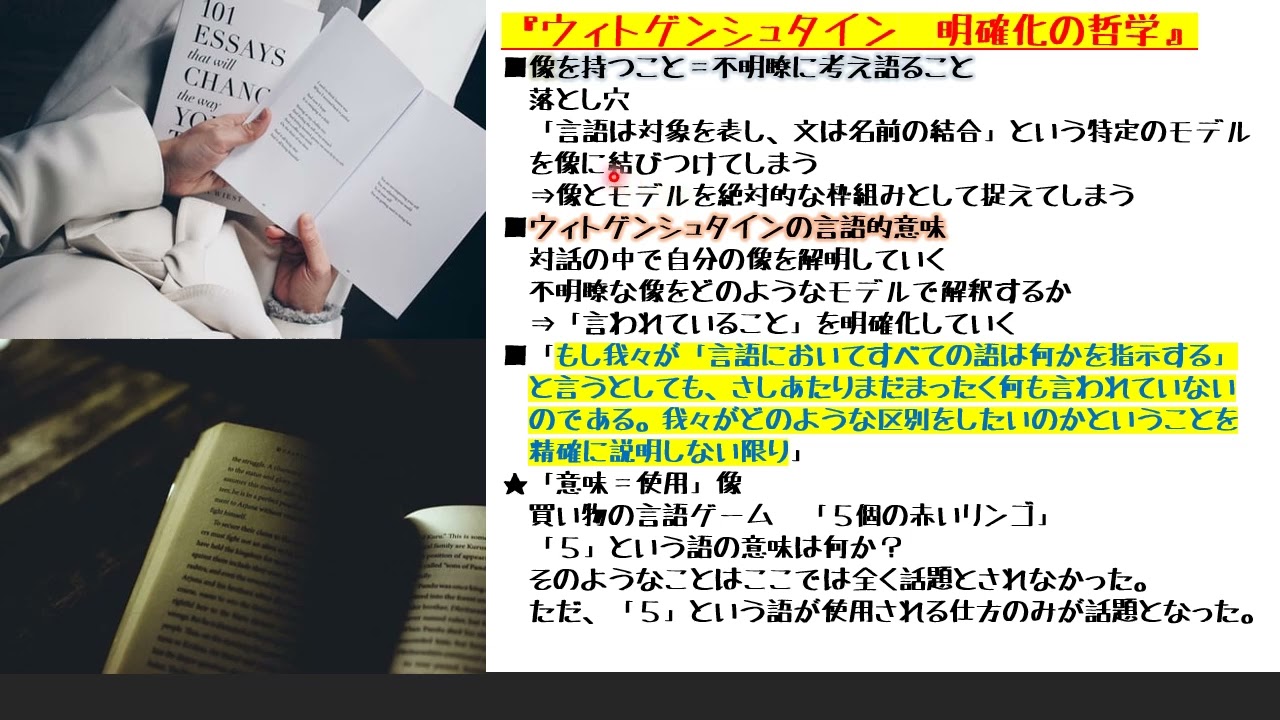











The linguistic turn in analytic philosophy, emerging in the 1920s-1930s through the Vienna Circle and figures like Carnap and Schlick, shifted philosophical inquiry from direct metaphysical claims about the world to analyzing the meaning and structure of language itself; this movement criticized traditional metaphysics as meaningless pseudo-statements and established that meaningful philosophical discourse requires examining what words mean, with truth conditions, justification conditions, and verification conditions all converging on meaning conditions.
The Linguistic Turn in Philosophy | Logical Positivism Explained
Added:Hume's Fork and Classical Empiricism: Understanding David Hume's distinction between relations of ideas and matters of fact.
The Foundations of Analytic Philosophy: Basic familiarity with Gottlob Frege and Bertrand Russell's work in logic and philosophy of language.
Early Wittgenstein's Picture Theory: Key concepts from the 'Tractatus Logico-Philosophicus' regarding how language represents reality.
Traditional Metaphysics: A broad understanding of metaphysical inquiries into the nature of existence, which logical positivists sought to reject.
Quine's Critique of Positivism: W.V.O. Quine's landmark paper 'Two Dogmas of Empiricism' and the collapse of the analytic-synthetic distinction.
Karl Popper and Falsificationism: Exploring falsifiability as an alternative to the verificationist criterion of meaning.
Ordinary Language Philosophy: The transition to late Wittgenstein's 'language games' and J.L. Austin's Speech Act Theory.
Post-Positivist Philosophy of Science: Examining Thomas Kuhn's 'The Structure of Scientific Revolutions' and scientific realism.
3K views17likes10:26Original Release: 2014-02-21
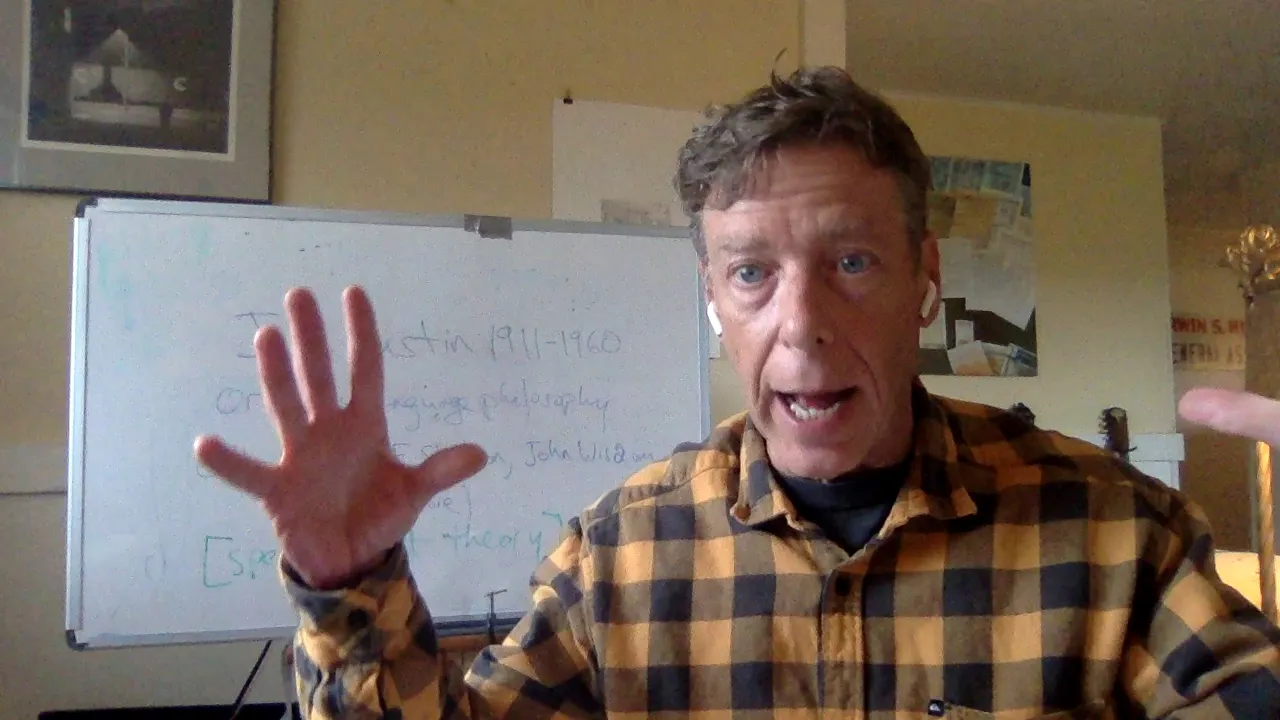
okay I'd like to talk a little bit about what is um properly called the linguistic turn in philosophy um when I say that when I say the linguistic turn I'm mostly looking towards uh the analytic tradition um you know if we want to go to the Continental tradition we can think about Jac um you know some people that are you know following this period of time I'm I'm talking about the linguistic term I'm thinking about like 20s like early 20s late late 19s you know um you know and then into into the movement of the Vienna Circle and then the and logical positivism um so that's kind of what I'm what I'm think what I'm thinking about um I'm Curr Cur currently taking a class where that's basically what we've been talking about is logical positivism and we're kind of moving pass that into into 1950 and onward so I thought I would just um at some point I'm G to make videos which are about each of the main um or about you know some of the main articles of this movement um I've done a video about GE Moore's intro of sense data and um Russell's hard and soft data which is kind of the beginning of that then what follows I also did a video on the Vienna Circle and then what follows from that is this movement called what is commonly called the philosophy of logical positivism um so why is this why it's called the linguistic term what is meant here is that prior to the the people I'm thinking about is uh Rudolph carnap um Mor schlick um these people includ yeah there's Carl hamble Friedrich Vasan um what they they're inspired by Vicken Stein and it has a lot to do with with Aon stach um you know B beran Russell was a big part of the influencing of this movement here uh in in his writings um so basically what this it's like but prior to like prior to Russell and Fraga you know prior to those guys um prior and somewhat you know during um you know we have these different kinds of of metaphysics in modern philosophy we had the rationalist and the empiricist the rationalist had metaphysics about um the soul the mind and God or I mean the soul the world and God when that's what K critique and the rational rationalist talking about life nits um deart um spot a made um but then the the empir are like lock Hume Barkley um those guys um so then we have 19th century um well we had Kant of course then we had 19th century of Hegel fcta um shelling um you know those guys and then the neoc contans like Schulz and uh um Beck and those guys um but you know the this is what these linguistic ter ter people are terming metaphysics um they're out to destroy and hate on metaphysics but it's a good thing in that it's trying to you know instead of talking about about the world as such we're going to talk first about what do what does this talk we're talking about mean what does this mean what the what are the words that we're using mean so Rudolph carab in his article the um elimination of metaphysics through logical analysis um he basically you know quotes quotes haider's uh vist metaphysic and uh he you know gives this quote where he you know if you didn't if you were on the analytic side of philosophy you would not know what the hell he means but if you are conditioned in the Continental thing you would some you know have a good idea also via secondary sources on on heiger but basically what I'm saying is that he you know and then it extends to people who um who you do who do philosophy via pseudo statements uh what does car what does carut mean by a pseudo statement um either a sentence which has a word in it which has been erroneously believed to have meaning or a sentence which is made up out of meaningful words but are put together counter syntactically um you know uh against the rules of logical syntax not grammatical syntax and in in the in that paper caret makes makes a distinction between grammatical and logical syntax um now when I when I do the video on that article then I will talk about that more but and then it rustles hard and data he which is which is in his book our problem our knowledge of of the um external world he um makes a difference between language of common sense or thing language or in language of com of sense data where um you know if I have the blue spec Spectacles on which is what the name of my channel is UM and if I have those on and I'm looking looking at this at this remote um and the blue it's not white it's blue because I have the blue glasses on I wonder why is this blue and in thing language I'd be like oh because there's a intervening medium um but in common but in sense data language we would say we'd have to correlate a certain touch space I would touch the the lenses we have to correlate a certain part of touch space with sight space so I'd have to put I would have to touch the lens and and put my hand out outside of it in order to to to correlate the two but all goes down to what do we mean by when we say such and such so and then in car's paper empir empirism semantics and ontology um he kind of you know does things a little a little bit different because logical positivism has kind of gone down because we don't have that that that that could of a reductive translation between between the thing language and in this in the syth language so we don't really have that really good of stuff going on so um logical positiv is kind of going you know it's kind of just going to go down a little bit so it in this era the linguistic turn is about what the words we use mean so you know if we're a Barkley style idealist you know um or schopenhauer idealist then we have to Define uh certain statements which are um of a certain kind in order to move up to you know certain other statements to figure out what these words designate so we have to in in his in carnap's 1950 article he's like well you can talk in any certain way but you have to I guess give an idea of what it means to say x um so it boils down to what to what we mean and if we figure out what the words we use mean then we can figure out what the world is then we can you know have a certain kind of of kind of metaphysics because even though the positivist The Logical positivist are hating on and trying to destroy metaphysics they're still doing a form of metaphysics which doesn't use pseudo statements that in in in the carnap since um they don't use meaningless um words and counter syntactically formed sentences and then we have the big issue of pro protocol sentences and you know as to how those factor into the whole picture of the buildup knowledge um because the whole stick there is truth conditions equal just ification conditions equal ver verification conditions equals meaning conditions so um that's what all that is so it all blows down to if we can figure out what this means if what a certain thing means then we can figure out how to go about you know we then normally what what will happen is a is a certain theory of Truth um though more schlick would not really like like to call it a theory because it's not a science scientific theory it's a some other kind of theory but um you know you would figure out what truth means but it you know has to do with what our words mean and if we don't really look at that if we try you know try to ignore what our words mean then according to these guys you know it's not going to then our structure of knowledge doesn't really um um work that worked that well so yeah I'm just kind of thinking about this stuff and uh maybe maybe in a few months I'll continue and make a video about carat but I just kind of want my uh I'm taking a class called the theory of knowledge which about epistemology and I'm I want to let this class uh be done with so maybe I'll do it in the in the in the month of May or April or such
Up Next

44:47
What Is Philosophy? Isaiah Berlin & Bryan Magee (1977) | Men of Ideas In-Depth Philosophy Interview & Introduction to Key Concepts
@Philosophy_Overdose
64.1K views•2022-03-25

164:01
John of Damascus on Holy Images: A Theological Defense
@BannedBooks
139 views•2026-04-25

68:32
Should We Destroy the Machines? Big Tech Surveillance Critique
@TheStoriesWeTell303
167.9K views•2025-11-30
4:57
The Myth of Sisyphus: A Greek Legend of Eternal Punishment
@TEDEd
8.6M views•2018-11-13
Related Study Plans & Knowledge Roadmaps
Structured learning paths in Philosophy
philosophy
Frankfurt School: Critical Theory & Culture
01Foundations of the Frankfurt School and Critical Theory
02Horkheimer & Adorno: The Critique of Instrumental Reason
03The Culture Industry and Mass Deception
+ 2 more learning modules
12h5 modules
Explore Roadmap
philosophy
Philosophy of Language: From Frege to Austin
01The Linguistic Turn: An Introduction to Language in Philosophy
02Gottlob Frege: Sense and Reference
03Early Wittgenstein: The Picture Theory of Meaning
+ 3 more learning modules
15h6 modules
Explore Roadmap
philosophy
Feminist Epistemology: Standpoint & Injustice
01Introduction to Epistemology and Feminist Critiques
02Sandra Harding and Standpoint Theory
03Donna Haraway and Situated Knowledges
+ 2 more learning modules
12h5 modules
Explore Roadmap
philosophy
Environmental Philosophy: Ethics & Deep Ecology
01Foundations of Environmental Ethics & Anthropocentrism
02Biocentric Individualism and Animal Liberation
03Ecocentric Holism and Deep Ecology
+ 1 more learning modules
10h4 modules
Explore Roadmap