





![مناقشة لأفكار فيتغنشتاين مع كريتيكال [291]](https://i.ytimg.com/vi/hUIx7pTyXnM/maxresdefault.jpg)









Ludwig Wittgenstein developed two fundamentally different philosophies: his early work (Tractatus Logico-Philosophicus) proposed a picture theory of meaning where language mirrors reality's structure, while his later work (Philosophical Investigations) introduced a tool/use theory where meaning derives from how words are actually used in language games, rejecting the search for universal essences and emphasizing that language is a form of life governed by social practices.
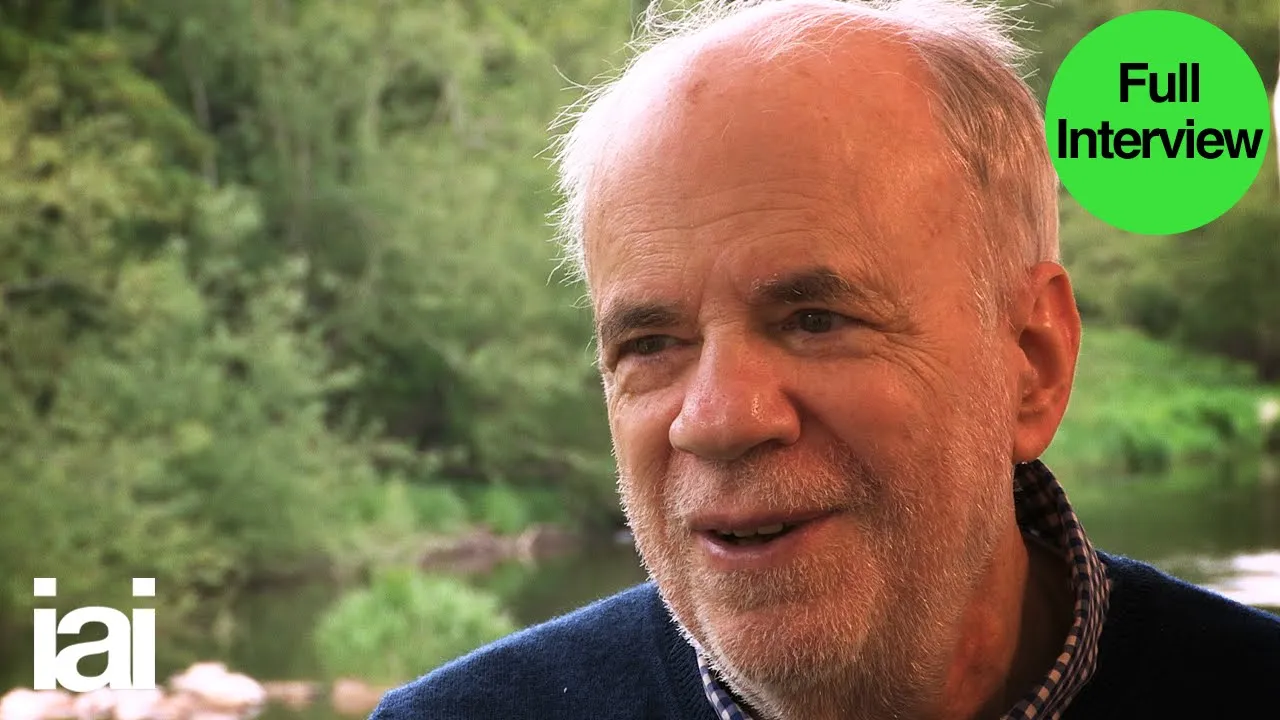
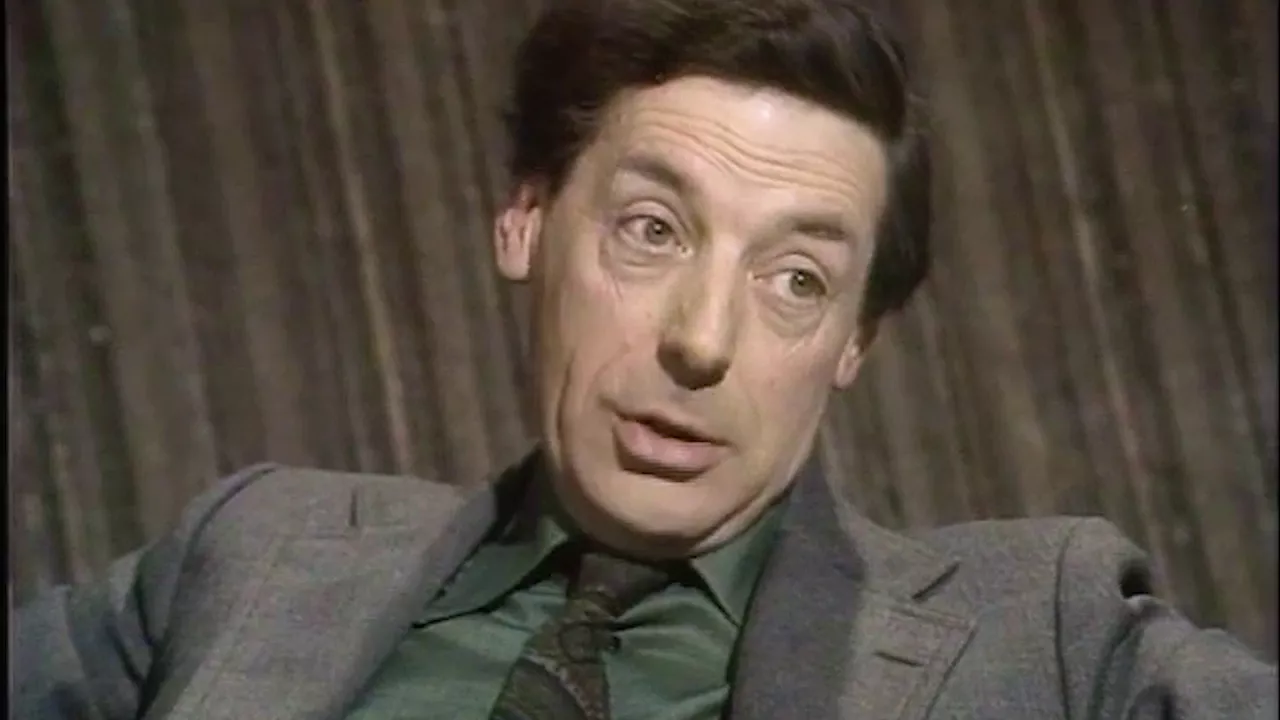
Wittgenstein's Philosophy | Searle & Magee (1987)
Added:Bertrand Russell's logical atomism and Gottlob Frege's distinction between sense and reference, which directly influenced Wittgenstein's early work.
Fundamental concepts in the philosophy of language, such as the nature of reference, truth conditions, and how language relates to reality.
The basic tenets of Logical Positivism and the Vienna Circle, who integrated Wittgenstein's early philosophy into their verificationist theory of meaning.
John Searle's Speech Act Theory, which expands on Wittgenstein's idea of language-as-action to analyze how we perform deeds with words.
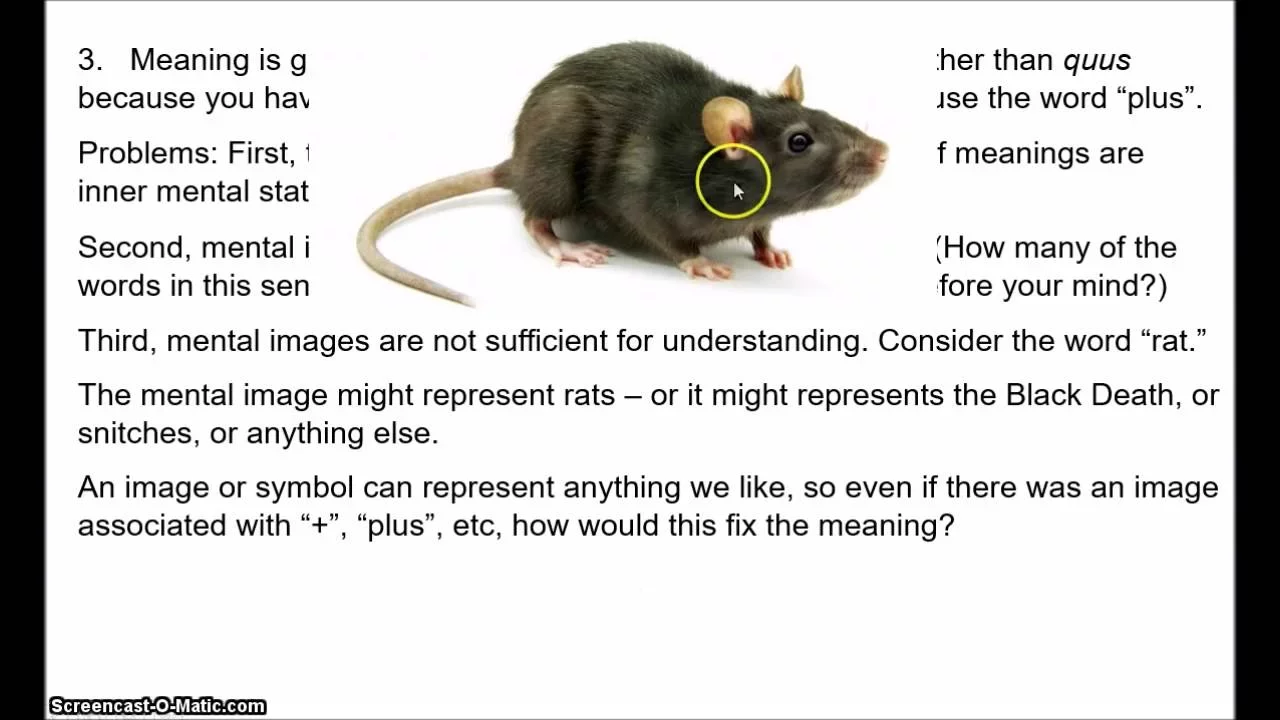
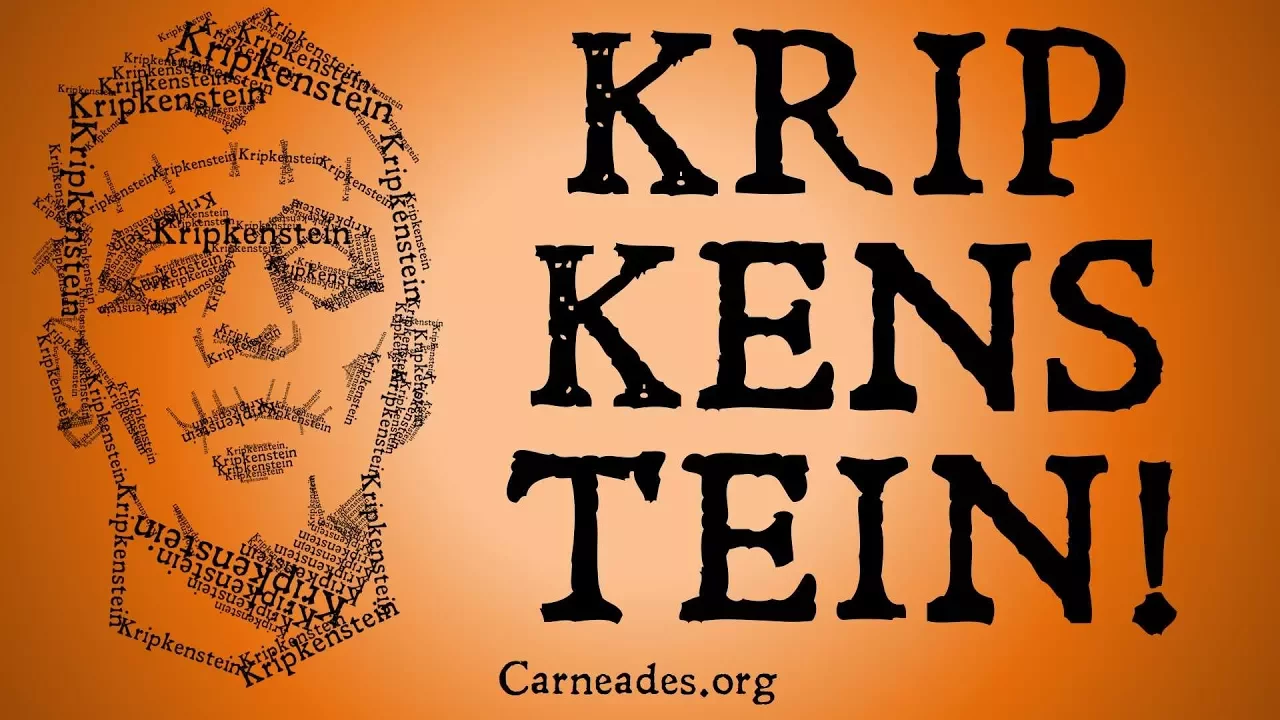
Saul Kripke's influential interpretation of Wittgenstein's rule-following considerations (often referred to as 'Kripkenstein') and its skeptical challenge to meaning.
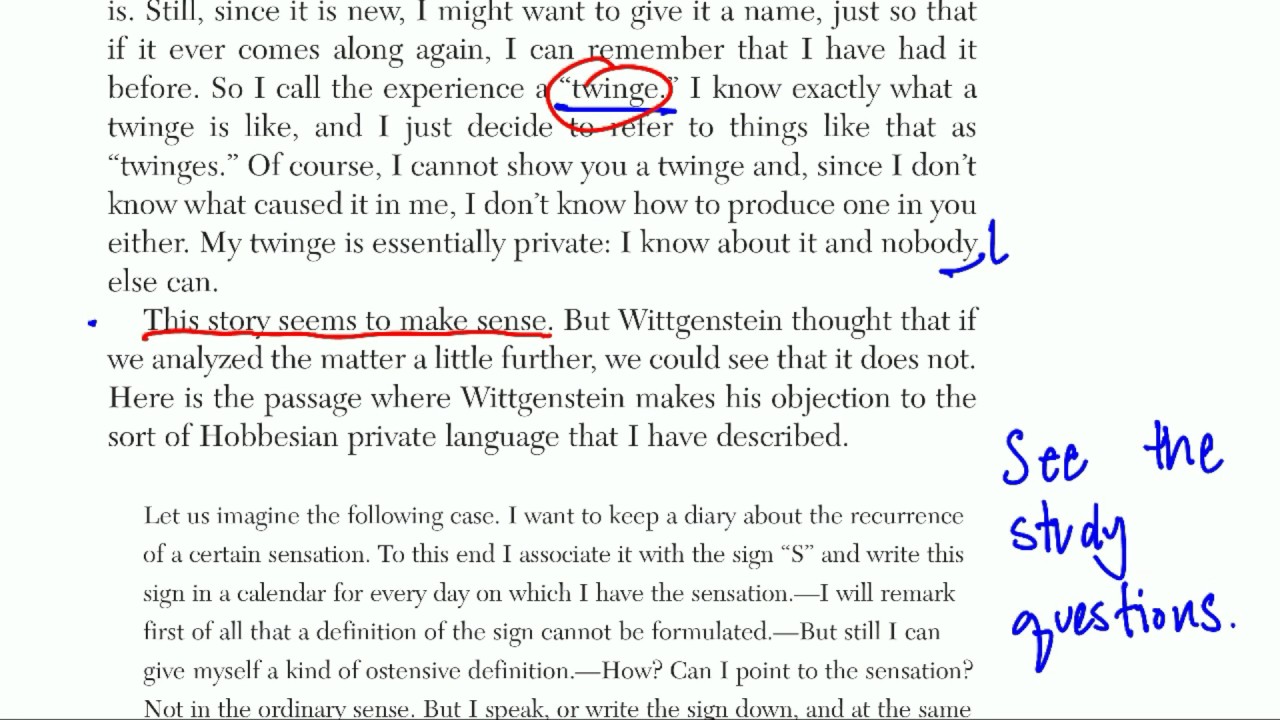
The application of the 'Private Language Argument' to contemporary Philosophy of Mind, particularly in debates regarding qualia, consciousness, and Cartesian dualism.
The development of Ordinary Language Philosophy in Oxford by figures like J.L. Austin and Gilbert Ryle, who built on Wittgenstein's later methods.
81.6K views2.1Klikes42:34Original Release: 2023-08-25
in philosophy as in most other fields of human activity the merits of the living are much more controversial than those of the Dead if you took a worldwide poll today among professors of philosophy on the question who is the best living philosopher I'm pretty sure no candidate would get an overall majority so any list of the so-called great philosophers can only end with the latest of the generally acknowledged dead and today for us that is Wittgenstein Ludwig Wittgenstein was born in Vienna in 1889 his father from whom he was to inherit a fortune was the biggest steel magnet in Austria Wittgenstein was fascinated by Machinery from Boyhood and his education was strongly weighted in the direction of mathematics physics and engineering after studying mechanical engineering in Berlin he spent three years at Manchester University as a postgraduate student in aeronautics during this period he became absorbed in fundamental questions about the nature of mathematics Bertrand Russell's book principles of mathematics inspired him to give up engineering and go to Cambridge to study the philosophy of mathematics under Russell himself he soon learned all that Russell had to teach and went on to do the original research that was to produce his first book The tractatus logico philosophicus published in 1921 and usually referred to just as the tractatus Wittgenstein genuinely believed that in this book he had solved the fundamental problems of philosophy so he turned away from philosophy and did other things meanwhile the tractators acquired enormous influence stimulating further developments in logic at Cambridge and on the continent becoming the most admired text among the famous group of logical positivists known as the Vienna Circle Wittgenstein himself came to feel that it was fundamentally in error so he went back to doing philosophy after all in 1929 he returned to Cambridge where in 1939 he became professor of philosophy during this second period at Cambridge he developed a completely new approach quite different from his earlier one during the rest of his life its influence spread only through personal contact since apart from one very brief article he published nothing more before his death in 1951. however in 1953 his book philosophical investigations came out posthumously and proved to be the most influential worker philosophy that's appeared since the second world war at least in the English-speaking world so here we have a most remarkable phenomenon a philosopher of Genius producing two incompatible philosophies at different stages of his life Each of which influenced the whole generation these two philosophers although incompatible do have some basic features in common both are focused on the role of language in human thinking and human life and both are centrally concerned to demarcate between valid and invalid uses of language or as someone once put it to draw the lines at which sense ends and nonsense begins for me the earlier of wittgenstein's two main books The tractators Remains hauntingly readable but it has to be said that it's the later one the philosophical investigations that has made him a cultural figure of international significance During the period since his death here to discuss wittgenstein's work with me as John so professor of philosophy at the University of California in Berkeley Professor cell since Wittgenstein himself repudiated his early philosophy and since in any case it's now the later philosophy that's far and away the more influential I don't think we ought to spend too much of our discussion on the early work what is it about that that we really need to know well I think the key to understanding the tractatus is the picture theory of meaning Wittgenstein felt that if language was to represent reality if sentences were to represent states of Affairs then there had to be something in common between the sentence and the State of Affairs and he saw the way to describe that on the analogy with the way that pictures represent states of Affairs he thought there had to be some structural similarity that just as the sentence was made of a sequence of words that stood for things names so the arrangement of words in the sentence pictured or mirrored the arrangements of objects in the fact now this gave him a a remarkable sort of lever of a metaphysical kind where he could then read off he thought the structure of reality from the structure of language because he thought that the structure of reality had to determine the structure of language unless language mirrored reality in some way it would be impossible for sentences to mean so the crucial Point here is that we are able to talk about reality not just because we use words that stand for things but because those words have a relationship to each other within the sentence that corresponds to the relationship that things have to each other in the world right now so that's what he called The Logical structure right and the world and sentences have that structure in common right but it's important to emphasize now that we're not talking about ordinary language of the sort that you and I are discussing which he thought concealed The Logical structure he thought if we took ordinary sentences and did an analysis of how they mean we would get down to the ground floor sentences what he called the elementary sentences and there there would be this strict picturing relation between the structure of the sentence and the structure of the fact now he inherits from Fraga the idea that the fundamental unit of meaning isn't the word but the word only functions the name only means in the context of the sentence and as you said it's the concatenation of the words in the sentence that is itself a fact that enables the sentence to picture the structure of facts in the world now I think people will see quite easily how that can be the case when a sentence is picturing a true fact I mean if I say there's a cat on the mat and there is a cat on the mat I think the that relationship is easily understandable but suppose I say there is no cat on the mat how can that sort of sentence be said to be picturing something well video Stein thought that words like not an and an or and if the so-called logical constants that they actually didn't picture they were not part of the picturing relationship as he says my fundamental idea is that these logical constants don't themselves represent there are ways we have of stringing pictures together and it's not so unrealistic if you think about it and for example across the street from my house in Berkeley there's a little park and there's a picture of a dog with a line through it now I take it that's not supposed to pick dogs that have stripes painted on them the the line is the negation sign and that's a it's a wittgensteinian sort of picture that is the the not symbol there is a way of operating on the picture but it isn't itself part of the picture so and he thought that what we say about the world can be analyzed down into basic sentence structures basic sentences which picture the world and are linked together or negated by particular operators pathological constants which have this function right now in my uh introduction to this discussion I said that throughout his career Wittgenstein was concerned to demarcate talk that made sense from talk that didn't make sense how was that demarcation done in the early philosophy well in the early philosophy in the in the tractatus if it can start that Wittgenstein thought that the only language which strictly speaking made sense was this fact stating language now unlike the positivists he didn't relish that he didn't think that was wonderful he thought that the really important things were unsayable were unstatable he thought that ethics religion Aesthetics were in the realm of the unsayable and he once said about the tractators that the really important part of the tractatus is the part that's left out the part that's not there at all so he he made a strict demarcation of meaningful language as fact-stating language and the other parts of language those parts of language that are not used to state facts he thought were strictly speaking nonsense and we couldn't really say anything although there might I mean although ethics religion the Arts and so on are a fundamental significance in life we can't actually ever do them Justice in language there are as far as the tractatus is concerned they are even it isn't that we can't do them Justice our attempt to do them Justice is meaningless we can't say anything meaningful about them now you've made the point very clearly that the central to the early Wittgenstein is this picture theory of meaning how did the late of Wittgenstein depart from that well again though the veganstein's ideas are very complex there's a rather simple answer to that question he moved away from the picture metaphor of the nature of meaning to the tool or use metaphor as the correct conception of meaning he says think of words as tools and the way to understand language the way to get a correct conception of how language function is to look at how words are used he says for most cases not all but for nearly all cases the meaning of a word is just its use in the language now this just as the tractatus gave him a certain metaphysical conception of the world derived from language so by changing from the picture metaphor to the tool metaphor he turns that metaphysics upside down now instead of saying that the structure of reality determines the structure of the language now what he says is that the structure of the language determines what we think of as reality we can't think of the world we can't discuss the world we can't have a conception of the world independent of the conceptual apparatus that we use for that purpose now you've raised a lot of very fundamental concepts here and I think we ought to take them one at a time for the sake of clarity let's let's begin where you began with the distinction between a picture theory of meaning and a tool theory of meaning the later Wittgenstein is no longer saying that a that that words or sentences picture what they're about he's saying that a word or a sentence is like a tool and what it means is what you can do with it so that in fact the meaning of the term is the sum total of its possible uses now it's in the nature of a picture that it can picture that it does in fact picture only one thing pictures and object or a state of affairs where it's in the nature of a tool that it has many uses perhaps an indefinite number of uses now that applies to his view of language doesn't it yes precisely yes yes let me say a little bit more about that Wittgenstein is anxious to insist in the investigations that language is indefinitely extendable and that there isn't any single thing that binds all uses of language together that there isn't any single Essence that runs through all of language and indeed for particular words there needn't be any particular Essence that marks the definition of that word that he says words have a a family resemblance of their uses so that I mean he gives the example of game he says if you ask yourself what is it that all games have in common and he keeps insisting don't think what they all have in common but look and see if you can find anything and then he says if you consider board games Olympic Games gambling games games played with uh balls on fields and so on what you find is that there isn't any single Essence there isn't any single thing that all games have in common not even the fact that they're pastimes or diversions right and if you're living in a career if you've been to Las Vegas say it isn't that those people are are just amusing themselves it's a pretty Grim business to watch them at the gaming as they're called tables but the idea is is that the strength of uh the words derives not from some underlying Essence but from the fact that they there's a series of crisscrossing relationships similarities and he Compares that to the way that the various members of a family resemble each other and he calls this a family resemblance relation now it might seem like wittenstein was just saying sort of obvious points here but remember he is militating against a very powerful philosophical tradition he's militating first against the idea of his own that words get their meanings by standing for objects and then secondly an even older tradition that says words get their meanings by being associated with ideas in the head and he's militating against a tradition that says this goes back to Plato that in order for a word to have a meaning there must be some Essence there must be some essential trait that the word marks so the interest of his remarks about language derives a lot from their revolutionary or radical attack on a pre-existing tradition he uses the term family resemblance so often that I think it's worth saying just a word or two about that when we talk of a family the different members of the family having a marked family resemblance to each other it need not be the case that there's one single feature that they all have in common they'd need not be the case that they all have the same nose or all have the same chin but that there's no single feature that they all have in common just an overlapping and crisscrossing a a set of features from which they all draw as it were now Wittgenstein is saying that this is true of language and meaning that if we look at a term or a word it's a great mistake to look for the one thing that it means because there is no one thing that it means the meaning of a word is like family resemblance in that case uh namely a word has several different meanings like the several different members of a family there may be a crisscrossing and overlapping set of relationships between those different meanings but there's no one thing that the meanings all have in common which is as it were the essence of that word that's really that's that that's right that's what he's saying now he doesn't say that this is true for every word in the language no doubt there are words that have strict definitions but he thought that this was crucial for philosophers to see because a lot of the words that trouble us especially in philosophy I mean in ethics and Aesthetics words like good and beautiful which he was very suspicious of these words but he thought that our part of our failure was we were looking for some essence of beauty or Essence of goodness whereas he insists just look at the various resembling crisscrossing similarities in the use of these words so he's saying for example that we have all sorts of different kinds of talk there's scientific talk religious talk music talk everyday talk philosophical talks such as you and I and are having and in each of these areas of discourse language is characteristically used in different ways and the same words will be used in different ways so don't ask yourself you know what is the specific meaning of this term ask yourself how is this term being used in that particular area of disco that was one of his slogans don't ask for the meaning ask for the use and at this point he introduces another metaphor indeed it's one of his few technical terms he introduces the notion of a language game and the idea he has is that we should see speaking a language on analogy with playing a game in that characteristically it's rule governed we aren't ourselves entitled to lay down The rules not everything is determined by the rules so there is a great deal of slack room for interpretation but nonetheless we're engaged in rural governed forms of activity now this again is a disconcerting idea for a lot of philosophers because he wants to insist that there isn't any foundation for the language games any more than there's a foundation for football or baseball these are just human activities and so he wants to get out of the idea that these language games where the word has its home where words get their meaning from their role in the language games he wants to get out of the idea that there must be some transcendental justification or foundation for the language game no The Language game has to look after itself we play a language game of ethical discourse of aesthetic discourse a fact-stating discourse a language game with the word cause a language game of identifying spatial and temporal relations so he's anxious to insist that there are the sequences and series of human activities where the use of words is tied up with the rest of our lives in a regular order but not in any way predetermined fashion and that's really the task of the philosopher is to describe not to justify or give a foundation for but to give just a description of how the language game is played I must say I think it's something of a disaster that if you fastened on this term language game because it sounds as if what he's talking about is something frivolous and in fact it even feeds a certain prejudice against philosophers that exists outside philosophy that they're all just playing with words or that they're somehow superficially concerned with with language this isn't so at all no let me know you use the word game for serious intellectual reasons right and let me just Hammer home the reasons for the analogy first of all it's an activity it isn't something Sublime that just goes on in our heads and it isn't an abstract set of relationships it's a ongoing human activity and secondly it's conventional it's regular There Are Rules involved and those are the features that he wanted to to get that we should look at language in action and we should see it as part of regular rural government Behavior but there I mean and that sounds I think pretty uncontroversial at least to us but there is a more radical aspect of this that I want to bring out and that is wickenstein thought that there isn't any point of view outside of language where we can so to speak stand back and appraise The Language game from a non-linguistic point of view he thought there wasn't any any Archimedean point from which we could get away from operating inside a language game stand back and appraise the success or failure of language in representing reality he thought that was impossible we're always operating within the language game we're always operating within some language game or other there's no conception that we have of appraisal or of getting at the world apart from operating within a language game but part of what he's saying is that for me to be able to see this as a hand or that is a table I must be in possession of the concepts hand and a table and therefore what I see reality as being is constituted by a whole conceptual structure that I have which can be articulated in language that's that is a great deal of it but I think in a way it goes even deeper than that for Wittgenstein Wittgenstein really thinks veganstein is part of the movement in the past hundred years it is part of it's a characteristic feature of the 20th century that we no longer can take language for granted language has become immensely problematic to us and it has moved into the center of philosophy and Wittgenstein is one of the great leaders in that movement so he would certainly agree with what you just said namely that reality divides up the way we divide it that because we call we we can only think of this as a hand or that as a table because we've got the relevant Concepts the relevant words but the point is deeper than that the point he wants to make is there isn't any such thing as thinking there isn't even any such thing as experience as human beings have adult full full-grown human being experiences that cannot exist apart from language language permeates that at every point now a moment ago you were saying that every language game has to be understood from the inside one consequence of this is as follows isn't it whereas uh the old logical positivists who'd been influenced by wittgenstein's early uh philosophy were extremely dismissive of all religious talk for example and they thought that if I said something like God exists that was just meaningless noise exhaust the later Wittgenstein would have not been intolerant in the same way he would not have dismissed religious talk as being empty of meaning what he would have said is well let's first of all examine how words are used in a religious concept a context how they function let's look at their use let's as it were get inside the religious language game as he would have put it and see how these terms are being used and then we can judge whether they're being used legitimately not legitimately or whatever it might be very curious about that last bit you see because what wegenstein would say is it's not our task as philosophy to a praise by the success or failure of the religious language game all we can do is describe how it's played and the important thing is to see that it isn't played like the scientific language game it's ridiculous he thinks that we should take religious utterances as if they were sort of second-rate scientific utterances for which there was inadequate evidence he was always anxious to insist well we ought to look at the role that religion and religious utterances play in people's lives that's the meaning of these utterances to see how what sort of a role they actually play in people's lives and he he disliked the idea that we should over intellectualize this and make it into some kind of of a theoretical Enterprise where what we were concerned to was to criticize this and see if the evidence uh for the existence of God was up to Snuff by scientific standards he didn't like that he looked w.g Grace once jumped on a chair in a meeting and said something Wittgenstein really approved of he thought this was wonderful I think Grace said something like this he said uh God doesn't want to head any old cabbage you'll do for a head what God wants is a heart now figure sign like that because he thought that was the language game in action that was not trying to get outside it and and do some sort of uh pseudo-scientific appraisal yeah but it is important I think for us to make the point that he didn't take a sort of anything goes attitude I mean he did think that philosophical puzzlement is characteristically caused by our using uh the terms from one language game as if they belong to another by for example trying to judge as you I think you just said trying to just say moral talk or religious talk as if it were scientific talk and that we got out we having got ourselves into these puzzles and problems the way to get ourselves out of them was to pay very strict attention to the way the words that we were using normally functioned no I think that's right and I he does have various ways he summarizes he says philosophical problems characteristically arise when we take the word out of the language game where it's at home and then try to think of it as something Sublime we would want to inquire into the nature of the good the truer the beautiful instead of just looking at how these words are actually used in The Language game where they get their meaning a few minutes ago we were talking about this analogy that Wittgenstein makes between games and the use of language there was one important aspect of it that we didn't take up because we can't talk about everything at once um a game is a rule governed activity and language is a rule-governed activity and has to be because if I didn't follow certain linguistic rules what I said would be unintelligible and wouldn't communicate or perform any of the functions I wanted to perform so I have to follow certain rules now Wittgenstein argued that because that was so there could be no such thing even in theory as a private language and his argument to this effect has become one of the most controversial aspects of his philosophy can you say a word yeah it sure is well I I would be glad to in a way I'm reluctant to get into this hassle because there's so much junk written about the private language argument but just let me say a little bit about it first of all you got to say something about rules we've been talking as if the notion of a rule for Wittgenstein was unproblematic but it wasn't his notion of a rule is it is itself one of his important contributions to philosophy what he thought was first of all that rules don't uh block off all eventualities that that language isn't everywhere bounded by rules nothing is everywhere bounded by rules there are always lots of gaps left open by any system of rules he gives the example of throwing a tennis ball when you serve there's no rule out how high you have to throw it but I suppose if somebody could throw the thing five miles high and we had to wait all day they'd make a rule I mean the rules are never final now another thing he said about rules is that rules are always subject to different interpretations and if you've ever been through the income tax laws you know this I mean the American in history of it is a series of different interpretations so it looks to Wittgenstein as if there's a kind of skepticism that arises here because as if anything can be made to conform to the rule by some fancy interpretation then anything can be made to conflict with it and you wouldn't get either a chord nor conflict the rule would then seem to drop out as irrelevant now his solution to that is to say obeying the rule is a social practice it's something we learn in society Society just has ways of making people and training people to conform to rules now he applies that to this whole private language problem the problem of the private language is could there be a language where I just named my own private Sensations in a way that no one else could understand it now the reason for all the fuss is that a lot of people in the history of philosophy has to have thought that must be the basic use of language in the whole Cartesian language must name inner experience that we get to the real world the external World by starting from our inner experiences by starting from inside and working outward now Wittgenstein wants to say two things about that first of all that isn't how the words for our inner experiences actually function they don't name private objects rather they're used in conjunction with public criteria Behavior situa Nations so we're not in fact speaking a private language when we use sensation language but secondly and more controversially he says we couldn't in fact speak a private language we couldn't give a private ostensive definition where we just sort of point inwardly to some private experience and name that experience because he said unless we can appeal to some larger social Gathering there won't be any difference between my thinking I'm using the word right and I'm actually using it right so his discussion of the rules and the and the social character rules is really what underlies his rejection of the idea of a private language and it's important for him to reject the idea of a private language as you say because he's reacting against a whole tradition of philosophy that goes back to I suppose Descartes but certainly includes law at least the the empiricist philosophers who say that we start by cognition of essentially private states of mind and and infer the world or build up a conception of the world from there now in the later Wittgenstein seems to me to be saying this that because the sum total of a words possible uses constitute its meaning in the end what language means and what words mean depend on forms of life on the social contexts within which they are used and in fact he uses that phrase forms of life a great deal so that all the ultimate criteria of meaning are not personal are not private at all they are essentially social are they not that's right and the and the it's important to emphasize that the notion of use is itself a social notion it's something that I do in conjunction with other members of a society and it's only because I'm trained to respond in certain ways that we avoid this skepticism that says well anything I do can be made to seem to be in accord with some rule or other or I could always interpret the rule in such a way that would come out in accord with it and he does emphasize the idea that a language is a form of life that we can't sort of carve off the language and look at it apart from the human activities where actually has its meaning when people pick up wittgenstein's books to read them I think they're often struck and surprised straight away by what they find because these books are not written in the way that ordinary books are they're not written in continuous prose they're written in separate paragraphs and each paragraph is given a number and very often it's not clear what the relationship is between a paragraph and the other two on either side of it and usually there isn't much in the way of connected argument either you get these brilliant metaphors brilliant examples brilliant similes so that the writing is wonderful and yet it's difficult usually to see what it is he's saying now why did he write like that well several reasons but first of all I do want to say I entirely agree with you about the character of the prose and it is both entrancing and exasperating I know I felt that when I Was preparing for this program I went and re-read Acres of Wittgenstein and there just is a huge amount and and it is enthralling you begin to start thinking that way yourself you begin to address your wife in Wittgenstein and aphorisms which can be very exasperating also you have this feeling that when you take up one of these books and and read it it's a bit like getting a a kit for a model airplane with no instructions as to how you're supposed to put all these pieces together and that can be extremely frustrating it's a sort of do-it-yourself book but why did he write like that well first of all I think it was the only way he found natural I mean he's often says what a torture it is for him to try even to put these paragraphs together consecutively much less to write conventional pros of Articles and books but secondly I think there is an element almost of arrogance in this Wittgenstein wanted it to be different from the standard ways of doing philosophy he hated this sort of standard articles that appear in journals and standard books that are written to be read by undergraduates in Philosophy by the way he would have hated the kind of thing you are and I are now doing to professional philosophers discussing his views on television but he did want to be deliberately different from other people and then there's a third aspect of this is that he honestly and sincerely was struggling to say something new and different and he always had the feeling that he hadn't said what he really meant that he was struggling to find a mode of expression and that he never really succeeded and then lastly I think we need to say for for English uh speaking viewers that this though it looks strange to the English eye to see this books written in this way it's not all that unusual in German there is a tradition in German philosophy of writing aphoristically you see it in Nietzsche it's in schopenhauer and Lichtenberg just to mention a few and the writing is that it's best wonderful I think we also doing the Justice it's a great stylist it's a great stylist and some of the sentences stay in your mind for the rest of your life forever after you've read them yes in my introduction to this discussion I mentioned the fact that in the last item when I how long why not to say 10 years 15 years probably not much more than that he has become an international figure of importance quite outside philosophy when one reads books and articles and journalism that have nothing to do with philosophy one is beginning now over and over again to come across wittgenstein's name can you say just a little about the fields outside philosophy in which he is important and and indicate at least what kind of an influence he appears to be having well at present I think it's like it's a kind of name-dropping it's an okay name and he's certainly mentioned in a lot of fields but I think he would feel himself that he has not been adequately understood and indeed has not been adequately understood in philosophy but some of these fields are literary criticism and Aesthetics generally Wittgenstein is now often referred to and I think will become more influential there is a great deal of mention of Wittgenstein in so social sciences particularly anthropology because he thought of himself as doing a kind of anthropology there is a books written about the importance of Wittgenstein for political Theory so it's what the the French would call The Sciences of man that Wittgenstein has been most influential paradoxical in a way because he wrote so much about the philosophy of mathematics but most of his influences now are in outside of philosophy are in the social it seems that the structuralists who are so fashionable or have been fashionable for so long seem to be claiming Wittgenstein for their own well it's the post-structuralist I think they probably misunderstood him but that's another program yes well right but then then we won't get into that but I think the point is worth making that for example if you read serious literary criticism now you are going to come across constant reference to Wittgenstein what is your personal evaluation of of of all this of Wittgenstein as a philosopher well I I feel so strongly about this I've been restraining myself all along just trying to say what the guy meant and not what I actually think about it but let me start out negatively and then I get to end on the on the more uh cheerful note there is a kind of exasperating feature of Wittgenstein that I want to highlight I want to emphasize and that is the anti-theoretical bent in Wittgenstein the idea that we mustn't have a theory that we can't have a theory of language we can't have a general theory of language or of the Mind now when somebody says to me when some guy says you can't have a general theory of speech Acts or you can't have a general theory of intentionality of how words are how the thought how thoughts relate to reality my natural instinct is to go out and write a general theory we'll just see if we can't have a general theory and in fact I have tried to make General uh statements in both of these fields I think it's premature of Wittgenstein to say we can't have General theories of language of a philosophical sort or general theories of how the mind functions we won't know if we don't try and the the sheer diversity of the phenomena should not by themselves discourages I mean think of physics if you think of Niagara Falls and a pot of water boiling and an ice skating rink it looks like very diverse phenomena and we could go on and on with the diverse forms that water takes but in fact we've now got a pretty good general theory that can account for all of that and I don't see why we shouldn't seek General theories in philosophy in particular in the philosophy of language and the philosophy of mind I almost think sometimes that Wittgenstein thought since he had failed to get a general theory since the tractatus failed then any general theory must be impossible roughly speaking if I can't do it nobody can and a lot of people a lot of what he actually believes a lot of his disciples have said to me oh well since you reject this anti-theoretical this anti-theoretical been of the investigation You Must Believe in the tractatus as if those were the only two options and I want to suggest there are lots of other options now tied in with this uh aversion to theory is a kind of waffling that goes on in certain crucial areas let's take religious discourse just as an example of this we were mentioning this earlier see Wittgenstein himself obviously had a deep religious hunger I mean it wasn't this sort of a middle-class English attitude about religion that it's just something for Sunday mornings no it he really had a religious hunger there are these constant references to God and getting himself right with God and yet I think most people would say that he was an atheist now he in a way you feel almost that he wants to have it both ways that he wants to be able to say things like well we just need to know the role at religious discourse plays in people's lives but of course you won't understand that role unless you see that religious discourse refers beyond that the only reason that people pray is because they think there's a God up there listening and it's and that's not whether or not God is listening is not part of the language game The Language game of religion can only be played the way it is because people think there's something outside the language game that gives it sense okay now that's for the bad part let me say what I think is really terrific in Wittgenstein well first of all I think most philosophers what I'm going to say right now is kind of contemporary Orthodoxy most philosophers would agree with this he has made terrific contributions in the philosophy of language and in the philosophy of mind his contribution in the philosophy of language is that he really amounted devastating attacks on the idea that words get their meaning by standing for things or by being associated with some introspective process by standing for some mental thing in the mind and he does knock those views pretty effectively and also he is pretty good one I think of the most powerful not the only one but certainly one of the most powerful expressions of the view that speaking a language ought to be seen as a form of human activity that words are also acts words are deeds and that is an important line of Investigations now in a way his discussion in the philosophy of mind is just as important as his work in the philosophy of language and it's a very effective attack on the Cartesian tradition on the idea that we really live in Two Worlds a mental world and a physical world but his attack on cartesianism is so powerful precisely because he doesn't mistake the as it doesn't make the mistake of most anti-cartesians of thinking yeah you just have to reject the mind just say there isn't any such thing as mental phenomena what he does is a painstaking analysis of a whole lot of psychological Concepts belief and fear and hope and expecting and he goes through these and what he shows you is that the Deep grammar of these Expressions is quite different from what you would think just looking at the surface where we have nouns like mind and body and where it looks like they're these two different things minds and bodies what he does is by carefully describing these language games he gets you to see that things like hope and fear and expectation and belief are grounded in situations that we actually use these words in such a way where we're not inclined to think there must be some deep Cartesian divide we say things like he's been groaning and in pain for the past two hours and we don't feel there oh my gosh he's mixed categories the physical groaning and the mental pain it's the Perfectly Natural way of talking and he shows us that our natural way of talking does not lead to any kind of cartesianism however the most powerful part of Wittgenstein from my own personal point of view is not his work in the philosophy of language and mind but it's an idea that really begins to acquire momentum in his last work it's also appears in his earlier work but in his very last work that he wrote when he was dying on certainty and that's it's a rather subtle idea but it's this we have in the western intellectual tradition going back to Plato we have the idea that any meaningful human behavior must somehow be the expression of a theory an implicit theory that we hold that if you understand me and I understand you it can only because we each have a theory of the other as you say an implicit an implicit very Chomsky things this that there's an unconscious theory of language and artificial intelligence is based on this presupposition that there are these unconscious theories now there's some truth in that but wittenstein is anxious to emphasize that a great deal of what we do both is both socially and biologically primitive it's a way of responding it's a way of acting we just act we don't need to appeal to the idea that there's some implicit theoretical structure that enables us to act and as usual he gives a very good similes he says look think of squirrels storing nuts for the winter now do they do that because they think hume's problem of induction has been solved and we now know that the future resembles the past no they just do it now he says think of yourself and putting your hand in the fire is the reason you don't put your hand in the fire is it because you think you've refuted Hume or you think you've got very good inductive evidence no you just don't do it you you couldn't be dragged into that fire and he says a great deal of our human activity has to be seen like that we're just responding in ways that are both biologically and culturally conditioned but his ground floor statement he keeps repeating this He Is We just act that's the way we do it and this goes against a whole tradition where we try to think well it's we can only do what we do because we've got an implicit Theory there's still a lot of juice in this or do you think that Wittgenstein himself has made all of the really importantly creative and constructive use of these ideas that can be made oh no I think there's a great deal more to be said on this uh to put it very bluntly I think Wittgenstein only scratched the surface thank you very much Professor so
Up Next

49:55
Wittgenstein's Tractatus Logico-Philosophicus | Analytic Tradition Lecture
@PhiloofAlexandria
103K views•2017-02-11

164:01
John of Damascus on Holy Images: A Theological Defense
@BannedBooks
139 views•2026-04-25

74:32
John Searle: The Logical Structure of Human Civilization | Social Ontology Explained
@Philosophy_Overdose
201.4K views•2022-07-27
4:57
The Myth of Sisyphus: A Greek Legend of Eternal Punishment
@TEDEd
8.6M views•2018-11-13
Related Study Plans & Knowledge Roadmaps
Structured learning paths in Philosophy
philosophy
Frankfurt School: Critical Theory & Culture
01Foundations of the Frankfurt School and Critical Theory
02Horkheimer & Adorno: The Critique of Instrumental Reason
03The Culture Industry and Mass Deception
+ 2 more learning modules
12h5 modules
Explore Roadmap
philosophy
Philosophy of Language: From Frege to Austin
01The Linguistic Turn: An Introduction to Language in Philosophy
02Gottlob Frege: Sense and Reference
03Early Wittgenstein: The Picture Theory of Meaning
+ 3 more learning modules
15h6 modules
Explore Roadmap
philosophy
Feminist Epistemology: Standpoint & Injustice
01Introduction to Epistemology and Feminist Critiques
02Sandra Harding and Standpoint Theory
03Donna Haraway and Situated Knowledges
+ 2 more learning modules
12h5 modules
Explore Roadmap
philosophy
Environmental Philosophy: Ethics & Deep Ecology
01Foundations of Environmental Ethics & Anthropocentrism
02Biocentric Individualism and Animal Liberation
03Ecocentric Holism and Deep Ecology
+ 1 more learning modules
10h4 modules
Explore Roadmap