









![FILOSOFÍA - Epistemología [CICLO FREE]](https://i.ytimg.com/vi/O0G1C39cEzo/maxresdefault.jpg)






Logical positivism, developed by the Vienna Circle in the 1920s, was a revolutionary philosophical movement that rejected metaphysics by asserting that only empirically verifiable statements or logical tautologies are meaningful; this approach, championed by figures like Moritz Schlick, Rudolf Carnap, and Otto Neurath, sought to make philosophy a tool for clarifying scientific concepts rather than formulating doctrines about the world, profoundly influencing 20th-century thought despite its eventual limitations.
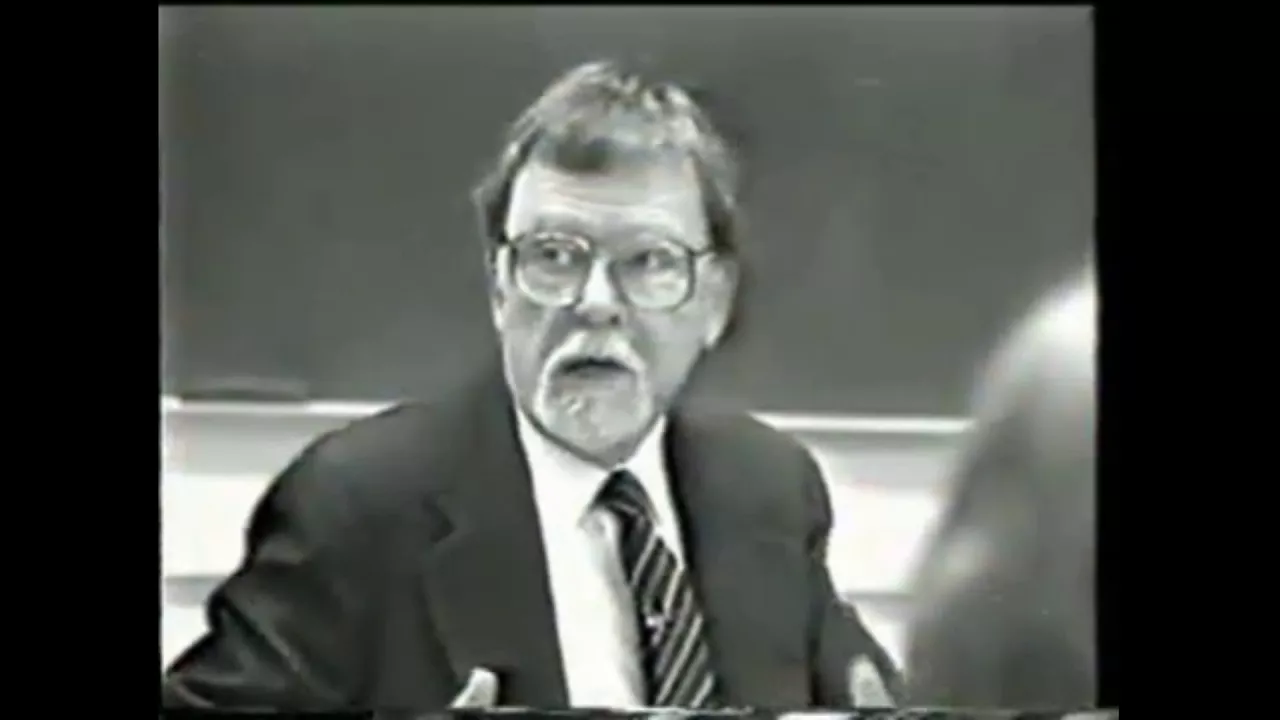
A.J. Ayer on Logical Positivism | Philosophy Interview (1976)
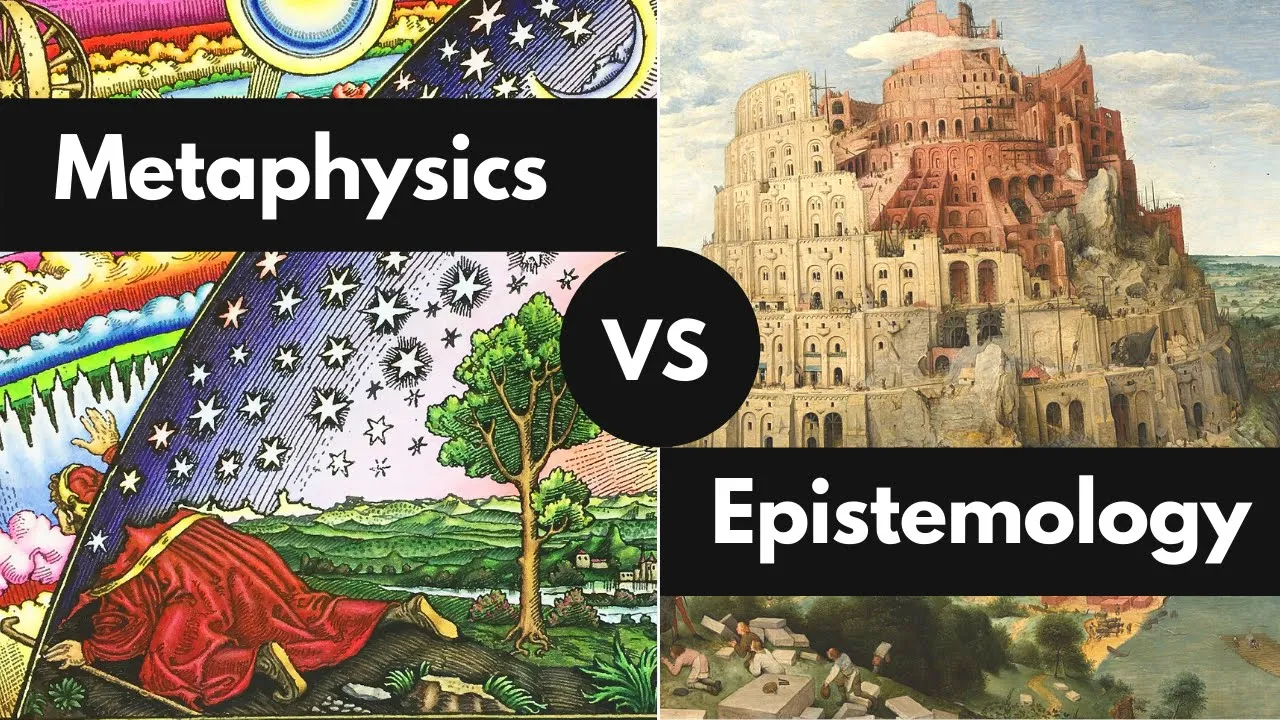
Added:David Hume's empiricism and 'Hume's Fork', which distinguishes between relations of ideas and matters of fact.
The distinction between analytic and synthetic propositions, which forms the logical foundation of positivist claims.
The historical origin of the Vienna Circle and their mission to establish a scientific worldview free of speculative metaphysics.
The basic tenets of early 20th-century mathematical logic, particularly the work of Bertrand Russell and Ludwig Wittgenstein's Tractatus.
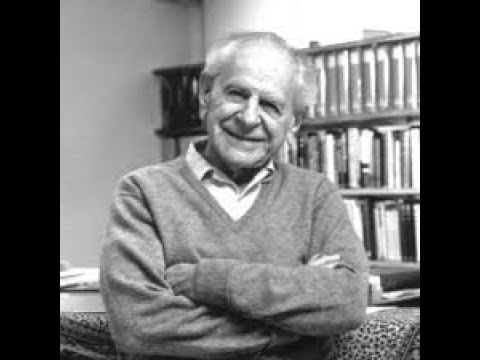
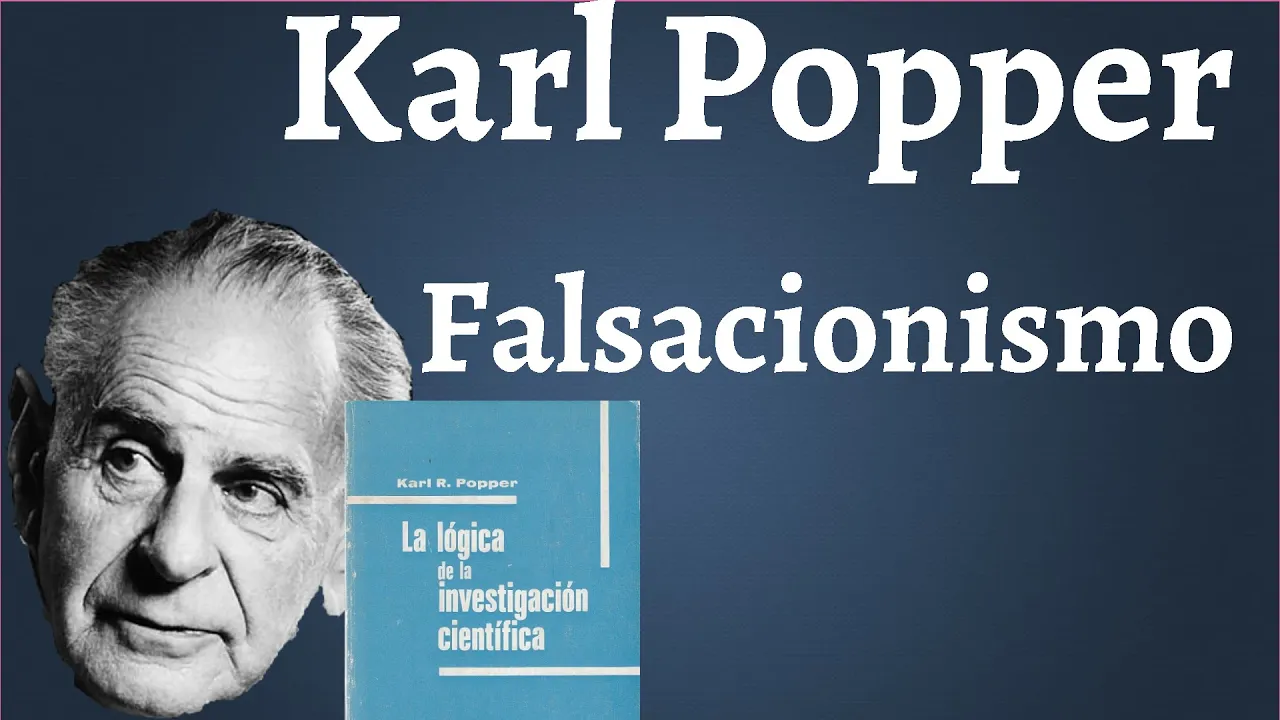
Karl Popper's critique of verificationism and his development of falsificationism as an alternative criterion of scientific demarcation.
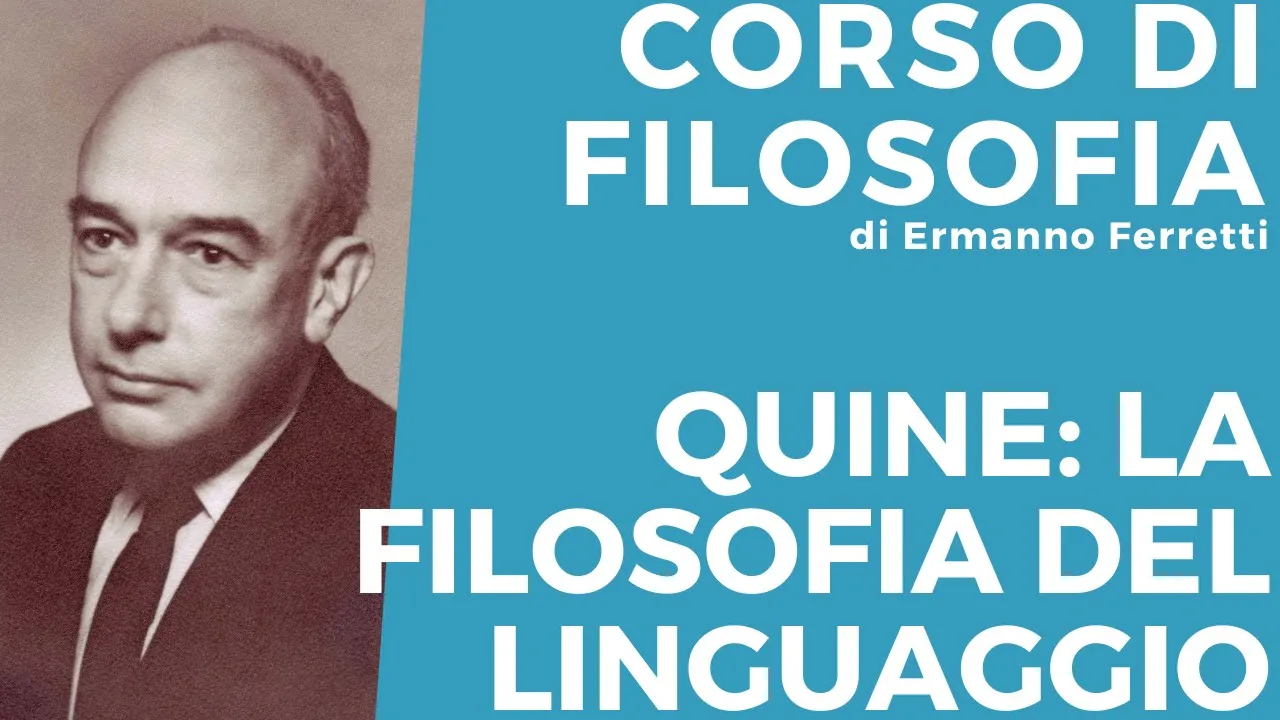
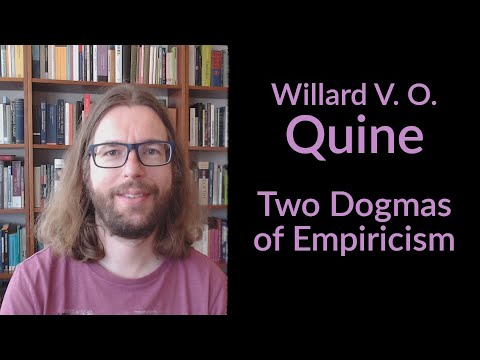
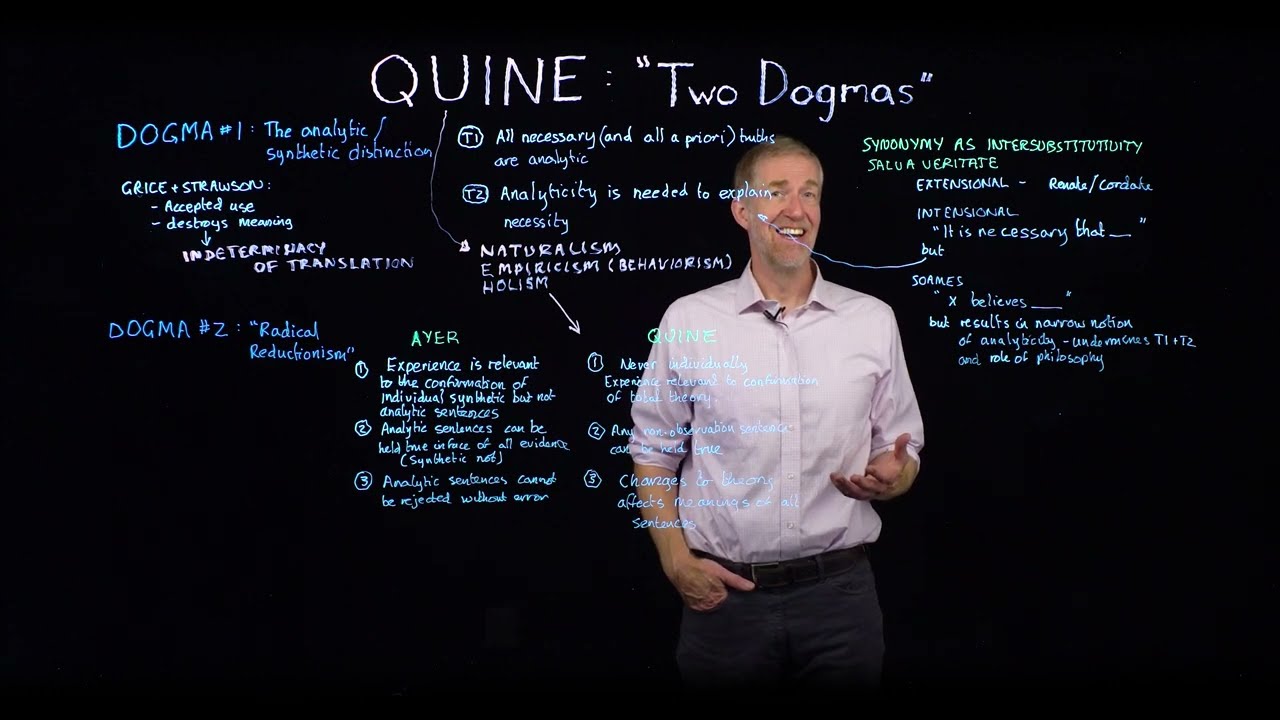
W.V.O. Quine's landmark paper 'Two Dogmas of Empiricism,' which dismantled the analytic-synthetic distinction central to logical positivism.
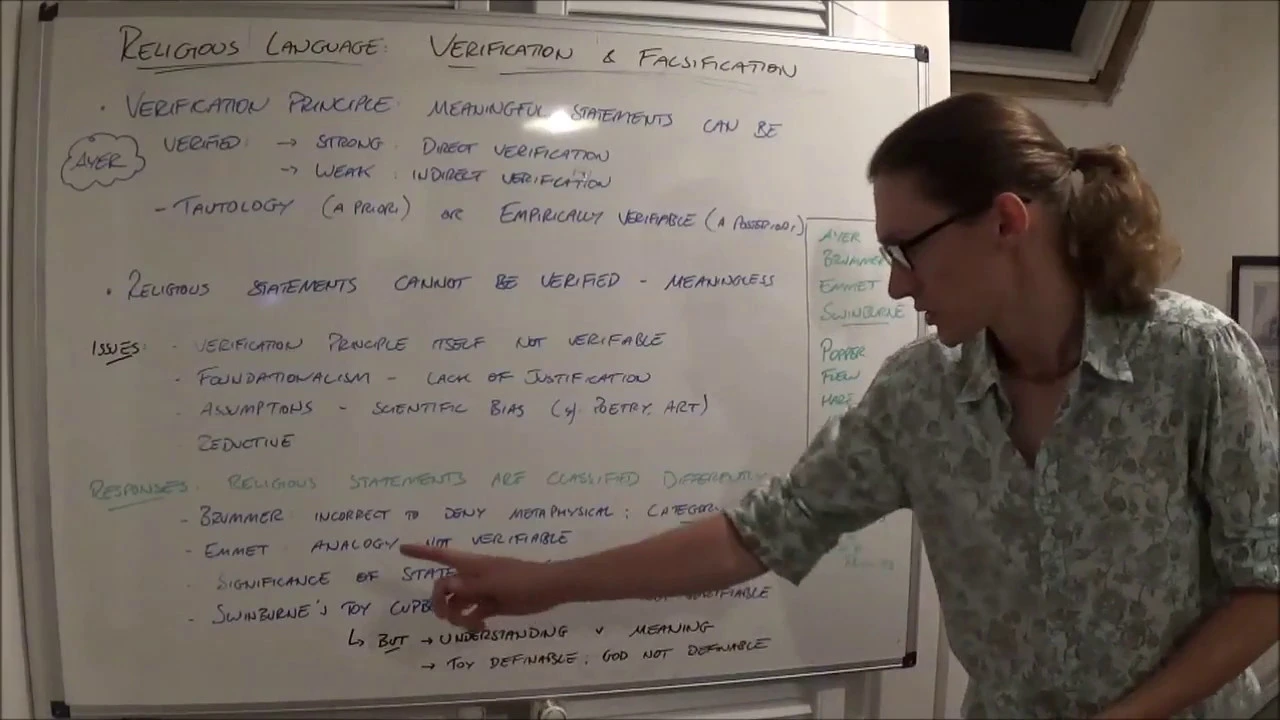
The self-refutation problem of the verification principle (i.e., whether the principle of verification is itself verifiable).
Ludwig Wittgenstein's late philosophy and the emergence of 'Ordinary Language Philosophy' as a reaction to logical positivism.
101.4K views1.5Klikes38:30Original Release: 2015-11-08
[MUSIC PLAYING] In the world of the arts, the remarkable fact has very often been noted that we still think of as modern painting and modern music and modern poetry and modern novel all developed, roughly speaking, simultaneously. They all got going in the early years of this century and first became fashionable in about the 1920s. And in all the arts, modernism has had some strikingly similar consequences.
For instance, in each of the arts, there was a turning away from the un-self-conscious depiction of the world, or of experience, and a turning in on itself. Art actually became its own subject matter.
That's to say it became familiar for, say, the subject of the poem to be the process of writing a poem or the difficulties of being a poet. Ditto with plays and novels, and later, even films. Music and painting, too, in their different ways, exhibited the same concern with their own innards and very often turned them into their own subject matter and put them on display. In all the arts, too-- and perhaps this is related to the last point-- there was a disintegration of traditional forms, a tendency to build new structures and to build them out of small, carefully shaped fragments.
I'm emphasizing this because of all this is true, and with remarkable exactitude, of philosophy as well, a fact which illustrates how deeply embedded the development of philosophy is in the cultural matrix of its time. Modern philosophy can be said to have started in 1903 with the breakaway of GE Moore and Bertrand Russell from the idealism which had dominated the 19th century.
And then after the pioneering work of Russell-- followed by that of Wittgenstein, who was a pupil of Russell-- there developed in the 1920s in Austria the first fully-fledged school devoted to the new philosophy, a school which was known as the Vienna Circle. To the philosophy they developed they gave the name logical positivism. And for a long time afterwards, that label was attached to modern philosophy generally in the minds of very many laymen.
The person who introduced logical positivism to England was AJ Ayer, and his is the name that has been chiefly associated with it ever since in this country. He did so in a still very famous and widely read book called Language, Truth, and Logic, which he published in January 1936, when he was only 25. It's very much a young man's book, explosively written, and it's still the best short guide to the central doctrines of logical positivism.
The aggressiveness of that book was typical of the movement as a whole. They self-consciously organized themselves like a political party, with regular meetings and publications and international congresses, and they propagated their doctrines with missionary zeal. If we look at the question of what they were fighting against so passionately, and why, I think that will provide us with the clearest starting point for our consideration of logical positivism.
And then we'll be in a better position to go on and examine their own doctrines. Professor Ayer, what was it that the logical positivists were campaigning so passionately against?
Well, primarily they were against metaphysics, what they called metaphysics. And that was any suggestion that there might be a world going beyond the ordinary world of science and common sense, the world revealed to us by our senses. Already Kant, at the end of the 18th century, had said it was impossible to have any knowledge of anything that wasn't in the realm of possible sense experience. But these Viennese people went further. They said that any statement that wasn't either a formal statement, like a statement of logic or mathematics, or one that was empirically testable was simply nonsensical. And so they cut away, therefore, all metaphysics in that sense.
And this had some further implications. It was, for example, obviously a condemnation of any theology and any notion of there being a transcendent God. And this, although they were themselves not politically conscious-- with one exception. There was one of them who was, and only one, a man called Otto Neurath-- had political implications. Because there was in Vienna at that time a rather bitter struggle between the Socialists and a right-wing clerical party headed by Dollfuss. And the opposition of the Vienna Circle was in part a political act, even though they weren't themselves primarily concerned with politics.
Now you mentioned one of them by name, Otto Neurath. Since we're going to be talking about this circle of people, I think it'll be helpful if we get clear who the main individuals were.
Who were they?
Well, the chief person, the leader of the circle, the official leader of the circle, was a man called Moritz Schlick, who was originally a German, and he came to the Vienna at the age of about 40 in the early 1920s, in his early 40s. And he had, like most of them, or many of them, had been trained originally as a physicist and was interested mainly in the philosophy of physics. And in fact, one of the leading traits of the circle is the extreme reverence for the natural sciences. And Schlick was their chairman, and he took up his chair in Vienna in the middle '20s and started organizing the circle, I think, almost from the moment he arrived there.
Then the next most important person was another German called Rudolf Carnap, and he had been a pupil of the great German logician Frege. He'd been a pupil of Frege in Jena. And he came to Vienna a few years after Schlick in the late 1920s and, in fact, left Vienna in the early '30s for Prague but was still a very powerful influence in the movement. He was chief contributor to their journal. It was a journal called Erkenntnis.
The third person was a man I've already mentioned called Neurath. I think he was an Austrian.
But he was the most active of them politically and in fact did have some post in the revolutionary Spartacus government in Munich after the First World War. And he was very nearly a Marxist.
If wanted to combine positivism and Marxism, and it was he who was mainly conscious of it as a political movement. He wanted to organize it politically.
Now it's obvious from what you said that this was a radically revolutionary movement. I mean, they were destructive of established ideas in religion, destructive established ideas in politics, and above all, destructive of established ideas in the German philosophical tradition. And I suppose that the two main scalpels that they used to tear away what they regarded as all that diseased or dead intellectual tissue were logic and science, hence the name logical positivism.
Indeed. It wasn't quite so novel as all that. It was continuing a previous Viennese tradition.
There was a scientist and a philosophy in France called Ernest Mach-- he's the man against whom Lenin wrote his Materialism and Empirio-Criticism-- who flourished in Vienna at the end of the 19th century. He was a professor in Prague from about the 1860s onward, then came to Vienna.
And it was he who took the view of science that, for example, Schlick also took, that it must deal in the last resort simply with human sensation. Since all our knowledge of scientific fact comes through our senses, it must reason that in the last resort, science would sort of be a description of sensation. And this the Viennese people took over.
And of course, they were following an old empiricist tradition. Although they didn't themselves know or care much about the history of philosophy, what they said was very like what was said by the Scottish philosopher David Hume in the 18th century. To that extent, they weren't all that novel. They weren't all that the revolutionary.
What was so revolutionary was, in a sense, their fervor and their seeing this as putting philosophy on a new road. They thought, here, at last we've now discovered what philosophy's going to be. It's going to be the handmaiden of science.
It wasn't so much that they used science in their philosophy as that they thought that the whole field of knowledge was taken up by science. I mean, science describes the world, the only world there is-- this world, the world of things around us and so on-- and this is what science describes. And there isn't any other domain for philosophy to occupy itself with?
Now what can it do? All it can do is analyze and criticize the theories, the concepts of scientists. This is how science came in.
Logic came in as supplying them with a tool. Logic had remained pretty much stagnant since the days of Aristotle. And then at the beginning of the 19th century, it took a move forward.
There were some precursors. There was Boole and De Morgan. But the real jump came at the end of the 19th century would Frege and Germany, and as you yourself said earlier, Russell and Whitehead in England.
And this generalized logic more widely than had been done. It didn't actually refute Aristotle.
It showed Aristotle's work as a little corner of logic. But they had a much more wide-reaching, far-ranging logic which provided them with a very powerful tool of analysis. It enabled them to express things much more precisely.
And since they were very interested in structures-- since they thought that science was largely concerned with structure, with the relations between things things-- the development originally by Schroder and Peirce in the 19th century and by Russell and Whitehead in the 20th of a logic of relations gave them a tool. It gave them a tool of philosophical analysis.
This is what happened.
While I try to take your point about Mach being a precursor of the logical positivist movement, it is true, isn't it, that in addition to there being a new logic at the turn of the century, there was also a new science? I mean, dramatically personified above all by Einstein. But there was this enormous breakthrough. A thought system of ideas which had started with Newton and which had been accepted as incorrigible fact by most of the Western world for nearly 300 years-- this was beginning to break down under the influence of Einstein and the new physics. Surely that must have had an enormous impact on what they-- Well, this had a very important-- it was a very important stimulus to them. Because in fact, Einstein had been affected by Mach. In fact, I heard it from his own mouth. He said he owed a great deal to Mach. And they saw Einstein's work on the theory of relativity, and also they sell the new quantum theory, as a vindication of their approach.
Because what Einstein had done-- and anyhow, as they interpreted him, was to say, there's no-- you can't attach any sense to something like simultaneity unless you consider how statements about simultaneity are verified. That is to say that what is meant by talking of things being simultaneous depends upon how simultaneity is actually determined in observation.
And they saw this as a great vindication within science of their philosophical approach.
Similarly with quantum theory, the fact that in quantum theory no meaning is attached to a particle simultaneously having a precise velocity and a precise position, because this can't be tested. Because if you measure the velocity it distorts the position. If you measure the position, it distorts the velocity. Therefore the scientists actually mean-- they said this is a proof that what scientific concepts mean is determine by how they're verified. And this is what we're saying.
And so this gave them an enormous stimulus. They said, well, science is on our side. We're interpreting science properly. And they were, as I said. Carnap and Schlick were originally physicists. Neurath was a sociologist.
So in other words, now we're getting at what the revolutionary nature of their work consisted in.
Yes, yes.
That they were applying the new logic and the new science to traditional methods of thought and breaking these methods down, as it were, under the impact of the new methods.
Is that so?
Well, yes. What they wanted to say was that the old philosophical problems were either senseless or else capable of being solved by purely logical techniques.
Now what were the doctrines, the main doctrines, that they developed in the course of doing this?
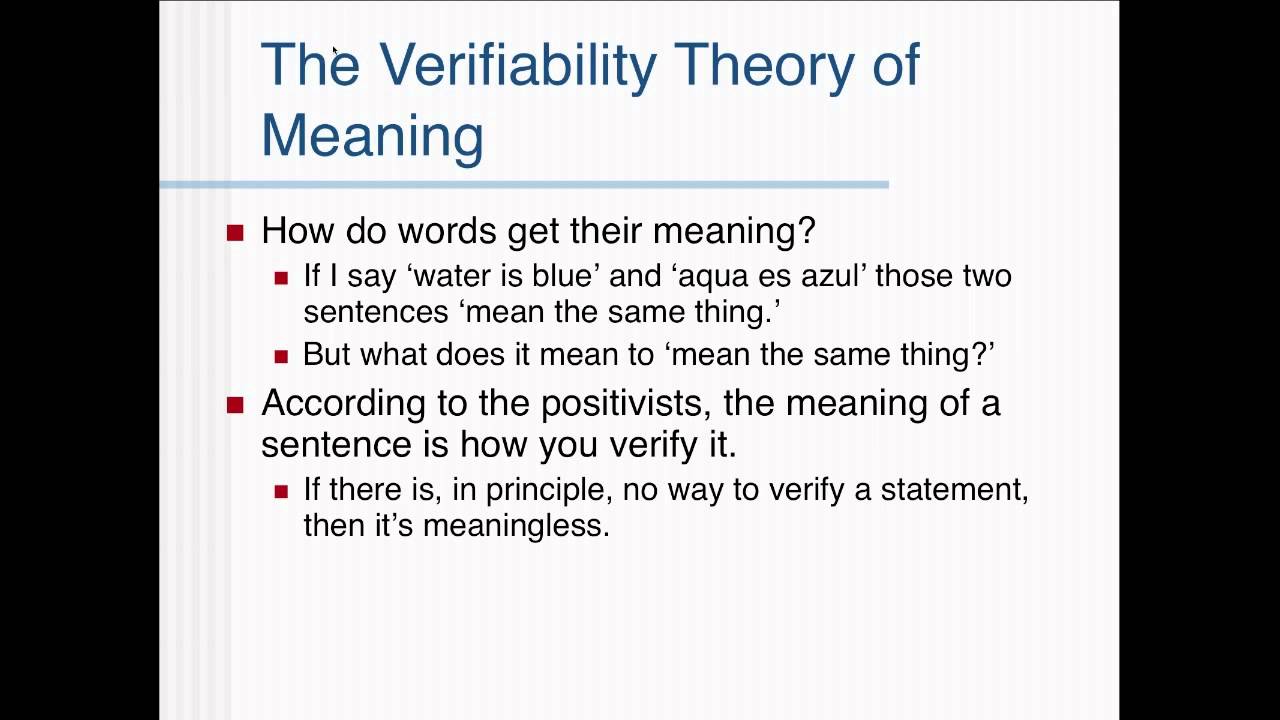
Well, there were three, really. First, everything hinged on the so-called principal of verifiability, which was put succinctly by Schlick as-- the meaning of a proposition is its method of verification. And this is slightly vague as it's there expressed, and we've labored ever since to somehow make it precise, and never wholly successfully.
But it had two consequences. One was that anything that couldn't be empirically verified-- verified by sense observation-- was meaningless. I've already referred to this. And secondly, it was interrupted by Schlick-- later it got loosened, but in the but in the early days by Schlick-- as entailing that what a proposition meant could be described by saying what would verify it. And so you get a reduction of all statements, the statements about statements of immediate observation.
This was the first point, which had both a negative and a positive side. Negative was excluding metaphysics. Positive was showing a way of now analyzing what sort of statements were significant.
Then they held-- this they got partly from Wittgenstein, but there is evidence that Schlick discovered this on his own-- that the propositions of logic in mathematics, necessarily true statements, were what Wittgenstein called tautologies. They said the same thing over again, as it were. I mean, they were-- They merely unpacked the content of what was already-- Unpacked the content. Like saying all bachelors are unmarried men or all brothers are male.
But all logical mathematics simply was what Kant had called analytic-- that is to say, as you put it, unpacking the content of what you've already said.
And then the third main thing was about philosophy itself. They thought that philosophy must exist in what Wittgenstein and Schlick called an activity of elucidation. I mean, I think there was a saying of Wittgenstein, which was quoted again by Schlick, that philosophy is not a doctrine but an activity. It doesn't issue in a body of true or false propositions-- for instance, covered by the sciences-- but simply is the activity of clarifying, analyzing, and in certain cases, exposing nonsense. I mean, Wittgenstein, at the end of his famous book, The Tractatus, had said the right method of philosophy is simply to wait until somebody says something nonsensical and then show him it is nonsense. Which is a bit, of course, negative and discouraging for a philosopher.
Yeah, yeah. Now taking off the first of those three points first. I think it'll be very clear to most people what's meant by the view that any statement about the world must make some observable difference to something if it's true. Otherwise it's difficult to see how it can have any application.
Yes, yes.
When you say that the meaning of the statement consists in the method by which you verify it, I think that's probably not clear to some of the people who are listening to this discussion.
What-- can you explain that a bit?
Yes, I can. Originally it was thought by Schlick and by Mach before him-- and possibly also by Wittgenstein, though it's not quite clear what Wittgenstein's atomic elementary statements were meant to be-- that you could translate out all statements into statements about sense data, about immediate data of observation. And this was never actually achieved and clearly runs into a variety of difficulties, for instance, in the case of universal problems, problems in saying all ravens are black. I mean, all gases expand when heated. Because the range of color value might be infinite, and of course if it's infinite, then you couldn't possibly translate out.
And so they then were roped into a rather desperate experience. Schlick actually said that statements of this kind weren't propositions at all, but rules, simply rules getting from one particular statement-- this is the raven, to this is black, and so on-- rules of inference.
And then there were other difficulties. Clearly it seemed perfectly clear that you should take very high-level, abstract scientific propositions about atoms, electrons, nuclei, and so on, to try and write it out in terms of sensations, in terms of blues and browns and warm feelings of warm and so on, it simply doesn't work. And for various reasons, then, the principle got weakened, and the idea that you could translate out became given up. And all that was required was that these propositions which should be significant should be confirmable by sense observation.
And this meant that their meaning remained sort of partially undetermined. It was thought that they got meaning from the cases where they were, in fact, confirmed, where the tests could be carried out. And the rest was left rather vague.
Also, this original view led to very implausible views for example, about the past. Because statements about the past were equated with the evidence we could now get for them. So saying Caesar crossed the Rubicon was held actually to mean if I look up in some sort of history book, I will see it written. Or if I go and dig, I will find such-and-such relics and so on. And actually, I actually put forward this in 'Language, Truth, and Logic'. Now it seems desperately implausible to me.
[LAUGHTER] And again, there was difficulty about other minds, of course. If I say that you're feeling such and such, I can only observe your behavior. And in the early days, the Viennese wanted to say that all those statements meant was statements about people's behavior. But that again became doubted. So I think that the verification principle in its strong form really didn't last very long.
Let me-- we're covering a lot of ground very fast.
That's also my fault.
Let me recapitulate, just to make sure that we've got things absolutely clear up to this point. According to what we might call the strong version of logical positivism, all meaningful statements were of two kinds. Either they were empirical statements about the world, in which case they must make some observable difference to something and therefore must be verifiable if they're to be meaningful-- it doesn't mean to say they're necessarily true, because we might then try and verify them and find that they are not true.
Certainly, certainly.
But it must be possible for them to be true and therefore possible for them to be verified if they're to have to any meaning. That's one lot of statements, empirical statements.
Or they must be about mathematics or logic, in which case they are purely self-referential.
The true ones unpack what is already in the premises. The false ones are self-contradictions.
Is this right? And if a statement is of neither of these two kinds, then it's meaningless.
That's right.
And with that as a kind of weapon they were able to chuck overboard whole areas of traditional discourse, not only in religion and not only in politics, but also in philosophy and, no doubt, all other areas of life.
Now one query that occurs to one straightaway is this. If we make a moral judgment or value judgments or aesthetic judgments, it seems pretty clear that these are neither statements about the world nor are they tautologies.
Yes.
Now that must have been obvious to logical positivists from the start. How did they deal with this?
Well, it wasn't obvious to them. They weren't statements about the world. There's quite a long tradition in ethics which makes ethical statements what is called naturalistic-- that is, statements about what or is not conducive to satisfaction of human desires or to the furtherance of human happiness and so on.
And this is the route that, for example, Schlick took. He wrote a book, rather a good book, called Ethical Questions, Fragen der Ethik, in which he put forward the doctrine that what ethics is about is what human beings want and how their wants are to be satisfied.
And roughly a form of utilitarianism. This is possible.
Now other people-- Carnap, for instance, and also myself-- took a different view. We took the view that ethical statements were much more like commands. I mean, not true or false, but-- I developed what's called the emotive theory, that ethical statements are expressions of feeling. Carnap took the view, though, more like imperative.
So ethics is brought in, therefore, in one of two ways-- either in a naturalistic way, as being about what conduces to human happiness, which has been a scientific matter of fact.
It's a matter of psychology and sociology and so on. Or being treated as not indeed metaphysical nonsense, but as being not fact-stating, either imperative or emotive.
Now when they used the verification principle like a sort of Occam's razor-- I mean, slashing about right and left and getting rid of all sorts of things-- what difference did this make to the philosophical outlook of the people who were influenced by it? Because it did have an enormous effect on the way people saw the world and the way they saw philosophy.
Well, one effect it had is one you mentioned in your opening remarks, that it made philosophy very much more self-conscious about what they were doing. I mean, they had to justify their own activity. On the assumption that the natural sciences took up the field, as it were, you then had to find a place for philosophy. Philosophy wasn't, as it were, allowed to be a competitor with them. And then people became much more self-conscious about what philosophers were about.
And on the whole, the Vienna Circle wasn't the only influence. There was also the influence of people like GE Moore in England, who were defending rather similar views for very different reasons. Moore believed, for instance, that propositions of common sense were certainly true and so on, and it could be shown-- this could extend also to the sciences. Each domain had its own criteria.
Through the influence of research and through the influence of people like Moore, philosophers came to think that their function could be only that of analysis. And then the question arose what analysis was, how it was practiced, what were its methods, what were the criteria, et cetera, et cetera.
So that in fact, under this stimulus, the techniques of analysis reached a degree of sophistication-- That's right, yes. Far greater than they'd ever reached before.
That, I think, is so.
Would it be a not unreasonable simplification to say this? That they thought that the job of finding out about the world and describing the world was the task of science.
That's right.
So all the various sciences were doing that. And therefore, it wasn't the task of philosophy to find out about the world or explain our-- Yes. Well, yes. I mean, it couldn't, as it were.
No. There wasn't any space for it to occupy.
There wasn't any place for it, yes.
So the task of philosophy, in fact, was to refine the methods of science, to clarify the concepts being used, to clarify the methods of argument being used, and perhaps most importantly of all, to separate out the legitimate methods of argument available to science from the illegitimate methods of argument.
That's right. You could put it in a technical way by saying that philosophy then came to be seen as a second-order subject, the first order being talking about the world. The second order being talking about talking about the world.
[LAUGHTER] Talk about talk.
I think [INAUDIBLE] expression that philosophy came to be seen as talk about talk.
Yes, yes. And now we're talking about talk about talk, this brings us onto the whole area of language.
Yes.
One striking feature of logical positivism was that it brought a hungry new emphasis to bear on the importance of language in philosophy. I have a quotation from Bertrand Russell, from his book My Philosophical Development. And it's very striking in this context, because he tells about how until he was in his mid-40s-- and it's important to remember that by that time, he'd done nearly all the work for which he's now most recognized.
All the important work he'd done, yes.
All the important work. He said this, that until that time, he-- and now I'm quoting-- "had thought of language as transparent. That is to say as a medium which could be employed without paying attention to it." Now I should think it almost certainly true that virtually all philosophers until this century took a similar view. They didn't actually turn in upon themselves and examine the medium of thought and expression, language.
They used it un-self-consciously, as if you didn't have to pay attention to it. You could simply use it about the world. Now the logical positivists took an entirely different approach to language from that, didn't they?
Yes, I think this is right. You could say that the interest in language starts very early-- even with Socrates, who went around asking his fellow citizens, what is justice?
What is knowledge? What is perception? And so on. What is courage?
But he didn't see these, I think, as verbal questions. I think Plato saw them as questions about the nature of abstract entities he thought of as being real. They weren't seen as verbal questions-- although in retrospect, one can see them as having been questions about meanings, at least. I think that it probably does start only at the beginning of this century, this extremely conscious preoccupation with language.
Wittgenstein and Russell, at the beginning of the century, were interested in the relation between language and the world. This was the great problem of Wittgenstein, the problem which the Tractatus was meant to be an answer to. And of course, he ended by saying it couldn't be described but only shown. But the intense preoccupation with the way that with language functions perhaps begins only in quite a late period, after the last war.
And it leads philosophers into a situation where as soon as anyone makes an assertion of any kind about the world, what you then do is examine the assertion. And you get straightaway into the examination of statements, the analysis of propositions, an analysis of the relation of the terms of the proposition to each other, its logical form, so on and so forth. And philosophy can soon seem to become, on that basis, about language.
And indeed, it would be true to say, wouldn't it, that a lot of non-philosophers have acquired the view that philosophers are only concerned with language-- and sometimes this is put disparagingly-- that they're only playing with words. Can you give some explanation of why that sort of prejudice against philosophy, which is very widespread, is misplaced?
Well, a great deal of philosophy certainly is about language, in as far as it distinguishes between different types of utterance and analyzes certain types of expression. I think the main-- I mean, I would make no apology for this. But beyond that, I think the answer I would give is that the distinction between being about language and being about the world isn't all that sharp.
Because the world is the world as we describe it. The world is the world as it figures in our system of concepts. And in exploring our system of concepts, you are at the same time exploring the world.
Let's take an example. Suppose now one is interested in the question of causality. And we certainly believe that causality is something that happens in the world. I'm bitten by the Anopheles mosquito, I get malaria, and so on. One thing causes another. And once could put it by saying what is causality. And this is a perfectly respectable, important traditional philosophical question.
You can also put it by saying, how do we analyze causal statements? What do we mean by saying one thing causes another? And in fact, although you look as though you're posing a purely linguistic question, you're answering exactly the same questions philosophers have always posed, only putting it in a different form. And we think-- or most philosophy-- are rather clear of form.
Now the point is that I think that there was a time-- I think the fashion has passed. It happened about 20 years ago and came to be known as the philosophy of the Oxford School, mainly through the particular philosophy of John Austin. It wasn't universal even then-- when philosophers were a bit inclined to start using it for its own sake, without seeing it as a means of solving any problems. And this, I think, is still dry.
That did become arid.
It did become arid and so on. But I think mostly now, when people try to investigate the meanings of words, it's just because these are concepts they're studying, which do play an important part in our description of what the world is really very like. I mean-- Well, I think that what you've just said really boils down to saying that the investigation of our use of language and our use of concepts is an investigation of the structure of the The world as experienced by human beings.
The world as experienced by human beings.
Yes.
There's an obvious relationship between what you just said there and Wittgenstein's and the logical positivists' doctrine that philosophy, the proper task of philosophy, consists not in formulating doctrines about the activity of analysis.
Yes, yes.
That philosophy ought to be analysis.
Certainly, yes.
And the organon of science.
Yes, yes.
Now this, it seems to me, had enormous influence on the educated layman. I went up to Oxford as an undergraduate during the years after the war, and people who were not studying philosophy at all seem to me to have come very much under the influence of some of these doctrines. In particular, if one tried to make an assertion of any kind about any subject, nothing to do with philosopher, one was immediately pinned against the wall by people who said to you, how would you go about verifying that statement?
Or what exactly do you mean by what? What kind of an answer do you want to that question?
Are you conscious of that having been so?
I think so. I think I was partly responsible for that, yes.
[LAUGHTER] Now coming to your responsibility for this, I think it would be interesting at this stage to come to your connection with the movement. You've described who the main people in Vienna were. You've talked about what some of their central doctrines were.
Now you are well-known as the figure who introduced these doctrines into England-- where they have, I must say, had an enormous influence ever since, right up to and including this day. How did you come to do that?
Well, I was up at Oxford-- I came up in '29. Took my schools in 1932. And I was at Christchurch, a pupil of Gilbert Ryle's. And when I took my schools I was appointed a lecturer at Christchurch and given a few months' leave of absence. And I thought I'd go to Cambridge to study under Wittgenstein, but Gilbert Ryle said, no, don't do that. Go to Vienna Instead. He'd happened to meet Schlick at a congress-- I think it was in Oxford, also-- two years before. And he'd had half an hour's conversation with him and thought that he was interesting, and got the impression something was going on in Vienna. I think he'd also perhaps read some of the articles they'd produce.
So he said to me, why not go to Vienna? Find out what's happening there. We know roughly what Wittgenstein's doing at Cambridge. We don't know what's happening in Vienna. You'll come back and go there and find out and tell us.
Well, I didn't speak very much German. Had, in fact, hardly any German at that time, but I thought, well, I probably learn enough just to follow what was going on. And so I went with a letter of introduction to Schlick from Gilbert.
And Schlick-- and now in retrospect, it was astonishing at the time-- simply quite natural.
But said, come and join the Circle, and so I did. And the only other foreigner allowed in was Quine, the American philosopher, famous [INAUDIBLE] philosopher. We were there together.
This was in, what? I went to Vienna in November '32 and stayed until spring of '33.
And you were in your very early 20s?
I was in my-- yes, I was just-- let me think. Yes, I was-- no, I was younger than that.
I must have been just 23 years. No, 22. I was 22. 22, just 22.
And I sat, then, and I-- I didn't contribute. My German wasn't good enough. And it was mainly debates between Schlick and Neurath at that time. On and on and on and on the discussion went, and I sat and listened. And then came back to England very full of all this. I wrote a paper in Mind called "Demonstration of the Impossibility or Metaphysics," which is simply borrowed with verification principle.
And then Isaiah Berlin said to me-- we used to meet regularly and talk philosophy together.
He said, you're so full of this. Why not write a book about it? And I said, why not? And so I sat down and in 18 months wrote Language, Truth, and Logic. And I wrote it when I was 24 and it was published when I was just 25.
Were you astounded by the explosive consequences of that?
Well, it didn't have all that great a success at the beginning. It had [INAUDIBLE]. The old philosophers at Oxford were absolutely outraged by it, and in fact, it was really hard for me to get a teaching job at Oxford. In fact, I didn't get one and for the while was a research fellow.
It was only after the war, when it got reprinted, that it had this enormous success and got-- I suppose already before the war, when it first came out, it did impress the younger people. They're were very excited by it, because they did see some liberation.
You see, Oxford philosophy, for a while, was terribly sterile. They were some old men who were only interested in the history of philosophy, only interested in repeating what Plato had said, and trying to put down anyone saying anything new. And there [INAUDIBLE] with his [INAUDIBLE], with his huge mind in front of these people, did seem to the younger people as a liberation. They did feel they could breathe. And in that way, it had big historical effect.
And I'd like to hear you say something about the influence you think it had outside philosophy.
It seems to me to have had obvious effects not only in science and logic and philosophy but in things like literary criticism or in history and so on.
It probably had less effect within science than, for example, the work of Karl Popper.
His Logic of Scientific Discoveries came out in the German edition about the same time, a year or so earlier. I think probably it appealed more to the scientists themselves.
But even, even with Language, Truth, and Logic, the scientists felt that this was all right.
I mean, they were told that they were, after all, the most important people.
[LAUGHTER] And they liked that.
They didn't have to worry about the philosopher standing over them, saying, oh, you mustn't say that. Not that they ever had worried much, but it was nice to be told that what they were doing was really the fundamental thing.
It's not in your book but the whole movement which your book is about, logical positivism, what do you think the influence of that was on other fields of activity?
Well, I think there was a great emphasis on clarity and a great opposition to what might be called wooliness. There was a kind of injunction to look at the facts, to see things as they are, a bit of humbug. All this was very attractive to young people in any field.
And it went with, I think, a general reaction against Victorian hypocrisy, really. This was seen as stripping off. I mean, it was the Han Andersen child. [INAUDIBLE] would function everywhere, saying the emperor has no clothes. There he is, parading around with his huge robes and [INAUDIBLE], and in fact, the fellow's naked. And this notion, the fellow's naked, which the logical positivists were taken to be saying, was very exciting for anyone in any subject.
And of course, that is enough in itself to explain the huge and passionate hostilities that were aroused against it.
Oh, indeed, indeed, yes, indeed.
Authoritarian governments, like the Communist and Nazi governments, banned it altogether.
Oh, yes. Yes.
Even liberals were discomfited by it.
Just a little, yes. Yes. They thought it was too iconoclastic.
Yeah. Yeah. But now, it must have had, actually, some real defects. What do you now, in retrospect, think that the main shortcomings of the movement were?
Well, I suppose most of the defect is that at the end of it all, it was false.
[LAUGHTER] I think you need to say a little more about that.
Well, perhaps that's being too harsh on it. But I still want to say that it was true in spirit in a way, that the attitude was right. But if one goes through the details-- first of all, the verification principle never got itself properly formulated. I tried several times, and it always let in either too little or too much. And to day it hasn't received a properly logically precise formulation.
Then the reductionism just doesn't work. You can't reduce statements-- you can't really mistake ordinary, simple statements about cigarette cases and glasses and ashtrays as statements about sense data, let alone more abstract statements of science. So the really exciting, strict reductionism of Schlick and the early Russell and so on doesn't work.
And then [INAUDIBLE] rather wishy-washy, which almost nobody what dissent from, that a scientific hypothesis must be-- have some relation to observation. I mean, this is all that remains there. It seems to me at least very doubtful whether statements of logic and metaphysics are analytic in any interesting sense-- the whole analytic-synthetic distinction has been put in question by the work of recent philosopher like Quine. No longer-- I think-- I still want to maintain it in some form. It's no longer so clear-cut as I once thought it was.
And I'm not sure-- in some sense, obviously, statements of metaphysics are different from statements about the empirical world. But saying, as I said, they're true by convention, I'm not at all sure this is right. Anyhow, it needs a lot of defending.
Again, the whole-- I mean certainly in [INAUDIBLE] logic, the reduction of statements about the past to statements about the future evidence for them is wrong. My [INAUDIBLE] was wrong.
My [INAUDIBLE], I think, was still on the right lines, though much to summary.
So if you go into detail, very, very little survives. What survives is a sort of general rightfulness of the approach, I think, the-- Would you agree with me if I tried to put it this way? That looking back on it, what seems to have been enormously good about the achievement of logical positivism is almost entirely negative. That is to say it did clear away whole areas-- That's right, yes.
Of hitherto plausible philosophizing which were now seen, under the-- through the lenses of the new logic and the new science, not to be acceptable. So that whole traditional areas go, so to speak, cleared of lumber.
Yes.
But it now looks as if all they actually succeeded in doing was clear the ground, because what they tried to build on that ground that they cleared isn't standing up.
Well, it's a little more than this. It was very liberating. I think if perhaps we can go back to something said not by a logical positivist but by a pragmatist, William James-- and of course, pragmatism, which came earlier, is in many ways very akin to logical positivism.
William James had a phrase in which he asked for the cash value of statements. And I think this is very important on the positive side.
The early positivists went wrong in thinking that we'd still maintain the gold standard, that if presented your notes, you could get gold for them. Which of course, you can't.
There isn't enough gold and too many notes.
But nevertheless, there must be some backing to the currency. And this is, I think, what comes out. But if someone makes an assertion, all right, perhaps you can't translate it into observational terms, but still it's important to ask, for clarifying, how you would set about testing it, what observations are relevant. This, I think, still holds good and is positive.
So former logical positivists like yourself-- Yes?
Although you now say that most of the detailed doctrine is false, are still immensely influenced by that whole approach.
Oh, yes.
And are addressing yourself to much the same questions.
Yes But in more liberal, open sort of way.
I would say this is so, yes. Now I'm a much older man, I do it much more slowly, possibly-- most certainly with less brilliance, though there wasn't any brilliance before. Perhaps more soundly. I hope I've learned something with the years.
Thank you very much, Professor Ayers.
[MUSIC PLAYING]
Up Next

7:07
Logical Positivism Explained: The Vienna Circle's Philosophy
@LennyBound
55.1K views•2009-03-02

164:01
John of Damascus on Holy Images: A Theological Defense
@BannedBooks
139 views•2026-04-25

68:32
Should We Destroy the Machines? Big Tech Surveillance Critique
@TheStoriesWeTell303
167.9K views•2025-11-30
4:57
The Myth of Sisyphus: A Greek Legend of Eternal Punishment
@TEDEd
8.6M views•2018-11-13
Related Study Plans & Knowledge Roadmaps
Structured learning paths in Philosophy
philosophy
Frankfurt School: Critical Theory & Culture
01Foundations of the Frankfurt School and Critical Theory
02Horkheimer & Adorno: The Critique of Instrumental Reason
03The Culture Industry and Mass Deception
+ 2 more learning modules
12h5 modules
Explore Roadmap
philosophy
Philosophy of Language: From Frege to Austin
01The Linguistic Turn: An Introduction to Language in Philosophy
02Gottlob Frege: Sense and Reference
03Early Wittgenstein: The Picture Theory of Meaning
+ 3 more learning modules
15h6 modules
Explore Roadmap
philosophy
Feminist Epistemology: Standpoint & Injustice
01Introduction to Epistemology and Feminist Critiques
02Sandra Harding and Standpoint Theory
03Donna Haraway and Situated Knowledges
+ 2 more learning modules
12h5 modules
Explore Roadmap
philosophy
Environmental Philosophy: Ethics & Deep Ecology
01Foundations of Environmental Ethics & Anthropocentrism
02Biocentric Individualism and Animal Liberation
03Ecocentric Holism and Deep Ecology
+ 1 more learning modules
10h4 modules
Explore Roadmap