









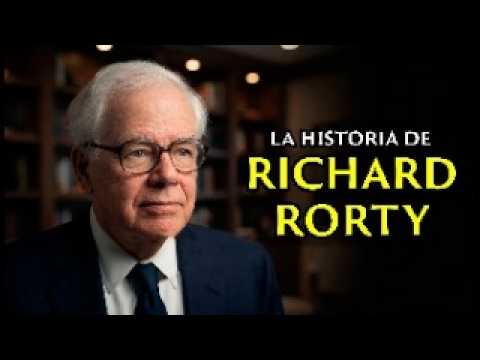









Richard Rorty's neo-pragmatism argues that traditional philosophy's pursuit of foundational truths about reality and meaning is fundamentally misguided; instead, he proposes a 'little p' philosophy that rejects the notion of a 'God's eye view' of reality and instead embraces democratic cultural discourse where all fields of inquiry—science, literature, art, and philosophy—are equally valid forms of human coping and expression, with truth understood as a practical compliment to sentences that work well for us rather than a correspondence to an external reality.
Rorty's Neo-Pragmatism: Truth, Language, and Democracy Explained
Added:Classical Pragmatism: Familiarity with the foundational ideas of Charles Sanders Peirce, William James, and John Dewey.
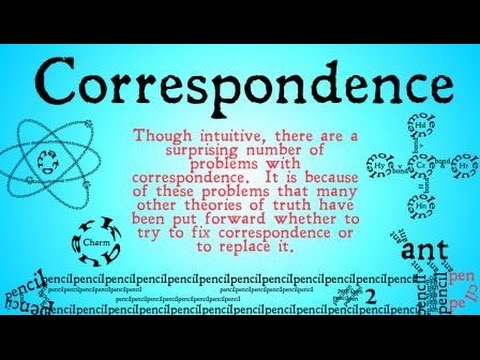
The Correspondence Theory of Truth: Understanding the traditional philosophical view that truth consists of a direct relation to objective reality.
The Linguistic Turn: Awareness of how 20th-century philosophy shifted focus toward language, meaning, and the work of Ludwig Wittgenstein.
Foundationalism vs. Anti-Foundationalism: Understanding the epistemological debate over whether human knowledge requires secure, indubitable foundations.
Rortyan Liberal Ironism: Examining how Rorty balances private self-creation with public solidarity in his work 'Contingency, Irony, and Solidarity'.
The Habermas-Rorty Debate: Exploring the philosophical clash between Jürgen Habermas's universal communicative rationality and Rorty's ethnocentric pragmatism.
Philosophical Quietism and Post-Philosophy: Investigating the implications of Rorty's view that traditional metaphysics and epistemology should be abandoned rather than solved.
Pragmatism in Contemporary Democratic Theory: Analyzing how neo-pragmatist ideas influence modern debates on pluralism, cultural politics, and social cooperation.
19K views559likes44:43Original Release: 2023-10-10
[Music] [Applause] [Music] Richard Ry is I would urge one of the most profound and influential philosophers in the current High cultural scene which just to say in the last 25 uh years he certainly established himself as one of the most eminent not only philosophers but cultural critics he's dabbled in literary criticism political Theory and has been had a very rich connection with various thinkers running from dereda to habas uh and of course the Great American literary critic Harold bloom in his philosophy he's drawn on and ID urge extended the insights and work of Willard vanorman Quin as well as figures like Wilfred sers and Donald Davidson what he's tried to do is move post analytic American philosophy which is the philosophy that comes out of the quinian destruction of positivism in a purely pragmatic Direction and is in fact attempted to argue that both the continental and American analytic Traditions are both headed down the same road and if they take the next three steps we'll wind up with pragmatism and William James like James and dwey before him R's pragmatism is deeply informed by a powerful commitment to democracy as well as naturalism tolerance and a sort of intellectual openness um in addition to and here I think is what becomes significant a profound awareness of the contingency of all of those values themselves none of them are taken as absolutes or finals or Givens but rather as particular forms of life that have emerged in America and in the west and which we cherish on the basis of our experience of them not on the basis of their foundations as an historicist which is to say a reader of Hegel much of Ro's work has taken the form of a critique a critique of the modern what we might call capital P philosophic tradition a tradition which Ry claims centures around capital T truth and capital r reality so Ry wants to get rid of all these capital letters and start bringing back Little P philosophy Little T truth and little r reality I think the first major work that tried to argue this and create this sort of sense of transformation was a really pathbreaking work called philosophy and the mirror of nature in that text Roy suggests that the history of modern philosophy particularly epistemology based Philosophy from decart all the way up to the present day is based on the notion that there is some sort of a medium a third party that intervenes between ourselves and the world this medium in every case it is is represented as in some sense mirroring the world and it is only with this medium or third party that we in fact have any sort of contact and of course you've heard this before this is the notion of Truth as correspondence when that Medium correctly copies in its representations the world that it is a copy of so very briefly I want to run through the historic iCal critique that Ry offers he begins with deart because deart really begins the whole project for him deart introduced and uh I hope you'll remember a lock we find the positive mind and its ideas as the medium between ourselves and the world right so in this sense the mind is as it were as he says a mirror in which our various ideas are representations of the world and what the philosopher does is he looks at that mirror right and he looks and tries to find out which representations have the markings of accuracy of copying and for deart we remember those properties were clear and distinct so he looked into his Mind's Eye as it were the his mind mirroring the world and said whichever representations are clear and distinct are true lock on the other hand said whichever representations can be seen to be derived from sense are true that's how we know they're a correct copy and of course philosophy does more than that too through analysis right and uh reflexive contemplation presumably the philosopher not only picks out the right representation but sort of polishes the mirror up so we can see a little more clearly in the future he clarifies Concepts as it were or so the locutions run now there was a problem we found with positing that veil of ideas right that that stands between us and the world that show between our ears as it were the problem was skepticism it's impossible to prove that in fact there is any world Beyond just that veil of ideas and that if it is there that those ideas correspond or copy the world which is the self-defined notion of Truth which is to say it's hard to tell whether our ideas correspond with the way the world capital r really is now Kant tried to solve this problem with his cernic Revolution right he introduced the notion of a conceptual scheme that in fact a lot of our interpretation of the world is supplied by ourselves our own minds in so doing Kant was able to make epistemology as the study and range of all possible knowledge within our mind imposed a priori conceptual scheme architectonic discipline or what we might call First philosophy which was the position that metaphysics had taken for Aristotle now I think you've learned from Professor SRU that Hegel undermined this project right he showed us that all of those conceptual schemes are historically contingent they change over time and they change across space there are presumably cultures that do not have the notion of cause and effect there may be cultures which do not have the or our fully uh richly developed notion of physical four-dimensional objects and therefore conceptual schemes are themselves contingent and that of course as we know led to the profusion of speculative metaphysical systems because we found that science itself is just one conceptual scheme and we got the flights of imaginative fancy and then the positivists responded they had to nail that conceptual scheme down to something so that they could get back to f first philosophy to the serious foundational task of grounding our beliefs and what they did was turned linguistic they took the conceptual scheme out of the mind and put it into language so th thus modern linguistic analysis is again an epistemological first philosophy language and its meanings have replaced mind in its ideas and in fact they are the exact same medium but in a different form right and of course language and its meanings now are the representations which stand between ourselves and the world and linguistic expressions are therefore said to be true when they accurately represent copy mirror picture or correspond to reality and various philosophers have introduced new words that are basically synonymous with the others so that they can somehow seem new and unique we're getting somewhere with this project it's not just spinning its Wheels Ry doesn't even bother to try and refute it so much because Quin has already refuted it he wants to ask a more interesting question why bother why bother give foundations what's the Instinct back there and what he argues is that what underlies such philosophical projects and what unites them to their platonic forerunners and forbearers is the desire to constitute philosophy as a metaculture cultural criticism right it is literally the desire to have a God's eye view of things so the philosopher to studying the medium of representation can see things as they really are in their Essence just the way God would see things not the way we see things moreover he the philosopher is a figure very much we saw this with air but also with Kant and the others who wants to stand up in his Ivory Tower in the philosophy Department look around the university and say oh you know the stuff they're saying in the English Department it's a lot of nonsense I know I'm a philosopher what they're doing in the science department that's just fine that's good historians be a bit more like the scientists as if he had this sort of metacultural role to criticize everything around him because he knows the nature of Truth he knows the nature of reality he's seen into the bottom of representation so the goal of such a philosopher is to stand above all of the other high cultural disciplines and tell them what's meaning mean f and what isn't what's legitimate what is not and this is very much like Plato's philosopher king isn't it right Plato's philosopher king is going to go around and tell the poets you can say this but that poem you have it's not allowed go away right so literally the modern philosopher would judge all the moves of all of the of the players in the high culture and decide on the basis of his epistemological criteria which are legitimate and which are vus right he would then be as it were the commissar of high culture in the modern epic what this means is that the architectonic cultural role that was held by religion in the medieval period right and that finally after several Generations was replaced in the enlightenment by the scientist right this was the architectonic fully human discipline is now at least according to its own self-conception since the Conan epistemological turn held by philosophy right but it was once the high priest of humanity being a priest then became a scientist is now The Logical positivist or the philosopher who discusses the nature of Truth Ry argues that what we have therefore is not really a secular culture at all because secularism is not replacing religion with science or science with philosophy but doing away with ar tectonic disciplines in the first place a truly secular culture will have no architectonic disciplines but will instead allow free play between all the various disciplines and Fields between all the aspects of culture there will not be a propensity to say well you know literature that just expresses feelings rather you'll say no literature has its place and it's wonderful and we should read it philosophy has its science has its own role history has a role and none of these Trump the other there is no one that gets to the bottom of things they each have our fun have their functions right no one is the queen of all of The Sciences I want then to turn to another text he wrote called consequences of pragmatism in consequences of pragmatism Ry argues that pragmatism is the Ultimate Enemy of uh philosophy with the capital P in both its metaphysical and its positivistic SL analytical phases in fact he's very clear about this because he says you know we pragmatists are the ultimate enemies of the metaphysicians the positivists think they are but we'll show that they too are metaphysical we're the ultimate opponents and his point is and it's an extremely pragmatic move philosophy has spent the last 2,000 years trying to come up with a theory of Truth correspondence theory coherence Theory any other Theory and he says it's not impossible that you could come up with such a theory but it is a fact that you haven't come up with one that wasn't trivial everything you've had to say so far about the theory of Truth has turned out to be either wrong and demonstrably so or if it wasn't wrong completely trivial and cliched something you could have found by any from anyone on the street corner that's not to say that in a hundred years you won't come up with it I can't prove that but rather you haven't yet you've had 2,000 years isn't it time to just change the subject right might it not be the case that this is just not a very fruitful topic of conversation Ry thinks it is time to stop trying we should leave capital T truth alone and move on Ry thinks of Truth as nothing more than a property of sentences like 2+ 2 equal 4 cruelty is bad galile Galileo preed preceded Newton good lectures are better than bad lectures right when you're hungry food is food sustains you says right all of those sentences are true there no problem with that there is no interesting theory about what those sentences have in common besides the fact that we all believe it anymore then there is an interesting theory about what the various acts we approve of have in common their goodness their virtess their abstract essence of approvability now there isn't there's just various things we approve of similarly with truth they're just various sentences we hold truth's a property of sentences nothing more to say leave it at that in fact like James Wy thinks truth is a purely primitive normative concept it's a compliment you pay to a sentence that's working for you right so in a sense we're back with James truth is what's good in the way of belief and good too is just a compliment you see an action you approve of it by saying good you don't point out some particular feature it has you simply say say yeah keep doing that I like that and when you say bad you say don't do that anymore I don't like that that's all there is to it and we need we don't need any more than that either so what Ro is saying is James was mistaken in only one thing calling that a theory of truth it's not a theory of truth it's a completely trivial remark to say about truth that it's a compliment you P to sentences that work it's completely trivial and there's nothing wrong with that as long as you realize that you don't have a theory of Truth what we have to do instead is what he calls change the conversation and he gives a wonderful example he says in the 18th century after Newton wrote there was a profound dispute between the issue of primary and secondary causes right Newton has shown all the secondary causes of motion the laws of Dynamics but what were the primary causes what were the Divine causes what were the purposes behind it that started those secondary causes in motion and Roy points something out you know we never solved that problem of the of what the primary causes were or what the relationship to the secondary causes were we never solved it you know what we did at a certain point we decided you know it's not a very fruitful topic of conversation let's just drop it let's just talk about secondary causes from here on in and he says it's the exact same thing with truth it's not that we have an answer for it it's not that we can prove it's a bad question it's not getting us anywhere we've tried for 2,000 years that's enough let's just drop it and move on to another conversation right we should never try to offer such a theory or prove that such a theory is impossible but just change the subject of high cultural conversation nonetheless Ry does argue at least a few claims against that correspondence theory of truth because such theories always assume that language is that Medium of representation that we can compare to some fixed final reality and thus the connection between language and the world is a mirroring relation right we saw this with air that language could not be part of the world because it must mirror the world it must picture the world it must copy the world but Ry with Quin and Davidson thinks that language is part of the world and the connection between our linguistic usages and other phenomena is purely causal right we're particular species and our sounds our culture is a means of coping with our environment it's a tool that it itself evolves as we evolve like opposable thumbs so for example einsteinian physics right is preferable to Newton not because it accurately represents the world or is a better copy of the world or more accurately mirrors the nature of the world but simply because it better hopes us better helps us to cope with nature by allowing us to make more accurate predictions more precise calculations and a good deal more powerful control over physical processes and if one thinks of all of culture is doing that and enabling one to cope then one will not have the the desire to draw an invidious comparison between the scientist and the poet between the physicist and the priest they each help us cope with our environment in one way or another there's no need for such invidious distinctions you can't dispense with any of them and obviously this is true of the human Sciences of the Arts right it is not the case that science is true and painting and literature of something else no that too is a way of helping us interact with our world with our environment and therefore we should think of beliefs not as metaphysical entities that mirror but simply as habits of action they're encoded ways of talking about our dispositions to behavior right so rather than think of a set of beliefs as some thing intentional meaning between my ears think of it as an encoding of a particular set of behaviors that can be predicted if One Believes true that sentence or that belief habits of action Ry also argues for something he calls anti-realism now don't confuse this with what Nelson Goodman calls irrealism the view that there are many worlds as many worlds as there are as ways of world making what Ry argues is and I think quite sharply is that the notion of a final and fixed reality which we can compare to our conceptual scheme um has literally this much which is to say zero explanitory power right there is no way to actually ever compare your conceptual scheme to a fixed and final world because you always experience your acceptu your the world under some particular Paradigm or conceptual scheme we saw this with both uh Mo and Quin so the point is that world which our theories must correspond to is a world well lost it's a world which has no explanatory function it's simply a form of metaphysical bootstrapping of giving ourselves a pat on the back oh yes we know we're right when in fact you know you're right simply if it functions if it functions better than previous beliefs so rather than try to offer epistemological grounds or foundations for our beliefs Little P philosophy should Instead try to show how our various descriptions actions behaviors institutions practices hang together in the broadest and loosest sense of the term it should be a reconstruction of more or less what's our form of life how does a relate to B how does our poetry relate to our physics how does our politics relate to our game playing how does our economy relate to our sporting events whereas philosophy conceives of high cultural inquiry as converging on the truth that's capital P philosophy Little P philosophy prefers to see such discourse not as a debate which leads towards the truth but as a conversation whose sole purpose is to keep the conversation itself going there will be no final answers nor should we even want them the point is just to keep talking that's the end in itself right it's on for its own sake in fact he says that's what we should try to do is turn Western culture from a debate where we try to get to the bottom and answer questions and nothing more than a conversation which remains open and keeps moving forward that's what's most valuable of in the west such a post philosophic foundational Little P philosophy would isue systematic theory in favor of what we might call and I have called edifying discourses examples hegelian historicism nichan self-creation haiger Talk of the historically contingent nature of language all of these he says are really not very systematic views at all they're edifying they give us a different angle a different perspective a different view of things they offer us wisdom as a as opposed to quote Theory I want to turn finally to his last text most recent text of I think about two years ago called contingency irony and solidarity in here this text Ry tries to show how his own edifying pragmatic discourses hang together with the Contemporary Democratic projects of the West projects that Ry calls I think quite aptly post-modern boua liberalism and I should say he says it with a smile he considers himself a good postmodern bgeo liberal Ro he doesn't try in this text to ground democracy or give it philosophic foundations or prove that it's right or the best form of government but rather he offers a view which shows how things cohere with our democratic practices and offers support short of justification now in fact there's a good reason why he does this he makes one of the most refreshing comments in the history of philosophy he says look if we have to get all of society together and tell them you know philosophy cannot legitimate democracy one of them's got to go which one's gonna go right he says come on democracy has priority over philosophy not the other way around philosophy doesn't have to support democracy just the other other way around entirely if you have a philosophy which is consistent with democracy you're likely to get adherence that's the way it really goes the form of life comes first democracy comes first that's the valuable part of of our project okay Ry in the text argues that postan inquiry has shown us contingency the contingency of our language right that it is the way it is not because of some final fixed metaphysical scheme but simply because the animals we are made the moves we did at this given time and that given time our institutions similarly evolved not be by on the basis of some great plan but simply through trial and error right we do not we did not put in amendments given us freedom of speech in this country and freedom of religion because we thought they were absolute Goods we G we wrote Such practices because we couldn't enforce Orthodoxy we tried for about a hundred years and it failed there's too many darn sects in this country everybody goes off and forms their own little church so we made a virtue of necessity now we see it for different reasons it was contingent similar to our beliefs all of our values all of our institutions all of our form of life is contingent Hegel showed us that what this has allowed us to do is realize how we might redescribe ourselves and our institutions right that we can redescribe what the founding fathers were doing they thought they were making an accommodation with reality but we can redescribe it as saying no they were really leading to the realization that tolerance is good in and of itself that it's the best form of life and now we we we can come to realize because of contingency that there is no big reality truth or goodness no metaphysical virtue which we must subject ourselves to we create virtue goodness truth they're all contingent we needn't feel ourselves to be a function of something outside of ourselves that there is some metaphysical power which we must be subservient to which once was God and then became science and now is the Criterion of meaning or some such thing we are as it were he's being quite humanist we're the center there's nothing outside of us upon which we must subject ourselves such redescription then attempt to re look at things from New Perspectives is achiev through something he calls nonnormal discourse which is clearly an illusion to in fact he's specifically sites Coons just as pre paradigmatic science is non-normal so description is like shifting out of paradigms into looser ways of looking at things and the best exemplification of this Roy believes is the metaphor this comes to the question of how one interprets a metaphor my love is a rose right now we've heard that metaphor so many times that we can't help thinking that it must either have to do with the fact that my love is sweet and fragrant or that my love is rather difficult and thorny right but the first time you hear a new metaphor how you interpret it will be completely up to you it has no fixed meaning that's non-normal discourse it breaks free of our paradigms of our fixed structures of discourse it's like um in the middle of a conversation throwing in a new move a new gesture stepping back or coughing when someone says something you disagree with it's that kind of an idea you're breaking up the normal flow of things what happens is if that turns to be fruitful if that metaphor strikes you you'll try it out and if enough of you find it fruitful it will eventually become literal so that it's no longer a metaphor consider the metaphor it's raining cats and dogs is it even a metaphor anymore it's an idiomatic expression everyone knows what it means it literally means it's raining real hard the first time it was said it may not have meant that right it's become normalized so it is through through this then metaphorical redescription non-normal discourse that we come to understand the contingency of our own views now the person who does such non-normal discourse Roy calls the strong poet he takes the phrase from the literary critic Harold Bloom so he'd say any scientific innovator of a new paradigm is a strong poet he's good at redescribing things in ways that no one had ever thought of before Newton for example by talking about a thing's gravit TOS it's gravy right was a metaphor it literally means its seriousness its profundity since then we've used the metaphor so many times that it's now become uh exclusively literal it simply refers to a property which is describable in mathematical terms an attractional Force so scientific innovators are strong poets so are utopian reformers right a Frederick Douglas who can use the term freedom in such a way to contrast it with chatt slavery and point out the contradictoriness of those two institutions in a way that Americans had never used those terms before he a strong poet he's getting us to redescribe ourselves in a different way a person who can say look at the Declaration of Independence all men are created equal blacks are men that's R description because clearly they hadn't been men before they were not part of the same quote species as us in a way that's strong poetry strong poet is the hero of R's utopian postmodern bgea liberal Society in other words contingency irony and solidarity is his own piece of strong poetry and he wants to argue that that's the hero of the culture he'd loves to see created and he thinks is being created in America by the young now in a postmodern bis liberal society in which the strong poet is now our hero the Ralph Waldo Emerson the Frederick Douglas the Einstein perhaps and not the traditional normal scientist normal thinker all right the second part of the text deals with something he calls ironists ironists are people who realize the contingency of what he calls final vocabularies what is a final vocabulary he says imagine you're on your deathbed and you want to describe to someone the meaning of your life what it was all about well we'll presumably have a certain of words in that description which are completely vague and everyone will share true good meaning they'll all show up somewhere in our final vocabulary but then some of us will have different V Final vocabularies in Middle range terms some if we were born say 400 years ago in a certain part of Europe might say England that would be an important term in the final vocabulary Magna Carta the rights of an Englishman uh no taxation without represent resentation if it was on this side of the Atlantic perhaps Freedom France uh Germany whatever various different terms which show up in our final vocabularies and they may it even more precise than that poetry science literature love philosophy depending on who we are so those are final vocabularies and everybody has some the ironist is the person who first of all has doubts about their own final vocabulary who says my final vocabulary is not authorized by nature or the realm of being or anything like that in in fact it might be wrong also they realize that their present vocabularies cannot resolve or what R Roy calls underwrite these doubts in other words they have doubts that maybe they have the wrong final vocabularies and they're fully aware that those doubts are not resolvable by those vocabularies themselves or by any other vocabulary and they don't think that their vocabulary corresponds to reality or taps into an extra real metaphysical power an extra human power which we must subject ourselves to so those are ironists right people who none have a final vocabulary but constantly have doubts about it for such people their greatest fear Roy says is that they might be a copy that they might be a replica that their V final vocabularies might not have been their own choosing might have been imposed by their culture so they're constantly trying to find new ways of redescribing themselves so that at least they can be like n self-c creators right those are ironists such irony then Roy urges would be typical of the democratic intellectual and would be used in Practical projects of private self-c creation this is an very important innovation that Ry has I think uh Vis A Jurgen Hopper MOS with whom he has a fairly close relationship philosophically speaking yet he says what seems to be the problem with habos is he doesn't realize what is wonderful about postmodern bis liberal Society is our alienation is the creation of individuality that each of us can find richly fulfilling moments apart from others in our own projects of self-creation and that those projects of self-creation which are always ironic right which are always uncertain which are always contingent need not contradict our public projects of ending cruelty and suffering that those two irony and solidarity need not contradict one another they're separate parts of life in other words it is legitimate for us to have a private life apart from the public now Liberals fory are people who as he puts it think cruelty is the worst thing we can do and in particular a form of Cruelty with with with which Ry is particularly anxious is what he calls humiliation and he diagnoses humiliation as follows he says when you have humiliation you force someone to do an act or affirm a statement such that they can no longer describe themselves consistently right they can no longer redescribe themselves in such a way that they can live with themselves that's human humiliation and he says frankly that's the ultimate purpose of torture is not even the pain but that humiliation so that you cannot live with yourself afterwards so how do we achieve moral education fori we achieve it through Reading literature novels going to movies seeing plays such Works sensitize us to the suffering of others and allows us to see their humiliation where previously we hadn't right a text like uh Ralph Ellison's um Invisible Man in which we see a character who would otherwise be invisible to us would not notice him all of a sudden we're aware of him and his humiliation and his humiliation at our hands he says that's moral education and he says this is not a prescriptive claim as to what you should do in terms of Reading literature it's an actual claim look at the Youth of America today where do they get their moral education do they read Plato or do they read Tony Morrison do they pick up Kant or do they go see JFK by Oliver Stone and nor should we tell them shame on you you should be reading Kant shame on you you should be reading Plato no it's not bad if they read that as well but they are right to get their moral education from those texts those texts for the first time allow them to see others as something other than others as themselves right it helps us literally redescribe people we thought of as aliens and is just like us right think of a novel of a not a novel A Book Like The Diary of Anne Frank what does it do but tells us take someone who we thought was an alien this young Jewish woman and we read the story and all of a sudden she's just like we are she's no longer one of them she's one of us so what holds our society together then fori is not shared rational legitimations it's not philosophic beliefs and this is a good empirical Point how many people even have philosophic beliefs how many people in our society even read philosophy much less could care less about it what holds us together is a sense of solidarity is a sense of usess that we're one that we're a community has nothing to do with argumentation or disputation it has to do with a shared form of life our democracy our postmodern bis liberal society and this is an important philosophical point because his argument is if you look at all all ethical terms what they really are are what sellers calls we intentions right and the we is our ethnos or the uswest and let me try and illustrate that for you for a minute when you say use an ethical term like it's wrong to steal he says what you're really saying is there's no absolute to that but stealing is not the sort of thing we do our kinds of people don't steal so he says now look if you really want to deal with a a problem of Cruelty and suffering and the one that really troubles Ry is the plight of young blacks in inner cities he finds that extremely troubling he says you are not going to help them and get any help for them if you appeal to people's sense of humanity and say my goodness humans are suffering there humans suffer everywhere the right way to deal with that problem is to appeal to our ethnocentricity and say you know those people are Americans an and we don't do that to our own we don't allow Americans to live that way they're not them they're us Americans shouldn't tolerate other Americans living such a lifestyle and his point is ethical terms as we intentions lose their Force as we spread the we out too wide so if we begin to cons be concerned about Humanity in general then someone's going to come along and say yeah why are you so concerned with humans what about dogs what about dolphins what about whales and someone else will say yeah what about amibas and planktons no the force has power only for our ethnos the us or the West now he says such ethnocentricity is not something to be afraid of in our case for one reason our ethnocentricity of the West is distinguished by its self-correcting fear of ethnocentricity right our ethnocentricity precisely because it went through a period of vitriolic racism and imperialism has learned a lesson that it should distrust itself and that it should always try to be open as open as possible and for once rity is being not just once but making a claim which I think is quite accurate that if you stop and look around the world right now perhaps because of the horrible things the US in the west have done it is by far the most tolerant culture in the world it is the only culture which mistrusts itself which argues that it should always question its own impulses and urges and should always make sure that when it looks at another culture it's not making invidious comparisons and then what we do is on a case- by casee basis we balance our public goals of solidarity and the fight against cruelty with our project private projects of self-creation and fulfillment and I want to pause here and make something clear he's very careful not to posit any sort of algorithm right any sort of of rule for deciding when we do public things and when we do private things that's a decision that each of us can make and we'll decide on a case-by casee basis or we can make it socially there's no need to ground it to fix it to finalize it I also want now to to stop and pause and take a look at what the implications of this are for the culture in general a culture in which we no longer feel the need to draw invidious distinctions between various disciplin and Fields we no longer have to distinguish between this is Meaningful discourse and this is meaningless discourse in which we might be perfectly satisfied and happy to say this discourse sensitizes me and works for me and if it doesn't do so for you that's fine too you have your own private discourse all we need to agree to is a public discourse that cruelty is bad that all solidarity is good and that humiliation is unacceptable think of what kind of Utopia that would be a Utopia in which your private acts of self-fulfillment your private acts of perhaps you paint at home perhaps you write your own little poetry would never be seen as selfish as alienating as distinguishing between you and the rest of the society in which you could be as much an individual as you choose without losing your sense of the we intention of a society and culture it's also a sense in which the philosopher takes on a new role he's no longer the master sitting on high telling people in the history Department you better tighten up your explanation schemes and people in the literature department so much stuff and nonsense you're deconstructing yourself to death rather the philosopher would be a sort of Jack of all trades instead of standing above the various disciplines he and the various departments up in a super high Ivory Tower saying good in science bad in math or whatever he'd be running between the places running over to the anthropology department saying give me something to think about and I'm going to as soon as I get that I'm going to bring it over to the historians and say have you heard what they're talking about in the anthropology department how they're thinking about the human project now while I'm at it why don't I go over to the literature department and see what they have to say about it maybe they'll show me a way of redescribing my own project such that I can bring the Anthropologist and the historian together he says that we're already beginning to see such a field such a new project and it's not the philosopher per se though it is Ry and it is some other philosophers he says that figure he wants to call the literary critic the reason is because I think quite factually he represents literary critics don't talk about literature anymore or not primarily more often than not they talk about politics they talk about philosophy they talk about and science right you're just as likely to find a quote person hired as a literary critic who knows just as much about if not more about the history of science than he actually does about say Joseph Conrad's books and he says that's not something we should fear it's evolved that way for a good reason because philosophy made the mistake of trying to stand above instead of connecting instead of drawing together and such a literary critic I would urge in fact that we drop the term literary critic my own feeling and replace it with a broader term even than that the cultural critic because literary criticism I think has certain connotations which cultural criticism doesn't but the cultural critic then would be um a person who's an Eclectic who reads a bit of who reads a bit of Quin and then maybe goes and looks at a bit of Picasso listens to a bit of Charles IES perhaps maybe even a little rap music while he's at it um maybe even watches a bit of MTV watches current films and talks about how it all hangs together or how it doesn't when it doesn't talks about how this novel has political implications or this political movement has literary implications or this scientific movement has historical implications in fact I think the beauty of that Utopia is that each of you would become cultural critics that taking a course like this and other courses and reading your own books are not not only projects of private self- creation and fulfillment which I think they are but in for in fact mean that you're all becoming your own cultural critics you're all making yourself your own lovers of wisdom your own philosophers
Up Next
3:49
White Savior Complex in Britain | Anti-Racism Analysis
@Channel4Entertainment
54.1K views•2020-06-16

164:01
John of Damascus on Holy Images: A Theological Defense
@BannedBooks
139 views•2026-04-25
44:06
Habermas' Critical Theory & Rationality in Modern Society
@dr.michaelsugrue
78.2K views•2020-07-19
4:57
The Myth of Sisyphus: A Greek Legend of Eternal Punishment
@TEDEd
8.6M views•2018-11-13
Related Study Plans & Knowledge Roadmaps
Structured learning paths in Philosophy
philosophy
Frankfurt School: Critical Theory & Culture
01Foundations of the Frankfurt School and Critical Theory
02Horkheimer & Adorno: The Critique of Instrumental Reason
03The Culture Industry and Mass Deception
+ 2 more learning modules
12h5 modules
Explore Roadmap
philosophy
Philosophy of Language: From Frege to Austin
01The Linguistic Turn: An Introduction to Language in Philosophy
02Gottlob Frege: Sense and Reference
03Early Wittgenstein: The Picture Theory of Meaning
+ 3 more learning modules
15h6 modules
Explore Roadmap
philosophy
Feminist Epistemology: Standpoint & Injustice
01Introduction to Epistemology and Feminist Critiques
02Sandra Harding and Standpoint Theory
03Donna Haraway and Situated Knowledges
+ 2 more learning modules
12h5 modules
Explore Roadmap
philosophy
Environmental Philosophy: Ethics & Deep Ecology
01Foundations of Environmental Ethics & Anthropocentrism
02Biocentric Individualism and Animal Liberation
03Ecocentric Holism and Deep Ecology
+ 1 more learning modules
10h4 modules
Explore Roadmap