The white savior complex is a harmful mindset where privileged white individuals position themselves as rescuers of marginalized communities, often driven by desires for recognition and self-redemption rather than genuine help; this phenomenon is fundamentally rooted in white supremacy and colonial history, as it perpetuates the idea that white people are inherently superior and responsible for saving others, while ignoring the systemic oppression that created the problems they claim to solve.
White Savior Complex in Britain | Anti-Racism Analysis
Added:Deep Dive
Historical understanding of the British Empire, specifically how colonial expansion was ideologically justified using the 'civilizing mission' or 'white man's burden' narratives.
![IDEAS that Justified IMPERIALISM [AP World History Review—Unit 6 Topic 1]](https://i.ytimg.com/vi_webp/DrjQ1dir1SI/maxresdefault.webp)
IDEAS that Justified IMPERIALISM [AP World History Review—Unit 6 Topic 1]
579K
The civilizing mission describes the sense of duty Western societies possessed to bring the glories of their civilizations to what they considered 'lower civilizations.' This ideology was used to justify colonization by claiming that Western powers had a moral obligation to convert indigenous peoples to Christianity and to impose Western-style education on colonial populations. Along with converting religions, imperial powers reorganized colonial governments according to Western models and made significant efforts to suppress indigenous languages and cultures among colonized peoples.
Click to watch →

Imperial 'Elites' of Oxford University (Oxford & Empire)
54.1K
The 19th-century imperial ideology of the 'white man's burden' developed from English exceptionalism. John Ruskin lectured that England must found colonies as fast as possible with her most energetic men. James Froude stated that when inequality between colonizers and natives was proved, the wisdom of the weaker party was to accept benefits offered in exchange for submission. Thomas Macaulay stated that through good government, subjects could be educated into capacity for better government, eventually demanding European institutions. This civilizing mission was seen as exempting the British Empire from conquest, violence, and exploitation.
Click to watch →

British History's Biggest Fibs with Lucy Worsley (3 of 3) The Jewel in the Crown
43.5K
The British Empire in India constructed a 'civilizing mission' narrative to justify colonial rule, transforming stories of conquest and exploitation into tales of benevolent governance; this narrative was reinforced through events like Victoria's 1897 Diamond Jubilee and the 1877 Delhi Durbar, where Queen Victoria was proclaimed Empress of India, yet the reality involved continued exploitation, discrimination against Indians in the civil services, and brutal suppression of resistance like the 1857 rebellion, revealing how imperial powers use propaganda to legitimize colonial control.
Click to watch →

Prof Dorling (Uni of Oxford) - Brexit and the End of the British Empire
897.9K
British colonial education promoted a sanitized narrative of empire that claimed the purpose was to bring civilization, order, justice, and development to colonized peoples. This 'white man's burden' mythology suggested that Britain gained nothing from colonial rule and bore a terrible burden in performing these civilizing duties. However, this narrative obscured the reality of exploitation, resource extraction, and cultural destruction that characterized actual colonial practices. The geography A-level curriculum under Michael Gove avoided teaching about British colonial possessions, instead focusing on regions like South America where Britain had few holdings, demonstrating how educational policy can deliberately omit uncomfortable historical truths.
Click to watch →

Clase de Historia Universal Imperialismo Colonial
3.7K
Imperialist powers justify their colonial expansion through the 'civilizing mission' ideology, claiming they are bringing civilization to 'primitive' peoples. This is based on Social Darwinism, which applies Darwin's theory of natural selection to human societies, arguing that 'superior' races have the right to dominate 'inferior' ones. This racist ideology, known as the 'White Man's Burden,' provided the theoretical foundation for colonial expansion and the exploitation of colonized peoples.
Click to watch →
Deep Dive
A foundational grasp of systemic and structural racism, moving beyond individual prejudice to understand how institutions perpetuate racial inequality.
This fearless WHlTE professor delivered a brutal speech that left WHlTE people ANGRY!!
45.7K
Systemic racism refers to the ways in which policies and practices within institutions create and maintain racial inequality, not just individual acts of prejudice; it manifests through institutional practices like school tracking systems that disproportionately place Black students in remedial classes while white students are placed in honors tracks, and through criminal justice disparities where Black individuals face higher rates of arrest and sentencing for the same crimes, requiring collective action and acknowledgment of historical continuity to address these structural inequalities.
Click to watch →

RACISMO ESTRUTURAL
62.4K
Structural racism is a systemic form of racism that transcends individual and institutional manifestations, operating as a normalized social structure where racism is not an abnormality but a fundamental component of society. Unlike the individualist conception (which views racism as a pathological behavior of specific individuals) or the institutional conception (which focuses on discriminatory practices within organizations), structural racism recognizes that institutions themselves are conditioned by broader social structures that precede and shape them. This means racism is not merely created by institutions but is reproduced by them as part of the normal functioning of society. The concept requires understanding that both white and black identities are social constructions, with white privilege characterized by the absence of racial consciousness, while black identity involves constant negotiation of racial identity. For structural racism to perpetuate, it requires both an ideological system that rationalizes racial inequality and a mechanism that prevents individuals from being emotionally disturbed by racial discrimination.
Click to watch →

Piers Morgan Vs Ben Shapiro UNCENSORED | Hasanabi Reacts
147.6K
The video presents the distinction between systemic racism and individual racism. The speaker argues that systemic racism refers to institutional and structural patterns of discrimination embedded in society, which cannot be reduced to individual actions. The speaker criticizes the position that denies systemic racism exists, arguing that this denial prevents understanding how institutions perpetuate racial inequality beyond individual prejudice.
Click to watch →

EN FINIR AVEC LES VIOLENCES POLICIÈRES
33.9K
Structural racism is not merely interpersonal prejudice but a system embedded in institutions that produces mass inequalities. This understanding requires political struggle rather than individual persuasion, as the system itself produces and reproduces racism through its structures and practices.
Click to watch →

TOLLY T (THE RECEIPTS) x AUDREY (THE RECEIPTS) x CHUCKIE ONLINE | JD IN THE DUFFLE BAG: UPFRONT
70.2K
Racism is fundamentally about power and systemic inequality, not just individual prejudice. Arguments that racism is not a problem because someone has Black friends are insufficient. Systemic racism requires dismantling institutions that perpetuate racial inequality. While individual actions are important, systemic change requires collective action and structural transformation. The process may take generations but is necessary for meaningful progress.
Click to watch →
Deep Dive
An overview of modern British social history, including post-colonial migration patterns (such as the Windrush generation) and subsequent race relations acts.
Как Британия открыла свои границы? История самой масштабной волны миграции в страну. (Fixed)
10.1K
The Windrush Generation refers to the first major wave of Caribbean migrants who arrived in Britain in 1948 aboard the Empire Windrush, fundamentally transforming British society through their contributions to the economy, culture, and politics, despite facing significant discrimination, housing challenges, and systemic barriers that were only partially addressed through legislation like the 1965 Race Relations Act and 1968 Rent Act, and whose descendants later faced a citizenship crisis in 2018 when Home Office destroyed their documentation, highlighting the long-term consequences of migration policies.
Click to watch →
Meghan Markle's royal status and its impact on racism in Britain
248.5K
The Windrush generation refers to nearly half a million Caribbean migrants who arrived in Britain after World War II to help rebuild the country. Their right to remain was guaranteed if they arrived before 1973. However, four years ago, the British Home Office began questioning their legality, denying them healthcare, work rights, and driving licenses. The government's destruction of arrival records made it nearly impossible for many to prove their status. This scandal revealed deep institutional racism. Critics argue that Black British history, including the British slave trade that forced three million Africans into slavery, is often glossed over as a North American issue. The Windrush scandal demonstrates how historical colonial relationships continue to impact contemporary race relations in Britain.
Click to watch →
The End of the British Empire
274.7K
As the empire degraded, consequences reached British shores. Immigration from current and former colonies changed British society. After 1948, the Windrush generation of immigrants from the Caribbean came to provide labor in rebuilding the country. People from Kenya, Pakistan, India, and Hong Kong formed communities in British cities. Discrimination and racism from native-born Britons, some under increasing financial distress through the 1970s, became prominent. This demographic shift represented both the legacy of empire and the challenges of integration in the post-colonial era.
Click to watch →
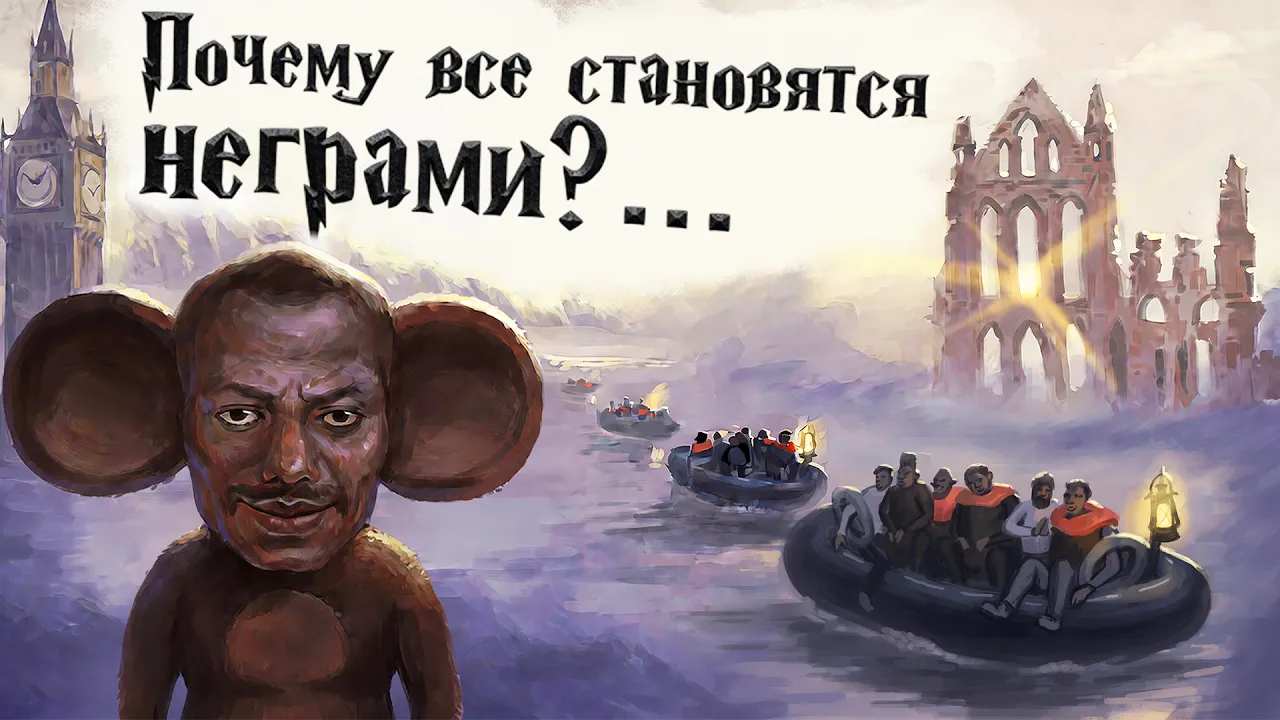
Негрофикация: Эбонитовая Британия.
60.4K
After two World Wars, Britain faced economic decline and population loss. The Empire Windrush arrived in 1948, bringing the first major Caribbean wave. The British Nationality Act granted citizenship to Commonwealth immigrants, either ending the British Empire or beginning a multi-racial transformation. The Windrush Generation (1948-1971) faced discrimination: denied employment, housing, and integration. Four factors caused marginalization: societal rejection, language barriers, low income, and lack of family connections. This led to crime, instability, and further marginalization. In 1967, Enoch Powell delivered his 'Rivers of Blood' speech, warning of a 'tragic and insurmountable phenomenon' of immigration, with 74% of respondents agreeing. While some pubs had 'No Blacks, No Dogs' signs, black communities created cultural institutions like nightclubs. Working-class white youth embraced Jamaican music, leading to ska, reggae, and skinhead culture. Deindustrialization and factory closures created 12% unemployment, fueling social tensions. Britain transformed from a homogeneous nation into a multi-racial society.
Click to watch →
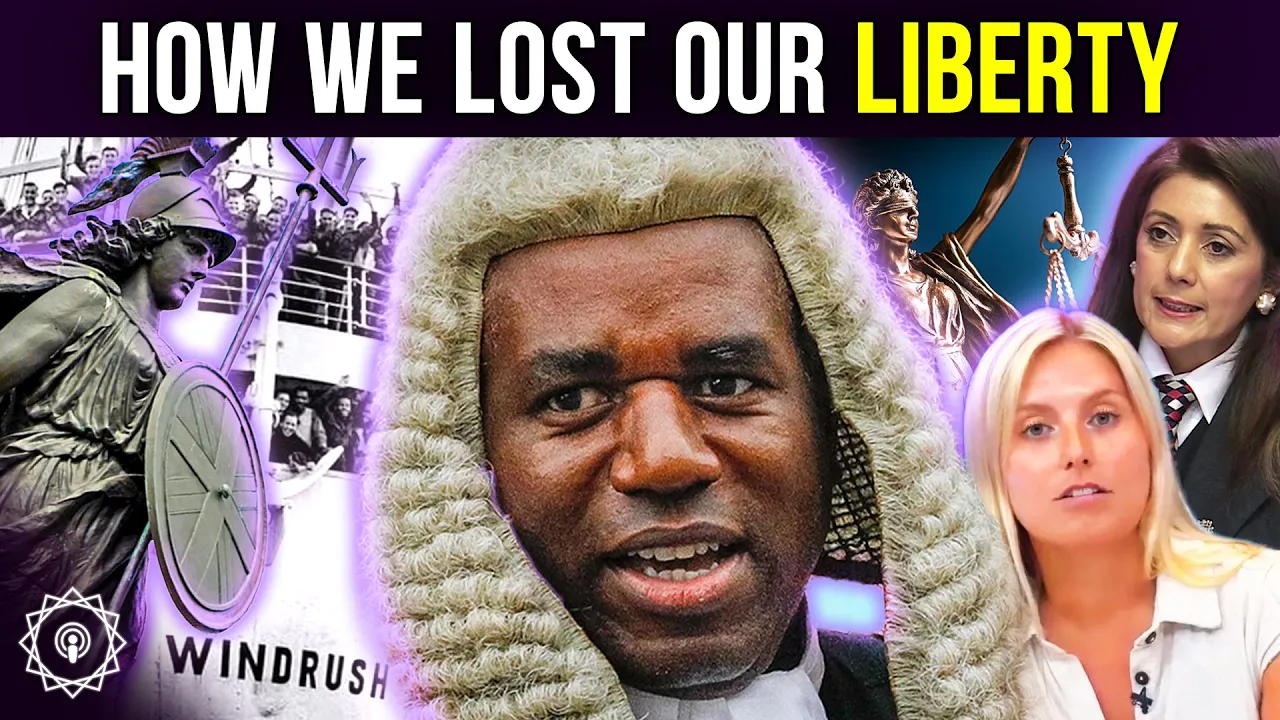
Why Are We Governed by Foreigners?
70K
The era of the 20th century was the century of equality, and Britain was living in the ruins of that paradigm shift. The liberal mindset that everything should be equal was imposed on Britain, which had never been equal. This created the civil rights movements and fundamentally changed British society. Britain gave away all its gold reserves and bankrupted itself fighting World War II, putting itself into debt to the point that by 1954 it was still on rations. This economic devastation meant Britain had no money, no infrastructure, and needed help to rebuild. The Marshall Plan and other American aid programs were essential for British recovery. The paradigm shifted from the old imperial model to the equalitarian model of the Soviets or Americans, fundamentally changing the global power structure. The British Nationality Act 1948 created the status of citizen of the United Kingdom and Colonies, which meant all Commonwealth citizens were recognized as British subjects. This act granted Commonwealth citizens the automatic right to enter, live, and work in the United Kingdom. This was a liberal gesture intended to celebrate the end of the war and unite all Commonwealth citizens as subjects under the crown. However, it was inappropriate for the time and place, as it effectively opened the door for mass migration from the empire. The Empire Windrush was a ship that brought Caribbean migrants to Britain in 1948, representing the beginning of large-scale Commonwealth migration. The ship was originally a German vessel captured during the war and repurposed for British Empire operations. The Nationality Act made it legal for Commonwealth citizens to migrate to Britain, and the government gave permission for free spaces on the ship to be filled with people. Jamaican magazines advertised cheap travel to Britain, and the response was almost instantaneous. The migration was initially seen as a positive development, but it created tensions as Britain was still recovering from the war and had a homogeneous population. The Windrush generation became a foundational myth of modern multicultural Britain, representing the proper liberalization of the country where everyone across the empire was equal. Before the Windrush generation, Britain was literally 99.9% native, with only small enclaves of non-natives around ports and trading outposts. The Windrush generation marked the beginning of large-scale migration from Commonwealth countries, fundamentally changing British society. By 1951, there were only about 17,000 people of Caribbean ancestry, but the Transport for London scheme in 1955 brought in huge numbers, with 50,000 in 1955 and 86,000 in 1956. This transformation created a new multicultural Britain that was fundamentally different from the homogeneous, traditional society that existed before. The Windrush generation represented the first major shift in British demographics and identity.
Click to watch →
Deep Dive
Familiarity with basic sociological concepts of privilege, paternalism, and hegemony.
Ch 1 Audio
170
Privilege is usually invisible to the people that have it unless it is pointed out to them or they do real soul-searching. This is because we create hierarchies that come with hegemony, which means being unquestioned at the top of the list.
Click to watch →
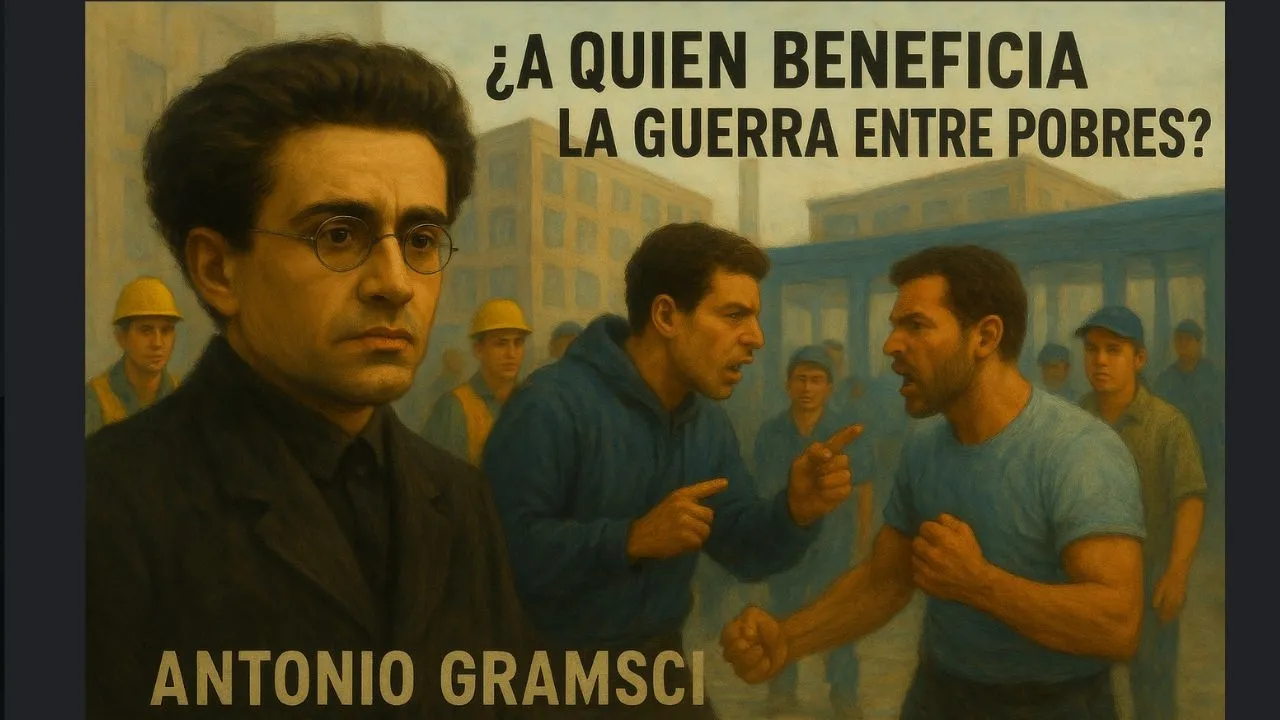
Antonio Gramsci: ¿Por qué peleamos entre nosotros en vez de contra las élites?
33.6K
Gramsci developed the concept of hegemony to explain how class domination is sustained in modern capitalist societies. Hegemony is domination that combines consensus and coercion—it is not only direct repression but also not only persuasion. It is a mixture where consensus is predominant for the majority while coercion is reserved for those who do not consent. The distinctive feature of hegemony is that dominant groups achieve that their worldview, interests, and values are accepted as universal, natural, and beneficial for everyone. They do not impose their dominance only by force; they achieve that the dominated actively share, defend, and reproduce their project. Hegemony implies that a social group exercises intellectual and moral leadership over society, not just economic domination.
Click to watch →

🔴 TARDE - SOCIOLOGIA - 07.11.25 - 2ª Série
109
Paternalism is a sociological, political, and ethical concept describing relationships where authority figures (fathers, bosses, states) act toward subordinates as fathers toward children. The essence involves intervention in others' freedom against their will, justified by claims of serving their well-being. Key characteristics include asymmetric relationships where leaders are portrayed as omniscient superiors while subordinates are seen as incapable dependents. This creates cycles of patronage where benefits are granted personally rather than institutionally, undermining individual autonomy and creating dependency.
Click to watch →

Ideological Criticism
398
Hegemony refers to systematic privileging of particular beliefs, values, assumptions, norms, and expectations to the extent they go unquestioned, reflected in legal, economic, social, and political spheres over sustained periods. Hegemonic ideologies establish naturalized and normalized ways of seeing and acting that support dominant group interests. People come to see these as just the way things are. Examples include patriotism reinforced through school rituals, military support, and national symbols. Hegemonic masculinity teaches males must be providers, dominant in relationships, and aggressive. These ideologies are reinforced through institutions (schools, universities, prisons) and everyday peer policing, where people call out behaviors deviating from dominant norms from a young age.
Click to watch →

Conrad Vine SERMONS - When the Bible Calls This Dangerous: Is the Final Sign Drawing Near?
691
Antonio Gramsci, an Italian Marxist scholar, developed the concept of hegemony, which describes the dominance of one set of ideas over society. This dominance is expressed as oppression by the oppressors over the oppressed. In contemporary America, concepts such as being on time for meetings, the value of hard work, and the importance of the nuclear family are viewed as expressions of white supremacy. Hegemony represents the dominance of one set of ideas or norms around which everything else in society must orient itself.
Click to watch →
Prerequisite Knowledge
- Concept 01Historical understanding of the British Empire, specifically how colonial expansion was ideologically justified using the 'civilizing mission' or 'white man's burden' narratives.
- Concept 02A foundational grasp of systemic and structural racism, moving beyond individual prejudice to understand how institutions perpetuate racial inequality.
- Concept 03An overview of modern British social history, including post-colonial migration patterns (such as the Windrush generation) and subsequent race relations acts.
- Concept 04Familiarity with basic sociological concepts of privilege, paternalism, and hegemony.
Subsequent Learning
- Step 01Critical analysis of the 'white savior' trope in popular Western media, literature, film, and humanitarian marketing.
- Step 02Deconstructing the 'voluntourism' industry and examining international aid development through a post-colonial, self-reflective lens.
- Step 03Exploring advanced anti-racism frameworks, specifically focusing on the shift from performative allyship to active accompliceship and systemic advocacy.
- Step 04Researching institutional efforts to 'decolonize' the curriculum and organizational structures within British higher education and public sectors.
Savior Critique
Real Solutions
Savior Critique
0:01Playing Section
- 1
Critiques the white savior complex in volunteering and media portrayals.
- 2
Highlights its roots in colonialism and ongoing systemic inequality.
- 3
Calls for moving away from self-centered help towards conscious action.
Universalist Cosmopolitanism and Pragmatic Humanitarianism
Critics of the 'white savior' framework, writing from perspectives of universalist cosmopolitanism, pragmatic humanitarianism, or class-first analysis, argue that overemphasizing the psychological motives and racial identity of helpers can be counterproductive. This perspective suggests that prioritizing the cultural policing of 'saviorism' risks paralyzing well-intentioned individuals and organizations, leading to disengagement or 'allyship paralysis' out of fear of social backlash. From a pragmatic standpoint, proponents argue that the immediate, tangible outcomes of aid, philanthropy, and development—such as poverty alleviation, healthcare, and educational access—should take precedence over the demographic makeup or psychological motives of the actors involved. Furthermore, materialist critics contend that focusing extensively on the 'white savior' narrative individualizes systemic global inequalities, shifting the analytical focus away from structural economic exploitation and state-level policy toward subjective debates about identity and moral purity.
Deep Dive
Critical analysis of the 'white savior' trope in popular Western media, literature, film, and humanitarian marketing.

The White Savior Trope Explained: Harmful Narratives in Film
1.1M
The white savior trope is a narrative pattern where stories about racism and civil rights center on benevolent white characters who rescue or uplift people of color, often sidelining firsthand black perspectives and reducing complex systemic issues to individual acts of heroism; this narrative persists because it allows white audiences to engage with difficult topics while avoiding accountability for their own privilege, and it perpetuates harmful stereotypes by portraying black characters as passive recipients of help rather than active agents of their own liberation.
Click to watch →

People Keep Calling Lottie a White Savior | But Are They Right?
51.5K
The white savior trope is a harmful media pattern where white characters are positioned as rescuers of people of color, often taking away agency, recentering the story around the white character, playing the fixer of systemic problems, and displaying performative benevolence; however, not all characters who help marginalized people fit this trope, as demonstrated by Lottie in The Princess and the Frog, who provides genuine support without erasing Tiana's agency or becoming the emotional core of the story.
Click to watch →
Where Are The Black People In Shogun!? Is This a Woke Article?
491.9K
The white savior trope is a critical description of a white person who is described as liberating, rescuing, or uplifting non-white people. It is critical in the sense that it describes a pattern in which people of color in economically underdeveloped nations are denied agency and are seen as passive recipients of white benevolence. This concept is often applied to media and historical narratives where white characters are portrayed as the primary agents of change in non-white societies.
Click to watch →

Iron Fist's Racism Problem
270.8K
The white savior trope describes a white person depicted as liberating, rescuing, or uplifting non-white people, denying agency to people of color who are seen as passive recipients of white benevolence. In Danny Rand's case, he does not save or liberate the people of K'un-Lun; they are simply chilling, and they actively test him through trials to determine his worthiness rather than receiving his help passively.
Click to watch →

ブラック侍ならぬブラック将軍が登場!坂上田村麻呂黒人説ってなんだ?仰天の風説に迫る!「日本人が隠蔽してる!」「元々の像は黒人だった。」「坂上田村麻呂は日本人ではなかったと考えられている。」など
83.6K
The video defines 'White Savior' (ホワイトセビア) as a film trope where white characters rescue non-white people from difficult situations. This trope has a long history in American cinema and portrays white characters as messianic figures who often learn something about themselves during the rescue process. The presenter lists several films that exemplify this trope, including Avatar, The Hidden, Dances with Wolves, The Last Samurai, The Matrix, and Indiana Jones. These films are criticized for reinforcing white superiority and white market dominance narratives.
Click to watch →
Deep Dive
Deconstructing the 'voluntourism' industry and examining international aid development through a post-colonial, self-reflective lens.
Edgar Villanueva | Decolonizing Wealth
2.3K
Humanitarian aid and international development share colonial dynamics with domestic philanthropy, including white savior complexes and parachuting resources into communities without understanding local needs. The same solutions apply: identifying colonial dynamics within organizations, holding mirrors up to examine how institutions may be contributing to harmful patterns, and disrupting these patterns through changes in leadership composition, resource allocation processes, and expectations for community partners. Organizations must examine who holds power and how decisions are made.
Click to watch →

Le volontariat humanitaire est-il une perte de temps et d'argent ? (white saviorism ?)
4.9K
This comprehensive video examines the problems with voluntary travel and international aid through personal experience and systemic analysis. The speaker, a white woman who participated in a volunteer trip to Togo in 2015, explains that while her intentions were good, the practice perpetuates colonial dynamics. Humanitarian work responds to urgent crises with trained professionals, while development work involves long-term local collaboration. The volunTourism industry exploits travelers economically and prioritizes their psychological satisfaction over community needs. White Saviorism teaches that developing nations need saving by outsiders, imposing Western values without consent. Local organizations are exploited because they cannot afford to reject unqualified volunteers. Alternatives include Service Civique, VIE/VIA programs, and skill-based volunteering. People should engage locally with communities, listen to affected populations, and pursue professional careers in development rather than short-term interventions.
Click to watch →
Le Complexe du Sauveur Blanc (White Saviorism/White Savior Complex) | Keyholes & Snapshots
25.5K
The voluntourism industry exploits the white savior complex by sending unqualified individuals to foreign countries during vacations to perform humanitarian work. These volunteers have zero experience in humanitarian work yet are treated as 'Santa Claus' figures bringing gifts to developing nations. The speaker participated in such a program in Cambodia in 2015, realizing too late that she had no legitimate place there.
Click to watch →
Voluntourism Panel: A Boost or a Burden for Communities? Oxford Union
5.1K
Modern voluntourism often replicates colonial-era dynamics where external actors come to 'civilize' or 'help' local populations, creating situations where local children may prefer interacting with foreign volunteers over local teachers. This undermines educational systems and reinforces harmful racial hierarchies that persist long after formal colonial rule ended. Effective cross-cultural engagement requires constant self-reflection about one's positionality—the ways in which race, nationality, class, and other factors shape power relationships. Volunteers must be willing to acknowledge their privilege, listen to feedback from local communities, and adjust their approach accordingly. The key is approaching international engagement with humility, openness to being changed by the experience, and recognition that sustainable development requires addressing root causes rather than providing superficial solutions. Organizations have a responsibility to lead in setting ethical standards and speaking out against harmful practices.
Click to watch →

Phi Kappa Phi Lecture: Cynthia Toms
398
International volunteering reinforces colonial power relationships by linking individual consumption to the development experience of poor communities. This practice conflates private interests with aid delivery and normalizes differential empowerment between volunteers and recipients. When volunteers view their activity as helping a needy other, local knowledge becomes automatically understood as inferior. Dependency Theory argues development and underdevelopment are two sides of the same coin, requiring inequality for some to benefit. The discourse frames volunteers as active agents of change while suggesting recipients lack inherent capacity, reinforcing narratives of developed versus underdeveloped worlds and preventing recognition of local agency and resistance.
Click to watch →
Deep Dive
Exploring advanced anti-racism frameworks, specifically focusing on the shift from performative allyship to active accompliceship and systemic advocacy.

Wo sich Rassismus versteckt und was wir dagegen tun können || PULS Reportage
660.3K
Anti-racism requires active allyship, not passive opposition. Inactivity effectively supports racist systems. Effective allyship involves intervening when witnessing discrimination and using one's privilege to advocate for marginalized groups. Anti-racism requires perceiving complexity and developing skills through practice. Those with white privilege have a responsibility to actively fight racism throughout their lives, transforming anti-racism from a slogan into meaningful social change.
Click to watch →

When it comes to racism, are you a non or an anti? | Hank VanPutten | TEDxLSSC
67.3K
The four-box framework categorizes positions on racism: (1) Active racism includes individual discrimination and historical systemic advantages; (2) Passive racism involves claiming non-racism through silence while benefiting from systems of oppression; (3) Active anti-racism requires deliberate action—speaking out, educating, and interrupting cycles of oppression; (4) Passive anti-racism is an oxymoron since anti-racism demands action. Martin Luther King warned that we'll remember enemies' words but friends' silence. Desmond Tutu stated neutrality in oppression equals choosing the oppressor's side. True anti-racism requires introspection to identify complicity in systems of racial advantage.
Click to watch →
Abdul Kader Chahin - Ein Problem, eine Lösung | Best of Poetry Slam Day @elbphilharmonie 2023
27.7K
The speaker delivers a comprehensive critique of performative anti-racism discourse. The speaker questions whether they have the right to speak on racism issues given their brown identity, challenging the notion that only those directly affected can speak. The speaker criticizes superficial privilege checking, such as wearing inauthentic cultural costumes, and argues that changing language alone cannot address systemic racism. The speaker emphasizes that the real problem is not individual stories but the 200 names on doorbells representing systemic patterns. The speaker argues that housing systems and urban policies produce racism by stereotyping entire groups as 'schmarotzen' (parasites) based on perceived identity. The speaker concludes that the solution requires recognizing that stories are not merely stories but systemic issues requiring structural change.
Click to watch →

Difficult Times (175) | Congratulations Podcast with Chris D'Elia
707K
This segment examines the problem of performative allyship, where people make public statements supporting social justice movements without taking meaningful action. The speaker discusses a white person who posted a statement about racism and anti-blackness, which was criticized by a Black person who said they prefer 'actual racism' over performative statements. The segment also addresses the problem of performative social justice, where people make superficial gestures to appear supportive of movements without taking meaningful action. The speaker emphasizes that each social justice movement is individually important and should not be compared or equated with each other.
Click to watch →

ICH konnte es nicht ERTRAGEN! KEBEKUS-Show „Wut“ – der TIEFPUNKT! 💥⚡️ #PolitSatire #Comedy
116.9K
This segment explores LGBTQ+ solidarity and the distinction between performative and genuine allyship. It discusses how Nazis target all LGBTQ+ individuals regardless of specific identity, emphasizing the need for male allies to actively oppose sexist remarks even when no women are present. The segment critiques superficial actions like wearing earrings or displaying feminist quotes as insufficient for real change. It argues that true solidarity requires actively speaking up against discriminatory speech, asking 'how can I be a cool ally?' and directly addressing sexist behavior. The segment also addresses how public discourse often generalizes suspicion toward all men, placing them under collective scrutiny.
Click to watch →
Deep Dive
Researching institutional efforts to 'decolonize' the curriculum and organizational structures within British higher education and public sectors.
YOU CANNOT DECOLONISE COLONIALISM
1.7K
British universities cannot be genuinely decolonized because they are fundamentally imperialist institutions that continue to sustain colonial structures; therefore, colonized peoples must create independent educational spaces outside these institutions to develop their own understanding of resistance and liberation.
Click to watch →

Possibilities, Challenges, and Complexities of Decolonizing Higher Education
323
Decolonizing higher education is a complex, ongoing process that requires examining both curriculum and institutional structures, beginning with personal reflection on one's relationship to colonial systems, engaging in critical analysis of educational experiences, and committing to lifelong learning and action; it involves creating authentic spaces for Indigenous voices and perspectives while recognizing that Western universities cannot be fully decolonized but can work toward supporting Indigenous educational sovereignty through allyship, land-based education, and institutional accountability.
Click to watch →

Panel OUTRAGE at Peace Union Demanding Remembrance Sunday Be 'DECOLONISED': 'Dismiss Them!'
37K
This extended segment presents a comprehensive critique of decolonization movements in British institutions. The discussion covers Oxford University's £3.5 million government funding for curriculum decolonization and microaggression reporting, with critics noting that non-white student representation (22%) already exceeds the general population (18%). The segment also addresses the BBC's casting of Black actors in 'Wolf Hall' as a deliberate political statement about Britain's identity. The speaker argues that these institutions are 'grifters' who exploit patriotic symbols and traditions for political purposes, and that their actions demonstrate a fundamental disconnect from genuine national values and historical continuity.
Click to watch →

Decolonising Higher Education
932
Decolonizing higher education requires understanding coloniality as multi-level structures (intellectual, personal, political, institutional) that persist beyond formal colonialism, and involves both curriculum transformation and interpersonal engagement; meaningful institutional change demands not just goals but genuine commitments, resources, and breaking down academic silos to build critical mass across disciplines and institutions.
Click to watch →

With the COLLAPSE of Eskom, there are people who are making BILLIONS | Mcebo Dlamini
454.7K
The Fees Must Fall movement demanded several structural changes to higher education: free education for all students regardless of background, curriculum decolonization to ensure learning serves practical purposes rather than creating sophisticated hobos, increased representation of black academics in teaching positions, insourcing of support staff (security guards, cleaners) so they could access educational opportunities, and university ownership of residences to provide affordable housing. The speaker notes that while some gains were made (more black academics, improved residence programs), these gains are now being reversed under current leadership, demonstrating the fragility of institutional progress without sustained political commitment.
Click to watch →
Savior Critique
Real Solutions
Savior Critique
0:01- 1
Critiques the white savior complex in volunteering and media portrayals.
- 2
Highlights its roots in colonialism and ongoing systemic inequality.
- 3
Calls for moving away from self-centered help towards conscious action.
Universalist Cosmopolitanism and Pragmatic Humanitarianism
Critics of the 'white savior' framework, writing from perspectives of universalist cosmopolitanism, pragmatic humanitarianism, or class-first analysis, argue that overemphasizing the psychological motives and racial identity of helpers can be counterproductive. This perspective suggests that prioritizing the cultural policing of 'saviorism' risks paralyzing well-intentioned individuals and organizations, leading to disengagement or 'allyship paralysis' out of fear of social backlash. From a pragmatic standpoint, proponents argue that the immediate, tangible outcomes of aid, philanthropy, and development—such as poverty alleviation, healthcare, and educational access—should take precedence over the demographic makeup or psychological motives of the actors involved. Furthermore, materialist critics contend that focusing extensively on the 'white savior' narrative individualizes systemic global inequalities, shifting the analytical focus away from structural economic exploitation and state-level policy toward subjective debates about identity and moral purity.
Historical understanding of the British Empire, specifically how colonial expansion was ideologically justified using the 'civilizing mission' or 'white man's burden' narratives.
A foundational grasp of systemic and structural racism, moving beyond individual prejudice to understand how institutions perpetuate racial inequality.
An overview of modern British social history, including post-colonial migration patterns (such as the Windrush generation) and subsequent race relations acts.
Familiarity with basic sociological concepts of privilege, paternalism, and hegemony.
Critical analysis of the 'white savior' trope in popular Western media, literature, film, and humanitarian marketing.
Deconstructing the 'voluntourism' industry and examining international aid development through a post-colonial, self-reflective lens.
Exploring advanced anti-racism frameworks, specifically focusing on the shift from performative allyship to active accompliceship and systemic advocacy.
Researching institutional efforts to 'decolonize' the curriculum and organizational structures within British higher education and public sectors.
54.1K views1.3Klikes3:49@Channel4EntertainmentOriginal Release: 2020-06-16
why can I just be born rich I want to go to an African orphanage so bad so bad for war going to South Africa for ten weeks on April to do volunteer just conservation work to help fix my mental health I do this is weird this is weird what do you can white saviors look how great I am Here I am in Africa doing a great job they almost like they want to come to the rescue of the black man but they are own is disingenuous because they're only doing it because of they want they want the recognition there's like no one asked you today you go anywhere else in a movie we're like you know the cost is black right and then the person who helps the black ghetto is get away is the one white guy and who turns up in the movie for like four minutes but his name is the first one that comes up at the start oh my god white man you saved me from that situation between forest fires plastic filled oceans lonely polar bears stranded on melting ice floes global viruses deadly air pollutions famine and not Ganga tanks back I am riddled with anxiety who will save us from this hot burning pile of garbage we call earth is it a bird is it a plane no it's white Saviour sorry guys hate to be the party pooper but that's not how it works I do get it hidden figures Avatar Django Unchained will help if white people are constantly being told they're the main character why wouldn't they want to Center themselves in every narrative but sometimes you just have to step away from the limelight sorry it's not about you white saviors aren't going to save us in fact white savior complex is a symptom of white supremacy it's what was used to justify slavery colonialism and Empire European students spent centuries pillaging the entire world for power and wealth no no no no no it was about rescuing billions of poor black and brown people from a living hell of heathen savagery bringing them God queen and cricket ah the white Savior complex is well it's complex because so often it's about privileged people trying to make themselves feel better and hopefully getting a few more followers on Instagram while they're at it about the very real problems that they created and before you jump in to tell me that wasn't me and that was hundreds of years ago today's privileged white Westerners are still the beneficiary of all of the awful things that make life intolerable for everyone else whether they were done three hundred years ago or last you see every time the white Savior industrial complex is real and it really isn't working and it's black and brown people who will suffer first and worst from the environmental impacts of climate change so there you have it I'm not telling you to stop saving the world but remember that God did not make you guardians of the planet so if you do insist on being a savior a little less colonial clout and a little more conscious consumption and then we might have a chance the arm tamia tick flexor and for now [Music] you
Up Next

8:28
Agamben's Homo Sacer Explained: Biopolitics & State Power
@tommiesoro6063
162.2K views•2014-03-07

164:01
John of Damascus on Holy Images: A Theological Defense
@BannedBooks
139 views•2026-04-25

68:32
Should We Destroy the Machines? Big Tech Surveillance Critique
@TheStoriesWeTell303
167.9K views•2025-11-30
4:57
The Myth of Sisyphus: A Greek Legend of Eternal Punishment
@TEDEd
8.6M views•2018-11-13
Related Study Plans & Knowledge Roadmaps
Structured learning paths in Philosophy
philosophy
Frankfurt School: Critical Theory & Culture
01Foundations of the Frankfurt School and Critical Theory
02Horkheimer & Adorno: The Critique of Instrumental Reason
03The Culture Industry and Mass Deception
+ 2 more learning modules
12h5 modules
Explore Roadmap
philosophy
Philosophy of Language: From Frege to Austin
01The Linguistic Turn: An Introduction to Language in Philosophy
02Gottlob Frege: Sense and Reference
03Early Wittgenstein: The Picture Theory of Meaning
+ 3 more learning modules
15h6 modules
Explore Roadmap
philosophy
Feminist Epistemology: Standpoint & Injustice
01Introduction to Epistemology and Feminist Critiques
02Sandra Harding and Standpoint Theory
03Donna Haraway and Situated Knowledges
+ 2 more learning modules
12h5 modules
Explore Roadmap
philosophy
Environmental Philosophy: Ethics & Deep Ecology
01Foundations of Environmental Ethics & Anthropocentrism
02Biocentric Individualism and Animal Liberation
03Ecocentric Holism and Deep Ecology
+ 1 more learning modules
10h4 modules
Explore Roadmap