
















![The C•O•W•S• | Racism in Film – Collateral, Hancock, Borat and Rocky [2009]](https://i.ytimg.com/vi/_nT-3Ntuz2k/sddefault.jpg?sqp=-oaymwEmCIAFEOAD8quKqQMa8AEB-AHUBoAC4AOKAgwIABABGD0gUihyMA8=&rs=AOn4CLA_dY7w43yz7nE4qDAXi8DKNCjkqA)


The white savior trope is a narrative pattern where stories about racism and civil rights center on benevolent white characters who rescue or uplift people of color, often sidelining firsthand black perspectives and reducing complex systemic issues to individual acts of heroism; this narrative persists because it allows white audiences to engage with difficult topics while avoiding accountability for their own privilege, and it perpetuates harmful stereotypes by portraying black characters as passive recipients of help rather than active agents of their own liberation.
The White Savior Trope Explained: Harmful Narratives in Film
Added:Understanding of media representation and its influence on societal perceptions of marginalized groups.
Familiarity with foundational film studies terminology, specifically the concept of narrative tropes and character archetypes.
A basic historical awareness of systemic racism, paternalism, and colonialism, particularly within the American context.
An introduction to critical race theory concepts, particularly how systemic privilege influences cultural storytelling.
Exploration of other racialized tropes in cinema, such as the 'Magical Negro,' the 'Model Minority,' or the 'Noble Savage.'
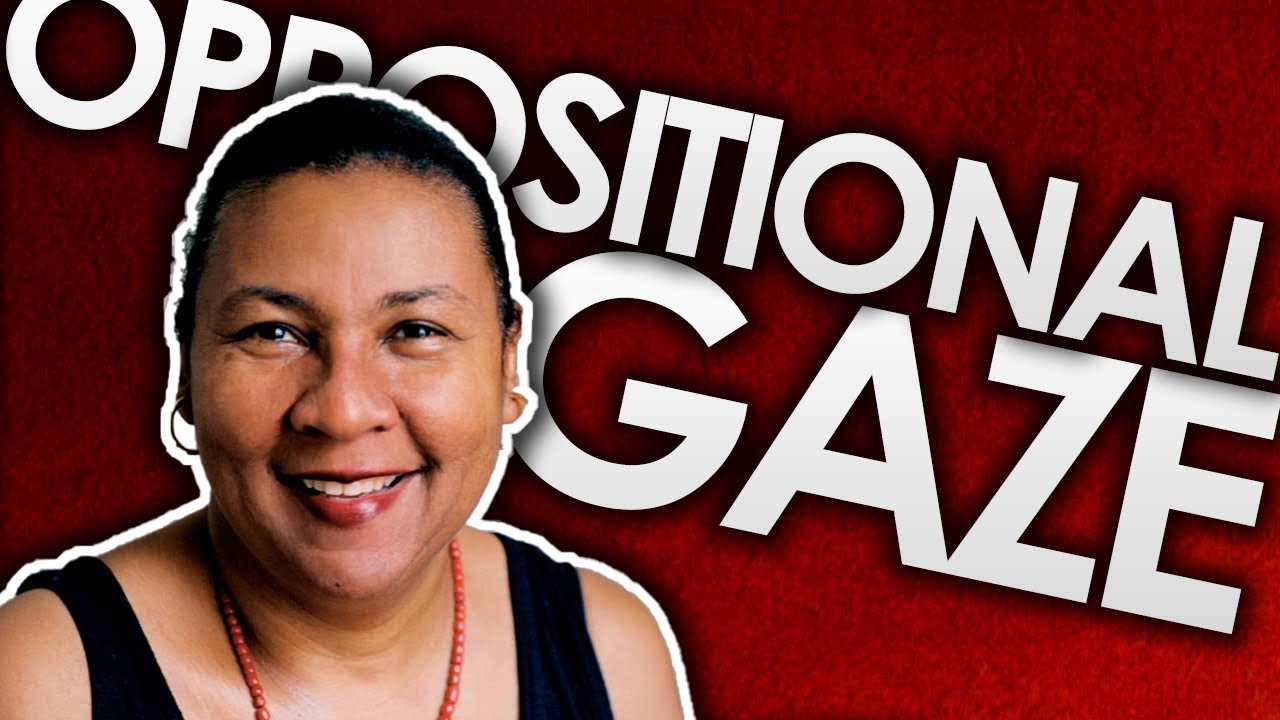
Examination of the 'White Gaze' in cinema versus oppositional gazes, studying theories of spectatorship by scholars like bell hooks.
Analysis of anti-racist filmmaking practices, specifically focusing on BIPOC-led narratives where marginalized characters possess full agency.
Investigation into the political economy of Hollywood, exploring how funding, casting, and distribution decisions perpetuate or challenge dominant narratives.
1.1M views57Klikes21:10Original Release: 2020-07-01
"Tonight I saved your ass, so show a little appreciation maybe."
In June 2020, while all eyes were on the Movement for Black Lives, following the police killings of George Floyd, Breonna Taylor and others, "This particular historical conjuncture holds possibilities for change that we’ve never before seen in this country."
The Help-a story about a white woman writing a book to confront racism - became one of the most-streamed movies on Netflix, even reaching number one in the US.
"You is Kind, You is Smart, You is Important."
The 2011 film’s resurgence in popularity was met with a strong backlash because The Help is widely considered a white savior narrative: in other words, a story about people of color that centers the benevolent actions of a white character.
"In every civil rights movie there’s two heroes.
There’s the black hero and the white person that's 'equally' as important."
Looking at the "white savior" character onscreen over the decades, we can see a common profile: They're a strong-willed, often optimistic non-traditionalist, who courageously risks being ostracized by their more prejudiced community in order to help a person of color.
"Believe it or not there are real racists in this town.
If the wrong person caught you with anything like that you’d be in serious trouble."
They frequently star in a period piece, where this character appears ahead of the curve and stands in contrast to blatantly racist peers in their era.
"You really think you can keep 700 union soldiers without proper shoes because you think it’s funny?"
The white savior tends to be the main focus of their story- so, while movies featuring this character may eloquently advocate for unity and fairness, they can also end up sidelining the black and POC characters.
"You can not hold Carl Lee Hayley responsible for my shortcomings."
Perhaps most jarringly, the white savior features in feel-good movies with happy endings, "I just thought our kids could play together."
which almost comfort viewers with a false sense that the ongoing, complex problem of racism is essentially "solved" by the end of a 2-hour movie.
"Come on, make some room, get this man a plate!"
As well-intentioned as many of them may be, the sheer ubiquity of these narratives (which are overwhelmingly created by white writers and directors, and frequently recognized by awards) detracts from other stories grounded in black perspectives and their firsthand experience of racism.
"I'd like to write something from the point of view of the help."
So what makes this trope so persistent?
Here’s our Take on the dangers of the white savior trope, and how we can shift our narratives and conversations to become more anti-racist ourselves.
"It's not enough in 2020 to be not racist, not racist meaning I am passive when it comes to racism.
If you see it you have to speak on it and call it out."
If you’re new here, be sure to subscribe, and hit the bell to be notified about all of our new videos.
The white savior complex in Western history can be traced as far back as the beginning of European imperialism, which was largely justified by the idea that white people were civilizing indigenous populations, who were amoral by nature.
"Do you think we’ll meet some savages?"
"If we do we shall be sure to give them a proper English greeting."
The popularity of this trope on film really took off during the 1950s and 60s during the rise of the American civil rights movement.
While calls for change were being led in the streets by black activists, "We shall be victorious in our quest."
the mainstream films produced in this era explored how white men related to these tensions.
And this reflected the prevailing assumption among studios that white audiences would not be able to relate to stories about race, unless they could see them through the eyes of a white person.
"If you shouldn't be defending him, then why are you doing it?"
"For a number of reasons.
The main one is that, if I didn't, I couldn't hold my head up in town."
In the 1962 film adaptation of Harper Lee’s To Kill a Mockingbird, Southern white lawyer Atticus Finch attempts to save a falsely accused black man from conviction in the 30s, "I've been appointed to defend Tom Robinson.
Now that he’s been charged that’s what I intend to do."
and while Atticus is unsuccessful, his bravery makes him a hero to the black community (and a role model to his daughter).
"Miss Jean Louise stand up, your father’s passing."
As admirable as much of their writing and ideas were for the time, staples of American film and literature like To Kill a Mockingbird helped to establish a norm of stories about black history being told through the lens of noble white protagonists.
In the late 80s through the 2000s, acclaimed movies like Mississippi Burning, Glory, and Amistad all articulated inspirational messages of freedom and equality.
"The national state of mankind is instead, and I know this is a controversial idea...is freedom."
but they did so while foregrounding the experiences (and hardships) of white main characters.
"Don’t you have the whole world to change?"
"That’s right and I’m changing it."
2011's The Help - which explores racial tensions between black domestic workers and their white employers during the civil rights movement- chooses as a protagonist not the maids, but the young white woman who wants to write a book about them.
"I’d really like to interview you, Aibeleen, I know it’s scary."
The volume and popularity of white savior films to this day shows how committed our culture remains to centering white characters in stories about civil rights, black history and racism.
These movies-usually made by white writers and directors- continue to receive top awards over films depicting the same themes made by black filmmakers.
"I mean every time somebody’s driving somebody I lose."
So the most fundamental issue is that white creators continue to dominate a conversation where it’s vital that black voices are featured most of all.
"If I were a Negro, I'd probably think the same way they do."
"If you were a Negro, nobody would give a damn what you thought."
Meanwhile, these movies can frequently lack three-dimensionality in their portraits of black and poc characters.
"Hmm I love me some fried chicken."
While the white protagonists often get love stories and complex character development, the non-white characters tend to be reduced to their negative experiences.
"I’ve never had one before."
"What a room to yourself?"
"A bed."
Black and poc characters also risk being portrayed as passive in their own stories.
"Did you fire her?"
In The Help, it is Skeeter’s revelation that her childhood maid has been fired that leads her to want to expose racism on behalf of the other black maids in her community, while in reality, black people were eager to tell their own stories and had been doing so since before the abolition of slavery.
So this simplified narrative centered on a white woman suggests that without Skeeter’s bravery, these women would never have encountered the ongoing black struggle for equality.
"My boy Treelore always said we gon have a writer in the family one day.
I guess it’s gonna be me."
Focusing primarily on the experiences of white characters also elevates their brushes with racism almost to the point where they’re equated with actually being victimized by racism.
"I just wanna live my life and not feel bad about it."
"I’m not trying to make you feel bad."
Of course, it’s important to note that the white savior trope is not limited to stories about Americans or black people.
The British film Lawrence of Arabia (released the same year as To Kill a Mockingbird) similarly centers a white male protagonist in a story of Arabic people’s struggle for independence.
"They hope to gain their freedom."
"They’re going to get it Mr. Bentley.
I’m going to give it to them."
In Indiana Jones and the Temple of Doom, Indiana is the only person capable of finding the missing children and a sacred stolen stone ' of an Indian village.
"You could’ve kept it."
"Ah what for, they’d just put it in a museum, it’d be another rock collecting dust."
In Gran Torino, Clint Eastwood’s Walt Kowalski becomes the savior of the Asian family who lives next door, while his unapologetic racism.
"What the hell'd these Chinese have to move in this neighborhood for?"
is dismissed as a forgivable personality quirk, or even played for laughs.
"How ya doing Martin, you crazy Italian prick?
You see kid, that’s how guys talk to one another."
"They do?"
Even in movies based on true stories, filmmakers often engage in significant historical omissions or rewrites in order to frame the material around a heroic arc for a white character.
2007’s Freedom Writers recast the Latina Erin Gruwell as a white woman "White people always wanting their respect like they deserve it for free."
More recently, 2016’s Hidden Figures invents a scene in which a fictional white boss, who’s a composite of real NASA executives courageously tears down a woman’s bathroom sign.
"Here at NASA, we all pee the same color."
When the film’s director Theodore Melfi justified this addition by saying, "There needs to be white people doing the right thing," his words revealed that the assumption underlying earlier civil-rights movies.
that white audiences can only relate to movies with white characters is still very much alive today.
Some of the people "white savior" films are based on have even criticized them for being misleading or oversimplified.
Ablene Cooper-a black woman who worked for the family of the author of The Help-is suing the author for using and distorting her likeness without her permission in a way she says is "embarrassing."
And the real life family of Dr. Don Shirley has condemned Green Book’s portrayal of him as completely estranged from both his family and black culture, "Who is this?"
"Who?"
"On the radio?"
"Lil' Richard."
to a degree that the movie even suggests he requires the help of his white driver to connect with his blackness at all.
"I live on the streets, you sit on a throne.
So, yeah, my world is way more blacker than yours!"
Most fundamentally, Green Book reduces Shirley’s life to supporting material for a narrative about a racist driver, when the life story of this queer black composer would by all accounts have made for a remarkable (and more unusual) movie on its own.
"He holds Doctorates in Psychology, in Music, and in the Liturgical Arts, and he has performed at the White House twice in the past fourteen months."
"Who are these kids, rejects from hell?"
One of the most central problems with white-savior narratives is that- while we know racism to be deeply systemic- these movies often explore it solely on the individual level.
"You threaten my son, you threaten me."
In 1957’s 12 Angry Men, as one white juror tries to convince his peers to act fairly in the case of a young man of color accused of murder, "Oh boy, oh boy, there’s always one."
the film’s focus is on each of the white men trying to confront his own personal prejudice.
"You wanna see this boy die because you personally want it not because of the facts."
In The Help, most of the racism we see takes the form of prejudiced remarks between white individuals.
"All that talk in there today... I’m sorry you had to hear that."
The problem with the individual focus of the white savior trope is perhaps best illustrated in two particular subgenres of this story: the white savior sports movie and the white savior education movie.
"All the poems you taught us say you can’t give in, you can’t give up, well we ain’t giving you up."
A number of iconic sports movies feature white coaches rehabilitating black sports teams to lead them to victory.
"What kind of statement are you trying to make by playing all these coloreds?"
"That I’m a basketball coach who don’t make statements."
Likewise, in the white savior narrative featuring teachers and education, "Actually I chose Wilson because of the integration program.
I think what’s happening here is really exciting don’t you?"
an energetic white teacher is frequently inspired to "clean up" a black school or change the lives of students for the better- often against the advice of more prejudiced or cynical members of their community.
"Don't you think that finishing high school will be valuable to their future?"
"That's not in their future."
Both of these subgenres can depict compelling and inspirational black and poc characters, and they might feature real racial violence and trauma experienced by their black characters.
Still, they rarely spend much time investigating the underlying systemic structures that lead to these characters being disenfranchised, underserved and victimized in the first place.
"The league never wanted you to play this game but you showed up."
"There are a lot of people who live in your neighborhood who choose not to get on that bus.
What do they choose to do?
They choose to go out and sell drugs.
They choose to go out and kill people."
And the result is that audiences usually aren’t presented with concrete ideas for structural change, but instead left with vague messages of "unity" and "kindness."
We’re made to feel that complicated, deeply entrenched problems can be fixed by an individual who simply cares enough.
"There are no victims in this classroom!"
"Why do you care anyway?
You just here for the money."
"Because I make a choice to care.
And, honey, the money ain't that good."
The hyperfocus on racism at the individual level also creates the illusion of good and bad white people who either choose to be racist or choose not to be.
"Is this some sort of white guilt thing?"
This oversimplified framing offers an easy scapegoat for white audiences, while handing them an admirable, non-racist white figure they can relate to.
"I don't need y'all to approve my choices alright, but I do ask that you respect them."
Another key feature of the white savior narrative is that it tends to be set in the past.
This allows viewers to comfortably look back on how far we’ve come from this period setting when prejudice was more egregious and overt.
"They carry different diseases than we do."
And it avoids making white viewers feel excessively implicated in the ongoing racism of the society they’re still a part of, "Aren’t you the machine?"
"You’re saying I’m the machine?"
"Yeah you’re white, you’re part of the school."
Writer Teju Cole, who coined the term "white savior industrial complex" to describe white-centered intervention in the African continent, describes white saviorism as "a big emotional moment that validates privilege."
In other words, the myth of the white savior is that in showing compassion to a non-white person, white people can absolve themselves of their privilege.
"Let’s get the fuck outta here."
In the end, while the white savior is positioned as relatively selfless, the resolution almost certainly involves them being rewarded with some sort of personal fulfillment.
"When I’m helping these kids make sense of their lives, everything about my life makes sense to me."
This trend in white savior films echoes the ‘magical negro’ trope which has long been criticized for treating black characters like counselors in the white character’s journey to self-actualization.
"There's only one shot that's in perfect harmony with the field.
One shot that's his."
Crucially, many white-savior narratives wrap up with a heartwarming resolution.
"Merry Christmas."
While the world may still not be perfect at the end, the implicit message is that progress at large is possible and on its way, because of what we’ve seen these individuals are capable of.
"You’re changing that boy’s life."
"No, he’s changing mine."
By contrast, in movies about racism made by black filmmakers, the emotional takeaway is frequently the opposite: audiences leave feeling challenged, confused, even confronted.
"Watching this is painful, but it’s necessary.
This needs to be watched."
And when Spike Lee’s Blackkklansman ends by cutting from its civil rights era story to 2017 footage of the Charlottesville white supremacist rally and Donald Trump, Lee reminds viewers that the fight is very much still ongoing; these films force us to reckon with the reality that racism is not some distant past, but a pernicious reality that continues to be part of all of our lives.
"So many aspects of the old Jim Crow are suddenly legal again once you've been branded a felon."
Tellingly, the hallmarks of the white savior narrative- a central white character, interracial reconciliation, or an employer-employee relationship that blossoms into friendship, "White women always wanna be friends with their maid."
rarely feature in the work of black and poc filmmakers.
On the contrary, it’s striking that in films made by black creators, white characters are very often on the sidelines.
In Spike Lee’s Malcolm X, they’re either grotesque villains, distractions, or simply irrelevant.
"I just wanted to ask you... what can a white person like me, who isn't prejudiced... what can I do to help you and further your cause?"
"Nothing."
While many classic white savior narratives frame the divide as being between "racist" and "not racist," in the words of Angela Y. Davis, "In a racist society, it is not enough to be non-racist, we must be anti-racist."
"We are all witnesses to this injustice!" (crowd: yeah!)
and we will not stop until the world sees it too!"
When it comes to creating or watching film and TV, being anti-racist means seeking out narratives that challenge us, instead of ones which make us feel more comfortable.
It means actively looking to confront our own bias, understand ways that we’re involved in racist systems, and hold ourselves and others accountable.
"There are many educated Caucasian folk who are talking to each other about it.
They need to continue to do that, so that we can save our energy for survival and thriving."
On Insecure, Frieda, Issa’s co-worker at her all-white non-profit, embodies the transition from being non-racist to anti-racist.
When we meet Frieda, she is well-meaning but can be patronizing in her attempts to help black children: "And these poor, poor children need our guidance more than anything."
however, over time we see her make a concerted effort to become more aware of how she and her organization carry implicit biases that hinder their work.
"We’re not about to waste time on white people, no offense."
"No we’ve given white people enough time."
The 2018 film Blindspotting and the series Dear White People highlight how even well-intentioned white people can endanger their black friends if they’re not cognizant of their privilege.
"Joelle, I called the cops the other night... I thought it would keep things from getting too out of control.
I thought I was doing the right thing."
These stories force their white characters to face that they cannot disavow their whiteness.
"I didn’t mean to."
"Are you sure?"
In Little Fires Everywhere, Reese Witherspoon’s Elena Richardson starts out the story fashioning herself as a "white savior" who’s self-satisfied after she does a favor for Mia Warren, a single black mother who appears to be in need.
"What did Lexi tell me, you’re renting to a homeless woman for practically nothing?
I mean, who does that?"
But when Mia not only fails to show gratitude but also brings challenging chaos into this wealthy white woman’s life, Elena is increasingly forced to confront her deep-seated biases and privilege.
"I think hard work and sacrifice is a hardship as well."
and because the audience at times can empathize with her, her story pushes viewers to look critically at themselves.
"A good mother makes good choicesl" "You didn't make good choices.
You had good choices!
Options that being rich, and white, and entitled gave you."
Another complex series starring an antiheroine, Mrs. America, cleverly subverts the white savior trope to depict a self-righteous protagonist-on-a-mission who’s not very relatable and who, far from saving anyone, causes tangible setbacks to the rights of women, the LGBTQ community, and people of color.
"If we pull this off, Houston will be the death knell of the women's liberation movement.
Let's blow it up."
All these narratives represent a step forward from the reductive racist-versus-not-racist binary from white savior films of the past.
"It’s almost like you’re stealing the identity from people who fought hard for against colonial structures so in a way it’s almost like you are the colonist."
Meanwhile, as more black and poc filmmakers have gained a platform to reach large audiences, films like Black Panther, Get Out, and Sorry to Bother You have been able to show black people grappling with how best to exist in a racist society, sometimes clashing with each other in their views on this complex question.
"It's about two billion people all over the world that looks like us.
But their lives are a lot harder."
Crucially, black and poc filmmakers increasingly have the opportunity to tell stories that include the challenges of racism but are not just about that.
Movies and shows about people of color must reflect a diversity of individuals and stories, in which confronting prejudice is one part of a complex lived experience.
"Like the white population, we are diverse within ourselves... There is not a monolithic black experience."
[Music]
Up Next
11:29
The 3 Fundamentals of Cinematography: Exposure, Lighting, and Camera Movement
@InDepthCine
662.9K views•2021-12-05

23:14
Visual Analysis Essay: How to Analyze Graphic Novels in College Writing
@nataliepleimann5941
1K views•2020-10-14

14:12
Call Me By Your Name Ending Explained: Film Analysis
@thetake
1.9M views•2018-03-15

4:00
Evolution of Darth Vader: Anakin Skywalker's Animated Journey Across Star Wars Films
@TellItAnimated
13.4M views•2019-03-30
Related Study Plans & Knowledge Roadmaps
Structured learning paths in Film Analysis
film-analysis
Sensory Cinema: Foley, Haptic Sound & Texture
01Introduction to Film Sound and Foley Artistry
02Micro-Sounds, Textures, and Extreme Amplification
03Haptic Audition and Film Phenomenology
+ 1 more learning modules
12h4 modules
Explore Roadmap
film-analysis
Breaking the Fourth Wall: Mockumentary & Satire
01The Invisible Wall: Basics of Cinematic Illusion
02Looking at the Lens: Direct Address & Character Glances
03The Mockumentary: Satire, Realism, and Complicity
+ 2 more learning modules
12h5 modules
Explore Roadmap
film-analysis
Analyzing the Long Take: Cinema, Space & Ethics
01Foundations of Film Grammar: Montage vs. The Long Take
02Choreography and Mechanics of the Simulated One-Shot
03Phenomenology of Film: Real-Time Spatial Continuity
+ 1 more learning modules
14h4 modules
Explore Roadmap
film-analysis
Anachronistic Music: Period Drama & Subversion
01Foundations of Film Sound and the 'Needle Drop'
02Traditional Authenticity vs. Revisionist History
03The Rise of the Anachronistic Soundtrack
+ 2 more learning modules
12h5 modules
Explore Roadmap