Breaking the Fourth Wall: Mockumentary & Satire
Learning Goal: Analyze the implementation of direct address, character glances at the camera, and metaleptic fourth-wall breaks in mockumentary and satirical cinema to interpret how self-reflexive visual cues negotiate the boundary between audience complicity and narrative illusion.
- Prerequisites: None (A basic understanding of narrative storytelling is helpful but not required).
- Estimated Study Time: 12 Hours (comprising video lectures, reading, formal analysis, and independent research).
Module 1: The Invisible Wall: Basics of Cinematic Illusion
This module establishes the baseline of classical narrative cinema: the construction of a self-contained fictional world (the diegesis) shielded from the spectator by an imaginary "fourth wall." You will explore how traditional filmmaking employs an "invisible camera" and spatial continuity to make viewers forget the apparatus of cinema, using sound design as the primary entry point to distinguish between what exists inside the story world and what is added for the spectator.
Recommended Videos

Why this video
To study the boundary between the fictional world and the audience, we must first learn how filmmakers construct that boundary. Sound is the most visceral tool for this. This video provides a comprehensive masterclass on how diegetic sounds (originating inside the story world) and non-diegetic sounds (added externally for the audience) define narrative space. Understanding how these sonic boundaries operate prepares you to spot when characters intentionally cross them.
Why this video
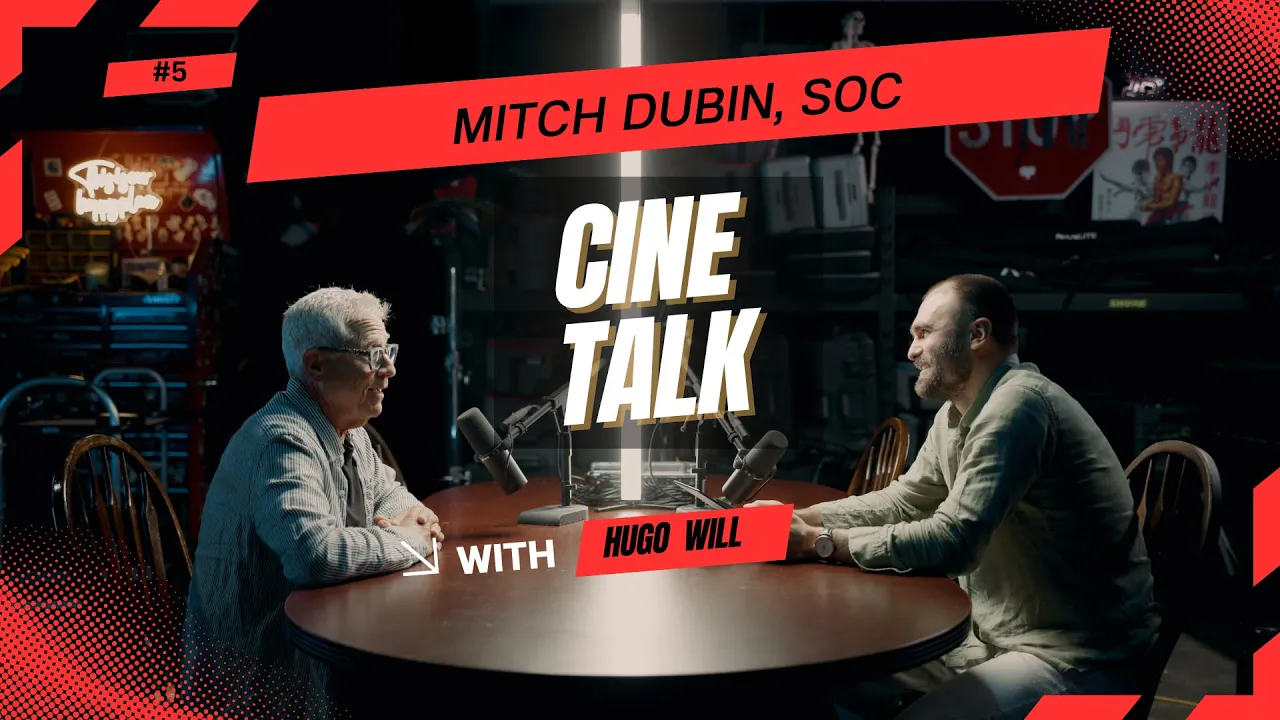
This video explains the industry philosophy of "invisible camera operation." Spielberg's longtime operator, Mitch Dubin, explains how the camera functions as an unseen "third character." This teaches you the standard rules of cinematic illusionism: the camera must observe without ever acknowledging its own presence, keeping the audience completely immersed in the narrative spell.

Why this video
This lecture segment introduces the foundational film theory of realism and objective observation. It breaks down how classical Hollywood style and realist cinema use specific staging techniques to hide the active look of the camera, setting up the exact rules that mockumentaries and meta-cinematic works seek to break.
Knowledge Checkpoint
- Explain the core difference between diegetic and non-diegetic elements in a film scene.
- Describe the concept of the "invisible camera" and how it preserves the narrative illusion.
- Define the "fourth wall" and identify how spatial staging in traditional cinema prevents characters from acknowledging the lens.
Module 2: Looking at the Lens: Direct Address & Character Glances
Once the rules of the invisible camera are established, we can study the disruption caused when a character turns their gaze directly toward the lens. This module tracks the history, mechanics, and psychological impact of direct address and character glances, shifting the camera from an invisible observer to an active, acknowledged participant in the scene.
Recommended Videos
Why this video
This brief history lesson contrasts early cinema—which was staged like theater where characters looked broadly toward a flat "audience line"—with the development of editing and dynamic camera angles. It shows how the gaze of the camera became an expressive tool rather than a static theater seat, laying the groundwork for intentional direct camera contact.
Why this video
This video provides clear linguistic and visual definitions of "breaking the fourth wall." It helps you transition from the theoretical concept of the dramatic wall to the practical visual act of direct address, providing concrete examples of how characters pull the audience directly into their confidence.
Why this video
This lecture excerpt details the psychological friction created when an actor looks directly into the lens. It discusses how this simple visual cue instantly shatters the suspension of disbelief, forcing the spectator to realize they are watching a constructed medium.
Knowledge Checkpoint
- Identify how a direct gaze at the camera lens alters the power dynamic between the spectator and the character.
- Explain how early theatrical staging differs from modern cinematic camera interaction.
- Describe the immediate psychological impact on a viewer when the "suspension of disbelief" is broken by a direct address.
Module 3: The Mockumentary: Satire, Realism, and Complicity
The mockumentary genre weaponizes the aesthetics of documentary film—handheld cameras, rough pans, zoom-ins, and direct interviews—to establish a false sense of reality. This module analyzes how satirical films use these visual cues not to build illusion, but to create "mock-realism," turning the camera into a character and making the audience a complicit observer in the social satire.
⚠️ Curriculum Note on Video Coverage: The discovered video pool lacks deep, dedicated video essays analyzing canonical mockumentaries (such as This Is Spinal Tap or The Office). To bridge this gap, you will watch proxy videos on media literacy and satire construction, and you are highly encouraged to independently search for essays like "The Office: How the Camera Functions as a Character" or "The Philosophy of Mockumentary Comedy."
Recommended Videos

Why this video
Mockumentaries rely entirely on our understanding of media formats to deliver satire. This detailed analysis of satirical construction teaches you how media creators use mock-promotional, mock-documentary, and propagandistic aesthetics to frame social commentary. It is an exceptional case study in how "authoritative" camera styles are manipulated to make audiences reflect on their own media consumption.

Why this video
This short clip acts as a structural placeholder representing the precise moment of a mockumentary camera break. Use this to analyze the structural setup of a mockumentary scene: the character reacts to an absurd situation by looking at the camera as if seeking validation from the audience, establishing a unspoken pact of complicity.
Knowledge Checkpoint
- How does the mockumentary format co-opt documentary filming techniques (e.g., zooms, shaky camera) to generate humor?
- Define how a character's glance to the camera in a mockumentary (the "Jim Halpert look") invites the audience to become an accomplice to the scene's absurdity.
- How does satirical framing expose the hidden ideologies of standard media and documentary formats?
Module 4: Narrative Metalepsis: When Characters Exploit the Medium
We now move into advanced narrative theory. Metalepsis is the transgression of the boundaries between different narrative levels—such as when a character acknowledges they are in a movie, rewrites the script in real-time, or interacts with non-diegetic text. This module moves beyond simple glances to study how characters actively exploit and manipulate the filmic medium itself.
Recommended Videos
Why this video
This academic video introduces structuralist theorist Gérard Genette's narrative frameworks. It directly explains metalepsis—the transgression of the boundary between the world of the telling (the narrating level) and the world of the told (the story level). This is the key theoretical foundation needed to analyze high-concept fourth-wall breaks in satirical cinema.

Why this video
This video explains how metalepsis blurs the lines between different levels of reality and fiction. It shows how narrative layers, which are normally kept strictly isolated to maintain the story's logic, can bleed into one another to shock, disorient, or amuse the audience.

Why this video
Through practical cinematic examples, this video essay demonstrates how diegetic and non-diegetic elements are not completely isolated categories. It explores the "crossover" potential where characters interact with elements outside their narrative level (such as picking up non-diegetic graphics or addressing sound effects), which is a core feature of metaleptic cinema.

Why this video
While framed as a pop-culture fan theory, this video serves as an excellent case study of a character (Deadpool) who functions entirely on narrative metalepsis. By analyzing a character who consciously knows they are inside a comic/movie and uses that medium-awareness to manipulate their environment, you will see metalepsis operating at its most extreme limit.
Knowledge Checkpoint
- Define "narrative metalepsis" using Gérard Genette's structural terminology.
- Give an example of a character crossing a narrative boundary (e.g., interacting with a non-diegetic title card or film score).
- Explain how metalepsis differs from a standard direct camera glance in terms of narrative structure.
Module 5: Brechtian Alienation and Audience Complicity
In our final module, we synthesize these visual techniques through the lens of critical theory, specifically Bertolt Brecht’s concept of the alienation effect (Verfremdungseffekt). You will evaluate how self-reflexive fourth-wall breaks dismantle narrative illusion not merely for cheap laughs, but to snap the spectator out of passive emotional absorption and shock them into active critical awareness—transforming the audience from passive consumers into active, often uncomfortable, accomplices.
⚠️ Curriculum Note on Video Coverage: Video essays directly applying Bertolt Brecht to cinematic analysis are scarce in the current pool. To master this module, focus on the theoretical framing of spectatorship, illusion, and audience presence in the videos below, and independently research the query: "Bertolt Brecht Verfremdungseffekt alienation effect in cinema."
Recommended Videos

Why this video
Renowned theorist Gertrud Koch explores the fundamental "undecidability" of the cinematic illusion. This video challenges you to think about how cinema balances realistic illusion with artistic construct. Understanding this aesthetic tension is crucial for studying how Brechtian alienation works to expose the artificial machinery of film.

Why this video
This video essay explores how the audience's physical absence in a dark theater is converted into a psychological "presence" within the intimate lives depicted on screen. It is an excellent analytical tool for understanding spectatorship theory, explaining how breaking this boundary turns our passive, voyeuristic gaze into an uncomfortable, active complicity.
Knowledge Checkpoint
- Define Bertolt Brecht's alienation effect (Verfremdungseffekt) and explain its political purpose in art.
- Explain how a fourth-wall break can convert the spectator from a passive "voyeur" into a complicit "accomplice."
- Analyze how modern political satire or dark satirical films (like Michael Haneke's Funny Games) use camera looks to indict the audience's own desires and consumption habits.
Course Map
This flowchart maps the recommended learning progression and module dependencies.
Key People Index
- Gérard Genette (1930–2018): A French literary theorist who coined the term metalepsis in narrative theory, classifying the structural ways authors and characters cross narrative thresholds.
- Bertolt Brecht (1898–1956): A German playwright and theorist who developed Epic Theatre and the Verfremdungseffekt (Alienation Effect), advocating for breaking dramatic illusions to stimulate intellectual, critical action from the audience.
- Mitch Dubin: Veteran Hollywood camera operator (collaborator with Steven Spielberg on Saving Private Ryan, Schindler's List), whose work defines the classic, immersive "invisible camera" style.
- Gertrud Koch: Leading film theorist and professor whose work on the "reality of illusion" explores the psychological and philosophical undecidability of the moving image.
Final Self-Assessment
Complete this comprehensive self-assessment to verify your mastery of the self-reflexive fourth wall in cinema.
- I can articulate the difference between diegetic and non-diegetic space, using sound design examples to illustrate the boundary of the story world.
- I can define the "fourth wall" historically (from proscenium theater to modern cinema) and explain how classical cinematography preserves it.
- I can explain the structural difference between a simple character glance (e.g., looking at the camera in a sitcom) and a formal direct address (monologue spoken directly to the lens).
- I can identify at least three documentary camera techniques used in mockumentaries to construct a sense of "mock-realism."
- I can analyze how the "camera look" in mockumentary comedy creates an alliance of shared irony and complicity between the character and the viewer.
- I can explain the concept of narrative metalepsis using structuralist terms (crossing of metadiegetic, diegetic, and extradiegetic levels).
- I can identify at least one cinematic example of a character breaking narrative levels to manipulate filmic elements (such as script, credits, or subtitles).
- I can define Bertolt Brecht's alienation effect (Verfremdungseffekt) and explain how its goal differs from traditional entertainment's goal of emotional immersion.
- I can analyze how breaking the fourth wall can be used as a moral critique, turning the spectator's voyeuristic gaze into active, uncomfortable ethical complicity.