


















![Filmmaker Reacts to Jaws [1975] | I've NEVER seen this Movie, is it any good?!](https://i.ytimg.com/vi/sGBiFyLEmeQ/maxresdefault.jpg)





Alfred Hitchcock's 1954 film 'Rear Window' demonstrates how projective geometry creates immersive cinematic experiences by folding space through architectural design; the film's carefully constructed courtyard setting enables viewers to experience 'ex falso sequitur quodlibet' (from falsity, everything follows), where the fourth wall becomes a permeable boundary that transforms passive observation into active participation, teaching us that desire operates as an atmospheric force that permeates space and connects observers to observed subjects.
Ex Falso Sequitur Quodlibet: Anamorphosis in Hitchcock's Rear Window
Added:Familiarity with Alfred Hitchcock's 1954 film 'Rear Window', including its themes of voyeurism, restricted point-of-view, and spatial framing.
Understanding the basic concept of perspective in visual art, specifically 'anamorphosis'—a distorted projection requiring a specific vantage point to be reconstituted.
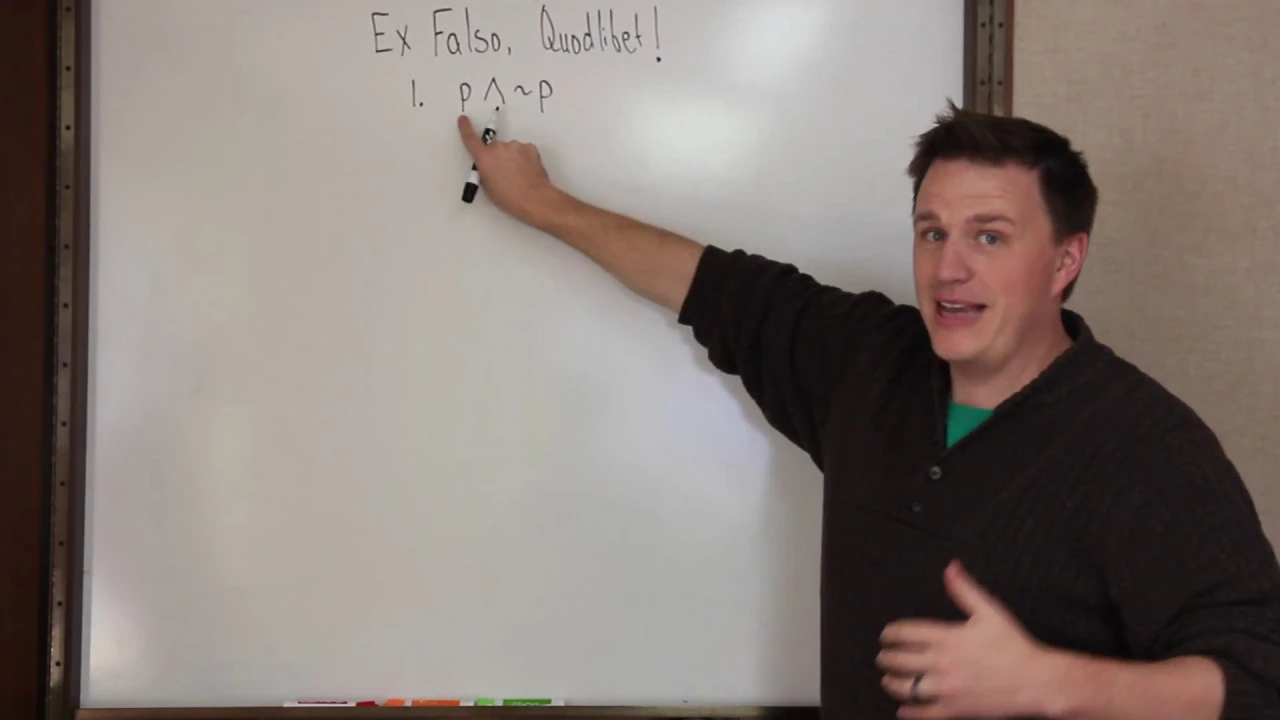
Basic knowledge of formal logic, particularly the principle of 'Ex Falso Sequitur Quodlibet' (the principle of explosion), where any statement can be proven from a contradiction.
An introduction to Lacanian psychoanalytic theory, especially the concepts of 'the gaze', desire, and the distinction between reality and fantasy.
Exploring advanced psychoanalytic film theory, specifically Slavoj Žižek's ideological critique and Lacanian readings of classical cinema.
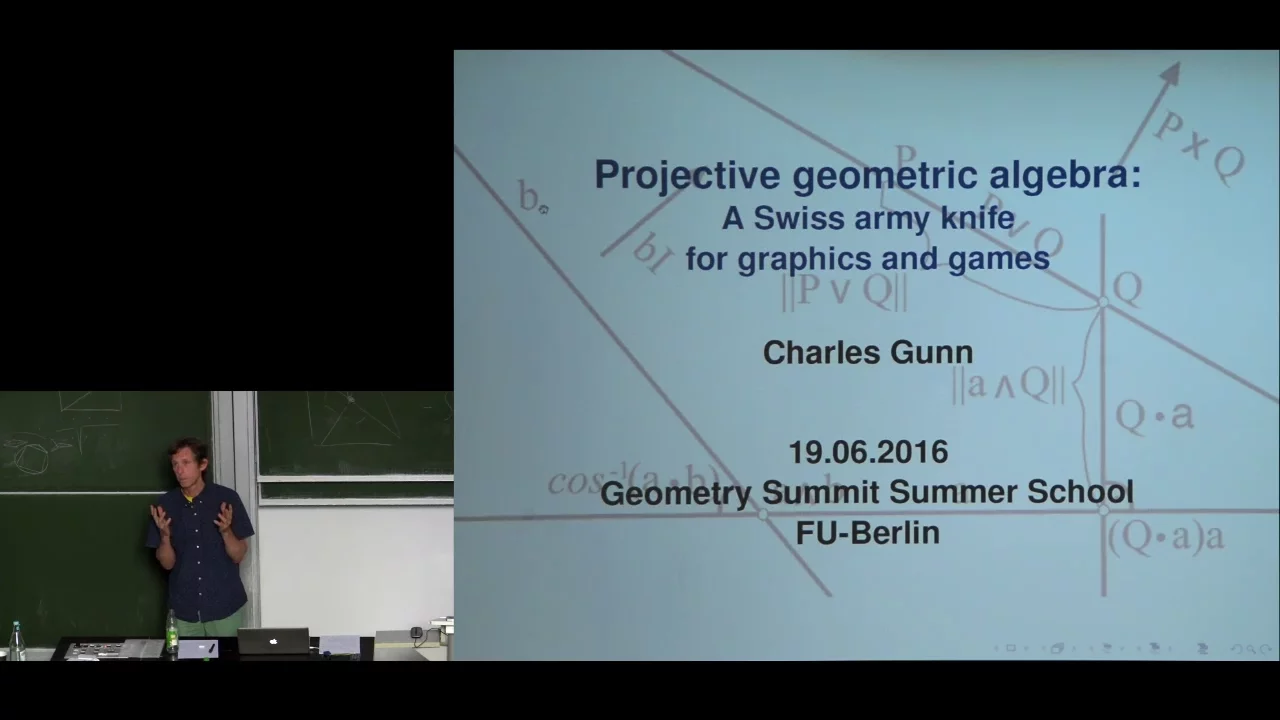
Investigating the mathematical principles of projective geometry and how they are used to construct virtual spaces in 3D computer graphics and game design.
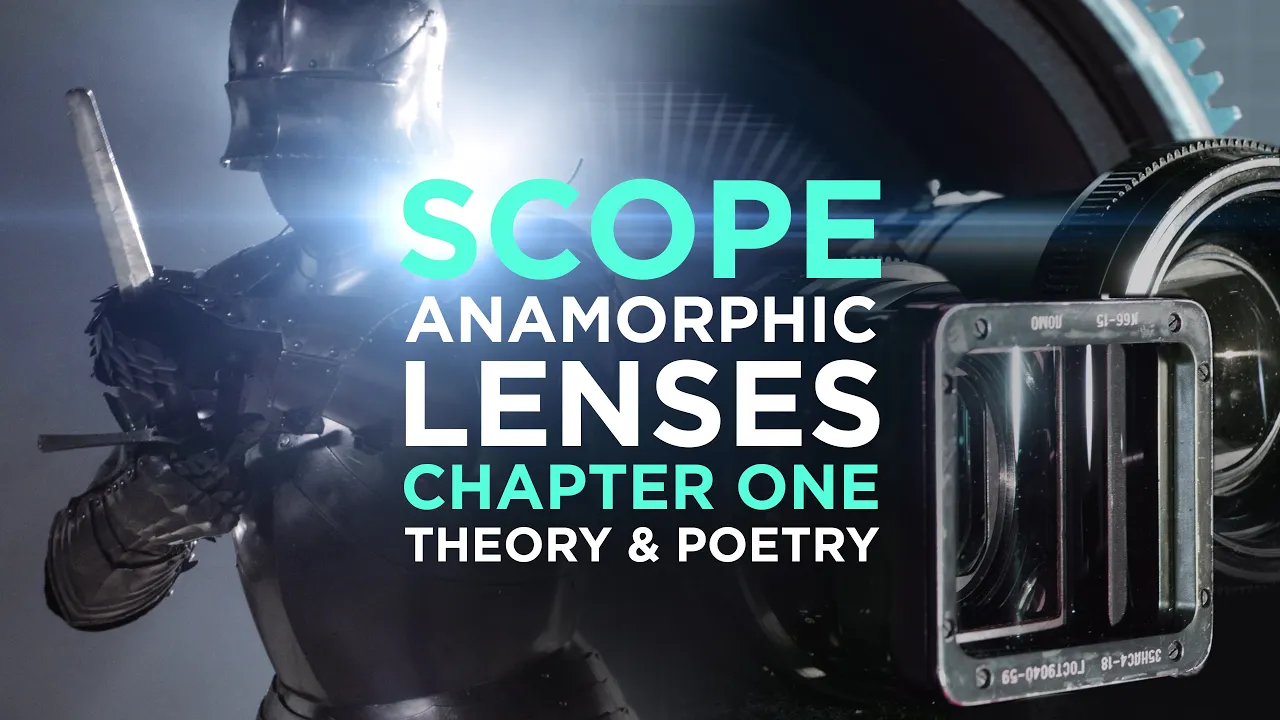
Analyzing the use of anamorphic lenses, forced perspective, and spatial distortion in other films to convey subjective psychological states.
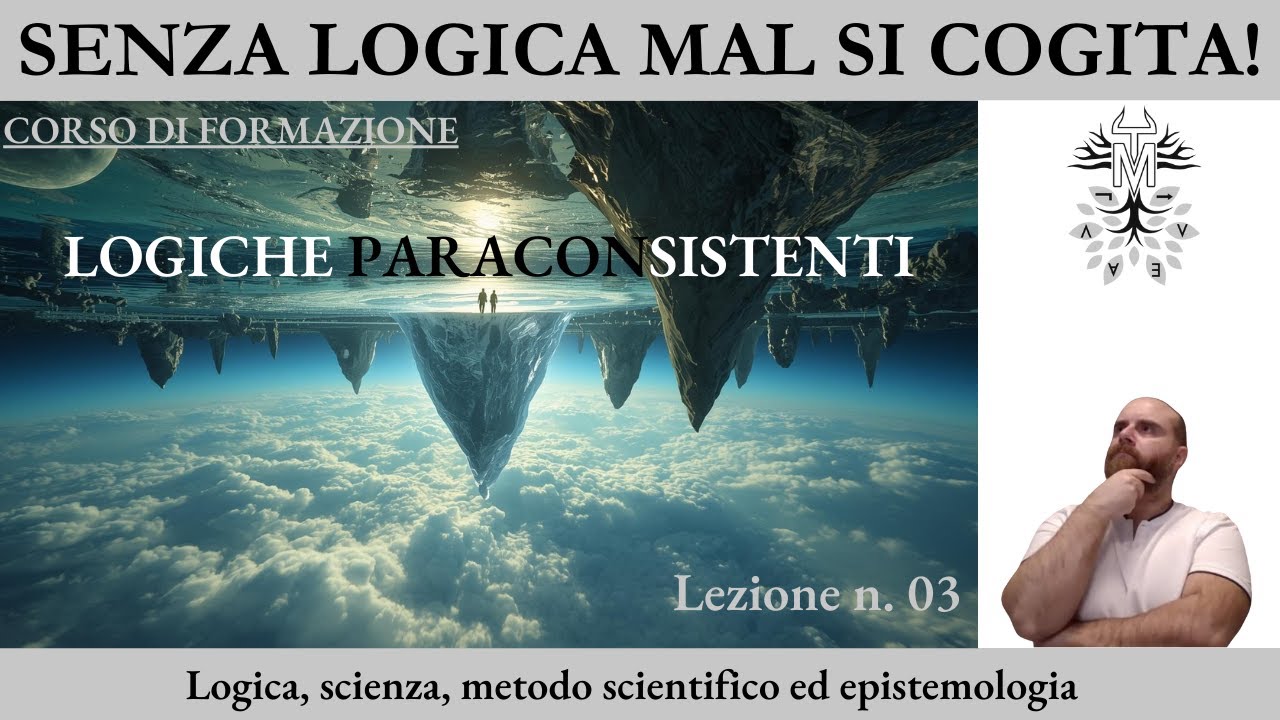
Studying paraconsistent logics in philosophy, which challenge the 'Ex Falso' principle by allowing localized contradictions without total systemic collapse.
667 views24likes40:59Original Release: 2022-02-08
alfred hitchcock's film rear window released in 1954 is surely one of his best and certainly a masterpiece it is not just a film you can learn from it's a film you can live in a kind of whole space-time that only art can offer this particular study argues that film's success as an enduring place for the imagination owes to its articulation of space folding known as projective geometry it won't be necessary to have expertise in this i hope rather i've tried to let the film explain how in projective geometry 2d surfaces achieve self-intersection and non-orientation and how these two qualities were originally conceived as the uncanny in ethnological forms of ritual and folk practices these have always been the basis for stories as forms we don't notice but because they work as structures they keep being passed down in the secularizing process we see the everyday transformed into something clever compact and instructive they don't tell us what to think but rather how to realize our situations as human subjects in the world with other human subjects in this particular lesson architecture plays a key role it is rear windows carefully designed set that allows projective geometry to do its thing to fold and unfold and to break out of its euclidean mold i've divided this study exercise into three parts that can hopefully build a bridge between popular culture and projective geometry that most of us can cross there are actually four things but the fourth thing is a bit complex and it ties together the trio and since it's about architecture's ability to insulate interior space from exterior space it's foundational for the way we understand how architecture constitutes a special kind of space and time that does not fit the standard euclidean model anamorphosis is normally about the way images can hide other images inside them which can be seen only by looking at the image at a special angle or with curved mirrors but there is a deeper sense of anamorphosis that has to do with the invisibility that is automatically generated with every experience of visibility both as a remainder and as a secondary world that is simultaneously intimate and inaccessible projective geometry is the name for the branch of mathematics that was discovered in 300 a.d but not developed until the 19th century today it is hardly understood and some architecture theorists have actually vilified it but it is key to understanding the functions and interactions of two kinds of virtuality the first belonging to perspectival experience the second belonging to imagination and dreams the third term the fourth wall comes from film criticism where it is used to talk about how the audience sitting in a dark auditorium turns up in the intimate interiors of lives on stage or screen this is presence that is absence and presence because of absence so it fits in nicely with the theme of but here we're going to learn that the fourth wall has a structure that is remarkably consistent with projective geometry anamorphosis is probably the first place to start this conversation since it's about how in ordinary experience we can see the critical role played by the uncanny the standard example given for anamorphosis is the famous painting by hans holbein made in 1533 when he was in london two young wealthy guys ambassadors of the french court wanted to be painted along with their expensive toys which included musical instruments books and an impressive collection of navigation instruments possibly to protect his clients from the evil eye holbein painted a blurred image at their feet running at an angle which can be seen correctly only if you kneel below the bottom left corner what most critics have missed however is that on the back of the painting holbein painted an over precise time for the painting's completion april 11th 1533 4 p.m why so precise the scholar john north has shown that the angles of the skull image intersect with the horizon and vertical line connecting the viewing point to the crucifix to fix 4pm as the time holbein and his astrologer friends thought would be the end of the world april 11th was good friday the end of three eons lasting 500 years adding the 33 years of christ's life to the day of crucifixion and the number three present in angles and dates you have a program of numerical over-determination because the painting has to be turned over to get this fuller view of holbein's intentions the painting's edge works as a hinge to a door that opens to connect the perspectival world shown on the front to a different kind of virtuality that includes the back the painting's two sides are actually facing in rather than out and the hinge is really a way of turning the painting inside out this is the recommendation i would make to convert the historical instances of anamorphosis into a general principle that can be used to apply to every case of looking every case of the imaginary where psychoanalysis shows that we require two kinds of virtuality so in rear window even the title tells us that we have an inside frame that is a cut inside the work that turns it inside out we would do best at this point to refer to what is called in mathematics projective geometry since i want to refer to how this geometry structures an entirely different kind of perceptual experience i use the expression projective virtuality a second kind of virtuality to complement the virtuality of ordinary experience projective geometry begins with taking our visual experience of perspective seriously we see parallel lines converge on a point lying at infinity on the horizon that has the shape of a circle around the visible world yet euclid tells us that this point cannot possibly exist that the parallel lines can never actually meet this is his fifth postulate one he could never fully prove and which has been controversial for the whole history of mathematics in 300 a.d papas of alexandria decided to accept the perceptual reality of converging lines horizons at infinity and the vanishing point to see if there was a geometry that could speak directly to our human perceptual experience by making the vanishing point an actuality rather than an abstraction so for every straight line on the earth's spherical surface there is a vanishing point a real point and any line parallel to it also vanishes at the same point the horizon is not a straight line but a circle that is the limit of visibility beyond it there is nothing the horizon is a real limit so it has to create an interior that is both visible and invisible as the horizon circles around us we see that for every vanishing point there is a double lying opposite behind our direction of view to correct for this circular limit with paired vanishing points for every family of parallel lines we make a circle the horizon line the set of all possible vanishing points so to speak is a circle beyond which there is nothing and thanks to its fictional status inside it can be everything this is the principle known in latin as x falseo sequitur quote limit whereas the true can be followed only by the true if we begin with a fiction both the true and the false can follow logicians have called this the explosion of the faults we can draw a circle with two points but we have to remember that this is a circle that doesn't cut off an inside space from an outside space it's more of a circuit a completion a flow of energy forget for a moment that it is like a map you look at from above and think of a line of travel instead it's really a picture of the saying ex-falso sequitur quote limit there are two vanishing points but the two points are actually the same point both are generated by perceptual convergence but the lines don't point in one direction or another we can portray two points however to imagine how space might spin around them to preserve their union and how the horizon is the link they are two points in the sense that if we spawn something around them the spin would be transferred as it travels from one side to the opposite this crisscross is critical in understanding the horizon in a way different from its geographical function the mirror actually reverses front and back not left and right as we normally say the mirror cuts down the middle of our viewing space but the topology of projective space doesn't do this so the spin is not in reference to an outside or inside of the hemisphere but to the 2d surface which is equivalent to a disc think of moving the point around the rim twisting it 180 degrees as it reaches the opposite side when we look at a film entitled rear window we can expect to meet up with some topological ideas it's a cut that opens up a space between two surfaces jeff's own apartment surface and the surface of the apartments opposite him topologically his position can be compared to a point with the chirality or spin that is opposite the spin of the point placed on the mystery of the apartment opposite him occupied by lars thorwald and at least for a while his wife anna topologically we would say that jeff and lars are non-oriented their spin is opposite jeff sees the parallels between lars and himself but he believes that fundamentally he is good and fundamentally lars is bad in projective geometry we say it's virtual because we can't do what it requires us to do in euclidean geometry the instruction in this case is to fold the edge of one side of the hemisphere's lip over to the other while twisting it the twist command requires us to imagine that all of space will have to be twisted to carry this out we can't easily picture this but we can use narrative elements we say that lars has seen jeff watch him realizing the direct connection then he locates jeff's apartment by calling him and using this address information he travels around the block to enter jeff's building this is a variation on the extreme case of two people who live next to each other physically but in different buildings they have to leave their buildings and go around the block to visit i've already introduced the expression in latin based on the logical principle that if you start with a true proposition you can only have true statements that follow it but if you start with a negative then you can follow it with anything this is called an explosion because basically anything can result from this ex falso position in the film we actually see this explosion following thor walls going around the block to reach what is as close as his glance we can't read latin but we can understand how an explosion might be the flash bulb blindness that keeps lars from rushing forward the meeting of the two vanishing points lars and jeff results in lars pushing jeff out of the window through the inside frame he technically vanishes in topological terms but in movie terms he just gains a new broken leg and the mystery is solved ex-falso the crime leads to everything the true and false clues but ultimately the space is folded into its true projective shape rear windows main theme hardly ever discussed is about insulation the residents of the courtyard at 125 west 10th street don't have enough of it so they have to open their windows and curtains they still feel a degree of privacy however because they do things in full view that they would ordinarily conceal which means that insulation is present as an imaginary function one that stella accuses jeff of violating the technical term for insulation is idiom potency the power of keeping something the same insulating it from disturbances or differences and it's key to the way that the brain handles stimulation whether positive or negative the balance things out using dopamine to return neural circuits to a low energy steady state to get across the idea of vitamin potency i use the example of shapes that magically are able to keep the square they occupy unchanged even though they flip positions in the process they define an interesting leftover which you can also think of as a lack there are two 90 degree angles one fits into the center tilted axis while the other fits into the retaining square frame in one position the shapes fill the frame in the other position there is a leftover space in the closed position there is nothing left over but if we reverse the location of the inner right angles so that they are on the outside an amazing thing happens this is a two-dimensional example of turning something inside out so we can connect it in potency of maintaining a fully filled square frame to the problem of what jacques lacan called extimidity the topological identity between inside and outside or the fact that an intimate exterior is the other side of an alien interior when we feel at home in some travel location that's the intimate exterior when we are spooked by the desire of the other or afraid in our own houses that's the alien interior just so you know the small remainder is simultaneously a surplus and a lack in the film we know exactly how this is represented it is the ring without a finger that is anna thorwald's wedding ring that lars kept after he disposed of his dead and dismembered wife this materializes the horror of the murder with the thought that he separated this ring by cutting off anna's finger the counterpart to this position inside the square has the hidden object and key to the crime is the little space the ring outside the square this is the girl without the ring which is lisa's situation of wanting to marry jeff the story proves idiom potency and also extremity and just as curious it shows how the two are related most students of architecture have already encountered this little space on the inside that is the same as the space on the outside in the golden rectangle where no matter how many squares or one-to-one shapes we add the ratio of the rectangle sides is always the same meaning that the shape is it impotent not just in spite of change but because of it the negative or x-falseo part is the reason for this ratio and it leads as the latin motto says to an explosion of the shape which is the golden rectangle specified as a spiral as the rectangle tries to surround itself it equates the interior with the exterior which is what we see in the spiral that is generated as the square shapes are added another insulating feature of the golden rectangle is the fact that the ratio never changes no matter how many squares we add or subtract but this ratio can only be approximated by making an interior cut between the fibonacci numbers that as you may know create the next number by adding the previous number each fraction that results from sliding the series across itself is a progressively better approximation of phi the numerical value of the ratio this inside out or estimate situation returns us to the theme of anamorphosis the function of the edge as a hinge between two identical aspects of the same reality in the holbein painting it is a small angle that allows us to see the skull in correct perspective in the idimpotent shapes that maintain the one-to-one frame it is the rotation that puts the two right angles of each shape first in the center then on the outside transferring the gap that is represented by the wedding ring in the movie from an inside position inside thorwald's apartment to the outside condition of being recovered by lisa from the ring without the woman to the woman without the ring we have an identity between anna and lisa on analisa shifty shape correlates with the way holbein used 27 degree angles to relate the view of the skull where the viewer was in a position directly beneath the crucifix half hidden at the upper left corner to the horizon running through the sound hole of the loot this overlay of secret lines relates to the overly exact date on the other side 4 p.m on a good friday 15 33 and its involvement with the number three to put us at the hinge position between a scene where we were simultaneously present in absence in the position of golgotha but separated from it by three eons of 500 years and three times 11 years again a one and one situation at paramount studios in hollywood hitchcock constructed a six-story set with a basement capable of handling the rainstorm runoff generated on the first night of the story the apartments were finished beyond the needs of what needed to be seen in the film they had electrical wiring and plumbing there was a light system to flash cues to the actor residence the fully furnished set was made to look as realistic as possible and indeed the courtyard has the look and feel of a new york city space even in the 60s and 70s when working-class people could still afford to live in manhattan chess studio is suited for a bachelor with frequent out-of-town assignments but the spaces we see reflected in jeff's telephoto lens had to be set up so that we would be able to imagine them focused on the far wall of the apartments like the mirror in the back of velazquez's painting las meninas where the two figures reflected are much too large to be those of the king and queen standing in the doorway an intermediate had to be set up lisa wasn't made out of thin air but based on a famous model who was actually a model and also a business executive for harper's bazaar she was a 1950s icon of the successful woman featured on the covers of life and time magazine grace kelly had a similar reputation in hollywood for being in control of the films she starred in as well as the way she was directed john michael hayes wrote the screenplay from a story by cornell woolrich published in 1942 it had to be murder with the addition of cinematic space-time hitchcock added an important dimension to the story which was the twin relationship binding jeff to lars thorwald and anna thorwald to the sympathetic lisa with marriage as the overriding theme as it is in many of hitchcock's other films it is not insignificant that a wedding ring plays a role both as a key to the story but also cinematically as the visual object that collapses the distance separating jeff from lars if you look in a mirror it's tempting to say that you see a reflection and let it go at that what happens however is more mysterious the smooth reflective surface makes a cut in space down a new middle the cut doesn't create the chirality of space that is the way space is structured stereognostically as a matter of left and right rather it allows us to see what has always been there but only as a virtual reality of space the rear window which looks to an inside rather than an outside is chosen for this very reason it reveals and makes specific what is already there but virtual this makes the rear window and the mirror anamorphic devices what they show is like schrodinger's cat is both alive and dead at the same time the problem with doing this kind of analysis is that it doesn't seem to show up on the drawings we customarily make to describe spatial arrangements in the plan we see how jeff's studio apartment has a corner position at the end of the building on a street with a projecting bay window bringing in more light like the ones shown here from bilbao spain jeff's slight projection into the courtyard gives him a more spherical or panoramic relationship to his neighbor's apartments and his hinge position assigns him the role of someone who collects folk tales in part the film is an anthology of stories about the people who live around the courtyard the struggling composer who is being visited here by hitchcock who winds the clock the childless couple who lowered their dog in a basket to let him run around the courtyard a single middle-aged woman who seems to have no luck with men a dancer who practices her routines and seems to have too much luck with men a sculptris working on a bust that summarizes the psychoanalytical theory of the human subject as having a hole through them the ice man who visits regularly enough to make us think that hitchcock is parroting eugene o'neill's 1939 play the iceman cometh and the newlyweds thorwald stands out because of all the neighbors jeff thinks that anna who is ill and resentful of lars is now what lisa could end up being jeff thinks this is generically true of marriage and not that he is anything like lars or that lisa is anything like anna it's a part of his bachelor's early warning system he wants to confirm his status as an adventurer with some good years still ahead and the idea of a settled life scares him given that we have a movie about the architecture of a courtyard and the physical model of the literary form of the anthology with a built-in storyteller we have to think about how language theory might become a way of looking at architecture from the semiotics theorists of the 1960s we get the division between the forward running order of language where we have to wait until the end of a statement to either confirm or revise the meaning of the first of the statement the end always has this revisionary power over the origin in architecture diachronic order is about the way buildings are used and how use completes or fills out the design sometimes in ways that revise the original intention we are familiar with the repurposing of factories into chic restaurants if the renovation is lucky then the factory looks like it had wanted to be a restaurant all along synchronic order is about replacement of individual words or in architecture about filling spaces with alternative uses occupants or materials it can be the variety of shops filling the retail spaces along a street or in an apartment building it's the constant departure and arrival of tenants occupying fixed spaces the replacement process seems almost to belong more to architecture than language the words can change but the grammar remains the same so when jeff looks at the collection of apartments across the courtyard the thor walls stand out in the same way replacing an expected word in a sentence with an unexpected one creates a new and powerful charge to the otherwise smooth flow of apartment life this grammatical shift happens because jeff thinks what the thor walls are doing fighting mostly has to do with him lara's wife anna is sick and complaining lars seems to be calling another woman on the phone the more the thor waltz bicker the more jeff congratulates himself for remaining single beyond the differences jeff sees a guy who packs up his valuables in a suitcase and travels a lot just as jeff puts his camera equipment in a bag and takes off to far away lands lisa is not sick like anna but that could be a matter of time jeff thinks what if it's her in a wheelchair and not me the equation of jeff loves lisa somehow becomes anna hates lars agents and actions reverse together when the thor walls argue and then anna seems to leave suddenly jeff uses this minimal difference to justify singling out the thor wall department for closer inspection to do this he breaks the rules of perspective that hold everything else in place grammatically at a distance across the courtyard his synchronic curiosity plays with the possibility that his neighbor might be a murderer let's look at this more closely synchrony uses a metaphoric logic of replacement metaphor is not just any suitable alternative word such as chum for friend but a word that brings with it a completely different and potentially dangerous new context if lars is a murderer instead of a neighbor then not only must jeff try to do something about it the whole space of the courtyard changes neighbors are seen in perspective which corresponds to the map view of courtyard space closer neighbors are bigger more important the ones further away less so distance is an index of relationship and interest all of a sudden when thorwald acts suspiciously the perspectival order of space must change in response when jeff begins to use his binoculars then his telephoto lens he does what the fourth wall in cinema does and so the analogy of jeff watching thorwald to us watching jeff takes on a new validity we use a fourth wall to insert ourselves into jeff's private space but now we see that jeff now needs a fourth wall to insert himself into the thorwald's private space his geometric transformation procedure is something we can see and apply retroactively to what we have already done in watching the film we have hitchcock's clear analogy connecting jeff's windows to the cinema screen to justify our comparison when we see jeff straighten out the converging lines of perspective we realize we are doing the same thing when we see the point at infinity brought within reach and reconstructed as the gaze that fascinates jeff a gaze located somewhere in lars apartment we are discovering how the gaze works in cinema and how its location is an important issue the parallel between what jeff does that we can follow and how this duplicates what we have done but done unconsciously means that this film is apart from its entertainment value or moral lessons a story about our generic experiences of cinema an experience that takes place across or through an imaginary semi-permeable fourth wall note that in the story there are two vanishing points the one that is jeff belongs also to us as fixed in our seats as he is stuck in his wheelchair lisa breaks into the apartment to find the other vanishing point which hitchcock has materialized as the wedding ring an object that is both lost and a proof of anna's dismemberment it is lara's broken promise but simultaneously jeff's promise to lisa so lisa hides the ring by putting it on her finger like the purloined letter of edgar allan poe's story the best place to hide something is where it's most likely to be the two vanishing points don't represent objects but rather the desire those objects seem to collect and store like an electrical charge notice the function of negation the ring is hidden can't be found jeff is stuck in a wheelchair unable to act on his own negation endows these vanishing points with potential they have no bodies or at least not working bodies but they have minds of their own jeff is the only one at first who thinks lars is a murderer the ring however has a different kind of mind it gets other people to think about it when the ring becomes a signifier within the parallel visible channels that jeff has constructed lars uses this visibility like a car would use a freeway at 2 am perspective would slow things down but the parallel striations of projective space mean that you are there before you know it lars suddenly knows how he got caught and by whom all he needs to do at this point is make a phone call to determine jeff's physical address the parallel lines that converted the courtyard's perspectival space into projective space are the same ones that allow the space to fold in a twisty way that gets the two antagonists together after all they are really two embodiments of the same idea the bachelor one before the fact of marriage one after i wanted to mix the issues of the narrative situation which everyone in the audience can understand with projective geometry which almost no one understands with a function of the fourth wall which some film critics seem to understand but only at a superficial level if the fourth wall is more than an analogy of how the audience is present inside the fictional lives of people on a stage or screen then it must have some rules some structure some operating principles the origami folding of space in projective geometry accounts for the necessity of the idea of a fourth wall but it goes further by showing exactly how space transforms itself to allow for this virtual presence we can check out these rules by looking at the work of art and in rear window in particular we find that the story itself amounts to a kind of textbook about how projective geometry works in real life so what do you think made jeff think of using his flash gun to delay thorwald's attack hitchcock here seems to understand how the connection of two antagonists is like the fold-over of a space with a twist and how that is related to a sudden explosion of something and the flash bulb idea must have popped into his head if it wasn't already a part of cornell woolwich's story it is up to the critics to connect this event explosion to something deeper than mirror catastrophe the explosion is not chaos but as we see in the scenes that follow the chance to reorder the rear window cosmos so that the problems that were previously intractable are now able to find resolution the explosive dissipation of energy allows the system to return to normal which is to say its original low energy state the ice man is back the sculptor falls asleep with her cat the childless couple have a new dog miss torso's husband comes back from the army and miss lonely hearts falls for the music man jeff at least now has some symmetry hopefully without the itch to get back to the jungle on a dangerous photo assignment even lisa seems to have realized the advantage of accommodating to jeff's fantasies by having one book to read when he is awake another preferred journal for when he's asleep the newly weds to the left of jeff's window have become what the others had been before the explosion all through the film they were the reverse case as if hitchcock needed to insert an even odd profile to check against the odd even of the general condition the print of rear window circulating in the 1960s cut out the concluding nice touch where hitchcock lowers the curtains to echo the way he had opened them at the start telling us that the window was like the theater screen with the restored print of the 90s this fine detail was added back and we are given a good way to summarize the principle of criticism by punctuation that the end of the story must respond to the beginning in the course of this particularly vivid treatise about architectural space we have had to revise our understanding of closure by incorporating ideas from projective geometry and the idea of the fourth wall the point of these views these rear windows is that we look through them to see out but are in fact at the same time looking in
Up Next

92:39
Power of Central Banks: Japan's Economic System Documentary
@Moconomy
131.1K views•2024-11-09

12:54
Triumph of Orthodoxy Icon: Byzantine Art & History Explained
@BenCallan
2.1K views•2024-08-06

9:49
FastAPI vs Flask vs Django: Choosing the Right Python Web Framework
@TechWithTim
302.5K views•2024-05-26

1:42
Game of Thrones Opening Credits: A Cinematic Analysis
@gameofthrones
46.3M views•2011-04-18
Related Study Plans & Knowledge Roadmaps
Structured learning paths in General & Interdisciplinary Studies
general-studies
Elevator Engineering: History, Physics & Cities
01From Hoists to Safety Brakes: The Dawn of Vertical Lift
02Hydraulic vs. Traction: The Engineering Physics of Elevators
03Modern Speed, Safety, and Algorithms
+ 2 more learning modules
12h5 modules
Explore Roadmap
general-studies
Rubber: Material Science, History & Geopolitics
01Origins of Natural Rubber & Mesoamerican History
02The Chemistry of Natural Rubber & Vulcanization
03The Geopolitics of the Rubber Boom & Colonization
+ 2 more learning modules
12h5 modules
Explore Roadmap
general-studies
Containerization: Evolution, Logistics & Trade
01Ancient Trade & Bulk Cargo: Amphorae to Barrels
02The Industrial Revolution & Cardboard Packaging
03The Containerization Revolution: Malcom McLean
+ 2 more learning modules
12h5 modules
Explore Roadmap
general-studies
Textile Tech: Evolution, Labor & Global Impact
01Pre-Industrial Textiles: Handloom & Cottage Industry
02Mechanization: The Spinning Jenny to the Power Loom
03The Factory System & Global Labor Transformation
+ 2 more learning modules
10h5 modules
Explore Roadmap