The fourth wall is an invisible barrier between performers and audience that, when broken, creates comedic effect by acknowledging the audience's presence, as demonstrated in this comedy sketch where characters directly address the audience and reference theatrical conventions.
Mockt 2: Advanced Concepts and Applications
Added:Deep Dive
Foundational concepts of unit testing, including assertions, test runners, and test-driven development (TDD) workflows.

Kent Beck on Cannon TDD
300
Test Driven Development (TDD) is a programming workflow where programmers change system behavior while ensuring existing functionality works and new behavior works as expected. The system should be ready for the next change. There are two design flavors: logical design (how behavior is invoked) and physical design (how it's implemented), which should not be mixed. The five-step TDD workflow involves: (1) writing a list of test scenarios covering expected behavior changes including edge cases, (2) converting exactly one item into a concrete runnable test, (3) changing code to make the test and all previous tests pass, (4) optionally refactoring to improve design, (5) repeating until the list is empty. The test list is flexible and can be modified. Behavioral analysis focuses on what happens when inputs come, not implementation details. Tests must be truly automated with setup, invocation, and assertions. Working backwards from assertions is useful. Tests without assertions provide false security.
Click to watch →
SwiftConf '18 - Jakub Turek: Always Give 100%
395
Unit testing involves automated code that invokes units of work and verifies behavioral assumptions. TDD (Test-Driven Development) is a programming technique where tests are written before production code, followed by minimal implementation to pass tests and refactoring. Research shows TDD improves code quality with up to 90% reduction in complexity. The TDD workflow follows three phases: red (write failing test), green (write minimal passing code), and refactor (improve code quality). Three core rules must never be violated: no production code without failing tests, no excessive test code, and no excessive production code beyond passing tests.
Click to watch →

C# Unit Testing - Full Course - Write Unit Tests in C# like a pro!
63.8K
This comprehensive section establishes the foundational concepts of TDD and unit testing. It contrasts manual testing (time-consuming, error-prone verification after each code change) with automated testing (writing code to test critical parts, running instantly when code changes). The section demonstrates creating unit tests using XUnit in Visual Studio, including writing test methods with [Fact] attributes, using if statements to verify expected results, and running tests via Test Explorer. A key focus is professional project architecture: separating concerns into distinct projects where the domain layer contains all functional business logic and the test project contains only test scenarios that reference the domain layer. The section introduces test-first development, where tests are written before production code, and emphasizes that effective assertion messages should provide specific details about expected versus actual results. The guitar tuner analogy illustrates how tests drive implementation.
Click to watch →

JeremyBytes - TDD Basics with C#
99.5K
Test-Driven Development (TDD) is a methodology where code is created based on tests, ensuring code matches desired functionality. The Red-Green-Refactor Cycle forms the foundation: Red (write failing test), Green (write minimal code to pass), Refactor (improve code quality). NUnit is a popular unit testing framework for .NET applications, requiring the Test Fixture attribute and using statements. The Arrange-Act-Assert methodology structures tests into setup, execution, and verification sections. Visual Studio's Test Explorer provides graphical test discovery and execution. Unit tests verify individual components, starting in Red (failing) state and becoming Green (passing) when code is written. Each new test should not break existing tests, ensuring backward compatibility.
Click to watch →

Test Driven Development (TDD): o que é e como aplicar
601
This section establishes the foundational concepts of software testing. Unit tests verify isolated code units like methods or validations without deploying full applications. Test-Driven Development (TDD) reverses the traditional development order by writing tests before implementation. The core TDD workflow follows the Red-Green-Refactor cycle: first write a failing test (Red), then implement minimal code to pass it (Green), then refactor for improvement (Refactor). This cyclical approach ensures tests drive design decisions and promotes cleaner, more maintainable code from the start.
Click to watch →
Deep Dive
Basic proficiency with the Mockt framework or introductory mocking concepts, such as creating simple mock objects and stubbing return values.

JUnit-Mockito-PowerMockito (Session-4) | Mockito-Introduction | By Mr. Sreenivas
1.8K
This section explains the stubbing concept and how to create mock objects in Mockito. Stubbing means creating fake or dummy objects that replace real dependencies. The presenter demonstrates two syntax options: using Mockito.mock(ClassToMock.class) without annotations, and using @Mock annotation with annotations. The video explains that when mocking an object, the real object becomes a dummy object that never calls the real implementation. This allows developers to test code without external dependencies while maintaining realistic behavior.
Click to watch →

Mocks & Stubs Explained Simply Kotlin + Android Testing
265
Mockito is a powerful mocking framework that allows you to create mock objects without writing any implementation code. With Mockito, you can use the mock() function to create a mock instance of a class, then use the whenever() or every() syntax to define what the mock should return when specific methods are called. This provides much greater flexibility than stubbing because you can dynamically configure return values for different test scenarios without creating multiple implementation classes.
Click to watch →
Mocking of mocks. A deep dive into the mock module - Mario Corchero PYCONES2018
101
Testing mocks are controlled objects that simulate real dependencies without executing actual operations. The unittest.mock library provides tools to create these objects quickly. Key concepts include: creating mocks with specific return values using 'return_value', and the automatic creation of nested mocks when accessing attributes on a mock object. This automatic behavior is particularly useful when testing code that expects objects with attributes, as the mock will provide those attributes as new mocks without manual creation.
Click to watch →

Spy with Mockito - Spy vs Mock
46.9K
A mock in Mockito is a complete dummy implementation that does not execute the actual class logic. When you create a mock using mock(), it returns default values for all methods unless you stub them. Stubbing allows you to define what a method should return when called. For example, stubbing size() to return 5 means that call will always return 5 regardless of the actual state. Mocks are useful when you don't care about the actual implementation and only need to test how your code interacts with the dependency.
Click to watch →

Introduction To Mockito , @Mock and @Spy Annotations. | Java | TechHub
478
Mockito is a Java library for unit testing that enables developers to create mock objects to simulate dependencies. The library allows testing individual components in isolation by replacing real dependencies with mock objects that can be configured to return specific values. Mockito provides two fundamental concepts: Mock objects are completely fake objects that simulate behavior, while Spy objects are partial mocks that wrap real objects, allowing developers to stub specific methods while letting others execute their actual implementation. To create mock objects, developers use the Mockito.mock() method which takes a class as a parameter and returns a mock instance. After creation, developers configure mock behavior using stubbing methods like when().thenReturn() to define what methods should return. By default, mock objects return null for reference types and false for boolean types when methods are called that have not been stubbed. The Mockito core library is organized into packages that provide different functionality for unit testing. The main package contains core mock creation and configuration classes, while additional packages provide support for different testing frameworks like JUnit and TestNG.
Click to watch →
Deep Dive
A solid grasp of Dependency Injection (DI) and how decoupled code architecture facilitates testability.

Dependency Injection Explained
12.4K
Complete decoupling through DI provides major architectural advantages: you can replace implementations entirely without modifying consumer code; you can throw implementation libraries into completely different applications and they will still function; you cannot accidentally create dependencies inside classes because they don't reference implementation assemblies. This architectural constraint prevents anti-patterns that lead to tightly coupled, unmaintainable codebases.
Click to watch →

Aplicando Arquitetura Hexagonal com testes de integração e unidade
89.3K
Dependency Injection enables testability by allowing dependencies to be injected at runtime rather than being created within components. This separation of concerns makes testing much more practical and reliable. The Composition Root should be the only place where concrete implementations are created, making the system more maintainable and testable.
Click to watch →
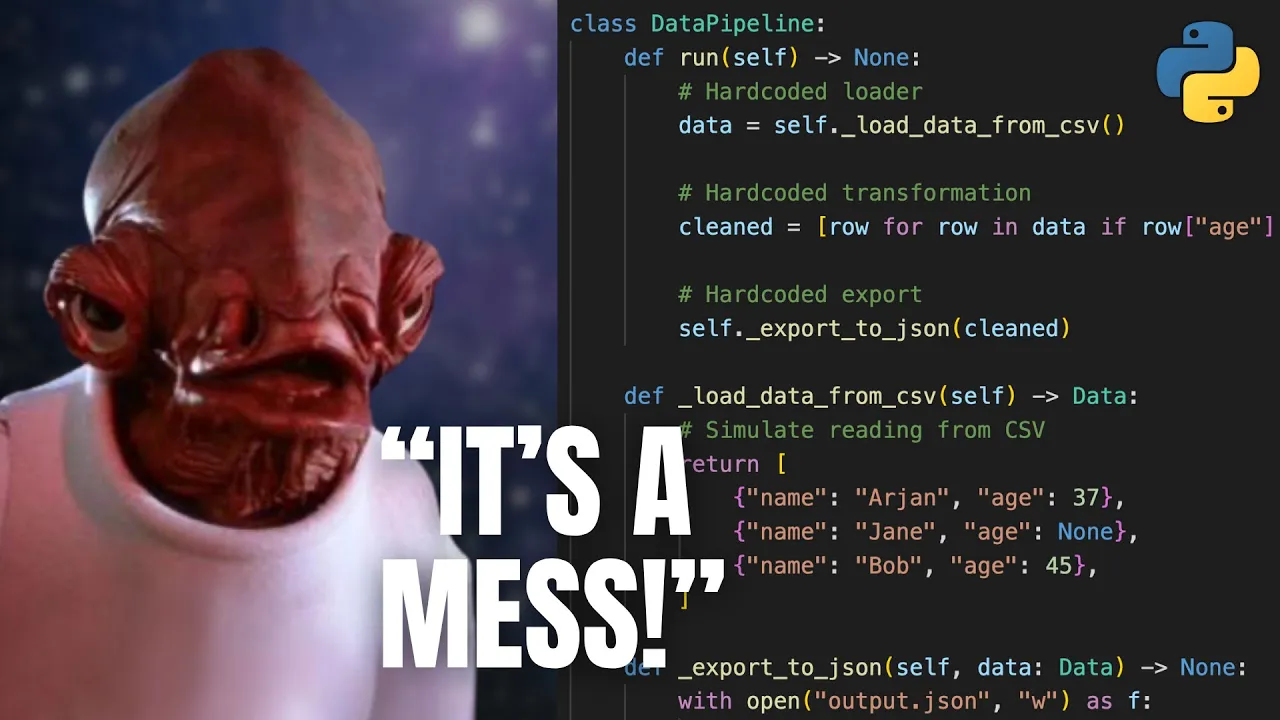
Stop Hardcoding Everything: Use Dependency Injection
116.9K
Dependency injection significantly improves testability by allowing you to replace dependencies with mocks or test doubles. For example, you can replace the actual data loader with a test loader that returns predefined test data, and replace the exporter with a fake exporter that doesn't write files. This makes unit testing much easier because you can isolate the pipeline logic from external systems like file I/O or databases, ensuring tests are fast, reliable, and focused on the business logic.
Click to watch →

Dependency Injection Explained in 7 Minutes
102K
Dependency injection makes unit testing much easier because you can inject mock or stub implementations into your classes during testing. This allows you to isolate the behavior of the class under test from its dependencies, making it clear whether failures occur in the class itself or in its dependencies. You can replace real services with mocks to test edge cases without external dependencies.
Click to watch →
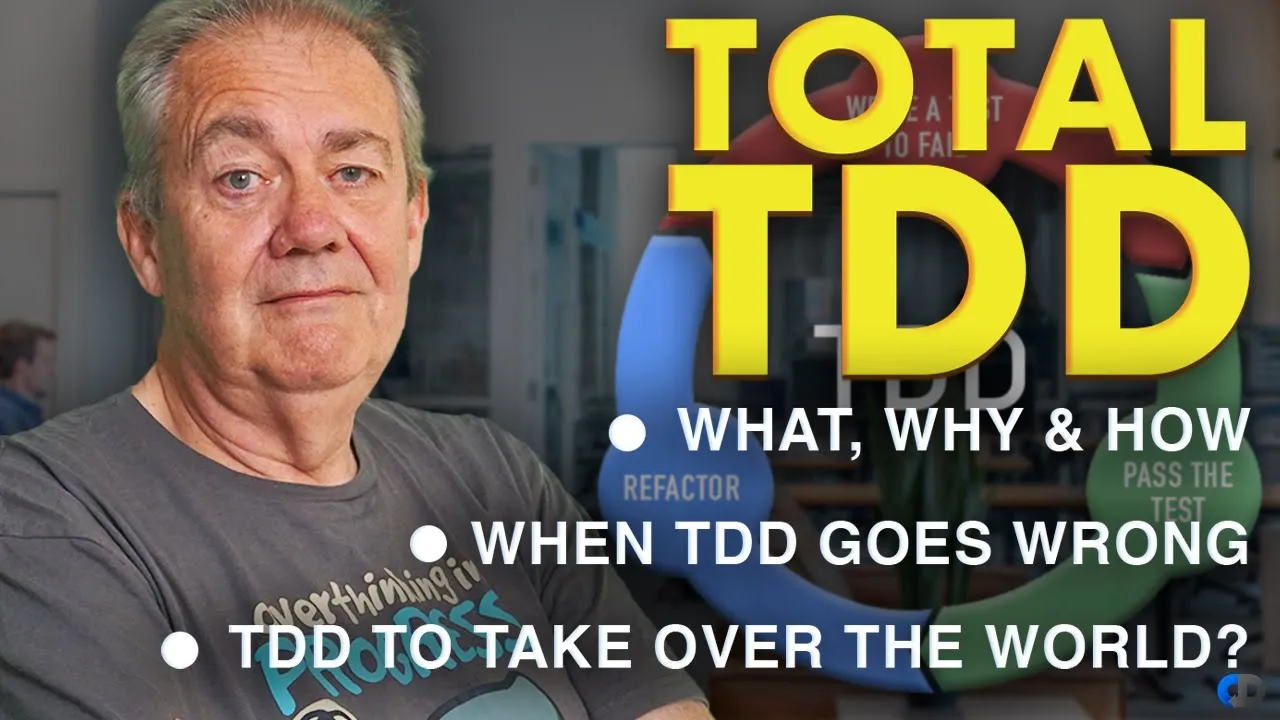
Total TDD | VOL. 1: What Is It, What To Do When It Goes Wrong & Why Hasn't It Taken Over The World?
8.6K
To make code testable, developers often use dependency injection. For example, instead of having a car class with a hidden petrol engine, a better design allows injecting an engine into the car. This makes the car decoupled from the engine—it doesn't know anything about the engine's implementation. A fake engine can be injected for testing purposes. This flexibility means the same car code can work with petrol engines, electric engines, or even jet engines, as long as they fulfill the contract of being startable. This demonstrates how working to make code more testable inherently improves its design.
Click to watch →
Deep Dive
Understanding the differences between various test doubles, such as stubs, fakes, spies, and mock objects.
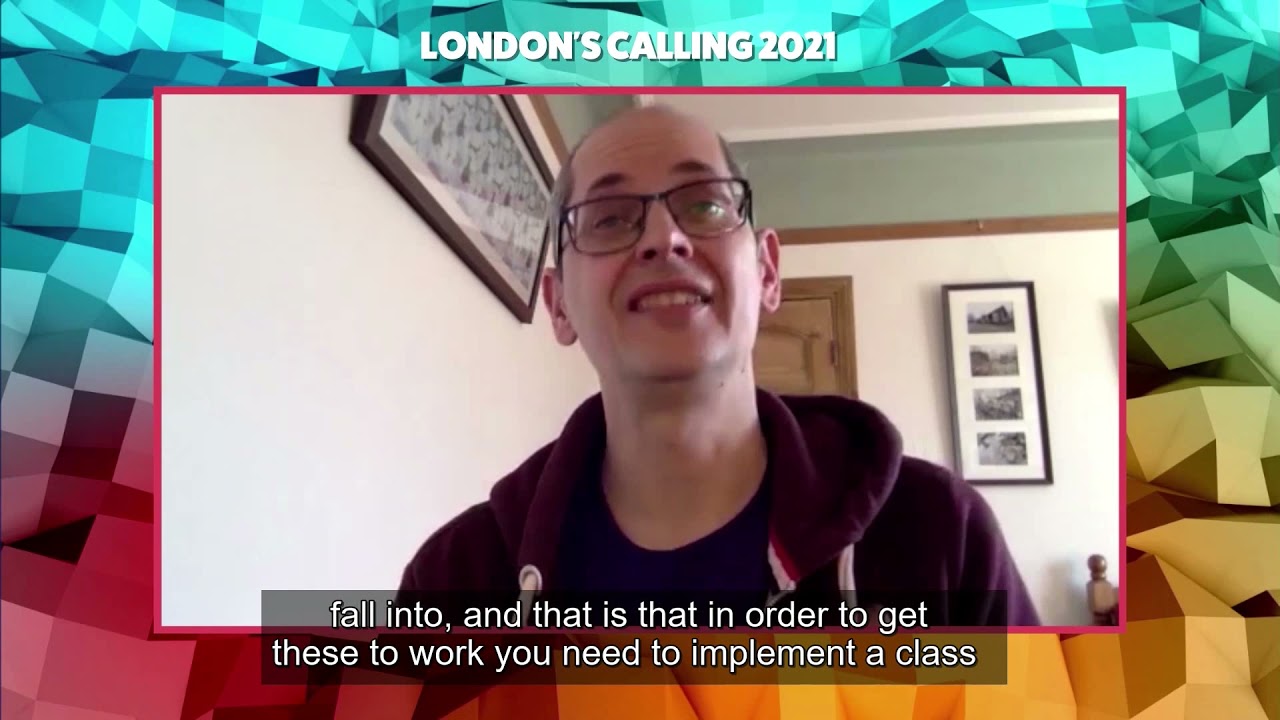
Stop trying to Mock me, and Mock me! with Rob Baillie from London's Calling 2021
125
Test doubles come in three main flavors. Stubs receive input and return output without performing operations, useful for driving behavior down specific paths. Spies validate that correct parameters were passed at the right time by maintaining a call stack. Mock objects are evolved spies that self-validate expected behavior: they verify specific methods were called with specific parameters in a precise order, and that nothing else was called. This provides succinct behavior description but creates brittle tests that test implementation details rather than outcomes. Use mocks sparingly for specific algorithms that must execute in precise order.
Click to watch →

We Need to Stop Calling Everything a Mock!
6.6K
According to Gerald Meszaros's definitions: A stub is an implementation of an interface that controls indirect inputs by returning specific hard-coded values or exceptions without checking arguments or failing tests. A fake is a lightweight real implementation similar to a stub but more sophisticated, like an in-memory database. A spy can control inputs and record method calls for verification. A mock differs from a spy in that it initiates test failures when expectations are not met, rather than just recording information for later assertion. These distinctions matter because they affect how tests are designed and what behaviors are being verified.
Click to watch →

TDD na prática - (Live Coding) com Diego Fernandes e Rodrigo Manguinho
115.2K
Test doubles are essential for unit testing: - Mocks expect specific method calls and fail if expectations aren't met. - Stubs provide canned responses to method calls. - Spies record all method calls for verification. The key distinction is that mocks verify behavior, stubs provide data, and spies enable inspection. Understanding these differences helps choose the right test double for different scenarios.
Click to watch →

Mocks vs. Fakes vs. Stubs | Mocking in Java | Mock Frameworks | Geekific
12.2K
Test Doubles encompass various types of objects used in testing, including fakes, stubs, and mocks. A fake behaves naturally but uses pre-written implementations with pre-arranged responses, such as a database class replaced by a map that returns objects by key. A stub behaves unnaturally by being pre-configured to respond to specific inputs with specific outputs, forcing the unit under test into particular states for controlled testing scenarios. A mock combines stub-like behavior with verification capabilities, asserting how the unit interacted with dependencies. For example, a mock can accept a file and verify its correctness before returning results. These categories exist on a spectrum from simple fakes to sophisticated mocks with verification. Other test doubles include dummy values and spies. Java mocking frameworks like JMock, easy-mock, and Mockito provide tools for creating these test doubles, with Mockito offering dynamic mock generation capabilities.
Click to watch →
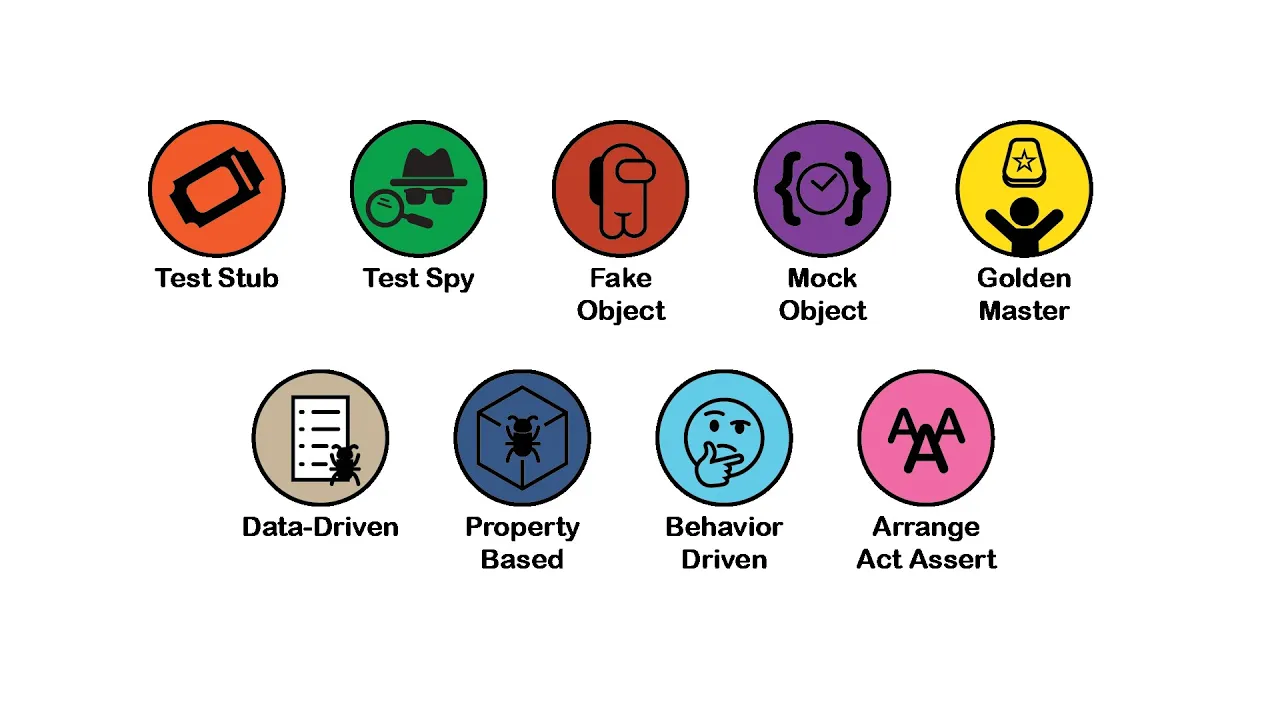
Every TESTING Design Pattern Explained in 7 Minutes
1.6K
Test doubles are artificial objects used in unit testing to replace real dependencies. Test stubs provide hard-coded responses to method calls, ignoring external factors. Test spies observe real method calls without interfering, reporting actual behavior for comparison. Fake objects implement real interfaces with simplified logic suitable only for testing. Mock objects verify expected interactions through configuration and logging. Each serves different purposes: stubs isolate tests, spies capture real behavior, fakes simulate functionality, and mocks validate interaction patterns. Understanding these distinctions helps testers choose appropriate tools for different scenarios.
Click to watch →
Prerequisite Knowledge
- Concept 01Foundational concepts of unit testing, including assertions, test runners, and test-driven development (TDD) workflows.
- Concept 02Basic proficiency with the Mockt framework or introductory mocking concepts, such as creating simple mock objects and stubbing return values.
- Concept 03A solid grasp of Dependency Injection (DI) and how decoupled code architecture facilitates testability.
- Concept 04Understanding the differences between various test doubles, such as stubs, fakes, spies, and mock objects.
Subsequent Learning
- Step 01Advanced mocking techniques, including mocking static methods, final classes, or private members.
- Step 02Handling complex testing scenarios, such as mocking asynchronous operations, APIs, network requests, and database transactions.
- Step 03Strategies for transitioning from unit tests using mocks to integration and end-to-end (E2E) testing with real dependencies.
- Step 04Designing highly testable software architectures (e.g., Hexagonal Architecture or Ports and Adapters) to minimize the need for brittle tests.
Ghost immunity
Fireball attack
Boastful intent
Ghost failure
Dismal end
Ghost immunity
0:52Playing Section
- 1
Paranormal entity cannot be destroyed through conventional means.
- 2
Breaking fictional boundaries is invoked as a survival tactic.
- 3
Supernatural threats remain persistent and lethal.
The Classicist (State-Based) Testing Approach
While advanced mocking techniques allow developers to isolate components and simulate complex behaviors, a significant counterpoint exists in the 'Classicist' or Detroit-school approach to software testing. Critics of excessive mocking argue that it leads to brittle, over-specified tests that are tightly coupled to the implementation details of the code rather than its external behavior. This makes refactoring difficult, as changing internal code structure breaks tests even if the external behavior remains correct. The Classicist perspective advocates for using real objects, state-based verification, and integration testing where possible, asserting that this leads to more robust test suites that truly validate system behavior and facilitate easier, safer code refactoring.
Deep Dive
Advanced mocking techniques, including mocking static methods, final classes, or private members.

CCC 2021 Spring C03-これから始める単体テスト改善に向けた第一歩 ~JUnit編~
5K
Advanced mocking techniques enable comprehensive testing of complex class hierarchies. Testing classes with private fields requires @InjectMocks and @MockitoAnnotations. Testing private methods in test classes uses @InjectMocks and @MockitoAnnotations. Testing static methods requires PowerMockito since standard mocking frameworks cannot intercept static method calls. The process involves importing PowerMockito, adding @RunWith(PowerMockRunner.class), using @PrepareForTest to specify classes with static methods, @InjectMocks for test objects, and @MockitoAnnotations for Mockito annotations. Static method stubbing involves defining expected return values and calling the static method directly in the test.
Click to watch →

Testing made sweet with a Mockito by Jeroen Mols
33.5K
Testing asynchronous logic requires argument captors to capture response objects, then simulate success/failure scenarios. Mockito 2.0 cannot mock final classes, static methods, or private methods due to runtime class generation limitations. These restrictions exist because Mockito generates mock classes at test execution time, which doesn't work with final or static modifiers. The framework remains compatible with new Android compilers like Jack and Jill.
Click to watch →

Mocking Final Classes and Methods
2.6K
Mockito provides an inline mock maker capability (enabled by using mockito-inline instead of mockito-core, or automatically in Mockito 5+) that allows developers to mock final classes and final methods, which cannot be extended or overridden through traditional inheritance; however, this feature should only be used for mocking classes and methods that you own or control, as mocking JDK classes, wrapper classes (like Integer, String), or library classes is discouraged due to potential optimization issues and undefined behavior.
Click to watch →

Curso Completo de Testing y Clean Code con Java
65.8K
Mockito cannot mock final classes directly. To work around this limitation, developers can create a mock configuration file (org.mockito.plugins.MockMaker) that enables mocking of final classes. This requires adding specific dependencies and configuration files to the project.
Click to watch →

Mastering Java Testing With JUnit, Mockito, and AssertJ in IntelliJ IDEA
21K
Spies wrap real objects to delegate calls while enabling selective method overriding, ideal for testing existing libraries like loggers. Argument matchers (anyInt(), eq(), custom lambdas) enable flexible method argument matching, though all arguments must use matcher syntax. Mockito 5+ supports mocking final methods, static methods, and constructors natively. Custom matchers use lambda expressions implementing ArgumentMatcher, with boxed primitives preferred to avoid compiler confusion.
Click to watch →
Deep Dive
Handling complex testing scenarios, such as mocking asynchronous operations, APIs, network requests, and database transactions.

Como fazer Testes unitários em APIs com Javascript
38.4K
Testes unitários devem ser independentes de ambiente externo (banco de dados, APIs, arquivos). Mocking resolve isso: você assume que o banco de dados funciona e retorna dados conforme esperado, gravando respostas fixas para cada caso de teste. Em Node.js, testes usam módulos nativos: 'test' para suites, 'it' para casos, 'before' e 'after' para setup. O contexto do Node.js permite mocking sem bibliotecas externas. Para mocks assíncronos (Promises), você deve retornar Promises para manter a assinatura correta. Você pode validar chamadas de dependências, quantas vezes foram chamadas, e argumentos passados.
Click to watch →

Tudo sobre TESTES AUTOMATIZADOS no REACT!
2.1K
Tests should not call real APIs because they are asynchronous and depend on external services. APIs should be mocked using libraries like Axios Mock Adapter to simulate responses. Mocks are configured by defining expected requests and their responses. Components that make asynchronous API calls require special handling in tests. The findByText query waits for elements to appear, making it suitable for asynchronous operations. GetByText does not wait and fails immediately if elements are not found.
Click to watch →
RubyC-2017 / Viacheslav Shvetsov: "Testing. Why so serious?"
408
This section presents the second rule: mock your own API, not external APIs. When testing with TDD, developers write failing tests, implement functionality, and refactor. If the system is not bound to external APIs, internal changes won't break tests. However, if tests mock external APIs, any changes to those APIs will break tests, making them fragile. The third rule addresses test performance: when tests are slow, developers should ask whether they have influence over the slow part. If the slow part involves external systems (databases, networks) outside developer control, it may be a candidate for mocking. The section then explains database operations testing, covering the four phases of testing: Setup (creating test data), Exercise (executing code), Verify (checking expected state), and Teardown (cleaning up). For simple find operations, mocks may not be necessary if implementation is unlikely to change. However, for complex queries or operations that might be replaced (like switching to Elasticsearch), mocks are appropriate. Database operations are external sources and good candidates for mocking because developers cannot control their internal implementation.
Click to watch →

Node JS Testing Full Course with Jest 2026 | Part 1
316
Async testing is important for functions that make API calls, database queries, or file operations. There are two main patterns: testing successful async functions using await and expect(result).toBe(expected), and testing failed async functions using expect(result).rejects.toThrow(expectedError). Real API calls should not be made in unit tests because they're slow, unstable, and unpredictable. Instead, mock the global fetch function using global.fetch = jest.fn(). Use beforeEach to set up the mock before each test, and afterEach with jest.clearAllMocks() to clean up. For successful API calls, mock fetch to return a successful response with the expected data using mockReturnValueOnce({ ok: true, json: async () => ({ id: 1, title: '...' }) }). Include all fields that your function needs in the mock response.
Click to watch →
Lynn Root - Advanced asyncio: Solving Real-world Production Problems - PyCon 2019
22.8K
Standard mocking libraries don't support asynchronous mocks, so you need to create fixtures that return mock objects and stubbed coroutines. A fixture can return a function that creates a mock object and a stub coroutine that calls the mock. This allows you to patch async functions like asyncio.sleep or database calls without actually waiting for them to complete. You can then assert that mocks were called with expected parameters and side effects.
Click to watch →
Deep Dive
Strategies for transitioning from unit tests using mocks to integration and end-to-end (E2E) testing with real dependencies.

Presenting TDD - Mockist
798
After implementation is complete, mocks can be removed and replaced with real objects to verify the system works correctly with real dependencies. Tests should verify that the system calls the right methods on real dependencies with the right arguments. Tests for the repository layer should verify that save and find methods work correctly, testing that the repository correctly persists and retrieves data from the database or data source.
Click to watch →

Qual é a diferença entre testes de unidade e integração? Pode usar mock?
16.5K
Unit tests exercise code independently of external resources and should not require mocks, as mocks indicate design deficiencies; integration tests exercise code dependent on external resources like databases and APIs, where mocks are essential for repeatable testing. The test pyramid concept shows unit tests form the largest base (fastest, most numerous), followed by fewer integration tests, and even fewer end-to-end tests, with each level serving different purposes in ensuring system reliability.
Click to watch →
Express JS - Integration & E2E Testing
8K
Integration tests test entire application scenarios and flows (like creating a user and then logging in), while unit tests only test individual functions. Integration tests are easier because they don't require mocks - you simply call your API and write assertions. SuperTest is a testing library that works well with Jest for writing these tests. Good practice is to keep unit tests separate from end-to-end tests in different folders. In package.json, add a test script like 'test:e2e' that uses Jest with the testPathPattern flag pointing to the e2e folder.
Click to watch →

E2E Testing y los mocks: ¿Un peligro o una ayuda?
841
In end-to-end testing, mocks can provide control and prevent test failures from external dependencies like API outages, but they also reduce test realism by preventing detection of real issues such as incorrect data formats or database problems; the recommended approach is to minimize mocks in end-to-end tests and use them primarily in API tests, following the automation pyramid principle where higher-level tests should test the actual system as much as possible.
Click to watch →

team03 02 integration tests
373
This segment demonstrates the practical process of converting unit tests to integration tests. It shows how to copy test files, rename them, and replace mocked repositories with real database repositories. The video explains that integration tests use real repositories (e.g., 'commitRepository') instead of mock beans, requiring actual database interactions. It covers handling auto-generated IDs by setting expected values in test objects, and demonstrates running specific tests using the '-Dit.test' Maven flag.
Click to watch →
Deep Dive
Designing highly testable software architectures (e.g., Hexagonal Architecture or Ports and Adapters) to minimize the need for brittle tests.
More Testable Code with Hexagonal Architecture with Ted M. Young - February 2023 - PhillyXP
2.2K
Hexagonal Architecture is a design pattern that separates IO (databases, external services, frameworks) from non-IO code (domain logic, business rules) to make software more testable. The architecture uses ports and adapters to define clear boundaries, with dependencies flowing inward so that domain code remains pure and can be easily tested in isolation. This separation allows developers to write IO-free tests that are fast, predictable, and easy to maintain, while minimizing the number of tests that depend on external infrastructure.
Click to watch →

Hexagonal Architecture (Alistair Cockburn)
26.1K
Hexagonal Architecture, also known as Ports & Adapters, is a software design pattern that treats an application as a standalone component with defined interfaces (ports) on both sides—one side for incoming requests (API/Driving Ports) and one side for outgoing data access (SPI/Driven Ports)—allowing developers to substitute databases, drivers, or other external systems without modifying the core application logic, thereby enabling easier testing, technology upgrades, and protection of business logic from I/O coupling.
Click to watch →

Hexagonal Architecture (All You Need to Know)
18.1K
Hexagonal Architecture, also known as Ports and Adapters, is a software design pattern that separates an application's core logic from external dependencies by defining contracts (ports) that external systems must implement, with adapters serving as translation layers between the core and specific technologies; this architecture enables testability by allowing isolation of core logic from external systems, promotes technology independence by making it easy to swap out external implementations, and follows a simple rule of one port with two adapters (one for production and one for testing).
Click to watch →
Arquitectura Hexagonal (ports & adapters)
905
Hexagonal Architecture (Ports and Adapters) is a software design pattern discovered by Alistair Cockburn about 20 years ago, formally documented in a book the previous year. The core problem it solves is separating essential complexity (business logic) from accidental complexity (technology-specific concerns like input/output handling). This separation provides two key benefits: transparent changes to input/output components without affecting business logic, and independent testability of business logic without peripheral dependencies. The architecture places the application at the center of a hexagon, with essential complexity inside and accidental complexity outside.
Click to watch →
Hexagonal Architecture in Spring Boot — The Proper Way (Ports & Adapters)
172
Hexagonal architecture, invented by Alistair Cockburn in 2005, treats the application as a hexagon where dependencies point inward. The hexagon contains the domain (value objects, domain rules) and application logic. Outside the hexagon are adapters connecting to external systems. Dependencies always point inward—nothing inside can import anything outside. This enables pure Java testing without framework dependencies. There are two types of ports: inbound ports (driving ports) define what the application can do and represent use case APIs, living in application.port.in. Outbound ports (driven ports) define what the application needs from the outside world, living in application.port.out. The rule is absolute: adapters know nothing about the domain, and the domain knows nothing about adapters. This separation creates a clean, testable architecture where business logic can be tested in isolation.
Click to watch →
Ghost immunity
Fireball attack
Boastful intent
Ghost failure
Dismal end
Ghost immunity
0:52- 1
Paranormal entity cannot be destroyed through conventional means.
- 2
Breaking fictional boundaries is invoked as a survival tactic.
- 3
Supernatural threats remain persistent and lethal.
The Classicist (State-Based) Testing Approach
While advanced mocking techniques allow developers to isolate components and simulate complex behaviors, a significant counterpoint exists in the 'Classicist' or Detroit-school approach to software testing. Critics of excessive mocking argue that it leads to brittle, over-specified tests that are tightly coupled to the implementation details of the code rather than its external behavior. This makes refactoring difficult, as changing internal code structure breaks tests even if the external behavior remains correct. The Classicist perspective advocates for using real objects, state-based verification, and integration testing where possible, asserting that this leads to more robust test suites that truly validate system behavior and facilitate easier, safer code refactoring.
Foundational concepts of unit testing, including assertions, test runners, and test-driven development (TDD) workflows.
Basic proficiency with the Mockt framework or introductory mocking concepts, such as creating simple mock objects and stubbing return values.
A solid grasp of Dependency Injection (DI) and how decoupled code architecture facilitates testability.
Understanding the differences between various test doubles, such as stubs, fakes, spies, and mock objects.
Advanced mocking techniques, including mocking static methods, final classes, or private members.
Handling complex testing scenarios, such as mocking asynchronous operations, APIs, network requests, and database transactions.
Strategies for transitioning from unit tests using mocks to integration and end-to-end (E2E) testing with real dependencies.
Designing highly testable software architectures (e.g., Hexagonal Architecture or Ports and Adapters) to minimize the need for brittle tests.
509 views6likes1:26@agoajOriginal Release: 2008-02-06
[Music] Don't you know you can't kill A ghost.
Fourth wall, man. Fourth wall. [ __ ] Fireball. Fireball.
I wouldn't mind dying if I got to beat Bruce Willis. Houston. Oh, why didn't Ghost kill you?
Oh, the bell, baby.
[Music] God [ __ ] damn it. God [ __ ] to hell.
Up Next

7:34
Diegetic vs Non-Diegetic in Film: Key Terms Explained
@mikemcgtv
915 views•2019-03-18

23:14
Visual Analysis Essay: How to Analyze Graphic Novels in College Writing
@nataliepleimann5941
1K views•2020-10-14

4:55
Film Blocking Techniques for Directors: Space, Shapes, Lines
@StudioBinder
1.9M views•2018-07-23

4:00
Evolution of Darth Vader: Anakin Skywalker's Animated Journey Across Star Wars Films
@TellItAnimated
13.4M views•2019-03-30
Related Study Plans & Knowledge Roadmaps
Structured learning paths in Film Analysis
film-analysis
Sensory Cinema: Foley, Haptic Sound & Texture
01Introduction to Film Sound and Foley Artistry
02Micro-Sounds, Textures, and Extreme Amplification
03Haptic Audition and Film Phenomenology
+ 1 more learning modules
12h4 modules
Explore Roadmap
film-analysis
Breaking the Fourth Wall: Mockumentary & Satire
01The Invisible Wall: Basics of Cinematic Illusion
02Looking at the Lens: Direct Address & Character Glances
03The Mockumentary: Satire, Realism, and Complicity
+ 2 more learning modules
12h5 modules
Explore Roadmap
film-analysis
Analyzing the Long Take: Cinema, Space & Ethics
01Foundations of Film Grammar: Montage vs. The Long Take
02Choreography and Mechanics of the Simulated One-Shot
03Phenomenology of Film: Real-Time Spatial Continuity
+ 1 more learning modules
14h4 modules
Explore Roadmap
film-analysis
Anachronistic Music: Period Drama & Subversion
01Foundations of Film Sound and the 'Needle Drop'
02Traditional Authenticity vs. Revisionist History
03The Rise of the Anachronistic Soundtrack
+ 2 more learning modules
12h5 modules
Explore Roadmap