

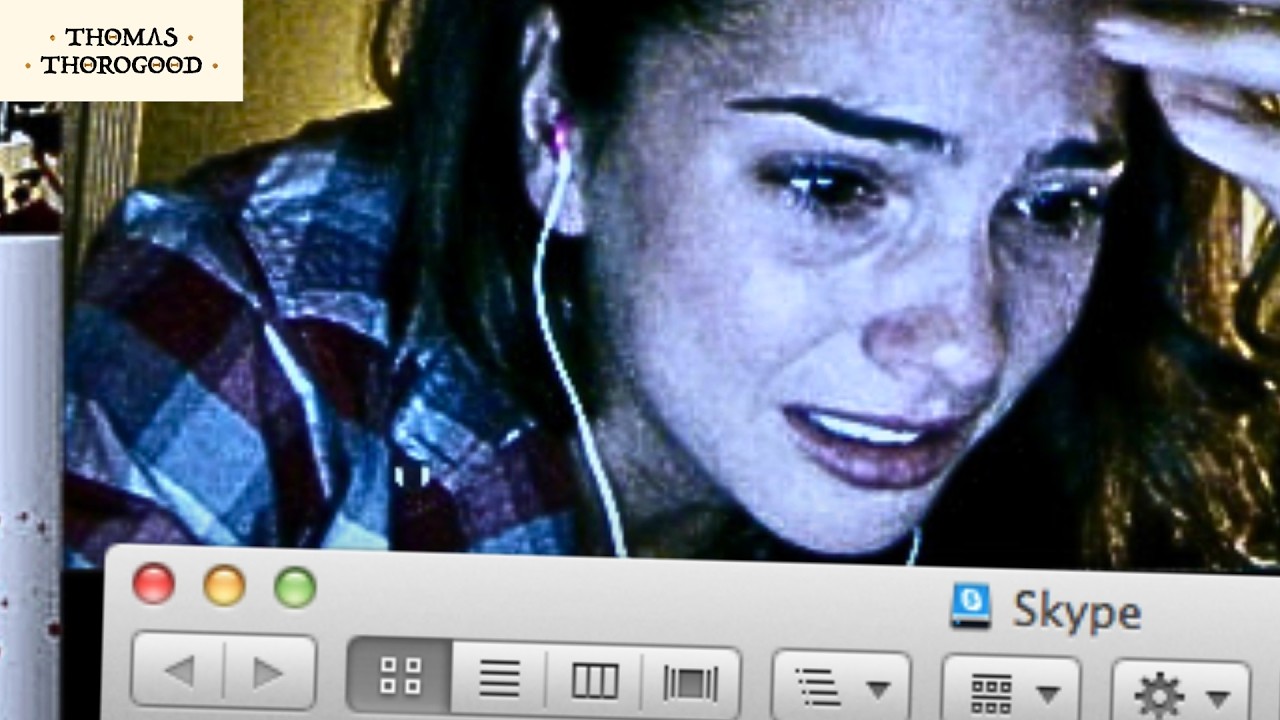





Unfriended (2014) pioneered the 'screenlife' found footage horror genre by telling its entire story through a laptop desktop interface, using digital language like cursor movements, typing patterns, and notification sounds to create immersive suspense and explore cyberbullying themes, representing a bold evolution of the slasher genre for the digital age.
Unfriended (2014) Screenlife Horror Film Analysis and Review
Added:Understanding of the 'Found Footage' horror subgenre and its historical conventions (e.g., The Blair Witch Project, Paranormal Activity).
Basic cinematic concepts such as diegetic vs. non-diegetic sound, real-time narrative pacing, and framing.
An introduction to 'Screenlife' or 'Desktop Documentary' as emerging narrative formats where the story takes place entirely on a computer screen.
Familiarity with standard horror tropes, particularly supernatural retribution, teen slasher dynamics, and the concept of the 'final girl'.
Analysis of more advanced screenlife films that expanded the format, such as 'Searching' (2018), 'Host' (2020), or 'Missing' (2023).
Exploration of the post-human and digital identity theories in film studies, examining how cinema represents online anonymity and cyberbullying.
Study of the technical production of desktop films, focusing on screen-recording, user interface (UI) design as set design, and unique editing workflows.
Investigation into how modern technology and social media platforms are utilized as narrative devices in contemporary thriller and horror screenwriting.
372 views14likes20:12Original Release: 2019-08-20
robots rule that's it Sydney yeah I mean um no we would like welcome back to yet another review today I'm talking about a film that I missed back in 2014 when it came out and that is unfriended I got to admit when it came out it seemed very gimmicky to me obviously there is a gimmick with this film I'll get into it and it seemed a little too teeny bopper and a little too out of my realm for where I was at five years ago I was what 26 five years ago something like that and I don't know the the idea of the film just didn't really vibe with me and to be honest I'm glad I waited until 2019 five years later to check this film out I'm curious to know what you guys think so please leave some comments down below so we could get a discussion rolling I'd love to know what you guys thought now I'm going to try my best to contain my excitement I watched this movie last night as of recording this video I cannot even begin to tell you how thrilled I was with unfriended I can't believe those words just came out of my mouth to be quite honest I sat down to watch this and I was like okay this is gonna be a found footage movie with a gimmick that it is but little did I know I was gonna come out of it thinking that this was a very special movie and I'm going to get into why here shortly so I'll set up what the story is about what the gimmick is and we'll go from there so essentially the entire film takes place on a laptop desktop which belongs to a young girl the lead female character named Blair so the film starts out with Blair and her boyfriend who are delving into some cybersex sort of thing but before they do all of their friends crash the party now there are technical observations I made that I don't think it's quite how things work with chatting and with Skype and all those sorts of things but honestly all of those minor nitpicks I overlooked because of how interesting this film is so all of her friends crash their party and we get to meet all the characters basically at once I mean literally at once they all pop up in the chat room for extra characters I forget all of their names no maybe I don't Adam just Ken Mitch's the boyfriend Blair's the girl yeah so it's five of them right a sixth girl comes in shortly thereafter but essentially we meet these three new characters and get to know all five of the characters as they interact in a very organic and natural way at first I was like oh man this is going to be hard for them to pull off but I really think all five of them pull it off wonderfully they all have really great chemistry they seem like a group of high school friends I was in high school not too long ago well 16 years ago now but their cohesion really felt organic to me and I was impressed and I really liked the I liked all of the characters mitch is the one who doesn't get as much play and Mitch and Jess but the other three I really really like I like all of the characters and how they kind of work together but Ken who is the comic relief he's the fat kid you know he's he's the comic relief he's making a bunch of jokes and I liked Adam his character was very dark at points he was sort of like that rich kid at school who has skeletons in his closet and as the story goes on we learned that all of these kids have skeletons in their closet and it's enough skeletons in their closet for a lifetime to be quite honest but it's all in good fun so they all start chatting shooting the [ __ ] and they notice a sixth person in the lobby and it's just you know a blank avatar and they're trying to figure out who the hell it is they have no idea who's kind of joined their party without them and but without them inviting them so the first act really sort of plays up this idea of who's in the chat room with them as an audience I'm like all right something weirds going on here what what exactly is going on mind you I didn't know anything about this movie I didn't know if it was supernatural if it was just a horror type of thriller without any supernatural elements as goes on we learn exactly what it is so they're all talking and trying to figure out who this sixth person is and things get progressively weirder so I need to talk about the crux of the story and sort of the device that gets things moving a girl from their high school named Laura Barnes killed herself because of some humiliation that she suffered when somebody posted a video of her [ __ ] herself on the Internet so as you can imagine the pressure from all of her classmates and this is a very pretty girl a popular girl and we see the video very early on in fact it's one of the first things that Blaire does before she starts talking to her boyfriend and so Laura Barnes kills herself prior to the film starting and so that's sort of that is the main idea of the story and and sort of she's sort of the main character in a lot of ways so as things roll along and I'm not going to give away everything here I'm not going to talk about everything because it really was a special experience for me not knowing anything going in so I don't want to spoil much but as things roll along or they think that somebody has hacked Laura Barnes's account and basically they're trolling the friends at first that's what they think is happening and as Blaire our main character who we're literally seeing through the eyes of is researching while she's talking to her friends while they're all shooting the [ __ ] she's researching to figure out what to do when somebody hacks an account and she goes through the motions of reporting that account so as the story goes along Blair and her friends learned that the account has not been hacked and that something more sinister is at play and the kids start dropping like flies that's all I'm going to say to kind of set up the story and now I want to honestly I want to gush about this movie I have not been so enthralled with a teen horror slasher movie a popular mainstream slasher movie by the way Universal put out this film which tells you something they thought they had something and I really honestly think that they do and did I'm gonna gush about this film because I was blown away with how invested in this movie in this movie and in this story in the characters I was I mean I was a gay Pat points like why do I love this movie so much I couldn't believe it and I've kind of boiled it down to a few points that I really want to talk about for one this movie reminded me of scream I saw scream back in 1996 or 1997 and prior to that I was let's say I was eight or nine and prior to that I had seen films like Halloween and I'd seen Friday the 13th a few of them and I teamed childsplay Candy Man which scarred me for life but then scream came along and did something completely different and blew my mind and scared me again those older slashers even as a kid at a point you know I pick up on what's going on with them and I wasn't as scared but scream played on everything that I learned from those maybe five to ten slasher movies that I saw before the age of nine and it flicked everything on its head and there were no rules anymore in fact well there were rules but all of those rules were being broken consciously and the movie blew my mind it didn't take till my team's till I really understood and appreciated what screen was going for and Wes Craven it's one of his best films it's a brilliant slasher now fast forward almost 20 years to unfriended I think unfriended does for this decade what screamed it for the 90s that is a bold statement now I'm not saying unfriended is as unfriended unfriended is as good as scream I don't think it is it doesn't unfriend it still plays by the rules quite a bit but it breaks every structure that I've ever seen and it's conceit is so different than any slasher film any horror film any film that I've ever seen and now I know searching came out last year and I know it does similar things and I know also know unfriended got a sequel which I'm going to be checking out soon but in 2014 this was the first of its kind a gimmick but I think this movie is a social media digital age cyber slasher and when I came to that realization I fell in love with this movie what can I say unfriended blew me away Levon Gabrielle's D hopefully I'm pronouncing his name right has created something so cool and so fresh to me that it's an incredible that Universal took a risk this big and I'm so glad that they did and I wish more big studios would do so this director has created an entire new language of editing and a film and what I mean by that is everything that's happening on the desktop is happening because Blaire is controlling it so she's controlling the cursor you see the cursor you see the mouse cursor go anywhere that she puts it and little things like little ways that the director communicates her actions things that we all do and we take for granted things that we don't think of because we're so we're a master of the desktop now whether it be Windows or Mac or whatever in this case it was Windows little quirks that Blair does things like circling around something when she's looking at it or focusing on it or circling around a button before she hits it sort of as her way of saying that she's thinking about it and so we're seeing we're basically living inside of her mind and inside of her psyche in a way that I have never seen or never been able to feel through any other characters because usually it's a character on screen we see and feel what they're feeling because of their facial expression but in this we're seeing her facial expressions sometimes but when we're not it's a different language you know she'll type she'll type a phrase and then kind of dwell on it and be like no she'll delete part of it and then she'll delete the whole thing and then type a new phrase we're seeing her thought process we're feeling her thought process as she goes through the motions in her head of what to say these are things that characters don't have a second chance to do in regular narrative films but in this she typed something she thinks about it for a second deletes it there are typos which I noticed which are a great little touch it's not like perfect because we all make typos other little things like sound cues they'll be notifications constantly popping up in the top right corner Facebook notification instant message notification etc etc and each time this happened happens our our attention is averted to what's going on it's like oh what did this hacker person or I'm not going to go into details about what is going on but what did this person send her now and so our eyes are all over the screen as if we're using a computer and man I thought it was brilliant and it's really impressive how the director and editor builds suspense with minimal score very little score and what's there is effective to sort of lead you into the scares and what's going on to intensify the situation and they build suspense with sound cues and a killer timer there's a countdown that pops up for a certain reason later on in the film constantly which always got me tensed kind of looking at what was going on with the characters and their little squares and looking at the timer and going back and forth and it just created this very tense situation for me that I I haven't felt in a movie in so long and it never felt anything quite like it and I have to say I went to high school from 2000 to 206 or Oh 306 and those are obviously formative years and back then we didn't really have Skype we had really sketchy chat rooms and webcams and poor quality I saw way too many [ __ ] penises in random chat rooms that my buddy and I would go on late at night just [ __ ] around because it was new and edgy and we had things like AI M and a buddy list and Instant Messenger it reminded me of those times when I was in high school you know fast forward 10 years to 2014 that's what kids are doing or were doing still are probably in that in this decade so I related to it in a weird way I mean technology has continued to snowball so quickly but it wasn't so different in Oh for in that era circa Oh for where we add Instant Messenger and we'd have random buddy names or what screen names contact you and be and mess with you that's what like the beginning of trolling I related to it on that level as well it's like basically what happens in the film is a little beyond my age bracket but I could relate to it because of what was going on ten years earlier sort of the budding of all the all of the things that our social media and Skype and all that sort of thing and going back to the film it also gave me vibes of the Japanese film called pulse and that's all I'm going to say because I don't want to spoil too much but it definitely had shades of that as well it reminded me of that and it reminded me of scream and it also reminded me of a movie from the mid-2000s called cry wolf which I saw in the theaters with my friends and we ended we walked out of there not really feeling the movie too much but it has a lot of similar ideas it uses the technology of the time to create somewhat of a slasher movie it's not much of a slasher but it uses the technology like instant messaging and email and phones big ass Nokia phones in a similar way so it's funny out each decade we seem to get something that uses the technology or every once in a while we get a film like a horror film that plays on the current technology the film is really about cyberbullying at the core and cyber bullying bullying in general what kids do to each other kids are mean they always have been mean they'll continue to be mean and what kids do to each other the lies that they weave the deception that they weave to sort of make themselves look better I knew kids like this in high school I'd say we all knew kids like this in high school there probably are still kids like this in high school it sucks but it's just something that kids do and this film plays on all of those ideas in a very in a very smart way some may disagree with that but it seemed very organic it seemed natural to me and it was believable and the characters all of them again I thought they had great chemistry each one had their own personality and when they start kicking the bucket you really do feel for them at least I did and it's just a crescendo into more and more kids say too much more and more craziness and the ways that these kids are dying they're some of them are really interesting some of them I wish were a little bit more intriguing a little bit more different and creative but a few of them really got me man and the sound design where the way the way the sound design sort of cuts in and out when things are lagging that's another thing there's lag in this movie with some of the way that the the kids appear on screen there's a good amount of lag so it just adds to the the realism I would say because we all experience that sort of [ __ ] especially when you got five people six people on a call it's like there's gonna be it's not gonna be perfect it's not gonna be flawless especially in 2014 when this movie was made so I thought it was very impressive and I was impressed man the most impressive thing to me about unfriended to sort of sum it up is the way it communicates subtext to the audience using a digital language that is the desktop that is the best way I could sum up why I love this film so much I yearn for creativity like this in Hollywood I mean I know there's probably not much else you could do with this sort of thing I'm interested to see unfriended dark web I hear it's even better than this I mean the unfriended got mixed reviews even on letterbox it's like 2.4 i rated it a 4 because I absolutely loved the concept loved the conceit loved the idea loved the execution I so appreciate the creativity that was found in terms of its structure in unfriended like I said it's not writing any new rules on how to make a slasher or how to make a teen movie a teen horror movie but the way it's executed makes it an entirely different thing in my opinion another minor complaint is there's one scene or shot or desktop image of exposition that we didn't need I thought I think without that one shot with that shot cut out would have added more mystery to what was going on and sort of let things open-ended but it kind of closed the book on exactly what was going on with this character that was trolling or harassing them and even doing more things than that more sinister things than that I wish that scene was left out but that is a minor nitpick because it was a quick scene it's one of those exposition moments where you like ah man I wish I didn't know that you know I wish they didn't close the book on on that idea that I had but they did and it is what it is all in all I loved unfriended I loved unfriended I can't wait to own it on blu-ray and watch it again maybe on my computer I was thinking about doing that you know a second time watching it on the computers I feel like that might be sort of the way that it's meant to be watched sort of in the dark glow of the computer you know nighttime nobody home I think it really would affect me in a different way and maybe even if I watched it the first time it's like maybe that the director and the filmmakers intended it to be watched that way they knew a lot of kids were going to be watching it that way downloading it illegally whatnot and scaring the [ __ ] out of them so I really dig this movie guys I think I'm alone here I'm curious to know what you guys think about this film and if it blew you away as much as it did me I'm a huge fan of found-footage and anytime a new concept comes along la longue something like this that takes the found-footage genre to new heights I can't help but appreciate it and in this case I loved it what can I say unfriended from 2014 if you haven't seen it check it out I just want to thank you guys for checking out my review of unfriended man did I love this movie man did it have me 10 set so many points and I just so appreciated the concept and the structure of this movie if you enjoyed this video feel free to give it a thumbs up and if you're new to the channel though I hit the subscribe button and the little bell for notifications anyway guys I will see you next time board cyborg out [Music]
Up Next
8:24
Akira Kurosawa's Cinematic Movement: Composition Analysis
@jldaudio
24.1K views•2015-08-01
11:43
Editing a Screen-Life Thriller: Inside an Editor's Workflow
@StandardStoryCo
32.3K views•2023-01-23
4:55
Film Blocking Techniques for Directors: Space, Shapes, Lines
@StudioBinder
1.9M views•2018-07-23

4:00
Evolution of Darth Vader: Anakin Skywalker's Animated Journey Across Star Wars Films
@TellItAnimated
13.4M views•2019-03-30
Related Study Plans & Knowledge Roadmaps
Structured learning paths in Film Analysis
film-analysis
Sensory Cinema: Foley, Haptic Sound & Texture
01Introduction to Film Sound and Foley Artistry
02Micro-Sounds, Textures, and Extreme Amplification
03Haptic Audition and Film Phenomenology
+ 1 more learning modules
12h4 modules
Explore Roadmap
film-analysis
Breaking the Fourth Wall: Mockumentary & Satire
01The Invisible Wall: Basics of Cinematic Illusion
02Looking at the Lens: Direct Address & Character Glances
03The Mockumentary: Satire, Realism, and Complicity
+ 2 more learning modules
12h5 modules
Explore Roadmap
film-analysis
Analyzing the Long Take: Cinema, Space & Ethics
01Foundations of Film Grammar: Montage vs. The Long Take
02Choreography and Mechanics of the Simulated One-Shot
03Phenomenology of Film: Real-Time Spatial Continuity
+ 1 more learning modules
14h4 modules
Explore Roadmap
film-analysis
Anachronistic Music: Period Drama & Subversion
01Foundations of Film Sound and the 'Needle Drop'
02Traditional Authenticity vs. Revisionist History
03The Rise of the Anachronistic Soundtrack
+ 2 more learning modules
12h5 modules
Explore Roadmap