


![[주환쌤의 미스터리한 연출발전소] 제 4강, 카메라무브에 대하여!](https://i.ytimg.com/vi/oen-jYxbQv0/maxresdefault.jpg)











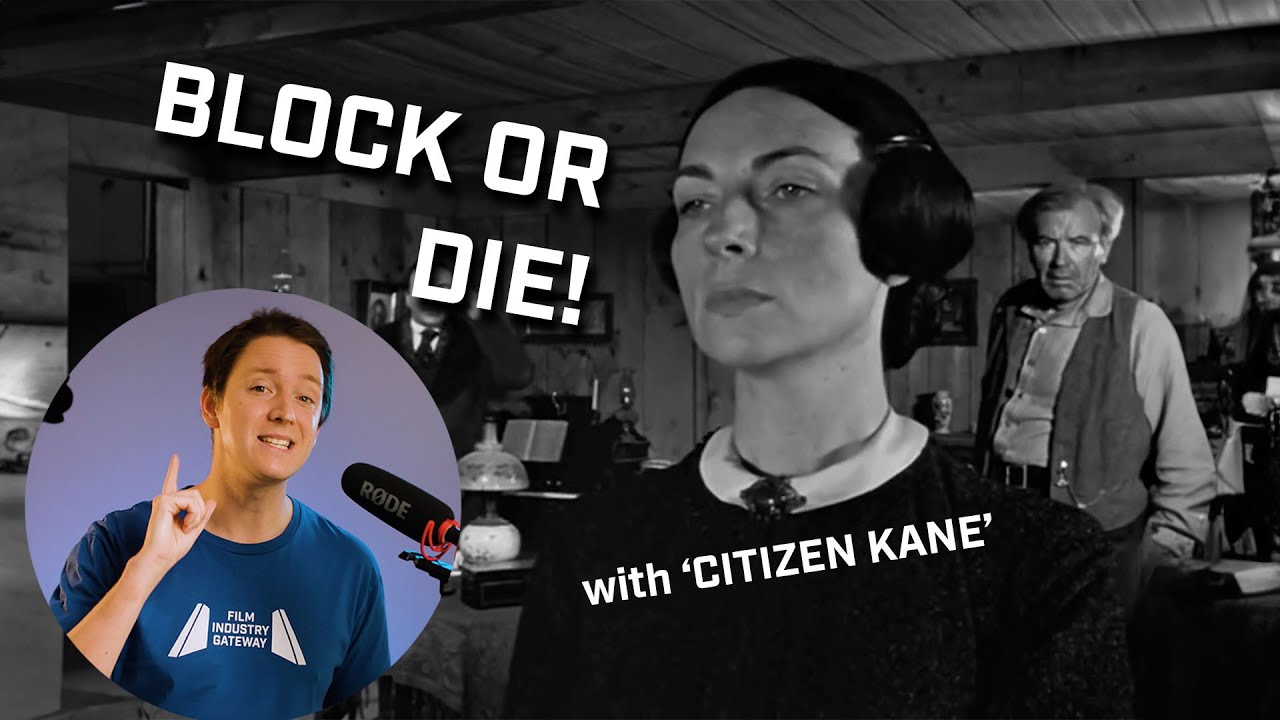
Film blocking—the precise staging of actors in a scene—is essential for making dialogue scenes visually dynamic and emotionally resonant; filmmakers can achieve this by strategically using three key visual elements: space (framing characters at different distances to convey power dynamics and importance), shapes (circles suggest safety/inclusivity, squares create confinement, and triangles feel aggressive yet direct attention), and lines (vertical lines suggest authority while horizontal lines suggest submission), all of which work together to communicate subtext and underlying meaning beyond the spoken dialogue.
Film Blocking Techniques for Directors: Space, Shapes, Lines
Added:Fundamental concepts of cinematography composition, including shot sizes (wide, medium, close-up) and the Rule of Thirds.
A basic understanding of film blocking, defined as the precise positioning and movement of actors and cameras within a scene.
The core principles of Mise-en-Scène, specifically how setting, props, and lighting contribute to visual storytelling.
Basic camera movements (pans, tilts, dollies, and tracking shots) and how they alter visual perspective.
Advanced camera choreography, learning how to sync complex actor movements with fluid camera rigs like Steadicams or crane shots.
The study of Cinematic Proxemics, analyzing the psychological impact of the distance between characters and the camera.
Maintaining spatial continuity and navigating the 180-Degree Rule during complex, non-linear multi-character blocking.
Deconstructing and analyzing the blocking styles of master directors renowned for geometry and space, such as Akira Kurosawa, Stanley Kubrick, and Wes Anderson.
1.9M views58.9Klikes4:55Original Release: 2018-07-23
Does the idea of watching two people having a conversation sound exciting?
Probably not.
You probably wouldn't pay money to see that.
And yet, you do.
All the time.
Because ultimately, that's what every movie and TV show boils down to.
Over and over again.
Two people having a conversation.
How have so many filmmakers managed to make those conversations exciting?
Well, one big way is with film blocking.
[Music: "Film Blocking Tutorial and Techniques"] Film blocking is the precise staging of actors in a performance.
In terms of cinema, it's where you place your actors in the frame.
There are three visual elements of filmmaker should think about when blocking a scene.
Space.
Shapes.
Lines.
By considering these components, you'll be able to block a scene between any subjects, in a visually dynamic way that is loaded with subtext.
First up - Space.
This scene opens with a boy playing in the snow.
The camera pulls out to reveal a tense conversation between adults.
The stakes of the scene are the boy - Charlie.
Who's framed carefully through the window for the duration of the scene.
On one side of him his father.
Standing in protest, but dwarfed in size, due to his distance from the camera.
On the other side his mother.
Framed closer to the lens, looming larger, more imposing.
Charles is smallest of all.
Take note of the way visual contrast is created in the space to portray tension and importance.
Next up is shapes.
There are three basic shapes.
Circles, squares and triangles.
Everything around us can be turned into one of these basic shapes.
Even an actor's face.
Circle.
Triangle.
Square.
The basic shapes come with certain emotional qualities and assumptions.
Circles feel safer and inclusive.
Squares create limited space, boxing someone in.
Triangles are sharp.
They feel aggressive, but it also has an apex.
[Screaming] -Holy shit -Let's watch this scene from "Guardians of the Galaxy."
James Gunn carefully framed his subjects to form a triangle pointing to Groot.
The moment is played for a joke.
The conversation happens while important action is staged behind it.
-You definitely, need to get that last.
-When you're looking through your frame, identify the basic shapes, and bear in mind the emotional connotations of each, and where they direct the viewer's eye.
We've covered shapes, and shapes are formed by lines.
Be aware of the lines created in every shot, and the effect they have on the viewer.
Take a look at this scene from "The Godfather Part 2."
It's a simple dialogue scene.
It plays out between a standing Michael - a vertical line.
And Fredo - nearly a horizontal line.
Fredo could have been standing for the scene.
If he did, the power dynamics would have been potentially equal, but he was slung so low in the seat that he was practically horizontal.
This film blocking creates visual tension between the two, especially when cutting.
It also emphasizes who holds all the cards.
During Fredo's outbursts, he flounders into an almost diagonal line.
Literally, attempting to change his shape.
An attempt to stand up to Michael.
When the outburst is over, the order of things remain the same.
Fredo goes back to his horizontal position, and Michael delivers his final judgment.
-You`re nothing to me now.
You're not a brother.
You're not a friend.
I don`t want to know you,or what you do.
-Happy trails, Fredo.
[Gunshot sound] So we've covered how shapes, lines and space can be used when blocking a scene.
The thing is, on their own, they're not going to make those dialogue scenes that profound.
Unless, you do it with this in mind.
Subtext.
Or contrast.
By contrasting, you're blocking with what's being said or done, you create an underlying meaning.
-It's also a personal statement about the band itself.
Hey, Paul!
[Screaming] -You can start to reveal the real story, and it's not only for viewers.
Communicating subtext through blocking a scene, guide your actors, your DP, and the art director towards your vision.
Blocking tells us what the characters are really up to, what they really mean, what's really going on.
That's what makes blocking so important to a story.
A good way to plan, your blocking is with a storyboard.
Think about what the characters are saying in the script, and then incorporate that into your blocking with storyboard software, like Studio Binder.
And the next time you're having a conversation in real life, pay attention to the way you stand, or sit, or move, or lie down like Fredo.
You might be surprised.
See you in the next video.
[Outro Music: "Film Blocking Tutorial & Techniques"]
Up Next
13:55
Kurosawa's Blocking Genius: 3 Scenes Analyzed | Film Technique Breakdown in High and Low
@CineFix
488.5K views•2019-01-21

23:14
Visual Analysis Essay: How to Analyze Graphic Novels in College Writing
@nataliepleimann5941
1K views•2020-10-14
19:56
Andrei Tarkovsky's Filmmaking Style Explained
@StudioBinder
206K views•2025-02-03

4:00
Evolution of Darth Vader: Anakin Skywalker's Animated Journey Across Star Wars Films
@TellItAnimated
13.4M views•2019-03-30
Related Study Plans & Knowledge Roadmaps
Structured learning paths in Film Analysis
film-analysis
Sensory Cinema: Foley, Haptic Sound & Texture
01Introduction to Film Sound and Foley Artistry
02Micro-Sounds, Textures, and Extreme Amplification
03Haptic Audition and Film Phenomenology
+ 1 more learning modules
12h4 modules
Explore Roadmap
film-analysis
Breaking the Fourth Wall: Mockumentary & Satire
01The Invisible Wall: Basics of Cinematic Illusion
02Looking at the Lens: Direct Address & Character Glances
03The Mockumentary: Satire, Realism, and Complicity
+ 2 more learning modules
12h5 modules
Explore Roadmap
film-analysis
Analyzing the Long Take: Cinema, Space & Ethics
01Foundations of Film Grammar: Montage vs. The Long Take
02Choreography and Mechanics of the Simulated One-Shot
03Phenomenology of Film: Real-Time Spatial Continuity
+ 1 more learning modules
14h4 modules
Explore Roadmap
film-analysis
Anachronistic Music: Period Drama & Subversion
01Foundations of Film Sound and the 'Needle Drop'
02Traditional Authenticity vs. Revisionist History
03The Rise of the Anachronistic Soundtrack
+ 2 more learning modules
12h5 modules
Explore Roadmap