










![The Bad Sleep Well (1960) ORIGINAL TRAILER [HD 1080p]](https://i.ytimg.com/vi_webp/-_DPoSV-nxM/maxresdefault.webp)

![Sinemanın Hikâyesi (The Story of Film: An Odyssey) 3. Bölüm - [Türkçe Altyazılı] HD](https://i.ytimg.com/vi/c2ZC73IJ6Yg/hqdefault.jpg)



![SUB] [Behind The Scenes] You are vitamins in my routine | #glseries](https://i.ytimg.com/vi/OJS0ag2lZmI/maxresdefault.jpg)


![S13E03 – High and Low (1963) [天国と地獄]](https://i.ytimg.com/vi/0c81VaqRWRM/maxresdefault.jpg)
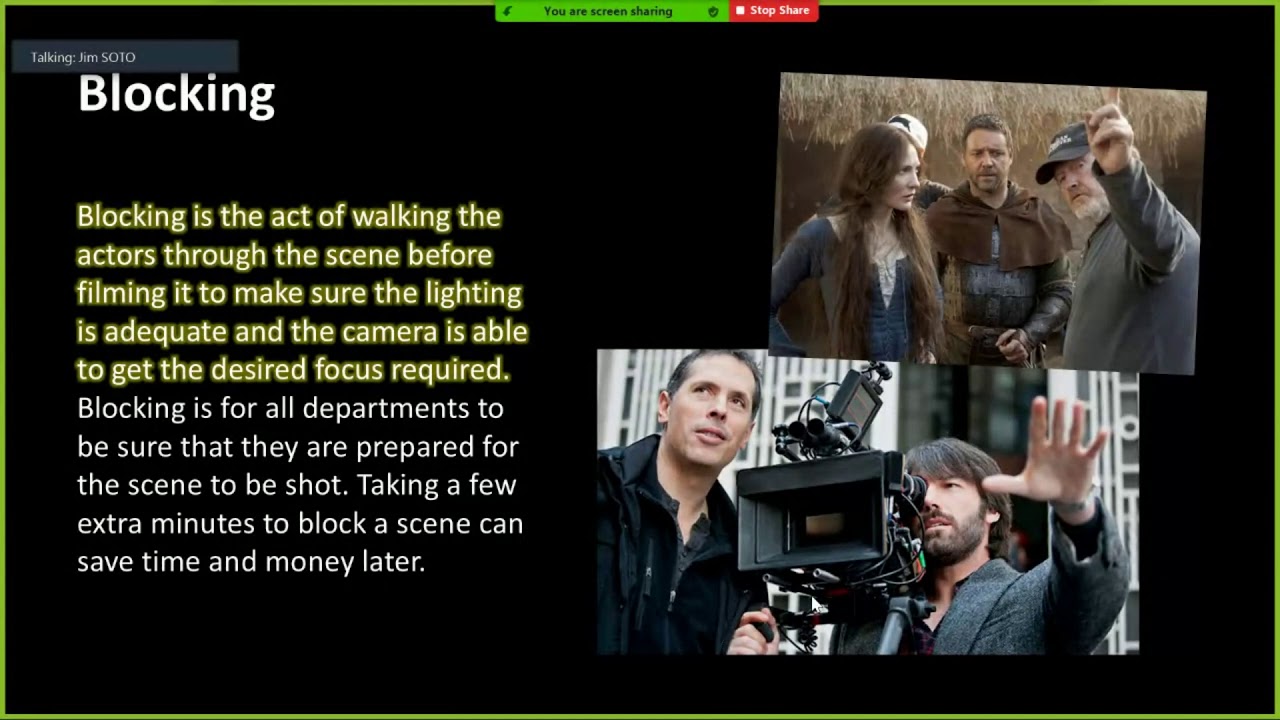
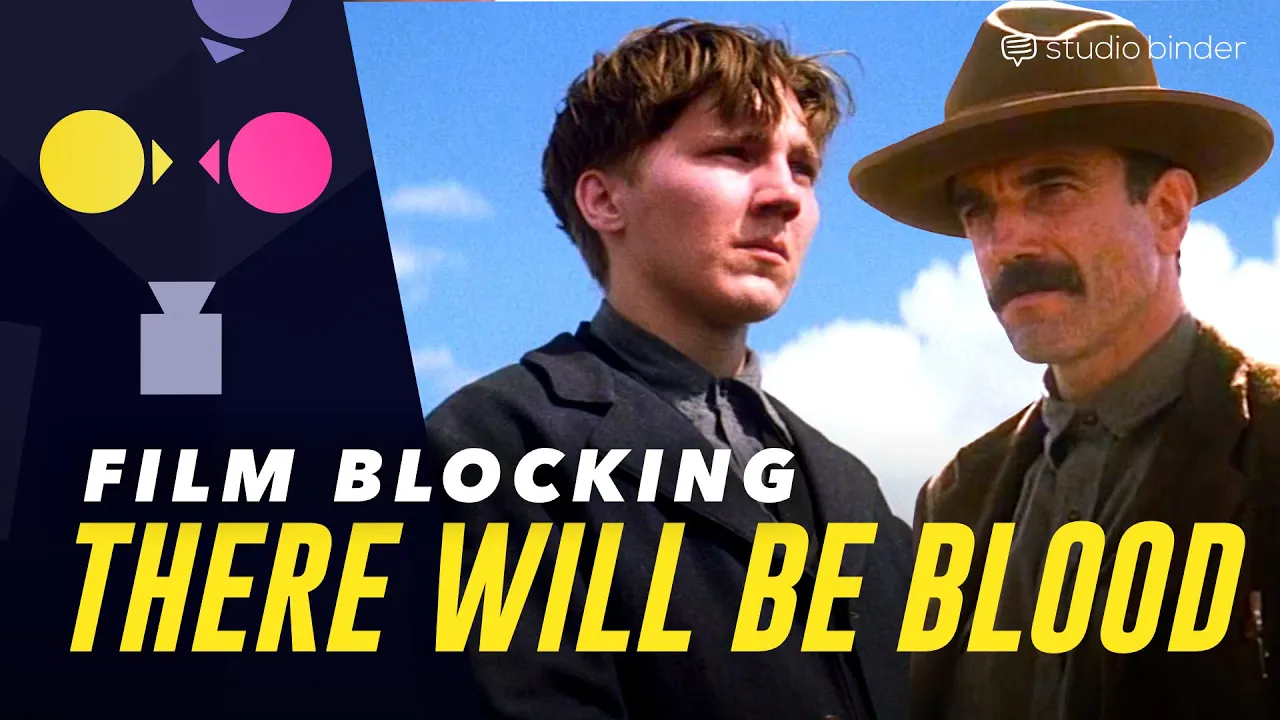
Blocking in film, borrowed from theater, refers to the strategic placement and movement of actors within a scene to advance the narrative. Akira Kurosawa's 'High and Low' demonstrates three key functions of blocking: (1) revealing character psychology by forcing actors to move in ways that externalize their internal motivations and desires; (2) creating unified tableaux where individual character positions combine into single evocative images that convey complex narrative ideas; and (3) controlling audience attention by arranging figures so that viewers naturally focus on specific elements—closer figures, taller figures, central positioning, and directional movement all guide where the audience looks. Effective blocking requires that characters move believably according to their personalities and situations while simultaneously serving the dramatic purpose of the scene.
Kurosawa's Blocking Genius: 3 Scenes Analyzed | Film Technique Breakdown in High and Low
Added:We spent a lot of time last year looking at how filmmakers were moving their cameras.
But in 2019, we're starting things off checking out how they move what's in front of them, too.
We're reconsidering the stage and its connection to the screen.
These are three brilliant moments in blocking from High and Low.
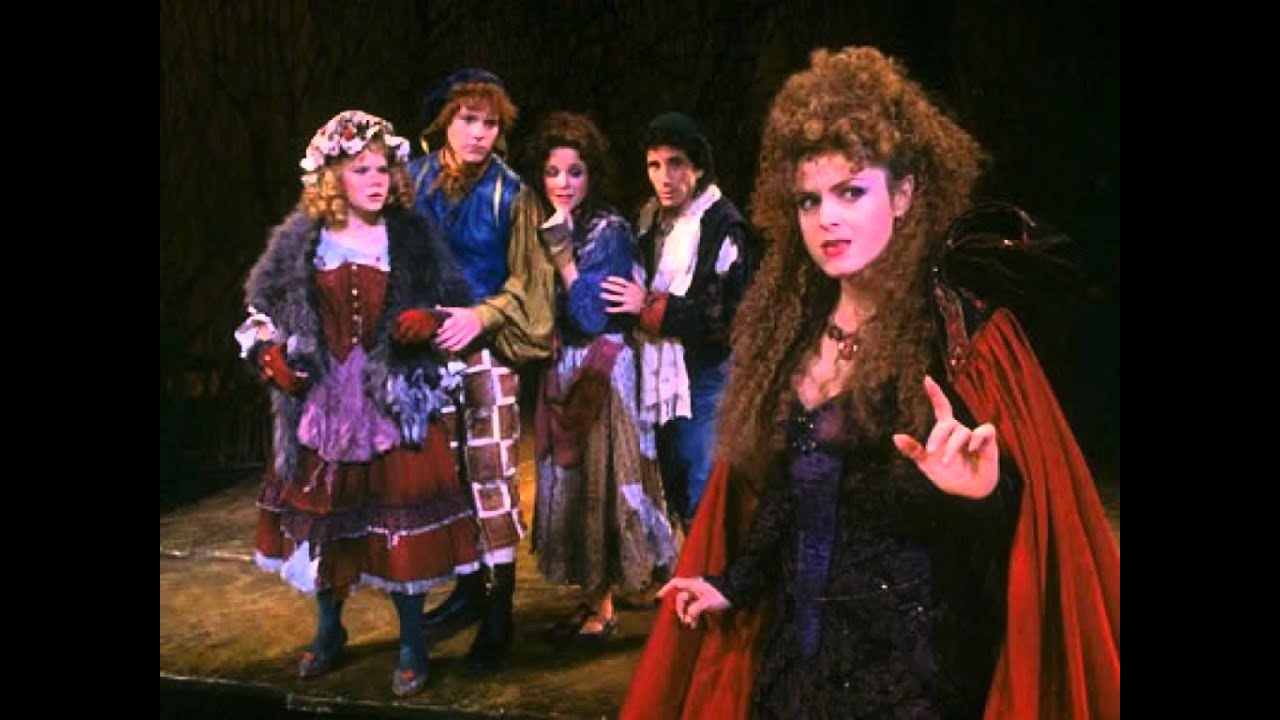
(Music) When we say blocking, we're using a term originally borrowed from the theater.
That refers to the placement and movement of figures in a space for the purpose of telling a dramatic story.
Think of it like the rough outline of a performance, blocking in the general shape of it, before all the nuances of emotion and facial expression, and dialogue are added in.
It's where everyone stands or sits, or moves, or turns.
On stage, the visual presentation of any given moment is incredibly limited.
The frame is set and unmoving.
Usually defined by the proscenium arch, and the perspective of each individual audience member is fixed.
So without changing the set or installing motorized seats, the only way to create visual variety in the stage picture is to move people around.
And this is important.
In any drama, pictures are a big part of telling a story.
That's why it's a film or a play, and not a radio show.
But on screen, you can tell eight different visual stories without anyone getting up because you can just move the camera.
And many, many films do this.
Oftentimes, it's the right choice.
But the fact that the camera can be used to do the composition doesn't make blocking obsolete.
It adds a technique.
It doesn't replace it.
And many of the great directors understand this.
Spielberg, for one, is pretty famous for his creative and complicated combination of camera and actor movement.
So should be Tarantino.
And Ophuls, and Renoir, and Welles, and Bergman.
But today we're talking about Akira Kurosawa and his genuinely superlative clinic on how to block actors in a space with a camera.
We're going to look at three of our favorite moments from just the beginning of the film so as not to spoil too much.
And we're going to focus on the different ways blocking can function in a dramatic narrative.
Function number one, blocking can move people in a way that reveals who they are.
It is an excellent vehicle for taking the internal and rendering it external.
Forcing people to act out their feelings and wants, and desires in a way that helps the audience understand.
You see this all over the place in musicals.
Characters practically dance out their feelings at each other.
The heightened expressivity of the form gives them permission to reveal themselves even more transparently than normal.
But in a non-musical, you can't quite do that.
And this function comes with an important caveat.
All blocking should move people how they would actually move, given who they are, and the situation they're in.
And that's the trick of it, finding good reason to force characters to reveal themselves in their movement.
The blocking can't just be evocative, it has to be believable at the same time.
And that takes major ingenuity.
Enter Kurosawa, High and Low is started with Mr. Gondo, a national shoes executive approached by the other executives at his company with an offer to band together and push the president out and take control.
He refuses and risks his job in the process.
He quickly takes steps to secure his own control of the board, leveraging his entire fortune to the tune of 50 million yen.
When suddenly he receives a call from a mysterious man demanding 30 million yen in ransom for his son who he claims to have kidnapped while he was outside playing.
But as Gondo is preparing to pay the ransom and save his son, the boy appears, very much not kidnapped, only he's alone.
And his friend, Gondo's chauffeur's son, he's missing.
The cops are called, and they're all waiting around for another call when we get this.
(Foreign) >> Everyone in this image is perfectly embodying their part in the developing parallel plot threads.
Kurosawa has basically sketched it all out for us to look at at once.
Consider that even if we strip this down to its component blocking basics, there's still a ton of information available to us.
Everyone is revealing their primary focus with their attention in their eyes.
There are two central figures to the conflict.
One in the midst of it exercising his agency and the other held off at a distance.
And lastly, there are two witnesses.
One here to mediate this primary conflict between central figures, and one off to the side under the radar, not participating in that central conflict but surreptitiously attended to the primary figure.
And that's really the whole story of this moment.
Everyone is dying to hear from the kidnapper, especially Gondo, who has the money and the power, and is driving the ship dead center.
Watch how this contrasts with where he positions himself later when he realizes this power comes with an ethical dilemma.
Always on the edge of frame trying to avoid this focus.
Aoki the father of the kidnapped boy hovers in the liminal space at the periphery as a helpless witness.
Pushed away by his lack of station in relevance in the negotiation, but brought closer by his emotional connection to the outcome.
And lastly, there's Gondo's right-hand man, Kawanishi.
He has $50 million burning a hole in his pocket that he would very much like to spend on a company and not a boy.
So he's positioned himself off to his boss's other side away from the inspector and Aoki so that he's available for his own private sidebar.
And we don't think anybody has time to get anywhere close to all this while they're watching.
Sure, there's a ton of thought behind it.
But while the movie is playing, an audience member only sees something like this just long enough for their subconscious to go powerful, pathetic.
Chilling, sneaky before it's time to move on and make its next judgement.
But over time, we really believe that hints like that do add up and tip the scales of our experience.
Put Gondo and his telephone elsewhere in the frame and its no longer announcing itself as the object of central important.
Let Aoki lurk anywhere else and he is no longer tearing at our attention in our heartstrings.
Put Kawanishi on the other side and he seems less like he has his own separate motivations.
But here, in these specific positions, their natural behavior reveals the nature of their behavior.
Which is why it's so brilliant, but it goes a step further.
They're not just positioned in a way that reveals their individual motivations.
Their individual positions coalesce into a single image that takes on a life of it's own and says something more.
And this is the second important function of blocking we want to look at today.
Good blocking takes individual elements and combines them into a whole to create a tableau that can be read as a single evocative image.
The parts of the picture each tell their own story, but the entire arrangement as a grand unifying story too.
In the last moment, that grand unifying story is crystal clear.
Our main character is trapped between two options.
Pay a ransom and save a boy, or buy a company and save himself.
And it is written right into the image, split down the middle.
These two options practically hover over his shoulders like his two consciences.
And if you like that, our next moment a few minutes later is even more palpable.
After the kidnapper calls, realizes his mistake but reasserts his demands.
It becomes clear that Gondo will not be able to escape this financial Sophie's choice.
No decision has been made yet and everyone is preparing for the next call when we get this.
(Foreign) >> And wow, when the inspector finally walks out of the shot, leaving us with this incredibly dramatic composition.
The resulting image hits us like a hammer.
We didn't even see it coming at all.
Kurosawa has clearly been building up to this moment.
Putting all his pieces quietly into play like a chess master before finally ripping the rug out from under us.
And the resulting stage picture has an almost palpable chasm of the unspoken in it.
There's all this empty space in the frame, in the room, and in the unsaid.
Like an unmade decision and it just consumes us with anticipation as we wait to see how the vacuum will be filled.
The first blocking function is clearly being utilized here.
Kawanishi keeps himself by the door because he wants to leave and buy those shares, and we feel that.
Gondo has sequestered himself in the corner because he does not want this moral responsibility.
We feel that too, but it's the Gestalt of the entire picture that carries all the power here.
When the composition opens up, the image almost crackles with electricity between twin lightning rods.
It isn't a picture of one man and also another man apart from it, it is a picture of their separateness, of the space between them.
Of a gap that will need to be filled with something, with a decision, but it gets even better than this.
Kurosawa is going to bring back almost all the characters we've met so far for an act ender that demands even more complicated blocking.
With eight people in frame at once, he's going to have to use blocking to yet another effect.
Our third function, focus.
Excellent blocking arranges figures in a way that tells their own stories, in a way that tells an overall story.
But it also arranges figures in a way that controls exactly what part of the image we're paying attention to at any given time.
Moving the camera is an essential technique for filmmakers to control where they want their audience to look.
There's nothing that says look at this quite like a close up.
But if you're very, very good, you can do it in a wide shot, just like they have to do on stage with smart ensemble blocking.
Consider these groups of unblocked people.
They are diffuse, a little messy and there's no clear place to put your eye.
Now consider this group of blocked people, and this one.
Your eye almost certainly goes here first, and here, and here.
And there are tons of ways to control focus like this.
Closer figures get more natural attention than further figures.
Taller figures get more attention than shorter.
Figures facing the camera get more attention than those facing away, all else being equal.
The center of the frame is a more natural focal point than the sides.
We will look at whoever talks, whoever is looked at, whoever moves.
We will follow shapes and lines.
Contrast can also control our gaze.
In our first example, Kurosawa put all of our focus on the telephone by pointing everyone at it.
In our second example, Kawanishi stood up to bring the focus to him and then turned himself towards Gondo to send our attention that way.
There are 30 example, Kurosawa is going to put it all together to move her eye around exactly where he needs it over the course of an entire scene.
The kidnapper has called back, has proved how serious he is and set a timeline.
Aoki is finally formally asked Gondo to pay for his son on his behalf.
Cornering him in another beautiful moment of blocking, and the time for Kawanishi to leave for Osaka to make a deal is approaching fast.
A decision needs to be made, and it's all coming to a head when we get this.
(Foreign) >> Papa (Foreign) (Foreign) >> And this is just the only shit moment of the whole thing.
There's just so much going on all in the exam frame in all at once.
It all looks real, and it all looks right, and yet we are all looking exactly where we need to.
Kawanishi's begging forces an answer from Gondo who wants to help but says he just can't.
He gives an answer and we pull back to the entire room as they receive it.
Us and everyone hearing his decision for the first time.
Kawanishi seizes on that answer and our attention by speaking and moving.
He's going to take the answer and put it into action.
But he walks our attention right into Mrs. Gondo standing in the way, who grabs it and says, stop.
She walks our attention over to Aoki and forces it to sit there.
Forces us and her husband to consider his pain as our attention keeps getting pulled there to the guilt.
Another moving element enters the frame which Mrs. Gondo walks to bringing our attention with it to another source of guilt.
And by this point, the emotional obstacles are stacking up between the two businessmen.
Literally in the form of human figures, and it's threatening everything.
So Kawanishi grabs the initiative and tries to run it out the door away from all the guilt with nothing else standing in his way.
But in doing so, he activates Gondo on the other side of the room.
Flinging our attention from one side of the frame to the other, and forcing us, and him, to take in the entirety of the picture.
And having looked at the whole thing, unable to hide from it anymore, he decides to wait.
The entire frame freezes for just a second, and we get to take in the entire image, the tableau of it all.
Gondo forced into a corner with too much guilt between him and his money to send it out the door.
The unspoken gap between the two men we established earlier has become their undoing.
Too much guilt has filled it to let their denial continue unhampered, all right in front of us on screen.
It is simply sublime.
Everyone is behaving as you would expect them to.
Everyone is moving in a way that reveals their motivations.
They're adding it all up to an evocative single image that we get the time and space to digest as a whole.
And our eyes are guided over it in a way that tells the story as it's unfolding, truly masterful blocking.
(Music) So what do you think?
Have a different take on High and Low?
Any other movies with awesome blocking we should take a look at next?
Any other lists you'd like to see?
Let us know in the comments bellow and be sure to subscribe for more Cinefix movie lists.
(Music)
Up Next
What Is Blocking in Film? | Citizen Kane Analysis
@filmindustrygateway
1.7K views•2024-10-02

Visual Analysis Essay: How to Analyze Graphic Novels in College Writing
@nataliepleimann5941
1K views•2020-10-14

10 Best Long Takes in Film: A Cinematography Analysis
@CineFix
309K views•2018-12-11

Evolution of Darth Vader: Anakin Skywalker's Animated Journey Across Star Wars Films
@TellItAnimated
13.4M views•2019-03-30
Related Study Plans & Knowledge Roadmaps
Structured learning paths in Film Analysis