






![CITIZEN KANE - Pourquoi c'est culte ? [#3]](https://i.ytimg.com/vi_webp/95KcrLkQLkU/maxresdefault.webp)








Blocking in film refers to the precise positioning and movement of actors within a scene, which serves as a powerful storytelling tool that can elevate emotional stakes, guide viewer attention, and visually reinforce narrative themes; when blocking feels unnatural, it disrupts the scene's balance and takes the audience out of the story, but when executed effectively, it becomes invisible while serving the story's emotional and visual needs.
What Is Blocking in Film? | Citizen Kane Analysis
Added:Introduction to Mise-en-scène: Understanding how the arrangement of actors, props, and lighting within a frame creates visual meaning.
Basic Cinematography Terminology: Familiarity with camera angles, shot sizes (close-ups, medium shots, wide shots), and composition rules.
The Concept of Depth of Field: Understanding 'deep focus' cinematography, which allows elements in the foreground, midground, and background to remain sharp simultaneously.
Plot and Character Overview of 'Citizen Kane': A foundational knowledge of the film's narrative structure and the shifting power dynamics of Charles Foster Kane.
Choreography of Camera and Actor: Studying how blocking interacts with dynamic camera movement (e.g., tracking shots, pans, and tilts) to create a seamless visual flow.
Analysis of Contemporary Blocking: Examining how modern directors (such as Steven Spielberg or Bong Joon-ho) utilize complex staging in single-take scenes.
Practical Directing Tools: Learning how to translate blocking ideas into director's shot lists, floor plans, and storyboards during pre-production.
Psychological Impact of Spatial Staging: Exploring how physical distance and height differentials between characters convey subtext, tension, and power struggles without dialogue.
1.7K views66likes6:29Original Release: 2024-10-02
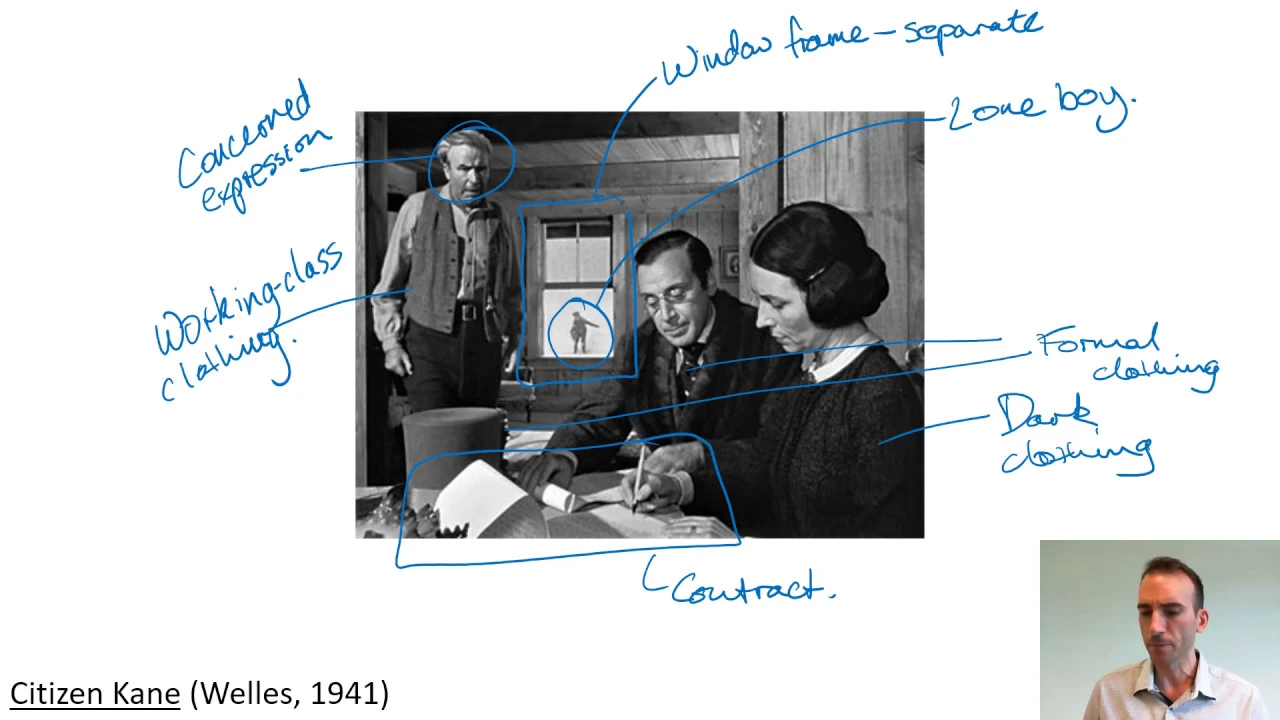
we're going to explore one of the essential tools that every director needs to master and that is blocking what is blocking blocking refers to the precise positioning and movement of actors within a scene and how they interact with the space around them it's not just about where your actors stand but how they move when they move and how those movements relate to the camera and the lighting done well blocking can Elevate the emotional Stakes of a scene it can guide the viewer's attention and it can visually reinforce the story if blocking feels unnatural then the entire scene can feel off-balance it can feel awkward and take the audience out of the story when it's done right blocking becomes invisible right now this video is an example of very simple blocking I am standing here in one place talking directly to the camera there is no movement there is no action it's just me in frame this is probably the most basic form of blocking one person one static position no camera movement it's simple but it's intentional for this particular format If This Were a scene in a film this static setup might suggest something about the character perhaps they feel stuck or the moment calls for Stillness for some reason but blocking can be much more Dynamic to show that let's dive into a more advanced example I want to show you a classic example of blocking from ausen Wells Citizen Cane this film is known for its innovative cinematography but one of the standout features is its use of [Music] blocking one thing to notice in this sequence is that they use the frame within a frame technique they use the window to always keep the boy within the shot since the scene is about him I'll sign those now Mr you people seem to forget that I'm the boy father pay attention to the power dynamics here straight away we have the mom taking up the majority of the frame with the other character which I think is the dad always lingering in the back a father has a right to the lawyer approaches and takes over the scene for a moment but the mom still has all the power is valuable and o take note how the mom and the lawyer take up two quarters of the entire frame with the dad character with taking up a quarter of the frame and they are split by the boy between my boy any bank as all this nonsense decision so here the mom and the lawyer have the majority of the power in this situation which is why they have the majority of the frame we will assume full management of the Colorado load of which I repeat Mrs Kane you are the sole owner to our side Mr now as the mom moves to make a decision the dynamic changes as the dad tries to claim some power back for himself,000 a year to be paid to you and Mr Kane as long as you both live and thereafter to the Survivor well let's hope it's all for the best it is the camera comes down giving the mom all of the power as she signs the document and immediately the dad leaves and closes the window on the he also gets smaller in frame as he has lost all of the Power until he his 25th birday the mom immediately comes and we switch to the second shot straight away you can see the power dynamics once again the mom is taking up the majority of the frame with the dad being obscured over her shoulder we can also see her eyeline facing towards the lawyer since he is the character that her decision has favored I've arranged for a and here we have a bit of a advanced movement here so they must have had the camera on some kind of Dolly system and this is why blocking is important when you have movement the characters need to know when and where to move in addition the camera team and the lighting team need to know where they can set up their equipment in order to capture the entire movement he comes from the East hello and coming back to the actors here we can see once again the dad is obscured in the background while the boy takes up the center of frame since now he is the one who needs to make the decision your mother won't be going right away Charles but she'll where am I going you're going to see Chicago and New York and Washington maybe ain't he Mr Thatcher he certainly is I wish I were a little boy going on a trip like that for the first time why aren't you coming with us Mom we have to stay here the dad tries to give his thoughts and the mom subtly steps them reclaiming the power for herself this ain't the place for you to grow up in you'll probably be the richest man in America someday and you ought to get an educ only of course not why we're going to have some fine times together really we are Charles now shall we shake hands oh come come come I'm not as frightening is all that am I now what do you say let's shake Charles you almost hurt me it's let to slay with got come you're I'm sorry Mr Thatcher what that kid needs is a good frash that's what you think is a gim yes that's why he's going to be brought up where you can't get and then we have the only closeup throughout that entire sequence the key here is that blocking and camera movement should always serve the story you don't want to move the camera or the actors just for the sake of movement every movement should enhance what is happening in the scene either emotionally or visually in more complex scenes like a fight sequence or a big emotional moment blocking becomes even more critical you need to plan out not only where your actors will move but also how the camera will capture the moment for example in a fight scene blocking ensures that the sequence feels Dynamic but it also has a practical purpose which is safety you need to make sure that the choreography looks good on camera while keeping everybody safe if you have any questions or need more details feel free to drop them in the comments that's it for now and I will see you in the next video
Up Next

0:52
Cinematic Power Dynamics: Analyzing The Dark Knight Interrogation Scene
@OutstandingScreenplays
540.4K views•2026-01-14

23:14
Visual Analysis Essay: How to Analyze Graphic Novels in College Writing
@nataliepleimann5941
1K views•2020-10-14
4:55
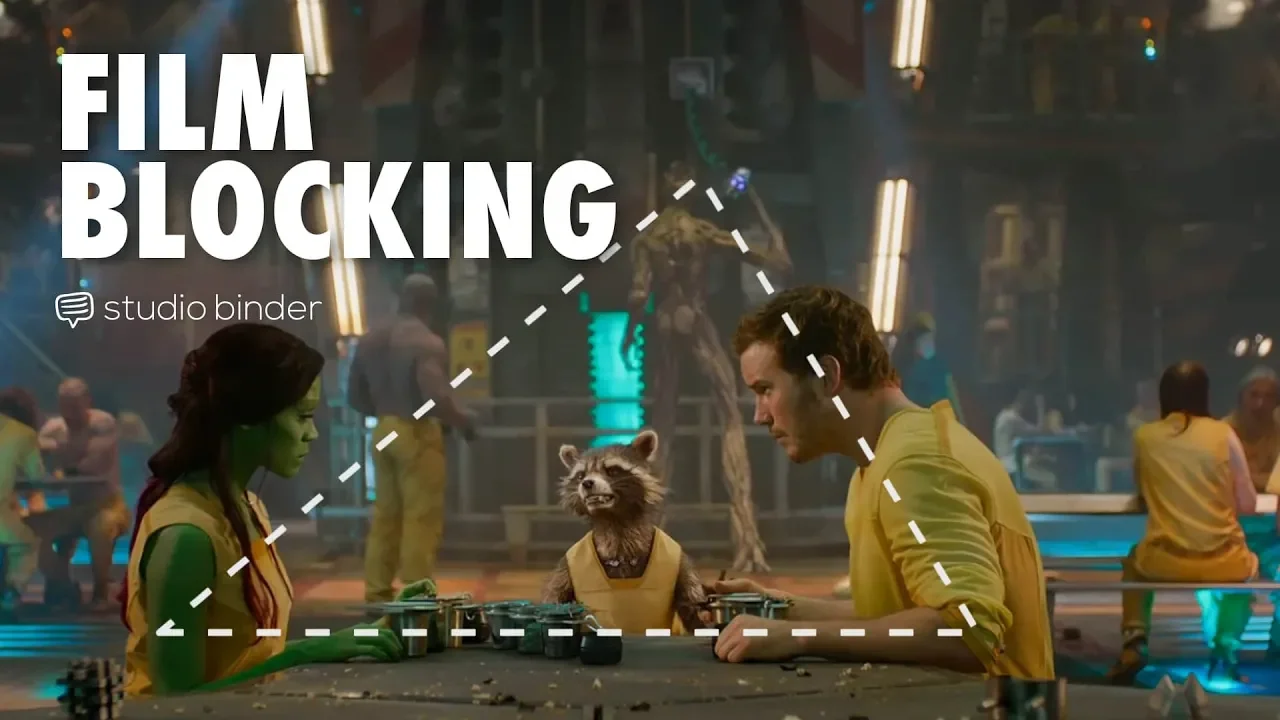
Film Blocking Techniques for Directors: Space, Shapes, Lines
@StudioBinder
1.9M views•2018-07-23

4:00
Evolution of Darth Vader: Anakin Skywalker's Animated Journey Across Star Wars Films
@TellItAnimated
13.4M views•2019-03-30
Related Study Plans & Knowledge Roadmaps
Structured learning paths in Film Analysis
film-analysis
Sensory Cinema: Foley, Haptic Sound & Texture
01Introduction to Film Sound and Foley Artistry
02Micro-Sounds, Textures, and Extreme Amplification
03Haptic Audition and Film Phenomenology
+ 1 more learning modules
12h4 modules
Explore Roadmap
film-analysis
Breaking the Fourth Wall: Mockumentary & Satire
01The Invisible Wall: Basics of Cinematic Illusion
02Looking at the Lens: Direct Address & Character Glances
03The Mockumentary: Satire, Realism, and Complicity
+ 2 more learning modules
12h5 modules
Explore Roadmap
film-analysis
Analyzing the Long Take: Cinema, Space & Ethics
01Foundations of Film Grammar: Montage vs. The Long Take
02Choreography and Mechanics of the Simulated One-Shot
03Phenomenology of Film: Real-Time Spatial Continuity
+ 1 more learning modules
14h4 modules
Explore Roadmap
film-analysis
Anachronistic Music: Period Drama & Subversion
01Foundations of Film Sound and the 'Needle Drop'
02Traditional Authenticity vs. Revisionist History
03The Rise of the Anachronistic Soundtrack
+ 2 more learning modules
12h5 modules
Explore Roadmap