






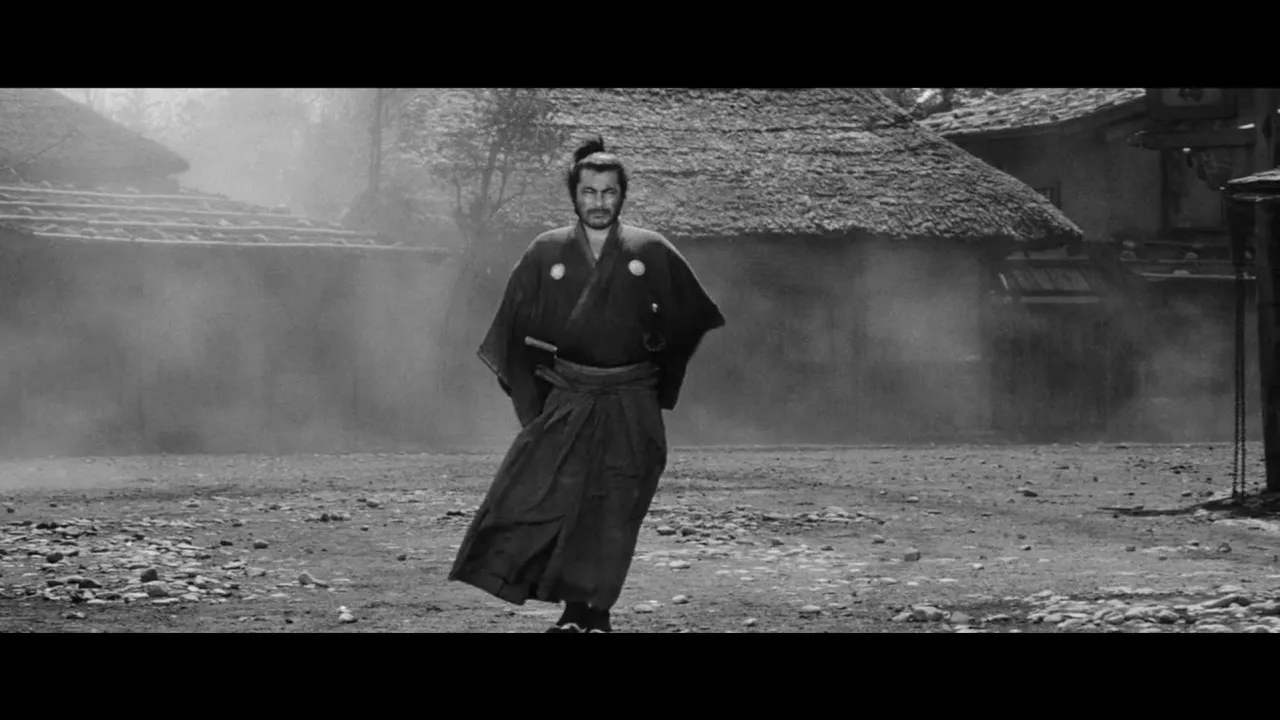










Effective film composition relies on five interconnected types of movement: (1) Movement of nature (weather, wind, water, fire, smoke, snow) creates visual interest and emotional resonance even when characters are still; (2) Movement of groups (crowds, large gatherings) amplifies emotional impact and makes scenes feel cinematic; (3) Movement of individuals (exaggerated, realistic blocking) helps audiences quickly understand character emotions and relationships; (4) Movement of the camera (fluid transitions between close-ups, full shots, and over-the-shoulder angles) tells stories through its own narrative arc; (5) Movement of the cut (editing rhythm) keeps viewers engaged by switching between static and dynamic shots. These elements work together to create compelling visual storytelling, as demonstrated by comparing Kurosawa's dynamic movement in Seven Samurai with the static camera work in The Avengers.
Akira Kurosawa's Cinematic Movement: Composition Analysis
Added:[Music] hi my name is Tony and this is every frame of painting so here's a fundamental question when you're judging a shot what's the first thing you look for is it balance leading lines golden ratio color light shapes I think these are all essential and they're all part of good images but there's one thing I always notice first movement for me kurasa is the bethoven of movie directors it's that recognizable full sound that Beethoven had that that is so unmistakable a kurasawa film moves like no one else's each one is a master class in different types of motion and also ways to combine them over a career spanning half a century he made 30 Films and in all of them the movement is surprising and [Music] cinematic wow if You' like to see the names of the films press the CC button below so what types of movement did he like first there's the movement of nature in every one of his films the background of the shot features some kind of weather wind water fire smoke snow no one advantage of this approach is that shots have a lot of visual interest even when people are still there's that rain in the background to draw your eye rain is a real emotional trigger that works in any film know any anything that's excessive because it gives you gives you another layer that the audience can relate to sensually Second there's the movement of groups kusawa films usually feature large groups of people who either band together or split apart crowds like this are really cinematic when you put this many people in a shot any emotion feels big if you want a good reaction shot try using four people or 25 and if you want something really big which brings us to number three the movement of individuals one of my favorite things about kurasawa is that his blocking is unrealistic and exaggerated if someone is nervous they Pace left and right if they're outraged they stand straight up and if they're ashamed he would often tell his actors to pick one gesture for their character and repeat it throughout the film that way the audience can quickly see who's who and how they're feeling number four movement of the camera one of the Hallmarks of Cawa style are his fluid camera moves that go from a close-up to a full shot to an over the shoulder in a single unbroken take I did another essay about these shots called the Spielberg warer but what's important here is that every camera move has a clear beginning middle and end just by itself this move tells a [Music] story and last there's movement of the cut kurusa is one of the few directors who worked as his own editor one of the reasons his movies just flow is that he tends to cut on movement often you're paying so much attention to someone who's moving that you don't see the edit when he finishes a scene he switches the Rhythm usually by ending on something static and then cutting straight into Movement by switching up the Rhythm he keeps you on your toes because you can't guess the next cut so with all that let's break down one scene and study the motion this scene comes from Seven Samurai I'm not going to tell you what it's about see how long it takes you to figure it out ready the first shot shows the whole village then just the important characters than just the samurai right about [Music] here most people get what's happening as kikio sits down his action ripples outwards to affect the whole village notice how much the wind adds to the scene even when people are still there's that little bit of wind to spice up the frame so that's pretty straightforward now let's jump 60 years into the future this is The Avengers here we start with a camera move into an establishing shot but this time these were in Phil coulson's jacket we get dialogue right away throughout this scene the only things that move are the camera and Nick Fury even though we have weather outside and actors in the background none of them are used notice that the camera movement doesn't have a beginning or an end and there's no variation each shot goes in the exact same direction maybe I had that coming but in Seven Samurai the camera moves have a distinct beginning middle and end and each shot changes the direction from the previous one as he climbs up kurawa uses the movement of the flag to cut smoothly into this angle all Seven Samurai and their Banner [Music] together this scene has every type of movement carefully piece together and space throughout the weather the group the individual the camera the cut but this scene tells its story mostly through dialogue called The Avengers Initiative sure the camera moves but it's pointless movement for all the money that was put into it this scene feels flat it's an oldfashioned notion but how could you improve a scene like this well if you know what the scene's about try to express it through movement start with the character how are they feeling is there any way the actor can convey that by [Laughter] moving okay maybe too much let's be more subtle take the feeling that's inside the character and bring it out through the background if a character is angry and menacing you can do this or if she's simmering with resentment another option is to contrast one person against the group so if somebody suffers a very public humiliation this works or if they're looking for a needle and a hay stack you can use camera movement to convey excitement you can cut on movement to show surprise and you can combine every type of motion into one amazing image by the way you don't need to put every type of movement in every shot that's just tiring but there's a nice middle ground with lots of variation and subtlety and you won't know what works best until you try [Applause] it if you combine the right motion and the right e motion you get something simp catic but it's just for me I look at this as two three times a year to just to feel oh wow that's why I wanted to be a filmmaker and look what I'm doing now special effects and then another movie about special effects and then the third movie about special effects now pick any of his films go to any scene and watch how everything moves together you know it's the visual stimulation that hits the audience that's the reason for film otherwise we should just turn the light out and call it [Music] radio
Up Next

Unfriended (2014) Screenlife Horror Film Analysis and Review
@theboredcyborg
372 views•2019-08-20

Editing a Screen-Life Thriller: Inside an Editor's Workflow
@StandardStoryCo
32.3K views•2023-01-23
Film Blocking Techniques for Directors: Space, Shapes, Lines
@StudioBinder
1.9M views•2018-07-23

Evolution of Darth Vader: Anakin Skywalker's Animated Journey Across Star Wars Films
@TellItAnimated
13.4M views•2019-03-30
Related Study Plans & Knowledge Roadmaps
Structured learning paths in Film Analysis