




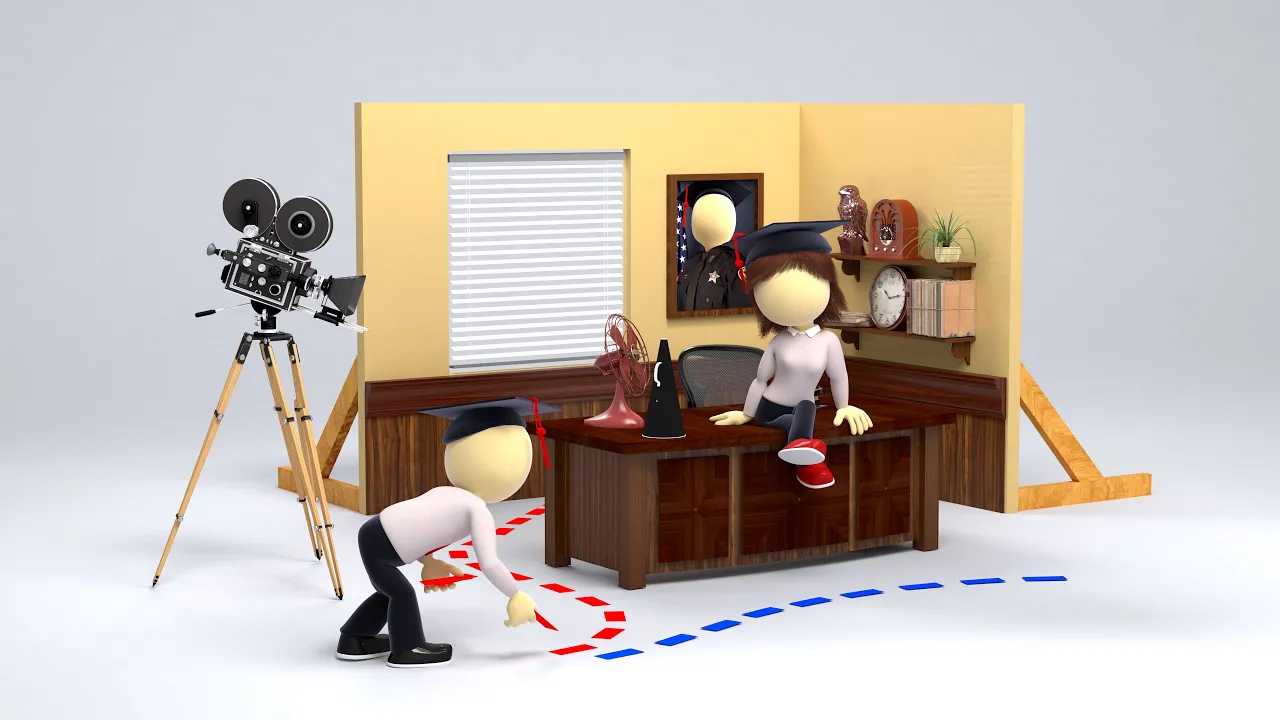
![Filmer un Dialogue - Regards, 180°, Cadres [REALISATION] RVB](https://i.ytimg.com/vi_webp/PGv6P-IvTsY/maxresdefault.webp)
![Vídeo aula Estética da Montagem [parte 1]](https://i.ytimg.com/vi/kNbW-4ZhiyU/maxresdefault.jpg)
![Video Editing for Beginners to Advanced | Complete Guide [2025]](https://i.ytimg.com/vi_webp/YdCNEf_KDVw/maxresdefault.webp)





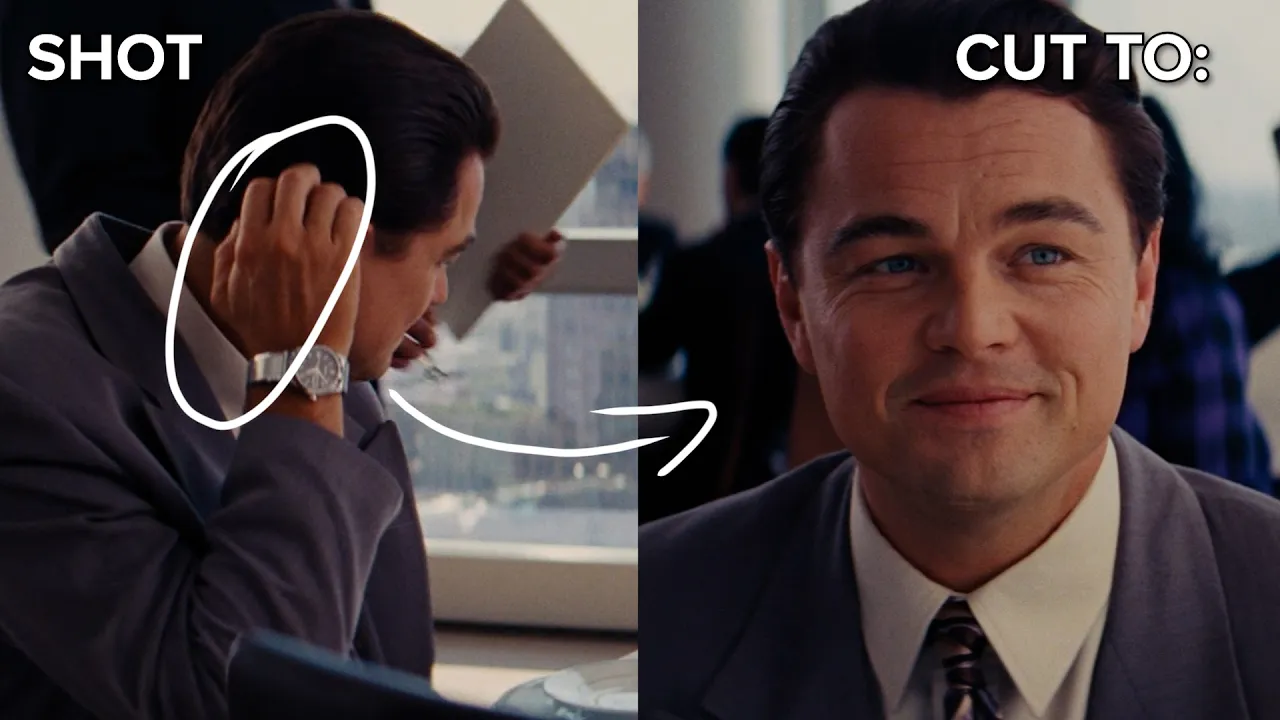
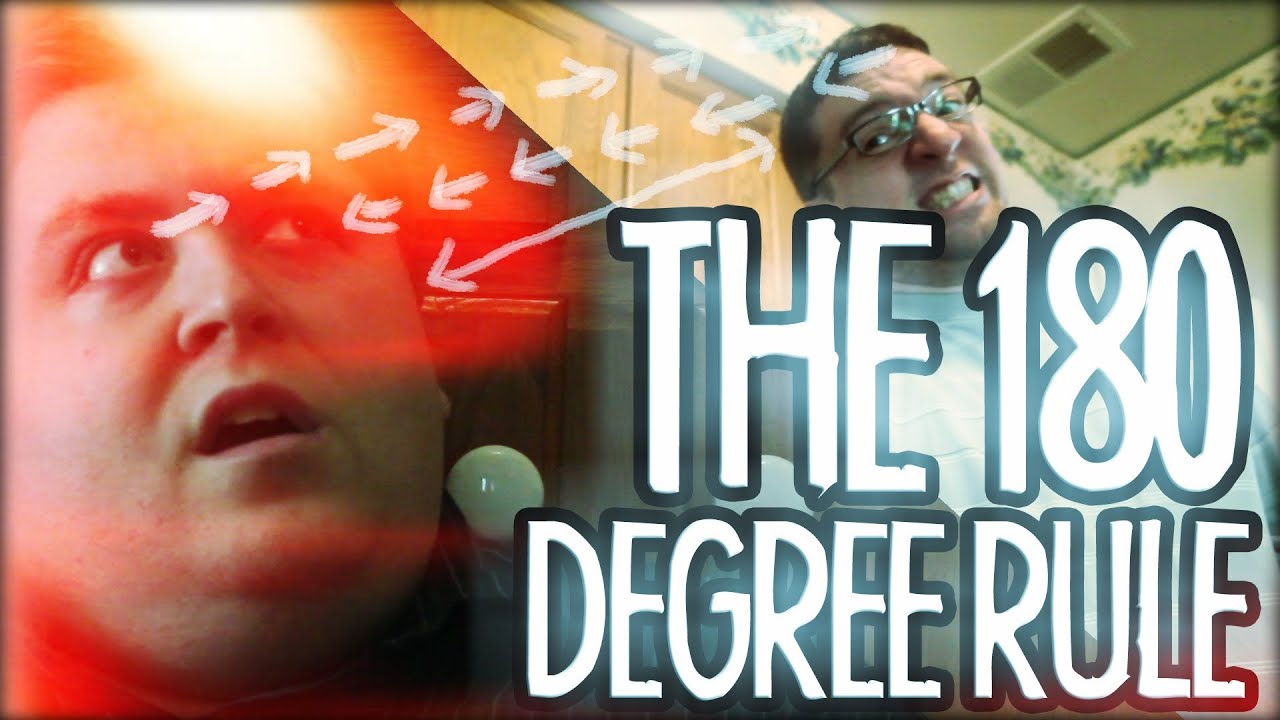
Continuity editing is a Hollywood filmmaking technique developed in the 1910s that transmits narrative information smoothly by making cuts functionally invisible through adherence to spatial and temporal principles, including the 180-degree rule (keeping the camera on one side of an imaginary axis between characters to maintain consistent left-right spatial relationships), shot reverse shot sequences, eyeline matches, point of view shots, establishing shots, and match on action cuts that splice different views of the same action together to create seamless visual flow.
Continuity Editing Explained: The 180 Degree Rule & More
Added:Understanding of basic shot types (such as wide shots, medium shots, and close-ups) and their narrative functions.
Familiarity with the fundamental role of film editing in shaping time, space, and audience focus.
The concept of spatial orientation—how an audience perceives physical space and character positions on a 2D screen.
Basic knowledge of camera movement terms (pan, tilt, tracking) and the concept of 'the frame'.
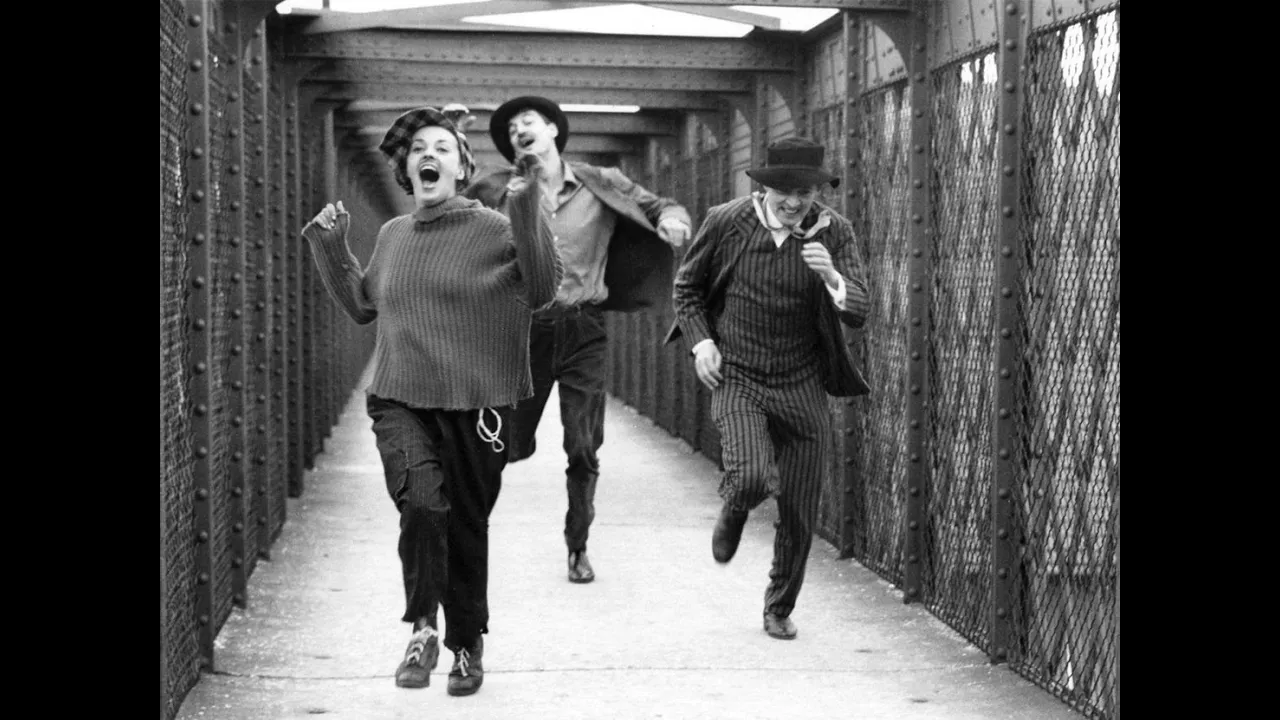
Exploring the deliberate violation of continuity rules, such as jump cuts and discontinuity editing seen in the French New Wave.
Studying complex scene blocking and editing techniques for dialogue sequences involving three or more characters.
Mastering advanced continuity tools like eyeline matches, graphic matches, and sound design bridges (J-cuts and L-cuts).
Applying continuity editing rules practically in Non-Linear Editing (NLE) software using multi-camera footage.
Analyzing the historical evolution from Soviet Montage theory to Hollywood's invisible editing style.
34K views569likes18:01Original Release: 2021-07-19
hi folks and welcome to the first part of our video lesson series on editing hope you enjoyed mad max fury road um we'll get to that in a little bit today we're talking about continuity editing specifically issues of space but before we get into the definition of continuity editing i just want to begin with an example of continuity editing or at least a little bit of that example i'm going to show you the opening of david fincher's film the social network do you know there are more people with genius iq living in china than there are people of any kind living in the united states that can't possibly be true it is what would account for that well first off a lot of people live in china but here's the question how do you distinguish yourself in the population of people who all got 1600 under sats i don't know they take sats in china they don't i wasn't talking about china anymore i was talking about me you go to 1600 yes i could sing in an acapella but i can't does that mean you actually got nothing wrong pc or you get into a final club or get into a final foot you know from a woman's perspective sometimes not seeing in an acapella group is a good thing this is serious on the other hand i do like guys who wrote crew well i can't do that i was kidding yes i got nothing wrong with the test have you ever tried i'm trying right now two row crew to get into a final club to real crew no are you like whatever delusional maybe it's just sometimes you'd say two things at once i'm not sure which one i'm supposed to be aiming at but you've seen guys who will crew right no okay well they're bigger than me they're world class athletes and a second ago you said you liked guys who were precise and you had that one i guess they just meant like the idea that you know the way a girl likes cowboys okay should we get something to eat would you like to talk about something else okay i'm gonna stop there um if you want to watch the whole thing i suggest you check it out on youtube i just wanted to show you what a good example of the most basic example of continuity editing looks like this is a shot reverse shot sequence and we're referring to a number of techniques that you've already seen within this one minute preview throughout this lesson this whole opening of the film lasts about five minutes and it retains this pace that you've seen throughout and i just want you to get a sense of what continuity editing does to our visibility of cuts you may be able to perceive that there's a rapidity a quickness of this conversation between these two characters but i doubt that you would be able to count the number of shots that take place within the entire five-minute sequence it's 108 shots most of them are from about three or four camera setups it's very simple um but most of those cuts are more or less invisible to our eyes and that has to do with what continuity editing is as a technique so let's go to the the basics the definition what is continuity editing it's a style of editing developed in hollywood in the 1910s and it became the basis of the classical hollywood style the term classical hollywood is a film that i've already used throughout this course without defining it but basically classical hollywood refers to um the uh structure of hollywood filmmaking both um financial structure um industrial structure and aesthetic structures that took place between the 1930s and the 50s so the style itself began in the silent era it was picked up by popular narrative cinemas around the world what is essentially the classical hollywood style is still very much the dominant mode that you see when you watch big budget films um or or films around the world today the idea of continuity editing is to transmit narrative information smoothly and clearly over a series of shots what are the main principles of continuity editing each shot has a continuous relationship with the next shot what does that mean it means that cutting is made to be unnoticed or invisible not literally invisible but functionally invisible the idea that you aren't distracted by the cuts because they conform to your expectations there's minimal effort for the viewer and following action there's an emphasis on following human actions we're going to look at how that manifests itself we're going to be talking about continuity editing and spatial comprehension that is spatial as opposed to temporal which we'll look at in the next video one of the biggest uh and most important techniques of spatial comprehension in classical continuity editing is what's known as the 180 degree rule you may have heard of it you may have not but we need you to know what it is it's the rule that says the camera should stay on one side of the action to ensure consistent left right spatial relations between elements from shot to shot the simplest example is when you have two people having a conversation just like we had in the opening of social network you have your two people and if you kind of connected an imaginary line across them that's your axis of action the 180 degree rule states that if you're going to shoot these people um with a camera from from more than one angle you better keep it on one side of this axis of action so if you're going to shoot in if you're going to shoot one shot from here all the other all your other shots better be on this side of the axis if they're on this side of the axis what you get is a reversal of screen direction what does that mean well i'll show you what it means um so once again let's look at it with the social network example here's our two people in the shot rooney's on the left eisenberg is on the right uh jesse's on the right and you make sure that when you do uh when you give a shot from over the shoulder that rooney is always on the left side and jesse is always on the right side what happens if we break that rule well what happens is that there's going to be something like this where you get jesse looking left and then rooney looking left and the theory suggests that if this happens we will become confused and we will no longer have a a sense of a spatial relationship between these two characters so what is the name of the technique um that we looked at the name of the technique as opposed to the rule that says keep the camera on one side of the axis of action is shot reverse shot um that means two or more shots added together that alternate characters typically in a conversation characters in one framing look left the other framing uh they look right over the shoulder is the name of the camera position which we talked about in cinematography that is very common in shot reverse shot editing these are all these interlocked terms and you it's important to know that they're all connected but that they mean slightly different things similarly the term eyeline match refers to this when the first shot shows a person looking off in one direction and the second shows a nearby space containing what they see eyeline match suggests that when i see this shot of jesse eisenberg and i see him say looking in this direction i'm going to see who or what he's looking at in the subsequent shot that's an eyeline match now a point of view shot which is a term i've already used throughout this class without defining it but i should do that is a kind a special kind of eyeline match a point of view shot is a subjective shot that reproduces a character's optical point of view often preceded and or followed by shots of the character looking so this famous example of a point of view shot would end from a famous film that is full of point of view shots you might say it is the main structuring logic of the film that uses point of view shots is both a point of view shot and an example of eye line match it is both but sometimes we have eyeline matches that aren't point of view shots so just keep in mind right that we have these three terms that refer to aspects of this kind of shot construction but they aren't synonymous they're connected but they mean slightly different things um a few more uh aspects of uh continuity editing that we've already seen in the opening of the social network the establishing shot it's a shot that shows a broad view of where the subsequent action will take place or show spatial relations among the important figures in a scene so there's two kinds basically of establishing shots you can call this very very common example of establishing shots in television shows and sitcoms where you see the exterior of a building and then you cut into the interior of the building that's an establishing shot but also this is an establishing shot when you have a wide view of all three people and then you cut into two people the first shot is an establishing shot because it's it establishes the relationships uh there are spatial relationships between the figures in uh in the scene so in the same way this large two shot and that's a kind of industrial uh jargon for what you would call a shot with two people in it uh or the two main people a two shot is also an establishing shot because it it's a wider view of our two characters sitting at the table what is a match on action a match on action is a cut that splices two different views of the same action together making it seem to continue uninterrupt many many shots in continuity editing in which people or things are moving happen to be match on action shots for this is a good example because it's isolating a very simple action humphrey bogart as you can see here stands up is taking off his jacket and boom right in the middle of taking off his jacket the other shot from the other side continues that movement and our eyes instead of seeing the abruptness of the cut they fixate on the smoothness of the movement that's why it's such a useful continuity editing technique it's continuous it's smooth it flows it doesn't interrupt our sense of the important stuff that is people talking doing important things within a narrative okay so this is a good example right he's forcing her to the left in one continuous motion and then as you cut he is still doing that motion in fact notice how our eyes made that smoother than it in fact is that's because match on actions rely on our eyes being able to play a trick on us right um so you can get away with a lot of imperfection in match on action but it still makes it a match on action um a silly example of a match on action is when you violate the principles of classical hollywood continuity editing to use the kind of perceptual synthesis of movement to play a little trick like in this backstreet boys uh video and you can see this all over the history of film as well in the same in the same way avant-garde films like daisies which we'll be watching in the next unit play with the match on action perceptual synthesis in order to violate a principle of uh classical continuity editing the idea is that you're not supposed to allow one person to simply uh float from one space to another simply by following a movement to the left of the screen that's exactly what happens here the match on action gets our mind to sink into the smoothness of the movement in a similar way another film we'll be watching in that next unit meshes of the afternoon by maya darren is doing a similar thing trying to kind of break the rules by using the rules and in other words it's using match on action but it's having a person step into totally different environments each time so we have to think of this as some kind of representation of mental space as opposed to physical space let's look at a um a more elaborate but still very very classical example of continuity editing um it's a little slower a little more boring i might say than the social network but it's going to just show us how redundant the classical hollywood editing principles are now you notice here that we have kind of taken uh our camera closer to our characters but we believe that our spectators won't be confused because we've maintained the 180 degree rule how do i know the 180 degree rule has been maintained because i kept the camera largely to the left of these two men i maintained the old guy is looking right and that humphrey bogart is looking left um and that's what my brain is telling me that humphrey should always be looking screen left bernie the chief inspector said where'd you wanted to see me go onset both pretty and most pretty wild notice there that we've cut in even closer and we've used that cut in to accentuate upon pretty and almost pretty wild right there what'd you want to see me about i'm being blackmailed again again but i knew he was a good man at whatever he did now this is the point where i want to slow down and just show you what's happening now this has gone on pretty long you'll notice that the pace is a lot more slower and more deliberate than the social network which takes place in an era in which this kind of pace is not as common but i want to focus on this moment when they decide to break up the axis of action they're going to allow humphrey bogart to get up from his place which is to the right of the old man i know he was a good man crossing that axis no one was more pleasing now he went to the left of the old man another drink whatever he was my friend my son now we've essentially re-established uh the axis of action and we've allowed ourselves to cut in because we believe that we now know that humphreys is to the left looking right and the old guy is to the right looking left and it just needs to happen that humphrey needs to have his eyes pointing that way to maintain almost that 180 degree rule consistently and are you sat here with another one you can break the 180 degree rule by re-establishing the axis of action that's exactly right randy i could no longer drink and telling stories of the irish revolution well enough of that yeah we have here is an insert but it's a special insert that we call a pov shot why because we know it's from the point of view the optical point of view of humphrey bogart that i've seen the action of him taking this card into his hands and i can intuit because i'm familiar with the editing system that it represents his looking his point of view at this object so now i'm going to fast forward just a bit to make sure if there's any other uh moments of interest to make sure we get our vocabulary down again for the most part we're getting shots that continue this access of action humphreys on the left all gentlemen is on the right he will head across the direction but at this point he's not going to re-establish the axis of action it's just going to re-establish the two shot and then have him leave so let's just make sure we have our our vocabulary in place if i were to ask you what is this moment a good example of the answer would likely be a match on action why because there's a very pronounced kind of connection between the movement of uh hepburn's arm that motivates the cut to the other side this is an interesting example when we get to the shot of of the lightsaber moving that is a good example of an eyeline match but what's really interesting of course about this is that there's no way that he can see this object he's actually below where it is even though the logic of editing tells us that there's a connection between him glancing to the right and thus getting this picture so we have to call it an eyeline match even if he can't literally see it now an example of shining chopped your wife and daughter up into little bits which world was broken here and you blew your brains out with that cut and that's a tricky that's a trick question in some ways the trick question because on a certain definition of the 180 degree rule it would break the 180 degree rule however i would never test you on on a quiz with this question why because there haven't been enough shots to establish this line as an axis of action there's only been one shot so i can't exactly tell you what the axis of action really is especially when it goes right back to the other angle at that moment so this is just to say that you need maybe at least two shots to establish what the access of action is before you break it to say whether you've broken the 180 degree rule okay so with that we'll see you next time for time and continuity editing
Up Next
18:19
Long Takes in Filmmaking: Techniques and Impact
@InDepthCine
31.3K views•2024-07-28

23:14
Visual Analysis Essay: How to Analyze Graphic Novels in College Writing
@nataliepleimann5941
1K views•2020-10-14
19:28
Daisies: Czech New Wave Feminism & Discontinuity Editing
@filmandmediastudieschannel
20.2K views•2021-09-24

4:00
Evolution of Darth Vader: Anakin Skywalker's Animated Journey Across Star Wars Films
@TellItAnimated
13.4M views•2019-03-30
Related Study Plans & Knowledge Roadmaps
Structured learning paths in Film Analysis
film-analysis
Sensory Cinema: Foley, Haptic Sound & Texture
01Introduction to Film Sound and Foley Artistry
02Micro-Sounds, Textures, and Extreme Amplification
03Haptic Audition and Film Phenomenology
+ 1 more learning modules
12h4 modules
Explore Roadmap
film-analysis
Breaking the Fourth Wall: Mockumentary & Satire
01The Invisible Wall: Basics of Cinematic Illusion
02Looking at the Lens: Direct Address & Character Glances
03The Mockumentary: Satire, Realism, and Complicity
+ 2 more learning modules
12h5 modules
Explore Roadmap
film-analysis
Analyzing the Long Take: Cinema, Space & Ethics
01Foundations of Film Grammar: Montage vs. The Long Take
02Choreography and Mechanics of the Simulated One-Shot
03Phenomenology of Film: Real-Time Spatial Continuity
+ 1 more learning modules
14h4 modules
Explore Roadmap
film-analysis
Anachronistic Music: Period Drama & Subversion
01Foundations of Film Sound and the 'Needle Drop'
02Traditional Authenticity vs. Revisionist History
03The Rise of the Anachronistic Soundtrack
+ 2 more learning modules
12h5 modules
Explore Roadmap