




![🎬 ¿Qué HACE un DIRECTOR DE CINE? [los 4 PASOS de una PELICULA]](https://i.ytimg.com/vi_webp/QXrEuC4aR7k/maxresdefault.webp)


![[NCS] 영상촬영 05 영상포맷 결정 · 촬영콘티 작성 · 사전답사하기_02 촬영콘티 작성하기](https://i.ytimg.com/vi/xj2cPhMTXdQ/maxresdefault.jpg)
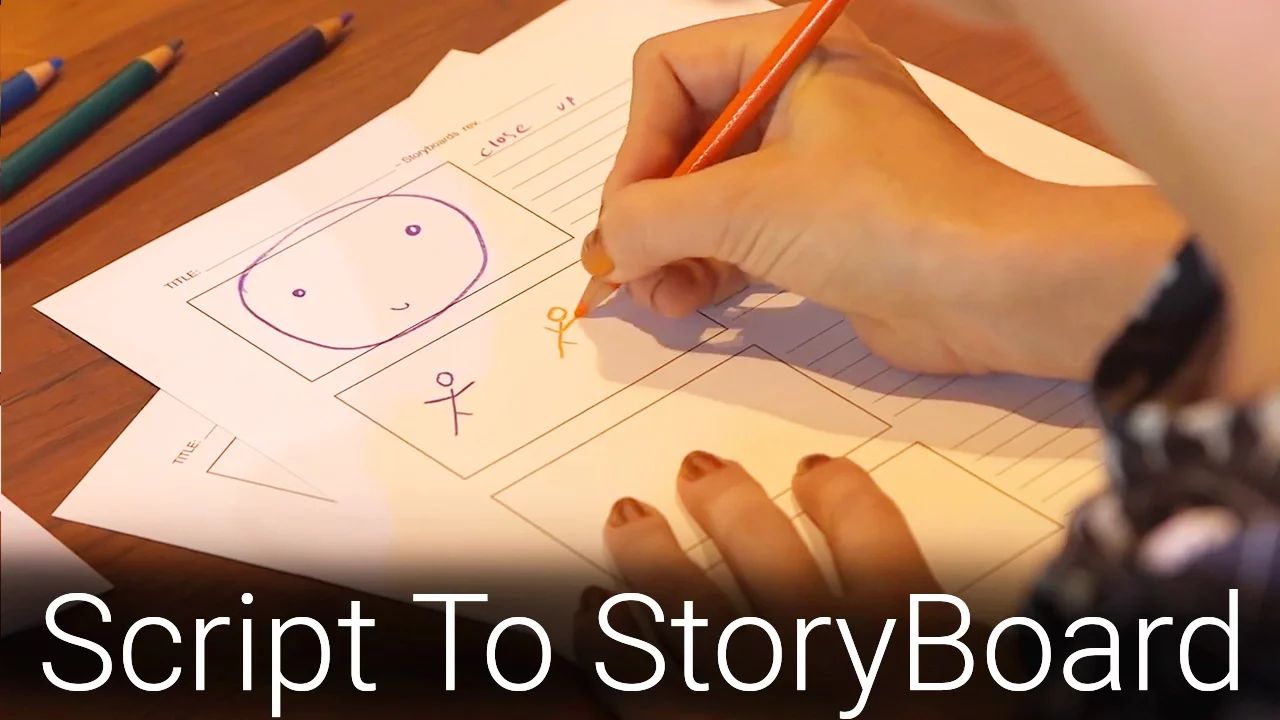




A director's choices in blocking and staging dramatically transform the meaning and emotional impact of a scene, as demonstrated by filming the same police procedural script five different ways using various blocking approaches—from static over-the-shoulder shots to dynamic one-take sequences—revealing how physical positioning, actor movement, and camera work create entirely different interpretations of identical dialogue.
Staging and Blocking: How Directors Shape a Scene
Added:Basic screenplay structure and terminology, including how to read dialogue, action lines, and scene headings.
Fundamental camera grammar, such as standard shot sizes (close-up, medium, wide) and basic camera angles (high, low, eye-level).
The foundational concept of 'mise-en-scène'—the arrangement of everything that appears before the camera.
The core responsibilities of a film director, specifically their role in translating a written text into visual storytelling.
The 180-degree rule and continuity editing, ensuring visual coherence when cutting between different camera setups.
Advanced character blocking for power dynamics, analyzing how spatial relationships on screen communicate subtext and psychological shifts.
The creation of shot lists, overhead floor plans, and storyboards to practically plan and communicate blocking to a production crew.
Choreographing dynamic camera movements (such as pans, tilts, dollies, and tracking shots) in tandem with actor movement.
911.5K views30.3Klikes26:05Original Release: 2016-04-04
Hi! John Hess from FilmmakerIQ.com - today we’re going to take a hands on approach and demonstrate how Direction and Blocking can change the same script into a completely different scenes.
To me, working with actors to create the scene is the best part of filmmaking. When YouTube Space LA announced that they were hosting a police set for use, I devised a little experiment to demonstrate just how important these choices you make with your actors are to your film.
In this demonstration, We will take a 2 page script of a police procedural and shoot that same script five different ways by changing the blocking and camera angles.
This script is about as boilerplate as you can get. In fact It took two drafts just to drain out every bit of subcontext from the dialogue - a perfect clean canvas to inject meaning with blocking.
We had one full day to shoot on the Police set. To pull off five versions of the script, we had to move quickly. We relied on the overhead set lighting - it was adequate - but this was really more of a blocking demo so I wasn’t too concerned about changing the lighting.
Camera wise, we used a pair of Canon C300s usually shooting from the same angle but with different focal lengths. Doing it this way creates twice the coverage per take and doesn’t require extra lighting or special blocking that shooting opposing angles requires. It also simplifies the continuity a bit as your wide angle shots will match your closeups.
For sound I opted for the convenience of wireless lav mics. In the past I have been skeptical about using lav microphones on crucial audio application as I never thought they sounded that good. But this time around I tried using the RODE lav mic connected to Sennheiser wireless transmitters. I had some glitching at the end of the day as the transmitters started to lose battery power but the RODE lav mics were so good that if one transmitter on one actor was glitching, I could always use the audio from the other actor’s mic. The audio signal was recorded on an external Tascam recorder at 96 khz 24bit audio. I did have a boom as a backup but it wasn’t necessary.
So that’s a little bit on the tech - let’s get into the fun part: Every experiment has to have a control - and even though this isn’t a scientific experiment, I still wanted a base that could represent essentially no blocking and simple over the shoulder back and forth camera angles. If you’re just starting out this is the kind of blocking you might start with. I also directed the actors to play as deadpan as possible - zero out inflections and emotions and just state the facts - take a look.
Captain.
Detective. Make it quick. I’ve only got a minute. Any news on the Mendoza case?
Jenkins isn’t talking.
He’s been in there for 15 hours.
Only an hour before we legally have to release him.
And the forensics?
Toxicology came back negative. Bloodwork is clean and no fingerprints at the scene. Looks like we’re at a dead end.
I’m not fan of dead ends. I don’t like losing.
We’re fighting the clock, Mendoza’s got an army of lawyers breathing down our necks.
If we so much as overstep this... Myers. Mendonza’s lawyer.
What about him?
If Mendoza is washing his hands - you find the soap. That’s Myers - put a detail on him. I want to know every move he makes.
I’ll put Nemie on it.
If I’m right that snake will lead us right to the prize.
What about Jenkins?
Let him sweat it out for an hour - then make have a big showy escort take him back. Mendoza will think he talked.
Yes Captain.
Darren. Keep me posted - this unit needs this... I need this.
I knew in the edit room that this version was going to be the weakest of them all. What what I discovered was that without really any emotional queues from the actors, I was forced to rely much more heavily on editing tricks to craft this scene. The first cheat is the dark music which underscores the intensity of the scene.
As for cutting I really want to emphasize closeups for intensity. Once we are in the sergeant's office, we open with a medium and then go right into closeups on the actors face as the detective explains the dead end. As the detective is about to give up, I switch to a medium shot, giving him some distance some breathing room - only to come back to a close up when the sergeant starts presenting her plan. In essence, the close ups are used to push tension and mediums let us back off the intensity as you don’t want to be monotonous in tone. It’s this intercut between medium to close up that create the tension that’s not being created in the scene.
So this is what is meant by crafting the performance in the edit - using montage and musical cues to create the feelings we want in the scene. It’s okay but to me, that’s boring filmmaking and really a waste of our talented actors.
Keeping our actors and camera locked down, here’s what you what happens when you free them up to interject some inflection and do a little “business”: Captain.
Detective. Make it quick. I’ve only got a minute. Any news on the Mendoza case?
Jenkins isn’t talking.
He’s been in there for 15 hours.
Only an hour before we legally have to release him.
And the forensics?
Toxicology came back negative. Bloodwork is clean and no fingerprints at the scene. Looks like we’re at a dead end.
I’m not fan of dead ends. I don’t like losing.
We’re fighting the clock, Mendoza’s got an army of lawyers breathing down our necks.
If we so much as overstep this... Myers. Mendonza’s lawyer.
What about him?
If Mendoza is washing his hands - you find the soap. That’s Myers - put a detail on him. I want to know every move he makes.
I’ll put Nemie on it.
If I’m right that snake will lead us right to the prize.
What about Jenkins?
Let him sweat it out for an hour - then make have a big showy escort take him back. Mendoza will think he talked.
Yes Captain.
Darren. Keep me posted - this unit needs this... I need this.
There is a term that I’ve heard used in directing before or perhaps I just made it up: Business. It sort of stems from question of what should an actor be doing when he or she is not delivering dialogue - watch most first year actors and you’ll see them freeze when not speaking.
Now that you’ve seen the scene a couple of times, you should be familiar with the main objective of each actor. The detective is there to deliver the bad news that Jenkins isn’t talking, the sergeant then comes up with a plan to proceed forward. Business is adding a secondary objective something that can but doesn’t necessarily have anything to do with the main objective. For the detective I gave him a pencil to play with - This is not exactly an objective but a prop to manifest his angst in the scene.
For the sergeant I told her to search the desk for a missing envelope- and at the point where she realizes that Meyers is the key to the case to suddenly find what it was she was looking for. Sort of a visual metaphor of the scene itself.
With this bit of direction something really interesting occurred. Watch the eyelines between the two actors. After the initial greeting the two actors do not meet eyes.. When the sergeant asks for news, the reverse shot shows the detective looking down. When the he returns his eyes to her, she’s looking away - They avert their eye contact unitll… bam… she makes a break in the case- that’s the first time they lock eyes and except for a glace off here and there they stay locked on to each other for the rest of this scene, they went from being lost to now being in sync.
Now I wish I sit here and take credit for that bit of direction. But I can’t. It wasn’t something we even discussed on set - it just happened naturally because the actors had something to do besides sit and talk through the case - The result is a completely unexpected but completely natural bit of visual storytelling with deeper context. This is why filmmaking is so much fun - but we’ve just started... Now it’s time to open up the blocking completely and really experiment with a “one shot” version of the scene: Captain.
Detective. Make it quick. I’ve only got a minute. Any news on the Mendoza case?
Jenkins isn’t talking.
He’s been in there for 15 hours.
Only an hour before we legally have to release him.
And the forensics?
Toxicology came back negative. Bloodwork is clean and no fingerprints at the scene. Looks like we’re at a dead end.
I’m not fan of dead ends. I don’t like losing.
We’re fighting the clock, Mendoza’s got an army of lawyers breathing down our necks.
Myers. Mendonza’s lawyer.
What about him?
If Mendoza is washing his hands - you find the soap. That’s Myers - put a detail on him. I want to know every move he makes.
I’ll put Nemie on it.
I have a feeling if I am right that snake will lead us right to the prize.
What about Jenkins?
Let him sweat it out for an hour - then make have a big showy escort take him back. Mendoza will think he talked.
Yes Captain.
Darren. Keep me posted - this unit needs this... I need this.
Let’s change gears for just a bit and talk about production choices. I went into this variation wanting to test out different types of camera stabilizers: a standard over the shoulder rig, a center of gravity stabilizer with the Steadicam Zephyr, and a brushless motor gimbal style stabilizer. The version you just watched was shot on the Steadicam - a device I had never used before but I have had extensive experience playing with and modifying a Glidecam 4000 over the years. It took about 45 minutes of playing with the Steadicam to get it balanced to the point where I could get the shot. Now I’m not a full time Steadicam operator by any stretch of the imagination and after flying for about a couple of hours and twenty or so takes to get the choreography right, I really doubt I will ever be a full time steadicam op.. but the Zephyr was a real pleasure to fly and I got results that weren’t too bad.
This was the first scene we shot after lunch - after an hour, the actors and myself were satisfied that we had a solid take with the steadicam. During this time, my second cameraman Chris had been working on getting the brushless motor gimbal stabilizer to work. It was still acting wonky on us so I gave him a little bit of time and reshot the scene using shoulder mount system.
Having some experience in the event and broadcast world, shooting shoulder mount is really intuitive and almost liberating for me. I know exactly how to point the camera at what I want to see and I know how to move to create an interesting shot. With handheld, pulling focus and even pulling zoom is pretty easy - you would need a wireless follow focus system when shooting with the steadicam.
But as you can see in this side by side, the motion is stylistically different. With a steadicam you float with the actors - shoulder mount introduces bumps with each step which gives it more of a documentary feel - think shows like The Office which have more of a fly on the wall feel than an omniscient point of view that steadicam offers.
So after spending 30 minutes reshooting the scene with shoulder cam, we gave the brushless gimbal stabilizer one more chance. I first let my second cameraman Chris take a shot at the scene but he hadn’t walked the camera move before so I took the realm. I was tired but on the very first take the gimbals just weren’t going to cooperate with us. After one take and my arms completely giving out at the end of the run, I made the executive decision to move on without the shot.
This experiment illustrates something that really isn’t talked about much with these brushless motor stabilizers. I’ve seen some spectacular footage in press releases, but the fundamental truth about Brushless motor stabilizers is they are a high tech solution to the camera movement problem. Each brushless motor, each battery hookup, the computer software, the wireless control, the accelerometer - all of those are single point failures which means if any one of those fails, the whole system fails.
On the contrary the center of gravity stabilizers have just one single point of failure - the gimbal - there’s no other moving parts - they are very low tech solutions to the camera movement problem.
Does this make the brushless motor stabilizer inherently bad? Of course not, but it does make it less reliable and more tempermental on set. Flying a center of gravity stabilizer, although requires skill and practice, takes a lot less muscle and once you have it balanced you have to do very minor maintenance on it to keep working throughout the day Because we were shooting on the C300 using a Cine lens, I think our problem was we had too much weight for the setup. We also didn’t have the passcode to get into the software so we really couldn’t say we gave the brushless motor stabilizer a fair shot.
But in the real world with all the imperfection that comes with it, maybe we did.
Let’s switch back to the blocking. Since there was going to be no cutting in this shot, you have to block the movement to create little individual compositions and them link them all up through movement. I wanted to demonstrate the power relationship between the sargent and the detective which means I wanted her to always be leading him along. As a result she is always closer to the camera.
Notice that as they discuss the details of the case at his desk she puts her hand up to her face in frustration - this is a shield from bad news, ultimately turning her back on him completely and not making eye contact until she comes up the solution.
From here, I wanted her path to take us around a corner desk by the jail cell and into the sergeant's office creating an S movement. At first she had trouble with this direction because she needed a motivation to take an indirect path - so I had her drop off an envelope on the desk. You can’t see it in the take but it makes sense for her character.
Unfortunately that area by the jail cell is really darkly lit so I had them scurry through that spot as fast as possible. When they get to the office she ends up being bathed in light while he is wrapped in shadow a perfect visual symbolism of their relationship.
And once again, a good visual metaphor that occurred completely out of dumb luck.
So far we’ve been playing this scene like it was straight out of something like Law and Order - let’s try something a little different: Captain.
Detective. Make it quick. I’ve only got a minute. Any news on the Mendoza case?
Jenkins isn’t talking.
He’s been in there for 15 hours.
Only an hour before we legally have to release him.
And the forensics?
Toxicology came back negative. Bloodwork is clean and no fingerprints at the scene. Looks like we’re at a dead end.
I’m not fan of dead ends. I don’t like losing.
We’re fighting the clock, Mendoza’s got an army of lawyers breathing down our necks.
If we so much as overstep this... Myers. Mendonza’s lawyer.
What about him?
If Mendoza is washing his hands - you find the soap. That’s Myers - put a detail on him. I want to know every move he makes.
I’ll put Nemie on it.
If I’m right that snake will lead us right to the prize.
What about Jenkins?
Let him sweat it out for an hour - then make have a big showy escort take him back. Mendoza he'll think Mendoza talked.
Yes Captain.
Darren. Keep me posted - this unit needs this... I need this.
First up you’ll notice we went from using a cinemascope style 2.35 aspect ratio to a more spacious 1.77 aspect ratio - the 16x9 television standard. You tend to see many comedies employing a less wide aspect ratio, it’s offers a little more vertical space for actors to work with. Because of this it feels a little friendlier.
The other obvious choice change up was the music which certainly adds a more light hearted feel to the scene.
Having just shot the oner, I really wanted to block a scene that had a lot of movement.. The sergeant's objective here is to romantically engage the detective, but still do her job.
The detective’s objective is to just get out of there once he realizes what’s going on.
One thing I really like to play with is reversing eyelines and positions. In the beginning of the scene, the sergeant circles the detective. He constantly turning to follow her creating this power dynamic between the two similar in what we saw in the oner.
As she closes in romantically, I had her move into the foreground and close the blinds.
The details of the case that the detective are spouting aren’t important - I’m letting them play out in the background. What’s important is how why she’s doing what she’s.
I let it play in this two shot because that’s emphasizes the subtext of the scene. Now when she returns to him we have reversed the blocking which creates a new objective for the detective.
He’s got his orders and now he needs to get out of there - but she’s in his way.
So as she’s playing with him, he can sheepishly try to get to the door - This interplay only made possible because we reversed the blocking.
Which then sets up this little door slamming joke -something the actress improvised in one of her takes.
So like a mouse caught in a trap, she’s all his and even though the sergeant does still bring everything back to the police work at hand, she teases him at the end by invading his personal space and playing with his… um... pencil. Subtext.
Originally I had planned to shoot a version where the detective was actually the bad guy in the case - sort of a twist on the show Dexter and use the camera to get increasingly closer and closer into his face like a noose tightening around his neck.
But since we were having so much fun with comedic versions and we needed something with a little more energy I scrapped that idea because it felt it too subtle considering what we had just done. Jacked up on the free YouTube coffee and the cookies we had at craft services, I let the actors all come up with a funny version of their own: Captain.
Detective. Make it quick. I’ve only got a minute. Any news on the Mendoza case?
Jenkins isn’t talking.
He’s been in there for 15 hours.
Only an hour before we legally have to release him.
And the forensics?
Toxicology came back negative. Bloodwork is clean and no fingerprints at the scene. Looks like we’re at a dead end.
I’m not fan of dead ends. I don’t like losing.
We’re fighting the clock, Mendoza’s got an army of lawyers breathing down our necks.
If we so much as overstep this... Myers. Mendonza’s lawyer.
What about him?
If Mendoza is washing his hands - you find the soap. That’s Myers - put a detail on him. I want to know every move he makes.
I’ll put Nemie on it.
If I’m right that snake will lead us right to the prize.
What about Jenkins?
Let him sweat it out for an hour - then make have a big showy escort take him back. Mendoza will think he talked.
Yes Captain.
Darren. Keep me posted - this unit needs this... I need this.
THE SITCOM Originally I had planned to shoot a version where the detective was actually the bad guy in the case - sort of a twist on the show Dexter and use the camera to get increasingly closer and closer into his face like a noose tightening around his neck.
But since we were having so much fun with comedic versions and we needed something with a little more energy I scrapped that idea because it felt it too subtle considering what we had just done. Jacked up on the free YouTube coffee and the cookies we had at craft services, I let the actors all come up with a funny version of their own: >Clip< I really enjoyed this version because it was a group effort and expanded the universe to include all the background actors. Because of such an intricate blocking, the camera placement really had to be transparent - just capture it all on frame - which is why most of it stays on wide so we get both the dialogue in the foreground and the antics in the background.
But there’s one thing worth pointing out here that I completely missed as I directed and edited this. It wasn’t until I studied the scene in preparing this discussion did I even notice it. In the very beginning, if you watch carefully, I break the 180 degree rule.
The 180 degree rule states that you should create an imaginary line between the actors speaking in a scene and then keep all your camera angles to one side of that line. I like to think of it like you’re shooting a play in a theater - you can place the camera anywhere in the audience but you can’t go on stage and shoot out into the audience.
That’s the 180 degree line or action line.
So if we diagram this scene we see that the opening wide shot starts us with the camera on the bottom right side of the action line - the reverse on the sergeant keeps the camera on the same side - but the medium on the detective jumps the action line shooting from the top left.
So why does this scene still work if I broke a fundamental filmmaking rule?
The short answer is because if I didn’t catch it until I diagramed it, it wasn’t that noticeable to begin with.
But let’s try explore this just a little bit deeper. The first shot of the scene establishes the geography of the scene. If we think of this layout as our stage - with the jail is at the back of the stage and the bars upstage - if we imagine this as a stage play we find that our action line is really not the one created by the eyelines at all, but rather created parallel to the jail cell door.
If we set our action line here, we see that almost all the shots stay on one side of this action line. All except one angle, the reverse shot on the sergeant looking through the bars.
But why is this not confusing? Because the bars are there to give us a visual clue about where she is in relationship to the set. In essence we have been conditioned to understand that this is a reverse angle, we don’t register it as off because there’s no visual clues that tell us it is off.
Remember that the purpose of the 180 rule isn’t that you have to have your cameras on one side of the action line, it’s there to keep you from creating confusing or jarring edits. But as you experiment more with blocking and camera movement, the action line will pick up and move and there are times when you can cheat and get away slightly fudging it. I’m sure we will get into the advanced implications of the 180 degree rule in a future episode.
I would like to thank all the cast and crew for helping us put together this little filmmaking demonstration and the folks at YouTube Space LA for their generosity.
Filmmaking doesn’t end with the script - a lot can happen beyond the page, and each choice that’s being made, whether to stand on one side of the table or the other can create deeper and richer context to your filmt. I’m not saying the script doesn’t matter. You can have a great script and a lousy movie -but I doubt the reverse is true. Ultimately a lot of decisions have to be made to commit the script into image and sound.
But if there’s one thing I want you to take away from this it's this: You cannot learn filmmaking by just watching films. Just like you cannot learn to run a restaurant kitchen by dining out every night. Watching films is a must but it is not enough because all you see are the end results. You don’t get exposed to countless decisions, pressures, and choices that are required to bring a movie together.
So if you want to be a filmmaker, you must make films. There’s no going around it - every project you create gives you something to build upon - but you’ve got to create. You’ve got to get that experience before you can make something great. I’m John Hess and I’ll see you at FilmmakerIQ.com
Up Next
23:21
Film Analysis of ESO: High Isle Cinematic | Filmmaker Breakdown
@kaizammit
177.9K views•2024-01-23

12:54
Triumph of Orthodoxy Icon: Byzantine Art & History Explained
@BenCallan
2.1K views•2024-08-06
15:40
Foley Art and Sound Effects: A Comprehensive Film Guide
@FilmmakerIQ
336.4K views•2014-11-17

1:42
Game of Thrones Opening Credits: A Cinematic Analysis
@gameofthrones
46.3M views•2011-04-18
Related Study Plans & Knowledge Roadmaps
Structured learning paths in General & Interdisciplinary Studies
general-studies
Elevator Engineering: History, Physics & Cities
01From Hoists to Safety Brakes: The Dawn of Vertical Lift
02Hydraulic vs. Traction: The Engineering Physics of Elevators
03Modern Speed, Safety, and Algorithms
+ 2 more learning modules
12h5 modules
Explore Roadmap
general-studies
Rubber: Material Science, History & Geopolitics
01Origins of Natural Rubber & Mesoamerican History
02The Chemistry of Natural Rubber & Vulcanization
03The Geopolitics of the Rubber Boom & Colonization
+ 2 more learning modules
12h5 modules
Explore Roadmap
general-studies
Containerization: Evolution, Logistics & Trade
01Ancient Trade & Bulk Cargo: Amphorae to Barrels
02The Industrial Revolution & Cardboard Packaging
03The Containerization Revolution: Malcom McLean
+ 2 more learning modules
12h5 modules
Explore Roadmap
general-studies
Textile Tech: Evolution, Labor & Global Impact
01Pre-Industrial Textiles: Handloom & Cottage Industry
02Mechanization: The Spinning Jenny to the Power Loom
03The Factory System & Global Labor Transformation
+ 2 more learning modules
10h5 modules
Explore Roadmap