

















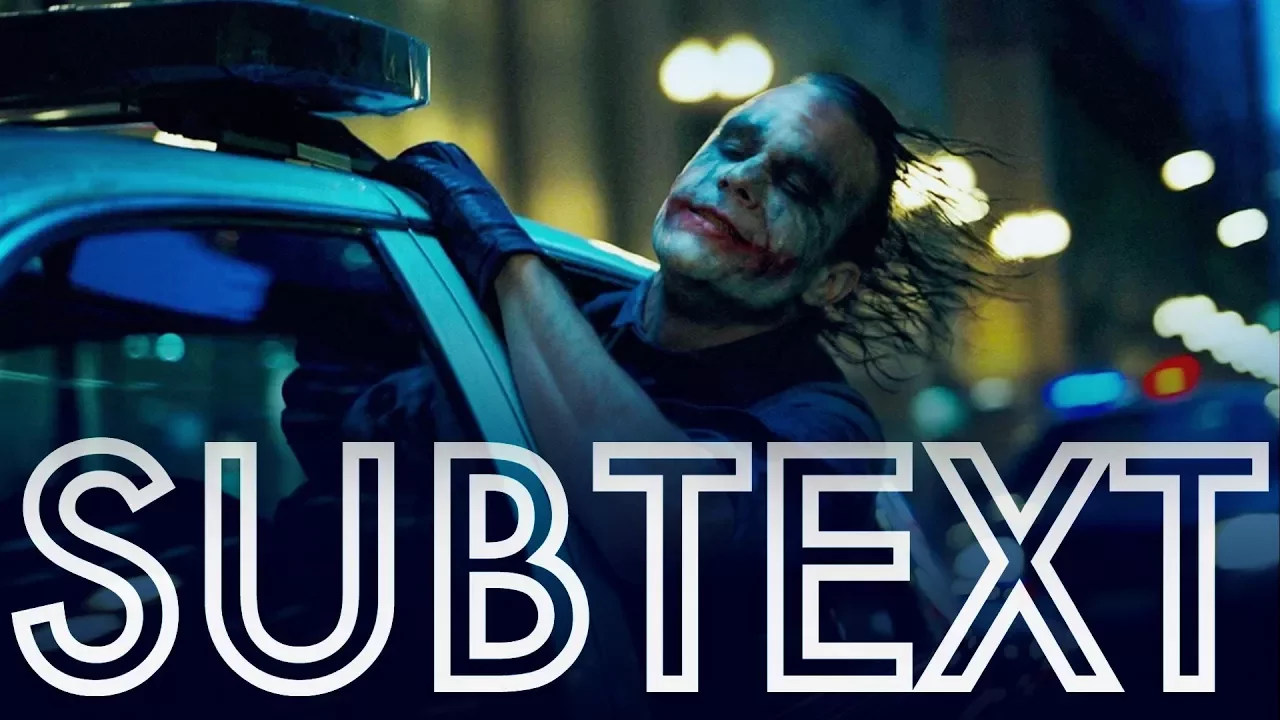


![On Writing: Subtext (and how to use it)! [ Tarantino | Thrones | Gatsby ]](https://i.ytimg.com/vi/58FyvzttlIg/maxresdefault.jpg)
Directors masterfully convey complex narratives through subtext—what characters truly want beneath their spoken words—and visual techniques like blocking (spatial actor positioning), camera movement, and strategic withholding of information. In 'No Country for Old Men,' the Coen Brothers use visual framing to signal Anton Chigurh's decision to kill Carson Wells before it happens; in 'The Godfather Part II,' Coppola employs blocking to reveal Michael Corleone's controlling nature through his physical positioning relative to his sister Connie; in 'Chinatown,' Polanski uses camera distance and movement to mirror emotional relationships; in 'In the Mood for Love,' Wong Kar-wai creates tension through withholding and stylistic contrast; and in 'Reservoir Dogs,' Tarantino builds suspense through dramatic pacing shifts. These techniques allow directors to distill complex human emotions and motivations into immediately comprehensible visual and sonic experiences.
Advanced Cinematography: Five Masterclass Scenes Explained
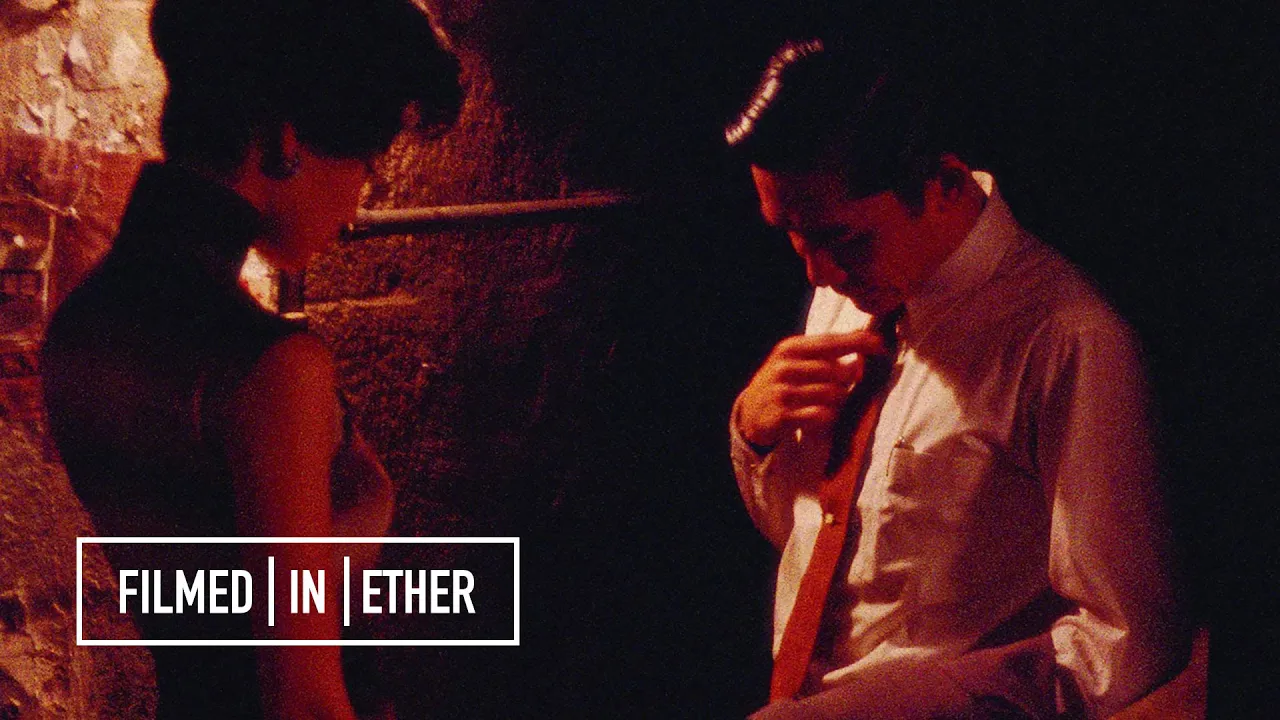
Added:you ask for more and we're delivering let's spend some more time vivisecting film form and our quest for Cinema knowledge these are five more UNR excuse me I mean unranked brilliant moments in [Music] [Applause] film let's start with another decision moment and see where it takes us this time from No Country for Old Men Anton shur AKA world champion bll cut H Javier Bard dim is a bounty hunter tracking down a whole metric buttload of stolen cartel money but it turns out he's better at random killing than scavenger hunts so the cartel boss hires Carson Wells AKA Woody harelson in a cowboy hat to go take care of Anton clean the mess up and bring the money back quietly but Anton gets the jump on him and this is what happens next you don't have to do this I'm a day trader I could just go home you good I know where the Satchel is if you knew you would have it with you I could find it from the riverbank I know where it is I know something better what's that I know what it's going to be you going to have the money andon let's focus on the last four shots because something cool is definitely happening here first Carson jumps in a way that's more Dynamic than any of the previous conversation so we know something's got to be happening then we watch Anton grin then back to Woody for a look of grim realization at Anton's smile this quickly cues us into the fact that there's something for him to realize without it maybe the scene just goes back to the way it was before but that's not what's going to happen and clear Carson knows it so we pick up on it too and in our favorite shot of the sequence we cut here barring Anton's establishing shot the entire conversation plays out in alternating clean singles no variation in scale movement or angle whatsoever just two medium close-ups but right here the Cohen Brothers specifically decide to break that pattern signaling an important shift visually it does two things first it puts the shotgun back into the picture after a long Hiatus bringing the threat of violence back to the mental Forefront but what's most brilliant about this shot is that it excludes Carson entirely it removes him from the screen the conversation and the plot what was a conversation becomes a monologue what was an exchange becomes an inevitability by removing him from the frame the Cohen's camera effectively kills Carson before shura does but this raises another interesting question if we're ending right where we started what changed between here and here why is there a conversation in the first place why is there an exchange it would make sense if shagar was trying to get information out of Carson but he explicitly doesn't he declines the information he doesn't want it and if we're operating under the reasonable assumption that these characters are representative of real humans with real human behavior and motives and we resist the ad hoc explanation that shagar is sitting there as a contrivance of plot and tense dialogue why the hell is he doing this the answer of course lies in the subtext which in dramatic terms is about as simple as this somebody wants something and they're trying to get it the subtext is what they're actually trying to accomplish the text the words that they're saying is just the strategy or strategies they're using to get it and you can absolutely dig through their dialogue to find subtext Clues and you should do it and post about it in the comments but our favorite way to figure out what's really happening in a scene is to go backwards it's simple start at a moment you understand and then step back Moment by moment beat by beat and use what you know will happen to deduce what's happening then based on the assumption that the characters like real human beings are subject to an internally consistent logic of emotions that operates on cause and effect check it out we know here that shagar kills Carson so we know that right before that must decide to kill him otherwise he would have done it already so we step back and here it is of course knowing that we know that something must have caused him to make that decision so step back it's right here and while it could have been either the phone call or Carson's reaction that caused his decision watch his eyes they don't even flip towards the phone they're all on Carson and since shagura would only kill Carson when he's gotten everything he wanted out of him we know that this is what he wanted not the money not information not a bargain but a Flinch an acknowledgement that the conclusion is forone and that Carson is a awaiting his death and here shur gets [Music] it okay cool maybe that was a whole lot of time dedicated to something you pretty immediately understood you watch his sequence in your brain is like yeah Carson's afraid shagar decided he just wanted to see him Flinch he's going to kill him and yep there it is but that's kind of the point isn't it the Cohen Brothers figured out how to make this complex interaction seem obvious and really that's a pretty good explanation of what the hell a director actually does a director dives into the script figures out what the hell is really happening beneath all the words and lies and deceptions and subtext and distills it into a visual and Sonic medium that is immediately comprehensible on a deeply emotionally resonant level where the underlying story is laid bare for all to see and Beyond shock composition and editing another important way to do this is through blocking and this one goes all the way back to the theater where directors didn't have cameras for multiple angles and editing for clever juck's musician all they had were spatial relationships so let's turn to the second installment in The Godfather Trilogy for a master class in blocking and the subtext it reveals very early in the film Michael sits down for a business conversation with his sister and her new fling Merl they tell him they want to get married and Michael does this com [Applause] coming I want to be reasonable with you now why don't you just stay here with us with a family you can live here on the estate with your kids you won't be deprived of anything you can have everything you want I don't know this Merl I don't know what he does I don't know what he lives on and why don't you tell him marriages out of the question and you don't want to see him anymore he'll understand believe me although Michael's words his text seem to suggest that he's trying to reason with his sister using words like why don't you and I want to be reasonable with you his body is all about controlling the scene check it out one of the most powerful effects of blocking and it's the ability to create meaningful spatial relationships and even though on screen we can't always see the whole space we're actually pretty good at reconstructing it in our heads as long as director helps us out a little bit so when Michael decides to walk over to Connie and reason with her he doesn't walk straight towards her no instead he wanders around her and puts himself smack dab between her and her bow cutting him off from the conversation and controlling the dynamic copel accus us into this too with the shot prior where he reestablishes Merl's position with a quick POV motivated by Michael's look this specifically tells us that Merl is to Michael's right immediately before Michael points his back in that direction now look at this next encounter between Michael and Connie it's a traditional shot reverse shot but there are two ways Copla could have shot this over the two shoulders we see here or over the their respective other shoulders and those options correspond to camera's positioned here or here and look at what Copa chooses he puts the back of one camera towards Merl and blocks Merl in the other with Michael's body eliminating him from the screen he mirrors the scene's action with his cameras so yes the spatial relationships created through blocking carry serious importance but film blocking can do something that theater can't it can also create pictures the actors create relationships between each other but they also create relationships with respect to the camera and while on stage all of these visual relation ships are with respect to the audience film can switch and change and alter the perspective from which this visual relationship is created to suit its changing needs so when Michael asks his sister to break up with Merl he walks away spatially allowing Connie to re-engage with Merl but based on where Copa places the camera his movements also function visually by creating a picture that is emotionally evocative of the scene's dynamic Michael placing himself between the two of them standing above them and chaperoning their interaction while they defy him and connect despite his interference which is exactly the subtext of this scene now if there's another moment that perfectly exemplifies the use of camera to enhance the blocking of the scene it's our next one from Chinatown Jake giddes AKA Jack Nicholson with a terrible nose job is a private investigator that's gotten caught up investigating a Los Angeles water department conspiracy that includes the murder of chief engineer of the city's water department Evelyn M's late husband so when Jake is hired by Evelyn to investigate her husband's murder he uncovers some evidence that nearly gets him shot and only narrowly escapes thanks to her NASCAR training so they head back to her estate for a few drinks to you Mrs malray frankly tonight you saved my you Sav my neck tell me Mr KS does this often happen to you what's that well I'm judging only on the basis of one afternoon and an evening but if this is how you go about your work I'd say you'd be lucky to uh get through a whole day so first things first palansky establishes a distance between Jake and Evelyn he puts a table in between them and even though he never shows it he uses it to separate them along the z-axis and then he takes the subtext and rubs it in our faces let's look at the text here on the surface Evelyn hides her smile and takes a serious scolding tone questioning Jake's safety beneath the surface it's pretty obvious she's teasing it but she uses a serious less intimate tone to move the conversation to a more intimate place she moves away from the goal to get towards it which is the definition of koi and what about the blocking how does it reveal our subtext well pretty obviously really she increases the distance between them before closing the Gap such that their spatial relationship mirrors their emotional relationship which would be good directing on its own but play this moment in a wide shot and it's just another functional moment in a great film but in a stroke of Genius just as how the dialogue is koi just as how the blocking is koi pansky employs a camera that is koi he increases the visual distance between them enough to completely exclude Jake from the frame but when Evelyn leaves leads the frame back towards him suddenly without a cut they move from a conversational distance to an intimate distance with the kind of immediacy that makes you skip a breath and this works so well because the movie creates an expectation and then withholds it for just a little while we know she's walking around to him but first we have to wait we'll get to see them close but first we have to see them far and when she does close the gap it's even better than we'd hoped they're even closer than we'd thought Jake has taken an extra step towards her and the camera and their closeness exceeds even our expectations that's what you call a payoff [Music] okay number four in the mood for love begins with neighbors Chia and Sue finding themselves frequently alone in their cramped apartment building with both of their spouses gone what follows is a series of Brief Encounters between the two of them going about their everyday in solitude and along the way when both Chia and Sue had to lunch at the same time we get this [Music] in contrast to the typical quiet static moments of the film this one is different the camera is constantly moving and in slow motion there's no diegetic sound only a simple violin them and we've seen all this before in the film by now always associated with moments of near intimacy between chiao and Sue so when the stylistic shift recurs we're ready and wondering how they will connect we're like pavlovian dogs trained to drool in expectation of a whis full moment when the violin theme plays and as we wait for our moment the camera pan slows here it comes we say to sure that the camera is settling for their approaching brush but instead the camera stops and Sue keeps going we weren't given what we expected the shot holds on nothing it holds on a plain cement wall a few unimportant posters in a streetl for a strangely long time the shot holds but we know that when a good director shows us something even if it's nothing if we're invested in the movie we trust that director so that instead of assuming he's messed up and what we're looking at as a mistake we subconsciously figure out that we just haven't seen the whole picture yet and that our question will be answered so our minds raced to fill in the blanks and it's exciting it's tantalizing it's the same kind of sexy withholding suspense we find in the Chinatown shop so by the time Chow enters the frame walking the opposite direction as if they just passed off screen we have no choice but to take all those fantasies we worked up in our head and apply them in retrospect to the very Encounter of which we were deprived turning an everyday moment we didn't even see into one of Maximum Impact finally for a little more withholding we're looking at Reservoir Dogs when a jewelry heist goes bad the robbers hole up in a warehouse to try to nurse their wounds regroup recover and figure out who ratted them out and when one of the robbers Mr blonde reveals that he captured a police officer in the getaway they try to creatively extract some information from him but he's not talking and eventually Mr blonde is left alone with him and it turns out blonde doesn't really care about who the snitch is he's just a bit of a sadis so he does what sadis do and after Michael matson's Boogie you'd think our last pick for a brilliant moment would be this one because well it's a brilliant little moment and it definitely fits in with our withholding theme but actually we want to focus on what happens next don't go anywhere I'll be right back [Music] [Music] [Music] J remember what we said about trusting that a director wasn't just showing us stuff for no good reason the same thing is happening here all of a sudden we go from fast-paced musical torture scene to painfully slow long take of a character just walking and Tarantino sets this up by establishing the stylistic rules of the scene smooth camera Snappy dialogue moderately cuty clear tension and then flipping it on its head he picks the camera up off the tripod and goes handheld walk out of his music at an incomplete moment and slows us way down this moment doesn't work in a vacuum it works in contrast so we know something's about to happen he's walking outside is he about to get capped caught seen what's in the trunk what did he mean when he said I'll be right back our brains respond to this boid by filling it in with all the worst kinds of anxiety which is exactly what the police officer is doing in his chair and when he grabs the gasoline we know we've got a whole long oh [ __ ] oh [ __ ] oh [ __ ] walk back into the compound where we're hoping he gets capped caught or seen something anything to stop him from ulating this poor hostage it's not what we know that scares us it's what we don't we don't know where he's going or why we don't know if the cop Will Survive it's not about what we're being told it's about what's being with held as we've seen it's just as often about what you can't see or hear as what you can whether it's what's being excluded from the frame what goes unet in the dialogue or what actions go unexplained Cinema not only combines visuals and sounds to tell a story it hijacks our emotions and our expectations to more deeply immerse Us in the emotional experience so what do you think any more thoughts on these moments any other moments you'd like to clue us into give us a couple more weeks of regular top 10 to gather up another handful of brilliant moments but in the meantime be sure to subscribe for more cix movie lists [Music]
Up Next

A Study of 'Portrait of a Lady on Fire' as an Artistic Cinematic Exploration
@SpikimaMovies
680K views•2020-03-30

Visual Analysis Essay: How to Analyze Graphic Novels in College Writing
@nataliepleimann5941
1K views•2020-10-14
10 Best Long Takes in Film: A Cinematography Analysis
@CineFix
309K views•2018-12-11

Evolution of Darth Vader: Anakin Skywalker's Animated Journey Across Star Wars Films
@TellItAnimated
13.4M views•2019-03-30
Related Study Plans & Knowledge Roadmaps
Structured learning paths in Film Analysis