















Voiceover narration exists on a spectrum from diegetic to non-diegetic, and can shift between these categories within a single film; in Memento, the voiceover is closely tied to the character's real-time experience and embodied existence, making it nearly diegetic despite not being fully diegetic, while in Sunset Boulevard, the voiceover creates ambiguity by switching between third-person omniscient narration and first-person personal narration, blurring the boundaries between diegetic and non-diegetic sound.
Diegetic vs Nondiegetic Sound: Voiceover Narration | Film Analysis
Added:Fundamental definitions of diegetic sound (sound originating within the film's story world) and nondiegetic sound (sound originating from outside of it, like a musical score).
Basic components of a film soundtrack, including dialogue, sound effects (Foley), ambient noise, and music.
The concept of narrative perspective in film, specifically the difference between first-person (character-driven) and third-person (omniscient) narration.
A general familiarity with the filmic styles of directors like Steven Spielberg, Billy Wilder, and Christopher Nolan.
Advanced theoretical concepts of film sound, such as 'transdiegetic' sound, 'acousmatic' sound, and sound zones (as theorized by film scholars like Michel Chion).
Analysis of narrative unreliability, exploring how voiceover narration can contradict visual cues to create dramatic irony or psychological complexity.
The screenwriting craft of writing effective voiceover that enhances rather than merely describes the visual action (e.g., contrapuntal voiceover).
Technical sound design techniques used in post-production to manipulate the spatial and acoustic quality of a voiceover to signal its diegetic status to the audience.
Comparative analysis of voiceover techniques across different film genres, such as Film Noir, mockumentaries, and memory plays.
2.7K views51likes6:36Original Release: 2021-12-26
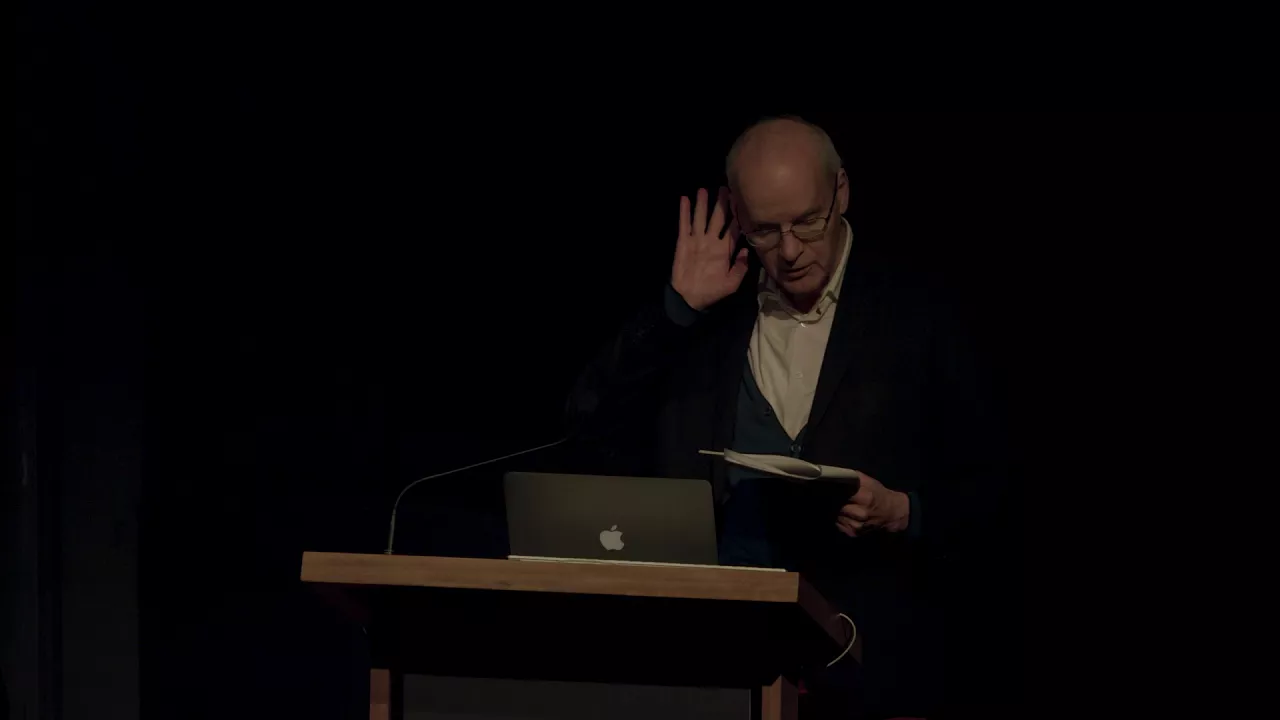
blurring the zones further let's think about uh voice over narration right voice over can be on the spectrum from from diegetic to non-diegetic and it can actually it can actually kind of float in between them so i'll give you a very simple example of what would be a non-diegetic narrator no one would have believed in the early years of the 21st century that our world was being watched by intelligences greater than our own that as men visit themselves about their various concerns they observed and studied how do i know that the voice of uh narrating is non-diegetic in a way i actually don't know until you've watched uh most of the film right the reason i know it's non-diegetic because we hear morgan freeman's voice is that it never becomes the case that morgan freeman is a character in the film right if he were a character in the film and say he was a radio host and these words that he was uttering was the recording of his radio uh then it would be a diegetic voice over if only it was revealed to be that way if it wasn't and as this film is it does not at all it's non-diegetic right so you can see how things can change let's look at something that's a little bit more complex here's the opening of sunset boulevard which plays a particular trick on our expectations about non-diegetic versus uh diegetic voice over narration yes this is sunset boulevard los angeles california it's about five o'clock in the morning that's the homicide squad complete with detectives and newspapermen a murder has been reported from one of those great big houses in the 10 000 block you'll read about it in late editions i'm sure you'll get it over your radio and see it on television because an old time star is involved one of the biggest but before you hear it all distorted and blown out of proportion before those hollywood columnists get their hands on it maybe you'd like to hear the facts the whole truth if so you've come to the right party you see the body of a young man was found floating in the pool of her mansion with two shots in his back and one in his stomach nobody important really just a movie writer with a couple of b pictures to his credit the poor dope he always wanted a pool well in the end he got himself a pool only the price turned out to be a little high so let's just piece together the information we have thus far we have a narrator who seems to know a lot about the story we're going to tell he is referring to all the events including this main person in the third person so it would suggest to us that either he's in the world of the film as a diegetic kind of viewer or he's a non-diegetic narrator who is merely someone who has the privilege of seeing all these events without having an actual embodied presence in the world of the film that's all we know so far but watch what changes as we get more information let's go back about six months and find the day when it all started i was living in an apartment house above franklin and ivar now something has changed he has used the pronoun i suggesting that he uh is in fact part of this world and he's going to be a take a role in the story that he's going to tell thereby rendering him definitely diegetic and there's even more that you're going to learn things were tough at the moment i hadn't worked in a studio for a long time so i sat there grinding out original stories two a week only i seem to have lost my touch maybe they weren't original enough maybe they were too original all i know is they didn't sell okay now i hope that you will notice that this particular person is the same man that we saw floating dead in the pool which makes things very confusing when you think about diegetic versus non-diegetic because indeed this is the main character of the film giving their narration from beyond the grave so is that is he diegetic or non-diegetic i don't actually know those terms start to become difficult but merely bringing those terms into a discussion can help us understand the complexity of what this film is trying to do right we are jumping back and forth between these two things even if we don't actually know those terms in trying to grapple with say the question of who is telling the story of sunset boulevard okay we can also think about non-diegetic versus diegetic in a slightly different way with respect to this question of how closely aligned are the say thoughts of a character narrated with respect to what we're seeing this is memento pay attention to the status of the voice over narration concentrate concentrate keep it in mind keep it in mind keep it in mind so memento as you might know is a film about a man who has a short-term memory loss and we get a very privileged access to his point of view through this kind of moment by moment play-by-play voice-over that happens in real time notice there's a very big difference between the way this voiceover plays with respect to the previous instances right in which we got a kind of voice over that was telling the story writ large here the narrator is very much attached to the real-life embodied existence of the character it is happening to the character in the world the only reason that it's not quite diegetic is because there is no way in which if i were in the world of the film i would have access to the audible thoughts of of a person in this manner
Up Next

16:35
Midsommar and Ari Aster's Cinematic Techniques: An Analysis
@nowitsdarkmovie
725.4K views•2019-09-15

20:12
Unfriended (2014) Screenlife Horror Film Analysis and Review
@theboredcyborg
372 views•2019-08-20
18:01
Continuity Editing Explained: The 180 Degree Rule & More
@filmandmediastudieschannel
34K views•2021-07-19

4:00
Evolution of Darth Vader: Anakin Skywalker's Animated Journey Across Star Wars Films
@TellItAnimated
13.4M views•2019-03-30
Related Study Plans & Knowledge Roadmaps
Structured learning paths in Film Analysis
film-analysis
Sensory Cinema: Foley, Haptic Sound & Texture
01Introduction to Film Sound and Foley Artistry
02Micro-Sounds, Textures, and Extreme Amplification
03Haptic Audition and Film Phenomenology
+ 1 more learning modules
12h4 modules
Explore Roadmap
film-analysis
Breaking the Fourth Wall: Mockumentary & Satire
01The Invisible Wall: Basics of Cinematic Illusion
02Looking at the Lens: Direct Address & Character Glances
03The Mockumentary: Satire, Realism, and Complicity
+ 2 more learning modules
12h5 modules
Explore Roadmap
film-analysis
Analyzing the Long Take: Cinema, Space & Ethics
01Foundations of Film Grammar: Montage vs. The Long Take
02Choreography and Mechanics of the Simulated One-Shot
03Phenomenology of Film: Real-Time Spatial Continuity
+ 1 more learning modules
14h4 modules
Explore Roadmap
film-analysis
Anachronistic Music: Period Drama & Subversion
01Foundations of Film Sound and the 'Needle Drop'
02Traditional Authenticity vs. Revisionist History
03The Rise of the Anachronistic Soundtrack
+ 2 more learning modules
12h5 modules
Explore Roadmap