












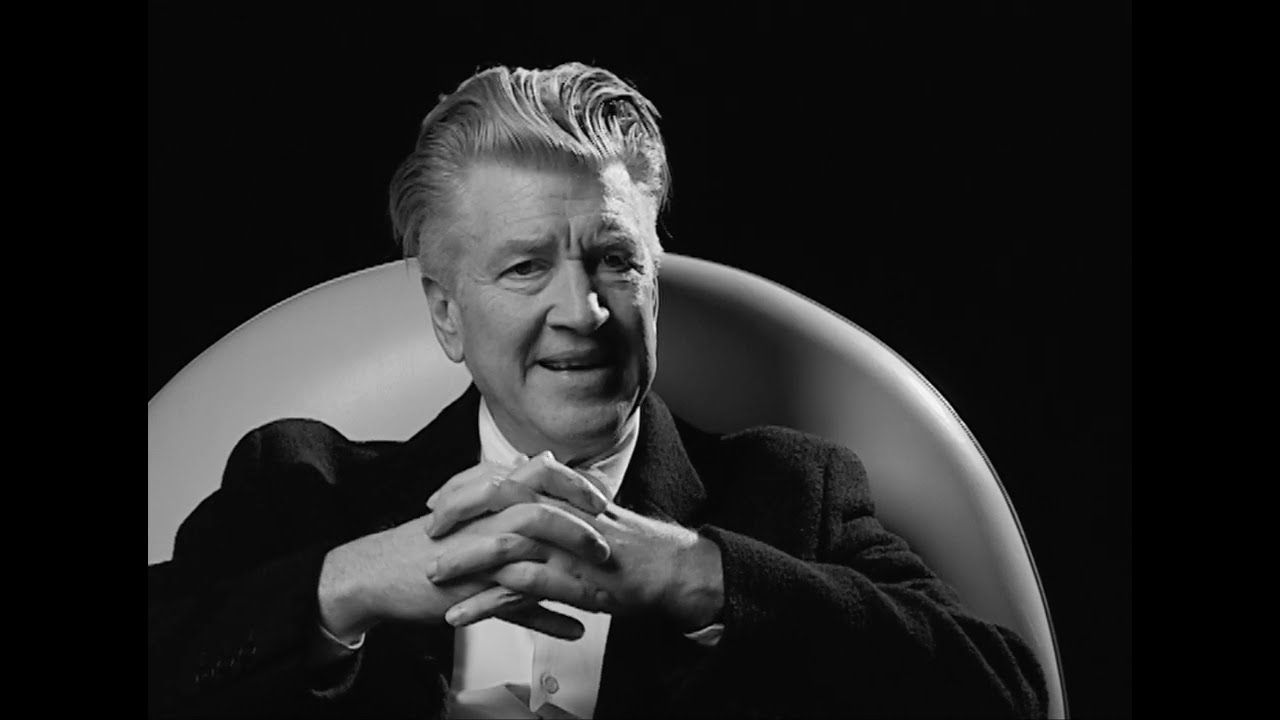
David Lynch's sound design approach integrates three key theoretical concepts: musique concrète (manipulating recorded sounds to create new sonic objects), added value (enhancing visual content through sound to provide additional information), and reduced listening (encouraging viewers to focus on sound's source and effect rather than its content). These techniques, developed in collaboration with sound designer Alan Splet, create immersive soundscapes that reveal psychological states and thematic elements in films like Eraserhead and Twin Peaks The Return.
David Lynch and Alan Splet: Sound Design in Film Analysis
Added:Fundamentals of film sound design, including the technical and conceptual distinctions between diegetic, non-diegetic, and Foley sounds.
The historical origins of 'Musique Concrète' (pioneered by Pierre Schaeffer), which treats recorded real-world sounds as abstract musical objects.
An introduction to Michel Chion's audio-visual theories, particularly the baseline relationship between image and sound in cinema.
Familiarity with the narrative themes, industrial atmospheres, and surrealist aesthetics of David Lynch's early filmography, specifically 'Eraserhead'.
An in-depth study of Michel Chion's advanced theoretical texts (e.g., 'Audio-Vision: Sound on Screen') to explore concepts like synchresis and acousmatic sound.
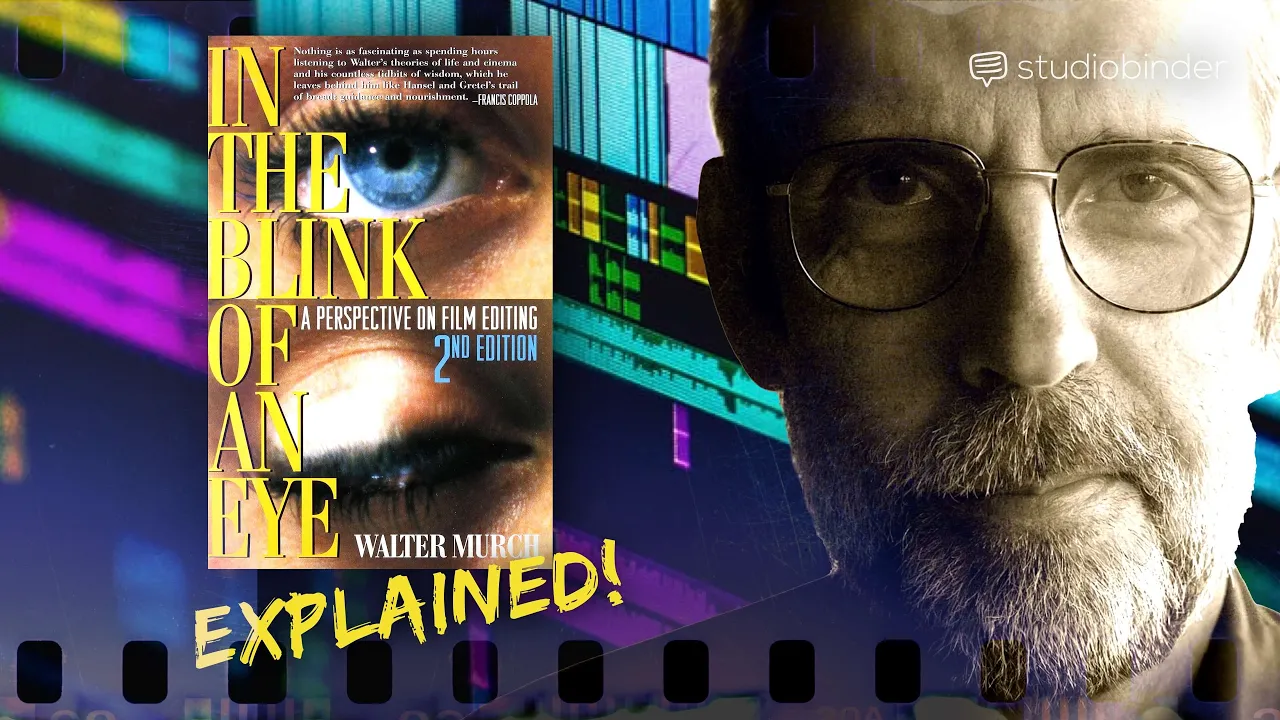
Comparative analysis of alternative sound design philosophies, such as Walter Murch's 'dense clarity' in 'Apocalypse Now' or Ben Burtt's sci-fi soundscapes.
Practical workshops in DAW (Digital Audio Workstation) environments applying 'reduced listening' to deconstruct and manipulate field recordings into abstract cinematic textures.
Analyzing the evolution of David Lynch's audio style in his later, post-Splet collaborations with sound designers like Dean Hurley in 'Twin Peaks: The Return'.
350 views27likes12:51Original Release: 2026-04-27
Don't they? You've got to say You've got the top of our This is David Keith Lynch, one of my favorite directors.
I've just had two Cokes, two cookies and a Coke.
This is phenomenal.
And this is Alan Splet, incredibly talented sound designer who worked with Lynch.
Together they worked on many of Lynch's films, such as Lynch's directorial debut Eraserhead, Dune, and Blue Velvet.
Sound is very important to Lynch. In my opinion, it makes [music] his films. He himself even states, "The borderline between sound effects and music is the most beautiful area."
Despite Splet not working on all of Lynch's films and his television outings Twin Peaks and his 2017 follow-up Twin Peaks The Return, his influence is felt throughout in the soundscapes of both shows and the projects he was not featured on. This is due to how closely Lynch works with the sound in his films. It's a key aspect of his films that gives us a hint into the often abstract worlds of his films.
In this video, I say I'll analyze and offer my view of the core tropes of Lynch's work in sound, alongside his collaborations with Splet and how he utilizes theoretical concepts in film sound, such as musique concrète, added value, and listening modes, specifically reduced listening. To do this, I'll be analyzing two sequences from Lynch's debut Eraserhead and episode 8 of Twin Peaks The Return, one of my personal favorite episodes of the series. One key trope of Lynch's sound work is the use of musique concrète. Musique concrète is a term created by composer Pierre Schaeffer and his colleagues, dating all the way back to the late 1940s.
It's used to refer to a way of manipulating sounds to create new sounds.
For example, Schaeffer would change pitch, volume, and length, as a result detaching the sound from its original object, creating object sonore and a brand new sound.
Eraserhead follows Henry, a new father whose unusual baby forces him to marry his girlfriend Mary X.
The film is the epitome of Lynch's visual style and his and Splet's collaborative style of sound work.
Theorist Gaspar Noe puts it best, stating from his discussion on Eraserhead, "One thing that really screwed with my brain is the soundtrack, mostly made of drones and high-pitched sounds."
This was also one of my key takeaways from watching Eraserhead for the first time. Unlike Noe, however, it did not screw with my brain, but it helped me to understand Lynch's intention with the film. This being due to my knowledge of Lynch's films and how [clears throat] he utilizes musique concrète to craft unique soundscapes. Musique concrète is found all over Lynch and Splet's work, especially in Eraserhead. The film lacks any score, instead being made up of mostly ambient sounds recorded by Lynch and Splet. Despite this, there is the lady in the radiator song.
>> [music] >> Eraserhead's opening has many examples of musique concrète. The sequence begins with a long pan from Henry's fading face to a large, black, desolate planet. I identified a long, low-pitched howling wind in the background, a leitmotif common in Lynch's films. However, what sounds to be woodwind instruments is overlaid, combining to create an eerie and desolate soundscape, helping to establish the movie's tone.
With both having their pitch and timbre altered, drawing away from their original sounds, musique concrète is created and helping to establish the aesthetic of the film.
Later, we meet the man in the planet who pulls many levers.
Pulling one lever, which causes sperm-like creature who previously emerged [clears throat] from Henry to fall into a pool. As the sperm falls, the sound of what appears to be a train horn is heard, but the pitch is altered. I believe Lynch utilized musique concrète here to make it sound like a bomb is being dropped, and I believe he did this to foreshadow how seriously and deeply the baby will impact the life of Henry and Mary X.
So, musique concrète is a signature of Lynch and Splet's partnership and of Lynch's sound design work as a whole.
It's shown to be incredibly effective in Eraserhead's opening, as it creates a really unique but desolate soundscape and introduces and foreshadows the key themes and concepts of the film.
Another key feature of Lynch's approach to sound is added value. Added value is a concept in which a clip is enhanced by sound, giving the audience more information. Theorist Michel Chion describes this best, stating, "This is why I define cinema as a place of images plus sounds, with sound being that which seeks its place."
Despite Chion's quote being relatively vague, it evidently rings true in Lynch's work, as added value is found a lot in Lynch's work. I believe one of the best examples of this is in Twin Peaks The Return episode 8, Got a Light.
Twin Peaks The Return is an ambitious project and what I consider to be the magnum opus of Lynch's work, covering many of the key themes found throughout [music] his filmography, such as in the violence of contemporary America, gender roles, and especially how they affect women, and much of Lynch's [music] philosophy, which stems from his passion for transcendental meditation.
Lynch [music] lets us in on a lot of these themes through his use of sound, especially through added value. [music] Got a Light is arguably the most abstract episode of the show, yet through Lynch's use of sound, [music] added value allows us to infer a lot.
One of the most impressive sequences in the episode is a nearly 10-minute-long section of the Trinity bomb atom test.
To demonstrate the power of added value, I will show you a short snippet from the beginning of this sequence with sound and then without sound.
Now without sound.
Dr. Caroline Eastwood, when discussing the sequence, states, "Sound and image blend to collide and create a highly effective experience for the viewer, thus making this moment one of Lynch's most expressive and visceral applications of the audio-visual style in the season."
I believe without sound, the sequence of the bomb going off loses its sheer scale and horror.
Not only are we being shown the horrifying nature of the bomb, but later, when our producer shoots his main antagonist Bob. So, Lynch utilizes added value here with the score, showing us the real horror of the bomb and its later fictional implications.
Returning to Eraserhead to discuss listening modes, there are multiple listening modes, such as casual and causal, but to focus on Lynch's sound, reduced listening is the most appropriate.
>> [clears throat] >> Lynch often incredibly encourages reduced listening, as reduced listening is linked to acousmatic sound, >> [music] >> which is sound that is not often visible, and this is very common in Lynch's works.
Returning to Chion, he discusses reduced listening and states, "Reduced listening is quite an instructive experience, but attendants can quickly realize that in speaking about sounds, they shuttle constantly between the sound's actual content, its source, and its effect on them."
I agree with Chion's statement here and believe it can be applied to Lynch's work, as he often makes the viewer really experience and be immersed in sound, and it really does make them think.
Even more so in Eraserhead, which utilizes musique concrète, as I have mentioned, and a very harsh soundscape, which leads us to question the source of the sound. A sequence from Eraserhead which demonstrates this well is the dinner sequence.
Arriving at Mary X's house, Lynch keeps the soundscape full of industrial sounds, one of which appears to me to almost sound like a scream, due to Lynch utilizing musique concrète.
As a result, reduced listening is engaged, as the audience have to now question where this acousmatic scream-esque sound has come from.
This gives us a glimpse into Henry's mind and how he really fears this dinner.
Lynch once again utilizes added value here.
As Henry enters the house, we hear a sound which to me at first appears to be rats, which wouldn't be out of place in the world of Eraserhead. Yet, it's revealed quickly to be puppies suckling on their mother, and Lynch and Splet alter the sound to be much more egregious, and I believe it reinforces Henry's real deep fear of intimacy and foreshadowing later events like him killing the baby.
Later in the sequence, when we meet Mary's father, simply Mr. X, he complains about the neighborhood as the very harsh wind returns.
The wind swells to match Mr. X's quick lack of temper.
And however, the wind disappears quite soon after as his wife gets up to stop him.
This once again relates to reduced listening as the viewer has to question why Mr. X gets so angry and where the wind has come from and why we can suddenly hear it so loudly in the enclosed house.
Uh this ties into one of the key themes I mentioned earlier in Lynch's projects about [music] the violence of suburban America especially from fathers. So to [music] viewers like me familiar with Lynch, this outburst of wind would allow through reduced [music] listening to make this connection.
It's evident to see from Lynch's adaptability [singing and music] to encourage reduced listening as a key trait of their work and Lynch's work as a whole.
To conclude, >> [music] >> in my opinion, Lynch is an incredibly experienced and expert sound designer which is shown in his solo work in Twin Peaks the Return and with Splet in Eraserhead. He easily taps into theoretical ideas like music concrete, added value, and reduced listening which are throughout both Twin Peaks the Return and Eraserhead. I believe this shows how well of an understanding that Lynch has in of sound and how it really adds to his films in enhancing many experiences. [music] It really adds to all of his unique approach to sound in film.
Up Next

4:36
Deactivation of HAL 9000: A Study in AI Intelligence and Fear
@futureartnow
1.7M views•2011-10-20
20:12
Unfriended (2014) Screenlife Horror Film Analysis and Review
@theboredcyborg
372 views•2019-08-20
4:55
Film Blocking Techniques for Directors: Space, Shapes, Lines
@StudioBinder
1.9M views•2018-07-23

4:00
Evolution of Darth Vader: Anakin Skywalker's Animated Journey Across Star Wars Films
@TellItAnimated
13.4M views•2019-03-30
Related Study Plans & Knowledge Roadmaps
Structured learning paths in Film Analysis
film-analysis
Sensory Cinema: Foley, Haptic Sound & Texture
01Introduction to Film Sound and Foley Artistry
02Micro-Sounds, Textures, and Extreme Amplification
03Haptic Audition and Film Phenomenology
+ 1 more learning modules
12h4 modules
Explore Roadmap
film-analysis
Breaking the Fourth Wall: Mockumentary & Satire
01The Invisible Wall: Basics of Cinematic Illusion
02Looking at the Lens: Direct Address & Character Glances
03The Mockumentary: Satire, Realism, and Complicity
+ 2 more learning modules
12h5 modules
Explore Roadmap
film-analysis
Analyzing the Long Take: Cinema, Space & Ethics
01Foundations of Film Grammar: Montage vs. The Long Take
02Choreography and Mechanics of the Simulated One-Shot
03Phenomenology of Film: Real-Time Spatial Continuity
+ 1 more learning modules
14h4 modules
Explore Roadmap
film-analysis
Anachronistic Music: Period Drama & Subversion
01Foundations of Film Sound and the 'Needle Drop'
02Traditional Authenticity vs. Revisionist History
03The Rise of the Anachronistic Soundtrack
+ 2 more learning modules
12h5 modules
Explore Roadmap