






![[IS HE??!??] คาธ The Eclipse Episode 5 Reaction](https://i.ytimg.com/vi/O_fr7bnPpzw/maxresdefault.jpg)




![Книжный клуб. Глава 77. [Лолита. В.Набоков]](https://i.ytimg.com/vi/QGHKeUyXWI4/maxresdefault.jpg)

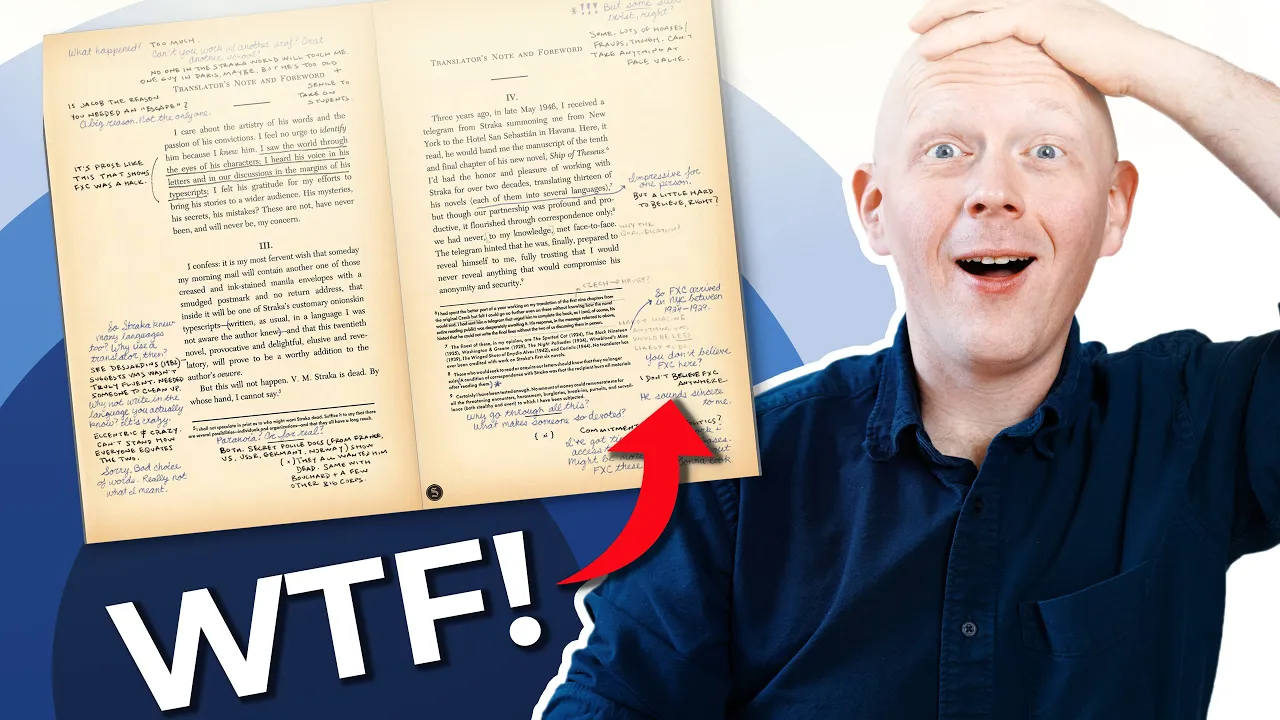







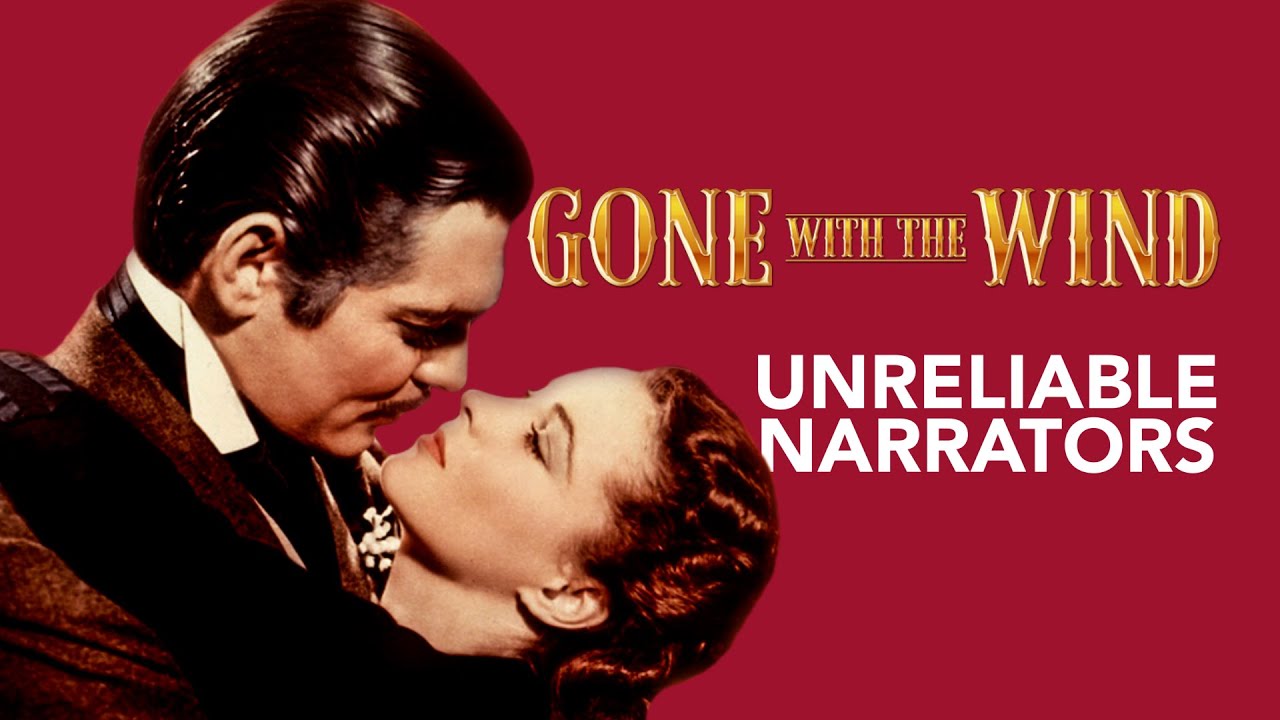
An unreliable narrator is a narrator whose account of events cannot be fully trusted, either due to intentional deception, ignorance, or psychological issues; this technique adds depth and complexity to narratives by forcing audiences to question what they see and encouraging critical thinking about how perspective shapes truth.
Understanding Unreliable Narrators in Storytelling
Added:The fundamental distinction between the author and the narrator, recognizing that the voice telling the story is a constructed character rather than the writer.
Basic narrative points of view (POVs), specifically the differences between first-person, second-person, and third-person perspectives.
The concept of narrative distance, including the spectrum from highly objective reporting to subjective, limited, and omniscient viewpoints.
The basic understanding of character bias, motive, and how a character's personal background can influence their perception of events.
Advanced categorization of unreliable narrators, such as Wayne C. Booth's theories and types like the Picaro, the Madman, the Naïf, and the Liar.
Deconstructive literary analysis of classic texts featuring prominent unreliable narrators, such as 'The Great Gatsby', 'Lolita', or 'The Catcher in the Rye'.
Postmodern literary theory and metafiction, exploring how modern narratives intentionally disrupt reader trust to comment on the nature of truth.
The psychology of reader compliance, investigating why audiences inherently tend to trust a narrator's authority and how cognitive biases impact reading.
Application to media literacy, analyzing how framing and unreliability function in non-fiction mediums like journalism, memoirs, and documentary filmmaking.
852K views44.5Klikes14:11Original Release: 2023-07-28
Every story with a narrator has a "narrative voice." In simple terms, it's the tone and approach taken by the narration - which is basically all the parts of the story that aren't dialogue or inner monologue. Scene-setting, physical descriptions, the actions a character takes - all these things make up the "narrative voice" of a typical prose story. The simplest thing to nail down about it is whether it's in first, second or third person. A first-person narrative voice talks in terms of "I" and "we" and "me", taking the explicit role of a character in the story retelling events that happened to them. A second-person narrative voice is more rare, talking in terms of "you" and "yours", taking the role of an observer describing the actions of the person they're dealing with. A third-person narrative voice is probably the most common, using "they" and "them" and "he" and "her" to describe the actions of the characters from a wholly externalized perspective. A second- or third-person narration essentially implies the existence of a narrator character, intangible and unobservable, narrating the events of the story and the thoughts and insights of its characters from a separated standpoint. And this is a very useful subdivision to draw, but it is not where the conversation about narrative voice ends. For one thing, these implied spectator-mode narrator characters have varying levels of omniscience - how much they actually know about the story and can communicate to the audience. "Limited" is probably the narrowest field of view - the narrative voice is limited to the thoughts and inner monologue of one character at a time, but will limit its narration of all other characters to the POV character's own observations. For instance, a third-person-limited narrator might volunteer that the POV character is feeling tired or scared, but when discussing a different character the narrator will only volunteer that the POV character thinks they're putting on a brave face. "Objective" is the narrative equivalent of a wide shot. This narrator doesn't have close-in access to anyone's thoughts and motivations, and will instead simply narrate their actions and dialogue, leaving the audience to infer how they're feeling and why they're doing the things they're doing. And finally, "omniscient" is a narrative voice that knows what everyone is thinking and feeling, and can freely switch perspectives between different characters to show what anyone and everyone is feeling about the story. This might seem like a lot of trouble for a character that doesn't even really exist. Narration is invisible, the glue that holds prose storytelling together because otherwise it would just be scripted dialogue and stage directions. Narration is how the story describes itself. And because there's no way for language to be completely neutral and objective, the choices a writer makes in how a narrator - even a third-person omniscient narrator - describes the story they're dealing with implicitly creates a characterization for that narrator. There's a difference between saying a character "said" something and saying they hissed or murmured or managed or yelled or shrieked. They all feel different and mean different things, and imply different things about the character they're describing - and thus indirectly imply things about the narrator holding that opinion. A supposedly distant narrator might describe a character as beautiful or repulsive or terrifying or irresistibly attractive with the implication that these opinions must be universally held because they're being stated by a character that's supposed to be neutral, despite the fact that these are subjective assessments that would vary from character to character and audience to audience. If a writer isn't careful about this, the narrator can end up as an unintentional and invisible author self-insert, giving the writer's unfiltered perspective on the story they're telling, perhaps revealing implicit biases or blind spots on the part of the storyteller. But the thing is, this is a feature and not a bug. A completely neutral narrator, if such a thing could even exist, would be distant and sterile and make the story needlessly difficult to parse. The fact is, the narrator is a character and that character has a voice, and while some stories make that explicit by having the narrator be one of the named characters recounting the story from their perspective, some story formats make this less obvious, and the characterization of the narrator is really only demonstrated in the specific ways they choose to describe the plot and characters. The narrative voice has opinions and biases and finds certain things funny or worth pointing out while others might be glossed over as irrelevant. In a medium with a narrator, the narrator becomes a lens through which the audience experiences the thoughts and actions of every other character. Which means, on the most basic and technical level, every narrator is an unreliable narrator. A theoretically perfectly reliable narrator would explain absolutely everything that's happening so the audience is fully briefed on the intricacies of the story, which is impossible because at bare minimum language itself isn't that precise, and, broadly, it'd just take way too long. There'll always be room for confusion and interpretation. But aside for a certain baseline background radiation of unreliability, there are many ways for a narrator to be notably unreliable. It's generally expected that a narrator or POV character is being honest and correct about what's happening, at least to the extent of their ability to understand it - but what happens when that's not true? Now the convenient thing about this line of questioning is it actually takes us out of the prose-only zone. See, most mediums of storytelling don't have narrators, because most of them don't need narrators. In prose writing, the narrator is the only way for the story to set the stage, paint the picture of the setting for the audience, tell us how the characters look and act and feel and broadly communicate information to the audience that the characters themselves wouldn't immediately want to volunteer. If you want to get across to your audience that a character is a redhead with green eyes and freckles, unless that character feels like saying those things out loud, it's gonna have to come through from the narrator. This stops being true as soon as a visual element is introduced to the story, so comics, picturebooks, shows and movies don't need narration - and in fact often suffer from its inclusion, because audio narration can feel like a clumsy and abstract way to communicate plot beats in a visual medium. Without a narrator, it might seem difficult to have an unreliable narrator. But even in stories that don't have third-person narrators, you can have unreliable narration or an unreliable narrative. Which is good, because otherwise it'd be really hard for me to put visual examples in this video! The easiest way to justify having an unreliable narrator in a non-prose medium is to have a character in the story tell a story. This character thus takes on the role of a first-person narrator for the benefit of the other characters in the story. This can be a framing sequence for an entire movie or a full episode of a show, where the story begins with a character starting their story and ends shortly after they finish. Maybe the characters are all sharing ghost stories around a campfire, or someone is being interrogated by the authorities about what they did for a recent heist or crime, or the characters are reading through another character's diary, or a movie opens with narration from an unseen much older version of one of the characters we're about to meet, or maybe several characters are all weighing in on their side of a big story, Rashomon-style. In these scenarios, the characters can all be expected to be biased by their personal eccentricities, and that means the writer can get a lot of mileage out of letting every character tell the story unreliably in a way that makes sense for them. We get to see how the characters flanderize each other in their own exaggerated ways. If two characters dislike each other, the way they characterize each other is liable to be cartoonishly evil or cruel or otherwise hilariously out of character. A prideful egotist might tell a story where they're the heroic champion that singlehandedly saved the day by fighting off a truly implausible number of bad guys. A villain might cast themselves as the victim. A parent might censor the swearwords and steamy bits of a story they're telling their kid. A child's version of a story is liable to be a bit more unfocused than an adult's. This is a way to reinforce characterization while also giving the audience a fun mystery to puzzle through - what parts of the story are true? What parts are exaggerated? What really happened? In cases where only one character is telling the story so we can't cross-reference with anyone else's version, we're often directed to take them at their word for the bulk of the runtime, only for doubt to be cast on them at the very end for a fun twist reveal. Maybe the happy ending they described was wishful thinking, or the story is revealed to be an elaborate lie. Broadly there are three ways narrators can be unreliable. The first and most obvious is if they are lying liars. These narrators will flat-out deceive characters and audience alike by either misrepresenting events or leaving out key information, like for instance "and in those intervening ten minutes I totally killed that guy." The second type are ignorant or inattentive. These narrators aren't intentionally misrepresenting the story, but they don't really understand what's going on, so their version of events might skip past key details they've missed and be broadly not very useful. This is most common in story-within-a-story settings, because it can easily be played for comedy if the narrator chooses to focus on a seemingly incidental detail while extremely significant things are happening in the background. And the third type is hallucinatory. These narrators are also not intentionally misrepresenting the story most of the time, but their actual perception of reality is unreliable because the way they perceive their surroundings is not how they're really happening. This works quite well in visual mediums, because the camera can show what the character is perceiving with subtle hints that it's not exactly bound by physical laws or shot continuity.
Unreliable narration can also be used for dramatic irony, if the character narrates a situation playing out one way while the audience sees it play out differently - presumably how it really happened, giving the audience information that the characters hearing the story don't have. A character might describe themselves as totally in control of their life while the camera treacherously reveals them to be a hot mess. In contrast, a character might also describe themself as lame or uncool or broadly disliked, only for the objective POV to show them surrounded by people who like and value them, and only their insecurities are making them tell the story that way. This is again used to highlight the character and their unique traits; the way they tell a story tells us something useful about this character - how their own perceptions color reality, and how honest they're willing to be with themselves or the people around them. This is very useful stuff. But the versions we've been discussing have all been safely compartmentalized in a story-within-a-story and used for the purpose of highlighting a character's unique wackiness in the way they specifically see the world and tell a story. In these scenarios we typically trust that the camera outside that story-within-a-story is still going to be honest with us about what's really going on. This is not always true, and that's where things can start getting complicated. When an unreliable narrator has control over the entire story, things start getting dicey. In general, an audience will start a story trusting that the story is not lying to them. It likely isn't telling them everything - even an omniscient perspective typically keeps the camera pointed away from the really juicy reveals - but the audience generally trusts that what they're seeing is what's really happening. They don't go into a story assuming the story is going to lie to them. However, there are ways a writer can clue in the audience that they should start being suspicious. Maybe characters are acting strangely or inconsistently, or backgrounds are shifting in ways that don't make sense, or continuity errors are cropping up between shots. An audience might begin to get suspicious, and will generally have those suspicions confirmed fairly soon after the evidence piles up. The suspicious scene might be revealed to be a dream, or a simulation, or a hallucination, or somebody's mind palace, or a brief glimpse into an alternate timeline, or any number of plot-based handwavey justifications the writers can use to briefly bait-and-switch the audience with an impossible or deeply unlikely scenario. This can be a lot of fun, but it has a detrimental effect on audience investment in the long term. If they've already done the nightmare sequence or the holodeck training program trick enough times, the audience might start feeling broadly unworried when a situation looks particularly perilous, because it's even odds it's not even really happening. This means when it turns out to actually be happening, the audience has to play catch-up on their investment. And unfortunately, if the audience has picked up on "clever clues" that the scenario was fake - like the writing making no sense or continuity errors in the shot - that goes from being very cool and smart writing to subtly hint that the events aren't really happening to the unfortunate realization that it's actually just bad writing and poor set management. It's a risky trope to overuse because it hits with less punch every time, and diminishes the punch of the actual non-fake plot twists - and it can train an audience to pick apart your writing looking for clues, which is of course a good and fun thing for an audience to do, but it can be a bit disheartening for the writer regardless. But of course, one easy way to avoid that issue is to tell only one self-contained story - like a standalone book or movie - and have that turn out to be an unreliable narrative, because that means there aren't later installments for the audience to disbelieve. One relatively common way this plays out is a reveal near the end of the story that the POV character has been hallucinating for large portions of it, and whole scenes didn't happen, or didn't play out the way they thought they did. Or a character's memories have specifically been tinkered with, and any flashbacks and recollections they had aren't what they seemed to be. These reveals usually hit late in the game and make a lot more sense on a second viewing, where the audience can be on the lookout for particularly exciting hints at the break in reality. Of course, once you establish the idea that the POV character's perceptions can't be trusted - on a certain level, that's kinda game over. For the purposes of this story, the audience can no longer be convinced that anything they're seeing is real. It has a similarly disengaging effect to the "all a dream" twist, since it confirms that the story can and will pull the rug out from under the audience and it's pretty much impossible to take anything the story presents at face value anymore. Most of the time this is a feature and not a bug, since this reveal usually hits when the story is already almost over and it can be very cool for an audience to go back through a story like that and catch all the hints and double meanings they missed the first time through. If the story doesn't have to convince the audience that they're seeing something that's really definitely happening, it isn't a problem that they basically can't convince them anymore. But this can become an issue in serialized media or other longform storytelling, because if the story gets too comfortable playing with the audience's perceptions of reality, then as mentioned the audience is going to disinvest - and if the writing gets too shoddy, the audience might literally refuse to believe it's actually happening. The problem is only worsened if the writer gets cute with it, as they so often do, like having a character snap out of a horrifying unreality into a scene where they're being rescued - which in turn dissolves into a horrifying unreality until they wake up to being rescued again but for real this time. It's pretty understandable that both the characters and the audience might have a little trouble believing the story is actually ending the way it says it is. And unfortunately, just like in "all a dream" scenarios, this is technically an interpretation that could be applied to literally any story ever. The idea that a story is being told by an unreliable narrator lying to the audience is technically always true because the writer is lying to the audience by telling them a story in the first place. This is one of those foundational elements of storytelling, like the fourth wall, where if the writer starts poking at it too hard it can destabilize the storytelling process itself. It's literally an attack on "suspension of disbelief." In order to fully enjoy a story, an audience can't be too hung up on the fact that the story doesn't necessarily make 100% sense or isn't 100% convincing in the effects department. The story could be critiqued or nitpicked for errors or speculative fantasy that doesn't necessarily make sense, but doing so damages the audience's ability to take the story at face value, so when an audience suspends their disbelief, they're choosing not to do that in order to remain immersed in the story. This is why things can get tricky when the story tells the audience that they should have been disbelieving them the whole time because actually the story was a lie. It can be an exciting, unusual approach to storytelling because it directly encourages the audience to critically examine what they're seeing rather than taking the characters at face value, but if they take that far enough - or rather, if the writer directs them to take that far enough - the audience's ability to stay immersed can be deeply compromised. In the end, the audience won't know when to trust the story, and if the story does something they dislike, they might choose to believe that it was a lie too. If the author makes too much of their story a canonical lie, they lose the ability to control the audience's belief in what they're telling them.
So… yeah!
Up Next

5:05
Point of View in Narration: First, Third Limited & Omniscient
@kellieoneill5384
235.5K views•2014-04-25

13:43
Formalism in Literary Criticism: An Academic Lecture Overview
@mattalberhasky9952
39.1K views•2015-08-05
13:07
Dr. Jekyll and Mr. Hyde: The True Horror of Victorian Repression
@OverlySarcasticProductions
4M views•2019-10-31

15:25
1984: Orwell's Dystopian World and the Mechanisms of Totalitarianism
@AlternateHistoryHub
7M views•2017-03-04
Related Study Plans & Knowledge Roadmaps
Structured learning paths in Literature
literature
Graphic Memoirs: Visual Art, Trauma & History
01Foundations of Sequential Art and Visual Language
02Autographics and Processing Historical Trauma
03Visualizing Personal Trauma, Grief, and Graphic Medicine
+ 2 more learning modules
14h5 modules
Explore Roadmap
literature
Campus Novels: Evolution, Themes & Critique
01Introduction to the Campus Novel Genre
02Mid-Century Satire and the Post-War Academy
03Dark Academia and the Critique of Privilege
+ 2 more learning modules
14h5 modules
Explore Roadmap
literature
Theater of the Absurd: Philosophy & Plays
01Postwar Existentialism & Historical Roots
02Dismantling Narrative: Esslin & Absurdist Conventions
03Samuel Beckett and Tragicomic Existentialism
+ 2 more learning modules
12h5 modules
Explore Roadmap
literature
Revenge Tragedy: Justice, Madness & State
01Foundations of Early Modern English Theatre
02Anatomy of Revenge: Structural Conventions
03Psychological Complexity: Madness and Melancholy
+ 2 more learning modules
15h5 modules
Explore Roadmap