Campus Novels: Evolution, Themes & Critique
Learning Goal: Analyze the thematic conventions and structural evolution of the Campus Novel from the mid-20th century to the present, evaluating how authors utilize the closed setting of the academic institution to critique class privilege, intellectual isolation, and shifting socio-political dynamics.
- Prerequisites: None (a basic familiarity with literary analysis and post-war history is recommended).
- Estimated Total Study Time: 14 hours
Module 1: Introduction to the Campus Novel Genre
This module establishes the foundational definitions, origins, and core characteristics of the campus novel (or academic novel). You will explore how this unique genre emerged in the mid-20th century as a distinct literary form and how it leverages the geography and hierarchies of higher education to dramatize human folly, intellectual ambition, and social structures.

Why this video
This video provides an excellent, comprehensive overview of the campus novel genre. It traces the term's history (often associated with David Lodge) and outlines how academic fiction functions as a closed ecosystem. It details the archetypes—including eccentric professors, ambitious researchers, and alienated students—and explains how the genre uses the university setting to critique institutional pretension and broader social dynamics.
Knowledge Checkpoint
- Define the primary difference between a "campus novel" (often focusing on faculty and institutional politics) and school stories or coming-of-age fiction.
- Identify the historical period in which the campus novel emerged as a distinct, recognized genre.
- List at least three recurring thematic motifs or character archetypes common to traditional campus fiction.

Why this video
Designed for advanced literary exams, this lecture dives deep into the academic classification of the genre. It surveys key texts, structural paradigms, and historical benchmarks. Watching this video will help you build a robust vocabulary for analyzing how academic environments act as petri dishes for testing broader societal shifts.
Knowledge Checkpoint
- Explain how David Lodge and other major theorists classify the "academic novel" versus the "campus novel."
- Summarize how internal academic hierarchies (e.g., tenure track, department chairs) are used to mirror macro-level societal power structures.
- Identify key early works that established the structural conventions of the genre.
Module 2: Literary Analysis: Setting as a Microcosm
As recommended in the curriculum review, this module is introduced early so you can actively apply the "Setting as a Microcosm" analytical framework to the novels studied in subsequent modules.
In this module, you will master the analytical techniques required to evaluate a closed setting—like a university campus—as a metaphor for broader social power dynamics. You will learn to construct thesis statements that connect physical boundaries and institutional hierarchies to universal thematic struggles.
Why this video
This lesson explains the literary concept of the microcosm—a tiny world representing a larger society where characters and physical structures mirror distinct social segments. It offers highly actionable advice on how to write literary thesis statements that analyze how closed institutional systems reflect macrocosmic societal struggles.
Knowledge Checkpoint
- Define the literary term microcosm and explain how a university campus fits this definition.
- Draft a thesis statement template that connects a specific physical space in a novel to a larger socio-political critique.
- Identify how characters in a closed environment represent broader, macrocosmic social classes or ideologies.
Why this video
This video breaks down setting analysis into four essential levels: physical setting (geography, architecture, time), social setting (class, economy, demographics), psychological setting (mood, atmosphere), and cultural/ideological setting. This framework is vital for analyzing how the insulated nature of an academic institution influences character psychology and narrative conflict.
Knowledge Checkpoint
- List the four levels of setting analysis and explain how they apply to an elite college campus.
- Explain how a physical institutional barrier (e.g., campus gates, ancient stone walls) functions as a social and cultural barrier.
Why this video
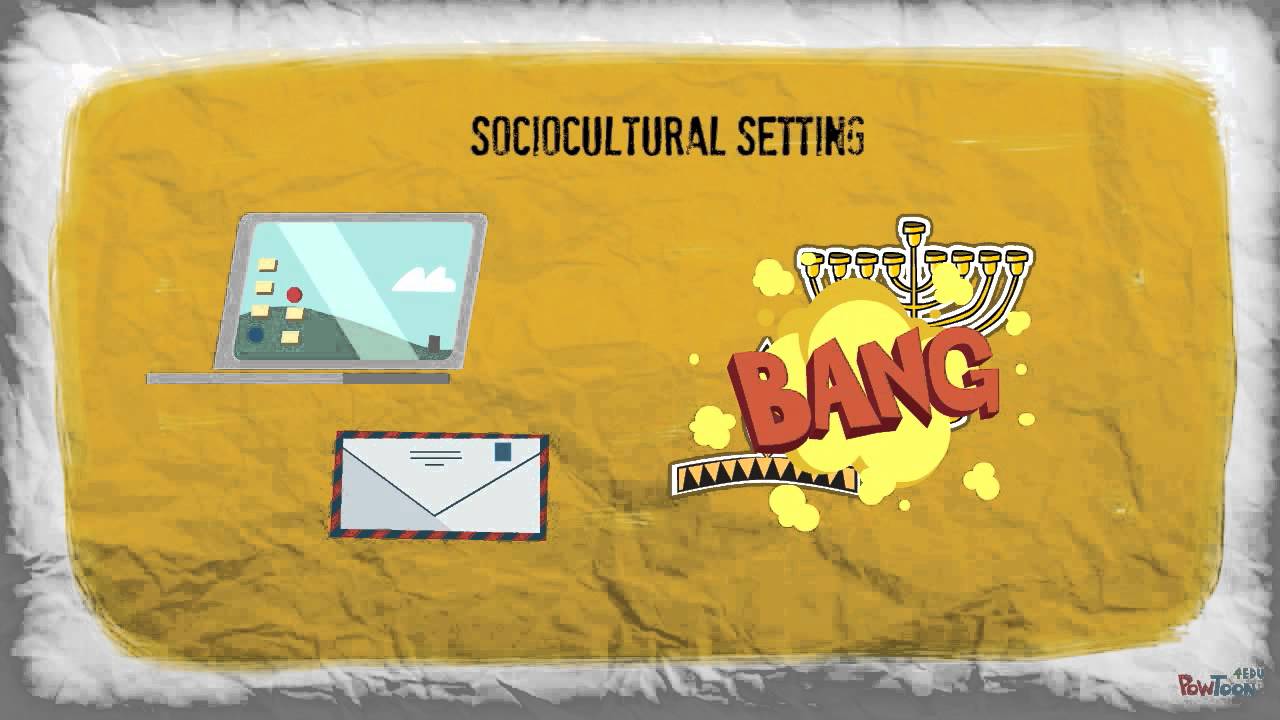
This concise guide details how authors use both physical environments and sociocultural contexts to establish tone and drive plot. It reinforces how a closed institution's internal rules, socioeconomic makeup, and academic pressures create a unique, pressure-cooker environment.
Knowledge Checkpoint
- Describe how the sociocultural context of a setting dictates the behaviors and moral choices of its characters.
- Analyze how a shift in physical location within a closed setting (e.g., moving from a classroom to an elite dorm) signifies a shift in power dynamics.
Module 3: Mid-Century Satire and the Post-War Academy
This module investigates how mid-20th-century authors utilized academic farce and biting satire to critique post-war social mobility, class tension, and intellectual pretension. You will focus on the British context, analyzing how the expansion of higher education in the 1950s challenged traditional elitist structures.
Curriculum Gap Alert: High-quality video essays specifically dissecting Kingsley Amis's Lucky Jim or post-war British academic satire are limited in the current video pool. To supplement your learning, we highly recommend reading Lucky Jim directly and searching independently for resources on "The Angry Young Men movement" and "Post-war British social mobility in literature."

Why this video
While brief, this clip introduces Kingsley Amis's Lucky Jim (1954), the foundational text of the modern campus novel. It establishes how the genre centers on the personal, professional, and sexual lives of professors and students, using provincial university life as a backdrop for social critique.
Knowledge Checkpoint
- Explain how Lucky Jim uses the protagonist, Jim Dixon, to satirize academic pretension and the provincial university structure.
- Identify the core conflicts between established high-brow academic expectations and the realities of post-war middle-class life.

Why this video
To understand mid-century academic satire, one must understand the mid-century British cultural landscape. This video details how the rigid boundaries between "high-brow" and "low-brow" culture began to dissolve in the late 1950s as working-class and provincial writers challenged established elitist tastes. This is the exact cultural climate that birthed the mid-century campus novel.
Knowledge Checkpoint
- Describe the cultural shift that occurred in late-1950s Britain regarding high-brow vs. low-brow culture.
- Explain how the rise of provincial and working-class voices challenged traditional institutional values in British academia.

Why this video
This segment comments on Kingsley Amis's signature style, highlighting his tendency to write deeply flawed, cynical, and unpleasant male characters. Understanding Amis's cynical characterizations is key to analyzing how post-war satirists rejected the idealized, romantic view of the intellectual.
Knowledge Checkpoint
- Define the aesthetic of the "unpleasant or cynical academic protagonist" in post-war satire.
- Explain how creating deeply flawed academic characters serves as a tool for institutional de-romanticization.
Module 4: Dark Academia and the Critique of Privilege
This module evaluates the late 20th-century transition of the campus novel from light-hearted mid-century satire to psychological tragedy. You will analyze how authors like Donna Tartt use classicism, exclusive intellectual circles, and the atmospheric architecture of New England colleges to critique elitism, aesthetic obsession, and moral decay.
Why this video
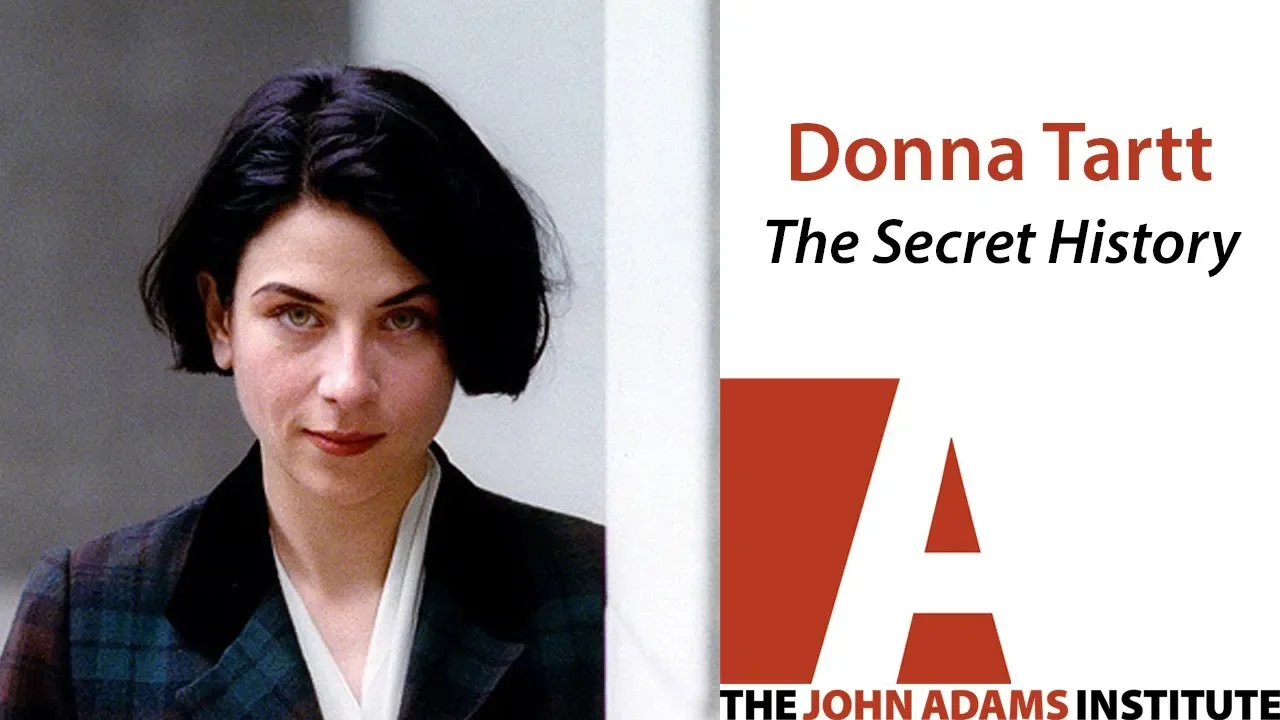
This feature-length archive interview with Donna Tartt is an invaluable primary source. Tartt discusses the genesis of The Secret History (1992), detailing how she merged classical Greek tragedy with the campus novel framework. She explains how the closed setting of Hampden College functions as an isolated world where moral boundaries erode under the influence of intellectual obsession.
Knowledge Checkpoint
- Explain how Donna Tartt integrates classical Greek tragedy structures (such as hubris and the Dionysian ritual) into a modern campus setting.
- Analyze how isolation from the "real world" impacts the moral decision-making of the characters in The Secret History.
- Discuss the role of aestheticism—the worship of beauty and classics—in blinding characters to ethical and human consequences.

Why this video
This deep-dive review provides a thorough thematic analysis of The Secret History. It focuses on class privilege, wealth disparities (contrasting the protagonist Richard's middle-class background with his wealthy peers), and the toxic nature of elite, insular academic cliques.
Knowledge Checkpoint
- Explain how Richard's status as a financial aid student shapes his perception of and vulnerability to the elite Classics clique.
- Identify how the novel critiques class elitism and intellectual exclusion as drivers of psychological harm.

Why this video
This video essay offers a vital critical perspective on the "Dark Academia" aesthetic. It details how the subgenre often romanticizes educational elitism, Eurocentrism, and historic inequalities, reinforcing class hierarchies under the guise of an aesthetic love for classics and ancient languages.
Knowledge Checkpoint
- Critique the Eurocentric and class-privileged foundations of the Dark Academia aesthetic.
- Analyze how modern campus novels both indulge in and critique the allure of "exclusivity" in higher education.
Module 5: Modern Campus Novels: Diversity and Neoliberalism
This module explores contemporary campus novels that address systemic exclusion, identity politics, postcolonial critique, and the corporatization/neoliberalization of the modern university. You will study how recent authors use the historical weight of university campuses to dramatize the collision between institutional traditions and marginalized identities.
Curriculum Gap Alert: The video pool contains excellent reviews of R.F. Kuang's Babel, but lacks academic lectures on the neoliberalization/corporatization of universities. To supplement this module, search independently for: "The corporate university in contemporary fiction" or read essays on "Socio-political critiques in Sally Rooney's and R.F. Kuang's academic settings."
Why this video
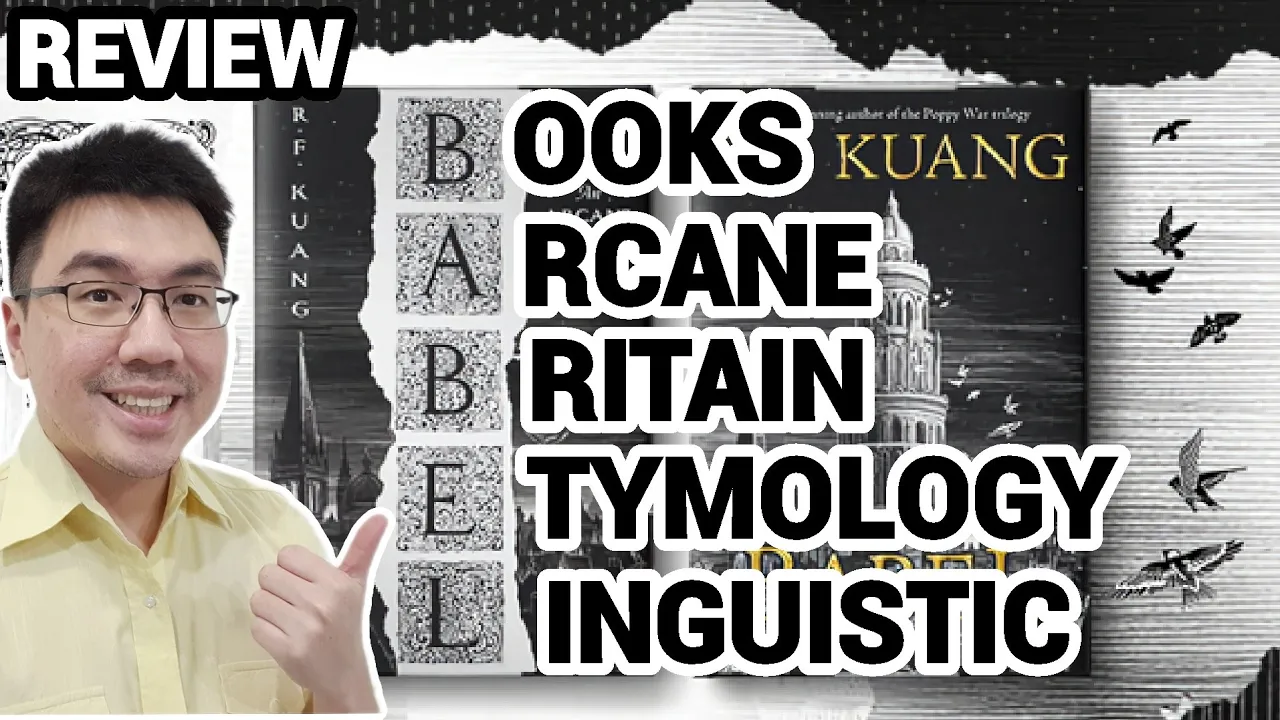
This review of R.F. Kuang's Babel analyzes how the novel reimagines Oxford University in 1836 as the epicenter of a magical-colonial empire. It explains how Kuang uses the historical campus setting to construct a postcolonial critique of academic translation, highlighting how elite institutions exploit marginalized individuals' languages and labor to sustain imperial power.
Knowledge Checkpoint
- Define how Babel uses the academic discipline of translation as a metaphor for colonial extraction and linguistic imperialism.
- Explain how the physical tower of Babel functions as a microcosm of global imperial power and academic gatekeeping.
![Did Babel Give What It Was Supposed To Have Gave?| SPOILER FREE REVIEW [CC]](https://i.ytimg.com/vi_webp/035gVRJojME/maxresdefault.webp)
Why this video
This detailed critical review dives into the ideological and structural mechanics of Babel. It explores the protagonist Robin Swift's internal conflict: the desire to belong to an elite academic institution vs. the realization that the institution is actively destroying his homeland.
Knowledge Checkpoint
- Analyze the psychological toll of institutional assimilation on a marginalized student.
- Evaluate the thematic argument Babel makes regarding whether institutions of power can be reformed from within or if they must be dismantled.
Why this video
Sally Rooney explains how the transition to Trinity College Dublin exposes the profound class alienation experienced by the working-class protagonist, Connell. Rooney discusses how elite institutional spaces present themselves as democratic merits, but in reality, reinforce pre-existing class privilege and social exclusion.
Knowledge Checkpoint
- Contrast how the character of Connell and the character of Marianne navigate the social and academic environment of Trinity College based on their class backgrounds.
- Explain how elite social networks within universities perpetuate socio-economic inequality.

Why this video
Joshua Cohen discusses how the traditional campus novel's structural unity has fractured over time. Historically, the campus novel relied on an insulated setting with strict academic hierarchies. Cohen shares how modern realities, cultural shifts, and institutional changes have broken down this traditional isolation, forcing the "academic bubble" to collide with external politics.
Knowledge Checkpoint
- Explain how the structural "insulation" of the traditional campus novel has changed in contemporary literature.
- Analyze how external socio-political controversies disrupt the traditional academic hierarchy in modern narratives.
Course Map
This map outlines the recommended progression of study, showing how the analytical frameworks introduced early in the course inform the subsequent chronological analysis of campus fiction.
Key People Index
- David Lodge: Celebrated British novelist and academic whose theoretical and fictional works defined the core structural boundaries, humor, and archetypes of the academic campus novel.
- Kingsley Amis: Author of Lucky Jim (1954); his work pioneered the post-war satirical campus novel, focusing on middle-class alienation and the critique of institutional pretension.
- Donna Tartt: Pulitzer Prize-winning author whose debut novel The Secret History (1992) established the atmospheric, tragic, and elitist-focused "Dark Academia" subgenre.
- R.F. Kuang: Contemporary author of Babel (2022); she revolutionized the genre by blending fantasy with academic fiction to construct postcolonial critiques of language, translation, and empire.
- Sally Rooney: Contemporary Irish author whose works, such as Normal People, analyze the intersections of class privilege, Marxist theory, and emotional alienation within elite modern universities.
Final Self-Assessment
Complete this final self-assessment to verify your mastery of the evolution, structural conventions, and socio-political themes of the campus novel:
- I can articulate the core structural characteristics of the campus novel and explain how it differs from traditional coming-of-age or school stories.
- I can define a microcosm and explain how authors utilize the closed setting of a university campus to mirror and critique macro-level societal hierarchies.
- I can draft a thesis statement that evaluates how the physical boundaries of an institutional space symbolize class and social barriers.
- I can explain the socio-historical context of mid-century British campus novels, including how post-war social mobility shaped academic satire.
- I can discuss the character of Jim Dixon in Lucky Jim as an archetype of the disillusioned, anti-pretentious mid-century academic.
- I can explain how the "Dark Academia" subgenre shifts the campus novel from light-hearted farce to psychological tragedy.
- I can identify the moral and social dangers of "aestheticism" and elite intellectual isolation as dramatized in Donna Tartt's The Secret History.
- I can critique the class-privileged, Eurocentric structures that underpin both historic universities and the romanticized Dark Academia subculture.
- I can analyze how R.F. Kuang's Babel uses academic disciplines (like philology and translation) to construct a postcolonial critique of colonial extraction.
- I can explain how modern campus novels, such as Sally Rooney's Normal People, depict the alienation of marginalized or working-class students within historically elite institutional spaces.
- I can evaluate how the traditional structural "insulation" of academic campuses has broken down in the late 20th and early 21st centuries to allow immediate socio-political conflicts to breach the classroom.