






![[ĐGNL V-ACT] CHỮA CHI TIẾT 100 CÂU TỔNG ÔN VỀ ĐÍCH VACT Ngày 3- Buổi 2](https://i.ytimg.com/vi/GTx-3uqPmPU/maxresdefault.jpg)





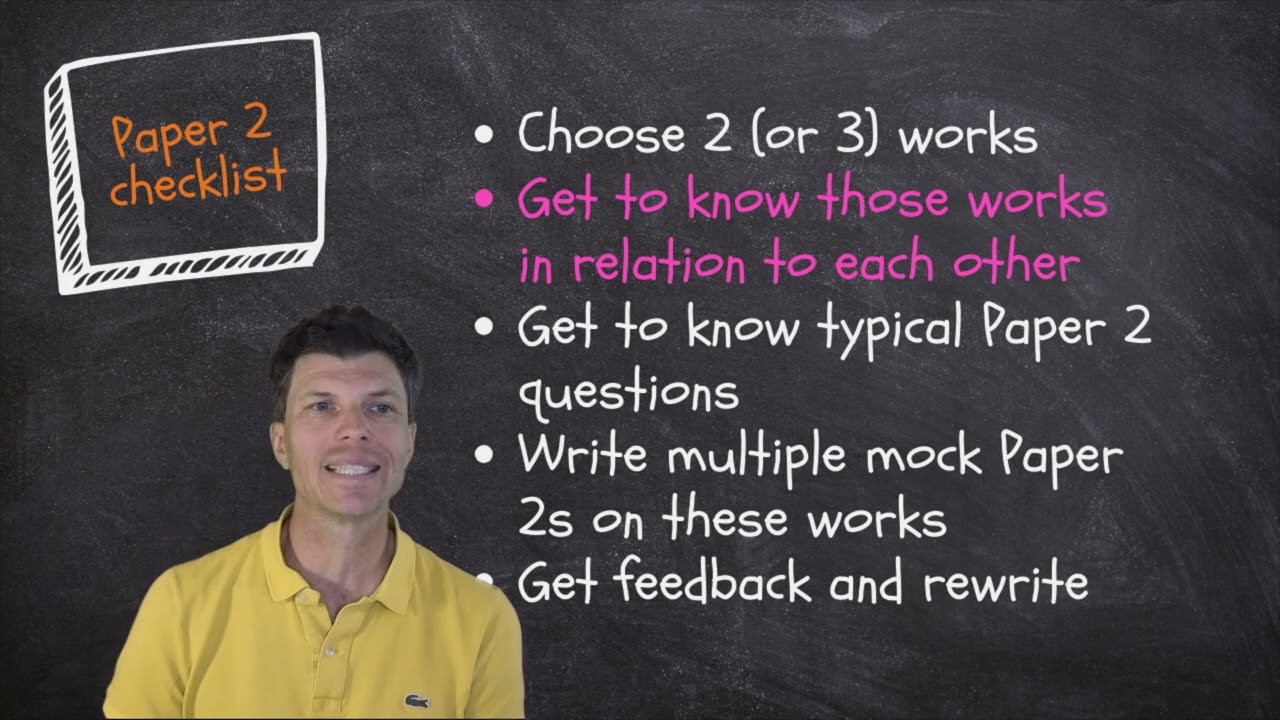

A thesis statement for a Paper 2 comparative essay should include the names of both works and authors, use the question's wording to demonstrate focus, acknowledge both similarities and differences using comparative language, and present a clear argument about how authors use literature as a microcosm of society; effective thesis statements can emphasize either similarities or differences depending on the analysis, and complex sentences can be broken into two simpler ones for clarity.
IB English Paper 2: How to Write Comparative Thesis Statements
Added:Familiarity with the overall format, requirements, and assessment criteria of the IB English Paper 2 exam.
A basic understanding of the plots, characters, and key themes of Arundhati Roy's 'The God of Small Things' and Ariel Dorfman's 'Death and the Maiden'.
Understanding the fundamental definition and purpose of a thesis statement in a standard academic essay.
Awareness of basic literary analysis techniques and terms, such as authorial intent, motif, symbolism, and socio-political context.
Drafting well-structured comparative body paragraphs using organizational frameworks like the point-by-point or block method.
Selecting and integrating highly relevant textual evidence (quotes and specific details) from both works to defend the thesis statement.
Writing cohesive introduction and conclusion paragraphs that frame and synthesize the comparative argument.
Applying the comparative thesis framework to past IB Paper 2 exam prompts under timed, exam-realistic conditions.
54.9K views514likes11:39Original Release: 2022-08-29
hi i'm andrew and i'm dave and we're the ib english guys today is our third video of our paper two series and we're going to talk about the all-important thesis statement mr josh's thesis is indeed important students just a reminder the first video we looked at breaking down the question and pulling out key elements the second video we talked about brainstorming and mind mapping and trying to figure out what we're going to write about now is time to put those ideas into a really powerful thesis statement that will guide and control your paper to response that's right today we're gonna we're gonna walk through this process briefly and we're gonna use two different two two texts we're gonna use the god of small things by arundhari roy this is one of my favorite novels to teach um this is an indian novel written in 1990 and we're going to use death in the maiden by ariel dorfman which is a play also written around 1990 on and by ariel dorfman that's right and this is interesting because remember we're meant to compare and contrast both content and form so in this case we have some really interesting thematic messages but we have a novel versus a place so we have quite a bit we can talk about with form mr j yeah that's going to get some good differences to really talk about that's excellent okay what do you say we tackle the question first and break down that question sure the question for today is as follows compare and contrast how into what effect authors use literature as a microcosm of society with reference to two works you have studied all right guys let's break down the question what are some words we want to hit there we're thinking about compare and contrast we always want to remember that this is a comparison contrast paper we're being asked to look at similarities and differences the ibs made it easy this time they put it in the question okay we want to think about this idea of how and to what effect again this has been made easy for us because we want to think about you know the how is the craft and to what effect is how you know the how is that thematic message influencing or impacting audience so we have that built into the question as well right the last thing we want to unpack is the word microcosm this is a favorite of many literature teachers we want to think about a microcosm being a tiny world and that's saying that the characters of this of the world of the piece of literature represent larger society yeah that could be allegorical in nature correct that's right that's right uh in this video uh we've already looked at brainstorming via a t-chart we've looked at making a mind map today we're just gonna make some lists and see if that suits you as well uh so why don't we take a stab at that mr josh let's do some brainstorming for text a the god of small things okay we're thinking about text a and being a microcosm of post-colonial india in 1969 so we might first think about the ipe family and how the family members represent different segments of society that's right we have papachi of course is the grandfather he represents the older generation sort of uh who's favoring and empathetic and sympathetic toward british culture yeah amu is a divorced single uh female who's being ostracized and she represents that segment of society we have baby kochama of course she's the resentful aunt and she is sort of clinging to that hierarchy of the caste system uh despite the fact that india is making progress in this in his time and space right besides the family we have other characters we have the all-important voluta he is represents uh in this microcosm the untouchable cast yeah i think that's important we have inspector thomas uh he is sort of representing that corrupt police element of indian society for the given context and of course we have comrade palais he's the self-serving politician uh who's really not thinking about the the people but he's thinking about himself and how he can how he can climb in society that's great now we want to think about how how does r dottie roy convey this this microcosm we're thinking about that third person omniscient narrator that we might want to talk about that's a really good way yeah we want to think about symbolism in god of small things there are just vast numbers of symbols that's one of roy's strongest attributes as a writer is her craft i think we have many symbols we could choose from mr jeff that's right that connect to those segments of society we also have a non-linear structure we have the back and forth between 1969 and 1990 and i think that's that's a really interesting thing to talk about we're doing some good work here but we're kind of just describing now we need to think about the so what mr giles what is the effect why is this so important and i think r dotty roy's message is she wants her audience to really understand and acknowledge these inequalities that are embedded in the caste system and the lack of social justice that is pervasive and post-colonial in his indian society yeah she is a passionate political activist and she's trying to give a voice to the voiceless and really create sympathy for oppressed people so that is really the effect let's stay with this method and let's flip over to text b death in the maiden and in this case we're looking at 1990 chile in a post-dictatorship so right so let's think about how this works mr jaws with respect to the guiding questions let's think about the microcosm okay so in this case we only have three characters really that represent that microcosm so that's interesting that's different we want to think about paulina what who she represents in this greater in this greater society she's a victim of of this um the violence that has from in the past yeah and similarly we have roberto who's a lawyer and he's sort of representing uh the legal system and justice in this case you know and he's sort of torn between what was and what has become now so he represents that uncertainty as we transition from one regime to another yeah it was gerardo was the one i'm sorry gerardo yes i misspoke no it's okay and roberto of course he represents the sort of perpetrator and the accused of of what he's done and so he represents the past dictatorship yeah now in this case we want to think about the how the craft endorfman really does a nice job with lighting setting and other dramatic elements throughout the play so maybe you want to focus on some of those stage directions ooh that's good so we got some different differences that we could talk about we also want to talk about the sort of character development and the dialogue that's used to convey this microcosm to show how these characters feel about yeah we could look at the music motif of death and the maiden of course that's the work from schubert and we want to think about how that comes at different times especially at the end of the play in the that ambiguous moment where death and the maiden is playing so music is really critical so dorfman's using music where roy does not that's right okay now we're getting out that we need to talk about the effect what's the greater purpose with dorfman mr giles we have to make some decisions and acknowledge the complexity of justice it's not always black and white cut and dry you know there are moral and ethical implications we must consider and those can be quite ambiguous at times i think that's what he's chasing and he's also trying to force the audience to consider stopping the cycle of terror this idea of like violence begetting violence there there's something he's making us think about right yeah and we have the elusiveness of truth you know there's some really interesting references to the truth the real truth and the real real truth and thinking about how truth can be fleeting especially in times uh during a dictatorship and like roy he's trying to give voice to the voiceless so these are ideas that we that we have in mind now we want to get at a thesis statement for a comparative essay we want to think about a thesis statement that has a few elements in that let's talk about the elements of the thesis statement definitely mr josh do you want to have the names of the works and the names of the authors that's critical to the introduction we need to have both those elements in play we also want to make sure we're using the wording of the question this tells our reader that we are focusing we are answering that question yeah this is a compare and contrast paper so we want to acknowledge similarities and differences in the thesis statement and we're going to need some comparative language elements to pull that off effectively and lastly most importantly i would say is that we need to have an argument we need to really have a rich idea that we're trying to convey yeah we're not just making observations about the text we're using these observations and evidence to articulate our argument which of course is a reflection of the arguments of the playwrights or authors themselves i like to let the authors make my argument for me in this case that's what we're doing so go ahead yeah we've got three different models of thesis statements that we can use for a comparison contrast paper the first model is where we emphasize the similarities by that i mean we're saying yes they are different but the similarities perhaps are a little bit more striking to me so we're acknowledging the differences but emphasizing the similarities let me read one now mr johnson okay go while the god of small things in death and the maiden use very different means to depict a microcosm of their respective societies both roy and dorfman create these many worlds to sharply criticize oppression and inequalities and also to give a voice to the voiceless victims okay so we're acknowledging in this case yes they use different techniques different means where one's a play one's a novel so we're acknowledging those differences we're saying that the most important thing is that both authors criticize the oppression i like that i like it too students notice the use of the word while then that follow is followed by a comma uh so you have a really complex sentence here that captures the differences on one side and the similarities on the other yeah and like grammatically the subordinate clause is the one that has the less important thing right so that that's working yeah it's working okay now we can flip it around we can emphasize the differences we can say yes they are similar in this way but the differences i think are more striking although both r and dottie roy and her novel the god of small things and ariel dorfman in his drama death in the maiden create microcosms to sharply criticize oppression and inequalities they used drastically different means to create these many worlds as a result of the chosen genre and complexities of their works okay so in this case in this case mr giles it appears that the student is going to focus on the literary forms and yes they do have similar messages but i really want to talk about how playwrights leverage technique to show that message versus how a novelist leverages their techniques to show the message those are very very different and that's going to be the emphasis of this particular paper yeah we notice that there's a rich idea in both of these example thesis statements now these sentences are kind of long mr jaws i'm not gonna lie they're cumbersome they're long i have many students who cannot write with grammatical accuracy and include that that complexity that sophistication what do you recommend you break it up break it into two sentences nothing wrong with making it two sentences so let's look at it let's look at a sample you read this one okay because of the contrasting genres and degree of complexity of their works there exist vast differences in the techniques used in the god of small things and death in the maiden to depict a microcosm of their respective societies however our daddy roy and ariel dorfman create these many worlds to sharply criticize oppression and inequalities and also to give a voice to the voiceless victims yeah for me mr giles i think this is cleaner uh while the first two were accurate i would encourage a lot of my students to make this into two sentences it looks like we're going to again put the focus on the similarities and how they're criticizing oppression in this paper while also talking about the vast differences in technique that's right that's exactly what we're doing so it's not like one is better than the other these are just three models but i think the the essence is that we have an argument we have a rich idea we are definitely going to consider similarities and differences in writing this paper students you may think wow these are really complex but remember you have an hour and 45 minutes to write this paper you need to say something substantial so definitely do some outside reading discuss these texts with your teacher in great detail collaborate with your friends and peers and you too will have something important and significant to share our next video is going to talk about how to organize a paper too and how to add some different strategies in doing that yeah so make sure you join us for our next video we'll talk about two different types of organization again we hope these are helping you out stay with the channel and we will continue to guide you in your paper to endeavors thanks for joining and take care thanks guys
Up Next

19:30
Campus Novels: Complete Guide for NTA NET, GATE, WB SET English
@brishtimukherjee3197
160 views•2023-12-21

13:43
Formalism in Literary Criticism: An Academic Lecture Overview
@mattalberhasky9952
39.1K views•2015-08-05

6:08
Point of View in Fiction: First Person vs. Third Person
@magicalthriftyteacher
153.8K views•2014-03-31

15:25
1984: Orwell's Dystopian World and the Mechanisms of Totalitarianism
@AlternateHistoryHub
7M views•2017-03-04
Related Study Plans & Knowledge Roadmaps
Structured learning paths in Literature
literature
Graphic Memoirs: Visual Art, Trauma & History
01Foundations of Sequential Art and Visual Language
02Autographics and Processing Historical Trauma
03Visualizing Personal Trauma, Grief, and Graphic Medicine
+ 2 more learning modules
14h5 modules
Explore Roadmap
literature
Campus Novels: Evolution, Themes & Critique
01Introduction to the Campus Novel Genre
02Mid-Century Satire and the Post-War Academy
03Dark Academia and the Critique of Privilege
+ 2 more learning modules
14h5 modules
Explore Roadmap
literature
Theater of the Absurd: Philosophy & Plays
01Postwar Existentialism & Historical Roots
02Dismantling Narrative: Esslin & Absurdist Conventions
03Samuel Beckett and Tragicomic Existentialism
+ 2 more learning modules
12h5 modules
Explore Roadmap
literature
Revenge Tragedy: Justice, Madness & State
01Foundations of Early Modern English Theatre
02Anatomy of Revenge: Structural Conventions
03Psychological Complexity: Madness and Melancholy
+ 2 more learning modules
15h5 modules
Explore Roadmap