Graphic Memoirs: Visual Art, Trauma & History
Learning Goal: Analyze the visual-verbal mechanics and narrative strategies of the Graphic Memoir, evaluating how contemporary cartoonists combine sequential art with autobiographical writing to process personal trauma, cultural displacement, and historical memory.
- Prerequisites: Familiarity with basic literary analysis, narrative theory, or visual art foundations. No prior experience with comic creation is required.
- Estimated Total Study Time: 14 Hours
Module 1: Foundations of Sequential Art and Visual Language
Overview
This module introduces sequential art as a unique literary and visual medium. It covers the core mechanics of how comic books and graphic narratives establish meaning through panel composition, word-image tension, panel transitions, and "the gutter" (the blank space between panels where the reader performs cognitive closure). By understanding these foundational formal elements, you will be prepared to analyze how graphic memoirists exploit these mechanics to represent complex, non-linear autobiographical themes.
Recommended Videos

- Why this video: Scott McCloud’s classic TED Talk provides a rapid, engaging introduction to sequential art as a historic visual language. He traces the medium’s evolutionary roots from Egyptian tomb paintings to modern comic books. This video is crucial for mastering his foundational concepts of visual abstraction (the "cartoon" as a simplified, universally relatable icon) and cognitive closure (how the mind completes transitions across fragmented space and time).
- Knowledge Checkpoint:
- Explain the concept of "closure" and how readers actively generate narrative meaning in the space between panels (the gutter).
- Describe McCloud's spectrum of representation, ranging from photorealism to total iconographic simplification.
- Contrast sequential art with other narrative media (like cinema or pure text) in how it represents the flow of time.

- Why this video: This video offers a rigorous, page-by-page analytical deep dive into McCloud's seminal book Understanding Comics. Hosts and professional cartoonists analyze how sequential layout, vocabulary, and artistic choices function practically. This video is invaluable for students looking to move beyond surface-level readings and explore the mechanical, behind-the-scenes layout rules of visual storytelling.
- Knowledge Checkpoint:
- Identify the six types of panel transitions (moment-to-moment, action-to-action, subject-to-subject, scene-to-scene, aspect-to-aspect, and non-sequitur).
- Define the relationship between words and pictures on a page (e.g., word-specific, picture-specific, duo-specific, additive, parallel, montage, and interdependent).
- Explain how panel border thickness and line-weight affect the reader's perception of time and emotional tone.
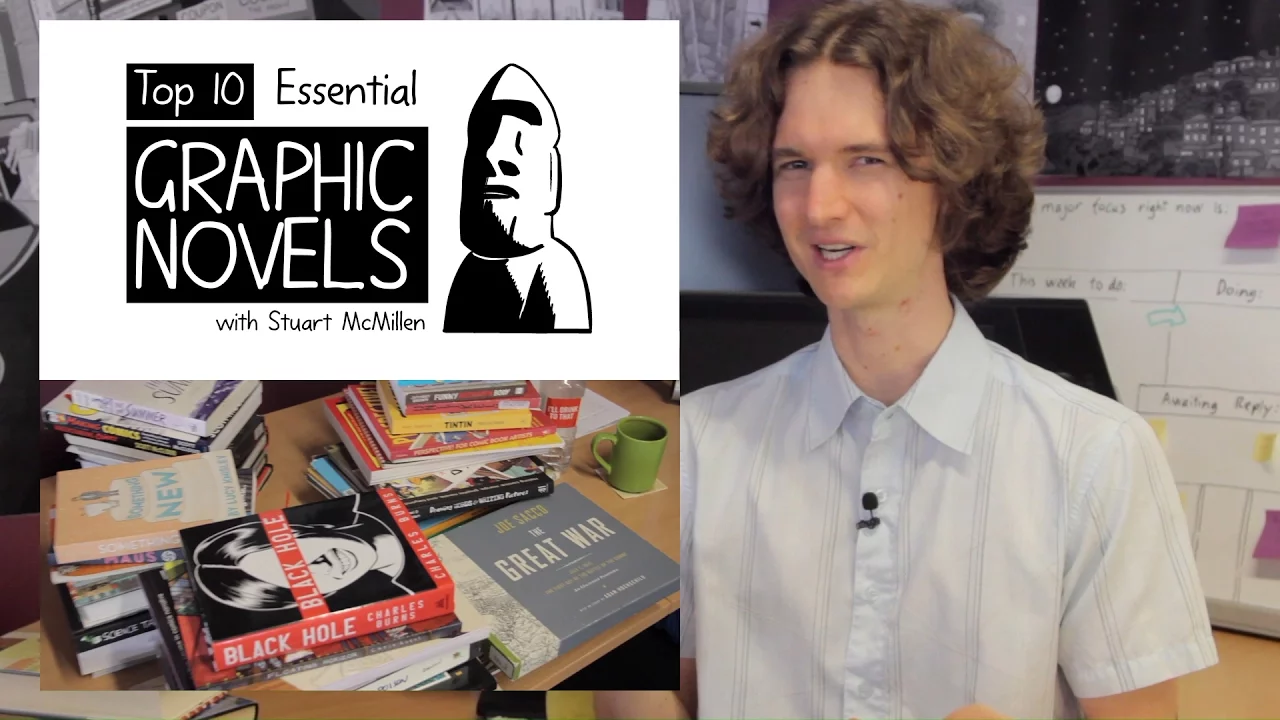
- Why this video: This short analysis positions Understanding Comics as a meta-book: a comic about comics. It explains why McCloud's framework served as the tipping point for the medium's transition from "low art" to an academically respected literary format.
- Knowledge Checkpoint:
- Discuss why utilizing comics to explain comics is a critical rhetorical strategy for establishing the medium's legitimacy.
- Describe how visual-verbal interaction allows for complex, theoretical ideas to be communicated clearly.
Module 2: Autographics and Processing Historical Trauma
Overview
This module explores autographics—a term coined by literary scholars like Gillian Whitlock to denote the unique visual-textual staging of self-representation. Unlike traditional written autobiography, autographics relies on a split subjectivity: the narrating "I," the visual protagonist "I" drawn on the page, and the historical "I."
We will analyze this dynamic through Art Spiegelman's Pulitzer Prize-winning graphic memoir Maus. We will examine how Spiegelman employs animal allegory, self-reflexive narratives, and visual historiography to confront the trauma of the Holocaust, the anxieties of second-generation survivors, and the challenges of representing historical memory.
Recommended Videos

- Why this video: This classic BBC Arena documentary provides an intimate, historical look at Art Spiegelman's creative process during the publication of Maus. Featuring direct interviews, it outlines how Spiegelman researched his father’s Holocaust survival and translated those oral histories into a complex visual architecture. It is crucial for understanding how the graphic memoir confronts historical archives and collective trauma.
- Knowledge Checkpoint:
- Explain how Spiegelman's animal allegory (mice as Jews, cats as Germans, pigs as Poles) works as a post-structuralist critique of Nazi racial categorization.
- Describe the tension between Vladek Spiegelman's spoken testimony and Art’s visual rendering of those events.
- Explain how Spiegelman addresses the ethical limits of representing another person's trauma.

- Why this video: This video offers a deep-dive page analysis of Maus's layout, panel layouts, and artistic composition. The hosts analyze Spiegelman's hand-drawn lines, his rejection of slick commercial comic styles, and his use of inset photos, maps, and diagrams. It demonstrates how Maus uses self-reflexive comic mechanics (such as showing the author wearing a mouse mask) to lay bare the artificial nature of historical narrative.
- Knowledge Checkpoint:
- Analyze how Spiegelman uses non-traditional panel borders and overlapping layouts to represent the intrusion of past trauma into the present.
- Define "meta-narrative" and explain how Spiegelman’s self-portrayals in Maus II reflect his struggle with the commercialization of his family's trauma.
- Describe how Spiegelman's "scratchy," expressionistic line work communicates vulnerability and emotional instability.

- Why this video: Spiegelman reflects on the cultural legacy of Maus, discussing how the graphic novel shifted from being dismissed as "low art" to winning a Pulitzer Prize. This interview is highly relevant for understanding autographics as a tool of political and cultural memory, and how comics can convey complex historical events.
- Knowledge Checkpoint:
- Identify the institutional shifts that allowed graphic novels to be integrated into academic, historical, and literary curricula.
- Discuss how Spiegelman views the limits of comics when representing extreme national and cultural tragedies.
Module 3: Visualizing Personal Trauma, Grief, and Graphic Medicine
Overview
This module explores how contemporary graphic memoirists visualize internal psychological states, grief, bodily illness, and personal trauma. We look at Graphic Medicine—the intersection of comics and healthcare discourse—to examine how physical and psychological suffering is mapped onto the comics page.
Our main focus is Alison Bechdel’s landmark memoir Fun Home: A Family Tragicomic.
⚠️ WARNING NOTE: When researching Fun Home, avoid videos focusing exclusively on the Broadway musical adaptation. Instead, focus on Bechdel's actual graphic novel layout, her rigorous use of grids, photographic self-reference, and visual-verbal irony to depict queer identity, suicide, and familial repression.
Recommended Videos
- Why this video: In this extensive academic lecture, Alison Bechdel breaks down her meticulous creative process. She explains how she poses for every single character using digital photography, translates those images into line drawings, and uses a complex system of architectural grids to organize her narrative. This video provides a rare look at how a master cartoonist maps psychological trauma and familial secrets onto a structured layout.
- Knowledge Checkpoint:
- Describe Bechdel's photographic referencing process and how it shapes the realism and intimacy of her line work.
- Explain how Bechdel uses visual-verbal irony (where the text and the drawing contradict or complicate each other) to represent family secrets and denial.
- Discuss how Bechdel visually links the architecture of her childhood home to her father’s internal repression.

- Why this video: This video focuses on the tension between Bechdel's position as an "outsider" looking in on her family, and her role as a chronicler of her father's closeted life and eventual suicide. She reads passages from Fun Home, detailing how she uses literary and visual allusions (e.g., Icarus, Daedalus, Wilde, Proust) to process grief and construct her own queer identity.
- Knowledge Checkpoint:
- Analyze Bechdel's use of literary allusions as a visual and textual shorthand for analyzing her father's hidden psychological life.
- Describe how the author represents the "archive" (letters, diary entries, maps) visually within the comic panels.

- Why this video: This presentation introduces "Graphic Medicine," a field that studies how comics depict healthcare, physical illness, and psychological trauma. Featuring nurse and cartoonist MK Czerwiec, the video explains how the combination of words and images provides a visual vocabulary for expressing bodily experiences and emotional pain that words alone cannot capture.
- Knowledge Checkpoint:
- Define "Graphic Medicine" and explain why the comics medium is uniquely suited to expressing illness and physical/mental trauma.
- Describe how cartoonists use abstraction and non-linear pacing to depict altered states of consciousness, depression, and physical suffering.
- Why this video: This video highlights Tom Hart's The Art of the Graphic Memoir, a key text on translating personal grief and trauma into comics. Hart, who wrote a deeply moving graphic memoir about the loss of his daughter, details how page architecture, layout, and visual metaphors can help artists navigate and express intense personal grief.
- Knowledge Checkpoint:
- Explain how visual metaphors can help render abstract, overwhelming emotions (like grief) into concrete, readable imagery.
- Discuss how variations in panel pacing can mimic the psychological experience of trauma and memory retrieval.
Module 4: Cultural Displacement, Diaspora, and Identity
Overview
Graphic memoirs are highly effective tools for exploring the complexities of immigration, cultural hybridity, and generational displacement. This module examines how cartoonists use visual language to navigate different cultures, political histories, and geographical spaces. We will focus on two major works: Marjane Satrapi's Persepolis (detailing her childhood during the Iranian Islamic Revolution) and Thi Bui's The Best We Could Do (chronicling her family's escape from war-torn Vietnam and their subsequent diaspora).
Recommended Videos

- Why this video: This video offers a thorough, academic-level literary and visual analysis of Marjane Satrapi’s Persepolis. It focuses on Satrapi’s stark, high-contrast, black-and-white expressionist style. The analysis shows how her simple artistic choices make her specific Iranian childhood feel universal, while capturing the bleak political realities of the Islamic Revolution.
- Knowledge Checkpoint:
- Analyze how Satrapi’s stark black-and-white aesthetic serves as both a political and a psychological statement.
- Explain the concept of "cultural hybridity" as depicted through Young Marji’s shifting visual identities (e.g., her jean jacket and veil).
- Describe how Satrapi visually depicts national history alongside her personal coming-of-age story.
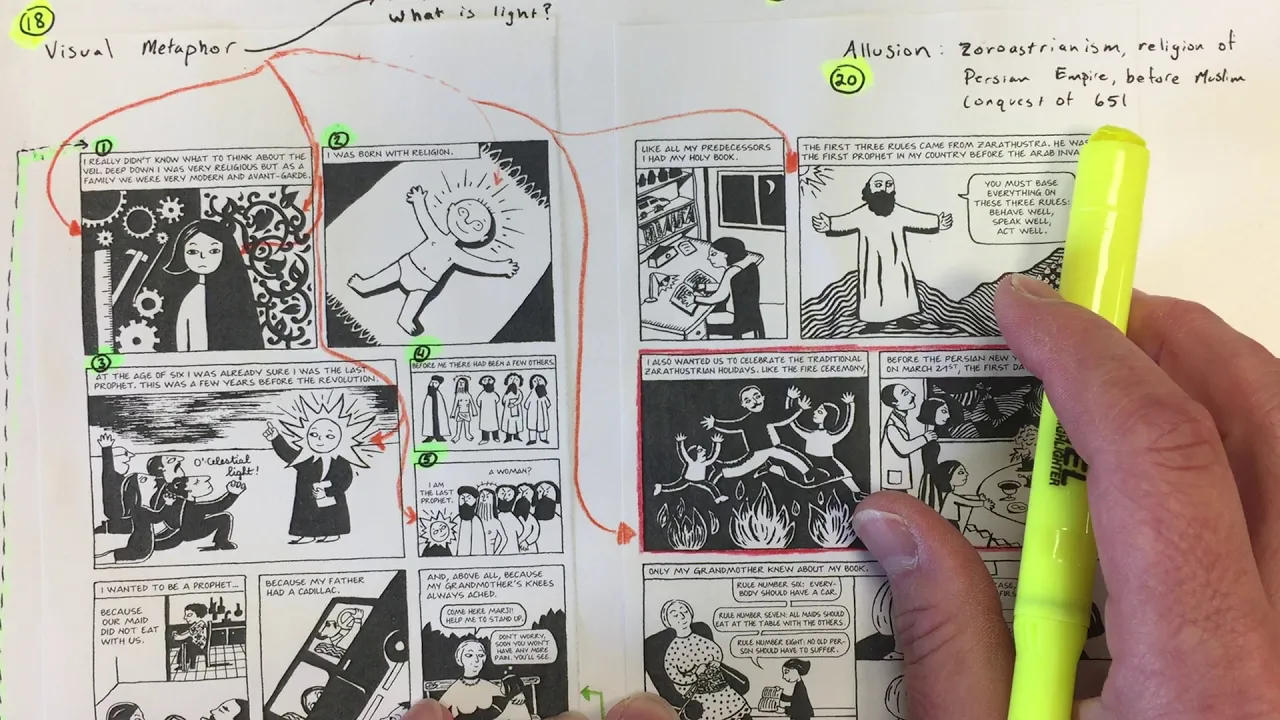
- Why this video: This academic lesson analyzes Satrapi's specific authorial choices. It covers her use of perspective, abstract background patterns, breaking the fourth wall, and panel placement. This analysis shows how Satrapi translates her memories of war and personal displacement into a structured graphic narrative.
- Knowledge Checkpoint:
- Analyze how Satrapi uses abstract patterns in her backgrounds to represent national trauma, chaos, and ideological conformity.
- Explain how Satrapi’s use of child-like perspective in her panel compositions mirrors her psychological development and changing political awareness.
![The Best We Could Do by Thi Bui [cc]](https://i.ytimg.com/vi/5D2A4niHrHA/sddefault.jpg)
- Why this video: This review analyzes how Thi Bui's The Best We Could Do explores generational trauma, displacement, and the immigrant experience. The reviewer highlights how Bui's expressive brushwork and single-tint watercolor wash (using orange/terracotta tones) visually connect different eras and trace family histories across borders.
- Knowledge Checkpoint:
- Describe how Bui uses a single-tint color wash to link past historical trauma in Vietnam with present-day life in America.
- Explain how the graphic novel depicts "intergenerational trauma"—the transmission of unspoken grief and anxiety from parents to their children.

- Why this video: This review examines Deb JJ Lee's In Limbo, a graphic memoir that explores the Korean-American diaspora, language barriers, and identity struggles. The video highlights how the artist blends digital painting with abstract elements to visually represent feelings of isolation and cultural dislocation.
- Knowledge Checkpoint:
- Analyze how Lee visually represents language barriers and the feeling of disconnect between different cultures.
- Explain how abstract, non-realistic art choices can help convey feelings of isolation and depression in an autographical work.
Module 5: Formalist Criticism and Analyzing Page Layouts
Overview
This capstone module focuses on Formalist Criticism—the systematic, close-reading analysis of a text's formal elements (line weight, color palettes, page layouts, gutter widths, and speech bubble placement) rather than external biographical or historical details.
By applying academic literary theories (such as Feminist Narrative Theory and Formalist Comic Theory), you will learn how to write critical, publishable visual-verbal analyses of graphic memoirs.
Recommended Videos

- Why this video: Renowned comic scholar Jan Baetens advocates for a rigorous, formalist approach to comics analysis. He explains why we must treat sequential art with the same close-reading care as classic literature. This video establishes the academic standard for analyzing graphic novels, urging students to perform detailed, panel-by-panel breakdowns.
- Knowledge Checkpoint:
- Define "close-reading" in the context of sequential art and explain why it requires examining both visual and verbal elements at the same time.
- Explain how formalist analysis helps elevate sequential art from "pop culture" to a respected academic subject.
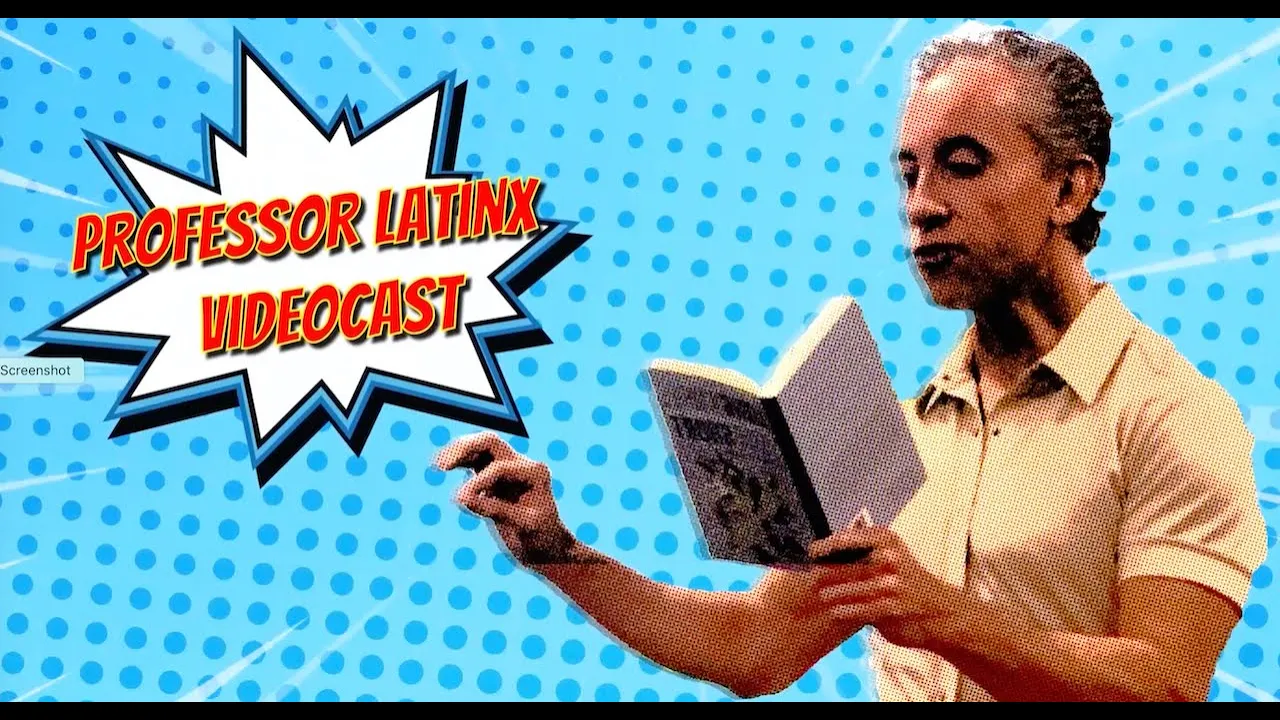
- Why this video: Professor Robyn Warhol demonstrates how to apply Feminist Narrative Theory to Alison Bechdel’s Fun Home. She discusses how the physical presence of the artist’s hand (the actual drawing process) interacts with the written text, creating a layered narrative voice. This video is an excellent model for combining literary theory with formalist comic analysis.
- Knowledge Checkpoint:
- Explain how Feminist Narrative Theory can be applied to the visual-textual structure of graphic memoirs.
- Define the relationship between the physical act of drawing (the "artist's hand") and the development of narrative voice in autographics.

- Why this video: This video offers a practical guide on how to structure and write a formal visual analysis essay on a graphic novel. It details how to evaluate how images support or complicate the written story, how stylistic art choices (color, detail, composition) affect the reader, and how to organize a close-reading essay.
- Knowledge Checkpoint:
- List the three key criteria required for a successful graphic novel visual analysis essay.
- Explain how to select specific comic pages and panels for a close-reading analysis.
- Describe how to write about visual choices (like layout, line weight, and shading) using precise academic terminology.

- Why this video: This video provides a clear, foundational overview of Formalist Criticism and its core principles. It explains why formalists focus on the text itself—ignoring external historical context or author biography—and instead examine how internal formal elements work together to create an aesthetic experience.
- Knowledge Checkpoint:
- Identify the six core principles of Formalist Criticism.
- Explain the concept of "defamiliarization" and how it functions as a literary device.
- Discuss how formalist principles can be adapted to analyze comic books (treating panels, gutters, and page layouts as key formal devices).
Course Map
Key People Index
- Scott McCloud: Renowned cartoonist, theorist, and author of Understanding Comics (1993). He revolutionized the academic study of sequential art by introducing formal frameworks for panel transitions, word-image relationships, and the cognitive role of the gutter.
- Art Spiegelman: Co-founder of RAW magazine and creator of Maus, the first graphic novel to win a Pulitzer Prize (1992). His use of animal allegory and self-reflexive storytelling established autographics as a powerful tool for representing historical trauma.
- Alison Bechdel: MacArthur "Genius" Grant recipient and author of Fun Home and Are You My Mother?. She is known for her structured layouts, photographic referencing process, and exploration of queer identity, familial secrets, and suicide.
- Marjane Satrapi: Iranian-French graphic novelist, illustrator, and filmmaker. Her black-and-white graphic memoir Persepolis (2000) brought international attention to the graphic novel as a key medium for exploring cultural displacement, diaspora, and national history.
- Thi Bui: Author of The Best We Could Do (2017). Her work uses expressive, ink-and-wash brushwork to capture refugee experiences, family oral histories, and the effects of intergenerational trauma.
- Gillian Whitlock: Literary theorist who coined the term Autographics, analyzing how autobiographical comics construct identity and subjectivity through visual and textual self-representation.
- Robyn Warhol: Distinguished Professor of English specializing in feminist narrative theory. She has written extensively on how narrative structures in graphic memoirs intersect with gender, sexuality, and the physical presence of the artist's hand.
- Jan Baetens: Belgian comics scholar and theorist. He is a leading advocate for applying formalist literary theory and precise, panel-by-panel close-reading to graphic narratives and bande dessinée.
Final Self-Assessment
Navigate through these checklist items to assess your master of the course material:
- Sequential Art Mechanics: Can you identify and define Scott McCloud’s six types of panel transitions on any given comic page?
- The Gutter: Can you explain how cognitive closure works within the gutter, and how cartoonists alter gutter widths to manipulate the reader's perception of time?
- Autographics: Can you define the term autographics and explain how the visual self drawn on the page creates a split subjectivity from the writing narrator?
- Animal Allegory: Can you analyze how Art Spiegelman’s animal figures in Maus deconstruct racial categorization while acknowledging the limits of representing historical trauma?
- Graphic Medicine: Can you identify and analyze three visual techniques (such as abstraction, visual metaphors, or panel fragmentation) used to represent physical illness or psychological trauma?
- Visual-Verbal Irony: Can you point out a panel in Alison Bechdel's Fun Home where the written text and the drawing contradict each other, and explain how this tension represents familial denial or secrets?
- Visual Historiography: Can you explain how graphic memoirists incorporate historical archives (like photos, letters, and maps) directly into their comic panels?
- Cultural Hybridity: Can you analyze how Marjane Satrapi uses black-and-white expressionism to represent political conflict, cultural identity, and displacement in Persepolis?
- Intergenerational Trauma: Can you analyze how Thi Bui uses color washes and shifting temporal planes in The Best We Could Do to show how ancestral trauma is passed down to younger generations?
- Formalist Analysis: Can you perform a close-reading of a single comic page, analyzing how layout, line weight, framing borders, and word balloon placement work together to generate literary meaning?