Thi Bui's graphic memoir 'The Best We Could Do' illustrates how the trauma of displacement and immigration affects multiple generations within a family, showing how parents carry unspoken sacrifices and hidden struggles that shape their children's lives, while also demonstrating the resilience and strength required to rebuild identity and find belonging across cultural boundaries.
The Best We Could Do: A Graphic Memoir of Family & Vietnamese Refugee Experience | Thi Bui Book Review
Added:Deep Dive
Historical context of the Vietnam War, including the division of North and South Vietnam, the Fall of Saigon (1975), and the subsequent refugee crisis.

Ghê sợ Cộng Sản ! Dân miền Bắc di cư vô Nam lánh nạn Quỉ đỏ 1954
1.7K
The Vietnam War (1954-1975) resulted in the division of Vietnam at the 17th parallel following the 1954 Geneva Agreement, triggering a mass refugee crisis where millions fled communist rule from North Vietnam to South Vietnam. The South Vietnamese military, despite conducting major counter-offensives including the 1971 Cambodian incursion, the 1972 Easter Offensive, and the defense of An Lộc in 1973, ultimately collapsed in 1975 after the fall of the Central Highlands and the chaotic retreat along National Highway 13, leading to the reunification of Vietnam under communist control.
Click to watch →
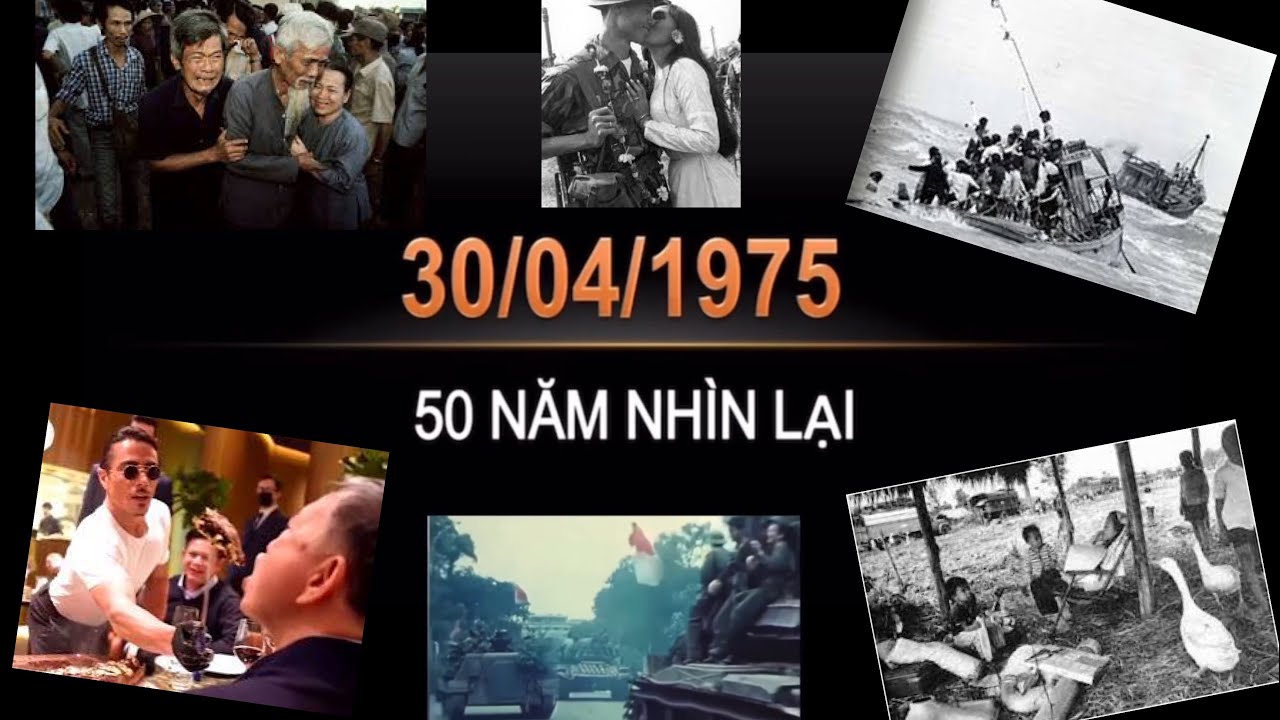
#1303: Video Tổng Hợp | 50 Năm Nhìn Lại 30/04/1975 - 30/04/2025 | History
27.2K
The Vietnam War resulted in devastating human casualties: 3.6 million deaths including 313,000 South Vietnamese, 1.1 million North Vietnamese, and 58,000 Americans. Following the war, 500,000 to 1 million South Vietnamese were imprisoned. From 1975 to 1995, nearly 1 million Vietnamese fled by sea and land, with over 500,000 dying at sea. The 1954 Geneva Accords temporarily divided Vietnam at the 17th parallel, with North Vietnam under Communist rule and South Vietnam under the Republic of Vietnam. In 1960, the North established the National Liberation Front. Following the 1954 Geneva Accords, approximately 1 million Vietnamese refugees fled from North to South Vietnam, with 76.3% being Catholic. The migration was organized by the U.S. Navy and French military. Before April 30, 1975, Saigon was the capital of South Vietnam and a center of culture, known as the 'Jewel of the Far East.' South Vietnam's education system was built on Humanism, Nationalism, and Enlightenment principles. South Vietnamese soldiers served at young ages, fighting in challenging conditions across the Central Highlands and U Minh forest. On April 21, 1975, South Vietnamese President Nguyễn Văn Thiệu resigned, transferring power to Trần Văn Hương for five days. On May 26, 1975, Trần Văn Hương resigned and appointed General Dương Văn Minh as president. Less than 48 hours later, Dương Văn Minh announced surrender via national radio on April 30, 1975. The Paris Peace Accords signed on January 27, 1973, were violated by North Vietnamese forces who launched large-scale attacks. The United States abandoned its ally, providing no military intervention, while North Vietnam received support from the Soviet Union, China, and Eastern European countries. After the fall, North Vietnamese forces launched campaigns against the South Vietnamese economy, beginning in September 1975. In 1980, the North Vietnamese government admitted to imprisoning approximately 1 million South Vietnamese civilians in reeducation camps, with prisoners forced to work from morning to night, facing starvation and various punishments. South Vietnamese currency underwent three devaluations, with the first in September 1975 exchanging 500:1 for new currency. South Vietnamese assets were confiscated and transported to North Vietnam. South Vietnamese language was downgraded, with North Vietnamese words introduced. South Vietnamese music was banned as 'reactionary.' In 1977, 700 tons of South Vietnamese books were destroyed. Many writers were arrested for 'anti-communist' activities. After 1975, millions of Vietnamese fled the country by sea, land, and air routes. Many refugees were captured by Thai pirates, who killed and raped them. Some refugees never reached safety and their bodies sank into the ocean. Rescue operations were conducted by foreign vessels, including American and West German ships. Refugees were rescued from desperate situations, with some having only 20 liters of water remaining. The government established state-controlled religious organizations that followed Communist Party directives. The government caused environmental destruction through dam construction on the upper Mekong River, blocking water flow and sediment to the Mekong Delta, causing freshwater scarcity and saltwater intrusion. Approximately 90% of Vietnam's natural forest cover was destroyed, causing significant climate changes. Before 1975, South Vietnam had two distinct seasons; after 1975, Vietnam experienced year-round rainfall. The government authorized bauxite mining in the Central Highlands, causing soil and water pollution. Hundreds of kilometers of border territory were ceded to China, including the Ailam Quang Tower at Bản Dốc. The South China Sea was lost, including the Hoàng Sa and Trường Sa islands. Vietnamese fishermen were prohibited from fishing in the South China Sea. Currently, approximately 90% of fruits and vegetables in Vietnam are sprayed with harmful chemicals. Many Vietnamese continue to attempt illegal immigration to the United States and other countries.
Click to watch →

Changing Stripes Revisited
3K
The Vietnam War officially ended on April 30, 1975, when Saigon fell to North Vietnamese forces. This marked the end of nearly 50 years of American military involvement and the beginning of a new chapter for nearly 2 million South Vietnamese refugees. Vietnam spent much of its early history ruled by China, and in the mid-1800s came under French colonial control. France exploited Vietnam's natural resources and suppressed Vietnamese identity. Ho Chi Minh and his army defeated the French in 1954, leading to the Geneva Conference where Vietnam was partitioned at the 17th parallel. The two Vietnams had different flags: South Vietnam's yellow with three red stripes, and North Vietnam's red with a yellow five-pointed star. When South Vietnam fell, anyone associated with the US government or South Vietnamese military could be targeted. Refugees like the speaker's mother fled with only essential items, and she was on one of the last planes to leave the country.
Click to watch →
![NGHĨA TRANG NGƯỜI VIỆT TRONG TRẠI TỴ NẠN GALANG [Indonesia 3]](https://i.ytimg.com/vi/_9_EuRxrHK0/hqdefault.jpg?sqp=-oaymwEmCOADEOgC8quKqQMa8AEB-AGOA4ACkAOKAgwIABABGGUgXyhUMA8=&rs=AOn4CLDMFOgD5CHUi5MdGfmaXbKmsNGHXA)
NGHĨA TRANG NGƯỜI VIỆT TRONG TRẠI TỴ NẠN GALANG [Indonesia 3]
115
Before 1975, Vietnam was divided into North (socialist, Hanoi) and South (presidential republic, Saigon). After reunification on April 30, 1975, a comprehensive revolution eliminated capitalism, transferring private businesses to state management. Many Southerners struggled to adapt and sought to leave. Cambodia's conflict with Vietnam forced refugees to flee by sea, creating the boat people phenomenon. The UN established camps in Hong Kong, Indonesia, Malaysia, Philippines, and Thailand. An estimated one million people left Vietnam, with many dying during the journey or in camps. The Galang refugee camp in Indonesia was one of the largest camps in Southeast Asia, accepting Vietnamese refugees from 1970-1996. The graves contain Vietnamese inscriptions, with some markers dated to 1980 and 1991. Some graves belong to individuals whose identities are unknown even to those who buried them.
Click to watch →
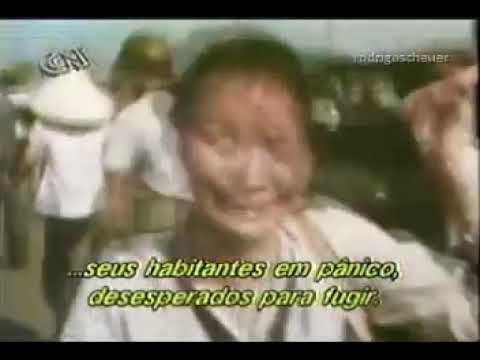
20th Century with Mike Wallace - Guerra do Vietnã (1994)
989
On April 30, 1975, Saigon fell to communist troops, marking America's defeat in its longest war. The event triggered the greatest refugee exodus in Vietnam's history, with a flood of boat people fleeing the country. The fall of Ban Me Thuot in January 1975 demonstrated South Vietnam's military weakness, as communist forces rolled northward with little resistance. The South Vietnamese army was described as 'paper mache' with incompetent officers fighting for a bankrupt government. This collapse created the 'convoy of tears,' with approximately 4,000 vehicles carrying refugees from the central highlands to the coast. Danang became virtually isolated as communist forces captured two more provinces, with refugees arriving by ship and on foot, crowded into ships like sardines. When Danang was expected to fall, panic prevailed, with an improvised airlift becoming chaotic as unruly soldiers led a frenzied mob trying to board. President Ford learned he could run but couldn't from Vietnam. The Ford administration refused to discuss evacuation plans, with Ambassador Graham Martin believing silence was the only way to prevent angry South Vietnamese from turning on departing Americans. More than 5,000 Americans seemed trapped along with as many as 200,000 Vietnamese who had worked for Americans. The US government set up an operation to evacuate orphans fathered by American servicemen, but shortly after the first takeoff, the plane crashed, scattering bodies over half a mile of rice paddies. Only 100 of the orphans survived. The battle for Saigon began with communist forces launching their first major assault in the capital's region since their offensive began five weeks ago. The heaviest attack was 40 miles east of Saigon at Chuan Lakh, which had been battered for a month by communist rockets. South Vietnam's 18th division put up what was called the single most gallant stand, holding out against unrelenting artillery barrage. After two weeks of assault waves and mortar fires, Wan Lock finally fell, and on that same day President Nguyen Van Thieu resigned. Confronted by continuing political pressures and military defeats, South Vietnam's president yielded to pressure. The 71-year-old vice president Tran Van Huong was named to succeed him, a frequently ill, virtually blind civilian in a military-dominated government. South Vietnamese politicians scrambled to put together a new government acceptable to the Communists for negotiations. President Ford sounded a note of reassurance, stating America could regain a sense of pride that existed before Vietnam but could not be achieved by refighting a war that was finished. The American role as protector was about to end. The final days of Saigon saw communist troops penetrate to the outskirts of the capital, with rockets waking Saigon up well before dawn. The boulevards near the Central Market were choked with smoke and flames. At mid-afternoon Saigon time, an armada of 81 US Marine helicopters descended on the capital, evacuating more than 6,000 people including 900 Americans. The evacuation order came after South Vietnamese President Nguyen Van Thieu ordered all Americans with the US Defense Attaché Office out of the country within 24 hours. The US embassy helicopters flew from roof to roof, plucking up stranded Americans and occasionally depositing them on the landing pad atop the embassy. The Vietnamese refugees were heliported to waiting ships of the US Seventh Fleet on the Midway, with Navy crewmen leading them quickly away from the howling blast of the helicopters. Critics charged that US Ambassador Graham Martin had been blind to South Vietnam's impending defeat and became one of the last Americans to flee from Saigon. Despite predictions of a bloodbath, there was no massacre, but also no utopia. The Communists renamed Saigon Ho Chi Minh City in honor of the man whose revolution this had always been. The refugee crisis continued, with thousands risking storms, disease, and piracy on the South China Sea. Some were rescued by the US Seventh Fleet during the final hours of the evacuation, going straight to a landing craft bound for Granby Island in Subic Bay. The refugee crisis continued to grow, with refugees crowding into makeshift camps in Thailand at an average rate of 500 per month. Many refugees were ethnic Chinese who had lived in Vietnam and were long regarded with suspicion, becoming pariahs when conflict broke out between Vietnam and China. By summer 1978, 10,000 boat people per month were making it to Malaysia's shores. The Danish container ship Clara Maersk carried 4,400 Vietnamese refugees into Hong Kong, rescued five days earlier at sea from a sinking Vietnamese freighter. The Hong Kong government accepted refugees temporarily on humanitarian grounds because they were victims of a disaster at sea. The refugee boats had become refugee ships, with the HAI Hong packed with ethnic Chinese who had been turned away by Thailand, Singapore, and Indonesia before Malaysia allowed the cargo ship to anchor offshore. Three decks were overflowing with people, with virtually every inch of available space occupied. The refugees were virtually every inch of available space, with hundreds and hundreds of men, women, and children lying about limply with each passing day. The refugee crisis prompted the United States to increase its quotas, with the Carter Administration announcing it was prepared to admit almost 22,000 Southeast Asian refugees. Meanwhile, Hong Kong had been giving sanctuary to thousands of refugees, particularly those on smaller boats, but by spring 1979, the numbers became overwhelming, with more than 900 people arriving each day. The refugee boats had become refugee ships, with the HAI Hong packed with ethnic Chinese who had been turned away by Thailand, Singapore, and Indonesia before Malaysia allowed the cargo ship to anchor offshore. Three decks were overflowing with people, with virtually every inch of available space occupied. The refugees were virtually every inch of available space, with hundreds and hundreds of men, women, and children lying about limply with each passing day. The refugee crisis had prompted Congress to establish a pecking order for admission to the United States: refugees who had close relatives here, those who had worked for the US government in Vietnam, those who feared for their lives, and everyone else for everyone else.
Click to watch →
Deep Dive
The concept of the 'boat people' and the migration patterns of Vietnamese refugees seeking asylum in Western countries.

RR7850A THE VIETNAM BOAT PEOPLE
93.6K
The Vietnam Boat People were refugees who fled Vietnam by boat across the South China Sea following the fall of Saigon in 1975, seeking asylum in Western countries; they faced significant challenges including prolonged detention in refugee camps, rejection by host nations due to strict immigration policies, and sometimes violent treatment by local populations, highlighting the complex international refugee crisis that emerged from the Vietnam War.
Click to watch →
🎧 Sex in Vietnam during 1980-1985 | HHE Podcast Ep.10
10.6K
Between 1975 and 1980, approximately 2.5 to 3 million Vietnamese fled their country by boat, seeking refuge in neighboring countries. These refugees, known as the 'boat people,' faced extreme dangers including capsized boats, attacks by Thai pirates who robbed, raped, and murdered them, and deadly minefields in Cambodia. Many perished during their escape attempts. Some refugees were held in camps in Thailand and Cambodia while waiting for resettlement opportunities in Western countries.
Click to watch →
Vì sao hộ chiếu Việt Nam yếu hơn Campuchia?
4K
To address the boat people crisis, the United Nations and Western countries worked together to resettle Vietnamese refugees in third countries. Despite the opportunity for easy resettlement in the West, the boat people continued to increase. From the mid-1980s, boat people were typically poorer, less educated, and mostly from North Vietnam. Western countries could no longer continue resettlement because many Vietnamese fled due to poverty rather than government persecution. Hong Kong and Southeast Asian countries had no choice but to repatriate boat people, a difficult process.
Click to watch →

Asien in Berlin
240
The largest group of Vietnamese migrants in West Germany consists of 'boat people' who arrived between the 1970s and early 1980s, primarily from South Vietnam. Due to their earlier arrival, many have since obtained German citizenship and are now in the second or third generation. This contrasts with later arrivals from East Germany who faced significant bureaucratic obstacles.
Click to watch →
1968-1975: How America Lost The Vietnam War
38K
After the Communist takeover, hundreds of thousands of Vietnamese fled by boat, becoming known as the 'boat people.' These refugees faced terrible conditions on overcrowded vessels, sometimes carrying 650 people on boats designed for much fewer passengers. Many died from lack of oxygen, disease, or attacks by pirates. Some were rescued by passing ships, including British commercial vessels. Those who reached safety faced uncertain futures, with many ending up in refugee camps or eventually migrating to Western countries.
Click to watch →
Deep Dive
An understanding of sequential art and the graphic memoir genre as a legitimate medium for serious historical and personal storytelling.
Taller de cómics e ilustración Sesión 1: ¿Qué es la narrativa gráfica?
2.4K
Graphic narrative (narrativa gráfica) is a form of sequential art that combines written scripts with visual illustrations to tell stories, where the reader's mind creates the movement and action between static panels; this medium encompasses diverse genres from superhero comics like Action Comics #1 (Superman's debut) to manga, European comics like Asterix, and graphic novels like Maus, which won the Pulitzer Prize for its powerful depiction of the Holocaust, demonstrating that comics can serve as both entertainment and a legitimate art form capable of conveying complex historical and cultural narratives.
Click to watch →

Will Eisner's Comics and Sequential Art Review
2.6K
Will Eisner, known as the father of graphic novels who coined the term to elevate comics from children's entertainment to respected literature, wrote 'Comics and Sequential Art' which teaches the fundamental principles of visual storytelling, including how to use frames, thumbnails, and reader control to tell compelling stories through sequential imagery.
Click to watch →
finish my sketchbook with me ✍️ acrylic markers + chatting
308
Graphic memoirs combine personal narrative with visual storytelling to explore formative life experiences. Works like 'Blankets' by Craig Thompson examine religion, family, and young adulthood through detailed sequential art, demonstrating sophisticated craft including beautiful drawing and lettering. Similarly, 'Make Me a Woman' by Vanessa Davis offers diary-style comics focusing on artistic process and personal expression. These works show how visual storytelling can convey emotional depth, making complex life transitions accessible through sequential art.
Click to watch →

Graphic Memoirs | New, Controversial, & Important (Nonfiction November)
363
Graphic memoirs serve as powerful literary tools that combine visual storytelling with personal narratives to explore complex themes such as identity formation, cultural heritage, and historical events, offering readers unique perspectives on both individual experiences and broader societal movements.
Click to watch →

Persepolis - Exclusive: Marjane Satrapi
651.9K
Marjane Satrapi explains that her graphic novel Persepolis is not a documentary but a subjective, fictionalized account based on her real-life experiences growing up in Iran, Austria, and France, created to provide an alternative perspective to the often one-sided narratives about Iran; she emphasizes that taking emotional distance from traumatic experiences is essential for meaningful storytelling, as one cannot respond to stupidity or violence with stupidity or violence.
Click to watch →
Deep Dive
The psychological concept of intergenerational trauma and how family history shapes individual identity.

Жмиль смотрит подкаст Шевелева и Лебедева
68K
Intergenerational trauma refers to the transmission of psychological pain and trauma across generations. Family history shapes individual identity and can influence how people understand their place in the world. Understanding family history involves examining how past events affect present circumstances and how individuals can process and heal from inherited trauma.
Click to watch →

Tucker & Dale vs Evil | Canadian First Time Watching | Movie Reaction | Movie Review | Commentary
142.3K
The hosts discuss how family heritage and background influence identity and behavior. They analyze the concept of generational trauma, explaining how psychological pain and trauma can be transmitted from one generation to the next through family stories, behaviors, and patterns. The hosts also discuss how understanding one's family history is important for personal identity formation and how this knowledge can help individuals break negative cycles.
Click to watch →

Bakı metrosunda qrafik dəyişikliyi nə vaxta qədər davam edəcək? “Xəbərimiz var”
118
Intergenerational trauma refers to psychological pain and dysfunction passed down through generations. Family experiences, including trauma, can influence how subsequent generations perceive and respond to similar situations. Understanding family history helps individuals recognize inherited patterns and make conscious choices about how to respond to situations.
Click to watch →

Dr. Mariel Buqué on Trauma & Breaking the Cycle
153
Intergenerational trauma is the only category of trauma handed down from parent to child through family lines. It operates at the intersection of biology (genetic encoding and epigenetic expressions during conception and fetal development) and psychology (parental stress hormones affecting the developing fetus). The process begins at conception, continues through prenatal development, and accumulates through childhood experiences like bullying, divorce, relocation, or toxic relationships. Identifying intergenerational trauma requires building comprehensive family trees to trace trauma responses across generations and understanding how unresolved parental wounds become the inner child within subsequent generations.
Click to watch →

Kill Someone
124
Family history and trauma can create lasting psychological burdens across generations. Children may inherit fear, guilt, and anxiety about repeating their parents' mistakes or tragedies. The narrator's experience shows how family occupations, past accidents, and personal tragedies become part of family identity, creating ongoing psychological challenges for descendants who must navigate both professional responsibilities and emotional legacies.
Click to watch →
Prerequisite Knowledge
- Concept 01Historical context of the Vietnam War, including the division of North and South Vietnam, the Fall of Saigon (1975), and the subsequent refugee crisis.
- Concept 02The concept of the 'boat people' and the migration patterns of Vietnamese refugees seeking asylum in Western countries.
- Concept 03An understanding of sequential art and the graphic memoir genre as a legitimate medium for serious historical and personal storytelling.
- Concept 04The psychological concept of intergenerational trauma and how family history shapes individual identity.
Subsequent Learning
- Step 01Exploring other seminal works of Vietnamese-American diaspora literature, such as Viet Thanh Nguyen's 'The Sympathizer' or Ocean Vuong's 'On Earth We're Briefly Gorgeous'.
- Step 02Methodologies for conducting oral histories and family interviews to document personal ancestry and historical memory.
- Step 03A deeper study of French colonialism in Indochina and its role in setting the stage for the Vietnam War.
- Step 04Analyzing the visual techniques of graphic novels, such as color palette choices, panel layouts, and the use of gutters to represent memory and time.
Memoir Overview
Core Themes
Final Analysis
Memoir Overview
0:00Playing Section
- 1
Introduces Thi Bui's graphic memoir detailing family's escape from Vietnam.
- 2
Highlights the book's critical acclaim and awards won.
- 3
Frames narrative around themes of family, displacement, and motherhood.
Critical Refugee Studies and the Deconstruction of the 'Rescue Narrative'
While Thi Bui’s 'The Best We Could Do' is celebrated for its intimate portrayal of intergenerational trauma and refugee resilience, scholars in Critical Refugee Studies offer an alternative framework for analyzing such memoirs. This perspective cautions against the Western tendency to consume refugee stories through a comforting lens of 'rescue, gratitude, and recovery.' Critical theorists argue that focusing primarily on personal healing and successful assimilation can inadvertently depoliticize the narrative, allowing mainstream audiences to overlook the systemic, imperialistic root causes of the Vietnam War and the ongoing complicity of Western nations in displacing populations. Additionally, some conservative factions within the Vietnamese-American diaspora criticize nuanced, humanizing portrayals of both sides of the conflict, arguing that they risk diluting the historical atrocities of the North Vietnamese communist regime and marginalizing the struggle of the South Vietnamese (ARVN) soldiers.
Deep Dive
Exploring other seminal works of Vietnamese-American diaspora literature, such as Viet Thanh Nguyen's 'The Sympathizer' or Ocean Vuong's 'On Earth We're Briefly Gorgeous'.

NOVIDADES DA SEMANA (+ um autógrafo super especial!)
6.1K
The Sympathizer by Viet Thanh Nguyen is a Pulitzer Prize-winning novel set in Saigon in April 1975 during the final chaotic moments of the Vietnam War. It follows a captain of the South Vietnamese Army who prepares a list of names for those who will receive spots on the last planes leaving the country. The novel explores themes of identity, betrayal, and the Vietnamese diaspora experience. The Compromised is a sequel continuing the story of the nameless communist double agent who infiltrated the South Vietnamese Army and escapes to the United States during the Spring Offensive of 1975. These works represent the growing presence of Vietnamese-American literature exploring complex identities between two worlds.
Click to watch →

ÁCCENTED #50 | Ocean Vuong in Conversation with Viet Thanh Nguyen
3.9K
Radical vulnerability—embracing one's inherent fragility rather than hiding behind societal armor—is a powerful literary and philosophical approach that challenges Western ideals of strength and invulnerability; this concept is deeply connected to diasporic identity, where writers like Ocean Vuong transform personal and collective trauma into art that acknowledges complicity in national narratives while honoring cultural heritage, demonstrating how vulnerability becomes a source of strength when used to connect with others and preserve cultural memory across generations.
Click to watch →

book shop with me in the mountains ✿ ⛰️ exploring local stores in Boulder, CO + book haul!
32.7K
'The Sympathizer' by Viet Thanh Nguyen is a critically acclaimed novel about a half-French, half-Vietnamese Army Captain who becomes a communist double agent. After the fall of Saigon, he comes to America and builds a new life with Vietnamese refugees in Los Angeles while secretly reporting back to the Communists in Vietnam. The book is being adapted into an HBO Max series starring Robert Downey Jr. The creator purchased this book for $9, making it an exciting acquisition.
Click to watch →
Ocean Vuong Wrote His Debut Novel in a Closet
424.3K
Ocean Vuong discusses how he transformed his personal experiences as a Vietnamese-American immigrant into his debut novel 'On Earth We're Briefly Gorgeous,' explaining that he intentionally began with truth and ended with art to give voice to Asian-American experiences in American literature; he also reflects on his mother's influence, noting that while she cannot read English, she taught him that true success means seeing how one's words affect the world.
Click to watch →
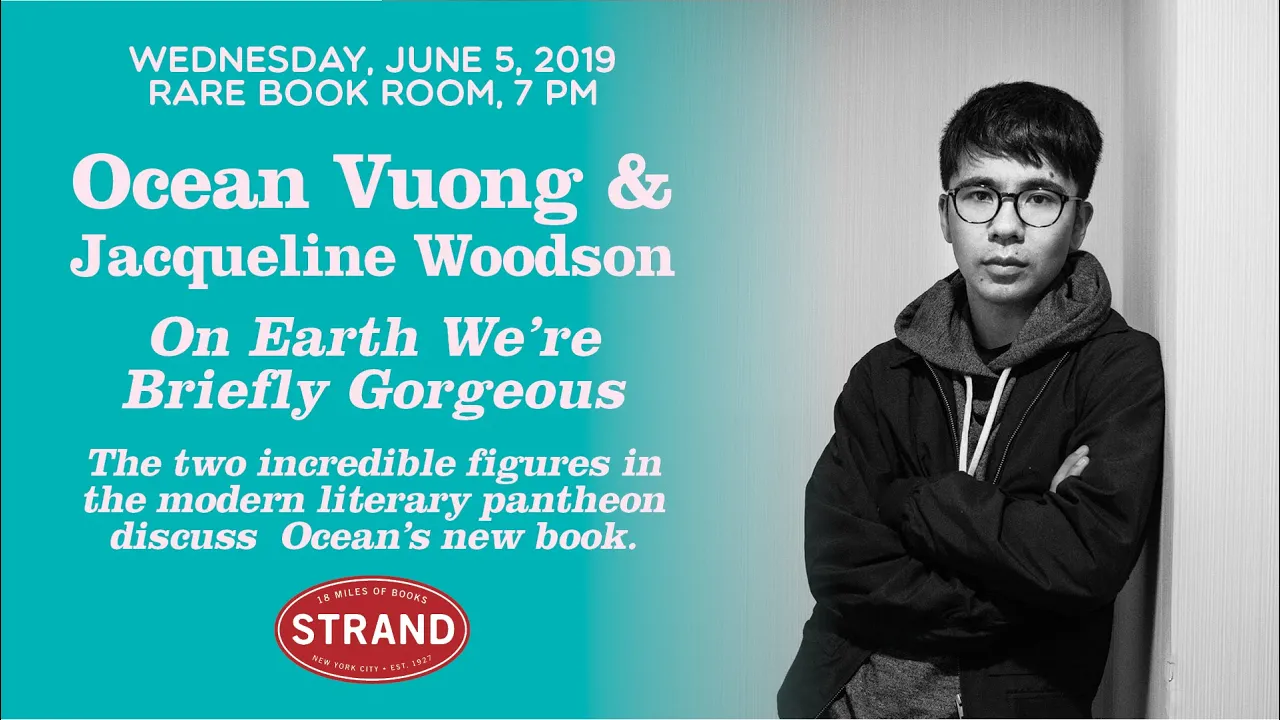
Ocean Vuong | On Earth We’re Briefly Gorgeous
77.7K
Vuong's work bridges Vietnamese and American Southern cultures through translation and cultural parallels. As a child interpreter for his family, he learned to edit and restructure sentences in real-time, borrowing rhythms from American vernacular to give voice to Vietnamese speakers. He recognized strange similarities between Southern Vietnam and the American South—both experienced civil wars where agrarian regions were marginalized, developing parallel organic storytelling traditions. This connection allowed him to see Toni Morrison's Beloved not just as a slave narrative but also as a refugee narrative, empowering him to view his grandmother's stories as equally worthy of literary attention.
Click to watch →
Deep Dive
Methodologies for conducting oral histories and family interviews to document personal ancestry and historical memory.
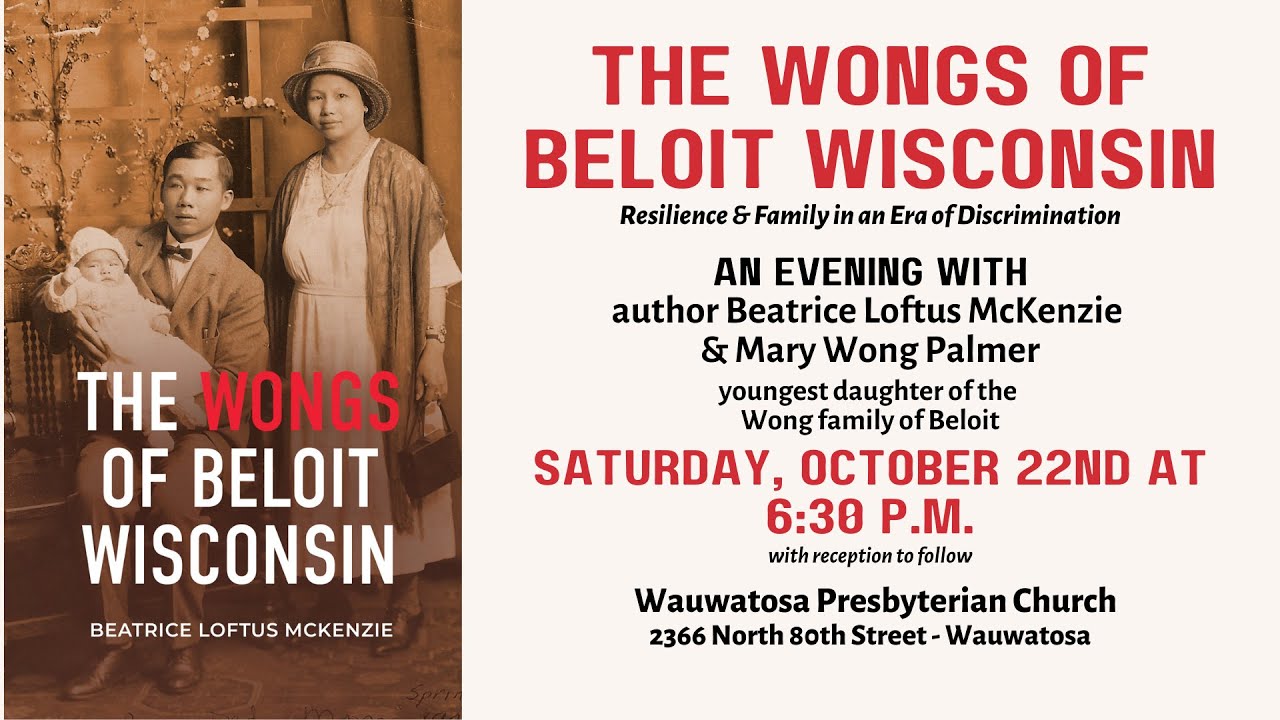
The Wongs of Beloit Wisconsin: An Evening with Author Beatrice Loftus McKenzie and Mary Wong Palmer
187
Comprehensive family history research combines multiple methodologies: gathering stories from surviving relatives, conducting taped interviews, sending questionnaires, visiting sites where family members lived, and consulting government documentation like the National Archives. Oral history complements written records by revealing nuances and clarifying mysteries—for example, explaining why a grandfather listed as a laborer was actually an herbal doctor who sponsored nephews using his deceased brother's name. This multi-source approach allows historians to construct fuller, more accurate narratives of individual and family experiences.
Click to watch →
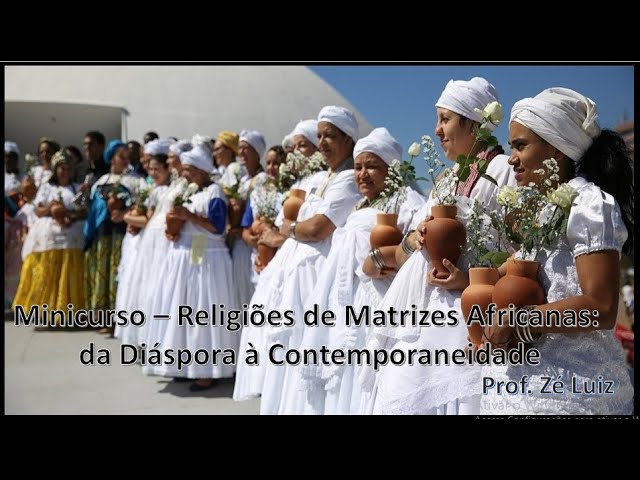
Aula 02: Trilhas Metodológicas.
210
Oral history is a methodological procedure for constructing sources and documents recorded through induced and stimulated narratives, testimonies, and interpretations about history. Memory is the main source of oral testimonies and is an infinite capital subject to multiple variables in temporal, topographic, and collective dimensions. Memories dialog with each other, sometimes revealing memories explicitly, sometimes veiled. Memory is a protective layer humans created unconsciously to protect themselves from pain and trauma. Memory contains dimensions of individual time (personal life, biographical route) and collective time (national and international). Interviewees may recall relics, photos, objects, and other resources that make remembering more vivid. Memory is a living, current, renewable, and dynamic process constructed in dialogue between present and past. Oral history has innumerable potentialities: it reveals new fields and themes for research, presents new hypotheses and versions about analyzed processes, recovers local, community, regional, ethnic, and gender memories, and recovers information about events not registered in other documents. It records visions of characters or witnesses of history not always considered by official history. It allows recording alternative versions of predominant history through interviews with community members and as an alternative to the static character of written documents. However, limitations must be considered, including applicability to contemporary history, predominance of subjectivity, and influence of the transcriber on written content. Two main types of interviews are used: life history interviews reconstruct the trajectory of historical subjects through in-depth testimonies from early childhood to present, while thematic interviews refer to specific experiences or processes witnessed by the interviewee.
Click to watch →

Como Criar Sua Árvore Familiar - #268
1.1K
This segment teaches two fundamental research methods for finding ancestors. First, oral history research: contact living relatives and ask specific questions about family history, recording all information. This is called 'preservar a memória viva da minha família' (preserving the living memory of my family). Second, working with suggested records: FamilySearch shows blue icons for records that may match your ancestors. Click on these to view actual documents, compare information, and verify matches. The segment emphasizes that these methods form the foundation of all genealogical research.
Click to watch →
Erweitere deinen Stammbaum mithilfe von Matricula und Ancestry. Ahnenforschung für jeden!
7.7K
This segment demonstrates the most valuable genealogy research method: conducting oral history interviews with living relatives. The presenter describes inviting his grandmother to dinner and asking questions about family history, which resulted in multiple pages of information including birth dates, stories, and photographs. He also discusses how to obtain death certificates and other documents from relatives. The presenter emphasizes that this personal approach yields richer, more meaningful information than simply looking up data in databases, as it captures family stories and personal connections that official records cannot provide.
Click to watch →

Leatrice Parker Powless
149
Oral history interviews systematically document personal narratives by collecting biographical information including names, birth dates, locations, family relationships, and generational memories. Interviewers follow structured protocols covering ancestry, childhood experiences, cultural practices, and life transitions. This methodology preserves indigenous knowledge, family histories, and community traditions that might otherwise be lost, creating valuable historical records for future generations. The process involves detailed questioning about grandparents, parents, siblings, and extended family networks, ensuring comprehensive documentation of individual and collective experiences.
Click to watch →
Deep Dive
A deeper study of French colonialism in Indochina and its role in setting the stage for the Vietnam War.

هذا هو السبب الذي جعل حرب فيتنام هي الأكثر رعبا في العالم
104.1K
The Vietnam War emerged from French colonial rule in Indochina (1858-1954). After World War II, Ho Chi Minh led the independence movement, establishing the Vietnam Independence League in 1941. Despite French resistance and American support for France, Vietnam declared independence in 1945. The Geneva Conference of 1954 ended French colonialism but divided Vietnam into communist North and non-communist South, setting the stage for the Vietnam War.
Click to watch →
![[세뇌탈출 3190탄] 우리는 한국의 시간을 맞이할 준비가 돼 있나? 단극체제 다자주의 시대가 열렸다! 철없는 프랑스, 정신실종 독일, 늦깎이 일본은 바뀌든지 망하든지! - 1부](https://i.ytimg.com/vi/QpUm-H7k9uw/maxresdefault.jpg)
[세뇌탈출 3190탄] 우리는 한국의 시간을 맞이할 준비가 돼 있나? 단극체제 다자주의 시대가 열렸다! 철없는 프랑스, 정신실종 독일, 늦깎이 일본은 바뀌든지 망하든지! - 1부
17.9K
France's colonial legacy in Indochina created conditions for the Vietnam War. During World War I, France forcibly recruited approximately 100,000 Vietnamese men to serve as laborers in French military factories, exposing them to communist ideology. After WWII, France refused to grant independence to Vietnam, leading to the First Indochina War. The conflict escalated after China's communist revolution in 1949, which enabled the Viet Minh to receive Soviet support. France's failure to negotiate independence led to the partition of Vietnam and ultimately the Vietnam War. In the Sahel region, France's influence has dramatically declined due to Russian mercenary forces and local extremist groups. In 2023, Niger, Mali, and Burkina Faso expelled French influence and formed the Alliance of Sahel States opposing French presence.
Click to watch →

A REVOLUÇÃO VIETNAMITA com Centro Socialista - Rômulo Cravinho e Patrícia Ramiro | João Carvalho
23.9K
The video provides a detailed analysis of French colonialism in Indochina, tracing its origins to 1858 when France began expansion with a 'civilizing mission' that was a justification for colonialism but in reality brought disease, death, and exploitation. The presenter explains that French colonialism in Asia was as violent and virulent as colonialism in the Americas, though often less understood. France pursued Indochina because it could not maintain its position within the British sphere of influence. The colonial period ended in 1884, with the final phase of the first resistance occurring in 1898 with the revolt of the scholars. After this revolt was suppressed, a collaborationist monarchy was established, with land concentration in the hands of collaborators who became a comprador bourgeoisie serving French imperial interests. The colonial period worsened the situation of the peasantry, with large infrastructure projects resulting in massive human casualties, including 25,000 deaths on one road project out of 80,000 workers. The presenter emphasizes that this exploitation was systematic and designed to benefit the colonial power.
Click to watch →

History class 10 chapter 3 bihar baord | Class 10 history chapter 3 | 10th history bihar baord
188.7K
The French colonized Indochina for four main reasons: (1) Economic exploitation - Vietnam had abundant minerals (tin, tungsten, coal, zinc) and excellent agricultural conditions for rice cultivation, which the French sought to exploit to strengthen their economy. (2) Civilizing mission ideology - The French believed they had a divine mission to bring civilization to what they considered 'uncivilized' peoples, believing they were specially chosen by God to spread their knowledge and culture. (3) Commercial opportunities - The French sought secure trading ports and access to raw materials, and they expelled other European powers (Portuguese, Dutch) from the region to establish exclusive control over trade. (4) Raw materials and market access - Indochina served as both a source of raw materials for French industries and a captive market for French manufactured products, creating a complete colonial economic system.
Click to watch →

Guerra do Vietnã: Saiba tudo sobre a história da Guerra do Vietnã - análise de Breno Altman
24.2K
Beginning in 1858, French expeditions under Napoleon III expanded into Southeast Asia, establishing colonial protectorates through force-imposed treaties. The French defeated the Chinese Qing Dynasty in the Sino-French War (1884-1885), leading to the formation of French Indochina in 1887, which incorporated Cochinchina, Annam, Tonkin, Cambodia, and Laos. The complete conquest was finalized in 1907 with the destruction of the Vietnamese state. French colonialism focused on extracting raw materials like rubber, coal, tin, and rice, establishing plantations and railways. The region's strategic position made it a key asset in imperialist competition between France and Britain. French policy created alliances between metropolitan bourgeoisie and Vietnamese elites while keeping the majority in poverty with limited access to education and rights.
Click to watch →
Deep Dive
Analyzing the visual techniques of graphic novels, such as color palette choices, panel layouts, and the use of gutters to represent memory and time.

Paper 2 Tips and Tricks | IB English A: LangLit SL & HL
155
Graphic novel conventions include gutters and panel transitions (moment-to-moment, action-to-action, scene-to-scene), color choices, scale and graphic weight, perspective, font style, and speech bubbles. Panel size and positioning affect how stories are told. Students should analyze how these visual and textual elements work together to create meaning and affect reader experience.
Click to watch →
Graphic Novel Analysis #1
6.9K
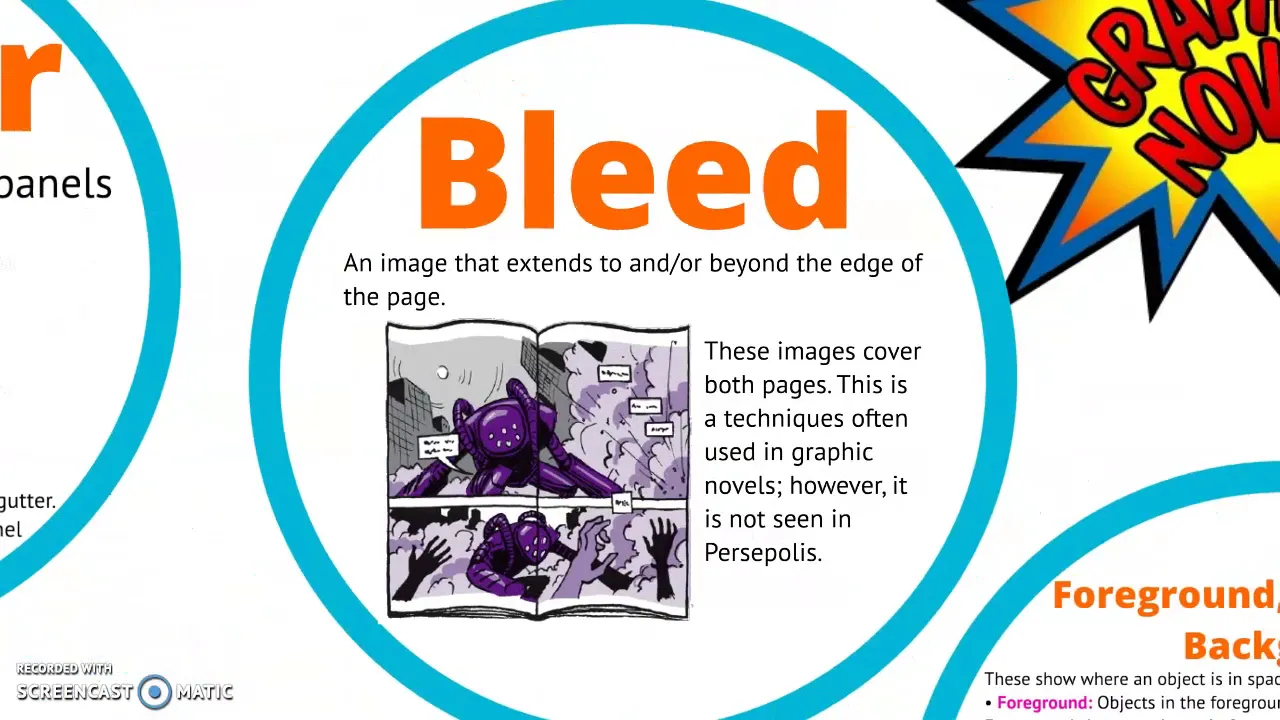
Graphic novels combine picture and text formats to tell novel-length stories, differing from traditional novels by using comic-style visual storytelling. Key structural elements include panels (individual frozen moments), frames (borders containing panels), and gutters (spaces between panels indicating narrative shifts). Reading follows a systematic left-to-right, top-to-bottom pattern. Visual elements like color, positioning, and spatial hierarchy convey mood and tone without text—dark colors create ominous atmospheres, and character placement establishes importance. Speech balloon shapes indicate speech intensity, with jagged forms suggesting screaming or shouting.
Click to watch →
VideoPodcast - EP51 Arquitectura en la Novela Gráfica
231
Graphic novelists represent memory through visual techniques that distinguish past from present, using simplified line work, minimal color palettes, and gradual fading effects. Memory is depicted as a process that gradually blurs reality, requiring artists to construct narratives showing how memories fade and transform. Artists use technology like Google Earth to research unfamiliar landscapes, combining visual research with personal memory to create authentic representations. Color serves as an emotional tool, with vibrant colors representing present reality and simplified palettes representing memory, allowing readers to visually recognize temporal transitions.
Click to watch →
Reading Graphic Novels: The Basics
14.5K
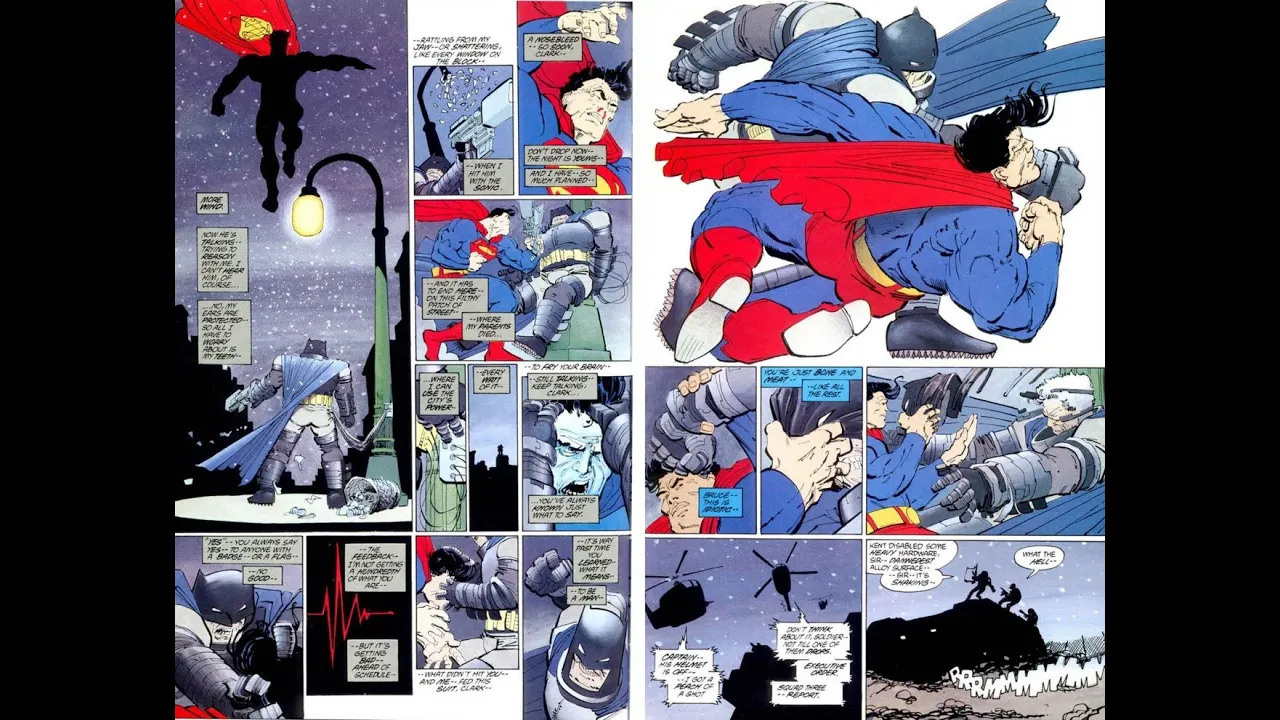
Graphic narratives consist of interconnected visual elements working together to tell stories. Icons represent people, places, things, or ideas—every visible element in a panel functions as an icon, from whole characters to their individual components. Panels serve as containers for these icons, representing moments in time like photographic frames. Borders frame panels and can vary in weight and color to affect emotional impact, while bleeds extend images to page edges. Gutters—the spaces between panels—function like film cuts, signaling time jumps, ellipses, flashbacks, or flash forwards. Splashes fill entire pages, and insets create panels within panels to indicate simultaneity or temporal distinction. Together, these elements form the visual grammar of graphic storytelling.
Click to watch →

Info2Go! Visual Literacy in Graphic Novels and Comics
433
Graphic novels have specific anatomical components: panels are individual images; gutters are spaces between panels; tiers are rows of panels; bleeds extend beyond page edges; splash pages are establishing shots; spreads are two-page layouts. Layout serves as visual grammar where spatial arrangement conveys meaning—small, repetitive panels imply speed while dramatic bleed panels create intensity. Every text type serves a purpose: speech bubbles for dialogue, thought balloons for internal thoughts, captions for narration, environmental text for context, and special effects lettering combining typography with illustration. Critical reading requires asking three questions: What is being presented? How is it being presented? Why were those decisions made? Focalization determines whose perspective the reader perceives, revealed through limited visual awareness and selective detail inclusion.
Click to watch →
Memoir Overview
Core Themes
Final Analysis
Memoir Overview
0:00- 1
Introduces Thi Bui's graphic memoir detailing family's escape from Vietnam.
- 2
Highlights the book's critical acclaim and awards won.
- 3
Frames narrative around themes of family, displacement, and motherhood.
Critical Refugee Studies and the Deconstruction of the 'Rescue Narrative'
While Thi Bui’s 'The Best We Could Do' is celebrated for its intimate portrayal of intergenerational trauma and refugee resilience, scholars in Critical Refugee Studies offer an alternative framework for analyzing such memoirs. This perspective cautions against the Western tendency to consume refugee stories through a comforting lens of 'rescue, gratitude, and recovery.' Critical theorists argue that focusing primarily on personal healing and successful assimilation can inadvertently depoliticize the narrative, allowing mainstream audiences to overlook the systemic, imperialistic root causes of the Vietnam War and the ongoing complicity of Western nations in displacing populations. Additionally, some conservative factions within the Vietnamese-American diaspora criticize nuanced, humanizing portrayals of both sides of the conflict, arguing that they risk diluting the historical atrocities of the North Vietnamese communist regime and marginalizing the struggle of the South Vietnamese (ARVN) soldiers.
Historical context of the Vietnam War, including the division of North and South Vietnam, the Fall of Saigon (1975), and the subsequent refugee crisis.
The concept of the 'boat people' and the migration patterns of Vietnamese refugees seeking asylum in Western countries.
An understanding of sequential art and the graphic memoir genre as a legitimate medium for serious historical and personal storytelling.
The psychological concept of intergenerational trauma and how family history shapes individual identity.
Exploring other seminal works of Vietnamese-American diaspora literature, such as Viet Thanh Nguyen's 'The Sympathizer' or Ocean Vuong's 'On Earth We're Briefly Gorgeous'.
Methodologies for conducting oral histories and family interviews to document personal ancestry and historical memory.
A deeper study of French colonialism in Indochina and its role in setting the stage for the Vietnam War.
Analyzing the visual techniques of graphic novels, such as color palette choices, panel layouts, and the use of gutters to represent memory and time.
1.5K views17likes4:35@LiterallyGraphicOriginal Release: 2022-05-14
hello and welcome my name is meepless they she he and this is literally graphic and today we are looking at the best we could do by t boy an illustrated memoir published by abrams comic arts in 2017 content notes for complicated pregnancy and birth plus child loss war hunger and escaping conflict according to her own website quote bui was born in vietnam and came to the united states in 1978 as part of the boat people wave of refugees fleeing southeast asia at the end of the vietnam war her debut graphic memoir the best we could do has been selected for the american book award a common book for ucla and other colleges and universities all city read by seattle and san francisco public libraries a national book critic circle finalist in autobiography and an eisner award finalist in reality based comics it made over 30 best of 2017 book lists including bill gates top five picks she illustrated the picture book a different pond written by the poet baufey for which she won a caldecott honor with her son with her son heen she co illustrated the children's book at chicken of the sea written by poulter winner viet tan nung and his son ellison her short comics can be found online at the nib pen america and boom california she is currently researching and drawing a work of graphic non-fiction about immigration detention and deportation to be published by one world random house end quote keywords that came to mind reading this book family motherhood dreams deferred escape legacy culture urban life choices and birth quote the best we could do the debut graphic novel memoir by t bowie is an intimate look at one family's journey from their war-torn home in vietnam to their new lives in america exploring the anguish of immigration and the lasting effects that displacement has on a child and her family but documents the story of her family's daring escape after the fall of south vietnam in the 1970s and the difficulties they face building new lives for themselves the heart of bowie's story is a universal struggle while adjusting to life as a first-time mother she ultimately discovers what it means to be a parent the endless sacrifices the unnoticed gestures and the depths of unspoken love despite how impossible it seems to take on the simultaneous roles of both parent and child bully pushes through with haunting poetic writing and breathtaking art she examines the strength of family the importance of identity and the meaning of home the best we could do brings life her journey of understanding and providing inspiration to all who search for a better future while longing for a simpler past end quote both writing and art in the best we could do are extremely skilled weaving many different strands of her family's story together into a book that is both hard and easy to read at the same time obviously for different reasons clearly a story from the perspective of one family coming out of vietnam when they did bowie does a good job of highlighting the differences that made each person's experiences their own gender was not terribly surprising pretty binary although as we dip pretty equally into the history of both of wee's heterosexual parents it did even out on that front that said there is a lot of heterosexual reproduction being vietnamese-american the social construct of race is fairly central even if a bit one note pretty average for a memoir colonization of vietnam was also touched on both in a reporting of history way but also in the ways it impacted both of bowie's parents lives and education both class and the failure of bodies to be perfectly able-bodied gets touched on a bit although it i wouldn't say they were central themes or purposefully deconstructed to conclude it was also interesting to see some light observation of vietnam after the bombing of hiroshima which having just read to manga on the topic perhaps jumped out at me a bit more than it would have otherwise i think i'm going to go with 4 out of 5 stars bye y'all keep reading and organized and capitalist depression and as always literally graphic is created on land that should be given back to the traditional land holders which in this case is to my knowledge the mississaugas of the credit first nation namashinabe people the whole nishoni confederacy and the huronwin dot nation
Up Next
29:01
Feminist Narrative Theory: A Conversation with Robyn Warhol
@ProfessorLatinX
636 views•2020-06-19

13:43
Formalism in Literary Criticism: An Academic Lecture Overview
@mattalberhasky9952
39.1K views•2015-08-05

6:08
Point of View in Fiction: First Person vs. Third Person
@magicalthriftyteacher
153.8K views•2014-03-31

15:25
1984: Orwell's Dystopian World and the Mechanisms of Totalitarianism
@AlternateHistoryHub
7M views•2017-03-04
Related Study Plans & Knowledge Roadmaps
Structured learning paths in Literature
literature
Graphic Memoirs: Visual Art, Trauma & History
01Foundations of Sequential Art and Visual Language
02Autographics and Processing Historical Trauma
03Visualizing Personal Trauma, Grief, and Graphic Medicine
+ 2 more learning modules
14h5 modules
Explore Roadmap
literature
Campus Novels: Evolution, Themes & Critique
01Introduction to the Campus Novel Genre
02Mid-Century Satire and the Post-War Academy
03Dark Academia and the Critique of Privilege
+ 2 more learning modules
14h5 modules
Explore Roadmap
literature
Theater of the Absurd: Philosophy & Plays
01Postwar Existentialism & Historical Roots
02Dismantling Narrative: Esslin & Absurdist Conventions
03Samuel Beckett and Tragicomic Existentialism
+ 2 more learning modules
12h5 modules
Explore Roadmap
literature
Revenge Tragedy: Justice, Madness & State
01Foundations of Early Modern English Theatre
02Anatomy of Revenge: Structural Conventions
03Psychological Complexity: Madness and Melancholy
+ 2 more learning modules
15h5 modules
Explore Roadmap