





![Pronumele personal în Engleză [I, You, He, She, It, We, They] Cum le folosim corect?](https://i.ytimg.com/vi/H_alkzDreeI/maxresdefault.jpg)



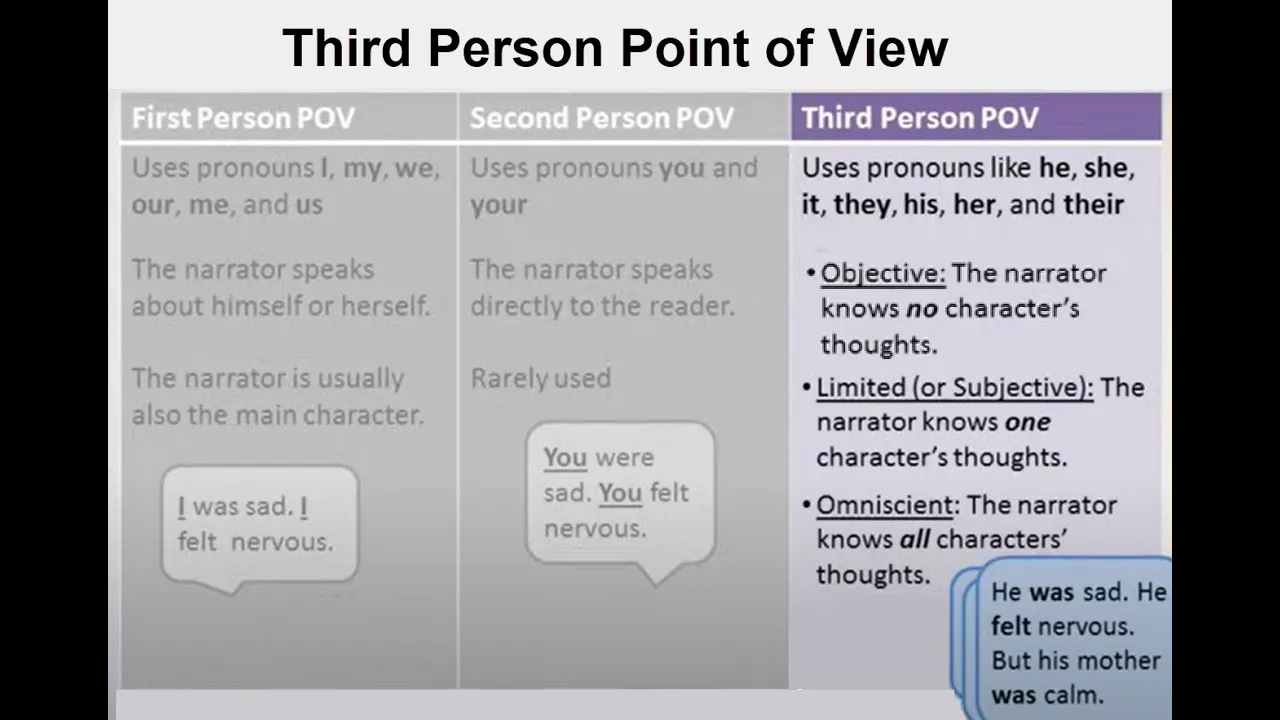
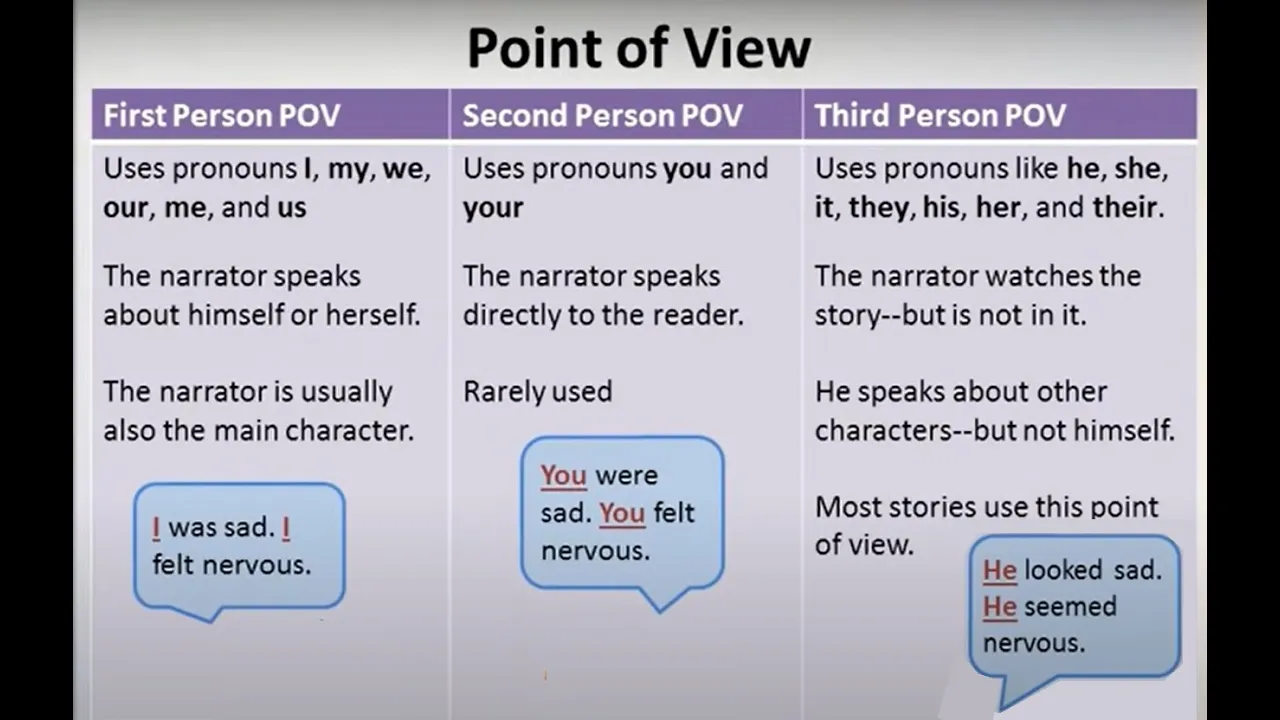


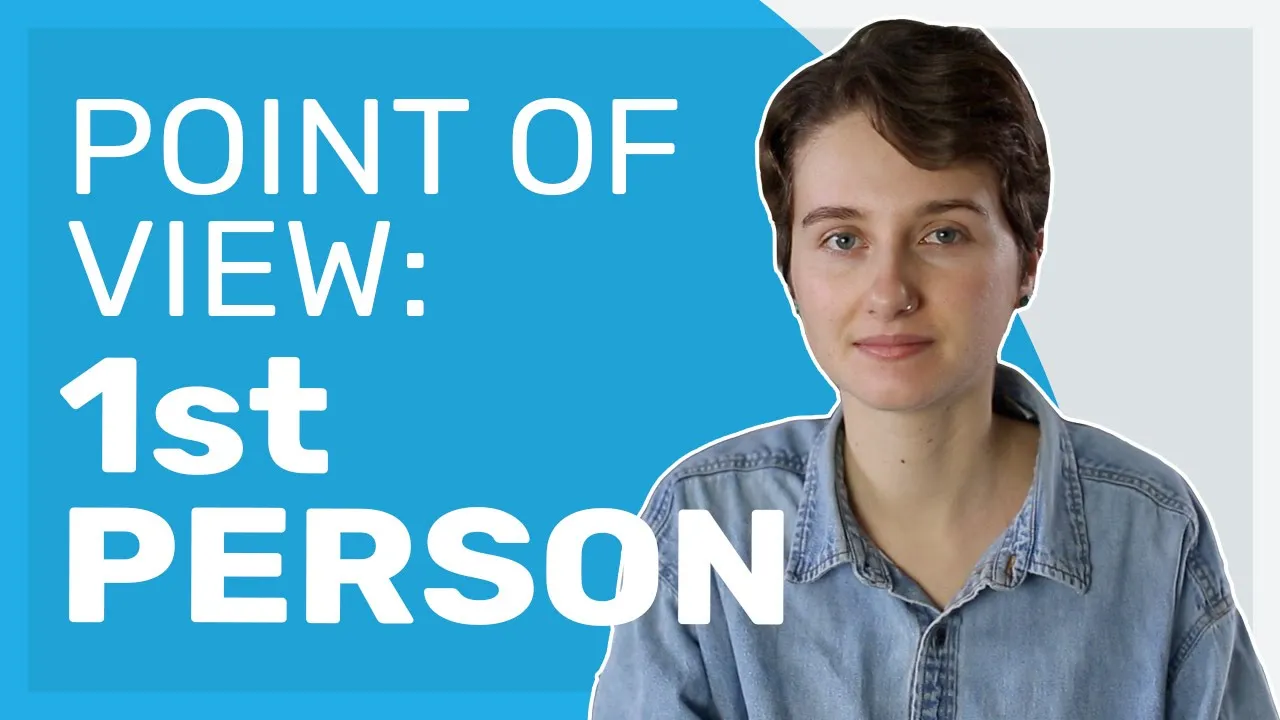








Point of view is the perspective from which a story is told, determined by the narrator; first-person point of view uses pronouns like 'I,' 'me,' and 'we' as a character within the story shares their personal experiences and limited perspective, while third-person point of view uses pronouns like 'he,' 'she,' 'it,' 'they,' and 'them' as an external narrator reveals the thoughts and actions of all characters in the story.
Point of View in Fiction: First Person vs. Third Person
Added:Understanding the difference between the author (the person who wrote the story) and the narrator (the voice telling the story).
Familiarity with personal pronouns (e.g., I, me, we, he, she, they) and their grammatical functions.
Basic comprehension of narrative structure, including characters, setting, and plot.
Distinguishing between the subcategories of third-person point of view: Limited, Omniscient, and Objective.
Exploring the concept of the 'unreliable narrator' and how first-person perspective can bias the delivery of a story.
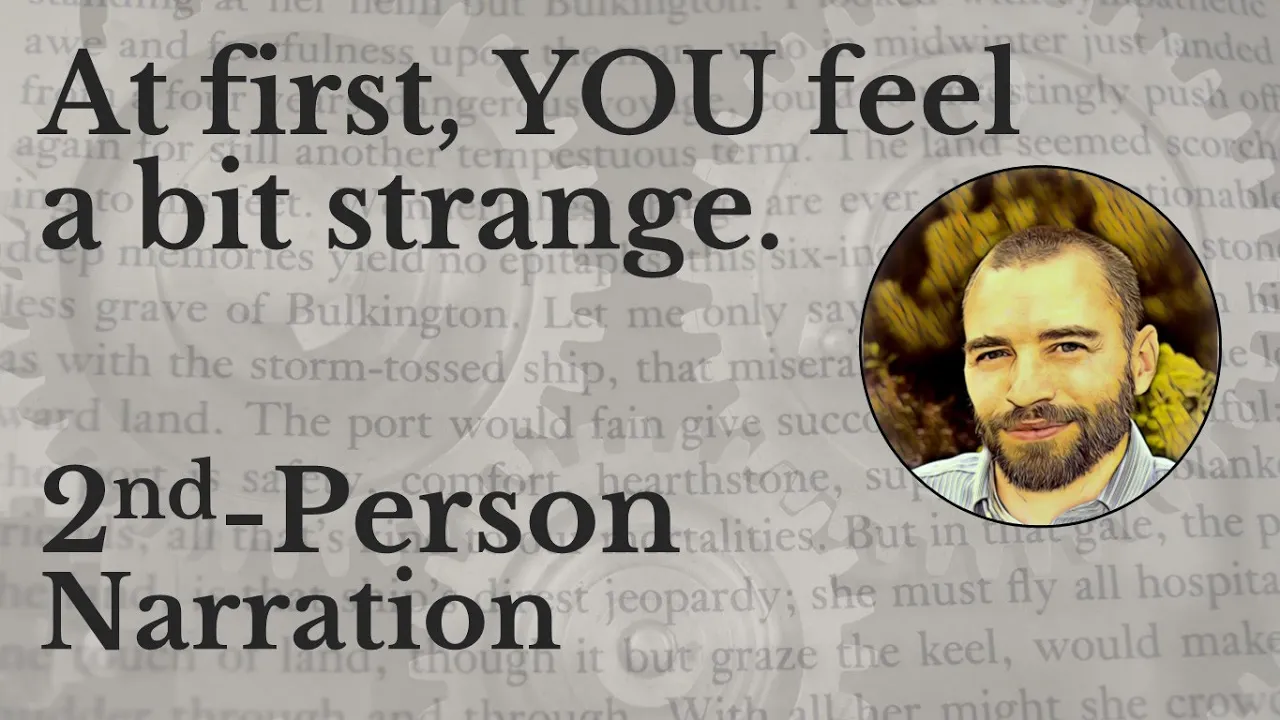
Understanding second-person point of view ('you') and its specific, less common applications in fiction.
Analyzing how a writer's choice of point of view affects the story's tone, pacing, and emotional connection with the reader.
153.8K views0likes6:08Original Release: 2014-03-31
hi guys it's miss Patrick and today we're going to be talking about point of view and what does it mean or what are the different kinds of points of view okay so we're just going to start off with definitions about point of view and what a narrator is point of view is the perspective or view from which the narrator tells the story this just means figuring out who is telling the story and just remember perspective just means view you can figure that out because there's a comma the word or and then the word view behind it so it's letting you know that perspective and view are synonyms for each other okay the narrator is the person or character who is telling the story so the narrator is actually the person who is giving you that story and believe it or not it can be someone that's in the story and it can also be a character that is not in the story but we're getting ready to learn more about that okay the first point of view that we're going to be talking about is first-person point of view okay so a good definition for it would be a character in the story is telling the story from his or her point of view that means somebody in the story is actually telling you the story and there are a few clues that you can look for in order to make sure that it's first-person okay some of the words you could look for I me we and us and need the words that I would use if I were telling a story I went to the mall yesterday I saw all my friends there we went and had lunch at the food court that lets you know I am actually telling you this story and here's an example down at the bottom today is my first day at a new school I have had butterflies in my stomach all morning I hope the other kids like me okay so let's go through and find some keywords okay today is my first day at a new school my is a keyword it lets me know that I am telling you the story about my first day I have had butterflies in my stomach all morning I used the word I and I also used it to describe the stomach it is my stomach I hope that other kids like me I have again used the word I and the word me those key words let me know that I am actually the person that is telling the story okay so let's move on the next point of view that we are going to be talking about is third person point of view you might say we're saved but we don't use second so much so we're actually not going to be talking about it this week third person point of view okay they did a good definition for it would be a person not involved in the actual story is telling the story including the thinking and actions of all characters that means somebody not in the story is telling you the story but this person that's not in the story is able to get all the juicy details from every single character tells you all the different characters thinking and all the different characters actions so you get to see it from outside of the story when I'm reading a third person point of view story or a novel book I always think kind of like I'm getting I'm able to look in through a window and see everything that's going on in the story whereas if I'm talking about a first-person point of view I'm only able to tell you what I see in the story okay clue words you can look for include he/she/it they and them so a good way to tell if it's third person is going to use the words he/she/it they and them in order to tell the story he went to the movies last night while he was there he met his friends they all went and had popcorn that's a good example okay so our example that we're going to try and find keywords in is the kids were excited about their first field trip they were visiting the beach Jack was really looking forward to seeing the shells on the beach he could hardly wait okay so we're going to circle some keywords okay and the first keyword I see is day okay that lets me know that none of them were actually telling the story then I am actually the person that is standing back and watching what's going on and I'm able to tell you the story okay I also see sometimes you can look and see the different characters names as a good clue to you and I also see the word he that lets me know that even though our story is about Jack that he's not actually telling our story I'm the person stay in the back looking in the window and telling you exactly what's going on in that story okay and the last thing we're going to look at it's a nice little review slide for us I've made a t-chart I've got first person on this side third person on this side and it's a good way to compare the two okay so in the first person is told by one character in the story that character is in the story they're not outside they're telling you exactly what they see think and hear but it only comes from what they see think are here you don't get any point of view from any other character other than the person that's telling the story okay and the third person is told by someone outside of the story you get all the juicy details about what's going on in every single character okay and the different clue words uses words like I mean we in us for first person they've heard the third person you would use words like he she it they or them and that's all I've got for today we'll be working on it later this week see you later
Up Next

79:21
Russian Formalism & Early Narratology: Literary Theory Origins
@siimstudiesonintermedialit4148
388 views•2020-05-01

13:43
Formalism in Literary Criticism: An Academic Lecture Overview
@mattalberhasky9952
39.1K views•2015-08-05
14:11
Understanding Unreliable Narrators in Storytelling
@OverlySarcasticProductions
852K views•2023-07-28

15:25
1984: Orwell's Dystopian World and the Mechanisms of Totalitarianism
@AlternateHistoryHub
7M views•2017-03-04
Related Study Plans & Knowledge Roadmaps
Structured learning paths in Literature
literature
Graphic Memoirs: Visual Art, Trauma & History
01Foundations of Sequential Art and Visual Language
02Autographics and Processing Historical Trauma
03Visualizing Personal Trauma, Grief, and Graphic Medicine
+ 2 more learning modules
14h5 modules
Explore Roadmap
literature
Campus Novels: Evolution, Themes & Critique
01Introduction to the Campus Novel Genre
02Mid-Century Satire and the Post-War Academy
03Dark Academia and the Critique of Privilege
+ 2 more learning modules
14h5 modules
Explore Roadmap
literature
Theater of the Absurd: Philosophy & Plays
01Postwar Existentialism & Historical Roots
02Dismantling Narrative: Esslin & Absurdist Conventions
03Samuel Beckett and Tragicomic Existentialism
+ 2 more learning modules
12h5 modules
Explore Roadmap
literature
Revenge Tragedy: Justice, Madness & State
01Foundations of Early Modern English Theatre
02Anatomy of Revenge: Structural Conventions
03Psychological Complexity: Madness and Melancholy
+ 2 more learning modules
15h5 modules
Explore Roadmap