Romantic Sublime: Nature, Emotion & Industry
Learning Goal: Evaluate the aesthetic concept of the Sublime in Romantic poetry and prose, analyzing how late 18th and early 19th-century writers used landscape and intense emotion to respond to the Industrial Revolution and scientific rationalism.
- Prerequisites: None (an interest in 18th/19th-century history, philosophy, or literature is helpful).
- Estimated Study Time: 12 Hours
Module 1: Historical Backdrop: Enlightenment to Romanticism
This module covers the profound historical transition from the Age of Enlightenment to the Romantic era. You will explore how the dominance of scientific rationalism, the mechanistic worldview, and the sudden, disruptive urbanization of the Industrial Revolution sparked a passionate, emotional counter-rebellion among artists, poets, and thinkers.

Why this video?
Tom Richey provides an essential historical and cultural breakdown of Romanticism as a direct rebellion against the cold, artificial rationalism of the Enlightenment and the ugly, mechanical realities of the Industrial Revolution. This video serves as the perfect historical baseline, setting up the key thematic dichotomies (reason vs. emotion, machines vs. nature) that define the era.
- Knowledge Checkpoint:
- Explain how the Romantic movement acted as a philosophical pendulum swing away from the Enlightenment.
- Define the core characteristics of the Romantic worldview, specifically its celebration of raw emotion over calculation.
- Contrast the Enlightenment view of nature (as a machine to be dissected) with the Romantic view of nature (as a living spiritual force).
Why this video?
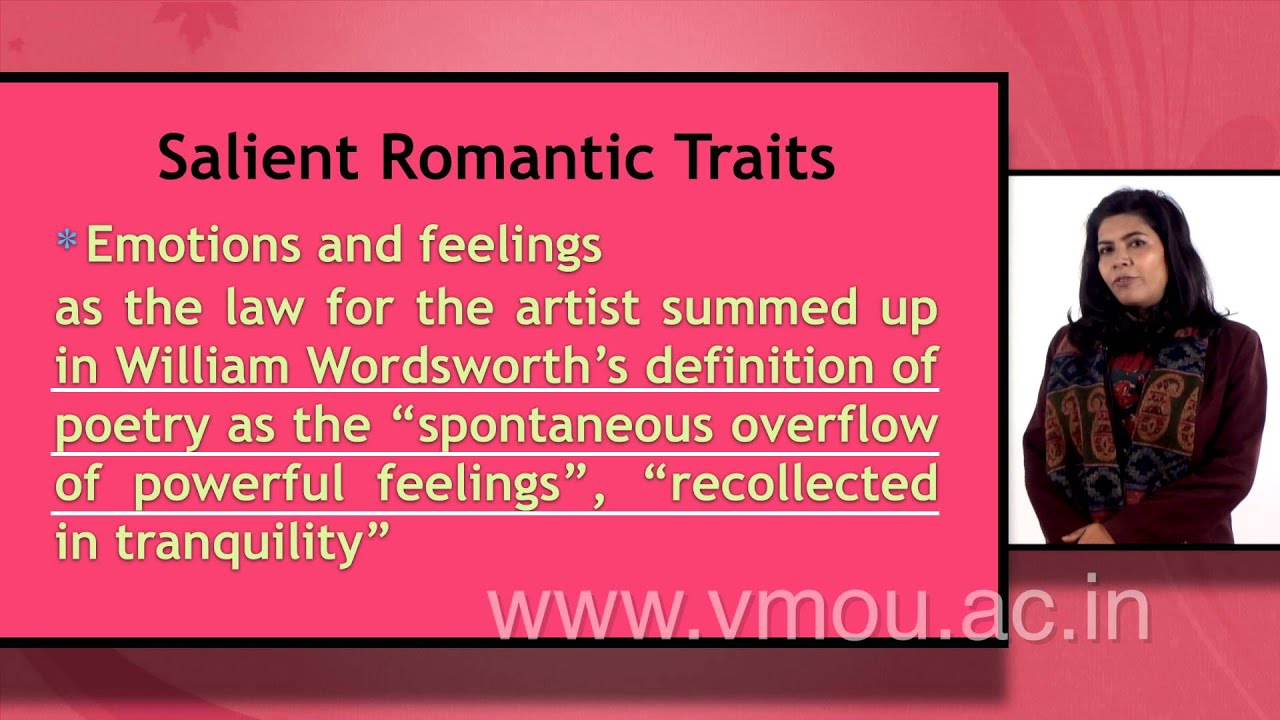
This presentation contextualizes the literary movement within its socio-political background, specifically highlighting the double impact of the French Revolution (which promised radical liberty) and the Industrial Revolution (which threatened human alienation). It outlines how English writers turned to pristine nature and emotional extremity as a refuge and battleground.
- Knowledge Checkpoint:
- Name the primary social and political catalysts that triggered the English Romantic movement.
- Articulate how the growth of factories and urban centers altered the human relationship with the natural landscape.
- Describe the literary shifts in form and theme that marked the transition out of 18th-century Neoclassicism.
Why this video?
This lecture dives deep into English literary history, defining the historical boundaries of the movement (roughly 1780 to the mid-19th century). It details how Romantic writers rejected the polished, orderly structures of Neoclassical poetry in favor of democratic language, common subjects, and the overwhelming emotional currents of the natural world.
- Knowledge Checkpoint:
- Identify the milestone publications and dates that traditionally bracket the English Romantic period.
- Distinguish between Neoclassical poetic conventions and the self-expressive, subjective ideals of Romantic writers.
- Explain how the concept of "democratic language" changed the accessibility and focus of poetry during this era.
Module 2: Philosophical Foundations of the Sublime
In this module, you will master the foundational aesthetic and philosophical definitions of "The Sublime." You will contrast Edmund Burke's physiological, terror-centered theory of the sublime with Immanuel Kant's cognitive-rationalist frameworks, understanding how the sublime was distinguished from the merely "beautiful."
Why this video?
This video offers a highly accessible explanation of Edmund Burke’s groundbreaking 1757 treatise. It explains why we are drawn to experiences that make us feel tiny, vulnerable, and astonished, and how Burke distinguished the smooth, harmonious qualities of "the beautiful" from the dark, vast, and terrifying qualities of "the sublime."
- Knowledge Checkpoint:
- Define the sublime according to Edmund Burke, paying close attention to his connection between the sublime and the instinct for self-preservation.
- List at least three physical qualities that Burke associated with the sublime (e.g., obscurity, power, vastness).
- Differentiate between a "beautiful" object and a "sublime" experience in Burkean aesthetics.

Why this video?
This concise philosophy tutorial unpacks Immanuel Kant’s complex theories of the sublime from his Critique of Judgment. It cleanly breaks down the crucial distinction between the "mathematical sublime" (scale beyond measurement) and the "dynamical sublime" (forces of immense power), showcasing how Kant relocated the sublime from the object itself to the human mind.
- Knowledge Checkpoint:
- Define Kant's "mathematical sublime" and explain how the mind processes an entity too vast for our senses to grasp.
- Define Kant's "dynamical sublime" and explain how human reason triumphs over the threatening physical power of nature.
- Describe the key shift Kant made from Burke: why is the sublime a property of our cognitive faculties rather than the physical object?

Why this video?
This academic lecture provides a deeper conceptual dive into the mechanics of Kant’s aesthetic judgments. It helps advanced learners understand how the free play of the imagination and reason generates the unique mixture of pain and pleasure that constitutes a genuine encounter with the sublime.
- Knowledge Checkpoint:
- Explain how the "pain" of the sublime's initial cognitive overwhelm transitions into the "pleasure" of rational comprehension.
- Explain how Kant’s concepts of the beautiful and the sublime relate to human moral feelings.
- Define the role of "imagination" when confronted with the infinite or the ungraspable.
Module 3: The Sublime Landscape in Romantic Poetry
This module shifts the focus to literary analysis, examining how major Romantic poets used wild, monumental, and untamed natural landscapes to provoke profound psychological, spiritual, and philosophical revelations.
Why this video?
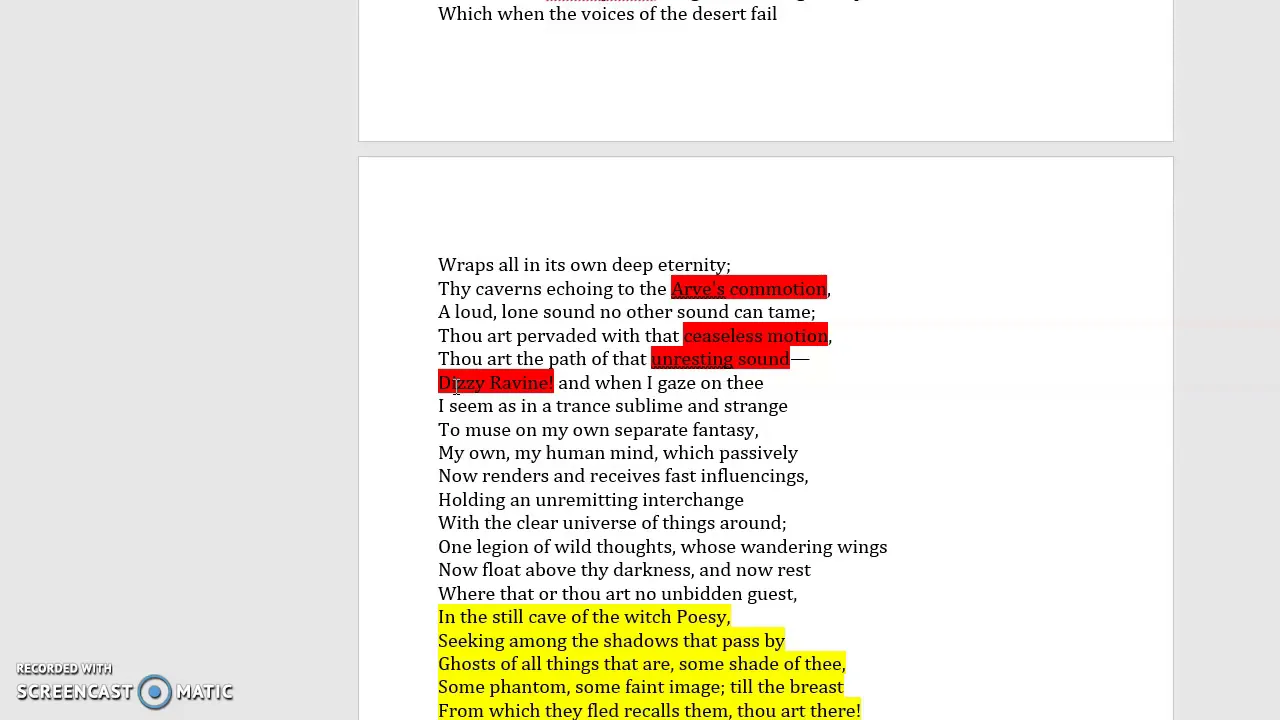
This close-reading lecture examines Percy Bysshe Shelley’s masterwork "Mont Blanc." It shows how Shelley uses Europe's tallest mountain not as a symbol of comforting divine order, but as a terrifying, chaotic, and indifferent monument to a supreme, impersonal creative/destructive force. It serves as an excellent case study of the poetic sublime.
- Knowledge Checkpoint:
- Analyze how Shelley departs from Wordsworth's view of a benevolent, moral nature in "Mont Blanc."
- Identify the poetic and rhetorical devices Shelley uses to convey the overwhelming scale and chaos of the Ravine of the Arve.
- Explain the philosophical relationship Shelley establishes between the human mind and the "secret Strength of things" represented by the mountain.
Why this video?
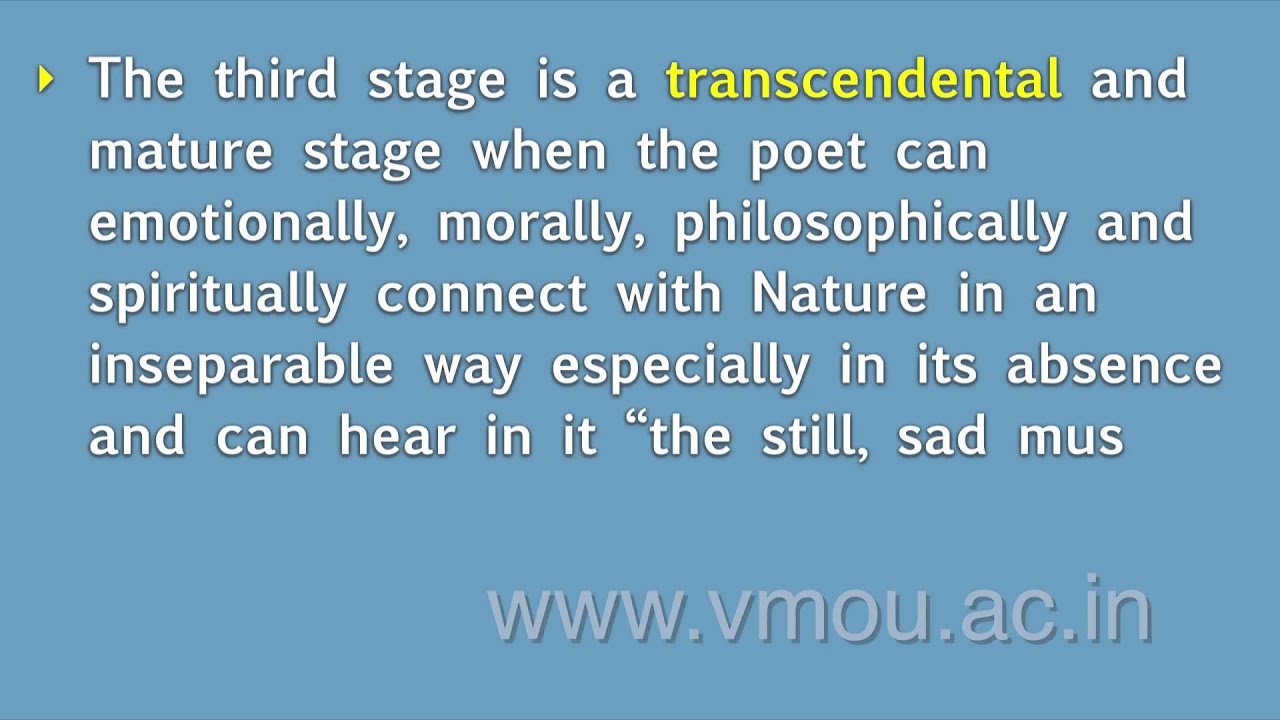
"Lines Composed a Few Miles Above Tintern Abbey" is the quintessential poem of memory, landscape, and the tranquil sublime. This lecture traces how William Wordsworth records the development of his mind through his interactions with the Wye Valley, demonstrating how memory of natural beauty acts as a spiritual anchor against "the din / Of towns and cities."
- Knowledge Checkpoint:
- Trace the three stages of Wordsworth's relationship with nature as outlined in "Tintern Abbey" (from physical/youthful to mature/spiritual).
- Explain what Wordsworth means by "a sense sublime / Of something far more deeply interfused."
- Analyze how the poem contrasts the restorative power of natural landscape memory with the alienating effects of urban, industrialized spaces.
Why this video?
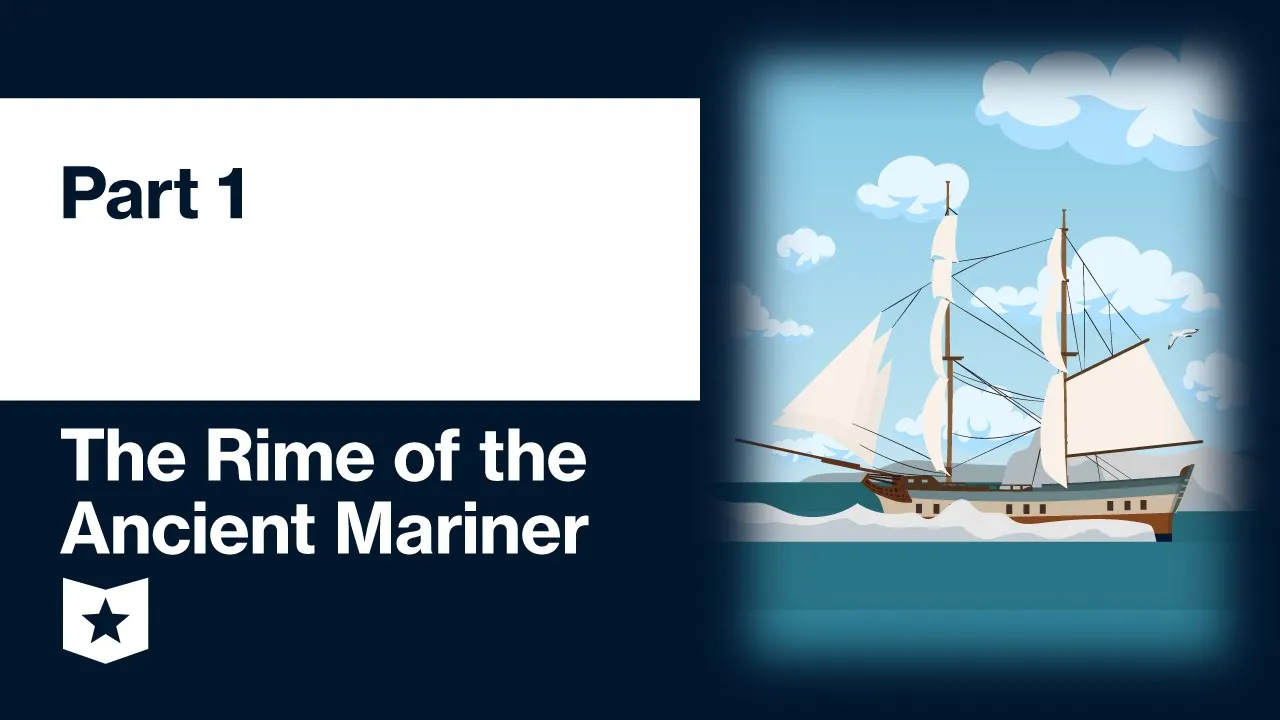
Though very brief, this video highlights the dark, supernatural, and oceanic sublime in Samuel Taylor Coleridge's famous ballad. It points out how the vast, hostile environments of the polar ice and the silent sea push the human protagonist beyond the boundaries of rational control, inducing an existential and spiritual crisis.
- Knowledge Checkpoint:
- Identify how Coleridge uses extreme physical environments (ice, open ocean) to evoke a sense of the sublime.
- Explain how the crew's experiences on the ocean represent the limits of human reason and control over nature.
- Discuss how the sublime in "The Rime of the Ancient Mariner" acts as a catalyst for a profound spiritual transformation.
Module 4: The Dark Sublime: Frankenstein and Scientific Hubris
This module examines the "Dark Sublime" within Gothic prose. We will focus on Mary Shelley's Frankenstein, analyzing how she uses the vast, terrifying landscapes of the Alps and the Arctic to critique Enlightenment scientific hubris, showing nature's overwhelming power as a corrective to human overreach.
⚠️ Curriculum Note (Video Coverage Gap): While the selected videos explore Frankenstein's Gothic elements and scientific contexts, there is a gap in our video pool regarding a highly specialized lecture that directly synthesizes Victor Frankenstein's scientific rationalism specifically with the aesthetics of the sublime.
To fill this gap, as you watch the resources below, keep in mind how Victor seeks to "penetrate the secrets of nature" (an aggressive, dissecting Enlightenment rationalism) and how nature repeatedly pushes back using the vast, sublime backdrops of Mont Blanc and the frozen North to reduce him to insignificance. For independent research, we recommend searching for:
"Frankenstein critique of scientific rationalism and the sublime""How Frankenstein warns against scientific hubris through nature"
Why this video?
Delivered by pioneering scholar Anne K. Mellor, this lecture explores the specific scientific contexts that influenced Mary Shelley, including Humphry Davy and Erasmus Darwin. It provides the intellectual history needed to understand how Frankenstein critiques the aggressive, dissecting impulse of modern science, contrasting it with a healthier, respectful appreciation of nature’s organic boundaries.
- Knowledge Checkpoint:
- Describe the differences between the scientific philosophies of Humphry Davy and Erasmus Darwin as presented in the lecture.
- Explain how Victor Frankenstein's scientific method represents an aggressive, masculine desire to dominate and master "Mother Nature."
- Discuss how the creation of the monster serves as a warning against separating scientific pursuit from moral and social responsibility.

Why this video?
This video directly links Burke's concepts of terror, obscurity, and power to the conventions of Gothic prose. It explains how Gothic settings (ruins, mountains, wild storms) rely on the psychological effects of the sublime to induce a state of productive terror in both characters and readers, pulling them out of comfortable everyday rationality.
- Knowledge Checkpoint:
- Outline how Gothic writers adapted Edmund Burke's concepts of terror and obscurity for fiction.
- Explain how "the sublime" differs from "ordinary horror" in Gothic literature.
- Identify how the vast landscapes in Frankenstein (like the Mer de Glace glacier) mirror the internal mental states of Victor and his Creature.
Why this video?
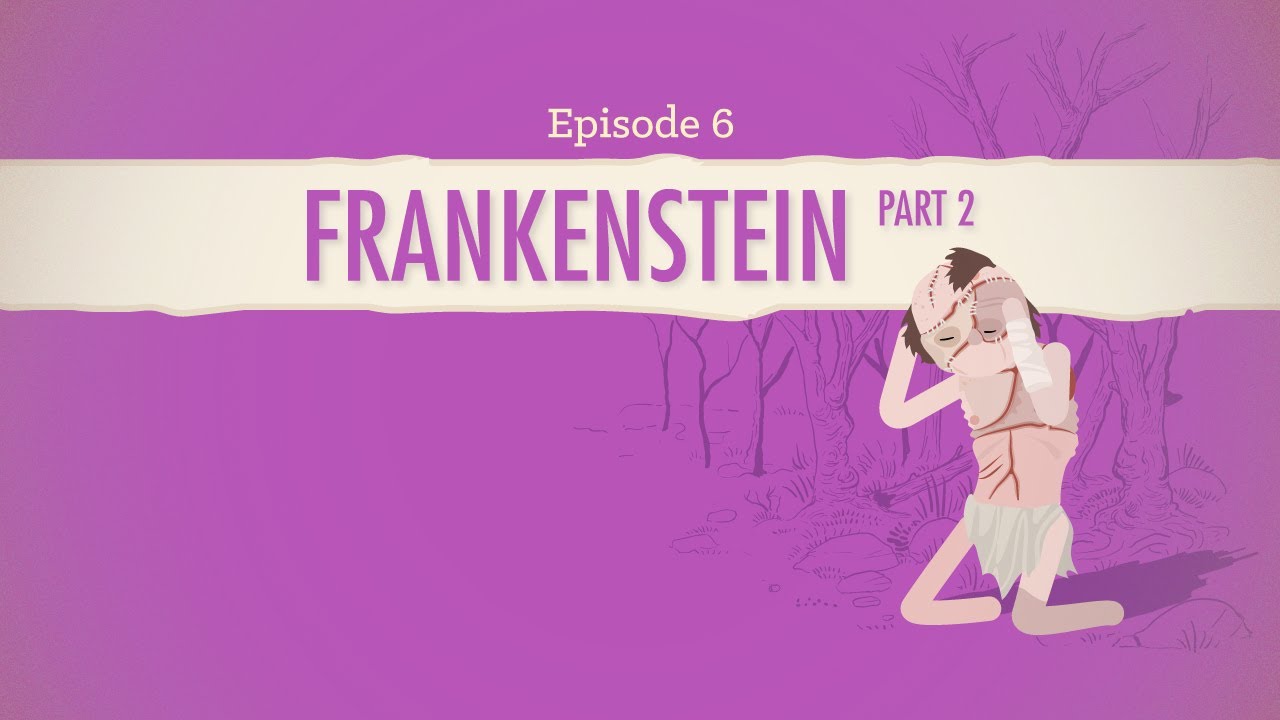
Although a brief segment, this video emphasizes Frankenstein's status as a quintessential Romantic novel because of its deep dive into radical, uncomfortable emotions. It notes how the narrative explores the limits of human ambition and the devastating emotional consequences of stepping outside the natural order.
- Knowledge Checkpoint:
- Explain why Frankenstein is classified as a Romantic novel rather than just a horror story.
- Describe the emotional spectrum (wonder, awe, horror) experienced by characters when facing the limits of human knowledge.
- Connect the Creature's rejection by society to the Romantic critique of civilized, urban prejudices.
Module 5: The Industrial Sublime: Literary and Visual Synthesis
In this final module, you will synthesize your understanding of the sublime by analyzing how late 18th- and early 19th-century writers and visual artists (particularly J.M.W. Turner and William Blake) shifted the aesthetic of "terror and awe" from wild nature to the giant machines, glowing furnaces, and dark factories of the Industrial Revolution.
⚠️ Curriculum Note (Video Coverage Gap): While the video pool contains fantastic resources on Turner's art and Blake's social critiques, there is no single video that directly synthesizes the precise theoretical term "Industrial Sublime" (the historical shift where the aesthetic vocabulary of mountain storms was transferred to train engines and iron mills).
As you watch the videos below, look closely at how Turner merges coal smoke with clouds and how Blake links mechanical wheels to demonic forces. To explore this synthesis further, we recommend independently searching for:
"The Industrial Sublime in 19th century art and literature""Turner JMW industrial sublime landscape representation"
Why this video?
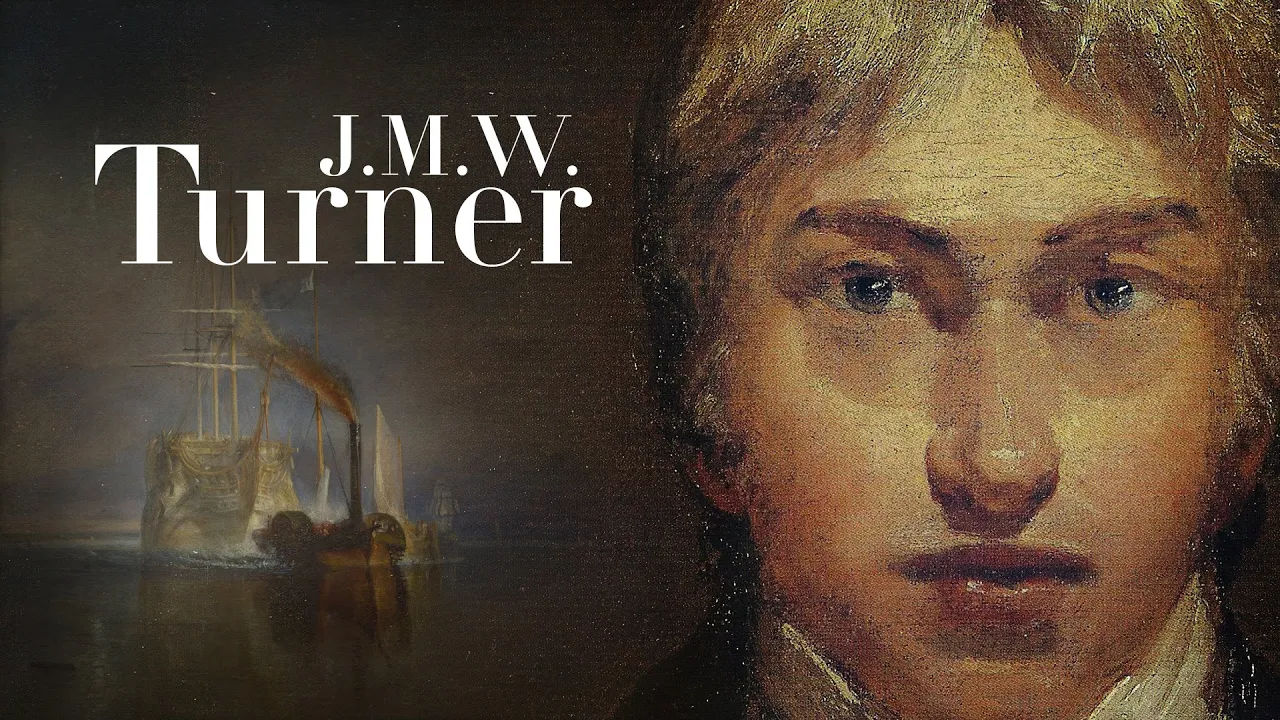
This video analyzes J.M.W. Turner's masterwork, The Fighting Temeraire, and other paintings that document the dawn of the steam age. It showcases how Turner used a dramatic, sublime visual vocabulary—blending fire, smoke, water, and shadow—to depict the transition from majestic wooden warships to ugly, highly efficient coal-powered steam tugs.
- Knowledge Checkpoint:
- Explain how Turner's The Fighting Temeraire serves as a visual metaphor for the end of an era and the rise of industrial technology.
- Describe how Turner uses the elements of light, smoke, and water to evoke a sense of the sublime in his industrial landscapes.
- Analyze how workers are depicted in industrial paintings like Keelmen in coals by moonlight, noting how they are integrated into a grand, overwhelming environment.

Why this video?
This biographical and philosophical profile highlights William Blake's fierce opposition to the institutional and industrial forces of his day. It outlines his core critique: that the Industrial Revolution was transforming flesh-and-blood human beings into mere cogs in machines, alienating humanity from both nature and the divine imagination.
- Knowledge Checkpoint:
- Explain what William Blake meant by his critique of the Industrial Revolution "making man a machine."
- Identify Blake's perspective on the relationship between institutional authority (churches, governments) and the mechanical systems of factories.
- Discuss how Blake's holistic worldview (imagination, spirit, and matter interconnected) directly opposed the dissecting rationalism of his century.

Why this video?
This art history documentary explains how Turner transformed landscape painting from a simple decorative craft into a complex, expressive genre capable of expressing grand historical and philosophical ideas. It outlines his revolutionary use of loose brushwork and atmospheric effects to convey nature's chaotic, ungraspable forces.
- Knowledge Checkpoint:
- Discuss how Turner elevated the status of landscape painting in the British art world.
- Explain the connection between Turner’s loose, expressive painterly style and the emotional impact of the sublime.
- Contrast Turner's depiction of a chaotic, dynamic nature with the static, orderly landscapes of previous generations.
Course Map
Key People Index
- Edmund Burke (1729–1797): Irish philosopher and statesman whose 1757 treatise A Philosophical Enquiry into the Origin of Our Ideas of the Sublime and Beautiful laid the psychological groundwork for Romantic aesthetics by defining the sublime through themes of terror, obscurity, and power.
- Immanuel Kant (1724–1804): German philosopher who, in his Critique of Judgment (1790), redefined the sublime as a cognitive phenomenon. He divided it into the "mathematical" (overwhelming scale) and "dynamical" (overwhelming force) sublime, arguing that the experience ultimately reveals the moral and rational superiority of the human mind over nature.
- William Wordsworth (1770–1850): Pioneer of English Romantic poetry who defined poetry as the "spontaneous overflow of powerful feelings." His landscape poetry treated the natural world as a benevolent, moral guide capable of elevating human consciousness.
- Percy Bysshe Shelley (1792–1822): Radical Romantic poet who depicted nature not as a gentle teacher, but as a wild, indifferent, and dynamic force of cosmic destruction and creation.
- Mary Shelley (1797–1851): Author of Frankenstein (1818), who blended Romanticism and Gothic horror to warn against the consequences of arrogant scientific rationalism disconnected from empathy and natural boundaries.
- William Blake (1757–1827): English visionary poet, painter, and printmaker who fiercely criticized the rise of industrialization ("dark satanic mills") and scientific materialism for destroying the human imagination.
- J.M.W. Turner (1775–1851): Groundbreaking English landscape painter whose innovative, highly atmospheric, and semi-abstract style captured the terrifying power of both natural storms and early industrial machinery.
Final Self-Assessment
Complete this comprehensive self-assessment to verify your mastery of the aesthetic concept of the Sublime and its relation to the Industrial Revolution and scientific rationalism.
- Distinguish between the Beautiful and the Sublime: Can you explain the difference using both Burke's physiological criteria (smoothness/harmony vs. terror/obscurity) and Kant's cognitive criteria?
- Describe the Transition from Enlightenment to Romanticism: Can you explain how the Romantic movement acted as a direct rebellion against the scientific rationalism and mechanistic worldviews of the 18th century?
- Analyze Wordsworth's Sublime: Can you trace how natural landscape acts as a restorative, spiritual force in "Tintern Abbey," specifically contrasting it with the alienating effects of industrial cities?
- Analyze Shelley's Sublime: Can you contrast Shelley's view of Mont Blanc as an indifferent, chaotic force with Wordsworth's gentler, moral view of nature?
- Evaluate Frankenstein's Critique of Science: Can you explain how Mary Shelley uses the Arctic and Alpine sublime as a physical corrective to Victor Frankenstein's arrogant attempt to dominate nature?
- Define the 'Industrial Sublime' in Visual Art: Can you explain how J.M.W. Turner used the aesthetics of fire, water, and shadow to elevate industrial engines and coal ships to the level of sublime art?
- Understand Blake's Critique of Industry: Can you explain William Blake's concept of "dark satanic mills" and why he believed industrialization alienated the human spirit?
- Explain Kantian Cognitive Pleasure: Can you explain why, under Kant's dynamical sublime, the human mind ultimately experiences pleasure when confronted with a terrifyingly powerful natural force?