




















Immanuel Kant distinguishes two types of the sublime: the mathematical sublime, where the sheer quantity or vastness of things (like starry skies or ocean horizons) overwhelms our senses but our understanding can form concepts of large numbers to overcome this limitation, and the dynamic sublime, where powerful natural forces threaten our physical well-being but our capacity for reason and understanding gives us superiority over nature, allowing us to feel threatened yet ultimately overcome.
Kant on the Mathematical and Dynamic Sublime
Added:Immanuel Kant's epistemology, specifically the distinction between the faculties of Understanding (Verstand) and Reason (Vernunft) as detailed in the Critique of Pure Reason.
The fundamental concepts of Kant's aesthetic theory in the Critique of Judgment, particularly the definition of 'disinterested pleasure' and the nature of aesthetic judgments.
The distinction Kant draws between the 'Beautiful' (which is associated with form, limitation, and harmony) and the 'Sublime' (associated with formlessness and boundlessness).
Edmund Burke's earlier empirical treatise on the Sublime and Beautiful, which heavily influenced Kant's transcendental approach to the same topic.
The connection between the Sublime and Kantian Ethics, specifically how the dynamic sublime reveals our moral superiority and freedom over physical nature.
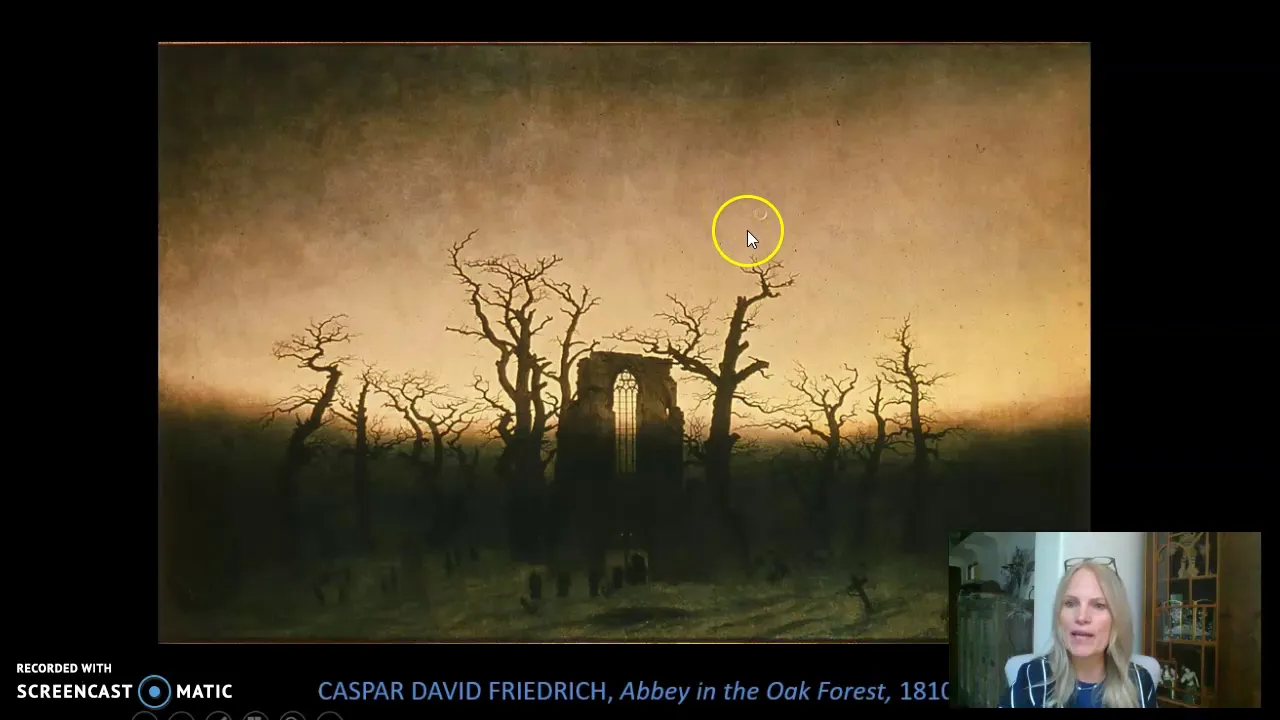
The representation of the sublime in 18th and 19th-century Romantic art and literature, such as the landscape paintings of Caspar David Friedrich and the poetry of William Wordsworth.
Jean-François Lyotard's postmodern reinterpretation of the sublime, exploring how the unrepresentable manifests in modern art and avant-garde movements.
The contemporary 'technological sublime' or 'ecological sublime', examining how modern technology and global environmental crises evoke similar feelings of overwhelming scale and power.
10.8K views433likes6:58Original Release: 2020-10-06
so last week and this week we've been talking about theories of art that pay special attention to the aesthetic feelings that they engender in us and i was explaining last week that these aesthetic feelings are supposed to be special sorts of feelings that are of a certain kind different from feelings of taste or smell or touch and usually the the the aesthetic feelings that are noted are one beauty which we talked about last week and this week we're talking about a second kind of aesthetic emotion or feeling namely the sublime now what the heck do people mean by the sublime well uh in general the sublime is supposed to be a feeling in which you feel threatened by something but then feel your own ability to overcome this thing that is threatening you so in the readings this week i've given you uh two readings again one by kant and the way that he talks about the sublime and another by uh schopenhauer and uh his characterization of the sublime so i'll talk about kant first so kant has two different kinds of sublime he says there's the mathematical sublime and there's the dynamic sublime and for him the difference is in the different ways that these uh things we encounter threaten to overwhelm us or or overcome us in some way so the with the mathematical sublime what threatens to overcome us is the sheer quantity or number of things so kant thinks that we can experience the feeling of the mathematical sublime when say you go up and look at the stars at night especially if you're like out on the the beach in lake michigan away from all the city lights and you just see there's so many stars it just outstrips the power of your uh your senses to be able to count them all and to perceive the full number of stars you might also experience the feeling of the mathematical sublime looking out on the horizon of lake michigan or the ocean and realizing that the expanse the distances are just so vast you can't really capture with your sight of the horizon just how vast those distances are so there's the sense in which the sheer number of stars or the sheer size of the earth overwhelms our ability in sensation to capture those things so that's kind of the the first part where we have these things threatening us then kant says but aha if you remember back to his idea of how our mind works last week we've got the sensation and and that's the part of our mind that's being overwhelmed in these cases but we also have this capacity for understanding our ability to form cons concepts or ideas of things so even though looking at the starry skies at night outstrips the ability of our senses to grasp how many stars they are we can form concepts like the concept of two or 3 or 560 billion and we can think about huge numbers by using these number concepts i can think about the idea of 682 billion stars even though when i try to like capture that in my vision it's going to outstrip my senses but i have this amazing mental property of the understanding that gives me concepts like billions and trillions and therefore i'm able to overcome this limitation of my senses by using my concepts and it's the feeling that i get when i realize oh this is so cool i've got this amazing unique human capacity to form concepts of billions and trillions that allows me to overcome the the the weakness of my senses and capturing really big stuff so that is kant's notion of the mathematically sublime now he also has the second notion the notion of the dynamic sublime and with the dynamic sublime what is threatened in us is our own physical well-being we realize oh man you know humans are tiny and fragile and easily killed and that can be very frightening to consider especially if you go out and say look at the ocean during a storm and you realize oh my gosh that can just snap me in half like i'm nothing or if you say um i don't know look upon a tornado and realize oh yeah that threatens my physical well-being as well so we have the sense of being threatened by the powerful forces of nature which are able to overwhelm us but yet at the same time kant points out yeah but there's one thing that you and i have that this tornado or the giant storm at sea doesn't have we again have this ability for understanding for having these concepts in which we're able to look out at the world and think about the world and categorize it and reason about it and that huge wave on the ocean however powerful it is it doesn't have that capacity that giant tornado that fire tornado out in california that doesn't have the capacity to understand and think about us the way we are able to understand and think about that tornado and conceptualize it as a tornado and once you realize that oh you get this feeling of the sublime where you realize oh yes there's lots of stuff in the world that threatens my physical well-being and yet i have some power over nature that it doesn't have over me i'm able to think about it in a way that it's never able to think about me and so again we have this feeling of the sublime where we feel ourselves having this ability and power to uh to to confront and overcome things that are otherwise seriously dangerous and threatening to us and so kant thinks yes there are certain sorts of art that put us in this position where we can contemplate the danger and the immensity of the universe that threatens to overcome and overwhelm us and yet allows us nonetheless in the safety of the art gallery to recognize our own superiority when it comes to our intellect and give us this feeling of the sublime
Up Next

38:09
William Blake: The Visionary Poet and Artist Who Defied Reality
@Eternalised
827K views•2022-04-11

131:21
The Arcades of Paris: Walter Benjamin on Urban Politics & Philosophy
@internationalcentreforcont7204
2.3K views•2013-06-19
4:58
Danto's Artworld Theory: Redefining Art Through Institutional Context
@andrewknoll8403
5.3K views•2020-11-09
4:57
The Myth of Sisyphus: A Greek Legend of Eternal Punishment
@TEDEd
8.6M views•2018-11-13
Related Study Plans & Knowledge Roadmaps
Structured learning paths in Philosophy
philosophy
Philosophy of Death (Metaphysics, Harm & Grief)
01Introduction to the Metaphysics of Death
02Is Death Bad? Epicureanism vs. The Deprivation Account
03Lucretius's Symmetry Puzzle
+ 2 more learning modules
15h5 modules
Explore Roadmap
philosophy
Frankfurt School: Critical Theory & Culture
01Foundations of the Frankfurt School and Critical Theory
02Horkheimer & Adorno: The Critique of Instrumental Reason
03The Culture Industry and Mass Deception
+ 2 more learning modules
12h5 modules
Explore Roadmap
philosophy
Philosophy of Language: From Frege to Austin
01The Linguistic Turn: An Introduction to Language in Philosophy
02Gottlob Frege: Sense and Reference
03Early Wittgenstein: The Picture Theory of Meaning
+ 3 more learning modules
15h6 modules
Explore Roadmap
philosophy
Feminist Epistemology: Standpoint & Injustice
01Introduction to Epistemology and Feminist Critiques
02Sandra Harding and Standpoint Theory
03Donna Haraway and Situated Knowledges
+ 2 more learning modules
12h5 modules
Explore Roadmap