












![John Harvey reading Contending Perspectives: Chapter 7: Institutionalism [EDITED]](https://i.ytimg.com/vi/vzDnOwH_9TY/maxresdefault.jpg)

![🟢 TERÇA PROFÉTICA [AO VIVO] | APÓSTOLO EDILSON POMINI 03/02/2026](https://i.ytimg.com/vi/oxSbyUMqY3s/maxresdefault.jpg)


Arthur Danto argues that art cannot be defined by inherent properties of objects themselves (such as imitation, as proposed by Plato), but rather by whether something fulfills a specific role within the 'art world'—a human-made institution including museums, critics, and art historians—that confers artistic status on objects through social and institutional context rather than intrinsic qualities.
Danto's Artworld Theory: Redefining Art Through Institutional Context
Added:The Mimetic Theory of Art: Understanding traditional definitions of art based on representation, imitation (mimesis), and physical beauty, dating back to Plato and Aristotle.
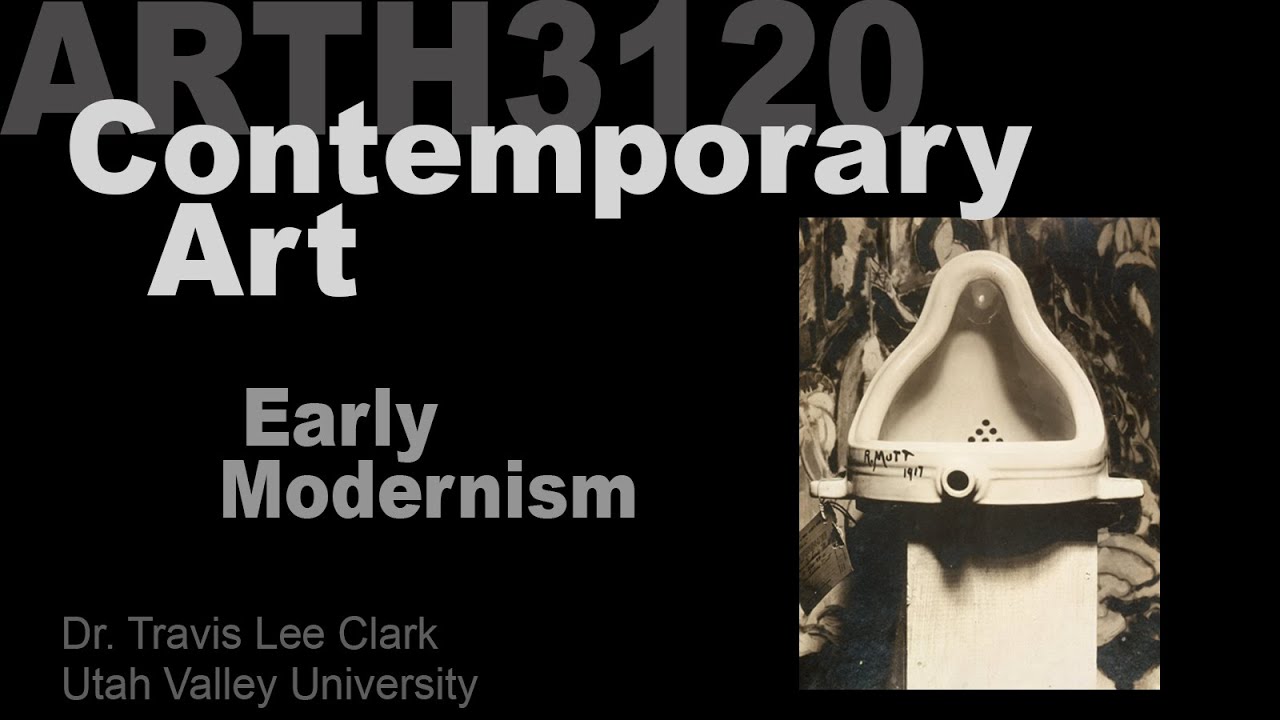
The Dada Movement and Duchamp's Readymades: Familiarity with how Marcel Duchamp's 'Fountain' challenged traditional aesthetic values and forced a paradigm shift in defining art.
The Distinction between Aesthetic and Artistic Properties: Grasping how an object's sensory properties (how it looks) differ from its artistic meaning and historical significance.
Basic Concepts in Aesthetics: Familiarity with the foundational philosophical question 'What is art?' and the limits of purely formalist definitions.
George Dickie's Institutional Theory of Art: Exploring Dickie's formalization of Danto's ideas, specifically how the 'artworld' confers the status of candidate for appreciation.
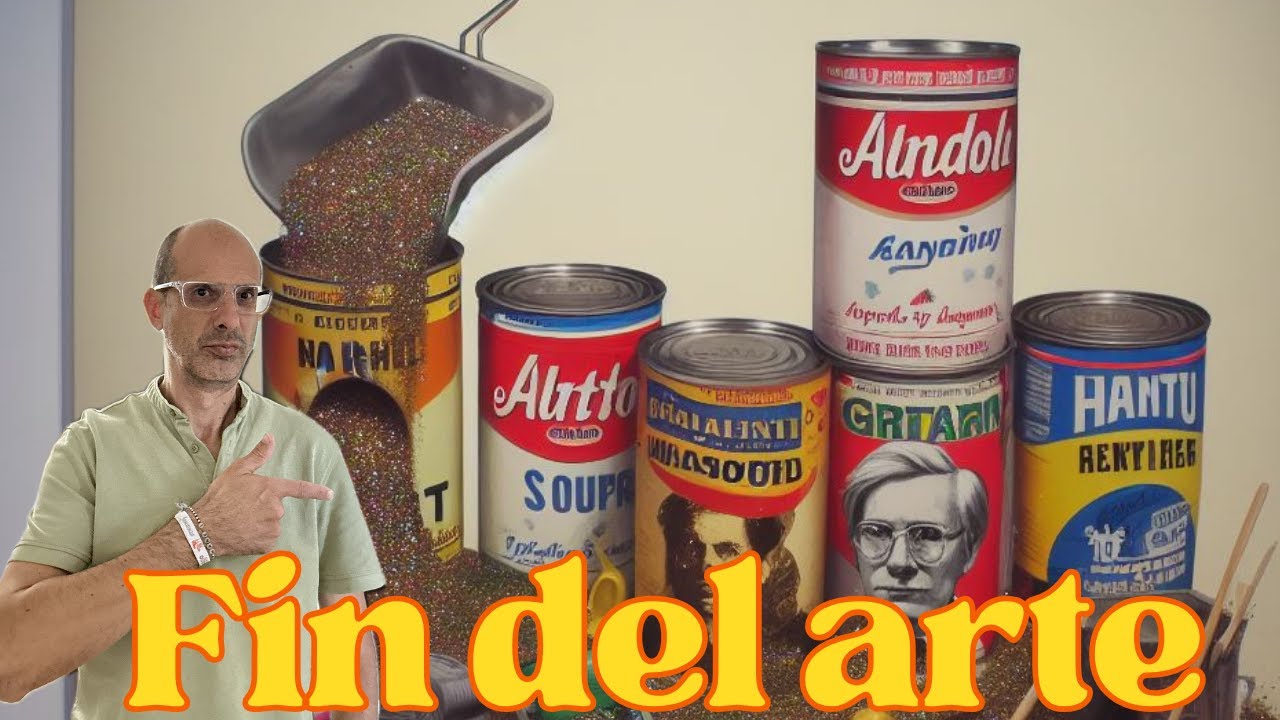
Arthur Danto's 'The End of Art' Thesis: Examining Danto's philosophical claim that art history, as a progressive narrative of self-definition, reached its end with Andy Warhol's Brillo Boxes.
Critiques of Institutionalism: Analyzing major objections to the theory, including issues of circularity, institutional elitism, and its struggle to explain 'outsider' or 'indigenous' art.
Application to Contemporary Art: Investigating how the institutional theory applies to modern artistic phenomena like street art (e.g., Banksy), conceptual art, and digital assets like NFTs.
5.3K views83likes4:58Original Release: 2020-11-09
OK. We're back talking about the definition of art we saw that Weitz thinks like, well, you're just not going to get a definition of art that's got necessary and sufficient conditions.
But the last three philosophers up teed up for us. Think actually we can do that.
And the first one here is Don Tō with his essay on the art world.
And he says, yeah, if you're looking for something that's a property of the particular object itself, like a painting or a sculpture, and you want to say that's what makes it are that what's what doesn't make it out.
Yeah. Vises. Right. That's going to be really difficult.
But what we can do is determine what things count as art by looking at not just a property of those things themselves, but at properties of how they are related to people and to the institutions like art museums that we set up.
So ultimately, he's going to come to this idea that art works, whether something is an artwork or not, is determined by whether it fills a certain role in a human made institution, which he calls the art world.
So that's where he's going. He's got to do a lot of work to get us to that point.
So this first little explainer, all I'll just kind of go over the first part of his essay and some of the considerations that he's looking at.
So the first thing he does is look at a couple of different theories of what art is, different definitions of art that seem to have popped up in history.
And we've seen these all before. It's the benefit of taking a static class.
So if you go back to Plato, you get this idea that, yeah, R is just imitation.
What makes something art is that it is an imitation being an imitation as a necessary and sufficient condition for something being an artwork.
And right off the bat, Don does as well. Look, come on.
This was never going to work cause, you know, if it's really true that being an imitation is a sufficient condition, not being art, all you have to do to be art is to just be an imitation of something else.
Well, then, gosh, you can make art just by walking in the mirror and boom, you've made an imitation of yourself.
That image of you in the mirror is art because it is an imitation.
And Danto says come out. Clearly, that's not art as much as you like the way you looked and all that.
Just looking in the mirror, does it make the image in the mirror a piece of artwork?
It just doesn't count as an artwork.
So that's one reason right off the bat why this imitation theory that you get from Plato isn't going to work as a definition for Jonjo.
Now he acknowledges, well, you know, like maybe you can try and patch it up a little bit, add some some further conditions.
Maybe it's not merely sufficient to that to be an artwork that it's an imitation.
Maybe it needs some some necessary conditions, like it's an imitation that's created through the effort of a person manipulating some other material or something like that.
Maybe maybe that's a definition of of art that would rule out these images in the mirror.
So what he points out is that historically, yes, something like that definition is what what people were working with throughout most of of history.
So you've got stuff like this, The Transfiguration of Christ by Rafael Humber, the right there, or that specific painting of a stag by Landseer where clearly these art pieces are imitative.
One is is imitating the vision of Jesus being being transfigured.
The other is imitating. Well, Steg. Out there in the wild.
And that seemed to work pretty well for these things.
But he says, look, this imitation theory that goes all the way back to Plato started to break down in the late 19th century.
And we've already seen why. Because you start getting paintings like like these.
Bye bye, post-impressionist. Like Van Gogh's Starry Night paintings by Toulouse Lautrec, other paintings by by Van Gogh and Dog Gannes Zon, where it's clearly not the case that they're trying to imitate what it is that they're seeing and they're adding something more in their Van Gogh is making hold these swirly patterns that really don't imitate anything that anyone has actually seen in the sky.
So you've got to have some other theory, too, to account for. Well, what makes these art?
Cause if art is just like imitation, clearly there's more going on here than merely imitation.
So we needed this new theory, which is why who calls the reality theory that.
Up Next

12:58
Kant's Theory of Beauty and Taste | Critique of Judgment
@OverthinkPodcastPhilosophy
74.8K views•2023-06-09

164:01
John of Damascus on Holy Images: A Theological Defense
@BannedBooks
139 views•2026-04-25

6:58
Kant on the Mathematical and Dynamic Sublime
@andrewknoll8403
10.8K views•2020-10-06
4:57
The Myth of Sisyphus: A Greek Legend of Eternal Punishment
@TEDEd
8.6M views•2018-11-13
Related Study Plans & Knowledge Roadmaps
Structured learning paths in Philosophy
philosophy
Frankfurt School: Critical Theory & Culture
01Foundations of the Frankfurt School and Critical Theory
02Horkheimer & Adorno: The Critique of Instrumental Reason
03The Culture Industry and Mass Deception
+ 2 more learning modules
12h5 modules
Explore Roadmap
philosophy
Philosophy of Language: From Frege to Austin
01The Linguistic Turn: An Introduction to Language in Philosophy
02Gottlob Frege: Sense and Reference
03Early Wittgenstein: The Picture Theory of Meaning
+ 3 more learning modules
15h6 modules
Explore Roadmap
philosophy
Feminist Epistemology: Standpoint & Injustice
01Introduction to Epistemology and Feminist Critiques
02Sandra Harding and Standpoint Theory
03Donna Haraway and Situated Knowledges
+ 2 more learning modules
12h5 modules
Explore Roadmap
philosophy
Environmental Philosophy: Ethics & Deep Ecology
01Foundations of Environmental Ethics & Anthropocentrism
02Biocentric Individualism and Animal Liberation
03Ecocentric Holism and Deep Ecology
+ 1 more learning modules
10h4 modules
Explore Roadmap