











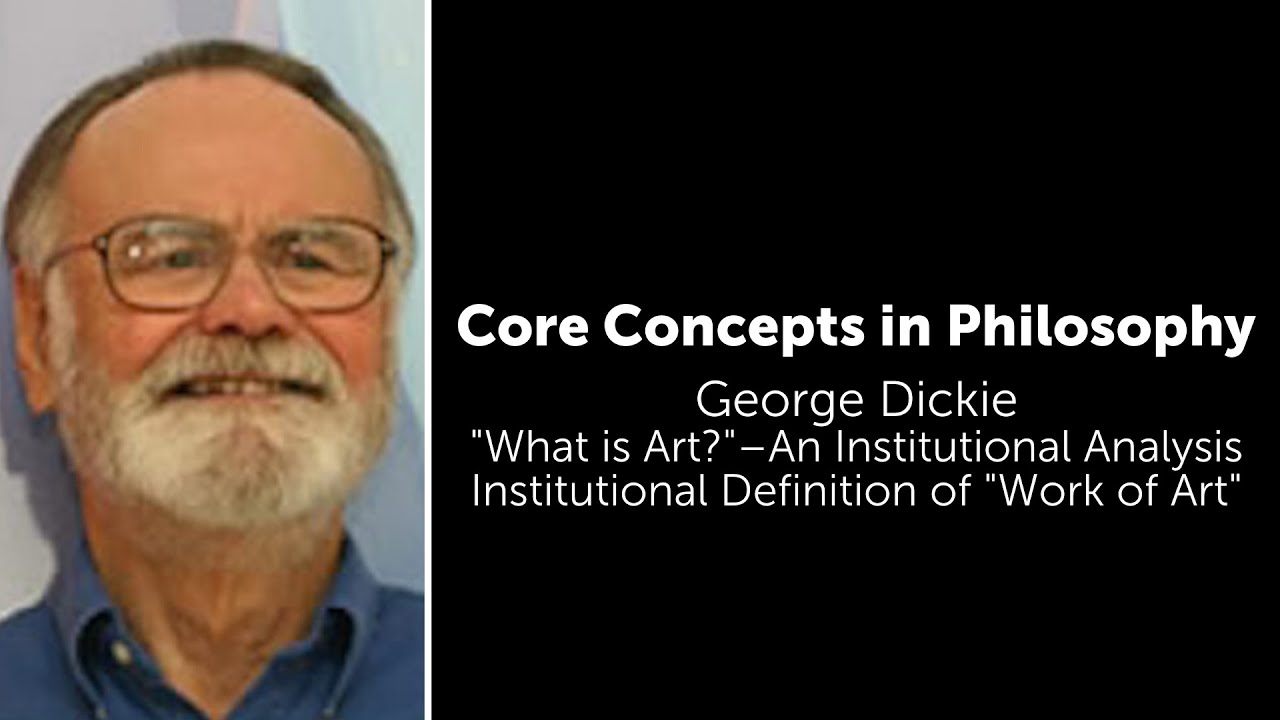


George Dickie's institutional theory of art proposes that a work of art is an artifact upon which status has been conferred as a candidate for appreciation by persons acting on behalf of the art world, representing a third phase in the history of attempts to define art that moves beyond the failed imitation and expression theories of Phase 1 and the rejection of definition in Phase 2.
George Dickie's Institutional Theory of Art Explained
Added:The philosophical quest to define 'art', including traditional theories like Mimesis (imitation), Expressivism, and Formalism.
Morris Weitz's anti-essentialist argument (influenced by Ludwig Wittgenstein) that 'art' is an open concept and cannot be formally defined.
Arthur Danto's concept of the 'Artworld,' which laid the conceptual groundwork for Dickie's institutional approach.
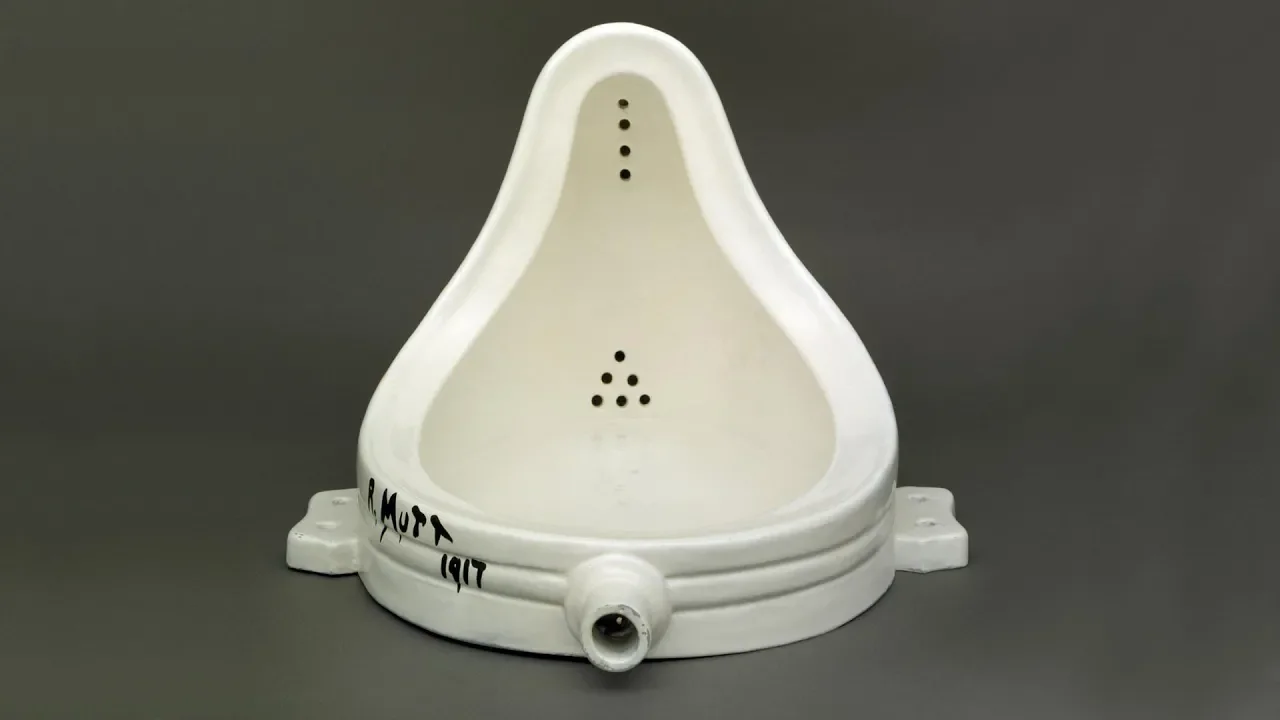
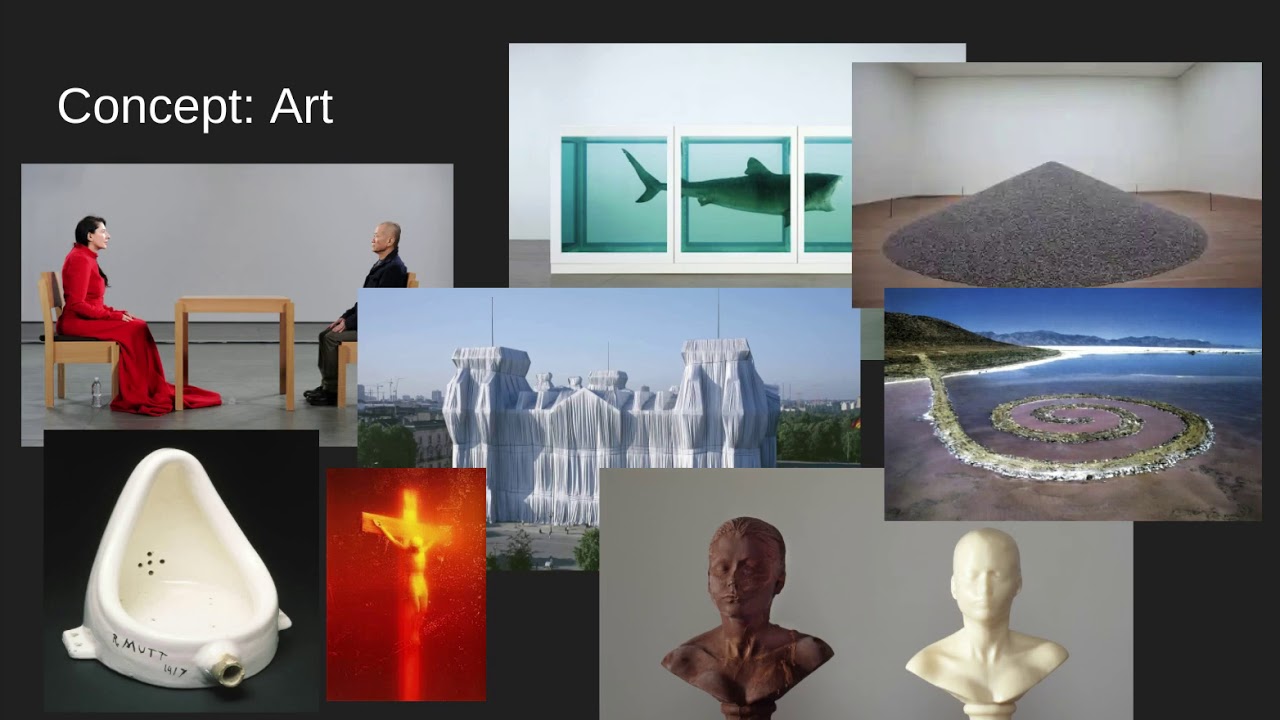
Familiarity with Marcel Duchamp's readymades (such as 'Fountain') as the historical catalyst that challenged traditional aesthetic definitions of art.
Critiques of the Institutional Theory, specifically the circularity objection (defining art through the artworld and vice versa) and Richard Wollheim's dilemma.
George Dickie's own later revisions to his theory, transitioning from his early 1974 version to his 1984 framework in 'The Art Circle'.
Jerrold Levinson's Intentional-Historical Theory of Art, which arose as an alternative response to the limitations of institutionalism.
Applying the institutional theory to contemporary debates, such as determining the artistic status of AI-generated art, street art, or digital artifacts like NFTs.
3.9K views95likes16:31Original Release: 2020-01-21
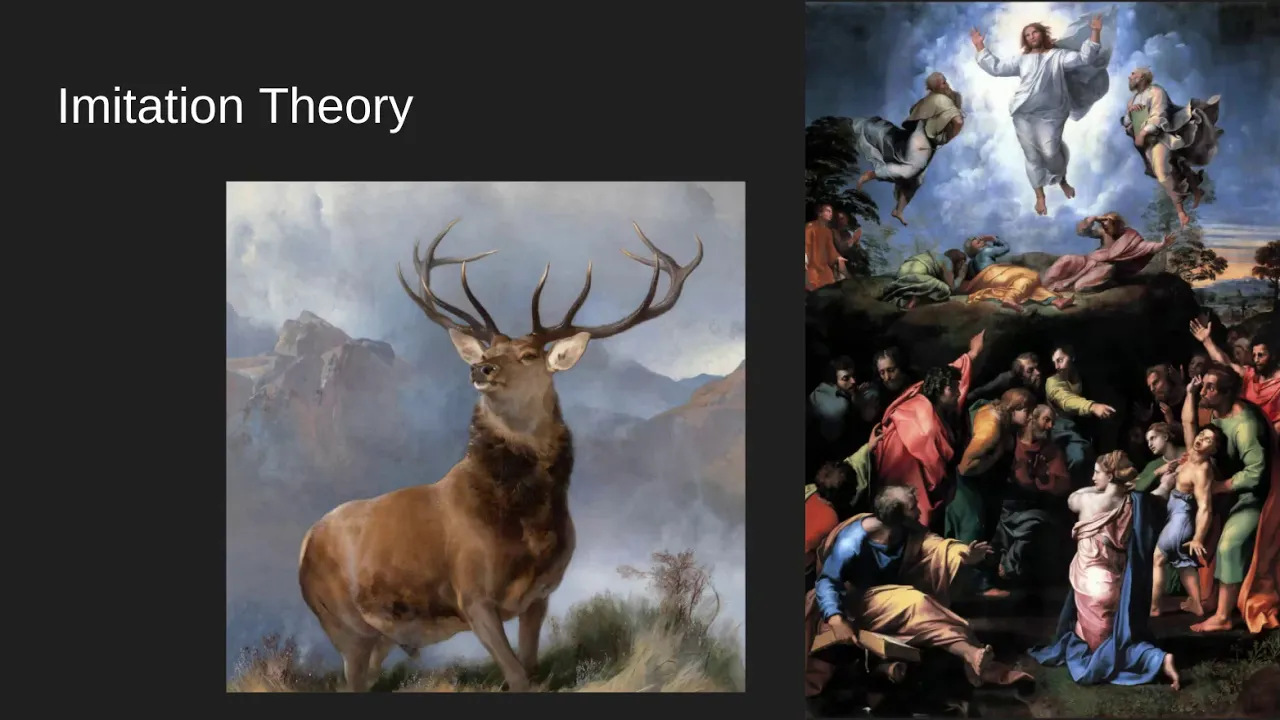
hi this is dr. Gregory Sadler I'm a professor of philosophy and the president and founder of an educational consulting company called reason IO where we put philosophy into practice I've studied and taught philosophy for over 20 years and I find that many people run into difficulties reading classic philosophical texts sometimes it's the way things are said or how the text is structured but the concepts themselves are not always that complicated and that's where I come in to help students and lifelong learners I've been producing longer lecture videos and posting them to youtube many viewers say they find them useful what you're currently watching is part of a new series of shorter videos each of them focused on one core concept from an important philosophical text I hope you find it useful as well in a short but influential essay what is art and institutional analysis George Dickey will set out a mini history of attempt to define art and then denials of that and then yet a further attempt which is his own proposal of the institutional theory of art that depends on the art world and he begins by framing this in terms of three phases and if we're thinking about the history of creation of art and talking about art and philosophical reflection on art the first phase occupies most of human history the second phase would be a relatively short time largely within the 20th century and then the third and final phase in this this analysis or this this schema would be the current time whether we call it an institutional theory of art or not it would be the time of Dickies theory which does provide some sort of definition of art but a different sort than the earlier definitions so he calls this phase 1 phase 2 and phase 3 phase 1 he talks about as the traditional attempts to define art from the imitation theory on so he mentions two main theories of art that is theories of what constitutes the work of art as opposed to everything else or what defines the work of art one of these is the imitation theory and we can call it representation theory we can call it mimetic theory these are all more or less the same and it gets its real start within the West at least with Plato saying that artwork is is merely there's a value judgment there imitation of realities ways of depicting things and this would go even for creatures that that never really existed like centaurs as far as we know you take you know in the imagination the torso of a human being torso and head and arms and you plop it onto the body of a horse - the head of the horse and boom you got a centaur now you can draw it or paint it or sculpt it or discuss it in literature or depict it in some other ways and as deke points out you know there have always been some problems with this theory when we're thinking about art okay so theater would be representation of human actions on the stage like Aristotle said also representation of their thoughts and words and spectacle but what about music does music represent it's always been kind of difficult to say precisely what music is supposed to be doing given this imitation theory I mean we could say well you know people are imitating birdcalls or something like that but that doesn't help that much and it's also difficult when we're thinking about poetry and language and those sorts of things so there are some problems with the imitative theory of art and he goes on and he says there's another possibility as well the theory of art as expression of emotion and he says this has focused on a different property of the works of art the relation of a work to its creator and so we say things like well you know artistic works are things in which we express our thoughts or we express our emotions or we express our experiences we express something and you know you could think of Leo Tolstoy you know art is supposed to produce communion through sharing of emotions as a prime example of this but there's many other sub fear E's that that also viewed art and artistic activities and products as essentially engaging in expression and these two kind of battled for quite a while and both of them were ultimately shown to be inadequate as theories of art so he says the expression theory is also proved inadequate no other subsequent definition has been satisfactory although not as fully satisfying as definitions however the imitation and expression theories do provide a clue so they weren't a complete loss both singled-out relational properties of art as essential and he thinks you know that there was some advance in doing so so the process of trying to say what is art what constitutes art what is essential to art even if it failed it turned out to be quite useful then we move into phase 2 what happens in phase 2 well in the 20th century a lot of theorists start despairing of the idea that we'll ever really be able to define art in terms of necessary and sufficient conditions in terms of a traditional definition where you know the word for definition Horus and Greek actually means boundary so think of a circle in which you've got everything that's that thing inside everything that's not that thing outside we want everything that's art inside and we don't want anything that's not art inside that circle we want all that out of the circle what is the border what allows us to define this some people said well we're never going to arrive in anything it's it's not simply you know imitation or expression or any essential thing that we could point our finger to and say aha this is what all art has in common all works of art share in this essence and there were a lot of ways of doing this there is you know use of Vidkun Stinney in ideas you know the notion that Vidkun Stein had that what what actually is a game we can't quite say what a game is with any sort of definition because any any way that we try to define it any characteristic that we pick out there's always something that seems to be an exception and yet is a game our game is supposed to be fun what about games that are deadly serious are games involving winning and losing what about throwing a ball against the wall you know and we can go on and on you may have read vacant science philosophical investigations in which he formulates this which had an incredible effect on the art world and there were other people who are raising similar arguments he brings up Morris vices article the role of theory in aesthetics and two arguments that he's providing a generalization argument a classification argument and he examines and discards them there that's not really quite so important as far as the development goes but a point that Maurice mandelbaum as he says raised about victim Stein's famous contention that game cannot be defined and vices theory about art is juror main here he says that the challenge to both is based on the charge that they've been concerned only with what mandelbaum calls exhibited characteristics exhibited characteristics would be things like is an imitation of something real or the product of a composition of imitation of something real or is an expression of emotion thoughts desires whatever it is that we're going to say in an expressive theory those would be exhibited characteristics Dickie goes on and says that mandelbaum is right in talking about non exhibited relational aspects of game and art so what do we what are we talking about there he says my exhibited characteristics mandelbaum means easily perceived properties like a ball being used in a certain kind of game or a painting having a triangular composition or the plot of a tragedy contains a reversal of fortune what would a non exhibited characteristic be it would be something much more complex much more relational based in something else and actually Vidkun stein is providing some sort of clues here with his notion of language game but also a form of life that's irreducible to a set of rules so phase two does serve some sort of purpose in that it helps to show the problems the failings of the previous theories of art that people were relying on now notice that Dicky is not saying oh well bad theory we get rid of it entirely we reject it it's thrown away it's canceled to use today's parlance no instead we need something that can incorporate what's right in those but also get beyond what was wrong so this is where he proposes an institutional theory of art and this is going to focus non exhibited relational aspects uses a couple different words here aspects features or characteristics of works of art and here is where he brings in something that he doesn't originate himself but takes from arthur danto the notion of the art world the art world as he says is an entire broad social institution in which works of art have their place and he notes that there are systems within the art world so drama is or theatre is a system painting is a system sculpture is a system literature can be understood as a system and he says that each of the systems has had its own origins and historical development you can't reduce it down to an essence you have to look at these things historically and you might even say sociologically although he doesn't use that word in this this discussion now he tells us that one central feature all the systems have in common is that each is a framework for the presenting of particular works of art and it provides us with a way of saying this is art this is not art at least in what he's going to call a classifications but also in the evaluative sense in in which we say this is a good work of art or this is really a work of art right with sort of emphasis in the voice so this third way of looking at things allows us to get beyond these these earlier theories get beyond the rejection of them and provide something like necessary and sufficient conditions and he will do so in in you know defining a work of art as a artifact a set of the aspects of which has had conferred upon it the status of candidate for appreciation by some person or persons acting on behalf of a certain social in tution ie the art world and he points out that there's several features to this which we'll look at elsewhere these are acting on behalf of an institution conferring status being a candidate and appreciation along with this also goes artifact Xu ality there has to be some sort of doing something some transforming something in the process I'm producing a product and Diggy thinks that this theory and definition of art can explain to us what art really is and how we can make sense of it he does say that a little bit later some may have the uncomfortable feeling that his definition is viciously circular and he says that it is circular but not viciously so it's it's providing us a genuine understanding of what's going on when we say that something is art when we sell something is art when we classify it as art when we produce it and when we hang it so towards the end of his essay he then says once the institutional nature of art is noted the roles that such theory of art is the imitation and expression theories played in thinking about art can be seen in an interesting perspective for example as long as all art was thought to be imitative imitation was thought to be a universal property of art but then we realize no no there's more to art than merely imitation so long as we turned our attention to expressivity that was taken to be the essence of art this what we earlier calling exhibited qualities or properties and so he says the role played by the expression theory was different from that of the imitation theory it was seen as a replacement and served as its correction developments and art had shown that the imitation theory was incorrect it was quite natural to look for a substitute that focused on another exhibited property of art in this case its expressive qualities interpreting them as expressions of the artists and then he says you know we had to go through this period of doubting whether we could come up with a definition and now we have a satisfactory definition by reference to the art world the institutional theory of art that allows us now to understand what the essence of art is which turns out to be a complex relation to the art world you
Up Next
13:43
What Is Art? Three Philosophical Theories Explained
@kennethshouler3055
1.2K views•2020-05-05

51:42
Rethinking Science to Support People with MCS: Kevin Elliott, Ph.D. on Epistemic Injustice & Research Reform
@podcastingMCS
123 views•2025-11-17

16:47
Rawls' Two Principles of Justice: A Theory of Justice Explained
@GregoryBSadler
28.9K views•2020-03-03
10:35
Philosophy Explained: Origins, Metaphysics, Epistemology & Value Theory
@crashcourse
8.1M views•2016-02-08
Related Study Plans & Knowledge Roadmaps
Structured learning paths in Philosophy
philosophy
Feminist Epistemology: Standpoint & Injustice
01Introduction to Epistemology and Feminist Critiques
02Sandra Harding and Standpoint Theory
03Donna Haraway and Situated Knowledges
+ 2 more learning modules
12h5 modules
Explore Roadmap
philosophy
Environmental Philosophy: Ethics & Deep Ecology
01Foundations of Environmental Ethics & Anthropocentrism
02Biocentric Individualism and Animal Liberation
03Ecocentric Holism and Deep Ecology
+ 1 more learning modules
10h4 modules
Explore Roadmap
philosophy
State Authority: Social Contracts & Anarchism
01Foundations of Political Authority & the State of Nature
02Thomas Hobbes: Order, Security, and the Leviathan
03John Locke: Natural Rights and Consent of the Governed
+ 3 more learning modules
14h6 modules
Explore Roadmap
philosophy
Hellenistic Ethics: Stoic, Epicurean & Skeptic
01Introduction to Hellenistic Philosophy & Ataraxia
02Stoicism and the Pursuit of Eudaimonia
03Epicureanism and Enlightened Hedonism
+ 2 more learning modules
12h5 modules
Explore Roadmap