











![[AULA] Linha do Tempo da História da Arte](https://i.ytimg.com/vi_webp/SEyhdqLQ6lA/maxresdefault.webp)





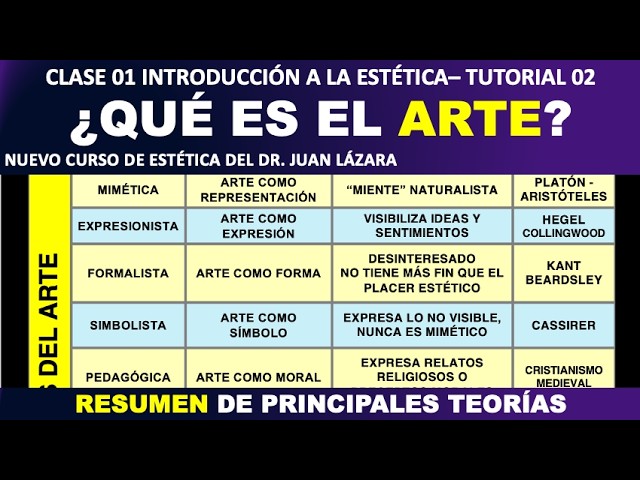







This video presents three major philosophical theories defining art: Expressionism (art as expression of emotion, where the highest state is when viewers share the artist's emotions), Formalism (art as 'significant form' that produces aesthetic experience), and Aesthetic Experience (art as that which produces aesthetic experience in the observer). Each theory is explained with examples and criticisms: Expressionism fails when viewers don't share the artist's emotions (e.g., Van Gogh's Starry Night); Formalism struggles with subjectivity in determining what is 'significant'; and Aesthetic Experience faces criticism that aesthetic experiences range from awe to repulsion, making it difficult to distinguish art from non-art.
What Is Art? Three Philosophical Theories Explained
Added:Introduction to Aesthetics: Understanding aesthetics as the branch of philosophy concerned with the nature of beauty, art, and taste.
The Concept of Mimesis: Familiarity with the classical Greek view of art as imitation or representation, particularly associated with Plato and Aristotle.
Philosophical Definition: Understanding how philosophers attempt to define abstract concepts using necessary and sufficient conditions.
Basic Art History: A general awareness of the historical transition from traditional representational art to modernism and abstract art.
Anti-Essentialism and Wittgenstein: Exploring Morris Weitz's argument that 'art' is an open concept that cannot be formally defined, relying instead on 'family resemblances'.
The Institutional Theory of Art: Studying George Dickie and Arthur Danto's theories, which argue that status as art is conferred by the social institutions of the 'artworld'.
Analyzing Avant-Garde and Conceptual Art: Applying the learned theories to challenging non-traditional works, such as Marcel Duchamp's readymades or John Cage's '4'33"'.
Cognitive Theories of Art: Investigating Nelson Goodman's view that art is primarily a system of symbols used for understanding and cognizing the world, rather than just provoking emotion or aesthetic pleasure.
1.2K views31likes13:43Original Release: 2020-05-05
ok everyone hello how are you and hope you're doing well you'll notice that the last unit of the course you've been asking questions about us aesthetics which raises several questions is all objective or subjective is that the eye of the beholder is it something independent of the individual receiver but all those questions have to come back to the original question of trying to define more it is philosophy I tried to do that at various times in various ways so the question is what is art at the outset of that section which is a very good chapter in the book one of their strongest chapters there are three answers one is this answer that Expressionism gifts especially ISM not to be confused with the 19th century movement in art the French expressionist for one don't it's not to do with that it's Expressionism is the idea that art is the expression of emotion that's where this definition gets its name from it goes back to Tolstoy at least where Tolstoy says it's the purpose of art to infect the viewer with the same emotions that the artist had so that art is the expression of emotion and the highest state of that expression is when the artist has the same view as the view has is to say the viewer has the same internal sense that the artist had while creating the pain so there's a kind of one-to-one correspondence between what the artist had in mind and what the observer of Dior and this could apply and we're talking about visual life server but I could have applied words or UI is a kid even polite to sculpture it could apply to many kinds of life that's what the the idea is about so first let's try to argue the theory and strong lightning before criticizing it so you can take any painting and for example and like the death of Socrates which we looked at when we did the unit on Socrates weeks back and there's a beautiful painting you can look at it for the purposes of this lecture and by jacques-louis dahveed who is a neo-classicists and he shows Socrates about to drink the hemlock that will kill him after he's been condemned to death by the Athenian jury the painting is very expressive by the heat of his respect and awe in awe of Socrates and the way he is calm in the face of death and so certainly that feeling you can pick out paintings like that in dozens of others where there's a a feeling of the artist is pretty clear and it is an expression of emotion there can't be doubted really looking at that painting that daveed had nothing but in this neo-classicists way trying to revive the classics so sort of like Renaissance movement in art Renaissance of course means we burn neoclassicism means much the same there could be no doubt that his emotion they are toward Socrates not pretty cool but you know it's admiration go back to a Tolstoy said is when that has reaches its highest pitch when the viewer and has the same emotion that the order says I'd have to say that I have that same kind of feeling for Socrates too is very few people who know philosophy who are wholly critical or even partly critical of Socrates life or the life he talked about he lived and so there's that in Socrates there's certainly that of course so I think it works in those kinds in many kinds of cases can't be denying that it works Scott's case if anyone has the same feeling is what the artists have is something similar it doesn't have to be exact it shows Expressionism in a strong way on the other hand if you want to be critical of Expressionism certainly the you could look at starry night by Van Gogh and which was written about a year before his death and it's very expressive of his looking out of the window of the sanitarium in France is a military man reminded him of his native Netherlands so there's no doubt that that it's expressive yet it can't fulfill the second part of what Tolstoy said they said the the viewer will have the same emotion the artist and because in this case the artist was about was severely depressed in about one year from killing himself with a gunshot wound to the chest so one of the chances that you looking at that have similar emotions so your emotions are not do not correspond to the artist in that case and yet we can appreciate it nonetheless so I don't think that that's a requirement that we have to have the same emotions as the artists and then I have other before we want to formalism the second definition I have another criticism of this what this really says this theory says is that emotion is essential to our so that if you have the expression of emotion iffy promotion then you have a or me I'm a reverse data FA then II not necessarily I can you know what a work of art can be angry yeah it can be joyous and it's just because it is angry or joyous or he shows those kinds of emotion doesn't mean that it's all a lot of things could be unskillful and still felt anger or joyousness so I'm not going to say that if if you have just a mere expression of emotion that sort that would make anyone who's expressing emotion an artist and we can think of people people to make dot things it can have some emotion of glee while doing it they've expressed let's flip it if something is lock does that mean it's the expression of emotion well this is puppy closer to the intent of the definition but again I don't think that that would necessarily work that would make art is the expression of emotion analytic and we did analytic statements where the subject implies the predicate that's kind of weird if this is saying here that if you haven't wanted to express emotion yeah I can imagine as a counter-argument I can imagine a work of art something being harmful highly skillful and yet the artist had no emotion at all while doing this too was emotionless what you see is the skill of the painting or the sculpture of the work of music and I'm not saying that that's commonplace but it's at least possible so none of those even though we can find cases where art is emotive and express this emotion doesn't none of those definitions also at least withstand criticism let's move on to the second formalism says that art this goes back to Clive Bell and on historian and I think his book was in 1914 on art said that part equals significant form so the form that we're talking about in the artist and and the work of art has to be significant well that's we have to know what that is what does it mean what significant form it said something subjective or objective a building in 1931 such as the Empire State Building is a significant form it's the culmination of a whole period of building skyscrapers that began in the early 1900s and this one's the tallest and it's so it's significant that during that period when architects were trying to make the buildings very high and beautiful those who objected that it is it significant for that period I think that comes to mind also the form of paintings to Vinci's Last Supper has a definite or mance does the information that Socrates da Vinci's Last Supper has christ-centered and disciples six on either side so this is a kind of significant balance to that pain as the balance is shown in the School of Athens if you want to look up that painting with Socrates end and plate over the center and all these other figures from ancient and not just Athens by nation of evil Renaissance philosophy around them and the death of Socrates where Socrates is again centered and there are 12 other people beside Sakari so dummied was influenced by DaVinci in that case what this what sometimes what a significant form will be in the eye of the beholder what would be that we can see for but is that significant form that sounds like a fiery Japan it is in fact many times that it has to be a not just any form by the artist but significant form also form can refer to the medium in which expanded which it's done so it can be acrylic or oil or water color that is set what's meant by form here probably not form probably means something like shape or structure coming back to Aristotle but you the you know you can think of other cases to be generous to the definition where are people like cubism Picasso's period of cubism he has a bridge with landscape one painting in which you see nothing but geometric shapes making up this landscape and a bridge so those those are forms and a literal sense were familiar with these promises and triangles and arches and from our geometry days but does that make them significant in and of themselves so I this is you know again if I see a painting with your stripes in Museum of Modern Art does it have that significant form I tend to think not it's like to me it's not significant at all maybe to the artist it was maybe there's some viewer but that definition doesn't work unless you can point to something objective that is form visit an objective form and that form is significant and so that definition will it's it's a good attempt in the definition it's good that philosophy tries to define these things I don't find other people trying to define it necessarily they'll say that something is someone yet they have no definition of war no it is so how would they know what is all what is not ours finally the aesthetic experience the definition has some promise but it says in effect that part is that which produces an aesthetic experience in the observer it could be listener it could be fewer that can be gotten and no other way okay so the only way you can get this aesthetic experience is by viewing the work of art so the aesthetic experience could be law it could be disappointment it could be inquisitiveness it can be anything that crosses your mind when you look at the work of art there's two kinds as the stars in the text of one kind is the subjective kind where we the artist the art historian or the art critic notes what the observers state of mind or condition of mind is while listening or viewing the work of art that's to me less significant and the other kind second kind of aesthetic experience is not just noting what's any observers head but what is in the work of art itself what is in the Vinci's David or what is in Socrates what is in W death of Socrates here the requirement is that you not only rapport them what's in your mind with your thought on what's on the canvas that seems to me to be more significant more telling you should be able to somehow prove up and say if this is a work of art point to something about the work of art itself that makes it not just something going on in the corridors that you want that that's not enough if I say to me this this pain with dots all over speaks to me of chaos I still have to say what is it about that work that with his chaos present in there it can't just be some factor in my head so that's the second version of the aesthetic experience my criticism of this theory is that extent aesthetic experiences can run the gamut it seems to me a kind of tie a spectrum of aesthetic experiences I could be awed by something on the one the one extreme but they can run all the way to repulsed let's say where you look at a work of art and and think that it's it's it's it has no value whatsoever like artist the the can of excrement that this artist Italian artist did who Pietro who died when he was 30 you know what's what's the what's their Atman so my point being that if if we're going to know the aesthetic experience it would be aesthetic experience must be qualitative we must be able to say the aesthetic experience cause to me a feeling of loss Rembrandt Mike let's say or Michelangelo or Duffy or the Vinci or any of these masters we can say there's something really magnificent going on there would we say the same for all the things that are called thought that repulsive that's because that's that's an experience that's an emotion my aesthetic experience is being repulsed as therefore it's alright that sounds like a bad argument for its repulsive premise therefore it's or doesn't seem to be good of a kind of argument maybe it's non art which is could be the same as bad luck so that that's the beginning of that chapter how he sets that up those those theories need to be gone over quite a bit so that's all I have for you for now talk again
Up Next
28:13
Exploring Anti-Art: The Dada Influence on Modern Art's Value
@CountDankula
521.2K views•2023-09-15

164:01
John of Damascus on Holy Images: A Theological Defense
@BannedBooks
139 views•2026-04-25

68:32
Should We Destroy the Machines? Big Tech Surveillance Critique
@TheStoriesWeTell303
167.9K views•2025-11-30
4:57
The Myth of Sisyphus: A Greek Legend of Eternal Punishment
@TEDEd
8.6M views•2018-11-13
Related Study Plans & Knowledge Roadmaps
Structured learning paths in Philosophy
philosophy
Frankfurt School: Critical Theory & Culture
01Foundations of the Frankfurt School and Critical Theory
02Horkheimer & Adorno: The Critique of Instrumental Reason
03The Culture Industry and Mass Deception
+ 2 more learning modules
12h5 modules
Explore Roadmap
philosophy
Philosophy of Language: From Frege to Austin
01The Linguistic Turn: An Introduction to Language in Philosophy
02Gottlob Frege: Sense and Reference
03Early Wittgenstein: The Picture Theory of Meaning
+ 3 more learning modules
15h6 modules
Explore Roadmap
philosophy
Feminist Epistemology: Standpoint & Injustice
01Introduction to Epistemology and Feminist Critiques
02Sandra Harding and Standpoint Theory
03Donna Haraway and Situated Knowledges
+ 2 more learning modules
12h5 modules
Explore Roadmap
philosophy
Environmental Philosophy: Ethics & Deep Ecology
01Foundations of Environmental Ethics & Anthropocentrism
02Biocentric Individualism and Animal Liberation
03Ecocentric Holism and Deep Ecology
+ 1 more learning modules
10h4 modules
Explore Roadmap