










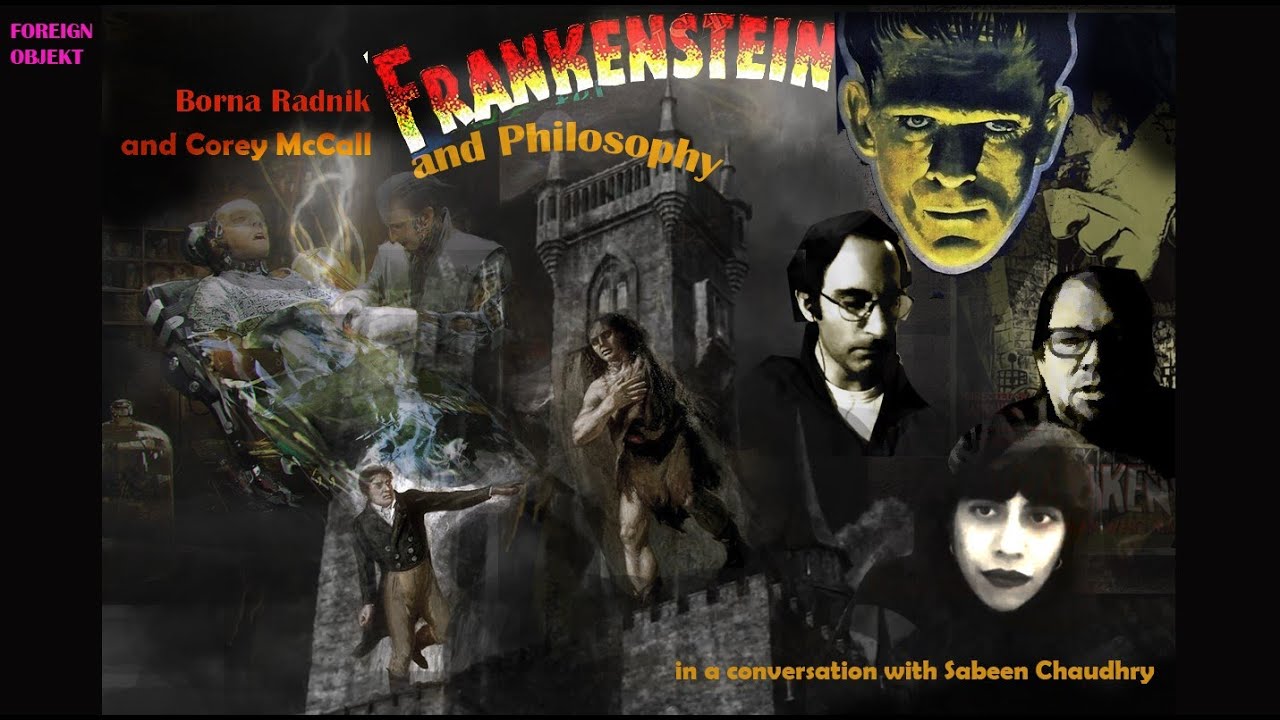
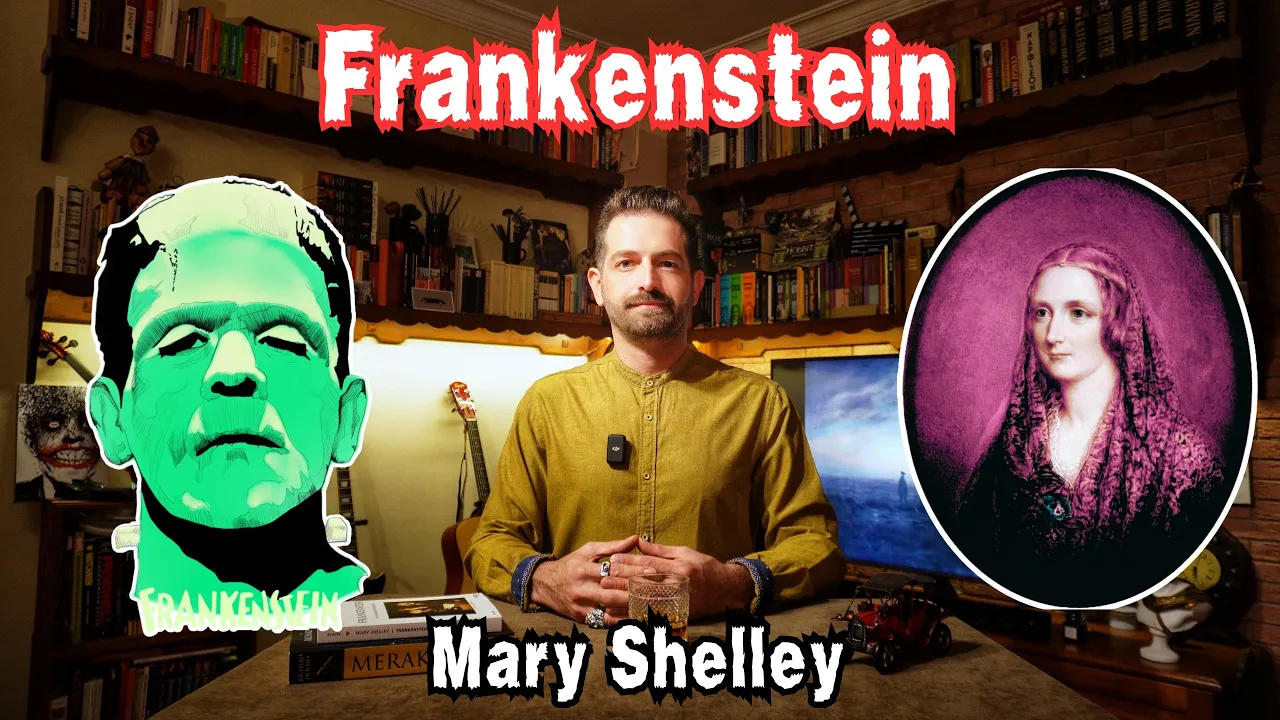


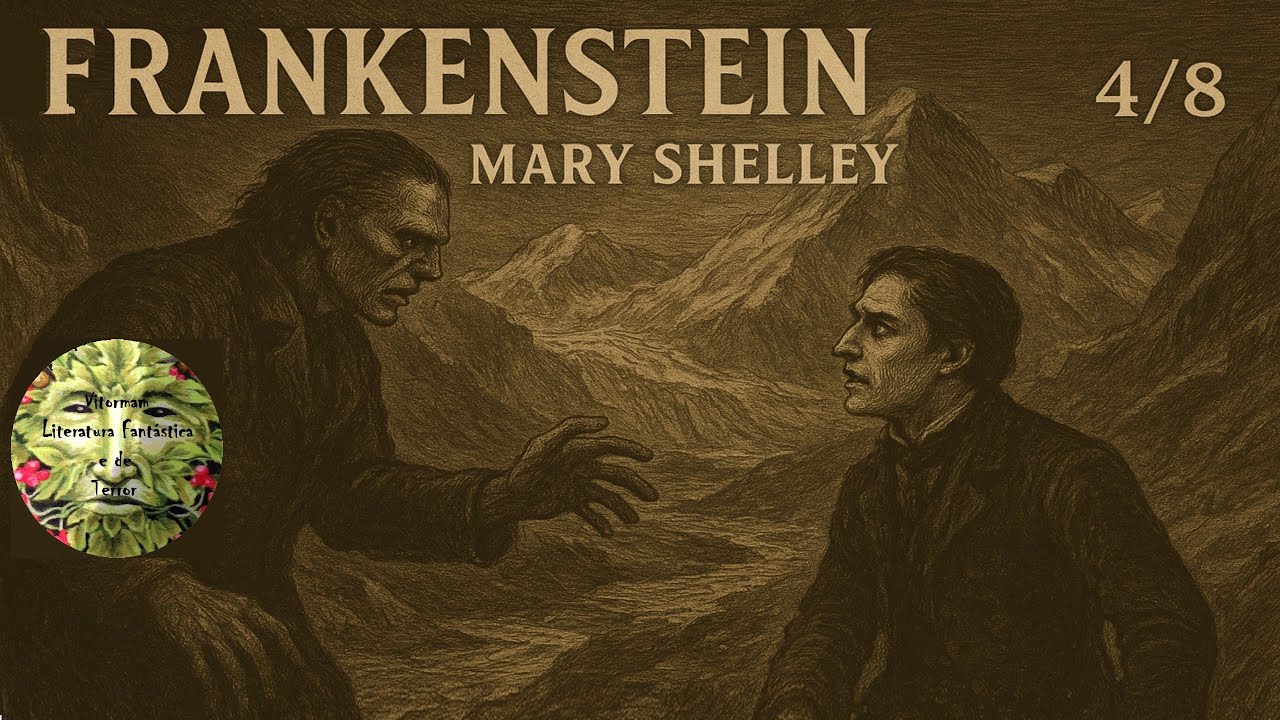


Mary Shelley's Frankenstein explores the dangers of unchecked scientific ambition and the moral responsibilities that accompany the pursuit of knowledge, as Victor Frankenstein's attempt to play God by creating life without considering the ethical implications leads to devastating consequences for himself and others, illustrating how the single-minded pursuit of scientific progress without regard for morality can result in tragedy.
Frankenstein, Part 2: Romanticism and Critical Readings
Added:A foundational understanding of the plot, characters, and narrative structure of Mary Shelley's 'Frankenstein'.
An introductory awareness of the Romantic literary movement, including its emphasis on emotion, individualism, and the sublime power of nature.
Basic familiarity with the scientific context of the early 19th century, particularly early concepts of bio-electricity (Galvanism) and the transition from alchemy to modern chemistry.
A general concept of feminist literary theory, specifically how literature can reflect or critique patriarchal societal structures and gender roles.
Advanced critical theories applied to Frankenstein, such as Psychoanalytic readings (the Monster as Victor's shadow/id) and Marxist interpretations (the Monster as the oppressed working class).
The application of Shelley's critique of science to modern bioethics, including artificial intelligence, genetic engineering, and the moral responsibility of creators.
An in-depth study of the 'sublime' in 19th-century literature and philosophy, analyzing how Mary Shelley uses Alpine and Arctic landscapes to evoke awe and terror.
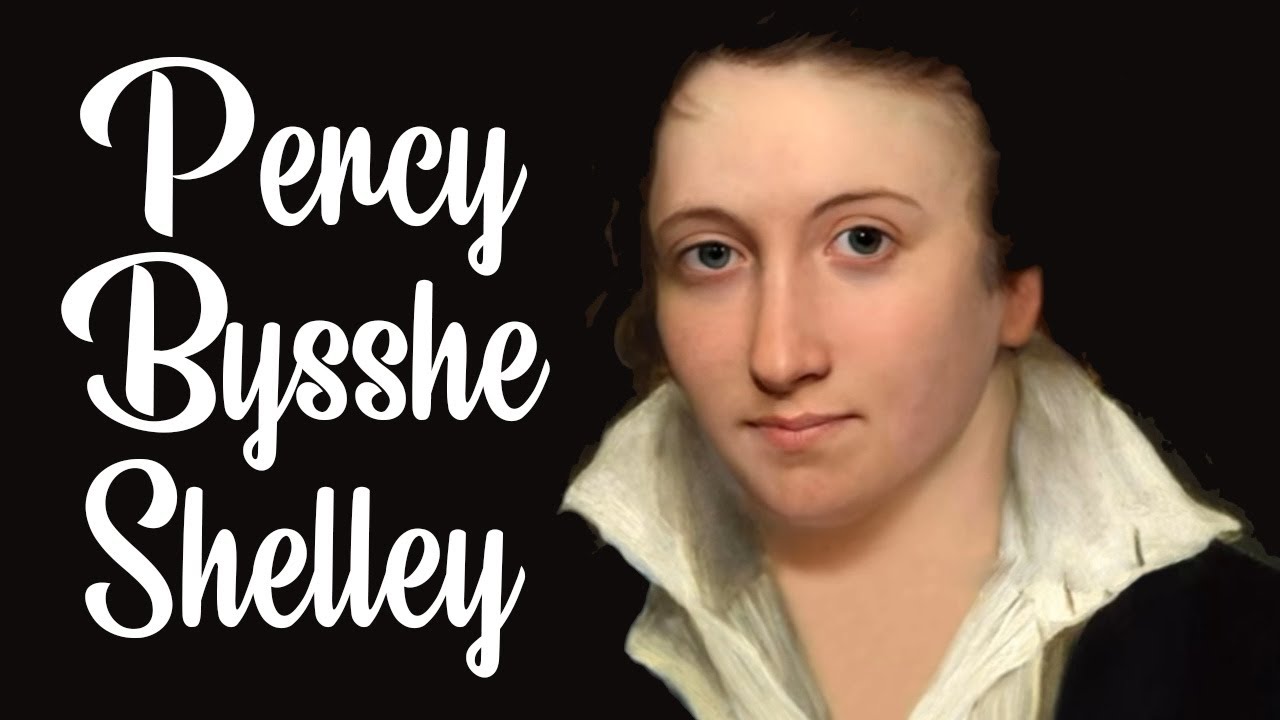
An exploration of Mary Shelley's biography, specifically her relationship with her mother Mary Wollstonecraft, her father William Godwin, and husband Percy Bysshe Shelley, and how these relationships shaped her writing.
1.1M views19Klikes12:38Original Release: 2014-04-03
Hi, I’m John Green, this is Crash Course Literature, and today we continue our discussion of “Frankenstein”. Oh, Me From the Past didn’t even come to school today. Isn’t that fantastic? Well we’re going to learn something without him.
Last time we talked a little bit about the Romantics, “Frankenstein” is often cited as the definitive Romantic novel, but ehh… let’s get a little bit deeper into it.
Capital “R” Romantics don’t have a lot to do with lower case ‘r’ romantics, unless your idea of romance involves like ecstatic descriptions of nature and a revolutionary spirit that often ends in bloodshed. And if that’s your idea of romance, don’t put it in your OK Cupid profile. However, pro tip, do say that you’re 6’3”.
Knowing more about the capital “R” Romantics will help you be better at lower case “r” romance so stick with me here.
[Theme Music] So Romanticism was a movement originating in the late 18th century and it’s typically understood as a reaction against both the Industrial Revolution’s devaluing of the individual human spirit and embracing of like the soulless assembly line. And also the Enlightenment’s claims of scientific certainty. Romanticism prizes intuition over rationalism, and nature and wildness over classical harmony, and emotions—especially difficult emotions like horror and awe and terror and passion—are preferred over intellect.
And there’s an emphasis on the unconscious and irrational part of humans. There’s a lot of talk of dreams and stuff. So is “Frankenstein” a Romantic novel?
Well, if you take a course in Romantic lit in college then you will almost definitely read it. So, yes. “Frankenstein” is interested in difficult, uncomfortable emotions the wonder and awe and horror of encountering the radically other.
And it’s certainly in many ways also a response to the Enlightenment’s emphasis on scientific rationality.
I mean people at the time really thought that we would eventually be able to reanimate the dead and other people were rightly troubled by that.
Then again, you can also read the book as a critique -- and a pretty stern one -- of the kind of thinking and acting that Romanticism encourages, right?
I mean Romanticism preaches a radical self-involvement that privileges the individual’s pursuit of knowledge and glory but for all of Victor and Walton’s encountering nature and going with their gut it’s pretty disastrous.. Another popular reading is to interpret “Frankenstein” autobiographically, a reading that was encouraged via 1970s feminist criticism of the novel.
Earlier readings along these lines situates “Frankenstein” as a tale of monstrous birth and look to Mary Shelley’s own experiences with birth, which were pretty terrible.. I mean Mary Shelley’s mother died while giving birth to her and Mary and Percy’s own first child, a daughter, died when she was just a few weeks old.
And in her journal, Mary recounted an incredibly sad dream about this daughter: “Dream that my little baby came to life again; that it had only been cold & that we rubbed it before the fire & it lived.” So, of course, the idea of bringing the dead back to life had occurred to her even before she listened in on Percy Shelley and Byron discussing new developments in electricity. Mary Shelley even refers to the book itself as a child. In her intro to the 1831 edition, she wrote, “I bid my hideous progeny go forth and prosper. I have an affection for it, for it was the offspring of happy days.” That’s a very tempting reading, but it’s also really literal and reductive.
First off, and I’m saying this partly defensively as a novelist, novelist don’t write exclusively from their own experience. More importantly, I’m not at all convinced that making an author the central character of a novel is a particularly helpful way to read it. So if you read “Frankenstein” as merely as Mary Shelley working out her own personal issues you miss the great and terrible questions at the center of the book. The questions that really can change you.
There’s in fact a term for trying to do this kind of reading—“intentional fallacy”—in which we believe we can know exactly what the author was thinking when they wrote a book. But putting aside those biographical readings there are still some pretty interesting feminist critiques of “Frankenstein.” For instance, the novel clearly shows what harm comes to women (and families and relationships) when men pursue single-minded goals. In fact, thanks to Victor’s lack of work-life balance, pretty much all the women in this novel die. I mean Victor’s creation of the monster leads to the hanging of the servant Justine, the murder of Victor’s bride Elizabeth on their wedding night. And occasionally in the novel Mary Shelley refers to nature itself as female, suggesting that Victor is violating it, as when Victor discusses how with “unrelaxed and breathless eagerness, I pursued nature to her hiding-places.” I mean you can say I’m reading sex into that if you want but “unrelaxed and breathless eagerness.”? And there are also plenty of suggestions that Victor might not like women very much. The creature says that he will leave Victor and all mankind alone forever if Victor just creates a mate for him and Victor begins work, but then he gets freaked out over what it will mean to create a lady monster.
Now admittedly that’s partly because it might mean monster progeny but just look at the text, “She might become ten thousand times more malignant than her mate,” thinks Victor, “and delight, for its own sake, in murder and wretchedness.” He worries, “a race of devils would be propagated upon the earth who might make the very existence of the species of man a condition precarious and full of terror.” So Victor destroys the female creature while the monster watches. He recalls, how “trembling with passion, [I] tore to pieces the thing on which I was engaged.” I don’t think I’m being too weird to point out the sexy stuff there: “trembling with passion.” Anyway, Victor claims to love his cousin, Elizabeth, but he deserts her for years at a time and even though the creature says—really, really, really clearly—“I will be with you on your wedding-night,” he leaves her alone on his wedding night.
Now we can all wonder why Mary Shelley didn’t create any strong female characters here and instead a collection of suffering, passive, doomed ones, but we can certainly read the novel as an exploration of what happens when men fear, distrust, or devalue women so much that they attempt to reproduce without them. I mean in some ways Victor is trying to bypass the feminine altogether. He’s creating life without recourse to egg or womb. Now you could counter this by saying that Mary Shelley’s original Creator—God—did the same thing.
But that’s precisely the point. Victor is not God.
And perhaps this is where “Frankenstein” is still most relevant, in its discussion of “playing God,” of the single-minded pursuit of science without an accompanying concern about you know, morality. Now, obviously, the experiments that Victor undertakes are extreme, but Mary Shelley was basing them on some of the scientific debates and discoveries of her day. And even if the book is largely science fiction, there’s a certain amount of scientific fact in it, and a lot of scientific questioning.
And part of why this book has survived is because the questions she was asking were important in her day, but they’re also pretty important now.
I mean there was a recent book on genetic modifications in animals called “Frankenstein’s Cat”, those who object to GMO foods often label them Frankenfoods, which only makes them sound like Franken-berry cereal - which is delicious!
So Mary Shelley was influenced… oh… it must be time for The Open Letter.
Oh look, it’s Frankenstein’s monster. No, wait, it’s the Hulk. It actually occurs to me that they’re quite similar. Both monsters created by failed scientific experiments who only really become monstrous when they’re rejected by society.
Anyway, an Open Letter to scientists: Dear Scientists, here’s a little rule of thumb.
Anytime you’re doing any kind of experiment, ask yourself the question, “Could this create a monster?” Even if the chances are relatively low, I’m going to advise against that experiment, because what I have seen from the movies and from books is that if it can become a monster it will!
But I will say scientists that I think you’ve been a bit unfairly maligned by poor readings of “Frankenstein.” Frankenstein is not like the Hulk because his story isn’t, at least not simply, about about science run amok. It’s an oversimplification scientists.
You are doing good work with you lab coats and your chemicals and I thank you. Don’t turn anyone into a monster. Best wishes, John Green. Right, but anyway, Mary Shelley was influenced by several scientists, but chief among them Erasmus Darwin, grandfather to Charles, and Luigi Galvani. Darwin published a long poem called “The Temple of Nature,” because back then poetry was a totally reasonable way to share scientific ideas. He had an idea that life—at least on the microscopic level—could be restored to seemingly dead matter or created out of inert matter, a phenomenon he called “spontaneous generation.” And Galvani, became famous for conducting experiments with electricity, in which he showed that electrical impulses could animate the muscles of dead creatures like the legs of a deceased frog. Did you get it? “.. conducting experiments in electricity”, anyone? Conducting electricity? No? OK.
Galvani’s followers did even more macabre experiments, like in 1803 test in which several scientists attached electrodes to the body of an executed murderer in the hope of restoring it to life. Because they were like, “Oh, man. Who should we bring back from the dead? I know, a murderer!” Anyway, they,of course, didn’t succeed, but they did succeed in making a few of the murder’s muscles convulse.
These experiments clearly influence Victor’s attempt to reanimate dead flesh and in fact Victor’s experiments weren’t that much radical than ones that were actually happening at the time. That said, the novel itself is clearly pretty skeptical about these pursuits. I mean even before he animates the monster, it’s clear that his studies are exacting a tremendous toll on Victor’s health, and his well being, also that of his friends and family. Let’s go to the Thought Bubble.
Victor describes how “My cheek had grown pale with study, and my person had become emaciated with confinement,” which is a pretty good passage to show your parents when they’re pushing you to go pre-med. And things only went downhill once he began to assemble the creature. Victor, “dabbled among the unhallowed damps of the grave, or tortured the living animal…collected bones from charnel-houses; and disturbed, with profane fingers, the tremendous secrets of the human frame,” But Victor thinks that this digging around in slaughterhouses and graveyards will be worth it; he says “I might in process of time…renew life where death had apparently devoted the body to corruption.” And that’s an amazing and laudable goal (unless you’ve ever seen any zombie movie ever, in which case you would know that it’s a TERRIBLE idea). But in that same passage, Victor says that the creatures he makes “would bless me as its creator and source…. No father could claim the gratitude of his child so completely as I should deserve theirs.” So it’s clear that his desire is actually selfish and that he’s pursuing this knowledge not for universal good, or so that the dead may live again, but for his own gratification.
And then of course there’s his reaction when his experiment does succeed. I mean, even though he’s assembled every facet of the creature and made him huge on purpose so that all these fiddly bits like veins and eyelashes will be easier to work with, he responds to his creature with utter horror. And what is Victor’s mature, responsible, heroic reaction to this situation? He runs away, making all the dads on “Teen Mom” look amazing by comparison. Thanks Thought Bubble So, the monster blames this initial abandonment for all the murders that result, right?
And Percy Shelley agreed, writing that while the creature was initially affectionate and moral “the circumstances of his existence were so monstrous and uncommon, that… his original goodness was gradually turned into the fuel of an inextinguishable misanthropy and revenge.” But is the tragedy inherent in the creation of the monster or is there a way to pursue knowledge without responding in horror?
Frankenstein is more than a little relevant today as we struggle to figure out where technologies like stem cell therapy, or genetically modified foods, or cloning land on the ethical and moral scales of the social order. The pursuit of knowledge is good, right, because that’s how I’m even able to talk to you through like the magic of the Internet. That’s why we aren’t hunger/gathers anymore. But we don’t actually know the outcome yet.
Sometimes we forget that we’re still in the middle of history.
I don’t think Mary Shelley condemned science outright, or explicitly discourages learning the secrets of life and nature. Now the experiment definitely fails. The question is why? Is it because Victor’s aims are just unnatural and evil? Is it because he can’t love the creature he’s created? Or is it because he let’s his ego run amok dictate his motivations? That’s a non-rhetorical question by the way. I look forward to reading your answers in comments. Thank you for watching. I’ll see you next week. Crash Course is made by all of these nice people and it’s possible because of your contributions at Subbable.com.
We want to say thank to all of our Subbable subscribers for keeping Crash Course free for everyone forever. If you want to subscribe you can do so over at Subbable.com. There are also great perks there. Thank you again for watching and as we say in my hometown, "Don’t forget to be awesome!"
Up Next
76:32
Mothering Monsters: Mary Shelley's Frankenstein | Anne K. Mellor Lecture
@ASU_English
50.1K views•2019-01-15

13:43
Formalism in Literary Criticism: An Academic Lecture Overview
@mattalberhasky9952
39.1K views•2015-08-05
11:18
Analyzing Sylvia Plath's Poetry: Feminism, Confession, and Metaphor
@crashcourse
1.4M views•2014-06-12

15:25
1984: Orwell's Dystopian World and the Mechanisms of Totalitarianism
@AlternateHistoryHub
7M views•2017-03-04
Related Study Plans & Knowledge Roadmaps
Structured learning paths in Literature
literature
Graphic Memoirs: Visual Art, Trauma & History
01Foundations of Sequential Art and Visual Language
02Autographics and Processing Historical Trauma
03Visualizing Personal Trauma, Grief, and Graphic Medicine
+ 2 more learning modules
14h5 modules
Explore Roadmap
literature
Campus Novels: Evolution, Themes & Critique
01Introduction to the Campus Novel Genre
02Mid-Century Satire and the Post-War Academy
03Dark Academia and the Critique of Privilege
+ 2 more learning modules
14h5 modules
Explore Roadmap
literature
Theater of the Absurd: Philosophy & Plays
01Postwar Existentialism & Historical Roots
02Dismantling Narrative: Esslin & Absurdist Conventions
03Samuel Beckett and Tragicomic Existentialism
+ 2 more learning modules
12h5 modules
Explore Roadmap
literature
Revenge Tragedy: Justice, Madness & State
01Foundations of Early Modern English Theatre
02Anatomy of Revenge: Structural Conventions
03Psychological Complexity: Madness and Melancholy
+ 2 more learning modules
15h5 modules
Explore Roadmap