

























Sylvia Plath, a pioneering feminist poet of the Confessional School, transformed everyday experiences into powerful poetry through vivid metaphors and raw emotional honesty; her work, exemplified by poems like 'Lady Lazarus' and 'Tulips,' demonstrates how personal trauma and daily life can be rendered into universal art that challenges readers to confront uncomfortable truths while maintaining emotional authenticity.
Analyzing Sylvia Plath's Poetry: Feminism, Confession, and Metaphor
Added:A basic understanding of mid-20th-century American history, particularly the gender roles and societal expectations placed on women during the 1950s and 1960s.
Familiarity with the definition and origins of Confessional Poetry, including its focus on highly personal, autobiographical, and often taboo subject matter.
A foundational knowledge of Sylvia Plath's biography, as her personal life and struggles are deeply intertwined with her literary output.
An understanding of basic poetic devices and literary analysis, specifically how metaphors, symbols, and tone function to convey complex emotions.
A comparative literary analysis comparing Sylvia Plath's work with other prominent Confessional poets like Anne Sexton, Robert Lowell, and her husband, Ted Hughes.
An exploration of Plath's semi-autobiographical novel, 'The Bell Jar', to examine how her themes of mental illness and feminist critique translate into prose.
An investigation into 'The Plath Myth' and the academic debate surrounding the ethics of reading her poetry strictly through a biographical lens versus a formalist lens.
An application of Psychoanalytic Literary Theory to Plath's Ariel-era poems, analyzing motifs of trauma, death, rebirth, and the paternal figure.
1.4M views36.3Klikes11:18Original Release: 2014-06-12
Hi, I'm John Green. This is Crash Course Literature.
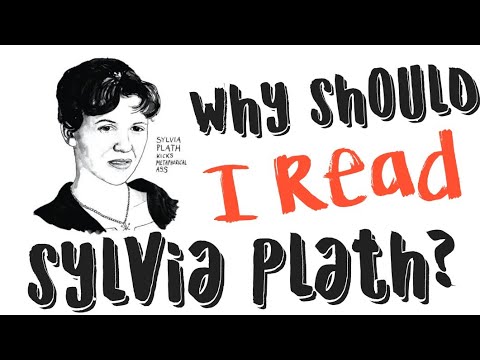
And today we're going to talk about the poetry of Sylvia Plath.
Mr. Green, Mr. Green! Ugh, I heard she's like the patron saint of sad teenage girls.
Well, me from the past, once again you're prejudging an author based on what you've heard rather than what you've actually read. I know this, because I used to be you, and I am keenly aware of the fact that you have not actually read Sylvia Plath.
So, let's actually read some poems before trying to convince everyone about how smart we are.
[Theme Music] So, Sylvia Plath is often described as a feminist poet, writing about the plight of women before women's rights were a mainstream idea. Like, essayist Thomas McClanahan wrote "At her brutal best -- and Plath is a brutal poet -- she taps a source of power that transforms her poetic voice into a raving avenger of womanhood and innocence."
And you though the Hulk was the only raving avenger. No, there is also 'The Plath!'
And there is no question that Plath's feminism is extremely important to her poetry, but she also wrote about a lot of day-to-day experiences and made them significant through her use of metaphor and simile.
Former American poet laureate Robert Pinsky said her poems "throw off images and phrases with the energy of a runaway horse or a machine with its throttle stuck wide open."
Like, here's part of her poem "Cut," which she wrote about cutting her thumb while cooking.
"What a thrill --- My thumb instead of an onion.
The top quite gone Except for a sort of a hinge Of skin, A flap like a hat, Dead white. Then that red plush."
So, she takes a commonplace experience and turns it into something more, and that's one of the hallmarks of a great poem. You can relate to it even though you've never considered the particular subject in that particular way. Like, you understand how she's cut herself, and you can picture the piece of skin like a hat or a scalp on her finger. You know what the red plush looks like and the dead white, and you can almost feel it.
But while you can relate to it, the imagery is also sort of disorienting. I mean this is a poem that begins "What a thrill." And I think some of us can relate to that feeling that injury or destruction can be kind of thrilling. It's not a healthy thing; it's not something we want to romanticize, but it is true.
So, let's talk about Sylvia Plath's biography in the 'Thought Bubble.' Plath was born in 1932 in Boston. Her father was an entomologist and wrote a book about bees, which would be the subject of many of Plath's later poems. Her mom was a first generation American pursing a master's in teaching when she met Plath's father. Sylvia published her first poem at the age of eight. Her father died that same year.
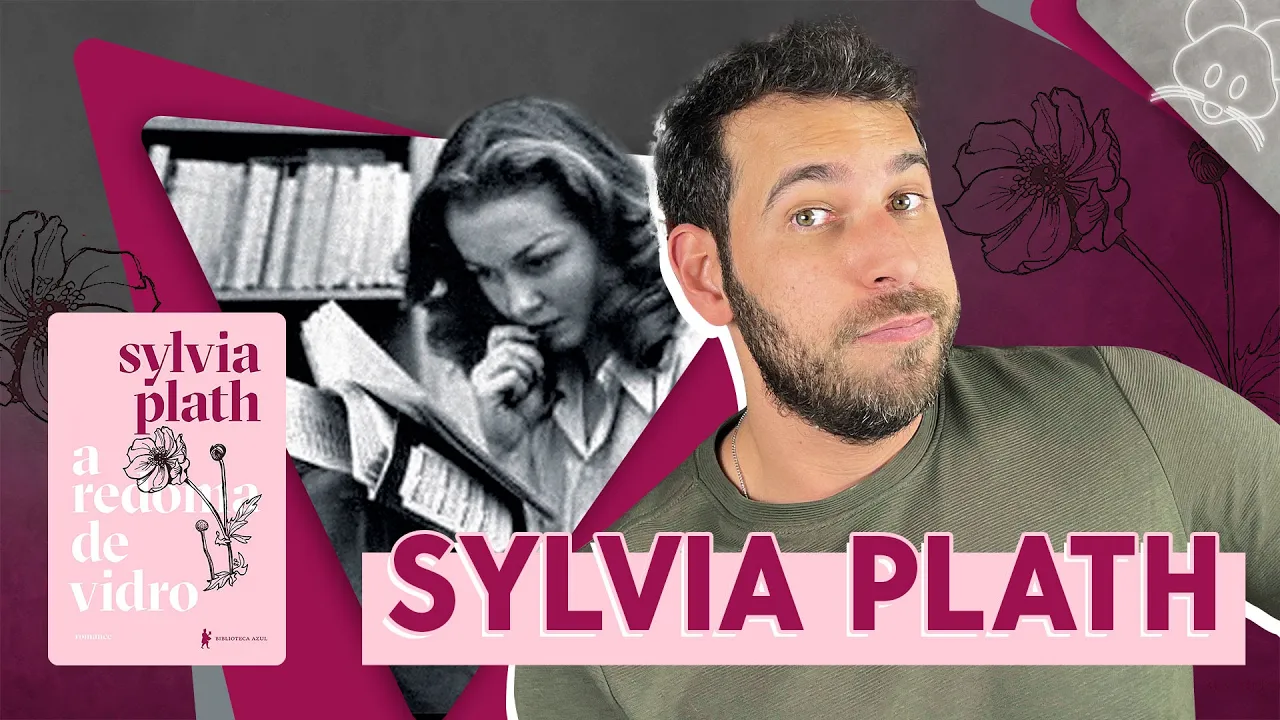
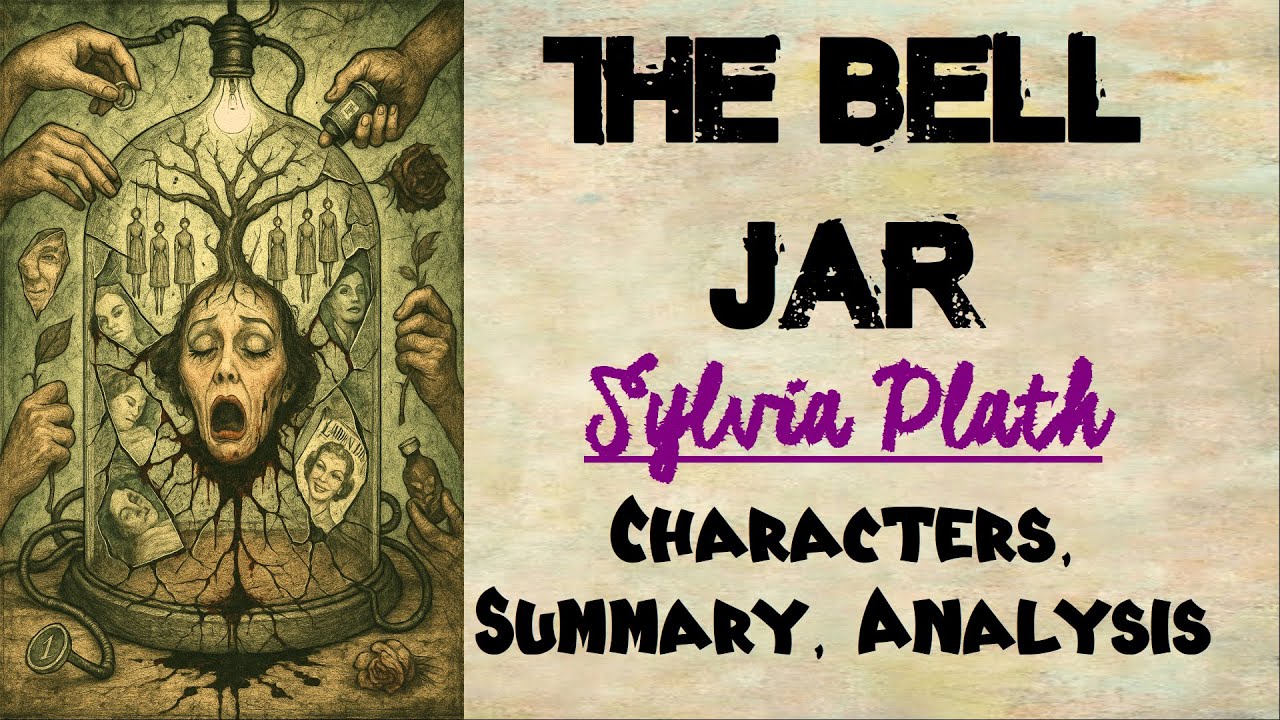
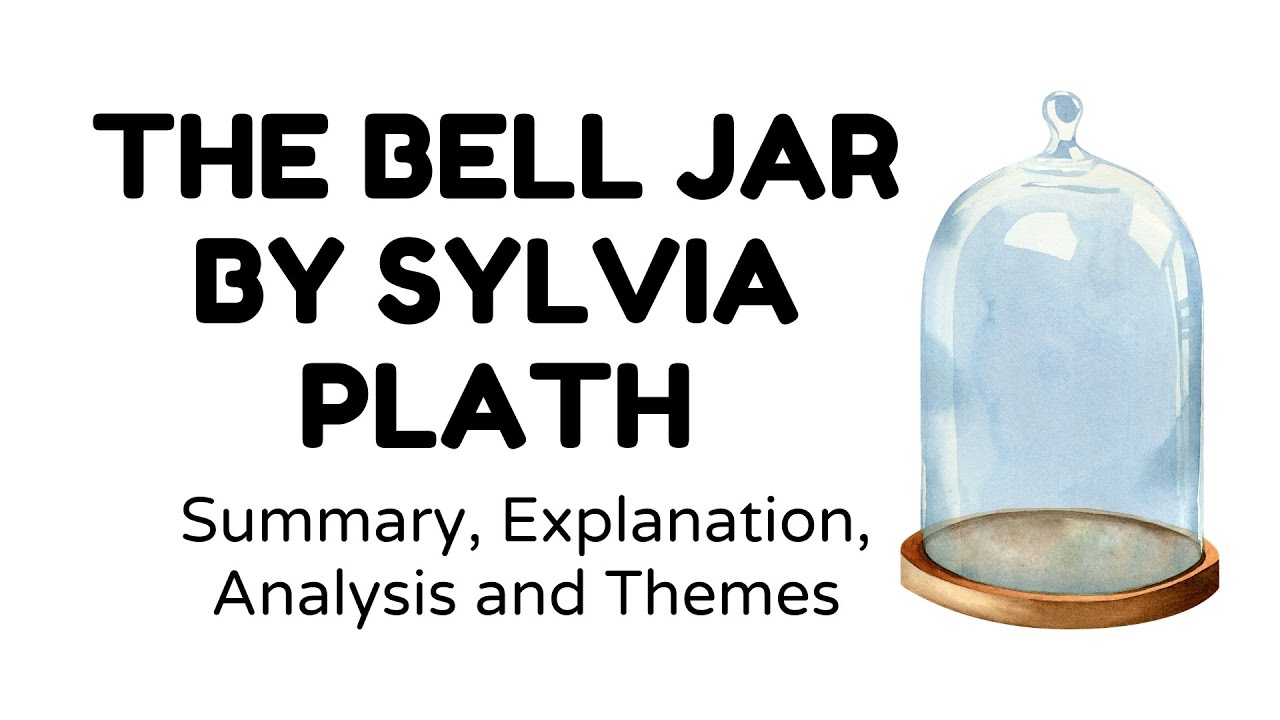
She was a good student and attended Smith College and was awarded a summer internship at Mademoiselle Magazine. The internship was the inspiration for her wonderful novel The Bell Jar. She said she looked back at the experience as though looking through a bell jar, which distorted it into a work of fiction.
The book tells us the tale of a woman who finds herself unable to enjoy her summer in the city and all the perks that come with her internship. When she returns home, her mother sees her depression and takes her to a doctor, who treats her extensively with electric shock therapy. She continues to get worse until a benefactor pays for her to go to a private hospital where she is treated appropriately and gets well enough to leave the hospital and go back to school.
In real life, Plath's first suicide attempt was in 1953. She crawled underneath her house and took her mother's sleeping pills and said later that she was "blissfully succumbed to the whirling blackness that I honestly believed was eternal oblivion."
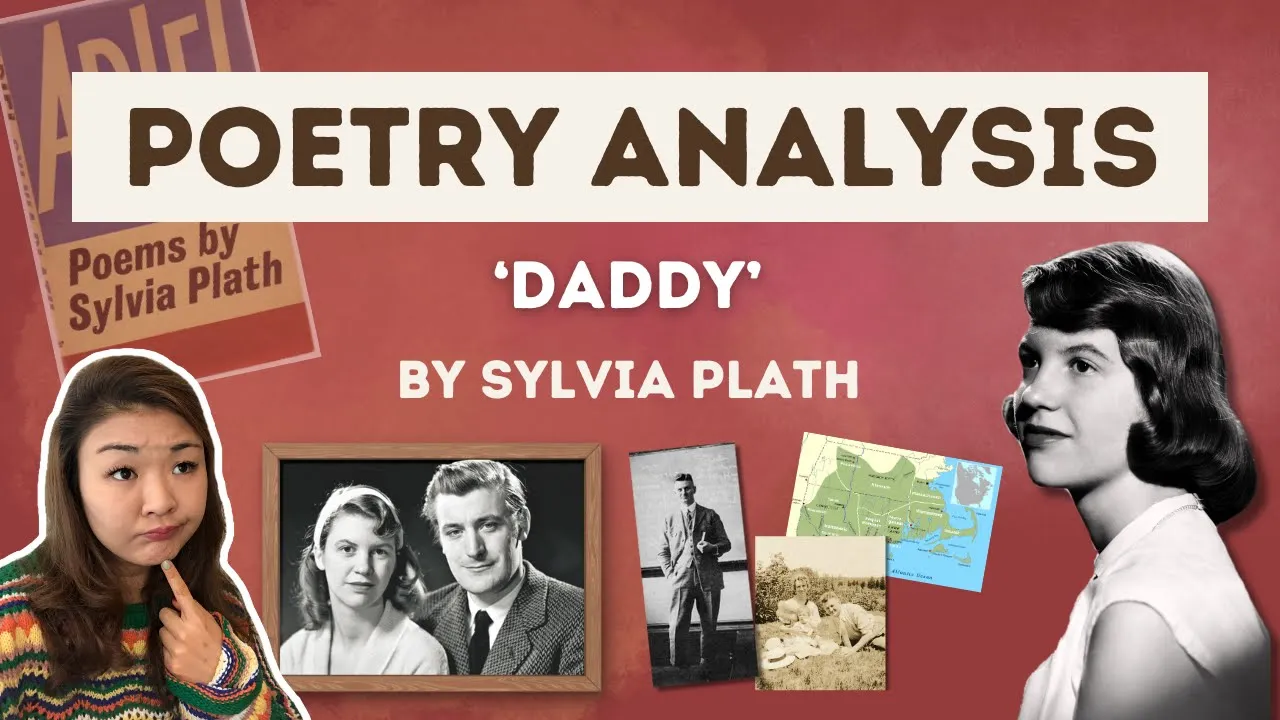
But she survived at graduated from Smith and then went on to win a Fulbright scholarship to study at the University of Cambridge where she met Ted Hughes, a poet whose work she admired. They married a few months later and found a mutual interest in astrology and the supernatural and a mutual admiration for each other's work.
In 1962, Plath discovered that Hughes was having an affair and they separated.
Later that year, she experienced a creative burst and wrote a book's worth of poems. And then, in February of 1963, she took her own life. She was only 30.
Thanks, Thought Bubble. Oh, it must be time for the open letter! Abe Lincoln?!
All right, an open letter to suicide. Dear Suicide, you are a permanent response to a temporary problem, and you are a solution to nothing. I just want to say that at the outset, there is nothing good or romantic about you, Suicide. You are a tragedy. You are also, in almost all cases, preventable.
Abe Lincoln had periods of intense, paralyzing depression throughout his life, and he became the best president of the United States ever in history, except for Franklin Pierce. I'm kidding, Franklin Pierce. You were the worst.
There is a correlation between depressive personalities and creativity, but people who are suffering from paralyzing depression don't create anything.
So, it's very important to me when we talk about a writer whose life ended with suicide that we note that people survive depression. And also that Sylvia Plath wasn't a good writer, because she eventually committed suicide. In fact, her career was cut short and I mourn all of the many wonderful books we might've had.
In short, Suicide, I don't like to say mean things, but you suck. Best wishes, John Green.
Okay, so Sylvia Plath became the first person to posthumously win a Pulitzer Prize for Poetry for her book The Collected Poems, published in 1981. But she's best known for Ariel, a collection of poems written in something of a poetic frenzy in the months before she died, and published in 1965.
Robert Penn Warren called Ariel "a unique book, it scarcely seems a book at all, rather a keen, cold gust of reality as though somebody had knocked out a window pane on a brilliant night."
In the introduction to Ariel, Robert Lowell says that in this book "...Plath becomes herself...everything we customarily think of as feminine is turned on its head. The voice is now cooly amused, witty, now sour, now fanciful, girlish, charming, now sinking to the strident rasp of the vampire."
So here are a couple excerpts from one of Plath's most famous poems, Lady Lazarus.
You can hear me read the whole thing here.
"Dying Is an art, like everything else.
I do it exceptionally well.
I do it so it feels like hell. I do it so it feels real.
I guess you could say I’ve a call.
It’s easy enough to do it in a cell. It’s easy enough to do it and stay put.
It’s the theatrical Comeback in broad day To the same place, the same face, the same brute Amused shout: ‘A miracle!' That knocks me out."
"Out of the ash I rise with my red hair And I eat men like air."
The poem is brutal, and angry, and morbid. It involves a lot of corpses. But it's also a poem of empowerment, and in a weird way, it's kind of hopeful. It's the kind of hard, one hope that you can take with you no matter how difficult things get.
Lazarus, of course, refers to the Bible story of Jesus raising Lazarus from the dead. She's imagining herself as rising from the dead, because she lived through a suicide attempt.
And throughout the poem, she uses repetition and rhyme so that you can't look away from these things that are difficult to face. Every time your mind starts to wander, there's a rhyme that sucks you back in.
And then there are the line breaks, which are really fascinating in this poem. So, when I was a kid, I though that you look a three or four second pause at the end of every line of poetry.
And that may be the case in many Shel Silverstein poems, but it's definitely not the case in many Sylvia Plath poems.
Now, like when proper poets read from their poetry, they read it all so slowly that they can afford to take a full breath at the end of each line. But you should treat a line break as some kind of punctuation, like maybe it reads as a comma. Maybe it just means there's a stronger emphasis on the word before or after the line break.
One of the pleasures of reading poetry for me is that I kind of get to be the co-creator of the poem by making choices about how to read it.
Sylvia Plath wrote in her journal once that she felt as though she lived two extremes: "joyous positive and despairing negative." And we see both in her poems. Like in "Letter in November," she gives us a glimpse of the joyous positive.
"...I am flushed and warm. I think I may be enormous, I am so stupidly happy..." And we've all felt puffed up with happiness, and she finds brilliant words to describe the feeling just as it is, but I also think there's something else going on here.
There's a longstanding idea that women should be quiet and small, right? Like when I'm on an airplane, men usually sit like blueergh, and God forbid if a woman takes an armrest on an plane!
Anyway, in that sense, allowing yourself to become enormous with happiness is a kind of countercultural action. Instead of enormity being, like, 'unwomanly,' it becomes the perfect and most wonderful thing for a woman to be.
So, Sylvia Plath was influenced by writers like James Joyce, Virginia Woolf, D.H. Lawrence, but also by Emily Dickinson. And if you watched our episode on Dickinson last year, you'll see that influence.
They both share a preoccupation with death, but they also both write from the perspective of women who find themselves trapped by lack of opportunity.
So along poets like Robert Lowell and Anne Sexton, Plath is often seen as a member of the 'Confessional School of Poetry.' This so-called poetry of the 'I' dealt directly with trauma and with relationships, and these poems were often autobiographical.
But vitally, they weren't just recording their emotions on paper and then just inserting line breaks and rhymes. Confessional poetry isn't just about capturing the 'self', it's also a kind of remaking the 'self'.
That's one of the great things about writing. And "Lady Lazarus" is actually a really good example of this. I mean, in that poem, the narrator dies, but then is slowly reformed.
The last poem I want to talk about today is "Tulips," the poem that was included in Ariel, although though it was written much earlier than most of the poems in the book. It was about a hospital stay in which she was recovering from an appendectomy.
"The tulips are too excitable, it is winter here.
Look how white everything is, how quiet, how snowed-in.
I am learning peacefulness, lying by myself quietly As the light lies on these white walls, this bed, these hands.
I am nobody; I have nothing to do with explosions. I have given my name and my day-clothes up to the nurses And my history to the anesthetist and my body to surgeons.
They have propped my head between the pillow and the sheet-cuff Like an eye between two white lids that will not shut.
Stupid pupil, it has to take everything in."
For me, this idea of "two white lids that will not shut" is central to my understanding of humanity and our ineradicable hope.
Plath is trying to give up and just lie still in the absolute white, but those two exciting tulips are pulling her back into the world.
Everything is white and quiet and snowed-in, but those tulips, we read, are "too red...they hurt me."
This poem, for me at least, captures the difficulty of being a person, but also what's rewarding about being a person.
We are called to attentiveness even when it's painful.
I think Sylvia Plath often gets a bad rap precisely because her poetry resonates with teenagers.
And I think it's a little bit unfair. Yes, there are times when she romanticizes death and self-injury, and I don't like it when she does that.
But there is astonishing emotional authenticity in her poems, and she manages it without irony.
And that incredible frankness in Plath's writing is what I think makes it endure. It all feels true.
Her focused observation of the world around her, the pupil that has to take everything in, that was a great gift to us because by keeping her eyes open as long as she did, she helped us to keep ours open. Thanks for watching. I'll see you next week.
Crash Course is filmed in the Chad and Stacey Emigholz Studio in Indianapolis, and it's made with the help of all of these nice people. It exists because of your support through Subbable.com Subbable is a voluntary subscription service that allows you to support Crash Course directly on a monthly basis. They are amazing perks available, so check those out. Thank you to all of our Subbable subscribers and to everyone who watches Crash Course. As we say in my hometown, don't forget to be awesome.
Up Next

56:30
Sylvia Plath Documentary: Confessional Poet & Pulitzer Prize Winner
@AuthorDocumentaries
63K views•2021-04-25

40:06
Street Haunting: Virginia Woolf’s London Essay Analysis
@ExtraLiteraryAffairs
146 views•2025-01-24
12:38
Frankenstein, Part 2: Romanticism and Critical Readings
@crashcourse
1.1M views•2014-04-03

15:25
1984: Orwell's Dystopian World and the Mechanisms of Totalitarianism
@AlternateHistoryHub
7M views•2017-03-04
Related Study Plans & Knowledge Roadmaps
Structured learning paths in Literature
literature
Graphic Memoirs: Visual Art, Trauma & History
01Foundations of Sequential Art and Visual Language
02Autographics and Processing Historical Trauma
03Visualizing Personal Trauma, Grief, and Graphic Medicine
+ 2 more learning modules
14h5 modules
Explore Roadmap
literature
Campus Novels: Evolution, Themes & Critique
01Introduction to the Campus Novel Genre
02Mid-Century Satire and the Post-War Academy
03Dark Academia and the Critique of Privilege
+ 2 more learning modules
14h5 modules
Explore Roadmap
literature
Theater of the Absurd: Philosophy & Plays
01Postwar Existentialism & Historical Roots
02Dismantling Narrative: Esslin & Absurdist Conventions
03Samuel Beckett and Tragicomic Existentialism
+ 2 more learning modules
12h5 modules
Explore Roadmap
literature
Revenge Tragedy: Justice, Madness & State
01Foundations of Early Modern English Theatre
02Anatomy of Revenge: Structural Conventions
03Psychological Complexity: Madness and Melancholy
+ 2 more learning modules
15h5 modules
Explore Roadmap