























The Bell Jar by Sylvia Plath is a semi-autobiographical novel that explores the psychological struggles of Esther Greenwood, a brilliant young woman who experiences a nervous breakdown after being rejected from a writing course and facing societal expectations. The novel's famous 'Fig Tree' passage illustrates how the pressure to choose one life path over others creates anxiety, as choosing one option means losing all other possibilities. While the book raises important feminist concerns about women's autonomy and the sacrifices required for career versus family, it also contains problematic racist remarks and lacks intersectional feminism, focusing primarily on middle-class white women's experiences.
The Bell Jar by Sylvia Plath: A Critical Examination of Mental Illness and Feminism
Added:An understanding of 1950s American societal expectations and gender roles for women, particularly the pressure to conform to domesticity.
A basic overview of Sylvia Plath's life, her mental health struggles, and her association with Confessional literature.
The historical context of mental health treatments in the mid-20th century, including early forms of electroconvulsive therapy (ECT).
Familiarity with the concept of the 'Bildungsroman' (coming-of-age novel) and how it traditionally applies to male versus female protagonists.
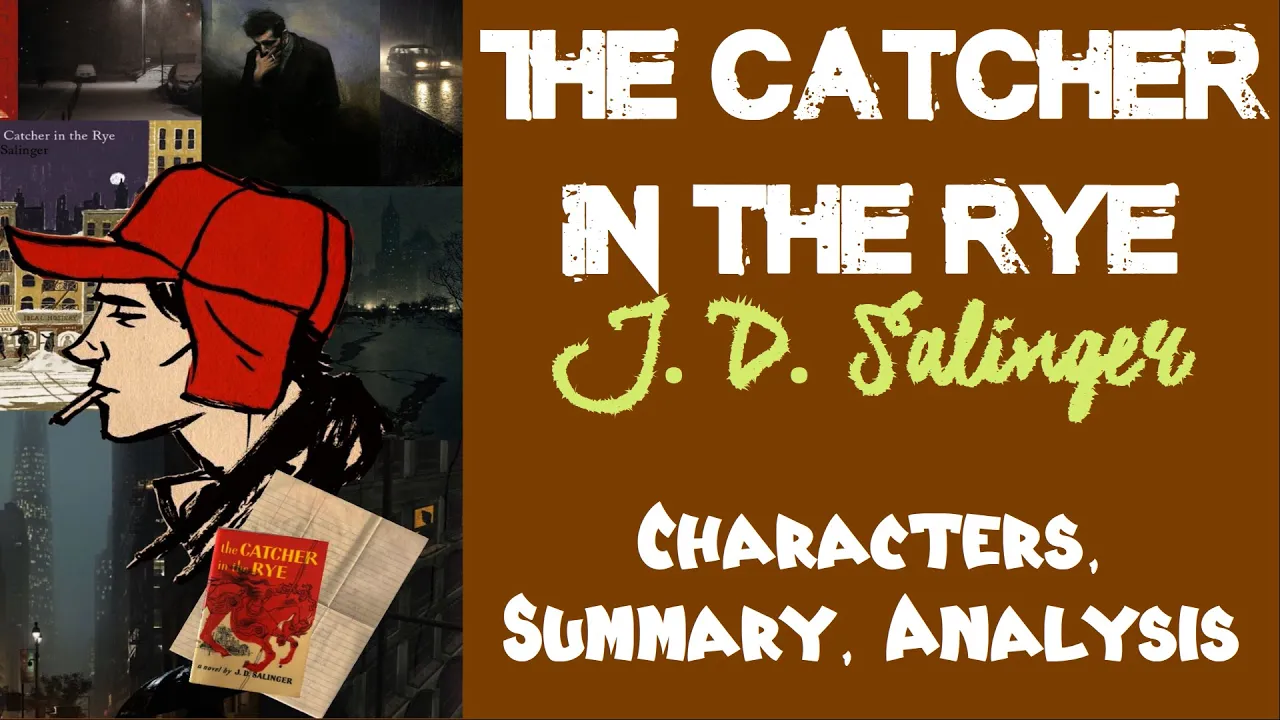
A comparative analysis of 'The Bell Jar' with J.D. Salinger's 'The Catcher in the Rye' regarding mid-century alienation.
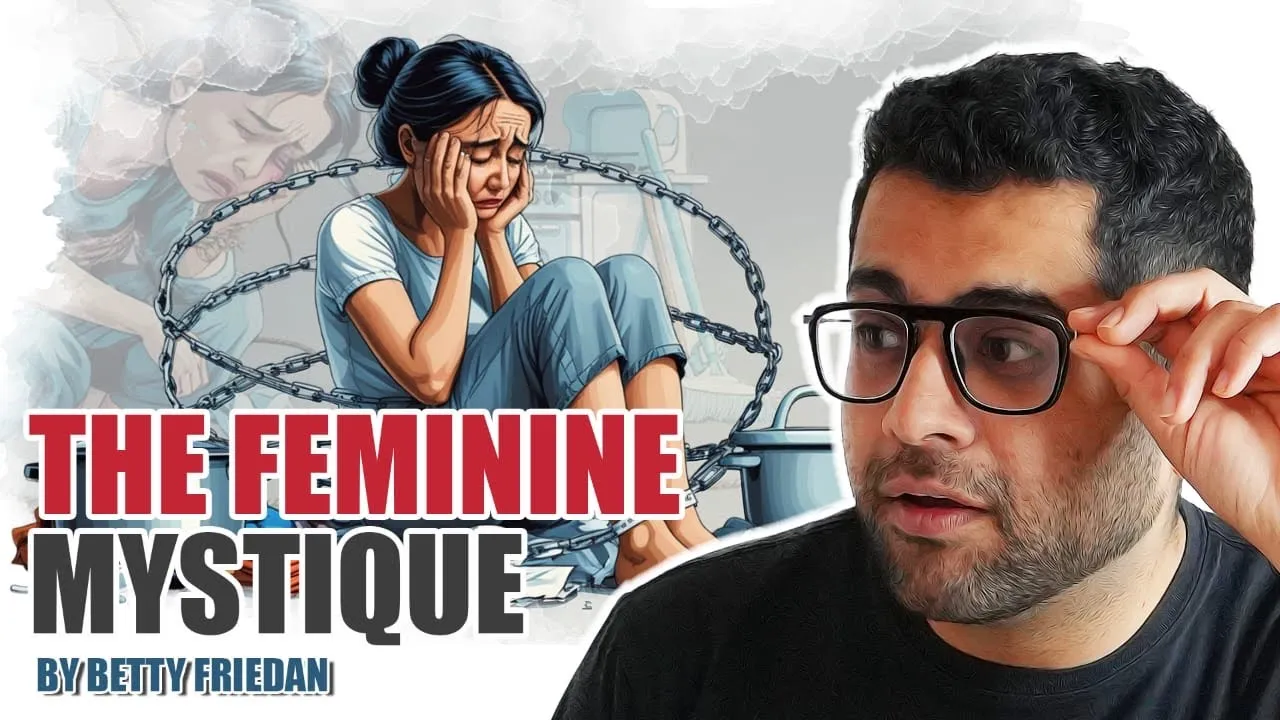
Exploration of Second-Wave Feminism and its alignment with the themes in Betty Friedan's 'The Feminine Mystique' (published the same year as 'The Bell Jar').
Deep-dive study into Plath's poetry collection 'Ariel' to examine how similar themes of depression and identity are expressed in verse.
Investigation of the 'biographical fallacy' in literary criticism, debating whether a work should be evaluated independently of its author's real life.
30.4K views1.6Klikes16:54Original Release: 2025-01-18
you know you know those people who use some sort of prompt to feed into an AI art software and then get these uncanny valy soulless illustrations to later post on their Instagram and then call themselves an AI artist yeah when I meet those people I actually do want to go into this oven do not do you do not do anymore black shoe in which I have lived like a foot all right so I just finished reading the Bell jar by Sylvia pla which is known to be an American classic and by some people it is also shown to be a feminist classic long story short I have a lot of thoughts about it so let's get into it shall we there will be spoilers of course but if you're more or less familiar with Sylvia plath's life you won't be too surprised I guess and that was a thing going into this book I knew nothing about Sylvia Plath other than the fact that she un alived herself by putting her head into a gas oven while I was like halfway through reading the book I decided to search the author and Came Upon This mental illness report and I was going through the report and I was like wait wait a second wait a second the events that were cataloged in the mental illness report were very similar almost matching exactly what was happening in the book which made me even more intrigued it was then that I discovered that the Bell jar is a semi autobiographical novel it's not fun in games anymore the Bel jar is about Esther Greenwood a brilliant beautiful enormously talented and successful middleclass college student who works at a prestigious company as an editor with a grant provided by her school as a summer job in New York after an incident of sexual assault in the summer and after she finds out that she hasn't been selected for a writing course in Harvard that she wanted Esther goes through a nervous breakdown leading her to her mental illness she makes a few attempts on her life which eventually ends up leading her into an asylum the thing I like most about this book is the pros I will get the criticisms in in a moment don't worry but no one can deny that this woman Sylvia Plath is a brilliant writer with a prolific Pros it's not just very flowery and Abstract but also can relate to the deeper levels of you which I really like she really knows how to set the tone and make you feel exactly in the way that she intends but the thing that was the most impressive but also kind of disturbing was how realistic her thought process was it is not this manic indu craze it doesn't feel like you're reading through the thoughts of a mentally ill person but more so of a very elaborate and prolific person who has great awareness about what she's feeling her thought process is actually so rational at times that I feel uneasy I I guess I'm only a few bad incidents away of completely collapsing is what she's trying to say that is what's so scary and disturbing about this novel because you you see exactly why She's suffering in the way that she does and it's not an entirely unique experience it's a very similar experience that is relating to a lot of people she's in a state of cognitive dissonance but she's so elaborate and aware of this fact that you can't help but relate to her journey one passage that directly stood out to me is a very famous one and one that you might have seen quotes of everywhere on Goodreads or on social media and that passage is no other than the Fig Tree passage and it goes like this I saw my life branching out before me like the green fig tree in the story from the tip of every Branch like a fat purple fig a wonderful future beckoned and winked one wig was a husband and a happy home and children and another fig was a famous poet and another fig was a brilliant professor and another fig was EEG the amazing editor and another fig was Europe and Africa and South America and another fig was constant and Socrates and Atilla and a pack of lovers with queer names and offbeat professions and another fig was an Olympic lady crew champion and Beyond and above these figs were many more figs I couldn't quite make out I saw myself sitting in the Crouch of the Fig Tree starving to death just because I couldn't make out my mind which of the figs I would choose I wanted each and every one of them but choosing one meant losing all the rest and as I sat there unable to decide the figs began to wrinkle and go black and one by one they plopped to the ground at my feet oh my goodness just this one passage made me relate more to this author than some authors managed to do in the course of a series or in the course of their lifetime the Fig Tree analogy is interesting because although it can apply to anyone it holds a special place especially for women the fact of the matter is that everyone has to make some sort of choice and some sort of sacrifice at the crossroads of their lives but some of these sacrifices are much more obvious for women and especially the woman living at the time this book was published the 1950s man we're talking about 1950s a man from this time could marry could have children and an artistic Endeavor and it's all good especially if they're a wealthy man and especially if they're of a certain demographic but for people of color and for women the scales are not so balanced even to this day women often have to pick a life to choose a life in between having a career or stay at home having and raising children or pursuing your passions I haven't read anything that spoke so vividly so tangibly about this crippling anxiety induced by the fact that everyone needs to make a choice with each potential Choice preventing you from going on the pathway of the other choices but if you don't make a choice because you simply want to have all the figs you won't get to have any at all not choosing a path means not choosing a future and while this book is written at a time where women couldn't even have their own credit line without their husband's approval we still see To This Day posts about young woman agonizing over the fact that they can't read every book they can't watch every movie work every profession both have a career and a fulfilling family life and pursue multiple passions while they're traveling the world I don't know why this is but just wanting to experience life fully with every possible path and outcome seems to especially be something a lot of people want and later struggle with because at the end of the day I think we all have that lingering feeling what would it be like if I had taken that job other than my current one what if I studied something different what if I married someone different what if I had kids what if I didn't have kids there is always an alternate timeline of how things could have turned out and there is this constant mourning thinking about the life that you could have had another passage that struck a chord with me given my ambivalence on the topic is when Esther goes to a gynecologist to get fitted for a contraceptive and I didn't know this apparently at the time this was illegal in some states I mean it's I guess it's not really wild thinking about the current Law and Order we have about women's bodies and abortion rights and at the doctor's office Esther ruminates about how doing this getting a contraceptive device will essentially be her key to Freedom even the money that she's using to get this contraceptive is from our Patron that's supposed to be supporting her in her studies and this this woman has no idea that Esther wants to sleep around since she knows her Patron would never approve of it because of the Purity culture at the time she just doesn't tell her and at the gynecologist's office she sees all the woman pregnant with babies and the woman with babies around them and this is the passage whether she knew it or not filam Min was buying my freedom what I hate is the thought of being under a man's thumb I had told Dr Nolan a man doesn't have a worry in the world while I've got a baby hanging over my head like a big stick to keep me in line I Lea nervously through an issue of baby talk the fat bright faces of babies beamed up at me page after page bald babies chocolate colored babies all right Sylvia that was a word choice choices were made eyes on how faed babies babies rolling over for the first time babies reaching for rattles babies eating their first spoonful of solid food babies doing all the little tricky things it takes to grow up step by step into an anxious and unsettling world I spelled a mingling of pabulum and sour milk and salt Cod stinky diapers and felt sorrowful and tender how easy having babies seemed to women around me why was I so unmaternal and aart why couldn't I dream of devoting myself to baby after fat pooling baby like da Conway and da Conway is a character that basically is their neighbor who had like five to six kids and everyone in the neighborhood is like oh my God she has so many kids she's like the neighbor they like gossiping about because she has so many kids and the this final line if I had to wait on a baby all day I would go mad first of all same for pla having a baby is described to be the worst thing that can ever happen to her and I'm not saying for me this is necessarily the case but I understand to an extent why she's feeling the way she's feeling she Associates any sort of Freedom that she would have going out of the window the moment she has a baby because that is the truth that is the reality of the time if you have a baby that is kind of your life you can't have much of a personality outside being a mother in the 1950s us and and is she wrong though is she wrong when Sylvia pla married her cheating two-timing waste of air husband called Ted Hughes this man not only cheated on Sylvia just after a few months of meeting his mistress oia but while they were on holiday together Sylvia and Ted Hughes in Ireland he just like took off to meet his mistress in London and they embarked on a 10-day trip through Spain the initial place where Sylvia PLA and Ted Hughes honey mooned in what and unfortunately our girl wasn't ambivalent for much long because she had two kids with this Dusty crusty man and in between these two kids she was actually pregnant with another one but she had a miscarriage want to know why because her husband violently beat her according to the writings in her journal and when they finally said separated of course this man didn't help out with the kids so was Sylvia Plath wrong about having kids hard to say the fact that abortions and birth control to this day are such controversial and divisive topics is not really surprising because it is to some extent true that when a woman has a baby they will usually be stuck with the child as the primary caretaker and especially in the 1950s when men aren't even supposed to be in the picture of you know child rearing and changing diapers they just think they can be a good dad while not even trying to be present although it is often thought that women use being pregnant and having the child of a certain man to trap them in their life not much as talked about the other way around how men trap women into their life which brings us to our point of feminism and I use the word feminism in quotation marks because it's not really intersectional feminism the feminism described in this book is mostly relating to middle class white woman but in a lot of circles this book is the Holy Bible of feminism and feminist ideology I personally can't call it exactly feminist myself because although it raises some good issues and some good concerns the way this book talks about these issues it's not in line with the definition of feminism that I practice so I would not call it a feminist critique on society I would still say that this is an excellent account into a person's descent into Mental Illness but feminist the book introduces some feminist ideas for sure but any notion of intersectionality is thrown out of the window the moment Sylvia pla starts talking about minorities oh my God some of the passages some of the dialogues I had to read through were absolutely so painful because this woman hates minorities there's so many glaringly racist remarks about black people Asians uh Latinos there there is no one spared literally no one spared I will share some examples to make you guys as uncomfortable as I was while reading them so here we go I looked as yellow as a China man I noticed a big smudgy eyed Chinese woman staring idiotically into my face it was only me of course he's from Peru they're squat I said they're ugly as Aztecs usually it was a shrunken old white man that brought our food but today it was a yeah the kept grinning and chuckling in a silly way I drew my foot back and gave him the a Sharp heart kick on the calf of his leg even with the racist remarks though I would say this book is a product of its time so I'm not I'm not going to go too hard on it and I'm not using these passages in a way to discount or invalidate what Sylvia went through in her life because it it clearly seems like she was let down by numerous people from the doctors that would Gaslight her into thinking she would be fine while they were going to put her into electroshock therapy I cannot imagine how painful being electrocuted is and your doctor doesn't even tell you the amount of medical gaslighting this woman endures by God another criticism I can make is that a lot of Esther's friends are portrayed to be like very cartoony apparently Plath explained this saying that this was UN purpose and in line with the overall message in the book that when someone is mentally unwell they see everything in a sort of distorted manner it's like you have a pessimistic stifling lens on life and like everything is under a bell jar and you're stuck inhaling this very stifling air inside it as a word of caution only read this book if you're somehow in a neutral state of mind it is very triggering it is very graphic at times it did affect me I was I was a little haunted thinking about how what if one day my own mind will turn on itself also another word of caution do not search up Sylvia pla's life because especially after she died the things that happened with her cheating lying waste of air of husband Ed Hughes and his mistress AIA the things that happen to them are very sort of ulty black magicky and very disturbing I do not want to go deeper into this but I'll leave you with an interesting fact that I stumbled upon in my research after Sylvia pla passed away Ted Hughes her ex-husband and his current mistress AIA moved into the house that him and Sylvia used to live in a lot of personal items and clothing that was Sylvia's was still in that house and for some reason AIA used the comb that Sylvia used to use and wore her clothing which is very eerie and disturbing well why are you you wearing your husband's dead wife's clothes and a few years later AIA the mistress unes herself and her children in a kind of similar way I don't know what happened my girl Sylvia text them I think from my research the couple is known to be into black magic and the occults so in conclusion syia Plath Might Be a witch so overall I thought this was a very intriguing read it is definitely a classic that I think everyone should read but you should read it when you're in a good mood not when you're in a bad mood okay the more I research Sylvia Platt's life the more I find it very fascinatingly dark now I get it I I get the hype surrounding Sylvia Plath and I get the hype around the oven the book introduces some feminist ideas but they only seem to apply a middle class white woman and there are a lot of racist remarks in the entirety of the book which takes away from actually making a intersectional comment or critique on inequality within Society oh sounds like my pizza's ready the moral of the story is if you feel a little down in the dumps don't put your face in an oven this Pizza is pretty awful though well with that being said thank you for watching and see you next time
Up Next
15:46
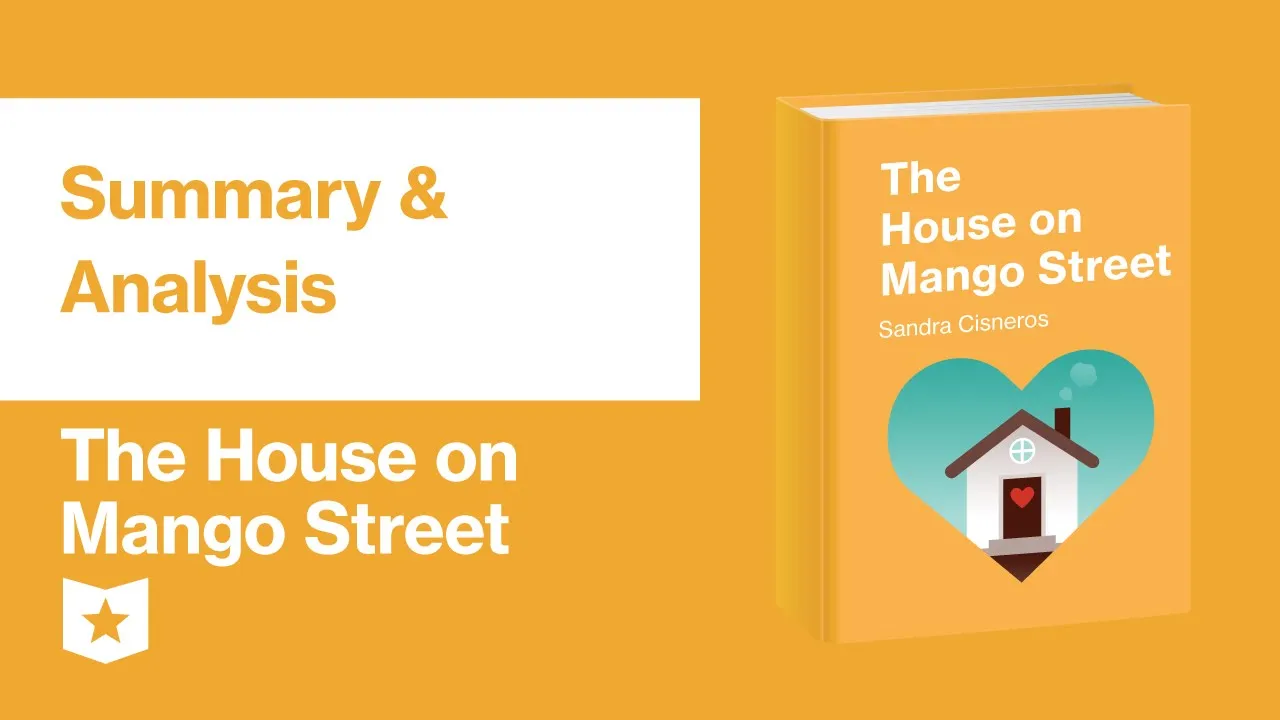
The House on Mango Street Summary & Analysis | Sandra Cisneros Guide
@coursehero
167.7K views•2019-12-24

13:43
Formalism in Literary Criticism: An Academic Lecture Overview
@mattalberhasky9952
39.1K views•2015-08-05

6:08
Point of View in Fiction: First Person vs. Third Person
@magicalthriftyteacher
153.8K views•2014-03-31

15:25
1984: Orwell's Dystopian World and the Mechanisms of Totalitarianism
@AlternateHistoryHub
7M views•2017-03-04
Related Study Plans & Knowledge Roadmaps
Structured learning paths in Literature
literature
Graphic Memoirs: Visual Art, Trauma & History
01Foundations of Sequential Art and Visual Language
02Autographics and Processing Historical Trauma
03Visualizing Personal Trauma, Grief, and Graphic Medicine
+ 2 more learning modules
14h5 modules
Explore Roadmap
literature
Campus Novels: Evolution, Themes & Critique
01Introduction to the Campus Novel Genre
02Mid-Century Satire and the Post-War Academy
03Dark Academia and the Critique of Privilege
+ 2 more learning modules
14h5 modules
Explore Roadmap
literature
Theater of the Absurd: Philosophy & Plays
01Postwar Existentialism & Historical Roots
02Dismantling Narrative: Esslin & Absurdist Conventions
03Samuel Beckett and Tragicomic Existentialism
+ 2 more learning modules
12h5 modules
Explore Roadmap
literature
Revenge Tragedy: Justice, Madness & State
01Foundations of Early Modern English Theatre
02Anatomy of Revenge: Structural Conventions
03Psychological Complexity: Madness and Melancholy
+ 2 more learning modules
15h5 modules
Explore Roadmap