


















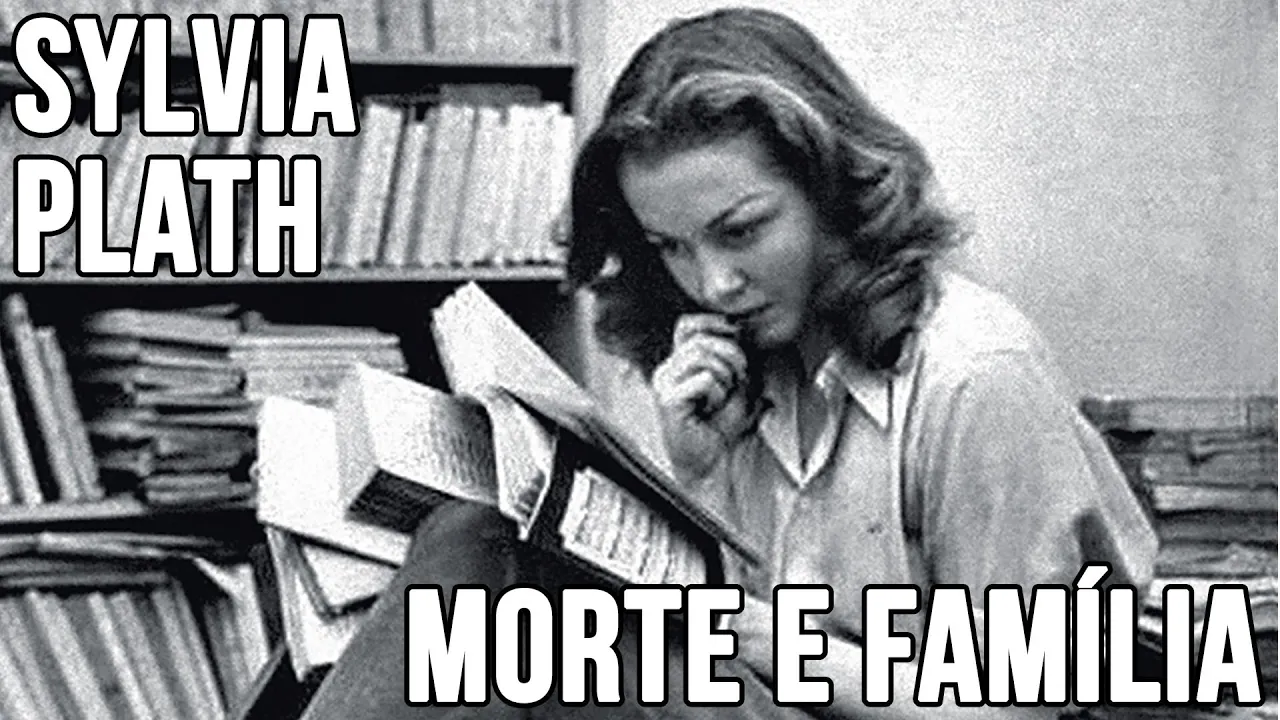






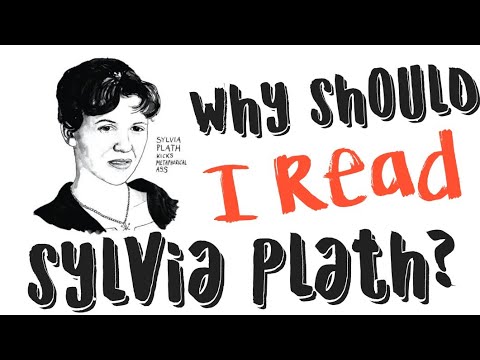


Sylvia Plath's literary journey demonstrates how personal trauma, mental health struggles, and creative ambition intertwine in the artistic process; her evolution from disciplined formal poetry to raw, confessional work in 'Ariel' illustrates how writers often need to confront and transform their deepest psychological conflicts—including complex father-daughter dynamics and existential despair—to achieve authentic artistic expression, ultimately showing that creative breakthrough frequently requires navigating intense emotional pain while developing a distinctive voice that transcends conventional poetic forms.
Sylvia Plath Documentary: Confessional Poet & Pulitzer Prize Winner
Added:An understanding of the shift from High Modernism to mid-20th-century subjective poetry in American literature.
A foundational awareness of the 1950s and 1960s socio-cultural context, particularly regarding rigid gender roles and the stigma surrounding mental health.
The basic definition of 'Confessional Poetry' and how it prioritizes highly personal, autobiographical, and formerly taboo subject matter.
Familiarity with the concept of biographical criticism—the literary approach that analyzes how an author's life events intersect with their creative output.
A close-reading textual analysis of Plath's major works, specifically her semi-autobiographical novel 'The Bell Jar' and her raw, posthumous poetry collection 'Ariel'.
A comparative study of Plath's contemporaries in the Confessional school of poetry, such as Robert Lowell, Anne Sexton, and John Berryman.
An examination of the literary estate controversy and the complex editorial role played by her husband, poet Ted Hughes, in shaping her posthumous legacy.
The application of feminist literary theory to analyze Plath's subversion of domesticity, patriarchal structures, and female autonomy.
An exploration of the cultural and psychological discussions surrounding the 'Sylvia Plath Effect'—the studied relationship between creative genius and mental illness.
63K views1.3Klikes56:30Original Release: 2021-04-25
presentation of the south carolina educational television network major funding for the voices and visions series is provided by the national endowment for the humanities annenberg media additional series funding is provided by the national endowment for the arts and the arthur vining davis foundations [Music] [Laughter] sylvia what about your childhood did you live in your imagination a great deal i certainly didn't have a happy adolescence and perhaps that's partly why i i turned especially to writing as i wrote diaries stories and so forth it was quite introverted during those early years [Music] you are about to hear a program on sylvia plath last monday the american purchase and wife of ted hughes died suddenly in london she was 30.
she published her first and highly accomplished book of poems the colossus in 1960 but it was only recently that the peculiar intensity of her genius found its perfect expression [Music] sylvia plan arrived in london around the fall of 1962 she was 30 years old by this time she had absolutely irrefutable proof that she was a kind of a real poet i guess i think a major poet um in that the poems have become unstoppable she'd kind of hit that motherlode you know it was like brent oil or something she'd gone through and found the reservoir she was writing poems of an order which seemed to me quite extraordinary for this century not just one a month or one every two months which is what she'd done before she was writing two or three a day as though she tapped the mother lode to end all mother lodes of her creativity fever 103 pure what does it mean the tongues of hell are dull dull as the triple tongues of dull fat cerberus who wheezes at the gate incapable of licking clean the anguish tendon the sin the sin the tinder cries the indelible smell of a snuffed candle love love the low smokes roll for me like isadora's scarves i'm in a fright one scarf will catch an anchor in the wheel such yellow sullen smokes make their own element they will not rise but trundle round the globe choking the agent in the meek the weak hot house baby in its crib the ghastly orchid hanging its hanging garden in the air [Music] she used to get up four dawn by the way john dunn did the same thing she was up before you know in the first play life so the most lovely phrase the glassy music of the of the milkman setting his bottles and she tried to get in as much as she could before the kids actually stirred and after that it was she was a mum and then by the time he became she was probably too exhausted to do anything else the complication about that is that she was writing an unbelievable amount with an unbelievable intensity in terms simply of creative effort it seems to me there is nothing in english poetry comparable with it except keats's great year you know when he was also riding against the clock the stuff was pouring out but it wasn't pouring in some unformed lava-like way it was highly highly disciplined and skillful can you say are there any themes which particularly attract you now as a person i think my poems come immediately out of the sensuous and emotional experiences i have but i must say i cannot sympathize with these cries from the heart that are informed by nothing except you know a needle or a knife or whatever it is i i believe that one should be able to control to manipulate these experiences with an informed and intelligent mind [Music] she was taking the everyday material of her life looking after kids chopping onions pushing the pram taking telephone calls and turning anything that came to hand into poetry i had always idolized england because if you're an english major especially you think that here it all began and you want to walk under milton's mulberry tree at cambridge and you remember all the dickens that you read when you were little and suddenly you go to london and you recognize scenes that you have somehow seen before and this is simply i think a sort of literary influence i remember being appalled when someone criticized me for beginning just like john dunn but not quite managing the finish like john done and i felt the weight of english literature on me at that point as far as language goes i'm an american i'm afraid i'm an american my accent's american my way of talk is an american way of talk the poets that excite me most are the americans in particular my background is um may i say german and austrian on one side i'm a first generation american on one side i'm a second generation american and i was brought up on on the northern coast of massachusetts and my whole childhood was spent on the ocean i remember the very spectacular hurricanes we used to have where my grandmother cellar would be flooded and there would be sharks washed up in the garden and so forth and the image of the sea has been with me ever since even though i've i've been inland for a few years and i think one always goes back to to something as vivid and colorful as this sort of experience and i know that the sea comes into um a great many of my poems sometimes it's just a subconscious see a sort of flow of thoughts and so on times it's the real sea itself we moved from jamaica plain to winthrop in 1937.
we had been down there visiting grandma and grandpa who were living at point shirley and the children were so happy on the beach my husband was failing in health and that was the real main reason i wanted to be near my parents we loved the shore we loved the house and i hoped of course that he'd recover and that we would live there and when he was ill the nurse cut down a uniform and put it on her and she was her assistant and she'd bring a cool drink up to her father she felt very useful then of course he was sent to the hospital and he had his leg amputated the first thing she said would he have to buy a pair of shoes and then of course when he died i had to tell the children in the morning that her father had died that he wasn't suffering anymore and uh while warren rejoiced that i was young and healthy and clung to me sylvia just slipped underneath the covers of her bed and said i'll never speak to god again so she had been praying [Music] every night that her father would be well and would come home she loved his praise at that time she was beginning piano lessons and she would play for him he would pat her in the head and praise her of course the children had much more freedom in the house after my husband died and now they could play anything they wanted anywhere they wanted all things that would be quiet play you a happy child well i think i was happy up to the age of about nine very carefree and uh i believed in magic which which uh influenced me a good bit and then at nine i was rather disillusioned i stopped believing in elves and santa claus and all these little beneficent powers and became more realistic and depressed i think and then gradually uh it became more adjusted about the age of 16 or 17.
[Music] when he was eight i knew that as soon as it got dark that there would be the emergence of the new moon and i took both children down to the beach i carried my son and she stood by my side and she more or less threw away stood apart and gazed at the moon and then quietly i heard her start to say very slowly the moon is a lock of witch's hair tiny and golden and red and the night winds pause and stare at that strand from a witch's head she learned to type very very competently from the age of 13 on i once for the fun of it timed on a standard typewriter she was going 80 words a minute she said the typewriter is an extension of my body from the age of 10 i put a diary in the christmas stocking both for warren and for sylvia sylvia's i saw that she had a diary where she had a whole page for a day [Music] when she went to junior high she wanted an unpaginated journal because when the big moments come one page is not enough ocean one two one two w when i was learning to creep my mother set me down on the beach to see what i thought of it i crawled straight for the coming wave and was just through the wall of green when she caught my heels i often wonder what would have happened if i had managed to pierce that looking glass would my infant gills have taken over the salt in my blood for a time i believed not in god nor santa claus but in mermaids the road i knew curved into the waves with the ocean on one side and my grandmother's house to this day i remember her phone number ocean one two one two w i would repeat it to the operator an incantation a fine rhyme puff expecting the black earpiece to give me back like a conch the sorceress of the sea out there as well as my grandmother's hello my final memory of the sea is a violence a still unhealthy yellow day in 1939 the seam molten steely slick heaving at its leash like a broody animal [Music] my father died we moved inland she says in ocean 12 12 w that's the real sort of historical source of the problem also the father died by the way in just about the year when world war ii broke out and that was so there's a kind of connection between public and private that occurs at the time of the death of the father uh but then i think it's very important to see the ways in which throughout her career she mythologizes the figure of the father the father metamorphoses into a kind of figure with tremendous mythological resonance uh all by yourself a father of pithy and historical is the roman forum the father is a vehicle for her through which she can also think about history and think about the world platford upon called the disquieting muses which appears in the colossus it's a comparatively early poem and i think it's a very interesting poem about the ways in which she's torn between being a decorous good girl who would please her mother and uh being being a person who was committed to the sort of disquieting forces represented by the muse figures in dakirkos painting the disquieting muses the mother figure though she's based on the real-life mother is really a kind of metaphor for terrifying female power i think it's a remarkable poem but i was hurt by it because she manipulated the reality of the story i told about my own delight in ballet dancing and in music at the end the first is based pretty factually but as a poem i think it's excellent for this quieting muses [Music] mother mother what ill bread aunt for what disfigured and unsightly cousin did you so unwisely keep unasked to my christening that she sent these ladies in her stead with heads like darning eggs to nod and gnawed and nod at foot and head and at the left side of my crib mother who made to order stories of mixy black short heroic bear mother whose witches always always got baked into gingerbread i wonder whether you saw them whether you said words to rid me of those three ladies nodding by night around my bed mouthless eyeless with stitched full head day now night now at head sight feet they'd stand their vigil in gowns of stone faces blank as the day i was born their shadows long and the setting sun that never brightens or goes down and this is the kingdom you bore me to mother mother but no frown of mind will betray the company i keep [Music] in the early poems in the colossus you can see that she's really trying to work within very strict forms she's counting syllables she's read marion moore she's as i said she's read uh thomas she's she's writing villanelles and sonnets i mean reams of them uh very often in the colossus the forms seem inert almost as if they were like the kind of black shoe that the poet inhabits as a poor white foot and daddy later on she seems to be confined or constrained by them but nevertheless obviously all of that work with strict forms made possible the later kind of explosion of language that you get in ariel her early poetry goes through a number of sort of imitative phases she's influenced by w.h orton she was always passionate about yates certainly from the time she was at smith when i was at college i was stunned and astounded by the moderns by dylan thomas by yates by arden even at one point i was absolutely wild on everything i wrote was it was desperately ought to ask sylvia plath went to smith uh in 1950 i think that the impact of smith was enormous she was a ferociously ambitious and gifted student she did a tremendous amount of reading i think we have to remember that she was a highly sophisticated sort of graduate student in the end and a literary critic and that smith was very important in fostering that part of her but again even throughout the smith years there's the kind of tension that i was talking about in just in the disquieting news is that his attention between her commitment to academic intellectual activity on the one hand and on the other hand her desire to be a sort of popular red-blooded all-american girl she was a little bit afraid because she felt that most of the girls at smith would come from private schools and she didn't know if she would stand up to them scholastically especially in french but i had her tutor that summer in france so she would be at ease after the first mocking period she wrote home she said i think i'm going to make it she loved going to a girls school because there was no competition with boys and she always had felt with the boy that she should pull back and not exert all that she had the transition academically was a very easy one for her because she had been an omnivorous reader and we had of course talked about many of the uh materials that she came across in college but i think the freedom that she experienced there and perhaps were difficult for her i think she in a sense felt deliberation that she did not feel while i had her as a student there was the academic atmosphere which was one thing and then there was the social atmosphere the the way that we lived well social atmosphere is very amusing to describe it to students nowadays there was there was some effort to make the smith girls into into ladies the various dormitories which are always at smith called houses each had a house mother was the house mother's duty to enforce certain rules and regulations also to keep up certain standards of gentilities there were dress toads you had to wear skirts or dresses for for dinner and then coffee served in the living room after dinner in demi taxes there were also lots of protocol about receiving male guests no man not your brother or father was ordinarily allowed above the first [Music] floor when sylvia plath was at smith college she won a guest editorship to mademoiselle the magazine brought her and a number of other girls to new york in the summer of 1953.
you can see why mademoiselle precipitated the kind of breakdown that it did all of the kinds of tensions in the culture that were in the back of her life as an american girl at that time must surely have come to a head and been almost dramatized theatricalized during the madness experience i had a letter from sylvia from new york this was just before she came home and she said you'll never want to see me again mr crying i have let you down and i puzzled over the letter i didn't realize that she was like a rope's end and i was vacationing in new hampshire when news of the disappearance came there was a great deal of attention at the time the new york times had a long account of smith well-known smithville you know disappearing finally of course she was found in her home after a period of two three days she came home and that was when she had her breakdown she couldn't she couldn't concentrate she couldn't read she just uh wasn't the same girl that went and that's when she started well she the only thing she read was freud's abnormal psychology and found all sorts of symptoms that she was sure applied to her and felt that she'd be a burden to the family the rest of her life and uh couldn't go back and take up her studies at smith she just felt she couldn't read or do anything and when she came to consciousness after her first attempt the first thing she said that was my last act of love [Music] there were two words that used a great deal one was always and the other was never the thing was either always or it was never everything was magnified i never knew anyone to reach the heights of joy that she reached at times you know the depths of absolute despair the suicide attempt was hugely important she had periods of chronic more or less psychotic depression but she also had huge energy immense kind of fight and drive and energy the suicide to some extent was linked with a kind of arrogance blade lazarus is about i can get through this too you think you think you've got me you haven't got me rising from the dead and i eat men like yeah it's a kind of angry poem it's a it's a declaration of war she wasn't a kind of passive victim in any conceivable way she was one tough cookie lady lazarus i have done it again one year and every ten i manage it a sort of walking miracle my skin bright as a nazi lampshade my right foot to paperweight my face of featureless fine jew linen the first time it happened i was ten it was an accident the second time i meant to last it out and not come back at all i rocked shut to the seashell they had to call and call and pick the worms off me like sticky pearls dying is an art like everything else i do it exceptionally well i do it so it feels like hell i do it so it feels real i guess you could say i have a call she talked about suicide as something that she had once had a go at and it was if she had once played tournament tennis or something like that something that sylvia had done and she loved to show her scars and tell the story of her smashing on the basement floor whatever it was and how the life force in her she said the life force in her was so strong that it counteracted all those pills she'd eaten and up sylvia popped silvia won a fulbright scholarship to study english at newnan college in cambridge england in 1955.
that as much as anything probably helped her recover from the nervous breakdown she threw herself into student life and among other things she was active in the footlights the cambridge amateur dramatic society she must have been rather lost at cambridge i should think sylvia was astonished to discover the difference between a woman's college in the states and a woman's college in cambridge university utterly astonished whoever she was how often she was published got herself done up as a model for some magazine it wouldn't have meant anything they don't have stars in oxford or cambridge one of the things that i think i like most about the english is their their ability to be eccentric to be themselves to such an extent that they're strikingly different from anybody else the most important thing at cambridge was her further study in modernism and her readings of particularly wolf and yates she says in her journal when she's in cambridge that virginia wolf makes my work possible then she's also of course rather rivalrous and says that i will do better than she did even during the cambridge experience she continued to be divided between a kind of deep commitment to intellectual academic aesthetic activity and on the other hand an urge toward being the popular all-american fulbright scholar abroad a story that was published in the cambridge newspaper with the headline sylvia plath tours the stores and models new spring fashions they're amazing pictures of plat modeling a bathing suit on the front cover of this cambridge newspaper and uh she sent a copy of the newspaper to her mother with the inscription um with love from betty grable so it's the same tension does she want to be virginia wolfe does she want to be a female reincarnation of william butler yates or does she want to be betty grable in february of 1956 she met ted hughes the tales that she tells in her journal are quite splendid about meeting and biting the great english genius and then fell in love with the man but one knows perfectly well if ted hughes had been ted views and hadn't written poetry i don't think it would have been the same story at all he had to be important ted hughes had enormous influence on her work because he also was in a very laurentian way looking at the underside of life was dealing with the big dark feelings i'd never be writing as i am and as much as i am without understanding and cooperation really all the poems that we wrote to each other and about each other were really before our marriage and then something happened i don't know what it was i i hope it was all the good that we began to be able to well somehow free ourselves for other subjects he taught her he helped her find her own voice i think that's very important um and i'm sure that you know were she alive today um and even if they were not still together um she would be the first to admit that ted's interest in animals made me look back into my own life and my father um among other things was a biologist and happened to keep bees and i oh why i didn't think much about this time but i've become very interested in beekeeping and the image of beekeeping has become part of my poems and i think this is a direct result of of knowing ted i somehow know more about my own past through him then i and i would otherwise the b poems are a mythologized way of dealing with the relationship with the father who was an expert in bees the author of a book called bumblebees in their ways also a way of coming to terms with issues having to do with fertility and creativity class began to learn to keep bees after the birth of her son and it was the local midwife who inducted her into this strange ceremonial world of beekeeping there's a great deal in the beekeeping palms that has to do with with childbirth again the tension this time between the self that's sexually fertile and the self that's aesthetically fertile the beekeeper's daughter a garden of mouthings purple scarlet speckled black the great corollas dilate peeling back their silks their musk encroaches circle after circle a well of sense almost too dense to breathe in article in your frock coat maestro of the bees you move among the many breasted hives my heart under your foot sister of a stone in burrows narrow as a finger solitary bees keep house among the grasses kneeling down i set my eye to a whole mouth and meet an eye round green disconsolate as a tear father bridegroom in this easter egg under the coronal of sugar roses the queen bee marries the winter of your year he told her that he could catch bees they wouldn't sting him they weren't the male bees and he caught a bee this must have been at the end of the summer when the meals emerged and he held it to her ear and she heard the buzzing of the bee and he let it go she thought it was very wonderful her father was very masterful he could catch bees and they wouldn't dare to sting him great love of her father great love sylvia seems to have fabricated him sylvia was a product ready a product of immigrant family intense ambition of her mothers that was silvia's love of her father that he himself may have been quite an ordinary man but that he had been sylvia's bastion against your mother but when he died then to really let all rip and just took sylvia over and to become this model little girl almost the way it must have happened with the child film stars towards the end of the colossus she discovered theodore retki who also wrote in his best period um poems about um about a very overpowering father this question of her finding her own voice this is what every writer in any medium does when you're young you shop around don't you what elliott said you know immature poets imitate mature poets steal and what do you mean by that is you shop around for styles when you're young when you're working it out finding out who you are you try on various suits then later you finally discover your own voice in the colossus she is enclosed in the kind of patriarchal history that the father comes to represent she's enclosed in this figure of the sort of gigantic god father figure the dead father she is inhabiting him she squats in his left ear she tries to put him together uh she isn't really sure whether she wants to escape from him or whether she wants to reconstruct him the colossus i shall never get you put together entirely pieced glued and properly jointed mule bray pig grunt and body cackles proceed from your great lips it's worse than a barnyard perhaps you consider yourself an oracle mouthpiece of the dead or of some god or other thirty years now i have labored to dredge the silt from your throat i am none the wiser a blue sky out of the oristia arches above us oh father all by yourself you are pithy and historical as the roman forum [Music] it would take more than a lightning stroke to create such a ruin nights i squat in the cornucopia of your left ear out of the wind counting the red stars and those of plum color [Music] i have one photograph and i took myself from ten to three to in our flat note very large wedding ring which is not usual among englishmen at all it is the kind of a symbol of how seriously he took the marriage and in a strange ironic way what a wonderful husband the first stage was obviously that he was very much in love with the second possibly was that he felt that she would be better and happier and that he could save the marriage if there were children she became or began to become a real person and the artifices were peeling away which obviously they do when you have children and it meant an enormous amount to sylvia that she just had frida srina was just plain born without being dragged from her in some sterilized hospital she loves the word midwife she's always using that i thought there was rather splendid my midwife she'd say has the baby made a big difference to the running of the house well actually i i was amazed when i i found how easy she was i had wondered if i'd be swallowed up in motherhood and never uh feel any time to myself but somehow she's fitted in beautifully and is amazingly little trouble i mean she doesn't yell and cry and she plays by herself it's very amusing and i think both of us have written good many poems to her and find her more entertaining than [Music] anything i think we're both very much family oriented i mean i i envision a large house sort of stocked with small children and small animals where do you live really up by primrose hill in the zoo that's one of the reasons we like it so much we're always going to the zoo with the baby and so forth we can hear the seals barking in the summertime they absolutely fell in love with our district which was on and around from rose hill they adored it everybody does i mean it's it's very beautiful because it's not in lots of trees and lots of grass but it's it undulates it looks like the country sylvia and ted went back to america in 1957 where she taught for a year at her old college smith then they decided that academic life wasn't for them so they returned to england spent about a year in london in a cramped little apartment near primrose hill and then they found themselves a lovely old house in a rather rundown village in devil [Music] as usual sylvia got herself involved in village life she took up beekeeping and learned to ride on a rather solid old horse called ariel it was in devon that she finally discovered her own powerful authentic voice and wrote many of the poems that were later collected in ariel and it was in devon that her marriage began to go wrong the moon in the uk is one of those kind of crucial planes where you can see everything happening that you can see the old sylvia and the new silvia coming together the inspiration for the poem was in fact an exercise ted gave her he said why don't you write about the tree in the church yard near the house so she got up at four in the morning and wrote a poem about that although the result was a long way from what ted had expected the grasses unload their griefs on my feet as if i were god prickling my ankles and murmuring of their humility few me spiritus mists inhabit this place separated by from my house by a row of headstones i simply cannot see where there is to get to now the point about that is the opening lines the few me spiritus mists and prickling my ankles and murmuring of their humility that's old style that's elegant um elegic very um very carefully cadenced very beautiful very cadenced yeah and then suddenly there's this voice comes out i simply cannot see where there is to get the moon and the yew tree this is the light of the mind cold and planetary the trees of the mind are black the light is blue the grasses unload their griefs on my feet as if i were god prickling my ankles and murmuring of their humility few me spiritus mists inhabit this place separated from my house by a row of headstones i simply cannot see where there is to get to the moon is no door it is a face in its own right white as a knuckle and terribly upset it drags the sea after it like a dark crime it is quiet with the oh gape of complete despair i live here twice on sunday the bells startled the sky eight great tongues affirming the resurrection at the end they soberly bung out their names the you tree points up it has a gothic shape the eyes lift after it and find the moon the moon is my mother she is not sweet like mary her blue garments on loose small bats and owls how i would like to believe in tenderness the face of the effigy gentled by candles bending on me in particular its mild eyes i have fallen a long way clouds are flowering blue and mystical over the face of the stars inside the church the saints will be all blue floating on their delicate feet over the cold pews their hands and faces stiff with holiness the moon sees nothing of this she is bald and wild and the message of the yew tree is blackness blackness and silence it's a kind of perfect changeover for him where she's speaking all the stuff is being cast away which is what she's talking about in the aerial poem as well casting away shells so that the naked person is there [Music] with a poem like ariel there's a kind of ghost text behind the real text which is the poem as it would be if you rewrote it in blank first the prime itself seems to me the most extraordinary beautiful thing because it's got the two elements that were in her that is it's immensely disciplined it's got all that fifties apprenticeship again and at the same time it's totally free the rhymes that become subtle and internal the actual scheme of the thing is very intricate very ingenious there isn't a spare fragment of word in it everything matters it's about getting on this force and being released from all troubles let's just go ariel stasis in darkness then the substanceless blue pore of tor and distances god's lioness how one we grow pivot of heels and knees the furrow splits and passes sister to the brown ark of the neck i cannot catch [ __ ] eye berries casting dark hooks black sweet blood mouthfuls shadows something else hauls me through air fires hair flakes from my heels white godiva iron peel dead hands dead stringencies and now i foam to wheat a glitter of seas the child's cry melts in the wall an eye and the arrow the dew that flies suicidal that one with the drive into the red eye the cauldron of mourning in the aerial poems she let herself go she stopped being what she called rajit's trollop she stopped using her thesaurus as she had done in her earlier poems and she she just surrendered to whatever the dark forces in her word that were represented by the disquieting muses she had peeled herself to such a slim core getting rid of these artificial selves these delusions and at the same time she was utterly lost without her old self without the sylvia aurelia the sylvia ed smith the sylvia with ted all that was gone she didn't want any of it anymore she wanted to be herself probably sylvia saw all women as rivals thinking about it she obviously felt insecure with ted right from the beginning but nobody would have known it asia went to devon to visit but ask your fancy poets she i think she'd had three or four and her latest poet hospital was no great interest to her nothing compared to ted he was by this time was really very famous sylvia must have been full of jealousy her great marriage to her prince was always a gift she was going to give aurelia this tremendously happy marriage of course it was all over her head really of course it had all fallen apart the implication that he went absolutely false left for a whole lot of reasons sylvia had been steadily punishing making scenes carrying on as no one who conceived can imagine he said the worst thing that happened was when she wrote my word she was pathologically jealous she was brilliant she was dazzlingly intelligent she was unbelievably talented in every way but it was a sort of unwisdom sort of lack of self-criticism and a sort of self-justification uh and it which gave her an absolute blind spot about cause and effect if you continually i knew someone when there's no reason to punish them something is going to go eventually she was full of anger i mean anger after all is part of grief is part of the process of mourning as they say that um if somebody dies and they die very suddenly you may feel stricken with grief because they're not there but you also feel very angry you feel you've been abandoned yeah so you feel kind of storming anger very difficult to express i mean because it's not appropriate when when there's a death in the family it is totally appropriate when um when a marriage breaks up suddenly she had her occasion the devil took her by the throat and shook her but she was already at that point she was prepared she done her apprenticeship but she was creating the situation in which she could ride ariel i'm absolutely convinced of she needed to be that amount destructive of both herself and everything that mattered to her in order to get to the raw material of ariel many of the things the the the woman's movement was concerned with particularly in his earlier years that she was concerned with and is really a kind of a pioneer that way now i know that lots of people object to her using sort of images of the concentration camp in this what seems to them this sort of a self-serving way uh you know i sylvia plath i've tried to kill myself and look at me i'm like a jew i'm so voice but i never saw it that way i really saw her as trying in some of her aerial poems to make uh to make a new mythology of women which is a kind of a task that women poets now are very well aware of i don't want to see ariel as a long suicide note on the one hand on the other hand i do think that it is the case that uh whether or not she had died in the way she did sylvia plath would have had to suffer in her own body some of the stresses that that women have been suffering since the end of the modernist period those last poems are about facing your demon they're about facing what you really feel rather than what you think you should feel in order to write those last poems she shed all the earlier poetic formulae that she had acquired during her long apprenticeship otto e plath was absolutely chucked inside sylvia plath there everywhere with her as if he was sort of turning the key that made her move and in order for her to be a real person sylvia had to move her father outside of herself it was hatred of that slavish bit in herself that had got stuck got stuck to this probably imaginary father daddy was the only problem that she ever read to me and for years afterwards when word came about after sylvia was dead of course and she became rather famous and word was spread around about the hate in that poem how could anybody be so vicious and revengeful and full of hate towards their father of course i knew it wasn't that at all i power laughing i still laugh very very funny wonderful nursery rhyme stuff booty mount the door out out i knew sylvia didn't hate her father 10 minutes before next day there she was talking about how wonderful how she loved loved him and the daddy that she's shouting out out daddy is the daddy inside of her not her beloved father daddy you do not do you do not do any more black shoe in which i have lived like a foot for 30 years poor and white barely daring to breathe or chew daddy i have had to kill you you died before i had time marble heavy a bag full of god ghastly statue with one gray toe big as a frisco seal not god but a swastika so black no sky could squeak through every woman adores a boot in the face the brute brute heart of a brute like you you stand at the blackboard daddy in the picture i have of you a cleft in your chin instead of your foot but no less a devil for that no not any less the black man who bit my pretty red heart in two i was 10 when they buried you at 20 i tried to die and get back back back to you i thought even the bones would do [Music] but they pulled me out of the sack and they stuck me together with glue so daddy i'm finally through the black telephones off at the root the voices just can't worn through there's a stake in your fat black heart and the villagers never liked you they're dancing and stamping on you they always knew it was you daddy daddy you bastard i'm through courageously really rather audaciously so they had been throwing everything out the window and inside sylvia was exceedingly frail and then these mysterious fevers mysterious no explanation why wouldn't they go away fevers in devon and then in london fevers again feverish viewers viewers boiling boiling hot being burned up [Music] the last time i saw sylvia was in early january 1963 and she had come to london with two little children aged almost three and almost one bravely had come found this flat yates's house which meant enormous amount to her and there she was quite well known by now sylvia platt's name was big in the world of poetry at least for people who read poetry i saw her in january in fitzroy street and i just felt strongly strongly strongly that loneliness of the house of her of the situation and when everybody was as young as we were it was almost impossible to imagine living alone divorced women in those days were considered prey or fools or hags unwanted the feeling of loneliness was very strong it was the worst winter in living memory it was just unspeakable the whole london phrase the whole of england froze she had flu sinus whatever it was she was chronically depressed um and effectively uh her friends me included abandoned her she was very difficult she was almost psychotically depressed and couldn't see any way out you get yourself locked into a kind of closed world and there was no way out i think it was a an inbred fear that what she'd love would louver sometime and i think it haunted her all her life without her making it known in words i never was aware of it until i gathered poems together and found this pattern running straight through if you are handling as it were material as volatile as that then you you know it's like terrorism you um poetic terrorism you risk it blowing up in your face if you're pushing on the friable edge it can break yeah i knew that young poets always conjecture about the mystery of death and afterlife but i felt that she should go away from it and live more in the present right of the present rather than always referring to the past that had hurt or [Music] so [Music] edge the woman is perfected her dead body wears the smile of accomplishment the illusion of a greek necessity flows in the scrolls of her toga her bare feet seem to be saying we have come so far it is over each dead child coiled a white serpent one at each little pitcher of milk now empty she has folded them back into her body as petals of a rose close when the garden stiffens and odors bleed from the sweet deep throats of the night flower the moon has nothing to be sad about staring from her hood of bone she's used to this sort of thing her blacks crackle and drag [Music] you
Up Next

8:00
Sylvia Plath Reads 'Daddy' (1962): Poetry Analysis and Audio
@betapicts
24.6K views•2017-02-08

13:43
Formalism in Literary Criticism: An Academic Lecture Overview
@mattalberhasky9952
39.1K views•2015-08-05
52:24
Arthur Conan Doyle: The Creator of Sherlock Holmes Documentary
@AuthorDocumentaries
234.5K views•2021-12-13

15:25
1984: Orwell's Dystopian World and the Mechanisms of Totalitarianism
@AlternateHistoryHub
7M views•2017-03-04
Related Study Plans & Knowledge Roadmaps
Structured learning paths in Literature
literature
Graphic Memoirs: Visual Art, Trauma & History
01Foundations of Sequential Art and Visual Language
02Autographics and Processing Historical Trauma
03Visualizing Personal Trauma, Grief, and Graphic Medicine
+ 2 more learning modules
14h5 modules
Explore Roadmap
literature
Campus Novels: Evolution, Themes & Critique
01Introduction to the Campus Novel Genre
02Mid-Century Satire and the Post-War Academy
03Dark Academia and the Critique of Privilege
+ 2 more learning modules
14h5 modules
Explore Roadmap
literature
Theater of the Absurd: Philosophy & Plays
01Postwar Existentialism & Historical Roots
02Dismantling Narrative: Esslin & Absurdist Conventions
03Samuel Beckett and Tragicomic Existentialism
+ 2 more learning modules
12h5 modules
Explore Roadmap
literature
Revenge Tragedy: Justice, Madness & State
01Foundations of Early Modern English Theatre
02Anatomy of Revenge: Structural Conventions
03Psychological Complexity: Madness and Melancholy
+ 2 more learning modules
15h5 modules
Explore Roadmap