In this 1962 BBC recording, American poet Sylvia Plath reads her iconic poem 'Daddy,' a confessional work exploring her complex relationship with her deceased father through dark, surreal imagery referencing Nazi Germany, concentration camps, and personal trauma. Plath explains her philosophy that poets should transform personal experiences—including trauma and madness—into intelligent, relevant art rather than mere emotional expression, stating that poetry should connect individual suffering to larger historical and political contexts like Hiroshima and Dachau.
Sylvia Plath Reads 'Daddy' (1962): Poetry Analysis and Audio
Added:Deep Dive
The tenets of the Confessional Poetry movement of the mid-20th century, emphasizing the use of highly personal, taboo, and autobiographical subject matter.
Literary Movements /Groups | One-Shot Revision | PYQs Practice | UGC NET English | Part-2 🎯
233
Confessional Poetry was a post-war American poetry movement where poets wrote deeply personal, autobiographical poetry revealing mental illness, trauma, sexuality, and family conflict. The term was coined by M.L. Rosenthal in 1959 while reviewing Robert Lowell's Life Studies (1959). The purpose was to bring private emotions into public poetry, breaking boundaries of private life and highlighting ordinary people's trauma. Notable members included Robert Lowell (founder who shifted American poetry from formalism to personal revolution), Sylvia Plath (most famous Confessional poet who explored mental illness, gender, death, and identity), Anne Sexton, and W.D. Snodgrass. Major works include Lowell's Lord Weary's Castle (1946), Life Studies (1959), and For the Union Dead (1969); Plath's The Colossus and Other Poems (1960), Ariel (1965), and The Bell Jar (1963); Sexton's All My Pretty Ones and Life Without Men; and Snodgrass's Heart's Needle (1959). John Berryman was an associated poet who used confessional elements with masks and personas.
Click to watch →

Theodore Roethke and Elizabeth Bishop
207
Confessional or domestic poetry is a literary movement emphasizing personal, intimate subject matter including family relationships and significant other relationships. This movement represents a significant shift in poetry, as these topics were traditionally considered off-limits. The movement emerged in the mid-20th century context of rising interest in psychoanalysis and therapy, which examines formative moments in early childhood relationships. The belief is that through speaking of these events, one can gain better understanding of who one is and gain perspective. Closed systems of families and significant other relationships can create distortions of thinking, and psychoanalysis helps people see these distortions and find acceptance.
Click to watch →

Confessional Poetry: Snodgrass, Sexton, Berryman, Plath, and Stanford
3K
Confessional poetry is an informal grouping of American poets from the mid-20th century who wrote deeply personal, emotionally intense work. These poets took ownership of the first-person voice in poetry and wrote about very real, authentic experiences that could be horrifying or traumatic. The movement includes WD Snodgrass, John Berryman, Anne Sexton, Sylvia Plath, and Allen Ginsberg. Unlike traditional poetry that maintains distance, confessional poets brought intimate details of their lives into their work, creating a window into the depths of human experience.
Click to watch →

A Lecture on Robert Lowell's "Home After Three Months Away"
1.2K
Confessional poetry became a countercultural movement that aired subjects mainstream culture would rather ignore. The movement included poets like Allen Ginsberg, Sylvia Plath, John Berryman, and Anne Sexton. These writers wrote with unprecedented candor about mental illness, addiction, substance abuse, suicidal ideation, domestic problems, marriage troubles, and family issues—topics that were taboo in the conformist atmosphere of the 1950s. This distinguishes confessional poetry from earlier forms of personal writing, as it was not merely about personal experience but about challenging social norms and exposing the private struggles that society preferred to keep hidden.
Click to watch →

Confessional Poetry EXPLAINED | UGC NET English Paper 2 | Sylvia Plath, Lowell, Sexton
900
Confessional poetry is a revolutionary American literary movement that emerged in the 1950s-1960s, characterized by deeply personal, autobiographical writing that openly discusses taboo topics such as mental illness, addiction, trauma, and intimate life experiences. Unlike previous poetic traditions that relied on nature imagery or fictional personas, confessional poets like Robert Lowell, Sylvia Plath, Anne Sexton, John Berryman, and W.D. Snodgrass removed the mask and spoke directly from their own lives, creating raw, emotionally charged works that challenged societal taboos and transformed American literature by proving that poetry could be brutally honest and psychologically intense rather than distant or decorative.
Click to watch →
Deep Dive
A basic overview of Sylvia Plath's biography, specifically her relationship with her father, Otto Plath, and her husband, Ted Hughes.
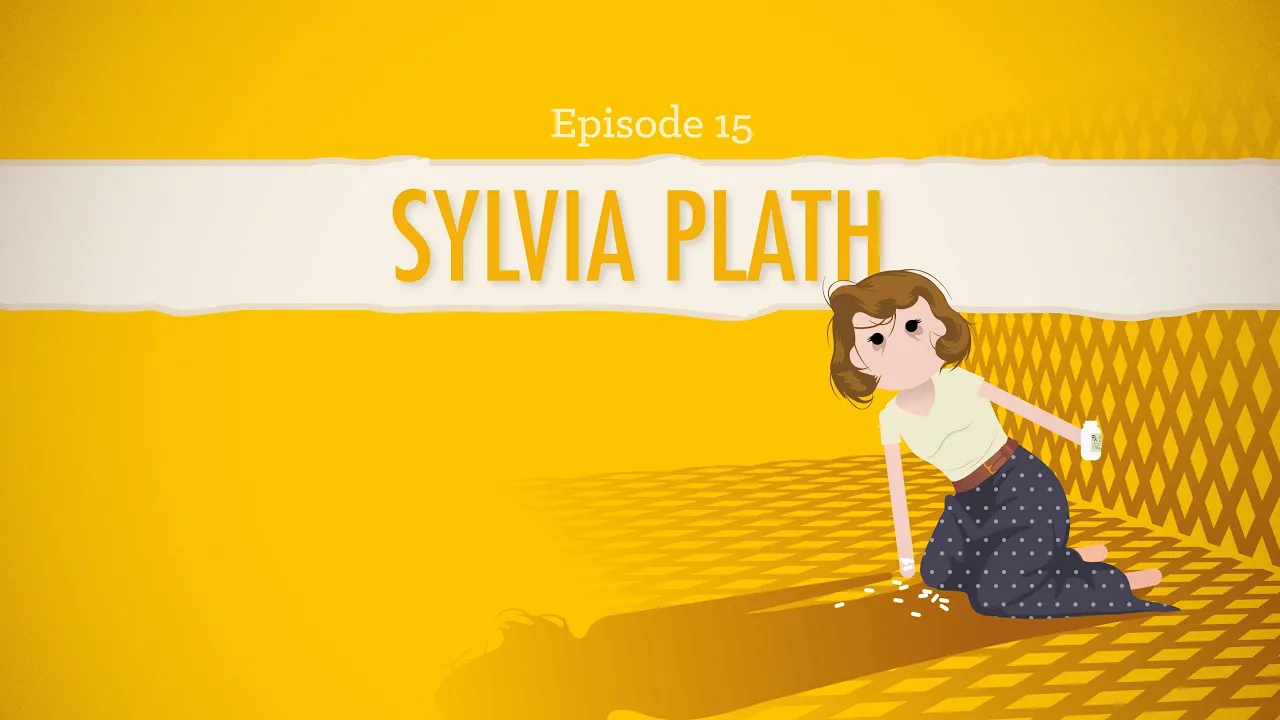
Analyzing Sylvia Plath's Poetry: Feminism, Confession, and Metaphor
1.4M
Sylvia Plath was born in 1932 in Boston. Her father was an entomologist who wrote about bees, a subject of many of her later poems. Her mother was a first-generation American pursuing a master's in teaching when she met Plath's father. Plath published her first poem at age eight, the same year her father died. She attended Smith College, won a summer internship at Mademoiselle Magazine (which inspired 'The Bell Jar'), and later received a Fulbright scholarship to study at Cambridge University where she met Ted Hughes. They married in 1956. In 1962, Plath discovered Hughes was having an affair and they separated. That same year, she experienced a creative burst and wrote a book's worth of poems. She died by suicide in February 1963 at age 30.
Click to watch →

Sylvia Plath on the Edge (Pt. II)
155
Sylvia Plath's grandmother, who came from Posen and settled in North Dakota in 1901, lost her mind in 1905 and was involuntarily committed in 1917 to the same mental hospital in Oregon where the film One Flew Over the Cuckoo's Nest was filmed. She died of tuberculosis in that institution less than two years later. Otto Plath, Sylvia's father, was born in 1885 in Posen (now Poland) and immigrated to the United States at age 15 in 1900. He came from a farming family where his grandfather was illiterate and had eight children who all immigrated to America in the late 19th century, mostly to the Midwest. Otto worked himself to death as a diabetic who didn't know it. He had paranoid delusions about having lung cancer and refused treatment, eventually requiring amputation of his foot. He died when Sylvia was 8 years old. The concept of 'daddy issues' refers to psychological patterns in relationships stemming from father-child dynamics. Sylvia Plath's dating life in her late teens and college years was characterized by promiscuity, with her dating many men simultaneously, including 20 dates in two weeks at Smith College. Dick Norton was one of her most significant early romantic interests, handsome and going to Yale medical school, representing the 'perfect relationship.' However, he was very traditional and domestic, which conflicted with Plath's aspirations as a career woman. In The Bell Jar, his character is changed to Buddy Willard, and Plath lambasts him for hypocrisy, particularly regarding the sexual double standard where men could sleep around while women couldn't. The person Plath lost her virginity to was a math student who happened to be there after her Dick Norton relationship fell apart. She ended up in the hospital after bleeding wouldn't stop. This experience was significant in her relationship with Ted Hughes, who she later married. Ted Hughes was born in 1930 in Yorkshire, England, from humble beginnings that barely survived the Great Depression. He was tall, strikingly handsome, and had a powerful aura. He became one of the greatest English writers of the 20th century, was Poet Laureate of the United Kingdom in 1984, and was awarded the Guggenheim Prize. His works include 'The Hawk in the Rain,' 'Lupercal,' and 'The Crow.' He was known for his intense, brooding personality and dark charisma. Hughes was part of a literary set called the 'Bolians' who published a journal called 'The St. Botolph's Review' that tried to aesthetically subvert the other Cambridge literary magazines. Robert Graves' 'The White Goddess' was a talismanic text for Hughes and his Cambridge friends. Graves believed that the source of the poet's inspiration was a seductive but ultimately dangerous Muse called the White Goddess. Poetry was 'magically potent in the ancient sense,' and true poets were acolytes to this cruel Muse. Sylvia Plath first met Ted Hughes at a party at St. Botolph's rectory in Cambridge. She asked a friend to point out Hughes, and he looked straight into her eyes. She began quoting his poem 'Fall Grief's Girlfriends,' and they shouted as if in a high wind above the music. Hughes wrote in an unpublished draft that he and Plath retreated to a quieter room where crates of alcohol were hoarded. He reassured her that Daniel would never have written so harshly about her poem if she had not been beautiful. On their first meeting, Hughes kissed Plath and ripped off her hairband and earrings. When he tried to kiss her again, she bit his cheek. Hughes later wrote in his journal about the violence and passion of their first encounter. Plath and Hughes met in February 1956 and were married in June 1956 at St. George's on Bloomsday, deliberately chosen. They had to keep it secret initially because Plath was worried about losing her scholarship, as married women were often passed over for jobs and grants.
Click to watch →
SYLVIA PLATH - VIDA E OBRA | Clube do livro | Revista Bula
1.7K
Biographical writing about Sylvia Plath is extremely complicated because her life is characterized by constant uncertainty. Despite extensive documentation from her husband, friends, and close associates, the complexity of her figure makes it nearly impossible to know exactly who she was. Plath was born on October 27, 1932, in Boston, Massachusetts, to Aurelia Plath (of Austrian descent) and Otto Plath (German). She began writing poetry at the age of 11, demonstrating an early and intense engagement with literature. Her diary differs fundamentally from typical personal diaries, as it was written with the intention of being read by others. In 1940, when Plath was 8 years old, her father Otto Plath was diagnosed with diabetes and did not receive proper treatment, leading to the amputation of his leg and his subsequent death. This traumatic event fundamentally changed the family's circumstances. In 1950, at age 18, Plath entered Smith College, a women's university. Her diary entries reveal that despite her academic engagement, she felt persistently unhappy and wrote that she would never be happy. Between ages 19 and 21, she experienced her first major depressive episode and attempted suicide. She was hospitalized and received treatment including electroconvulsive therapy (ECT), which was common in that era but is now largely considered outdated. In 1955, Plath received a scholarship to study at Cambridge University in England, where she met Ted Hughes, a prominent British poet who would become her husband. Their relationship began almost immediately after meeting, with marriage occurring just four months later. Despite their rapid marriage, both were aware of each other's artistic particularities and psychological complexities. In 1960, during her pregnancy with their first child, Plath published 'The Colossus,' her first and only book published during her lifetime. Following the birth of her second child, Plath's marriage deteriorated as Hughes began an affair with another woman. This period of personal crisis coincided with the writing of 'The Bell Jar,' her most famous novel. During the months following her separation from Hughes, Plath wrote 'The Bell Jar' in London. After Plath's death, Hughes became the primary editor of her literary estate. He selected which works would be published and organized her diaries. The video notes that Hughes removed certain passages from the diaries, particularly those written near the end of Plath's life, possibly to protect their children from reading disturbing content. This raises important questions about editorial responsibility and the ethics of posthumous publication. In 1963, shortly after completing 'The Bell Jar,' Plath committed suicide by placing her head in a gas oven and turning on the gas. She had prepared the house for her children's safety by placing them on the first floor. Hughes remained with the children and later revealed that he had had an unacknowledged affair with another German poet. Plath's daughter, Frieda Hughes, became an artist and painter, while her son, Nicholas Hughes, also became an artist. The video notes that Nicholas Hughes later committed suicide at age 47-48. In 1965, Hughes published 'Ariel,' Plath's major collection of poetry, which became her most significant literary achievement. Plath wrote extensively by hand, and this practice is significant for understanding her creative process. Hughes noted that her handwritten writing often occurred during periods of high stress or negative emotion, or as a way to regain determination to complete a work.
Click to watch →

SYLVIA PLATH. Uwięziona w szklanym kloszu.
2.4K
Sylvia Plath was an American poet and writer known for 'The Bell Jar,' a novel about mental illness. Her father Otto Plath was a German immigrant who emigrated before WWII and was dismissed from his university position due to his heritage. Despite this, colleagues described him as an excellent scholar. Plath inherited his perfectionism, which became a defining characteristic of her personality. Her mother, an Austrian woman, struggled to support the family after Otto's death in 1940 from diabetes complications. As a child, she wanted to gain her father's approval and learned to flatter him. After his death, she became angry at God and vowed never to pray. Plath was highly intelligent and academically successful, earning a scholarship. She published poems and stories, won literary contests, and worked as a secretary for Mademoiselle magazine. She actively sought to break stereotypes of the 'eternal suffering woman' in literature. In summer 1953, she lived with 19 other women in a New York hotel while working on special issues for the magazine. The post-WWII period created a unique situation for women: they were the first generation after the war and the last before the birth control pill. Society promoted consumerism and female sexuality while maintaining strict moral standards, with laws prohibiting contraceptives. Plath experienced a severe mental health crisis after returning from New York. She became depressed, neglected her appearance, and made a suicide attempt. She wrote a note saying 'I'm going on a very long walk' and left the house. Her mother found her in the basement, where she had been planning to kill herself. After her suicide attempt, Plath underwent treatment including electroshock therapy, which she feared intensely. She returned to school and completed her degree at Cambridge University with honors, writing a thesis on Fyodor Dostoevsky. In June 1956, she married Ted Hughes, keeping their relationship secret while both were still students. Hughes was born in 1930 to a carpenter and seamstress, studied anthropology and archaeology, and was interested in anything irrational. Plath struggled to balance her career with domestic responsibilities. She was criticized for not being a 'perfect housewife' and would cry when dishes weren't prepared correctly. Despite her love for home and cooking, she felt she couldn't reconcile her professional ambitions with traditional domestic expectations. In October 1958, she began an affair with her student Aziza, which led to physical violence. She witnessed Aziza being intimate with another woman, which transformed her jealousy into disgust. This experience shattered her trust and led her to believe that love was a lie and that sacrifices were painful obligations. After the affair, Plath experienced a severe psychological breakdown. She smashed a glass in the dark, causing it to shatter without breaking. She saw stars for the first time in her life, described as 'blinding red and white in black emptiness.' Despite her personal struggles, Plath achieved significant literary success. In 1968, she received a prestigious award for her work. She published 'The Bell Jar' and 'Ariel,' which became major works in American literature. In April 1962, Plath gave birth to her daughter Frieda while pregnant. During this period, she published 'Ariel,' a collection of poems dedicated to her husband. However, Plath had a serious conflict with Ted Hughes when she gave him her manuscripts. Hughes became enraged and physically abused her, tearing up her work. This incident mirrors a similar situation involving Zofia Czerwińska and her husband, where the husband's reaction to his wife's work led to violence. Plath's early 1960s life was marked by domestic violence and mental health struggles. She was unable to openly discuss her situation because social norms prevented women from admitting their husbands might harm them. Many women today still hide such situations, and husbands often don't defend their wives. Plath's marriage deteriorated into a form of separation. Her domestic situation affected her health, causing her to catch the flu and suffer from illness. She traveled to Ireland in an attempt to save her marriage, but it failed. She sought legal help for divorce, and the stress of separation and child-rearing caused her to lose weight and suffer from insomnia. Plath's affair with Aziza began in June 1962. When Aziza's mother visited, Plath discovered the affair and cut the phone cord, symbolizing her desire for freedom. She left the house, and a car accident was interpreted as another suicide attempt. In October 1962, she began writing a poem each day, creating the 'Bee Meeting' cycle. In November, she moved to London, close to her lover Aziza. She prepared for winter by storing food and securing the garden. In January 1963, she and her children fell ill during a severe winter. Without her husband's support, she was isolated and vulnerable. Plath died on February 11, 1963, by placing her head in a gas oven.
Click to watch →

#Thanksfortyping: The making of Ted Hughes
1.2K
Sylvia Plath grew up in the Boston area, publishing her first poem at age eight. She chose Smith College, becoming a huge reader of biographies and historical figures. Her father died when she was eight, profoundly affecting her. She wrote 'Daddy' partly about him and other powerful male figures. During World War II, she created a snowman figure of Hitler. By college, she was ambitious, wanting 'it all' and a home and family, dating extensively while concerned about whether partners would give her time to write. She was looking for a powerful male figure who would be a combination of father and husband. At Cambridge University, she dated English boys but found them immature. She heard about Ted Hughes through mutual friends and they met at a famous party where Hughes ripped off one of her earrings and she bit him on the cheek. Hughes was a Cambridge graduate doing nothing with his degree, a dilettante with a following of disciples. Plath served as editor of his poetry, with hardly any published except in magazines. Hughes' friends resented her because they felt she had taken him away from them. She kept telling everyone this guy was going to be great, writing to editors about his potential. Hughes won the Harper Prize for his first book of poetry, with Plath typing, organizing, and shipping his poems. She received an offer to teach at Smith College after her Fulbright studies. Hughes had a big to-do at the 92nd Street Y where all the big poets went. Without Plath's support, Hughes might have joined his brother in Australia and we may never have heard of him. Plath predicted he would be the poet of England, which became true when he became Poet Laureate. Hughes took his success in stride, believing the whole promotional bit wasn't why he was a great writer—it was the strength of his own work. When he got to America, he hated it partly because of the American culture of selling yourself and promoting yourself, which conflicted with his Old World views. In England, poets like Louis MacNeice and later Hughes were able to make a living as poets. Hughes had a tremendous voice and was a huge fan of Dylan Thomas. When he auditioned for BBC Radio, he read other poets and eventually read his own poetry and wrote plays for radio. Plath struggled with writer's block while Hughes was a whirlwind, putting out a lot of poetry. She sometimes worried because everything came too easily to him. She even wrote a story about this, wondering why she couldn't have those dreams. By 1960, Plath was on the BBC and by 1962 was being asked to organize a program about American Poetry at a British theater. She had recordings of her reading on the BBC, and her voice changed to become more Mid-Atlantic. She was tremendous and could have been an actress. After Hughes left her, she found her voice, writing about the baby crap in the kitchen, the stink of it, using vulgar words. This was a come-up for Sappho, setting her poetry in the kitchen rather than the salon she had dreamed of. Hughes had the idea that he was a gentleman of the Poetry world with no money grubbing, which was comical because he was such a ruffian. He wanted to be adopted by TS Eliot and Stephen Spender as the next generation. Plath described him as one of the most unself-aware people she had ever read about. He told her she wasn't enough for him, which was devastating. The fallout from the marriage was much harder on Plath than on him—she couldn't just stand on somebody's doorstep and say 'let me in' in those days. Even when Plath read Hughes' love letters to another woman, she was tearing apart but said 'but he's writing great poetry' and could make that distinction. She was very proud of his success and would never regret her part in making him a great poet. Around 1960, in the last two years of her life, Hughes praised her poetry, saying she was as great as Emily Dickinson and that there weren't any other women poets who would measure up. One of the joys of Plath's life toward the end was she made friends with Ruth Fainlight, an American poet living in England who was still alive at 93. Fainlight wrote a poem that had a huge influence on Plath. They became friends and would visit Ted and Sylvia. There was a level ground where there wasn't any gender-based tension.
Click to watch →
Deep Dive
Familiarity with the historical events of World War II and the Holocaust, as the poem heavily utilizes Nazi and Jewish imagery as central metaphors.

How Sylvia Plath exploited the trauma of others
200.4K
Sylvia Plath uses Nazi-Jew symbolism in both 'Daddy' and 'Lady Lazarus,' including references to Dachau, Auschwitz, Belsen, and lampshades. In 'Lady Lazarus,' the speaker describes her post-resurrection skin as 'Bright as a Nazi lampshade' and her face as 'featureless, fine Jew linen.' The poem contains repeated use of 'Herr' (German for Mr.) and references to items like soap, wedding rings, and gold fillings reminiscent of belongings taken from concentration camp inmates.
Click to watch →

UGC NET English Literature 2025 | Holocaust Fiction | UGC NET English By Ayesha Mam
1.5K
Sylvia Plath's poem 'Daddy' uses controversial metaphors comparing her father to Nazis, stating 'My father was a cruel man' and comparing him to Nazi soldiers. The poem was written one month after Plath's separation from her husband Ted Hughes and four months before she committed suicide. The poem's controversial nature stems from its direct comparison between her father and the Nazi regime. The poem opens with 'My father was a cruel man' and uses the Nazi symbol to represent her father's cruelty. This demonstrates how Holocaust imagery can be used metaphorically in poetry to express personal trauma.
Click to watch →

Review - Lady Lazarus (Sylvia Plath) - Patron Poem
3.2K
The poem contains powerful historical references to Nazi concentration camps and the Holocaust. The line 'my skin bright as a Nazi lampshade' refers to the horrific practice where Nazi officials would take the skin of Jewish victims and use it to make lampshades, with the light illuminating the tattoos on the skin. The reviewers explain this as 'terrifying' imagery that connects the poem to the suffering of Jewish people during World War II. The poem also references 'a cake of soap a wedding ring a gold filling' which are items that remain after cremation, symbolizing what is left of victims. The reviewers note that these historical references add another layer of meaning to the poem, connecting personal suffering to historical atrocities.
Click to watch →
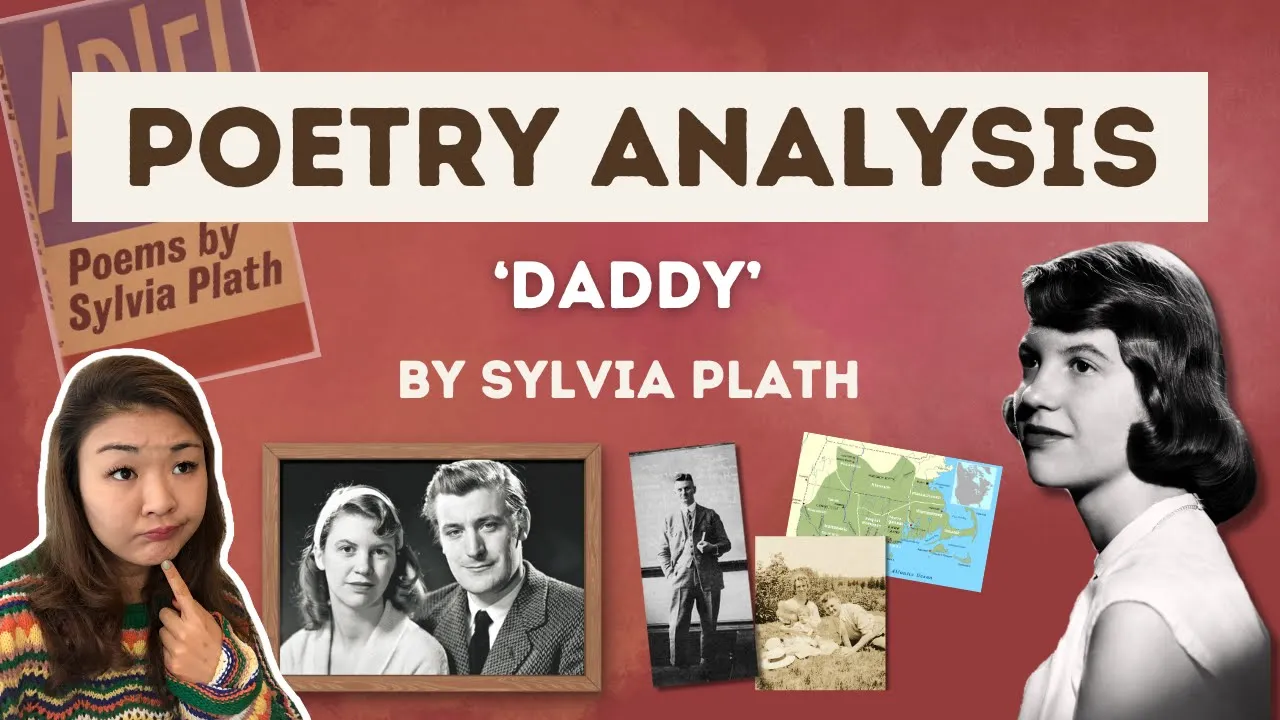
Daddy by Sylvia Plath | Poetry Analysis
19.2K
The poem employs Holocaust imagery including Dachau and Auschwitz, the largest concentration camps for Jewish extermination under Hitler. The speaker describes paralyzing silence before her father, whose dismissive demeanor reflects lack of acknowledgment of Polish towns destroyed by Hitler. Her inability to speak is metaphorically associated with a tongue stuck in barbed wire snare. In stanza 7, she explicitly calls herself a Jew, representing modern history's persecution. The mechanical echoes of an engine and being 'chuffed off like a Jew' parallel obsessive replaying of violent childhood memories. The speaker identifies with marginalized victims including Romani people, with the curious tautology of 'my tarot pack and my tarot pack' possibly signifying desperate hope for better luck to relieve constant suffering.
Click to watch →

Lady Lazarus by sylvia Plath
503
The poem contains symbolism of Nazi Germany, where Plath refers to her oppressors as people from the Nazi regime. She describes herself as a victim, specifically a Jewish victim. This symbolism connects her personal experiences of death and suffering to the atrocities of the Holocaust. The poem uses these historical references to express themes of victimhood, oppression, and the dehumanization experienced during the Holocaust.
Click to watch →
Deep Dive
Understanding of basic poetic devices such as nursery rhyme meter, dramatic monologue, and the use of dark irony and hyperbolic language.
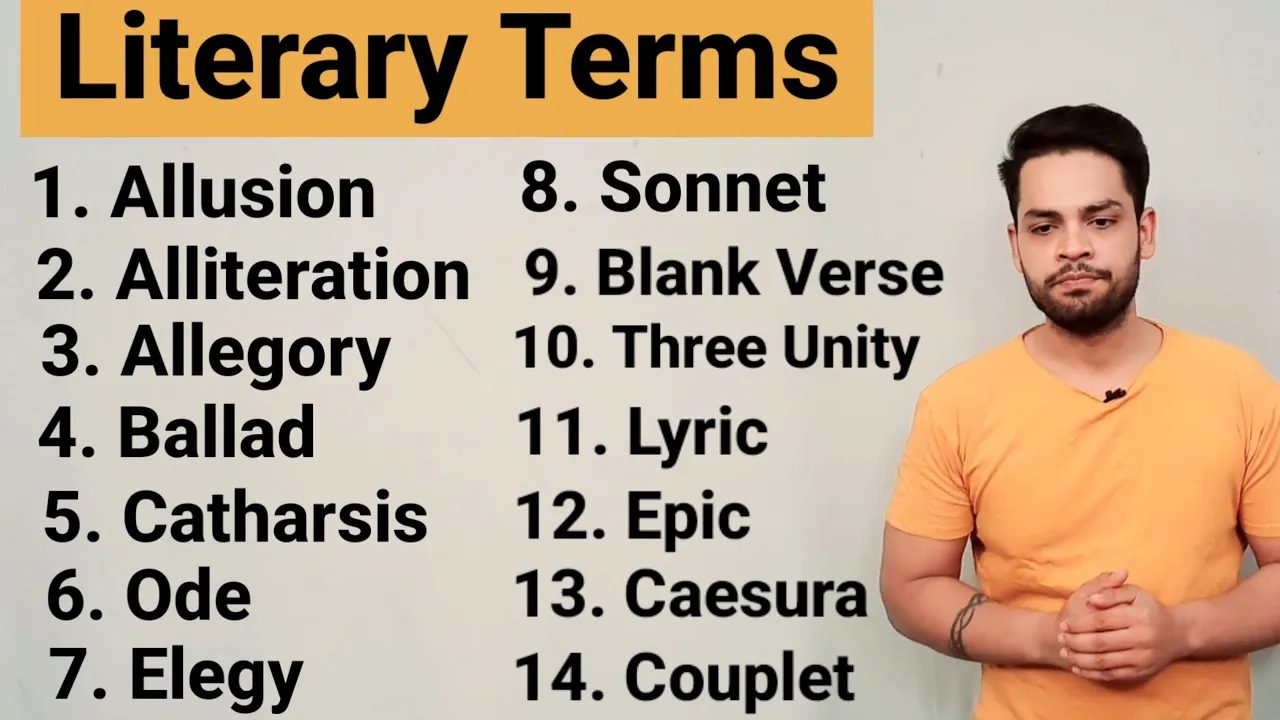
Terms Sonnet Alliteration Blank Verse Allegory Ballad Lyric Catharsis Epic Ode Caesura Elegy Couplet
394.7K
This section covers two important literary concepts. Irony has three types: verbal (words mean opposite of what is said), situational (outcome differs from expectations), and dramatic (audience knows something characters do not). Poetic meter involves syllable patterns, where a syllable is a word part with one sound. Meter types include monometer (1 foot), dimeter (2 feet), trimeter (3 feet), tetrameter (4 feet), pentameter (5 feet), and hexameter (6 feet). Pentameter is most commonly used. Common meter alternates tetrameter and trimeter lines.
Click to watch →

Poetic Devices | Figures of Speech | Literary Devices ✅Easy Explained | English Grammar & Literature
81.1K
Hyperbole uses extreme exaggeration for emphasis (e.g., 'I'm so hungry I could eat a truck full of food'). Irony creates meaning opposite to what is stated (e.g., a fire station burning down, a person named Khushi saying 'I am very sad'). These devices add depth and humor while challenging surface-level interpretation.
Click to watch →

TOP MOST LITERARY TERMS| MCQS OF PYQS| WITH EXPLANATION| #tgtenglish #literarydevices #viralvideo
206
This section explores poetic meter and dramatic terminology: Dactylic meter consists of three syllables. Basic metrical feet include iambic (unstressed-stressed), trochaic (stressed-unstressed), spondaic (both stressed), and pyrrhic (both unstressed). Anapestic meter has three syllables with unstressed-unstressed-stressed pattern. Tragedy is serious, complete imitation of action. Soliloquy features a character alone expressing thoughts on stage. Dramatic monologue involves a single speaker before a silent listener. Novel is one of the latest forms of writing.
Click to watch →

MARATHON | UP LT Grade English Literature A To Z Revision Class | Literature Lovers | AKSRajveer Sir
42.8K
A dramatic monologue is a type of poem featuring a single speaker who addresses a silent listener. The term combines 'dramatic' (related to drama/acting), 'mono' (single), and 'log' (conversation). The speaker delivers a speech while the listener remains silent throughout. This form is most closely associated with Robert Browning, who is considered the master of dramatic monologue. Other examples include Arnold's 'Dover Beach' and Tennyson's 'Ulysses.'
Click to watch →

2nd grade english literature classes | Literary Devices By Manish Mangal sir
22.5K
A dramatic monologue is a poetic form where a single fictional speaker addresses a silent listener, revealing character through speech. The speaker is not the poet but a fictional character. The form reveals character unintentionally through speech patterns, tone, and content, creating dramatic irony. Robert Browning is considered the master of dramatic monologue, with 'My Last Duchess' as the most famous example. T.S. Eliot called it a perfect dramatic monologue. The form became popular in the Victorian era with Browning and Tennyson. It explores taboo themes like murder and madness. Modernist versions like Eliot's 'The Love Song of J. Alfred Prufrock' are less dramatic and more psychological. The form connects to stream of consciousness and internal monologue.
Click to watch →
Prerequisite Knowledge
- Concept 01The tenets of the Confessional Poetry movement of the mid-20th century, emphasizing the use of highly personal, taboo, and autobiographical subject matter.
- Concept 02A basic overview of Sylvia Plath's biography, specifically her relationship with her father, Otto Plath, and her husband, Ted Hughes.
- Concept 03Familiarity with the historical events of World War II and the Holocaust, as the poem heavily utilizes Nazi and Jewish imagery as central metaphors.
- Concept 04Understanding of basic poetic devices such as nursery rhyme meter, dramatic monologue, and the use of dark irony and hyperbolic language.
Subsequent Learning
- Step 01Applying Freudian psychoanalytic theory, specifically the Electra complex, to analyze the psychological dynamics between the speaker and the father figure.
- Step 02Engaging with the ethical and critical debates surrounding Plath's appropriation of historical atrocities (like the Holocaust) to express private, domestic trauma.
- Step 03Conducting a comparative analysis of Plath's 'Daddy' with poems from Ted Hughes's 'Birthday Letters' collection to examine their literary dialogue on memory and grief.
- Step 04Exploring the broader themes of female rage, patriarchal oppression, and self-assertion in Plath's posthumous poetry collection, 'Ariel'.
Identity Roots
Poem Performance
Final Liberation
Identity Roots
0:23Playing Section
- 1
Plath explains personal German-Austrian heritage intensifies her Holocaust concerns.
- 2
She distinguishes her political intensity from typical American detachment.
- 3
Poems originate from sensory experience, not abstract book learning.
Ethical Criticism of Holocaust Imagery and the Persona Theory
While "Daddy" is widely celebrated as a masterpiece of confessional poetry, a significant school of criticism challenges its ethical and aesthetic implications. Critics like George Steiner and Irving Howe argue that Plath’s use of Holocaust imagery—such as equating her personal domestic pain with the mass murder of Jewish people in concentration camps—is a form of historical appropriation. This viewpoint contends that using the absolute horror of the Holocaust as a metaphor for private psychological trauma is sensationalist, exploitative, and ethically problematic. Additionally, other scholars push back against purely biographical readings of the poem. They emphasize Plath’s own introduction to the recording, where she frames the speaker not as herself, but as a dramatic persona—a fictional girl suffering from an Electra complex. This counter-perspective cautions readers against conflating the poet's actual life with the highly constructed, theatrical rage of the poem's narrator.
Deep Dive
Applying Freudian psychoanalytic theory, specifically the Electra complex, to analyze the psychological dynamics between the speaker and the father figure.

CTET EXAM 2021 | CDP | बाल मनोविज्ञान (शिक्षण के साथ) | PRACTICE SET- 03| cdp practice set by rp sir
273K
According to Sigmund Freud's psychoanalytic theory, the Electra complex describes a girl's unconscious attraction toward her father during early childhood development. This attraction emerges alongside the Oedipus complex in boys. The Electra complex represents one of Freud's theories about the psychological dynamics of parent-child relationships and the formation of gender identity during psychosexual development stages.
Click to watch →

PARA ELE AS MULH3RES DO ARGENTINA CASTING SÃO VÍTIMAS, POBREZINHAS SEM OPÇÃO. PUTZ RAIAM SANTOS.
6.5K
According to Jungian psychology, the daughter embodies the father's anima - the internal image of the feminine representing vulnerability and idealized femininity. The father projects all that is pure and precious onto her, experiencing any criticism as an attack on his soul. In the Electra complex, the father develops narcissistic identification with his daughter, regressing to a hero protector position. This creates ideological blindness where fathers treat all women as eternal daughters needing infinite protection, preventing recognition of women as responsible adults.
Click to watch →

KEIKO FUJIMORI: PERFIL PSICOLOGICO
21.9K
The Electra Complex describes young girls' emotional attraction toward their father and desire to replace their mother. This psychological pattern can persist into adulthood, particularly in individuals with strong father-daughter bonds. The speaker demonstrates how this manifests through voice analysis showing childlike emotional responses, public statements revealing rational detachment, and specific triggers that cause emotional breakdown. Psychological healing requires internal processes involving genuine emotional work, not superficial gestures for external purposes like political campaigns.
Click to watch →
El Mito de EDIPO Explicado: El Más Increíble de la Mitología Griega | Mitología Para Dormir
43.7K
Despite the resonance the Oedipus complex had in the twentieth century, the direct application of Sophocles' myth to the psychoanalytic concept has been subject to intense and fundamental criticism. The main dispute centers on intent. The fundamental difference between Oedipus of the myth and Freudian Oedipus lies in intent. Oedipus of the myth is innocent of intent—he does not desire his mother. He actively flees to avoid parricide and incest. His tragedy is one of involuntary knowledge. His horror and self-punishment stem from an act committed in ignorance of the facts, but which is ritually impure. The tragedy is in external fatality. The application of the Oedipus complex to females created an obvious problem in Freudian theory, as the dynamic of desire and rivalry was inverted and the fear of castration did not function analogously. Carl Jung, Freud's disciple and later dissenter, addressed this problem by introducing the term Electra complex to describe the female dynamic, inspired by another Greek tragedy, Electra, who plots revenge for her father Agamemnon's death at the hands of her mother, Clytemnestra. The Electra complex postulates the following dynamic in the female: desire for the father. The girl develops unconscious attraction toward the parent of the opposite sex, the father, and rivalry with the mother.
Click to watch →

Комплекс Электры. Кто виноват?
12.3K
For healthy development, the father must be a mature man with good relationships with his wife, demonstrating love while maintaining appropriate boundaries. He should not use his daughter's unconditional love to solve his psychological problems. The Electra Complex forms when: the father is immature and cannot build adult relationships, the mother is unhappy with her life, or the father prefers his daughter over his wife. These conditions prevent the girl from developing into a mature woman and cause her to remain emotionally dependent on her father.
Click to watch →
Deep Dive
Engaging with the ethical and critical debates surrounding Plath's appropriation of historical atrocities (like the Holocaust) to express private, domestic trauma.
How Sylvia Plath exploited the trauma of others
200.4K
Sylvia Plath's poem 'Lady Lazarus' subverts the biblical resurrection story to critique how society commodifies trauma, transforming personal suffering into public spectacle and profit; however, the poem simultaneously raises profound ethical questions about whether Plath herself exploits the suffering of others, particularly Jewish Holocaust victims, through her use of Nazi imagery, creating a complex debate about artistic freedom versus cultural appropriation.
Click to watch →
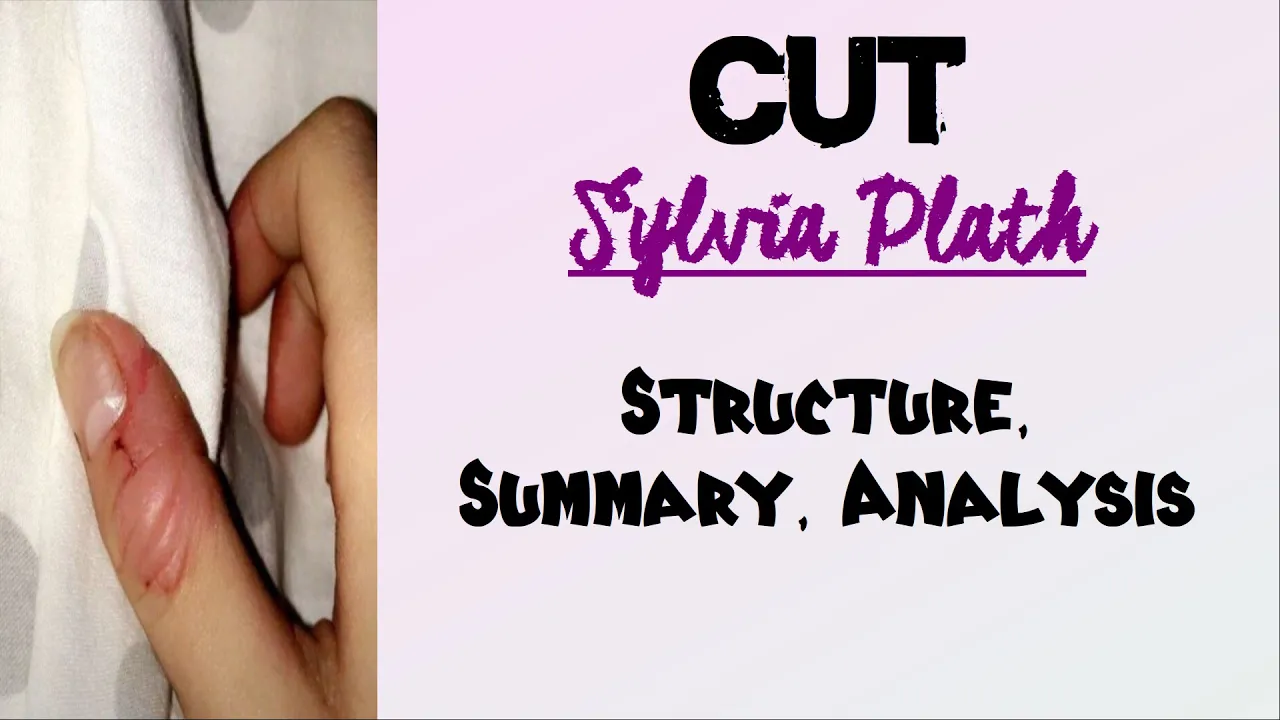
Cut by Sylvia Plath | Structure, Summary, Analysis
275
Lines 5-8 use stark color contrast ('dead white' and 'red plush') and the simile 'a flap like a hat' to create visceral intensity. The speaker personifies the thumb as a 'little pilgrim' whose scalp was removed by 'the Indians,' blending historical violence with domestic imagery. The thumb resembles a 'turkey vattle' and 'carpet rolls,' suggesting suppression of trauma. This stanza demonstrates how Plath merges historical brutality with the domestic act of self-injury, creating surreal metaphors for psychological pain.
Click to watch →

The Most Dangerous Poet Who Ever Lived
943.7K
Sylvia Plath (1932-1963) was an American poet whose confessional style explored themes of depression, identity, and trauma; her early childhood trauma from her father's death, subsequent suicide attempts, and betrayal by her husband Ted Hughes profoundly influenced her work, including 'The Bell Jar' and 'Ariel'; after her death, Hughes controlled her legacy by censoring her poems and blaming her mental illness, while her poem 'Daddy' continues to spark debate about comparing personal suffering to historical atrocities.
Click to watch →

Sylvia Plath e a Herança do Trauma: O Segredo Sombrio Por Trás da Poesia
156
Sylvia Plath, though not Jewish, frequently incorporated Jewish imagery, persecution themes, and Holocaust references into her poetry. In 'Lady Lazarus,' she compared her father to a Nazi and herself to a Jewish victim, writing 'I think I may well be a Jew.' This raises complex questions about artistic appropriation versus legitimate use of trauma language. The video argues that Plath's approach was not appropriation but fusion—she recognized that the collective trauma of the Jewish people could express universal human experiences of suffering, abandonment, and existential exile. Her work demonstrates how personal pain can connect to ancestral language of survival.
Click to watch →
UGC NET English Literature 2025 | Holocaust Fiction | UGC NET English By Ayesha Mam
1.5K
Sylvia Plath's poem 'Daddy' uses controversial metaphors comparing her father to Nazis, stating 'My father was a cruel man' and comparing him to Nazi soldiers. The poem was written one month after Plath's separation from her husband Ted Hughes and four months before she committed suicide. The poem's controversial nature stems from its direct comparison between her father and the Nazi regime. The poem opens with 'My father was a cruel man' and uses the Nazi symbol to represent her father's cruelty. This demonstrates how Holocaust imagery can be used metaphorically in poetry to express personal trauma.
Click to watch →
Deep Dive
Conducting a comparative analysis of Plath's 'Daddy' with poems from Ted Hughes's 'Birthday Letters' collection to examine their literary dialogue on memory and grief.

Sylvia Plath and Ted Hughes: An Introduction
1.5K
Sylvia Plath's Ariel and Ted Hughes's Birthday Letters represent a powerful literary dialogue between two poets whose relationship was marked by infidelity, emotional conflict, and tragedy. Plath's poetry is characterized by intense, chaotic imagery with recurring motifs like hooks and red, while Hughes's work is more narrative-driven with irregular stanzas and moral twists. Both books are deeply confessional, exploring personal pain and complex emotions, though Hughes's 1998 response to Plath's 1965 manuscript raises questions about literary ethics and the glorification of suicide.
Click to watch →
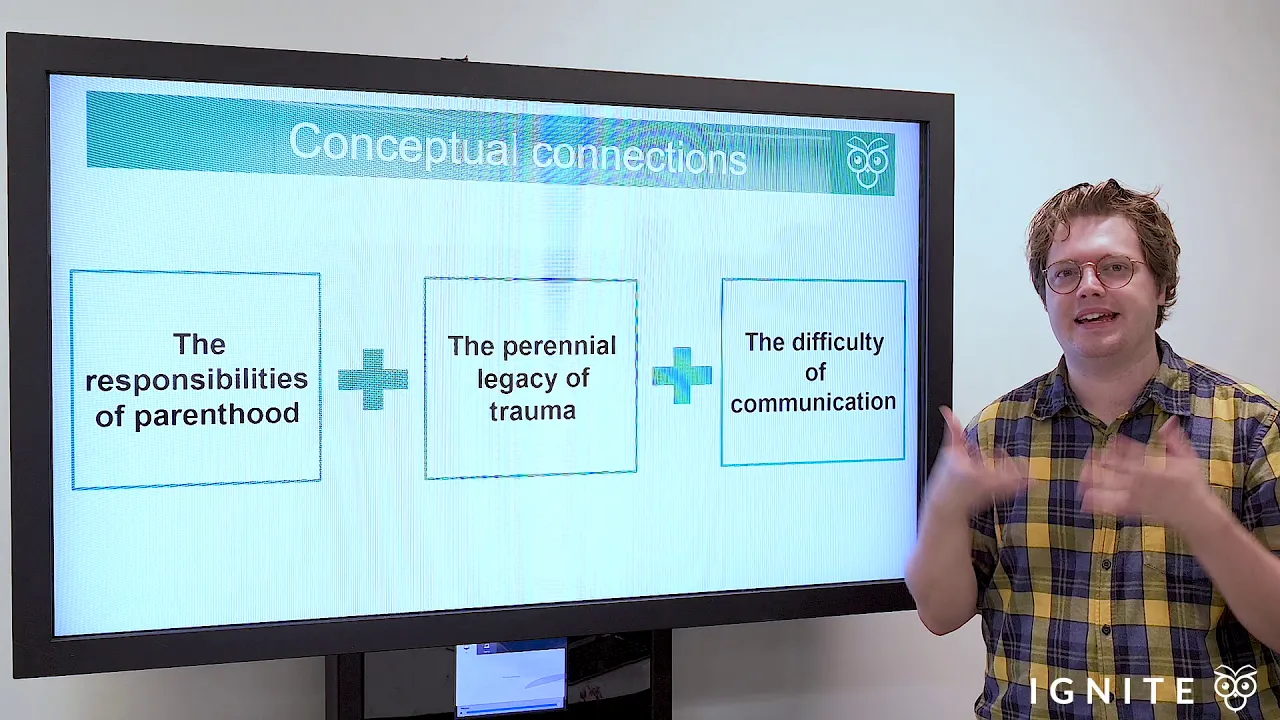
Sylvia Plath's 'Ariel' vs. Ted Hughes' 'Birthday Letters': Textual Connections (Module A)
5.7K
A textual conversation occurs when two texts engage in a reciprocal dialogue through conceptual connections (such as shared themes of parenthood, trauma, and self-victimization) and formal connections (such as confessional style and second-person address), creating a more complete understanding than either text could provide alone; in this case, Plath's 'Ariel' and Hughes' 'Birthday Letters' converse through their exploration of parental responsibilities, the inescapable legacy of personal and historical trauma, and their use of confessional poetry and second-person address to communicate across absence and loss.
Click to watch →

'A Picture of Otto' BY TED HUGHES - POEM ANNOTATIONS
960
The poem 'A Picture of Otto' exemplifies a call and response style of poetry between Ted Hughes and Sylvia Plath. Hughes's anthology 'Birthday Letters' was released in 1998, though the poetry was written over approximately 25 years prior. The poem directly responds to Plath's 'Daddy,' which begins with 'You stand at the blackboard, daddy.' Hughes imitates this opening line as intertextual dialogue, creating a connection between their works and shared history. This demonstrates how poets engage in literary conversations through textual references, with Hughes placing Otto at the center of the poem while Plath's persona is more directly her own.
Click to watch →

"Birthday Letters" By Ted Hughes
1K
Ted Hughes' posthumously published collection 'Birthday Letters' (1998) explores his complex emotional journey through 88 poems depicting his marriage to Sylvia Plath, her suicide, and his subsequent grief and guilt; Hughes portrays Plath as both a powerful muse and a destructive force, using vivid imagery and metaphor—such as describing her as a 'glass-headed queen' symbolizing brilliance and fragility—to convey the intensity of his conflicting emotions, ultimately revealing how poetry can serve as a medium for processing profound personal trauma and moral reckoning.
Click to watch →
Daddy by Sylvia Plath | Poetry Analysis
19.2K
Sylvia Plath's 'Daddy' (1965) is a seminal confessional poem that explores the psychological trauma of paternal and marital oppression through vivid Holocaust imagery and Freudian concepts like the Electra complex; the speaker initially portrays her deceased father Otto Plath as a terrifying, abusive figure before shifting to describe her abusive marriage to Ted Hughes, ultimately reclaiming agency through poetic expression and imagined vengeance, demonstrating how personal tragedy can fuel creative genius.
Click to watch →
Deep Dive
Exploring the broader themes of female rage, patriarchal oppression, and self-assertion in Plath's posthumous poetry collection, 'Ariel'.

Румен Павлов :: LITTERA MAGNA :: РАДИО ALMA MATER :: 28.10.2025
106
Writing often serves as a therapeutic process for authors, particularly during difficult moments in their lives. Sylvia Plath wrote 'Ariel' in approximately two months following her separation from her husband Ted Hughes, filled with intense emotional energy. This collection contains approximately 40 poems expressing anger and despair toward her husband and father, with the father figure being a recurring contradictory theme throughout her work. The bee symbolism continues strongly in 'Ariel,' with approximately five of the 40 poems dedicated to bees. Critics consider 'Ariel' the work that established Plath as a master of her craft, unambiguously celebrating female anger and female energy. The evolution from 'Colossus' to 'Ariel' shows Plath becoming more liberated from formal constraints, with fewer rhymes and more experimental structures, allowing her to develop a stronger, more distinctive female voice.
Click to watch →
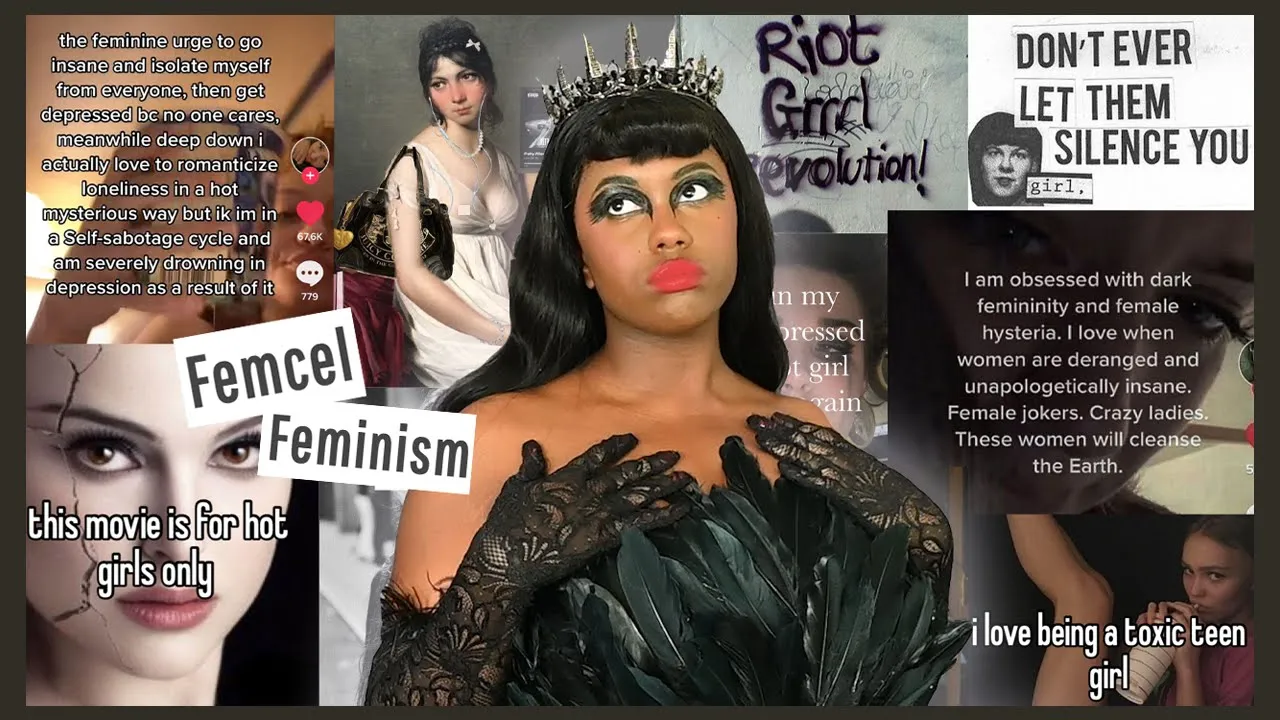
Femcel Feminism and Transgrrressive Girlhood
712.3K
Sylvia Plath is a key icon for femcel communities, known for the destructiveness in her writing. Parvin Ghasemi argues that Plath's portrayal of a world devoid of meaningful spiritual resources crashes the self and leaves it mutilated and silenced. As a reactionary gesture against oppressive modern society, Plath employs harsh language and violent images to indicate individual struggle to liberate the self from social conformity and dispossession. These idols are cathartic for femcels, allowing them to see characters in similar situations and express rage without feeling alone, embodying traits society tells women to suppress.
Click to watch →

I read Five Books in a Day and got out of my reading slump
156.3K
Sylvia Plath's Ariel collection, published two years after her death, is notoriously raw and dark, focusing primarily on themes of death and postnatal depression. Unlike her earlier work Colossus which was more lighthearted, Ariel presents heavier emotional content. The collection is best approached by dipping into individual poems rather than reading all at once, as each poem carries significant emotional weight. Despite its intensity, it contains many of Plath's most beloved poems and offers valuable literary appreciation.
Click to watch →

Ariel by Sylvia Plath (full audiobook)
13.3K
Sylvia Plath's Ariel collection explores profound themes of death, female identity, and psychological struggle through vivid, often violent imagery. Poems like 'Lady Lazarus' and 'Daddy' demonstrate her signature style of confronting mortality and patriarchal oppression with unflinching intensity, while works such as 'Morning Song' and 'Tulips' reveal her nuanced exploration of motherhood and personal transformation. The collection exemplifies confessional poetry's power to transform intimate suffering into universal artistic expression.
Click to watch →

Sylvia Plath Documentary: Confessional Poet & Pulitzer Prize Winner
63K
The Ariel poems represent Sylvia Plath's technical mastery combining immense discipline with total freedom. 'Ariel' features subtle internal rhymes and intricate schemes where not a single word is spare—everything matters. The poem describes getting on a force and being released from troubles. She surrendered to dark forces represented by the 'disquieting muses,' peeling herself to a slim core. This process involved being utterly lost without her old self—her previous identities as Sylvia Aurelia, Smith student, and wife to Ted Hughes. The poems address facing demons and what one really feels rather than what one should feel. Many critics saw her use of concentration camp imagery as self-serving, but she intended to create new mythology of women—a task women poets now recognize as pioneering.
Click to watch →
Identity Roots
Poem Performance
Final Liberation
Identity Roots
0:23- 1
Plath explains personal German-Austrian heritage intensifies her Holocaust concerns.
- 2
She distinguishes her political intensity from typical American detachment.
- 3
Poems originate from sensory experience, not abstract book learning.
Ethical Criticism of Holocaust Imagery and the Persona Theory
While "Daddy" is widely celebrated as a masterpiece of confessional poetry, a significant school of criticism challenges its ethical and aesthetic implications. Critics like George Steiner and Irving Howe argue that Plath’s use of Holocaust imagery—such as equating her personal domestic pain with the mass murder of Jewish people in concentration camps—is a form of historical appropriation. This viewpoint contends that using the absolute horror of the Holocaust as a metaphor for private psychological trauma is sensationalist, exploitative, and ethically problematic. Additionally, other scholars push back against purely biographical readings of the poem. They emphasize Plath’s own introduction to the recording, where she frames the speaker not as herself, but as a dramatic persona—a fictional girl suffering from an Electra complex. This counter-perspective cautions readers against conflating the poet's actual life with the highly constructed, theatrical rage of the poem's narrator.
The tenets of the Confessional Poetry movement of the mid-20th century, emphasizing the use of highly personal, taboo, and autobiographical subject matter.
A basic overview of Sylvia Plath's biography, specifically her relationship with her father, Otto Plath, and her husband, Ted Hughes.
Familiarity with the historical events of World War II and the Holocaust, as the poem heavily utilizes Nazi and Jewish imagery as central metaphors.
Understanding of basic poetic devices such as nursery rhyme meter, dramatic monologue, and the use of dark irony and hyperbolic language.
Applying Freudian psychoanalytic theory, specifically the Electra complex, to analyze the psychological dynamics between the speaker and the father figure.
Engaging with the ethical and critical debates surrounding Plath's appropriation of historical atrocities (like the Holocaust) to express private, domestic trauma.
Conducting a comparative analysis of Plath's 'Daddy' with poems from Ted Hughes's 'Birthday Letters' collection to examine their literary dialogue on memory and grief.
Exploring the broader themes of female rage, patriarchal oppression, and self-assertion in Plath's posthumous poetry collection, 'Ariel'.
24.6K views345likes8:00@betapictsOriginal Release: 2017-02-08
[Peter Orr] You say, Sylvia, that you consider yourself an American, but when we listen to a poem like 'Daddy', which talks about Dachau and Auschwitz and Mein Kampf, now I have the impression that this is the sort of poem that a real American could not have written, with the same feeling --- with which you have written it because it doesn't mean so much, these names do not, I think, mean so much, on the other side of the Atlantic, do they?
[Sylvia Plath] Well now, you are talking to me as a general American.
In particular, my background is, may I say, German and Austrian.
On one side I am a first generation American, on one side I'm second generation American, and so my concern, I must say, with concentration camps and so on is uniquely intense.
And then, again, I'm rather a political person as well, so I suppose that's what part of it comes from.
Do your poems tend now to come out of books rather than out of your own life?
Oh no, no: I would not say that at all.
I think my poems come immediately out of the sensuous and emotional experiences I have, but I must say I cannot sympathise with these cries from the heart that are informed by nothing except a needle or a knife, or whatever it is.
I believe that one should be able to control and manipulate experiences, even the most terrifying, like madness, being tortured, this sort of experience, and one should be able to manipulate these experiences with an informed and an intelligent mind I think that personal experience is very important, but certainly it shouldn't be a kind of shut-box and sort of mirror looking, narcissistic experience.
I believe it should be relevant, and relevant to the larger things, the bigger things such as Hiroshima and Dachau.
DADDY You do not do, you do not do Any more, black shoe In which I have lived like a foot For thirty years, poor and white, Barely daring to breathe or Achoo. Daddy, I have had to kill you.
You died before I had time— Marble-heavy, a bag full of God, Ghastly statue with one gray toe Big as a Frisco seal And a head in the freakish Atlantic Where it pours bean green over blue In the waters off beautiful Nauset.
I used to pray to recover you.
Ach, du.
In the German tongue, in the Polish town Scraped flat by the roller Of wars, wars, wars.
But the name of the town is common.
My Polack friend Says there are a dozen or two.
So I never could tell where you Put your foot, your root, I never could talk to you. The tongue stuck in my jaw.
It stuck in a barb wire snare.
Ich, ich, ich, ich, I could hardly speak I thought every German was you.
And the language obscene An engine, an engine Chuffing me off like a Jew.
A Jew to Dachau, Auschwitz, Belsen.
I began to talk like a Jew. I think I may well be a Jew.
The snows of the Tyrol, the clear beer of Vienna Are not very pure or true.
With my gipsy ancestress and my weird luck And my Taroc pack and my Taroc pack I may be a bit of a Jew.
I have always been scared of you, With your Luftwaffe, your gobbledygoo.
And your neat mustache And your Aryan eye, bright blue.
Panzer-man, panzer-man, O You— Not God but a swastika So black no sky could squeak through.
Every woman adores a Fascist, The boot in the face, the brute Brute heart of a brute like you.
You stand at the blackboard, daddy, In the picture I have of you, A cleft in your chin instead of your foot But no less a devil for that, no not Any less the black man who Bit my pretty red heart in two.
I was ten when they buried you.
At twenty I tried to die And get back, back, back to you.
I thought even the bones would do.
But they pulled me out of the sack, And they stuck me together with glue.
And then I knew what to do.
I made a model of you, A man in black with a Meinkampf look And a love of the rack and the screw. And I said I do, I do.
So daddy, I’m finally through.
The black telephone’s off at the root, The voices just can’t worm through.
If I’ve killed one man, I’ve killed two— The vampire who said he was you And drank my blood for a year, Seven years, if you want to know.
Daddy, you can lie back now. There’s a stake in your fat black heart And the villagers never liked you. They are dancing and stamping on you.
They always knew it was you.
Daddy, daddy, you bastard, I’m through.
Up Next

21:23
Her Kind by Anne Sexton: Poem Analysis & Summary
@SosoStories
1.9K views•2023-03-11

13:43
Formalism in Literary Criticism: An Academic Lecture Overview
@mattalberhasky9952
39.1K views•2015-08-05

11:56
Anne Sexton Reads Her Poems: Housewife & More (1966)
@betapicts
19.2K views•2013-09-14

15:25
1984: Orwell's Dystopian World and the Mechanisms of Totalitarianism
@AlternateHistoryHub
7M views•2017-03-04
Related Study Plans & Knowledge Roadmaps
Structured learning paths in Literature
literature
Graphic Memoirs: Visual Art, Trauma & History
01Foundations of Sequential Art and Visual Language
02Autographics and Processing Historical Trauma
03Visualizing Personal Trauma, Grief, and Graphic Medicine
+ 2 more learning modules
14h5 modules
Explore Roadmap
literature
Campus Novels: Evolution, Themes & Critique
01Introduction to the Campus Novel Genre
02Mid-Century Satire and the Post-War Academy
03Dark Academia and the Critique of Privilege
+ 2 more learning modules
14h5 modules
Explore Roadmap
literature
Theater of the Absurd: Philosophy & Plays
01Postwar Existentialism & Historical Roots
02Dismantling Narrative: Esslin & Absurdist Conventions
03Samuel Beckett and Tragicomic Existentialism
+ 2 more learning modules
12h5 modules
Explore Roadmap
literature
Revenge Tragedy: Justice, Madness & State
01Foundations of Early Modern English Theatre
02Anatomy of Revenge: Structural Conventions
03Psychological Complexity: Madness and Melancholy
+ 2 more learning modules
15h5 modules
Explore Roadmap