








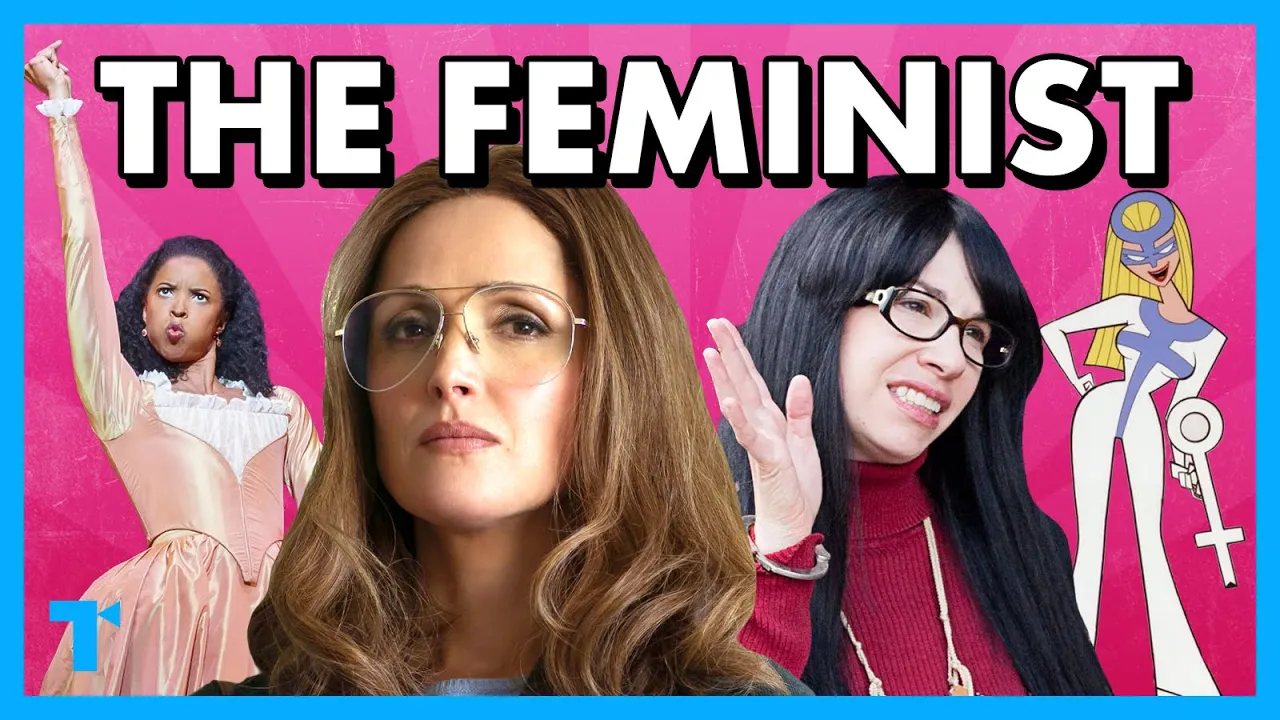




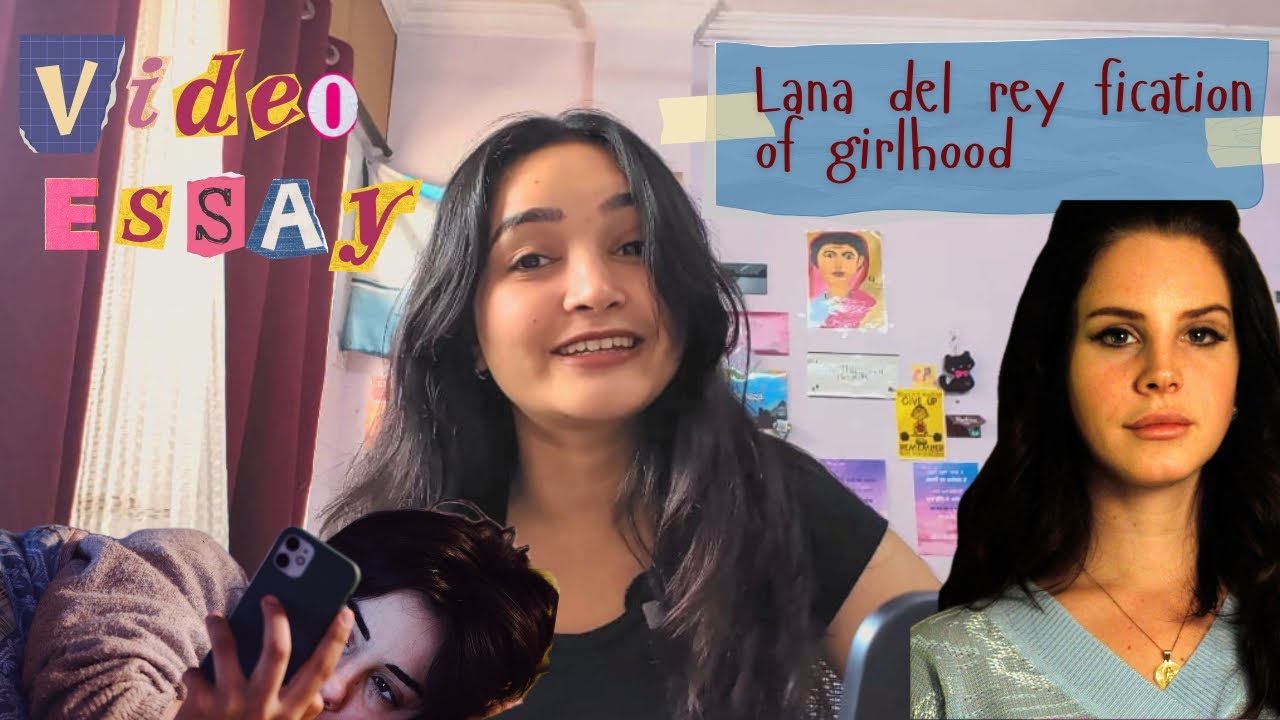










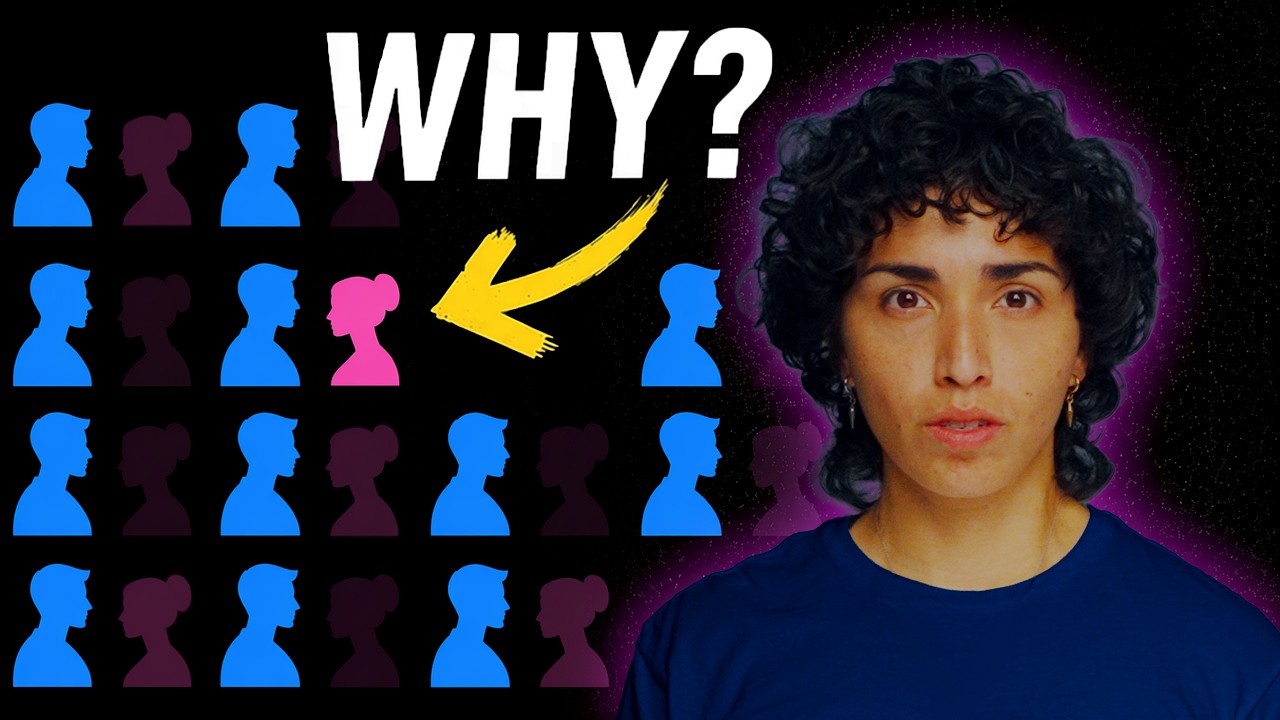

This video essay analyzes the femcel subculture as a modern manifestation of transgressive girlhood, examining how young women use irony and aestheticized pain to reclaim agency against oppressive gender norms while acknowledging the problematic exclusions within these communities, particularly regarding race, class, and intersectionality.
Femcel Feminism and Transgressive Girlhood Analysis
Added:The core tenets of Third-Wave Feminism, particularly the emergence of subcultural movements like Riot Grrrl in the 1990s.
The sociological origins and terminology of the online 'incel' (involuntary celibate) subculture and its evolution on digital platforms.
Basic feminist theory regarding gender performance, societal expectations of female passivity, and the political expression of female rage.
The concept of intersectionality and how mainstream feminist movements have historically excluded or marginalized specific groups of women.
The 'sad girl' aesthetic and digital nihilism: analyzing how female mental distress and isolation are commodified on modern social media platforms.
Digital ethnography and online radicalization: researching how niche, gender-segregated internet forums foster specific ideological echo chambers.
Literary and cinematic analysis of the 'monstrous feminine' and 'transgressive girlhood' tropes in contemporary culture.
A critical evaluation of 'Choice Feminism' versus radical, defeatist, or nihilistic feminist perspectives in the 21st century.
712.3K views38.7Klikes50:06Original Release: 2023-03-07
Dear Polly, I barely know anybody---literally. I'm not even sure I want that many friends but how am I ever going to find anyone (as in a romantic partner) if I speak to literally seven people in my life?
One of those seven people is a guy who struck up a conversation with me over half a year ago online.
Over time I grew more and more interested in him. He seemed to grow less and less interested in me.
I'm crazy about him and so lonely. I feel like a starving rabbit with only a few pieces of horrible, rotting cabbage leaves in its cage. I keep telling myself they're awful and I'm better than that and I deserve at least some normal (not even amazing!) just regular, good cabbage. But eventually hunger always gets the best of me and I give in.
Please help me get out of that cage. Love, Can't Stop Eating Rotten Cabbage Leaves.
Dear Can't Stop Eating Rotten Cabbage Leaves, You're like a working breed of dog that doesn't have any sheep to herd. Do you know what happens to those dogs? They rip up rugs and chew shoes to tiny shreds and then pace and then grow depressed and violent. That's what you're doing to yourself with this pointless correspondence. You have so much potential, so much energy, so much sensitivity to the world and you're wasting it and using it to eat yourself alive, using it to tell yourself that you're worthless. You're addicted to loneliness and desperation. It's the strongest emotion you've ever known so your subconscious tells you that it's your destiny. It's like a rite of adulthood; a page torn from the Teenage Girl Bible or something. Cabbage, you are very, very young. You're learning how to live. Nothing could be more romantic, more fated than that. The cage is open. The sheep in your heart need herding. What is it that Zack Snyder said? You have all the weapons you need. Now fight.
Please allow me a moment to thank today's sponsor, Scentbird. Scentbird is a fragrance subscription service that allows perfume aficionados and newcomers alike to express themselves through their favorite scents--all without having to commit to full bottles or full bottle prices. Every month for just $17, you can choose a new designer fragrance from such brands like Prada, Gucci, and Confessions of a Rebel. And they're shipped right to your door in these chic, sophisticated bottles. I've worked with Scentbird before and every time I get an order from them, I am just always so amazed by their cases. They feel incredibly sturdy. I think they're really well made and they're really fun to mess around with! This one is magnetized so you just slide over the bottle into this little nook to unlock it, and you can pop it right open.
[Crickets and Frogs.mp3] You can spray it when it's in the case...[Blinking noises] Isn't that--oh my God. That's genius. Okay, sorry. But don't let me have all the fun. Scentbird is rated E for everyone, just like these hands! And---[laughs] They carry perfumes, colognes, and unisex options for those not interested in gendered smell. And with each fragrance, you get a 30 day supply so you can take your time and save your money before committing to a full bottle. Full bottles are... expensive. The full bottle of one of my all-time favorite fragrances is Floreal by Vince Camuto and that runs for like over 90 dollars. So if it weren't for Scentbird, I would have had to buy the full thing first without even knowing if I liked it or not. Who do you think I am?! This month I tried three scents. The first is French Leather by Memo Paris. It contains pink pepper, juniper, cedar and lime, and rose essence. I don't know what any of that means but it smells fantastic so!
It smells exactly like the inside of a Parisian woman's handbag--which is a good thing believe me!
I don't know what it is about the United States and our obsession with, like, all things French, but Miss Memo got it going on! She is definitely on to something here. It's sophisticated and airy and makes me feel really fancy whenever I do get the chance to wear it. The next is Dans Le Bois by Dime Beauty. That is such a fun name. [Name repetition] The card describes it as feminine, bold, and intoxicating which not only makes us twinsies but it also makes it my favorite fragrance out of the three. Oh, they were cooking in there. I could smell this all day, like wow. It's also not overpowering which is a plus for me. My nose is really sensitive, which sucks for me because I love drowning myself in perfume whenever I wear it. A lot of sweet smelling perfumes also feel like they're doing too much, like girl... Go sit down! But this is actually very delicate and easy on the nostrils. I could probably wear this like anywhere. If any of this sounds interesting to you, please make sure to use my code SHANSPEARE55 to get 55% off your first month at Scentbird. That means you pay just a little over seven dollars for your first month. And this promo is available in the US of A and Canada. And as for me, I've got a play to put on. Lights, camera-- I'm talking to myself in my bedroom--action!
Ah, girlhood! The most sacred time. A time where God himself reaches a hand down from the cotton candy skies, unscrews our heads from our necks, and pours down sugar, spice, and everything nice. Between the ages of 5 and 19, girls are unflinching. They embody rainbows, daisies, Barbie dolls, and cherries.
Girlhood is clean. It's dainty. It speaks when spoken to and never raises its voice. It knows no identity outside of marriage, outside of motherhood. It puts pants on when men are invited over, even if shorts are more comfortable. It learns shame and envy and a need for perfection.
Girlhood is Godly! And Godly girls grow up into women who are just as pious!
Victorian women, for instance, were expected to be the Angel in the House. This was an archetype popularized by Coventry Patmore's 1854 poem, "The Angel in the House." The arsenic wafers were truly impeding upon their creativity but anywho! Coventry wrote "The Angel in the House" for his wife, Emily, whom he saw as the most perfect woman on planet Earth. She was graceful and young, tender and pure. She'd probably fling herself in front of a moving car if it meant that she could stop him from getting splashed from curb water. Coventry writes, "[Emily] was simply, subtly sweet.
My deepest rapture does her wrong yet it is now my chosen task to sing her worth as maid and wife."
Hmm. The poem gained traction in the late 1800s and became an ideal for women to emulate. She was beautiful and pious and would never throw a pan of hot grits at her lying, cheating husband. I'm not saying that Coventry was a lying, cheating husband. I'm saying that, if he was, Emily would probably refrain from playing hot grit skee ball with his face. Yet amongst all these pure characteristics, The Angel in the House was suffocating to women. Elaine Showalter considers the Angel "a male ideal rather than a living woman." Mainly because a living woman would play hot grit Skee-Ball with her lying, cheating husband's face. And a male ideal simply would not. Virginia Woolf knew intimately the suffocating nature of the Angel archetype. Woolf was a prolific writer of the 20th century and the current owner of an absolutely insane Wikipedia "Views" section. So, congratulations to her on the weirdness. She once noted that the Angel archetype "hovered over her as she wrote, and whispered, 'Be sympathetic, be tender, flatter, deceive; Never let anybody guess that you have a mind of your own. Above all, be pure." Later Woolf would write about the Angel: "It was she who used to come between me and my paper when I was writing reviews. It was she who bothered me and wasted my time and so tormented me that, at last, I killed her."
a girlhood so Godly you have to kill it. Not even M. Night Shyamalan could write something so ironic. The truth is, girlhood isn't as Godly as we've said it is and it's not as universal as Pop Culture would have you believe. We desperately want it to fulfill these expectations, but there's too much evidence stacked against us. How do we reconcile the fact that girlhood is supposed to be sugar, spice, and everything nice when there are so many people who don't experience it that way? What do we say to the girls who feel like open wounds? The girls who had their labels misread and were filled with salt and cyanide, rather than sugar and spice? How do we hold space for their reality?
[Phone ringing offstage] Hello? Oh, I've got to take this. It's the World Wide Web calling! Social media's idea of girlhood is much more of a blight than a sparkle. In this realm, the very essence of girlhood is to fear and be feared, as Hannah Williams argues. Girlhood is to "hold [these two fears] simultaneously within yourself, to know that your body, by the sheer fact of its existence, will be terrified by the society that claims to be terrorized by it...The female body has been codified as disgusting, defective-- leaking, bleeding, oozing--from time immemorial. She limps, incomplete and half finished, across Aristotle's theories; a deformed monstrosity and a misbegotten man." Why do I write my scripts with the cadence of a British person in mind? Bit sad innit? A bit sad innit? But Hannah Williams' musings aren't entirely off the mark. It's hard not to envision society as "girl-hostile" when you consider the horrors. When describing this darker aspect of girlhood, Mary Pipher evokes Ophelia, the doomed and destroyed young girl in Shakespeare's Hamlet. Through Pipher's eyes, girlhood is marked by a stripping of agency, a confused and touched mind, and a tragic self-inflicted death. Reviving Ophelia--both the book and the archetype it spawned--relies on seeing women and girls as vulnerable victims of a patriarchal society. They are not so much human as they are personified anxiety, unable to reach fruitful self-determination. Pipher states, "Adolescent girls are like saplings in a hurricane. They are young and vulnerable trees that the winds blow with gale strength. Just as planes and ships, so do the selves of girls go down in droves.
They crash and burn in a social and developmental Bermuda Triangle." Bummer! I'm not a big fan of this argument; it sounds medically archaic at best and essentializing at worst. Pipher repeatedly references the ungovernable emotions of young women and girls, she laments about how entirely fickle their minds are, how swayed they are about the slightest of temperaments. "M. Shanspeare, I-I think I've come to a conclusion about your symptoms. You may have an illness known as hysteria." I find Pipher's language strange in these cases but the truth is, there is a profound level of sadness in sectors of young girls and women. A sadness that puts them at odds with The Godly girlhood that has forsaken them. The way these girls cope, especially in the age of the internet, is to transfer that religious promise onto tragically beautiful communities.
Whether it be blogs, TikTok niches, or Instagram hashtags, girls who feel doomed by The Narrative are finding online spaces where their girlhood finally feels vindicated. Take for instance, the tragically beautiful idol of my teen years. My 14th birthday was 10 years ago, which on the internet, sounds like a century. But at that age, I was hopelessly and romantically anguished. I'm not one to romanticize the act of struggle; living with bipolar disorder in a heavily stigmatized society sort of turns me off to glamorization. But, as the Ask Polly excerpt stated earlier, I was addicted to loneliness and desperation, and because those were my strongest emotions, it felt like it was my destiny to feel them. The most popular platform to express this pain--at least in my little bubble of the internet--was Tumblr. For all its current uselessness, Tumblr felt like a safe beacon for people like me...asterisk included. People who were lost and confused and tied to their pain by a red string of fate. Tumblr is where the Sad Girl niche grew wings and floated to the top of our cultural zeitgeist, aided and abetted by lonely users like me. The Sad Girl was a paper mâché of messy buns and Lana Del Rey images; she wore fishnets, Doc Martens, and Nirvana band teees. She smoked cigarettes for the aesthetic and often wrote concerning poetry in all caps. God. I'm unlocking a memory.
There was always a pain behind the eyes of the sad girl and she wasn't ashamed to show it. She was the embodiment of our sadness, a piece of evidence that we presented to society, telling them that their expectations were killing us. We believed back then that the sugar, spice, and everything nice bullsh*t must have skipped a generation because our destiny was chaos and isolation. No one wanted to hear us but we demanded to be heard. In my last video, I talked about the damaging effects of beauty sickness and how it may motivate online users to commodify themselves into a product for the consumption of the masses. Obsessed with curating identity centered around Beauty and Aesthetics, these users commit themselves to the grueling lifestyle of constant performance. As a sort of mini part two, I thought it would be interesting to zoom in on a specific aesthetic niche, especially one that can be seen as an agonized response to the suffocating standards presented in my beauty sickness video. After all, a decade has passed since the call to action put forth by the Tumblr sad girl and our youngest generation is still clamoring for a space to validate them into existence. Thus, like a swan rising from the ashes of her own tears, the femcel was born.
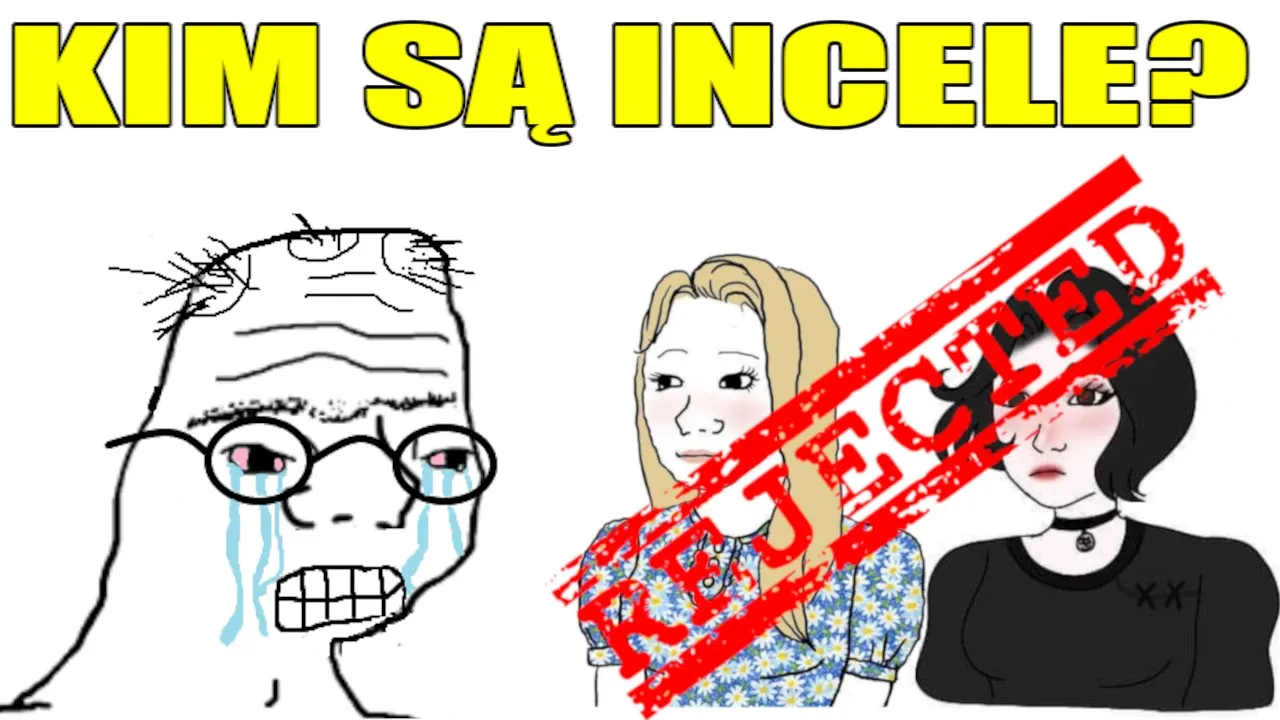
The Atlantic named 2022 the year of the femcel. Women and girls were "gleefully asserting their right to give a name to their loneliness and alienation." They started by embracing their own toxicity. Their manipulative behavior became a trophy and their ironic possession of girlhood became an accessory. While not as hopelessly emo (or maybe indie?) as the Tumblr sad girl of my time, femcels have at least one similarity to their foremothers. They both have a penchant for Lana Del Rey and really just about any other tortured woman, be it fictional, musical, or historical. You can argue, like Roisin Lanigan, that the femcel stems from earlier subcultures like the manic pixie dream girl or, better yet, they're a modern retelling of the kinderwh*re. Maybe they even take a few pages out of the commercialized Riot Grrrl movements. But the femcel is different... At least, that's how they view themselves. Armed with Instagram bios that boast the banishment of locals and basics and the belief that they're the most interesting people in the room, the femcel feels entitled to the label of exceptionalness. But this is the description of the modern femcel, most associated with Instagram aesthetic niches and TikTok communities. Earlier versions of the femcel held true to its portmanteau. To be a femcel back then literally just meant to be a female incel. Incel stands for involuntarily celibate and over time it became well associated with men. Not just any men but men who turned violent, most often against women, when they felt denied something integral to their existence. S*x. I'm talking about s*x. However, the first incel form was created by a queer woman seeking community for her loneliness in 1997. It wasn't inherently linked to lonely men but more so linked to lonely everybody. The creator of the forum wanted to make a space where she and other people could vent without being shamed or ignored. After a while, the forum kind of took on a life of its own. The originator of the form moved on, but the people within it didn't. Incel communities became more exclusionary and much more misogynistic as time went on, and it's in this increasingly binary environment that femcels emerged. Femcels began posting on a subreddit titled TruFemcel in 2018, and here they flourished until 2021 when the sub was banned. Reddit cited hate speech for its termination and since I wasn't there before it was taken down, I have no idea what kind of content was on the platform. I also couldn't find any alternative subreddits specifically related to femcels in name but there are various subs to this day that are dedicated to lonely women-- some of which still use the infamous language associated with incel forums. The femcel I'm most interested in is not the original version but the aestheticized version that is proliferating online communities. What I find fascinating about the femcel is that it speaks directly to the idea of transgressive and rebellious girlhood. Like earlier communities that shun traditional feminine expectations and the oppression that that begets, the femcel "exists as a reaction, albeit a self-reflective and ironic one, to prescriptive doctrines of wholesome femininity." But not only that, I'm intrigued about the politics of the femcel. What makes something transgressive in a heavily racialized and classist society? How can an identity that's built on the notion of rejection and revolution at the same time be fetishized--both in our cultural eye and by the people who partake within the community? This, dearest viewer, is now the 40-minute traffic of our stage. The which, if you with patient ears attend, what here shall miss, my toil shall strive to mend.
And with that, the sweet, passive, and docile heroine were told to be falls away.
And in her place steps...Revenge To understand the femcel, we must first understand transgression and the foremothers born out of it. To be transgressive is to be rebellious, to push boundaries. The term is usually used in reference to crime or infidelity. For instance, when you ran that red light last week and maimed 42 geese and there are three small children, you transgressed against the societal rule of safe driving and geese preservation. And you will be convicted soon. But transgression also relates to realms outside of unlawfulness. If we understand the definition to simply relate to challenging the norm, it can refer to any social, political, or even economic landscape. Let's say, for instance, that your family has a rule that you don't speak about movies at the dinner table. Especially not on Meatloaf Mondays and especially not when your Aunt Helen is visiting for the weekend. Helen is a Team Jacob sort of person and your family are Die Hard Team Edward fans...as they should be. Theoretically.
This rule is so cemented in your family that it's been observed for generations; your mom even has a sign up over the dinner table banning any sort of discussion related to Twilight, New Moon, Eclipse, and especially that one scene in Breaking Dawn. You know exactly what scene I'm talking about. "Is that the Grim Reaper?!" But you--you're rebellious. That meatloaf is sitting right in front of you, your mom is thinking about that one picture of Robert Pattinson in a skirt, and you look your Aunt Helen in the eye and you say: "Team Jacob never existed because Bella never even considered Jacob as more than a friend and even when you think she did, she was really just feeling that way out of guilt or loneliness--depending on what situation she was in-- and not because she actually felt connected to him beyond friendship." Gasp! You've ruined family meatloaf night. Your mother is crying. You have transgressed.
What I'm most interested in today is not Twilight or the 87 sequels that ruined Jacob's character beyond repair. But, instead, I'm most interested in transgressive gender. Despite gender being a social construct, our society views it as something we're born with having intimate knowledge of, as well as something that's inherently dictated by our sex. For instance, if you're born male, you're expected to partake in masculine presentation, hobbies, and identity. You must go to war, play football, be the breadwinner, and know how to drill a hole. And no, that's not a euphemism. I've got a set that needs building and, well, I'm nothing but a small, dainty Little Flower. If you're born female, like me, your gender expectations are entirely different. You are to clean the house, cook the dinner, stay at home, and rear the children. And you can't forget about those pesky little lack of rights! As an enby, I'm considered transgressive just by way of existing. Not only do I push the boundaries of gender norms, but I reject them entirely. I'm like Bugs Bunny. Whichever gender is funniest at the moment, I'm gonna be that. Depending on how you look at it, girlhood is usually positioned as inherently transgressive. And, forgive me, I am going to be so vague with the term girlhood! But this ambiguity has its purpose, just keep that in mind. As Carol Gilligan argues in her 1982 book, girlhood is an "Especially critical time in women's development because to connect her life with history on a cultural scale, she must enter--and by entering, disrupt--a tradition in which human has for the most part meant male." One can argue that, in this way, anything a woman does is transgressive simply for the fact that she's not expected to do anything at all. That is her one societal boundary; don't eat the fruit, don't do anything except be born from the rib of a man. Just by way of breathing, the woman crosses the social boundary and is transgressive. Of course, this argument only works if we ignore every single horror bestowed upon Womanhood from the dawn of time. In fact, there is a lot expected out of women. These expectations just get more narrow and convoluted the further you travel across intersections. But let's take a general approach for now. If we assert that women must be passive, they must be dainty, they must be traditionally feminine in order to be accepted, then the way we identify gender transgression changes. It no longer takes mere existence in a man's world to be transgressive. You must now be assertive, coarse, and viciously non-conforming.
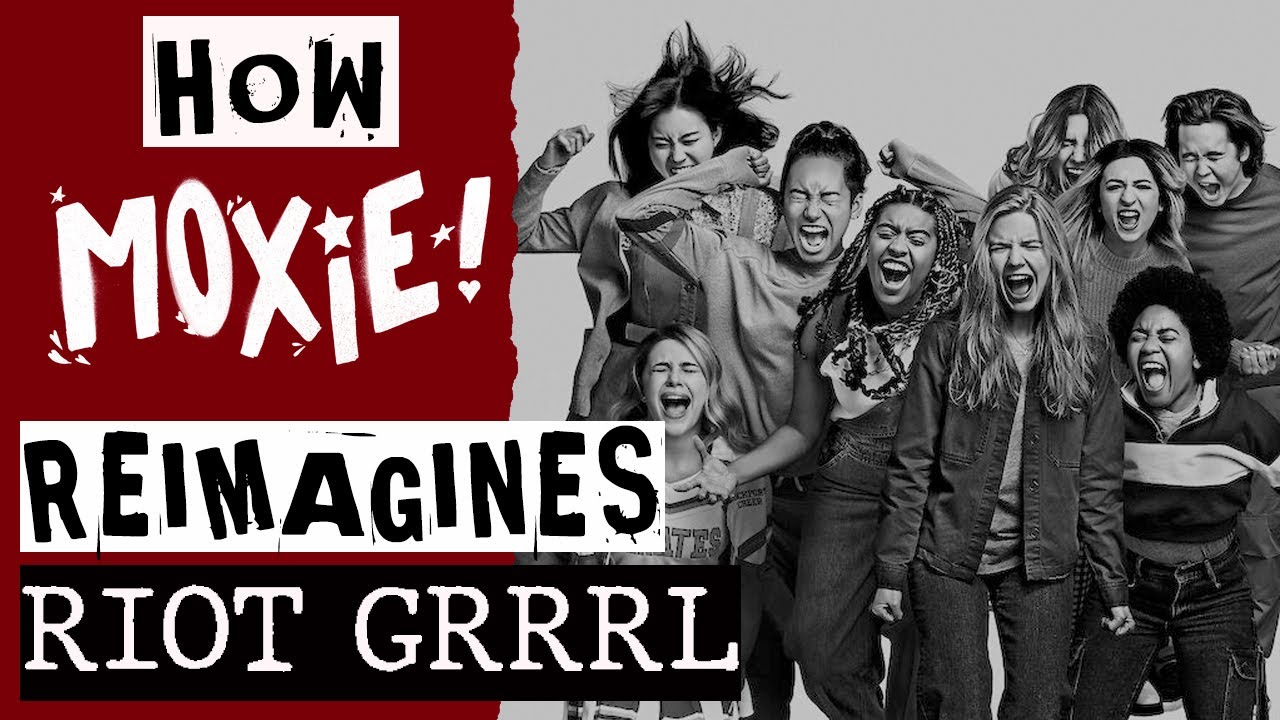
You must be a riot grrrl. The riot girl is one of many early manifest stations of subverted (white) girlhood. It originated in the early 1990s along the west coast of the United States.
At its core, it was a political and feminist pushback against the patriarchal domination happening within the punk scene at the time. Women fronted bands such as Bikini Kills, Heavens to Betsy, and Bratmobile presented themselves as the quintessential embodiment of girlhood...with a twist.
They cultivated a girly aesthetic through their outfits, zines, and iconography while also mixing in what Gonick describes as "The most threatening thing in a female adult: rage, bitterness, and political acuity." These three characteristics-- especially rage--were long since considered a man's thing. After all, in writing about the subversive nature of the Riot Grrrl Movement, Gayle Wald argues that "Youth is more likely to be associated with aggression, violence, and crises. And youth itself is frequently conflated with Boyhood." These so-called manly characteristics go against popular imagery of traditionally feminine women, making the reclamation of such characteristics transgressive for the Riot Grrrl community. To better explain this ironic reclamation, Ernesto Laclau put forth the theory of disarticulation-rearticulation. This is just a fancy way of saying "This thing used to be used negatively against me and I think that's wack! So, I'm going to reclaim it and use it for myself--maybe even ironically--so I can have agency over its oppression." In the case of the Riot Grrrl and other transgressive niches of their time, they disarticulated and re-articulated girlhood itself.
They kept the so-called 'staples of girlhood', which is really vague when you think about it, and they challenged those boundaries. Instead of it being seen as a condescending remark about their lack, the term girl became a vicious indicator that they weren't going to take anyone's sh*t anymore. The music found within the Riot Grrrl niche also reflects this fierce gender transgression.
Some Riot Grrrl bands spoke of assault, violence, patriarchal infantilization, and the sexualization of young girls--all within music and styles that were unquestionably girly. As Gayle Wald argues, the themes within the Riot Grrrl Community were not about "A loss of Innocence or a fall from childhood grace, but an innocence that was not owned or enjoyed, a grace that was denied." This is where I find that the Riot Grrrl and the femcel converge the most. The social media profiles of femcels and girl bloggers are carefully curated to show their girlness; they post pictures of bows and heart-shaped sunglasses, they collect makeup and outfit inspiration, they're unapologetically pink and masters at sweetness. But there's also the same rage and transgression within the femcel community that exemplified the Riot Grrrl. The femcel is turned off by the ills of society. She rejects the expectations that have caused her harm. Their idols are women unhinged, women abused, women who seek revenge and come out on top. One such icon in the community, Sylvia Plath, is well known for the destructiveness exhibited in her writing. Parvin Ghasemi argues that "[Plath's portrayal of a world devoid of meaningful spiritual resources] crashes the self and leaves out the corpse, mutilated and silenced. As a reactionary gesture against this oppressive modern society, Plath employs a shockingly harsh language, a host of violent images, impressed by painful and hurting incidents and experiences. Her work then exhibits a rebellion and indicates the individual's struggle to liberate the self from the bondage of social conformity and dispossession."
These idols are cathartic to femcels. They're able to see characters in situations similar to theirs, at least thematically, and they don't have to feel so alone in their emotions. These Idols are given space to spiral, to be angry, to express their opinions, to fight back against oppression, to embody the very traits that the femcel feels forced to suppress. Femcels are transgressive to our popular understanding of femininity because of this rage, because of this penchant for violence.
If you remember from earlier, rage is one of those things that are expected of boys and suppressed in girls. You can't be delicate, docile, and submissive if you want to play Hot grit Skee-Ball with your lying, cheating husband's face. Women not only suppress their anger because society views it as a "man thing" but because showing anger as a woman may put you in more danger.
For instance, when women reject men, when they show disapproval at a man's actions, when they get angry at a man's actions and show that anger, there's a high chance of them getting further harassed, assaulted, or even killed. So, yeah. Reclaiming anger as a valid emotion can be viewed as transgressive for women, asterisk included. But here's the thing. Even while acknowledging all of this, even while understanding how important these communities can be for lonely young girls, and even while understanding how liberating gender transgression can be for those suffocated by unattainable ideals, there's still the matter of ambiguity. You see, the adoption of girlhood done by niches such as Riot Grrrl and femcels is very indistinct in its meaning. Yes you have the pink, and you have the bows, and you have the heart-shaped sunglasses. You post memes about you and the girls rotting in bed and you wax poetic, perhaps ironically, about your favorite feminine activities. But what is it about girlhood exactly that you're adopting and trying to subvert? And what demographic does that girlhood reflect? I would argue that these communities are in the business of manufacturing a very specific image of girlhood and transgression that is only plausible for a certain type of girl. They achieve this by employing a mixture of imagery, language, and expectations that narrow the field of representation and and solidarity. For example, for all of its emphasis on inclusion and gender revolution, a lot of the bands who consider themselves Riot girls often participated in trans-misogynistic events. Not only that, but the reclamation of girlhood that Riot Grrrls, Kinderwh*re bands, and girl power activists undertook in the 90s and 2000s desperately tried to fashion girlhood as white, middle class, and cis. The same goes for some sectors of the femcel community. The social media apps I sifted through for this video include Tumblr, Instagram, and TikTok. It was hell on Earth. On all three of these platforms, the femcel tag is dominated by imagery and experiences that most relate to white women than any other race. Sometimes, you have to scroll quite a bit to find anyone of color in these spaces. And when you do, it's very slim pickings. I know in our current anti-woke age, we don't consider underrepresentation an issue. If anything, most people would try to argue that it's a skill issue rather than a systemic one. But as George Gerbner theorized in 1976 with his symbolic annihilation proposal, underrepresentation doesn't just exist for funsies. It contributes to ongoing social inequity. He states that representation in the fictional world signifies social existence. Perusing these communities, people of color do not exist within them--at least not a lot of people of color. This can happen through a suppression of people of color's content; maybe people of color do post within these circles, but they just get ignored or shunned. Maybe white creators within these circles prefer to only post white centric media. Or maybe the environment is so hostile to "outsiders" that people of color aren't comfortable interacting within them. Lorelei Alverson makes an interesting case for the white centric nature of the femcel community. They researched various platforms, including Reddit and Discord, and came back with receipts! Racism and transphobia are especially rampant within some femcel communities. Even when it seems to just be one person committing these acts, no one steps in to correct them. In fact, on the since deleted femcel subreddit, TruFemcel, one user posted a long and egregious rant about how no one would want to date black women because they're too strong, too sl*tty, and the like. According to Alverson, only black users tried correcting the original poster while hundreds of other users liked the post. This doesn't even begin to breach the rampant fatphobia and transphobia circulating within the femcel community, especially on Tumblr. I'm not saying that every femcel is like this. It seems to be notable enough that people have begun making call-out posts and articles about it, but it's possible that this is only a small minority.
But even so, the femcel, like past communities of transgressed gender, has sort of cemented itself as white, thin, and cisgender. Instead of holding space for the vast, unstable, and fluctuating states of girlhood, these communities seek to universalize it, "creating an ethnocentric identity that equates girlness with whiteness." The thing is the concept of girlhood is not portable. It cannot transfer across every social experience. Therefore, the way in which femcels and their foremothers display girlhood goes even further to symbolically annihilate anyone who doesn't look and behave like them. For instance, lost in the pretty imagery of pastel outfits and bloody heroines dominating these niches, are young girls of color and girls from working class families. Their relation to and experience of gender as well as transgression is drastically different from the white and at times middle class girls who are given the most space within these platforms. The very idea of transgressed girlhood hinges on the idea of women and girls being innocent until they're not. In order to subvert traditional femininity, you must first be granted access to it. As a black enby who was socialized as a girl growing up, I was never given the chance to be defined by my innocence or femininity at my high school. For instance, a few of my peers considered me "too dark." They would say that I disappeared in dark rooms and that I probably never blush because how could it ever show up on my skin?! Though it seems innocent, this teasing, it's directly linked to the stripping of my innocence and femininity. Dark skin is considered ugly, but it's also treated as an indicator of someone's intelligence or Womanhood or temperament-- even their financial class. People with darker skin, especially women with darker skin, are perceived to be more sexualized, more aggressive, more masculine, and more evil than people with lighter or even white skin. Even online, people within my comment sections consistently call me a man or paint me out to be this evil, angry black woman... [Perplexed Black laughter] Sorry. It's just so funny how racism makes you hallucinate. It's kind of crazy. But, in my opinion, black women's anger is viewed differently than white women's anger. Just by way of existing, black women are seen as angry, volatile, and ignorant. We're never even given the chance to get angry because its existence is assumed before we even open our mouths. This makes the reclamation of anger, a femcel staple, a bit harder for black women. I won't say it's completely out of reach because I encourage black women to always embrace their anger, no matter the stereotypes, simply for the fact that it's a human emotion and you are allowed to feel it. It doesn't have to be useful, it doesn't have to serve this great revolutionary purpose. It's something you were born feeling, not because you're black and not because you're a woman, but because you're a person. I also think in terms of transgression, a lot of the boundary crossing that happens with women of color, especially black women, is the reclamation of traditional and unironic femininity. When they lean into softness, when they lean into delicacy. For so much of our history, the social boundaries for us have been different so the way in which we cross those boundaries will be different. But anyways, let's-- I'm getting sidetracked! Let's speak more about black girls and their relation to girlhood. Black girls are usually the subject of Adultification Bias, a term first used in a 2017 Georgetown Law study. Adultification can refer to two phenomena; the first is acting older than you really are. It usually occurs when children are handed adult responsibilities at a far earlier age than developmentally healthy. The second, Adultification Bias, occurs when adults view black children as older than they are, regardless of action or circumstance. Usually, Adultification bias is informed by anti-black stereotypes that view black people as superhuman, subhuman, angry or the like.
In a quest to investigate Adultification Bias, Epstein et al...Very tragic name btw. Epstein interviewed 325 people. Of those 325 people, 74% were white, 62% were female, 39% were between the ages of 25 and 34, and 69% held a college degree. Epstein et al found that, "Across all age ranges, participants viewed black girls collectively as more adult than white girls. Participants perceived black girls as needing less protection and nurturing than white girls. And that black girls were perceived to know more about adult topics and are more knowledgeable about s*x than their white peers." Adultification Bias tends to transcend action in the sense that, even if a black child is doing something similar to a white child, that black child would still likely be viewed as 'more adult,' thus leading to more discipline or discrimination. This bias is especially pronounced in the education sector. Teachers who participated within similar studies also considered black children to be older than they really were. One teacher was recorded saying that "Black girls think they are adults and try to act like they should have more control sometimes." Other teachers agreed, stating that black girls "exhibited very mature behavior and were socially (but not academically) sophisticated." Others still argued that black girls were unnaturally controlling for their age, compared to their white peers. Based on Epstein et al's study, the Adultification of Black girls begins as young as five years old. It tends to peak around the ages of 10 and 14, and remains notable across a span of 15 to 19. According to Epstein, "These results suggest that Black girls are viewed as more adult than their white peers at almost all stages of childhood." This essentially means that young black girls aren't ever viewed as girls. Therefore, their girlhood is truly void...Interrupted (ba dum tss). In terms of classism, lower and working class girls are also given less space to challenge social boundaries. "For girls in inner city schools, their Girls with Attitude stance--the doing it for themselves in a way that ran counter to traditional forms of femininity-- resulted in them being labeled at various times by teachers as 'real b*tches,' 'a bad influence,' and 'little cows.' For working class girls, the ideal is even further out of reach as they have to "Reconcile a girl power discourse that tells them that they can be and do whatever they want in a labor market that cruelly sets limits on any ambition and an education system that classifies the majority of them as only fit for low end, poorly paid work." The ways in which racism and classism intersect with transgressed girlhood isn't to imply that white, middle-class girls aren't also brutalized for their expressions. But it does seek to call into question who these niches are made for and how these acts of transgression only seek to reinforce a dominant hierarchy. Femcels tend to scream about how different they are and, sure, you can read this as ironic, but I question that. How different can you be while maintaining the status quo? How new and subversive are your actions when you're simply reinforcing historical exclusion? "As Fusco writes, 'it is imperative that we cease fetishizing the gestures of crossing as inherently transgressive, so that we can develop a language that accounts for who is crossing and that can analyze the significance of each act.'"
On May 21st, 2020, Lana Del Rey set the internet ablaze. With a Jack Torrence-style, typewritten, Notes app non-apology, she proposed a question for the culture. Now I'm not interested in dissecting every word and racial fumble within this post. I've done that. Twice. And all work and no play makes Shanspeare a very dull boy. But there's something else of interest in this question for the culture.
And that is the idea of delicacy, tragedy, and glamorization. Lana has had a tumultuous career in terms of public acceptance. As she states in her question for the culture, she has been relentlessly attacked, accused, and at times, informally diagnosed with hysteria--all because of her music. Lana is the Sylvia Plath of pop music; the kind of girl that self-destructs and uses the blood spatter to paint a portrait. She talks about difficult experiences like abuse, drug use, and failed relationships, all through a lens of glamor and mysticism. And not to blow your mind or anything, but she is a certified God within the femcel community. Because of Lana's presentations of these topics, she's often said to be romanticizing unhealthy situations. "He hit me and it felt like a kiss" may not be an original lyric from Lana, but it does encapsulate her style of romantic tragedy. When she proposed her question for the culture, Lana argued that she doesn't romanticize tragedy, but instead shows the reality of her tragic circumstances. This is not a new debate. It doesn't start nor end with Lana Del Rey, especially when you consider that the femcel community is fighting the same battle...constantly!
On various platforms! On one side, you have critics of the femcel calling the community toxic for their embracement of...well, toxicity. On the other hand, you have femcels willing to die on the hill of denial. They state that what they're doing isn't fetishizing tragedy because, one, all of their posts are ironic. And, two, they're just sharing their experiences, like Lana. But what if both camps are right? Is it possible for tragedy-based media to be a presentation of reality while also being fetishized by its creators? The short answer is...duh! Obviously! The long answer is...this is a very extensive YouTube video and even this will not cover the complexity of this conversation. But, my purpose here isn't to have the answers or to even supply you with one. As James Baldwin argues, you write to find out something which you don't know. It's not about the answer so much as it is about the journey. So, I will try my best and let the rest float above me, unkillable. The definition I'm working with in terms of fetishizing something comes from Cambridge Dictionary: "To consider something or someone important, interesting, or attractive to an unreasonable degree." I would argue that this is sort of a prerequisite to becoming a femcel. They find characters that they relate to, at least thematically, who are often toxic or tortured and they make Gods out of them. The femcel tag on any given social media site is drowned with images of Nina, Pearl, and Lisa. While I agree that these characters feel realistic to the tortured femcel, the treatment these characters are given is not an attempt to normalize or start conversations about the complexity of mental illnesses or other afflictions. The point is to fetishize, to make someone or something more glamorous than they should be. Ironically or not, the way in which the femcel holds up these characters (at times uncritically) contributes to an everlasting cycle of fetishizing harmful behavior and experiences.
Not only that, but femcels also tend to insinuate that their pain is something cool or hot. Hot girls have a pair of grippy socks. Grippy socks equals grippy box. Hot girls would be diagnosed with hysteria back in the 50s. Hot girls need a lobotomy. I'm aware that there's an element of irony to it, but how much of it is irony and how much of it is genuine belief? It's kind of like when you start saying slay as a joke and suddenly you can't stop. You're witnessing the birth of your first niece in a near silent hospital room and your throat is burning trying to hold back the word slay at that very moment! At what point do you just accept the fact that 'slay' is a part of you, now? That your postmodern, post-ironic, post-post adoption of it has altered the way your brain interacts with language? Of course, this isn't coming from a place of judgment. It's simply coming from a place of recognition. The language, memes, and aesthetics circulating femcel blogs right now is exactly what I reposted 10 years ago when I was 14 on Tumblr. Despite giving a voice to the most agonized parts of me, it was still detrimental to my health to constantly partake in the behavior and mentality associated with the sad girl era. To constantly view myself as tragically yet beautifully broken. To feel incomplete without my sadness and loneliness, to glamorize the detrimental symptoms that stem from my mental illness as if they weren't cries for help. You can argue that the layer of irony that the femcels employ protects them from glorifying unhealthy behavior. But I think that ironic layer is very, very thin. It protects you, surely, but it also protects you from being responsible for the things you're posting and internalizing. Let me clarify that this discussion is not me condemning your coping methods or telling femcels that they 'just need to try to be happy!' That's weird. Why would I do that? I know what it's like to live with a debilitating mental illness...or three. And have nowhere to turn to. You're contemplating a permanent decision and you have Rebecca from yoga telling you that mental illness isn't real and that you should just drink some more water and try this headstand. And suddenly you'll be all better!!
The only place that feels receptive to your pain is the one that actively encourages it, because... at least they acknowledge it's there. The behavior of the femcel is not uninfluenced by society. It seems to be a direct retaliation against the pain caused by suffocating expectations. I understand how important these communities are to lonely, desolate young girls. I know how important it is to have a space to vent without fear of judgment. But some of the behaviors prevalent in these communities is not healthy. It just reconfirms the negative thoughts in your head that tells you that you're eternally hopeless, that you're nothing without beauty, that you're so useless you don't deserve to live. It just encourages you to remain in its cycle. Just because it's real doesn't mean it's beautiful. Just because they're your strongest emotions doesn't mean they're your destiny. I know we like to gather around on the internet and say "It's not that deep! There are worse things happening in the world than women enjoying themselves!" And sure, you're right about that. That's why I posted this on YouTube.com under the entertainment category and not a proposal to Harvard. But also, just two things. One, I think it's detrimental to call the self-destructive, racism, transphobia, and fat phobia happening within sectors of the femcel community "something women do to enjoy themselves!!" It's discrimination, Bethany! It's not brunch. And two, I think we should take the sadness and anger present in the aestheticized femcel community seriously. At times, I wish people took my own mental illnesses seriously when I was younger. I'd have a lot less physical and emotional scars if they did. I probably wouldn't have self-immolated and burned myself up if someone just took the time to see me, to tell me that there are other options, that the lifestyle I was romanticizing on Tumblr was the worst possible option for me.
If someone just was there to tell me that there's more to life than my mental illnesses and that I'm welcome to try and search for that meaning at my own discretion. It's hard! I won't say it's not. But I made it past 16 and I didn't think I would, so...that has to count for something.
"You're a young, sensitive romantic and you need to find some new form of self-expression that builds you up instead of knocking you down. You're essentially throwing yourself into another destructive, loneliness-induced obsession, one that leaves you feeling empty, abandoned, and out of control, but that keeps you coming back for more simply because these are the emotions that feel the most familiar to you. You are young and you are learning how to live.
Write that down. I am very young and I'm learning how to live. Tape it to the wall by your bed and read it every morning. You are very, very young. You are learning how to live." The cage is open, the sheep in your heart need herding. What is it that Zack Snyder said?
You have all the weapons you need. Now fight. Thank you guys for watching! I hope you enjoyed it. Please be thoughtful in the comments; I'm a person, you are a person, and those 'faceless looking bots' in the comments--they're people too, believe it or not. And I just want to say thank you again to Scentbird for sponsoring this video! Make sure to click the link in my bio to check them out and be sure to use my promo code SHANSPEARE55 for 55% off your first month. I love you and stay safe out there!
[Shanspeare hitting their head hard as hell on the floor] [General agony] Oh, that hurt!
Up Next

68:44
Microbial Freeze Drying: A Comprehensive Webinar Primer
@OPSDiagnostics
7.3K views•2016-02-18

12:54
Triumph of Orthodoxy Icon: Byzantine Art & History Explained
@BenCallan
2.1K views•2024-08-06

9:49
FastAPI vs Flask vs Django: Choosing the Right Python Web Framework
@TechWithTim
302.5K views•2024-05-26

1:42
Game of Thrones Opening Credits: A Cinematic Analysis
@gameofthrones
46.3M views•2011-04-18
Related Study Plans & Knowledge Roadmaps
Structured learning paths in General & Interdisciplinary Studies
general-studies
Elevator Engineering: History, Physics & Cities
01From Hoists to Safety Brakes: The Dawn of Vertical Lift
02Hydraulic vs. Traction: The Engineering Physics of Elevators
03Modern Speed, Safety, and Algorithms
+ 2 more learning modules
12h5 modules
Explore Roadmap
general-studies
Rubber: Material Science, History & Geopolitics
01Origins of Natural Rubber & Mesoamerican History
02The Chemistry of Natural Rubber & Vulcanization
03The Geopolitics of the Rubber Boom & Colonization
+ 2 more learning modules
12h5 modules
Explore Roadmap
general-studies
Containerization: Evolution, Logistics & Trade
01Ancient Trade & Bulk Cargo: Amphorae to Barrels
02The Industrial Revolution & Cardboard Packaging
03The Containerization Revolution: Malcom McLean
+ 2 more learning modules
12h5 modules
Explore Roadmap
general-studies
Textile Tech: Evolution, Labor & Global Impact
01Pre-Industrial Textiles: Handloom & Cottage Industry
02Mechanization: The Spinning Jenny to the Power Loom
03The Factory System & Global Labor Transformation
+ 2 more learning modules
10h5 modules
Explore Roadmap