







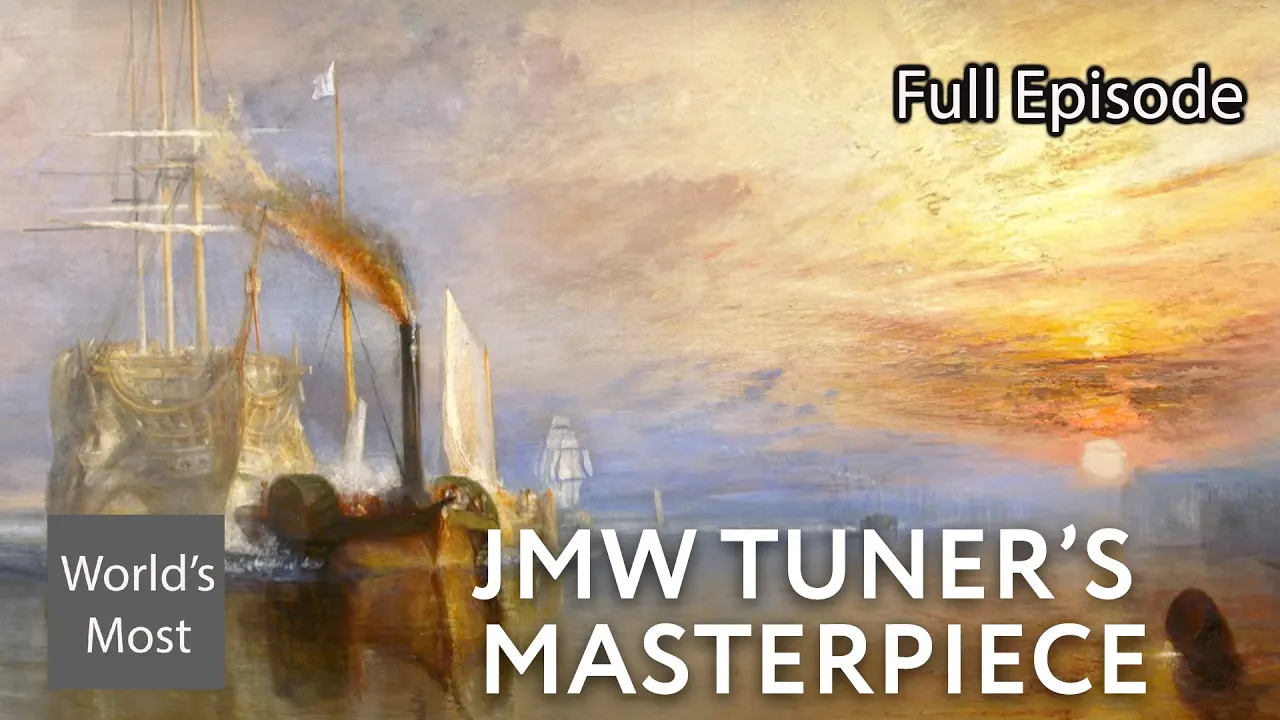









J.M.W. Turner's painting 'The Fighting Temeraire' (1839) uses the image of a retired warship being towed to its final berth to symbolize the transition from Britain's naval golden age to the industrial era, raising timeless questions about whether technological progress is beneficial or whether society should preserve its traditions; Turner deliberately avoids taking sides, instead presenting a poignant allegory that invites viewers to reflect on what is gained and lost when societies undergo radical transformation.
Turner's Fighting Temeraire: Art History & the Industrial Revolution
Added:The fundamental tenets of Romanticism in 19th-century European art, particularly the emphasis on emotion, nature, and the sublime.
The socio-economic impact of the Industrial Revolution in Britain, specifically the transition from manual, wind-powered technology to coal and steam power.
The concept of allegory in visual arts, and how historical events or everyday scenes can be used to represent broader philosophical or cultural shifts.
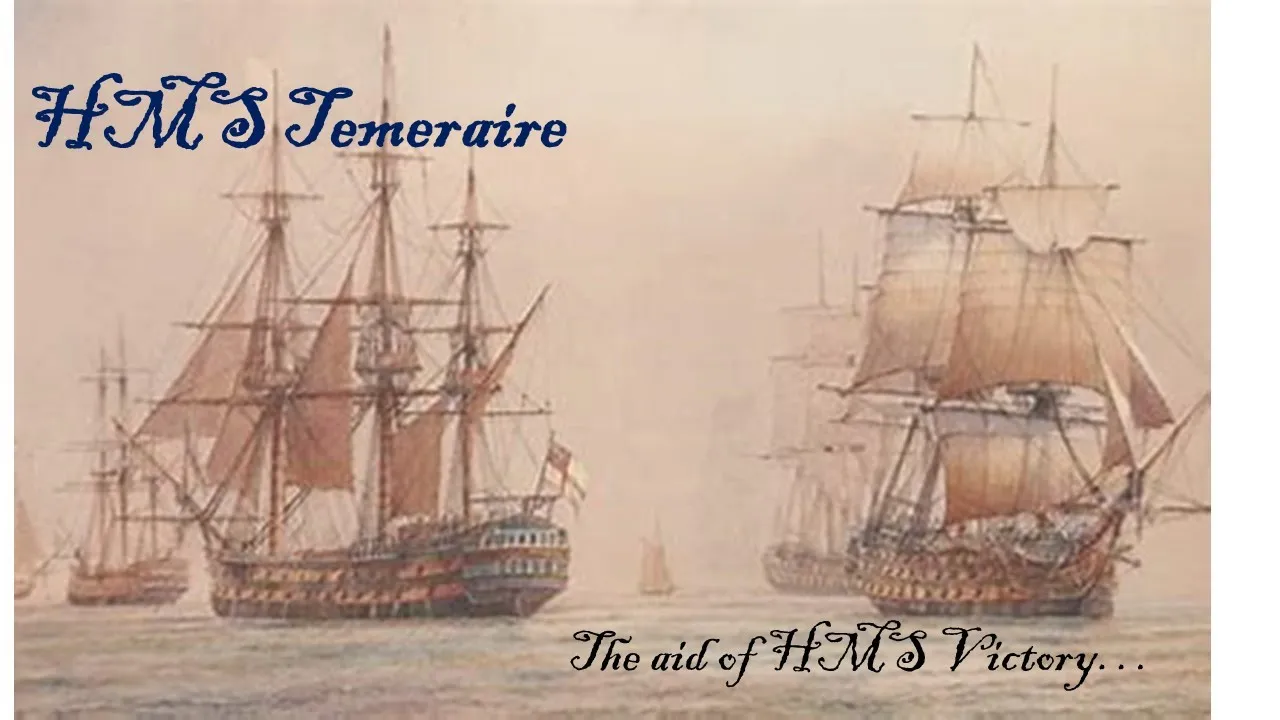
The historical significance of the HMS Temeraire and its heroic role in the Battle of Trafalgar (1805) within British national memory.
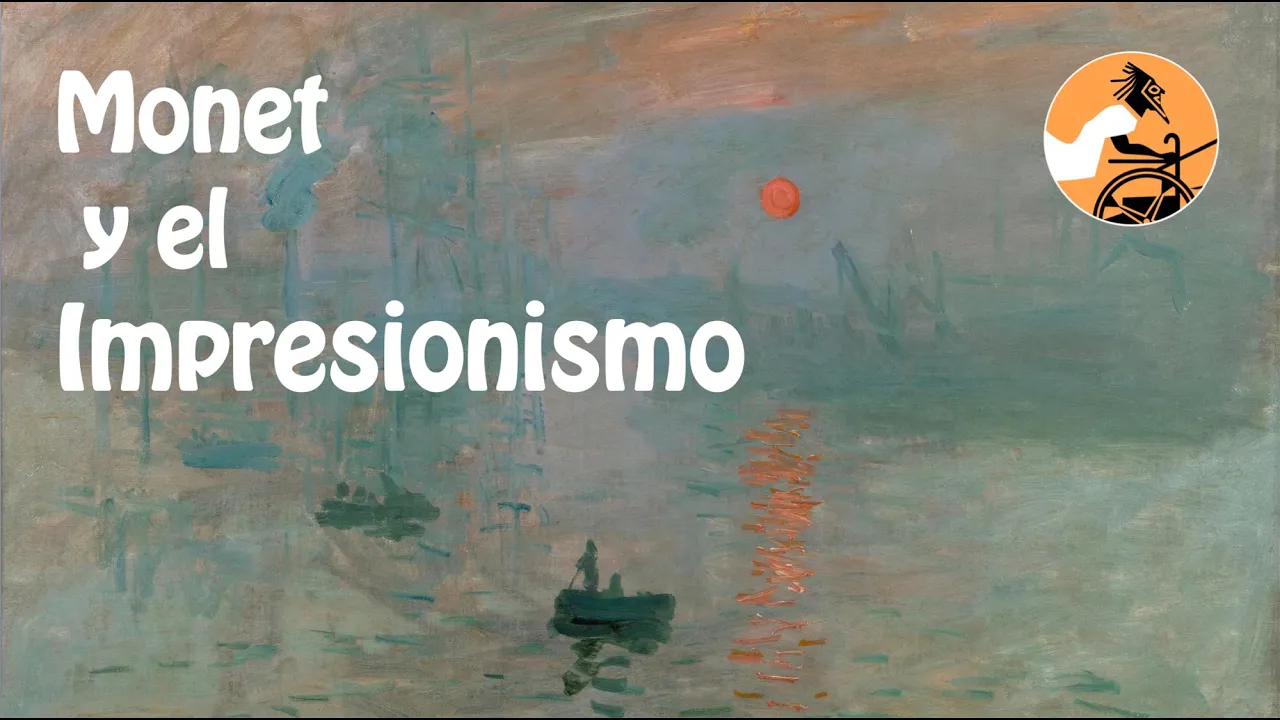
The direct influence of J.M.W. Turner's late atmospheric style on the emergence of French Impressionism, particularly on Claude Monet.
A comparative analysis of Turner's other industrial-themed masterpiece, 'Rain, Steam, and Speed - The Great Western Railway'.
The representation of environmental degradation and ecological grief in 19th-century art as a response to urbanization.
How Victorian-era British art navigated the tension between nostalgic patriotism and the inevitable march of technological progress.
42K views2.1Klikes8:37Original Release: 2021-10-26
My favourite paintings are the ones that subvert your expectations. The kind of paintings that seem pretty mundane on the surface, but that can reveal an incredible amount of meaning if you’re willing to dig into them and engage with them. These paintings are what make me love art history and make me do these videos. This painting definitely falls into this category.
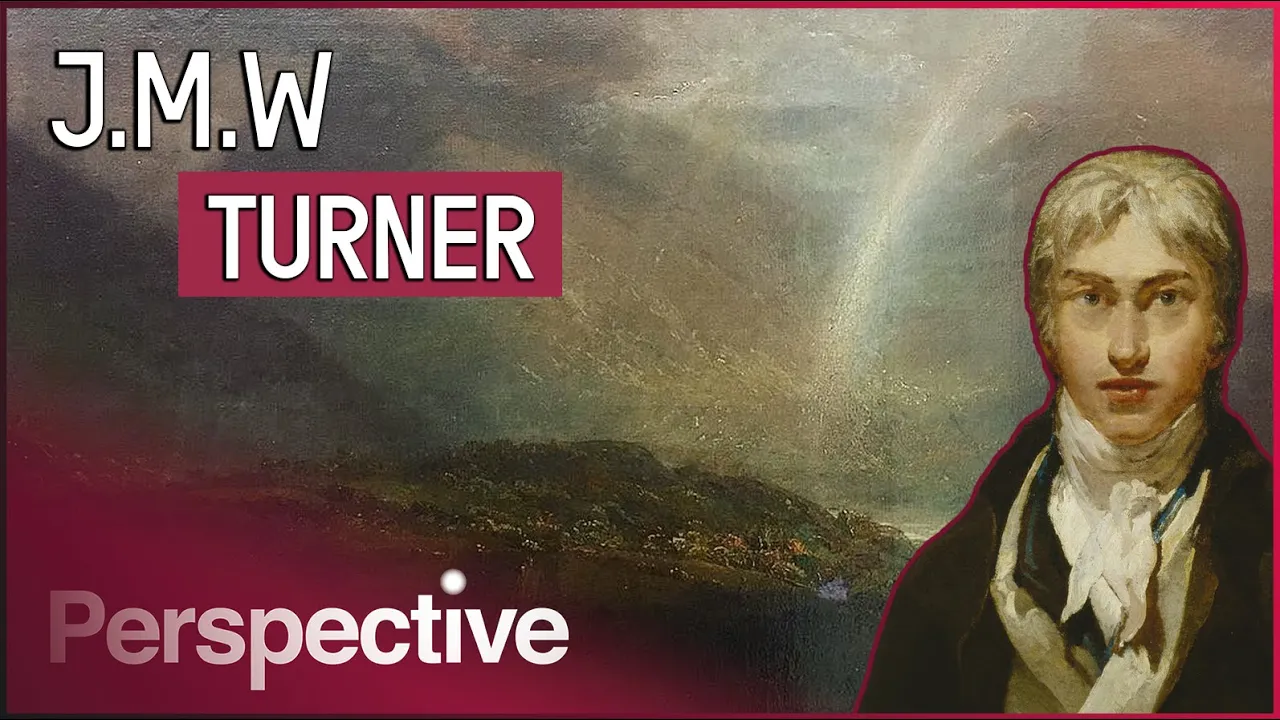
The year 1789 is known for being the year of the Storming of the Bastille and of the beginning of the French Revolution in Paris, but on the other side of the English Channel, in London, 1789 is the year J.M.W. Turner joined the Royal Academy of Arts at the age of 14. A child prodigy, he would make this self-portrait at 10 years old.
However, portraits are not what Turner would become known for.
William Turner often depicted maritime scenes: boats, waves, clouds. For example, the very first oil painting he ever exhibited, Fishermen at Sea, depict men in turbulent waters at night. The only source of light comes from the moon and a dimly lit lantern on one of the boats.
The fishermen are surrounded by darkness and they’re struggling at the same time to keep their ship afloat. There’s a clear contrast between the silent and calm landscape at the horizon and the violence of the sea.
Turner would later create more of these types of energetic paintings depicting the threat of nature at sea, the quintessential example of the Sublime. If you don’t know what the sublime is, you can check out the video I made on the subject.
But what really fascinates me about Turner is how he depicted the Sublime, the violence of nature, the waves, the clouds in an almost abstract manner. Keep in mind, we’re at the beginning of the 19th century and Impression Sunrise is still half a century away. Elements of modernism are clearly on display here from Snow Storm: Hannibal and his Army Crossing the Alps made in 1812, to Snow Storm: Steam-Boat off a Harbour's Mouth made 30 years later where Turner would comment: “I did not paint it to be understood, but I wished to show what such a scene was like; I got the sailors to lash me to the mast to observe it; I was lashed for four hours, and I did not expect to escape, but I felt bound to record it if I did.” I know I’ve said in the past that Le Déjeuner sur l’Herbe is considered to be the first modern painting, which it widely is, but isn’t that hard to believe when looking at Sunrise, with a Boat between Headlands, or Sun Setting over a Lake, both made over 2 decades before Manet’s painting.
Turner’s art was radically different, but keep in mind that his surroundings also radically changed in the span of a couple of years. The Industrial Revolution was at its peak while Turner was evolving as an artist and, as many innovators did, he saw an opportunity.
In the face of rapidly developing technology, the rise of manufacture in the British landscape and the shift in the very way we organized as a society, Turner started painting this new reality.
Here’s another moonlit seen made by Turner, Keelmen in coals by moonlight. If the major part of this artwork is quite conventional, the bottom right is a very telling illustration of the industrialization of England. Coal is being loaded into boats by dozens of working men. The area is engulfed in dark smoke. To be able to see through the smoke, streaks of fire silhouette the workers.
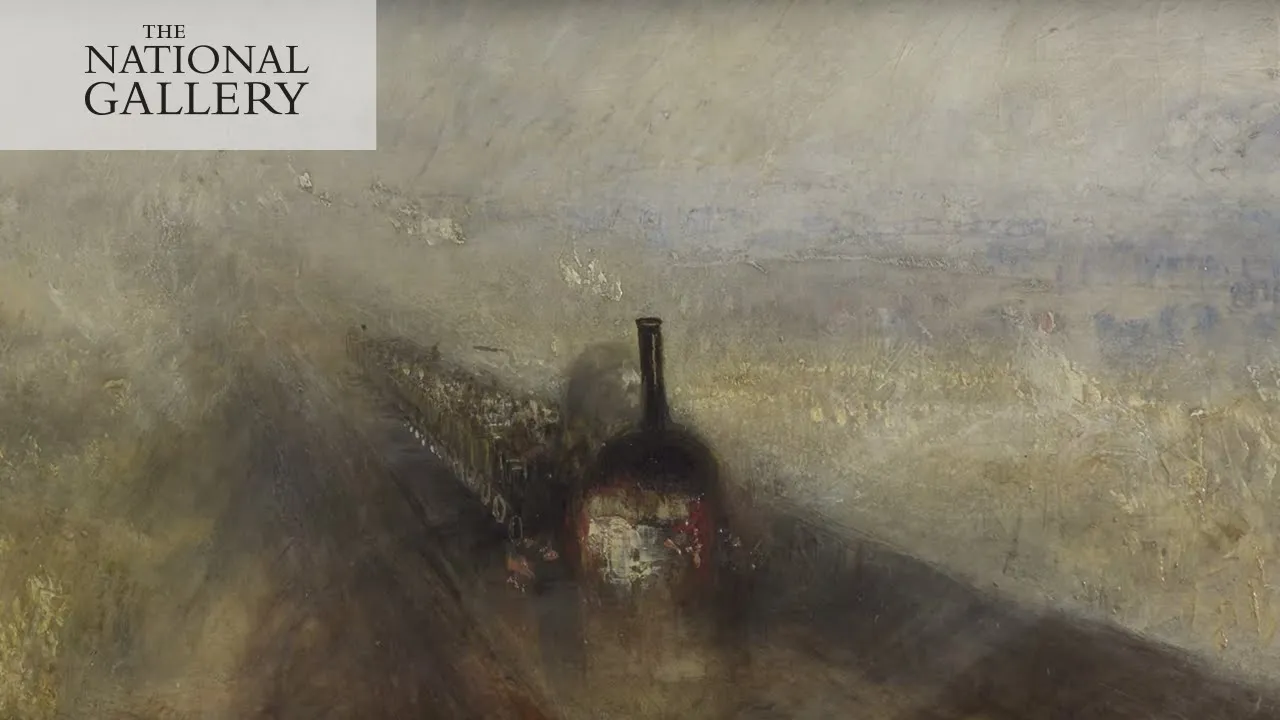
Rain, Steam and Speed – The Great Western Railway is another great example of Turner’s depiction of the Industrial Revolution. The composition is a blend of Nature, Industry and Force, contrasting the forces of nature with the forces of industry. The only industrialized element of the composition is the train heading towards the viewer. Its power and dynamism is reinforced by its diagonal orientation. It’s imposing itself in the landscape, surrounded by people on a boat, a gathering on the shore, a stone bridge in the background, a farmer with its cattle or horses and, famously, a small hare on the tracks running away from the train.
All these elements blend in such harmony that they’re sometimes even hard to make out, but the train, however, is its own thing. This means that these technological innovations are bursting into the world loudly and powerfully. Wether that’s a good thing or not is up to the viewer.
Now, this finally brings us to the painting I’ve been wanting to talk about since we started this video.
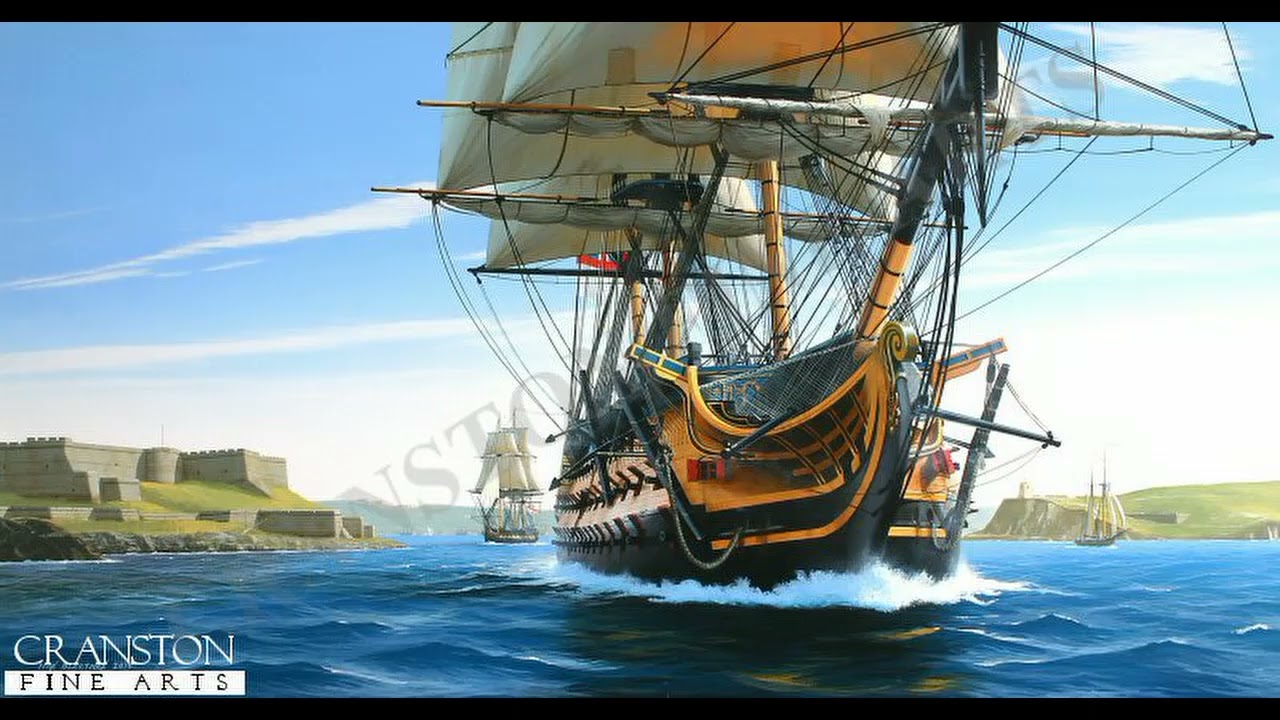
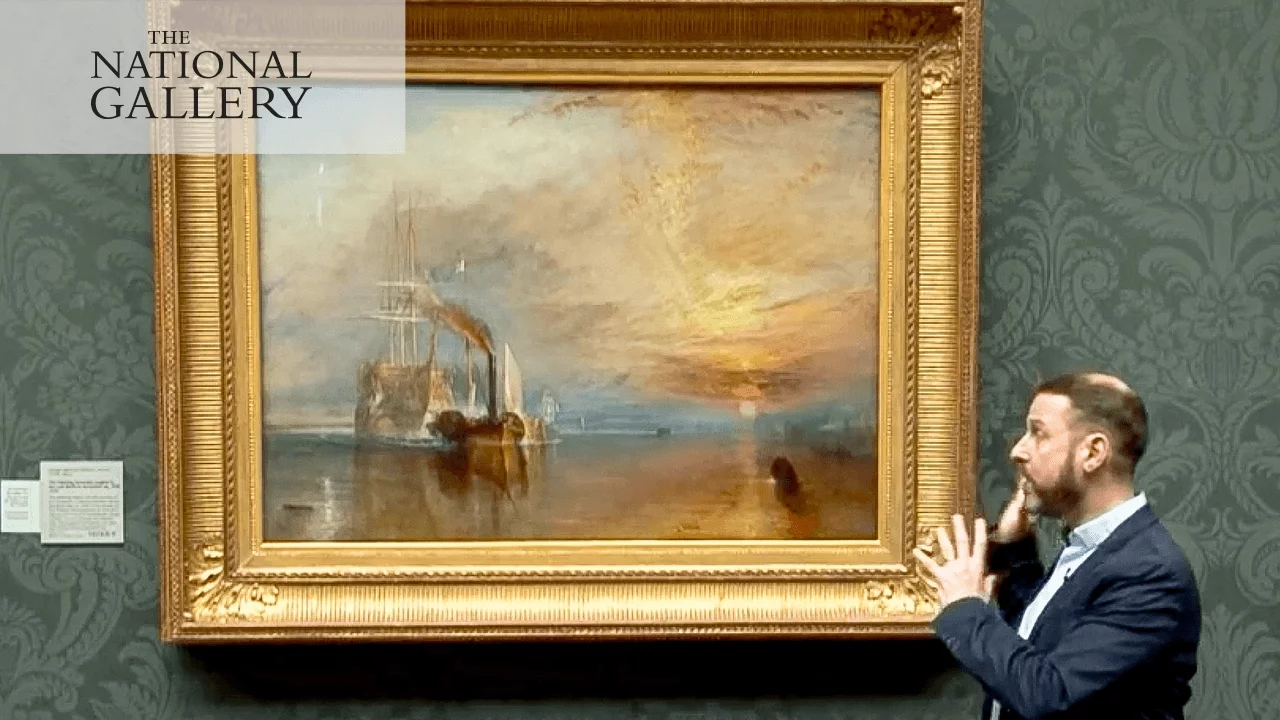
The waters are calm, the sun is setting, the moon is rising. This setting is much more appeasing than some of Turner’s more dramatic works. It’s known as The Fighting Téméraire, and, when exhibited at the Royal Academy in 1839, everybody knew what the Téméraire was. The Téméraire was a 60m long ship, armed with 98 cannons, built in 1798, which covered itself with glory after beating both French and Spanish enemies at the Battle of Trafalgar.
Here the Téméraire is pictured, not fighting, but being escorted to its ultimate end. The full title of the painting is The Fighting Temeraire, tugged to her last Berth to be broken up, 1838.
The Téméraire was sold for its parts. During the actual event, when it was tugged away, it didn’t have its masts anymore and was basically just a carcass to be torn apart. However, Turner decided to present the Téméraire in all its past glory and dignity. He’s not presenting the facts of the event, this is not a historical document; he’s presenting an idea, he’s telling a story; and this story is a very compelling one. This is the story of a ship, made of wood and powered by wind, and this ship is at the end of its life. It’s being dragged on the water to its final destination by a new generation of ships, those ones made of metal and powered by coal.
This depicts the end of an era and the beginning of a new one.
And what I like most about the story Turner is telling here is that there is no moral prescriptions. He’s not saying that industrialization is bad, but he’s not necessarily saying it’s good neither. The ghost ship could be interpreted as an homage to the past, to a glorification of what Great Britain used to be.
The tugboat could be interpreted as a dark, gritty and dirty metal aberration, one which contrasts itself with nature, its power and implied noise being at odds with the calm waters and the sunset. However, this could also be interpreted as the sign of the rise of Great Britain and how the power of these boats is such that it can singlehandedly replace the past.
I don’t know what Turner’s opinion on the matter was and I don’t really think that matters. The story he’s telling here is not supposed to give you answers, it’s not supposed to give you Turner’s answers, it’s supposed to ask you questions.
The society Turner lived in was changing, it was changing radically and Turner was simply asking: “Is this change for the better? What are we leaving behind? Is it worth it?” And you know what I love the most about Turner’s Temeraire story? It’s that these questions, which normally would have been exclusive to the 1800s, are now asked to us, centuries later.
Up Next

14:05
Turner: Master of British Landscape Art | Documentary Analysis
@NationalGalleryofArtUS
339.2K views•2014-05-30

114:18
Christian Iconography: History, Theology, and Meaning | Fr. Panayiotis Papageorgiou
@Trisagionfilms
58.8K views•2020-02-21
11:42
Abstract Expressionism: The Irascible 18 Explained
@Shawn.Grenier
134.2K views•2020-01-31

16:34
Earliest Depictions of Jesus in Art: 10 Ancient Images Explained
@UsefulCharts
5.9M views•2022-06-03
Related Study Plans & Knowledge Roadmaps
Structured learning paths in Art History
art-history
Gothic Cathedrals: Engineering, Light & Society
01The Birth of the Gothic: Romanesque to Suger's Vision
02The Structural Triad: Pointed Arches, Ribbed Vaults, and Flying Buttresses
03Theology of Light: Lux Nova and Sacred Geometry
+ 2 more learning modules
14h5 modules
Explore Roadmap
art-history
Pre-Raphaelites: Realism, Symbolism & Critique
01The Victorian Art Establishment and Academic Formula
02The Founding of the PRB and Radical Realism
03Medieval Revivalism and Literary Symbolism
+ 1 more learning modules
8h4 modules
Explore Roadmap
art-history
Street Art: From Subways to Art Market
01Subcultural Origins in Philadelphia and New York (1970s)
02The Subway Era and Style Wars (Late 1970s - 1980s)
03The East Village Scene and Early Gallery Crossover
+ 2 more learning modules
10h5 modules
Explore Roadmap
art-history
Classic Maya Art: Iconography, Glyphs & Ritual
01Foundations of Classic Maya Visual Culture
02Deciphering Maya Hieroglyphs & Text-Image Integration
03Sacred Geography and Cosmological Architecture
+ 2 more learning modules
14h5 modules
Explore Roadmap