






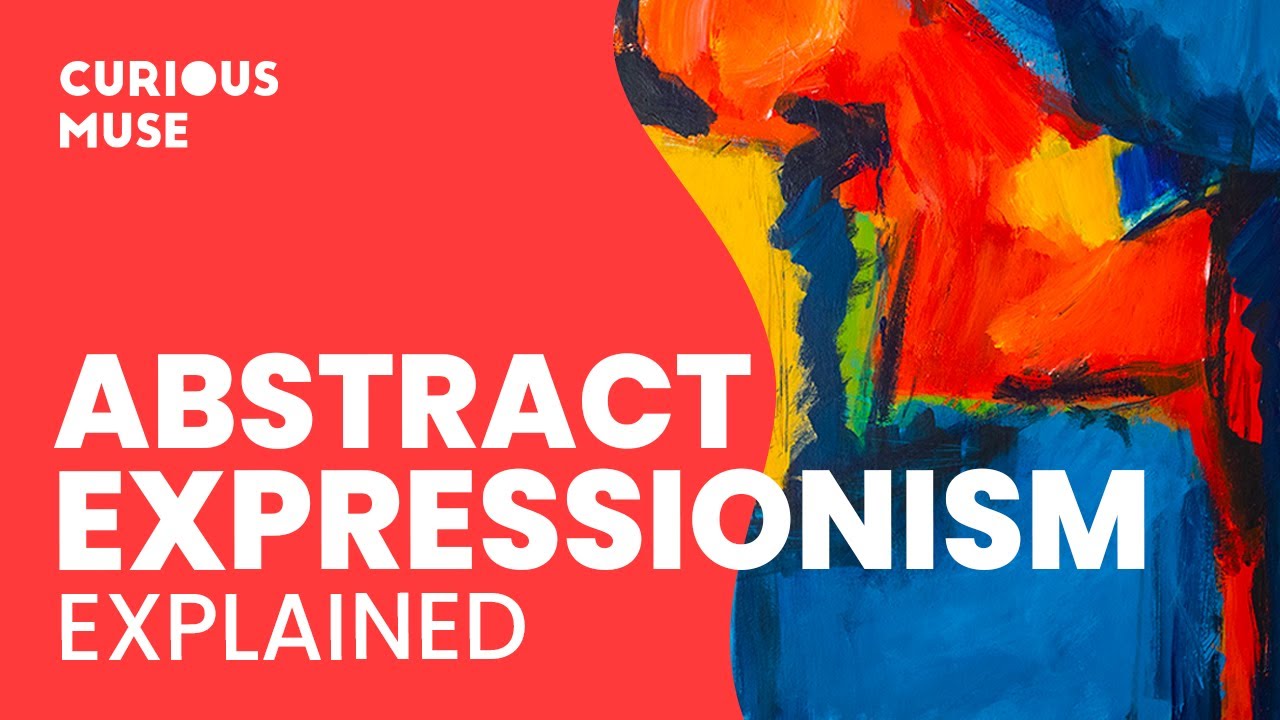


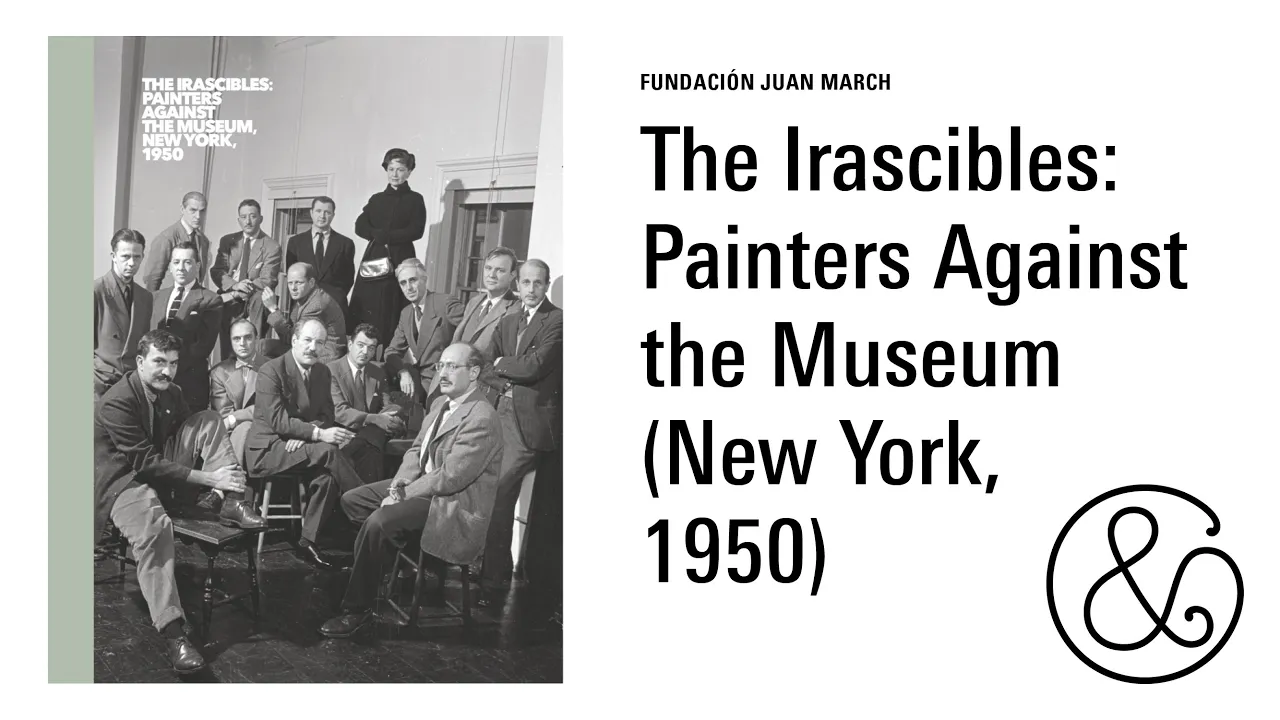


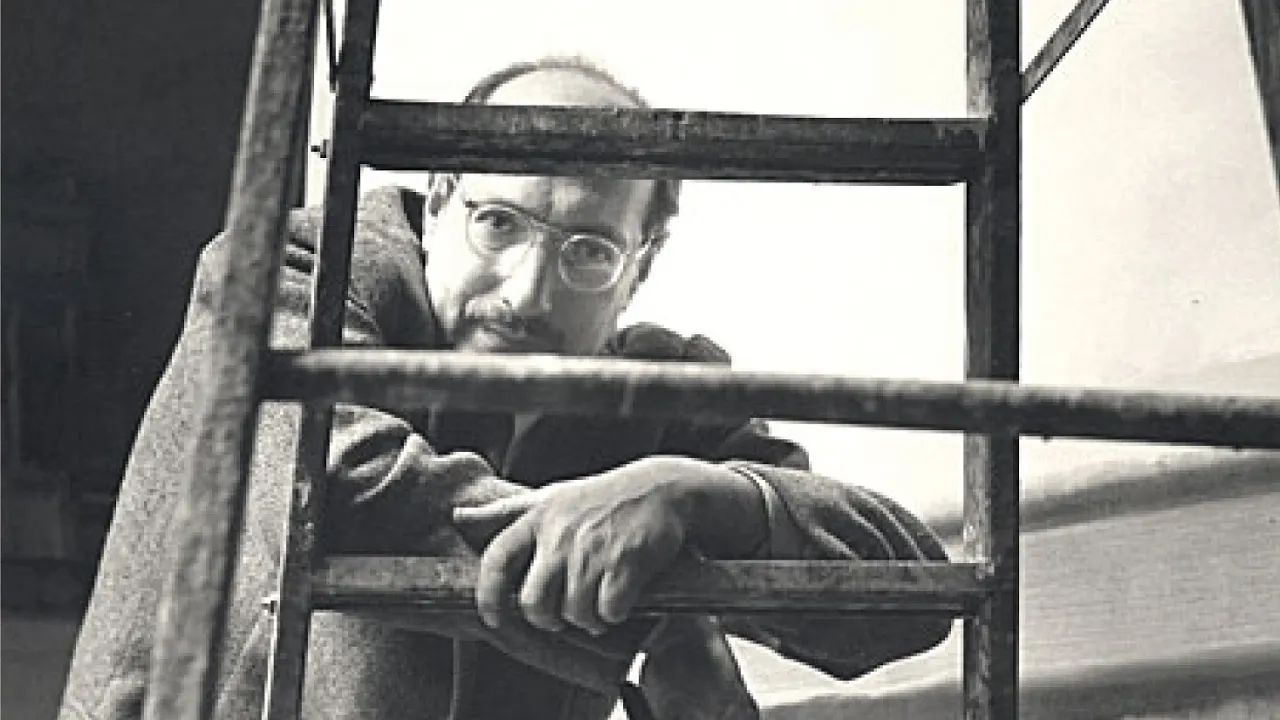





The Irascible 18 were 15 prominent Abstract Expressionist artists who wrote an open letter to the Metropolitan Museum of Art in 1950 to protest its conservative exhibition policies, including Adolph Gottlieb, Jackson Pollock, Mark Rothko, Barnett Newman, Willem de Kooning, and others; this group exemplifies how Abstract Expressionism was not a unified movement but rather a diverse collection of individual artists with distinct styles, divided primarily into two branches: Action Painting (emphasizing gesture, movement, and physical process, exemplified by Pollock's drip technique) and Color Field Painting (focusing on meticulous color application and spiritual transcendence, exemplified by Rothko's large color fields).
Abstract Expressionism: The Irascible 18 Explained
Added:The historical shift of the art world's epicenter from Paris to New York City in the post-World War II era.
The fundamental distinction between representational art and non-objective abstraction.
The traditional role of major art institutions, such as the Metropolitan Museum of Art, in defining and gatekeeping artistic merit.
An overview of early 20th-century avant-garde movements, particularly Surrealism and its concept of automatism, which heavily influenced abstract expressionists.
A comparative study of the two main branches of Abstract Expressionism: Action Painting (e.g., Jackson Pollock) and Color Field Painting (e.g., Mark Rothko).
The sociological and cultural impact of Nina Leen's iconic 1951 'Life' magazine photograph of the Irascibles in shaping the public image of the modern American artist.
How the protest of the Irascible 18 successfully forced mainstream museums to integrate contemporary, non-traditional American art into their permanent collections.
The rise of subsequent artistic movements, like Pop Art and Minimalism, which emerged in the late 1950s and 1960s as a rejection of Abstract Expressionism’s emotional intensity.
134.2K views4.3Klikes11:42Original Release: 2020-01-31
This has to be one of the most evocative pictures of the first generation of the New York School, the founders of Abstract Expressionism. You see 15 of its most important figures, but before talking about this image, its artists and the movement they represented, we have to go back, as we always do when we talk about 20th century history, to WWII.
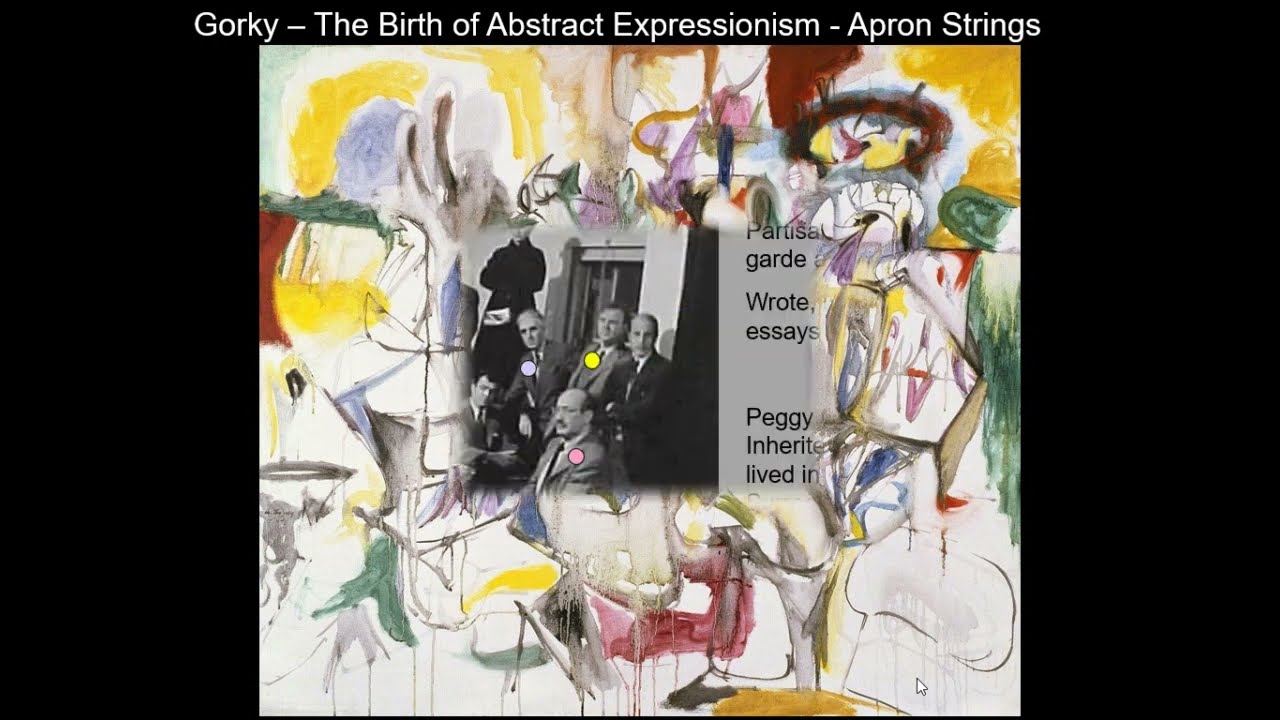
Before and during WWII, America’s art world was reduced to two main movements: Regionalism and Social Realism. Any modern Art was considered European, non-sensical and worthless. But the war will bring over many artist refugees such as Mondrian, Chagall and André Breton, the main theorist of the very influential surrealist movement. In the summer of 1941, Peggy Guggenheim, with her surrealist husband Max Ernst, flee from Nazi Europe for America. She opens an Art Gallery in New York City, called it Art of this Century and shows European modern artists such as Picasso, Braque, Dali and Miro to the American public.
Most importantly, she’ll organize solo exhibitions for many emerging American painters such as Jackson Pollock, Mark Rothko, Clifford Still and Robert Motherwell. You can’t overstate the importance of Peggy Guggenheim in the development of Abstract Expressionism.
"Art of this Century was of the utmost importance as the first place where The New York School could be seen.. Her Gallery was the foundation, it's where it all started to happen." -Lee Krasner (?)
But, as stated earlier, the American art world was extremely conservative which made it very hostile to the abstract expressionists. In 1950, a group of artists wrote an open letter to the Metropolitan Museum of Art to oppose this conservatism.
The Met organized an exhibition called American Painting Today – 1950 along with an art competition, and the appointed jury was conservative and hostile to abstract expressionists. Many members of the New York School got together and Adolph Gottlieb came up with idea of writing an open letter to oppose this exhibition and its competition, which was then signed by 28 artists.
It said: “The undersigned painters reject the monster national exhibition to be held at the Metropolitan Museum of Art next December, and will not submit work to its jury. [...] The organization of the exhibition and the choice of jurors [...] does not warrant any hope that a just proportion of advanced art will be included.” It was published on the New York Times’ front page on May 22nd 1950. The next day, the Herald Tribune responded to the attack and, in defence of the Met, called the artists “The Irascible 18”, irascible meaning “having or showing a tendency to be easily angered.” The controversy was sparked and the abstract expressionists were in the public’s eye.
The extremely influential Life Magazine, the same one that got Pollock famous just two years before, wanted to do a photo story to be published at the same time as the winners of the Met’s contest.
Life wanted, at first, to photograph the artists holding one their paintings in front of the Metropolitan, but that proposal was refused “because that would look as if we were trying to get into the Metropolitan and we were being turned down on the steps.” “They were very surprised at this, because nobody refuses anything to Life Magazine.” -Adolph Gottlieb On November 24th 1950, Nina Leen photographs 15 of the avant-garde artists in a West 44th Street studio.
Here, we don’t really see rebels that want to revolutionize or burn the art world down. They didn’t challenge the hierarchy of the system, they were only criticizing its conservative bias. These are well-dressed middle-class people. Barnett Newman was quoted saying that he wanted the group to look like bankers.
Now, lets take a quick look at the artists.
There’s Theodoros Stamos, the youngest of the group, Jimmy Ernst, the son of Max Ernst, Barnett Newman who became popular for his zip paintings, James Brooks, Mark Rothko who got known through his boundless fields of colour, Richard Pousette-Dart, William Baziotes, Jackson Pollock and his drip paintings, Clifford Still and his peeled colours, Robert Motherwell and his dominant deep black patches, Bradley Walker Tomlin and his fragmented compositions, Willem de Kooning and his violent paintings, Adolph Gottlieb who wrote the letter, Ad Reinhardt and his monochromatic shapes and finally Hedda Sterne.
Hedda Sterne was the only woman in the picture. Arriving late, she stood on a table and was, as she said, the “feather on top”. Going back on the event, she said “They all were very furious that I was in it because they all were sufficiently macho to think that the presence of a woman took away from the seriousness of it all.” She later regretted the experience, saying that “[She’s] known more for that darn photo than for eighty years of work.” and she went as far as calling herself an anti-abstract expressionist.
This goes to show how little these artists had in common. All they had was a desire to create a new modern American art. They’re just a collection of individuals each with their own signature style. It’s hard, for example, to identify the similarities between a Rothko and a Pollock.
Recently, I’ve been reading a great Mark Rothko biography by James E. B. Breslin published by the University of Chicago Press (the link to the book will be in the description). Breslin makes a great comparison between Rothko and Pollock’s style, not by comparing their work, but by comparing their portraits.
But, before doing that, let’s talk about the distinction between the two branches of Abstract Expressionism: Action Painting and Colour field painting.
In Action painting, gesture and movement are extremely important. Jackson Pollock, Franz Kline, Willem de Kooning, Lee Krasner... These are all painters who painted with their bodies. Each and every brushstroke is powered by strong gestural movement. Here, the process of painting is really what matters, the marks left on the canvas are just traces of that process. When looking at an action painter’s work, what you really see is the painter’s footprint, what they left after their performances.
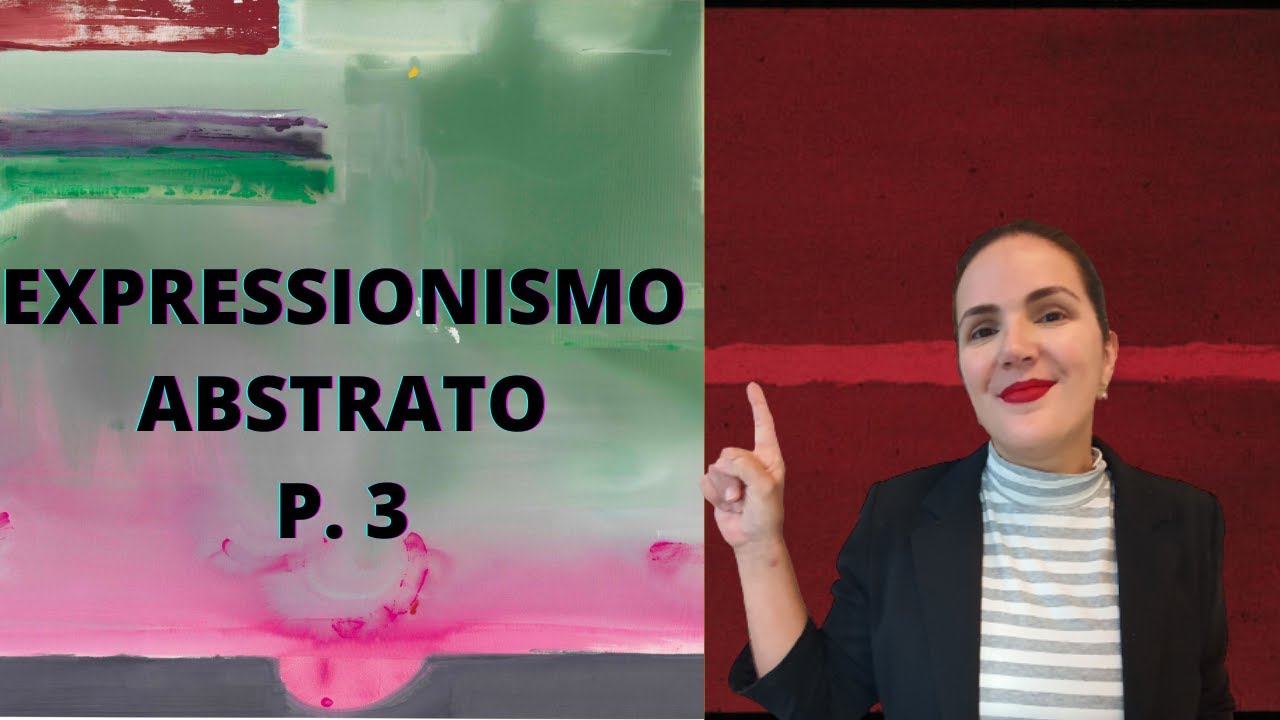
As for Colour field painting, what’s important is the end result. The painting isn’t impulsive and improvised, but meticulously calculated. The careful application of colour, the planned interaction between the different colours are all harmoniously orchestrated to create a feeling of transcendence. There’s a spiritual experience one might get when looking at, for example, a Rothko. It might be hard to understand at first, but there’s a certain mysticism about it which can be illustrated by a story Rothko would repeat, which I’m taking out of his biography. He liked being around his own exhibition and: “As Rothko was looking at his paintings, a man approached him and said, "You look like a sensible human being. How can anybody get away with this? Look at this. There's nothing. How can anybody get away with this? It's just... it's a disgrace." Rothko asked why it upset him so, "and the man started to sputter and carry on, but he couldn't really articulate what he objected to. It just wasn't enough, there on the wall." After letting the man "go on a little bit," Rothko finally said, "well, you know I painted these paintings," something he had to prove by pulling out his driver's license. "And he said the man was totally flabbergasted." Rothko invited him to come to the museum's coffee shop and talk; a few weeks later, the man called asking to visit Rothko's studio, see his work, and talk again. "He ended up buying a painting." In fact, Rothko added, "I have an appointment with him now at 2 0'clock. He owns three works of mine."
“The artist as missionary converting the heathen”, as Breslin puts it, isn’t the only example of Rothko’s work having this religious aspect: “You might as well get one thing straight. I'm not an abstractionist... I'm not interested in the relationships of colour or form or anything else. I'm interested only in expressing basic human emotions—tragedy, ecstasy, doom and so on. And the fact that a lot of people break down and cry when confronted with my pictures show that I communicate those basic human emotions... The people who weep before my pictures are having the same religious experience I had when I painted them. And if you, as you say, are moved only by their colour relationships then you miss the point.” Now, let’s look at the portraits of Pollock and Rothko, two very prominent abstract expressionists, one an action painter and the other a colour field painter.
These two portraits were made by Hans Namuth. Here’s Jackson Pollock in his studio in 1950 and Mark Rothko in his studio in 1964. You see both artists immersed in their work, they’re both completely absorbed by it in their own way. Pollock is absorbed by his work by stepping on it and dripping paint while Rothko is absorbed by his painting’s captivation. He could look at his artworks for hours, making sure that everything was perfect and really evoked what he wanted. Pollock is dynamic, dominating, he’s using energy as his body is stretched over the canvas while Rothko is sitting down, feeling his painting.
These two artists are extremely different, both in their art making process and in the final results they produce. As Breslin puts it: “Pollock acts; Rothko meditated”.
So Abstract Expressionism is a very broad term to encompass a multitude of artists with very different styles. Any of the irascible 18 could have started their own art movements instead of being encompassed by abstract expressionism. If post-war modernity created an atomized and very individualist world, then abstract expressionism is a great example of this individualism materializing. Every abstract expressionist individual had their own specific style to the point that a lot of them didn’t even need to sign their paintings anymore, we knew who they were from just by looking at them.
And perhaps that’s why this movement is so powerful, not because of its unity, but because of the individual strength, personality and autonomy of each of its members.
Up Next

5:01
Modernism & Kitsch: Clement Greenberg's Art Theory Explained
@JudeShimer
124.4K views•2011-12-14

114:18
Christian Iconography: History, Theology, and Meaning | Fr. Panayiotis Papageorgiou
@Trisagionfilms
58.8K views•2020-02-21
8:37
Turner's Fighting Temeraire: Art History & the Industrial Revolution
@Shawn.Grenier
42K views•2021-10-26

16:34
Earliest Depictions of Jesus in Art: 10 Ancient Images Explained
@UsefulCharts
5.9M views•2022-06-03
Related Study Plans & Knowledge Roadmaps
Structured learning paths in Art History
art-history
Gothic Cathedrals: Engineering, Light & Society
01The Birth of the Gothic: Romanesque to Suger's Vision
02The Structural Triad: Pointed Arches, Ribbed Vaults, and Flying Buttresses
03Theology of Light: Lux Nova and Sacred Geometry
+ 2 more learning modules
14h5 modules
Explore Roadmap
art-history
Pre-Raphaelites: Realism, Symbolism & Critique
01The Victorian Art Establishment and Academic Formula
02The Founding of the PRB and Radical Realism
03Medieval Revivalism and Literary Symbolism
+ 1 more learning modules
8h4 modules
Explore Roadmap
art-history
Street Art: From Subways to Art Market
01Subcultural Origins in Philadelphia and New York (1970s)
02The Subway Era and Style Wars (Late 1970s - 1980s)
03The East Village Scene and Early Gallery Crossover
+ 2 more learning modules
10h5 modules
Explore Roadmap
art-history
Classic Maya Art: Iconography, Glyphs & Ritual
01Foundations of Classic Maya Visual Culture
02Deciphering Maya Hieroglyphs & Text-Image Integration
03Sacred Geography and Cosmological Architecture
+ 2 more learning modules
14h5 modules
Explore Roadmap