










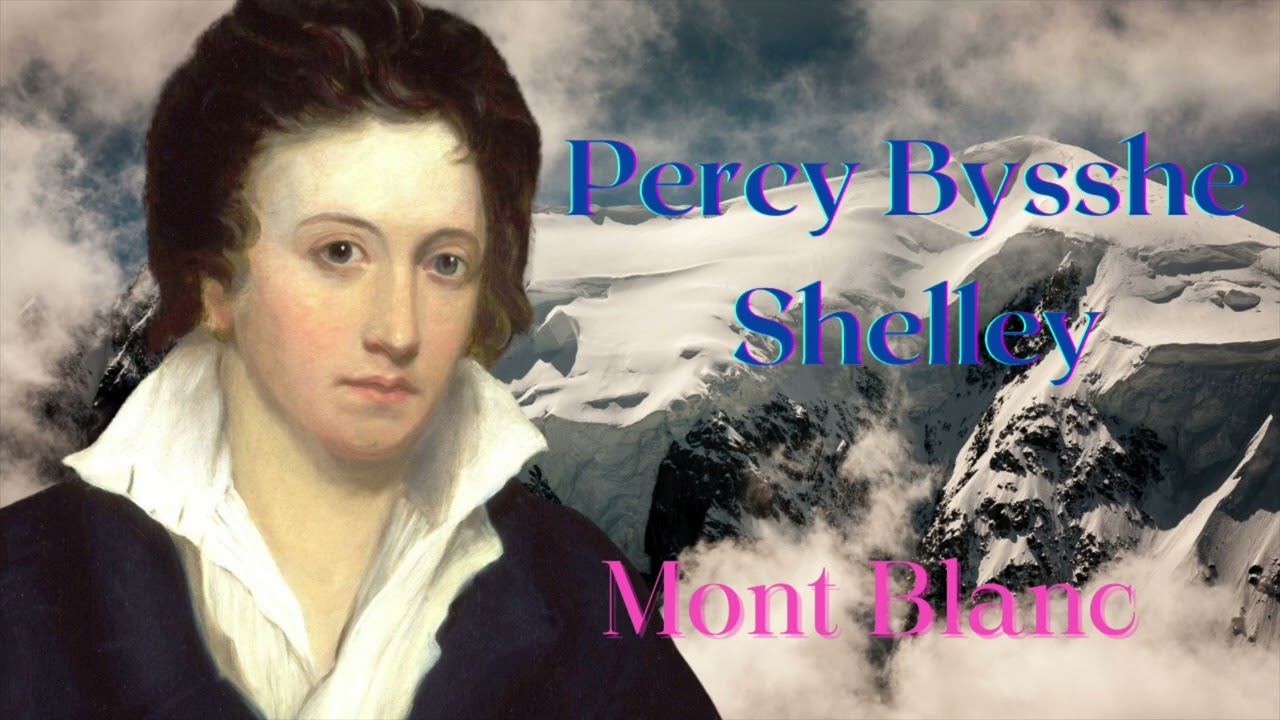



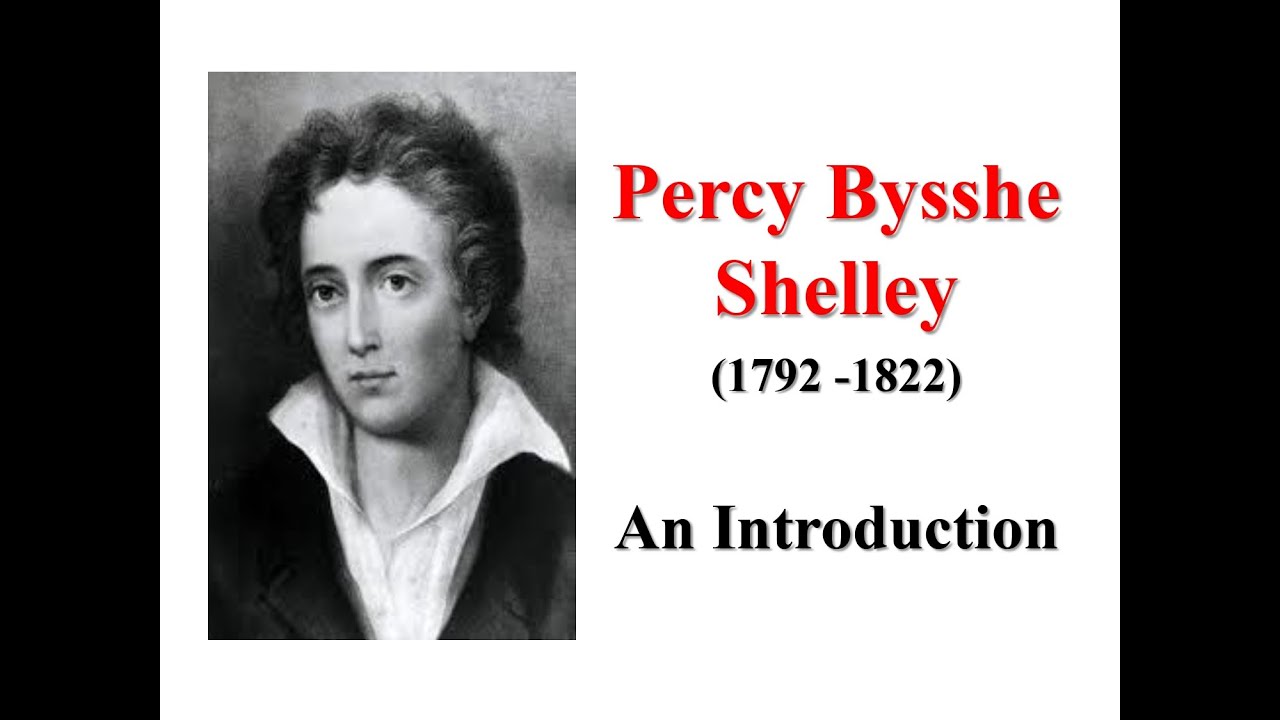







In 'Mont Blanc,' Percy Bysshe Shelley reconfigures William Wordsworth's vision of nature as a benevolent moral force into a more sublime and threatening symbol of creative power, depicting the mysterious power emanating from nature as both destructive and life-sustaining, ultimately requiring human interpretation to reveal its meaning, thus challenging Enlightenment philosophy's tabula rasa theory and Berkeley's idealism about perception.
Close Reading of Shelley's Mont Blanc: Power and Mind
Added:Understanding of the core tenets of British Romanticism, particularly its emphasis on nature, imagination, and the individual consciousness.
Familiarity with the philosophical concept of 'the Sublime,' specifically Edmund Burke's theory of terror and awe in the presence of vast nature.
Basic skills in close reading poetry, including the ability to analyze poetic form, syntax, imagery, and figurative language.
An introduction to Percy Bysshe Shelley's philosophical skepticism and his intellectual background regarding empiricism and idealism.
Comparative analysis of Shelley's 'Mont Blanc' with William Wordsworth's 'Tintern Abbey' to contrast their differing views on the relationship between the human mind and the natural world.
Exploration of Shelley's later, more complex philosophical works, such as 'Prometheus Unbound,' to examine his evolving ideas on power, agency, and liberation.
Application of Ecocriticism to 'Mont Blanc,' exploring how the poem anticipates modern ecological thought and the decentralized role of humanity in the biosphere.
Advanced study of Kantian epistemology to understand how the concept of mind constructing reality influenced Romantic poets.
2.4K views68likes13:36Original Release: 2020-09-24
mole blanc by percy bishelly is probably one of the most difficult poems i've given you thus far so i want to look at this in a little more depth you'll notice that this poem was written in 1817 so it's later than a lot of the poetry we've been reading thus far and shelley belongs to what's what's often referred to as the second generation of romantic writers who wrote in reaction to the the first generation characterized mostly by wordsworth and coleridge uh you should certainly notice some connections with wordsworth uh in in the uh sort of vague generalities in which uh shelley writes uh and the the fact that that both talk about things a lot the everlasting universe of things flows through the mind and rolls its rapid waves that sounds a lot like wordsworth's presence in tintern abbey that rolls through all things also this source of human thought rolls with the sound but half its own which should recall wordsworth's mind that half creates what it perceives so like wordsworth shelley is describing a mutually dependent relationship between the human mind and this power in nature and this goes against a lot of enlightenment philosophy going back to john locke locke's theory of the mind was based on the idea that the mind is a tabula rasa a blank slate on which experience is imprinted we don't have any uh innate uh uh beliefs or properties in our mind that uh that precede our birth wordsworth and shelly kind of question this by suggesting the mind has its own independent creative power that is that operates in relation to nature in a in a in a mutually reinforcing way the mind that half creates notice also this this power is described in ways that appear somewhat contradictory it is everlasting on the one hand so it's something that is permanent but it also flows and rolls uh verbs that are associated with motion and mutability so something that permanent permanent but that's always moving and changing it's it's described as dark and glittering reflecting gloom and lending splendor uh that's so this the power has a relationship to the human mind that is both active uh reflecting uh or sorry both passive in its reflecting but also active in its lending so the or later on at the beginning of the third stanza we're told some say that gleams of a remoter world visit the soul in sleep that the death is slumber it's again echoing a wordsworthy an idea which comes from from an ode that we're the immortality owed which we're going to read later or again at the end of that stanza when the shelley speaker says thou has to voice great mountain to repeal large codes of fraud and woe uh this very much gives us a sense of wordsworthy in sense of nature as a moral force so the encounter with nature is supposed to inspire a moral awareness although nature for shelley does not serve entirely the same function as it does for wordsworth in this poem nature is primarily important insofar as it symbolizes something beyond itself so while wordsworth emphasizes a kind of harmony between mind and nature shelley in this poem is depicting a more sublime disjunction between the two so one important question for this poem will be how exactly does shelley reconfigure wordsworth's vision of nature and how does he formulate it into a myth of his own creating in order to answer this question we need to first try to figure out what this poem is all about as i've said it's a very dense and challenging poem you probably found yourself having to reread certain passages because they just don't quite intuitively make sense the first time around so essentially shelley develops a highly complex and highly personal symbol of creative power based on the relation between mold block the mountain and the river arv which flows in a deep ravine below it the river becomes a symbol for the way in which the mysterious power activates the human mind in the first stanza we're told that this mysterious uh mysterious power emanates from secret springs and the the speaker then compares it to a feeble brook which then by the end of the stanza comes down in a vast river that ceaselessly bursts and raves [Music] so the first image we get is one of a river that originates inside the rocks of a high mountain then gradually picks up speed and increases in size as it goes along the second stanza begins with a direct comparison between this movement of power to the ravine of the river arv so instead of being a general metaphorical river it becomes a real actual river he describes the ravine as an awful scene where power in the likeness of the arv comes down notice the strangely inverted metaphor here instead of showing that the arv is like this this general power shelley wants to show that this power is in fact like the arv hidden there beneath its surface this line clearly calls attention to the heavily symbolic nature of the poem it isn't the river but always the power disguised as the river that that shelley's speaker is interested in the speaker describes the the powerful movement of this river which flows restlessly and seemingly randomly referring to the arv's commotion its ceaseless motion its unresting sound and he calls it a dizzy ravine all all words that that suggests it's it's tumultuous nature these lines should start to suggest the the major contrast between shelley's idea of this power and wordsworths wordsworth always finds a benevolent and helping power even in even the most sublime natural scenes but shelley depicts this vast power of nature as violent potentially threatening uh and certainly threatening to overwhelm the human senses in fact these lines suggest that the the speaker himself is getting lost in the scene he's describing much as the reader is is likely to do uh suggestive again of the sublime power of the river similarly the power shelly invoked seems to roll through the human mind in a powerful but seemingly indifferent fashion it can be both destructive and life-sustaining at the end of stanza 2 shelley figures his mind in in response to the scene in the still cave of the witch poesies seeking among the shadows that pass by ghosts of all things that are some shade of thee some phantom some faint image till the breast from from which they fled recalls them thou art there so the the language here seems to present poetry in a somewhat sinister manner a witch ghosts there's something supernatural and gothic in in this final final passage in that this stanza as though poetry were a way of manipulating or enchanting the power of nature but with that language maybe not necessarily in a positive way moving ahead to the ending everything is shown to be subject to the probings of the human mind mont blanc may be terrific and sublime but it it needs the the speaker or observer to be so uh thou has to voice great mountain to repeal large codes of fraud and woe not understood by all but which the wise and great and good interpret or make felt or deeply feel so this moral force that the mountain represents uh requires the the observer to to make it so uh the the the why is the great the good you have to have some kind of ability to interpret or make felt or deeply feel and similarly in the very end of the poem uh the secret strength of things which governs thought into the infinite dome of heaven as a law inhabits thee and what were thou and earth and stars and sea if to the human mind's imaginings silence and solitude or vacancy uh so mo blanc has great power but if we didn't care it maybe wouldn't matter the the power is not inherently there another reference to 18th century philosophy bishop berkeley uh had the famous dictum to be is to be perceived that that that if something is not uh is not perceived by someone it has no existence and berkeley posits god as the the force that is perceiving everything and thus keeping it all in place so shelley's point of view is kind of similar to berkeley's here subject and object do not have independent existence but depend upon one another so the poem ends with this statement of reliance upon the human interpretation of the divine and we might relate this to shelley's comment in his journal when he was actually describing his journey past mont blanc he said that the ravine was so deep that the very roaring of the untameable arv which rolled through it could not be heard above so that's kind of significant for this poem in that he's talking so much about the sound of the river but it's a sound that you can't empirically actually hear from the position he's describing it and yet he knows it's there the very roaring uh it could not be heard he knows it's roaring but he can't hear it roaring so the sublimity of this scene comes from in a way the absence of that sensual experience the poem thus ends with its focus squarely on the poet who seeks to express the universal power through symbolic language and who struggles to express the sublimity of this power because of the limitations of this language so the poem suggests that a harmonizing vision of nature is possible only from a far removed vantage point where one can both see and at least imagine hearing in which case perhaps the point of the poem is that we are supposed to find it difficult uh we're supposed to get lost in it after all the po the poem tells us that everything in the mortal world is incomplete and changeable
Up Next
6:53
Romanticism in English Literature | Key Features & Writers
@vmouonline
148.2K views•2014-09-27

13:43
Formalism in Literary Criticism: An Academic Lecture Overview
@mattalberhasky9952
39.1K views•2015-08-05

6:08
Point of View in Fiction: First Person vs. Third Person
@magicalthriftyteacher
153.8K views•2014-03-31

15:25
1984: Orwell's Dystopian World and the Mechanisms of Totalitarianism
@AlternateHistoryHub
7M views•2017-03-04
Related Study Plans & Knowledge Roadmaps
Structured learning paths in Literature
literature
Graphic Memoirs: Visual Art, Trauma & History
01Foundations of Sequential Art and Visual Language
02Autographics and Processing Historical Trauma
03Visualizing Personal Trauma, Grief, and Graphic Medicine
+ 2 more learning modules
14h5 modules
Explore Roadmap
literature
Campus Novels: Evolution, Themes & Critique
01Introduction to the Campus Novel Genre
02Mid-Century Satire and the Post-War Academy
03Dark Academia and the Critique of Privilege
+ 2 more learning modules
14h5 modules
Explore Roadmap
literature
Theater of the Absurd: Philosophy & Plays
01Postwar Existentialism & Historical Roots
02Dismantling Narrative: Esslin & Absurdist Conventions
03Samuel Beckett and Tragicomic Existentialism
+ 2 more learning modules
12h5 modules
Explore Roadmap
literature
Revenge Tragedy: Justice, Madness & State
01Foundations of Early Modern English Theatre
02Anatomy of Revenge: Structural Conventions
03Psychological Complexity: Madness and Melancholy
+ 2 more learning modules
15h5 modules
Explore Roadmap